
Where a “first deposit bonus casino Australia” search actually leads
Every dollar a reader pictures depositing into an offshore casino bonus is, in Australian law, a dollar paid to an unlicensed provider of a prohibited service. The Interactive Gambling Act 2001 makes the offer itself the offence; the credit card ban of June 2024 chokes off the obvious payment route; ACMA’s blocking round in June 2026 added another twelve sites to the list. The “best first deposit bonus casino Australia” search still brings up glossy landing pages, and the first job of this page is to explain why those pages do not survive contact with the law that governs the device they are read on.

Current as of 6 November 2026 and verified against the public registers maintained by the Australian Communications and Media Authority (ACMA), Australian Payments Plus (AP+), the Reserve Bank of Australia, and the National Self-Exclusion Register (BetStop).
Table of Contents
- The Australian gambling law a bonus offer is read against
- Where the money would have to come from, and why most of the obvious routes close
- What PayID, Osko and BPAY actually mean for someone paying
- The cost a “first deposit bonus” actually carries, when the math is done
- The eleven brands the ACMA has warned, and what the warnings actually say
- Reading the ACMA’s blocking record as a rate, not a count
- What an Australian reader can actually do
- What this page is not
- Frequently asked questions
The Australian gambling law a bonus offer is read against
The Interactive Gambling Act 2001 (IGA), as tightened by the Interactive Gambling Amendment Act 2017, makes it a criminal offence to provide a “prohibited interactive gambling service” to a person who is physically in Australia. The prohibited services are, in plain terms, online casino games and online pokies. In-play betting on sport falls inside the same prohibition once the event has started. What is licensed is wagering on racing and on pre-match sport, lotteries and keno. The minimum age is 18. State and territory gambling authorities do not issue online casino licences — there is no licence to apply for.

Enforcement runs through the ACMA. The regulator investigates complaints, issues formal warnings and asks Australian internet service providers (ISPs) to block illegal services. As reported in June 2026, the ACMA had asked ISPs to block 1,751 illegal gambling and affiliate marketing websites since the first blocking request in November 2019, and more than 230 unlicensed services had left the Australian market since enforcement was strengthened in 2017. The most recent round reported on 26 June 2026 added twelve more sites: 7Signs, ChromaBet, Donbet, Duospin, Freshbet, Slots Gem, Jacks Club, Lucky Start, Pointsbetz.com, Spinrise, Vinyl Casino and Wildsino.
The shape of the prohibition has practical consequences a reader cannot see from a landing page:
- The provider is the target, not the player. The IGA does not prosecute an Australian who deposits; the offshore operator carries the criminal exposure. The player carries everything else: no Australian dispute resolution, no balance held in escrow, no enforced identity check, and the standing possibility that the ACMA has the site blocked mid-session with funds still in it.
- A foreign licence does not cure the problem. A Curaçao or Anjouan seal at the footer of a casino page is a licence to operate from that jurisdiction, not a permission to take Australian customers. The site can hold both at once: legal where it sits, illegal where the reader sits.
- A new law in the pipeline narrows the inducements side further. The Interactive Gambling Amendment (Gambling Reform) Bill 2026 passed Parliament on 19 August 2026; its advertising and inducement measures commence 1 January 2027. For a 2026 reader the inducement framework is law with a start date, not yet in force.
Where the money would have to come from, and why most of the obvious routes close
A first deposit bonus only matters if the deposit itself can be made. Australian-licensed wagering services have been barred from accepting credit cards and credit-related products since 11 June 2024, with penalties of up to A$247,500 for operators that breach the rule. The same rule constrains digital wallets where the underlying funding source is credit. Crypto is out for the same reason. Legal deposit routes for licensed wagering narrow to debit card, bank transfer, PayID/Osko and BPAY — and an offshore casino asking for a credit card or a coin transfer is operating outside the Australian rules on the way in.
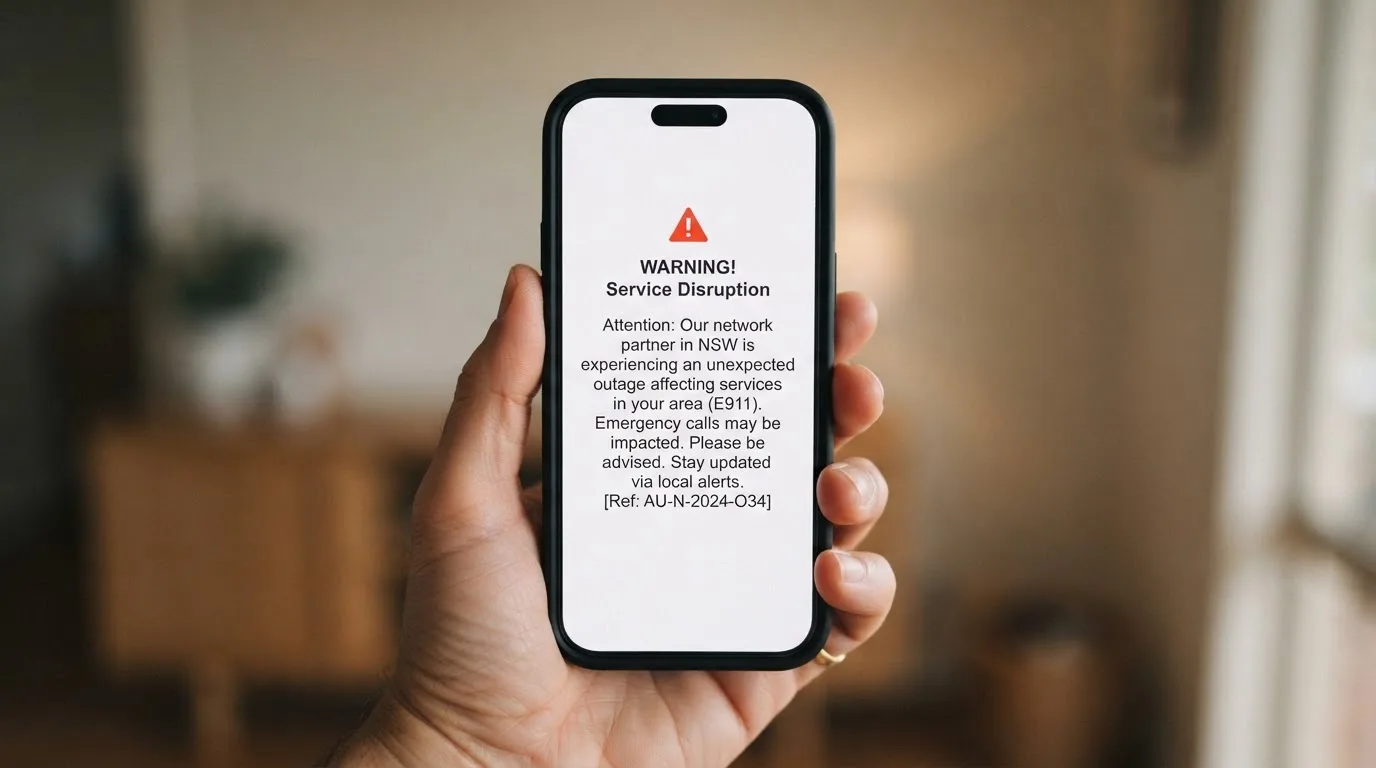
What banks do on their own side is the next layer of friction. The four majors and several neobanks now let a customer put a card-level gambling block on their own account:
- Westpac. The block works at card level and refuses authorisation on transactions registered under the merchant category code “Betting/Casino Gambling” on eligible personal credit and debit cards.
- ANZ. The block, activated in the ANZ app, also blocks gambling transactions made through a digital wallet such as Apple Pay on an eligible card, not just the physical card. Removing the block requires a 48-hour cooling-off period, and the bank warns that not all gambling transactions will be blocked and some non-gambling transactions might be blocked in error.
- Commonwealth Bank. A gambling lock applied in the CommBank app automatically blocks most gambling transactions, though the bank states it cannot guarantee every gambling-related purchase will be stopped.
Card surcharging itself is moving. The Reserve Bank of Australia’s July 2025 review proposes removing surcharges only on eftpos, Mastercard and Visa transactions, explicitly leaving American Express outside the proposed ban — which leaves the surcharge surface of an Amex-funded bet untouched in any reform scenario. American Express itself runs as a three-party network rather than the four-party Visa/Mastercard model: Amex issues cards and processes transactions itself, which is the structural reason it sits outside the RBA’s proposed scope.
The mobile-wallet share makes the block layer consequential, not theoretical. By the end of 2025, Apple Pay, Google Pay and Samsung Pay transactions collectively accounted for around 45% of all card payments in Australia by number. Apple itself does not charge fees to consumers for Apple Pay; any surcharge comes from the merchant’s card-processing fees, not from Apple. Transaction limits and PIN requirements for Apple Pay are set by the card issuer or merchant, not by Apple — a point that matters because the issuer, not the wallet, decides whether the underlying card can reach a gambling merchant at all.
What PayID, Osko and BPAY actually mean for someone paying
For a reader who has decided to ignore everything above, the payment plumbing is the next thing the bonus page will not explain.
PayID is an addressing layer on top of Australia’s New Payments Platform (NPP). Over 100 Australian financial institutions participate, and more than 25 million PayID identifiers had been registered on the platform as of April 2025. The platform itself went live on 13 February 2018 and is owned by New Payments Platform Australia Ltd, a non-profit whose 13 shareholders include the Reserve Bank of Australia and the major banks; in 2021 the ACCC authorised the merger of NPP Australia with BPAY and eftpos into the single entity Australian Payments Plus (AP+). PayID shows the account holder’s name before the transfer is sent; AP+ warns that being asked to send money to a PayID on an illegal gambling site almost certainly means a scam site.
Osko runs on the same platform. A bank transfer between participating Australian banks arrives in under a minute, 24/7 including weekends, whether it is addressed to a BSB and account number or to a PayID. Participants must keep the platform’s monthly outages to no more than two minutes.
BPAY is a separate bill-payment service that has operated since 1997 and is owned equally, via Cardlink Services Limited, by the four major banks: ANZ, Commonwealth Bank, National Australia Bank and Westpac. It is available in the online banking of over 140 banks and financial institutions and is offered by over 95,000 businesses. The payer enters a Biller Code and Customer Reference Number (CRN) printed on the bill. None of these three rails stops the payment at the merchant end; what stops it, where it stops, is the card block or the absence of the merchant in the licensed wagering channel.
AUSTRAC’s threshold-transaction-report rule requires reporting of transfers of A$10,000 or more, but only for physical cash. Ordinary electronic bank transfers are not subject to that per-transaction reporting requirement, regardless of the amount sent — a fact that does not make large bank transfers anonymous, only absent from this one reporting line.
The cost a “first deposit bonus” actually carries, when the math is done
A first deposit bonus in this market is built from the same parts as any other: a percentage match on the deposit, a wagering multiple applied to the bonus (or the bonus plus deposit), a maximum cashout, sometimes a maximum bet per spin, often a list of excluded games. The mechanics are not exotic. What is exotic is the gap between how a landing page describes the offer and what the offer actually costs the player.
The cheapest working example: assume a 100% match on a A$200 deposit, a 40x wagering multiple on the bonus alone, and a A$1 stake per spin at a slot with a 96% RTP. The required turnover is A$200 × 40 = A$8,000. At A$1 per spin that is 8,000 spins, which at a 5-second spin interval is 40,000 seconds — about 11.1 hours of continuous play. The expected loss on those spins is A$8,000 × (1 − 0.96) = A$320, before any consideration of the A$200 that was the player’s own money and is now also in play under most match structures.
That figure is an average over many spins under the stated assumptions, not a guaranteed outcome. It promises no win, no payout and no return. Change the RTP to a 94% slot and the expected loss on the same turnover rises to A$480. Change the wagering multiple to 50x and the turnover rises to A$10,000 with the expected loss moving to A$400 at 96% RTP. The headline number on the bonus page is the smallest figure on the offer; the wagering multiple, the RTP and the stake-per-spin cap are where the real price is set, and none of them is in the headline.
For Australian readers the comparison the math invites is the wrong one, because the offer itself is the prohibited service. The real price of a “first deposit bonus” in Australia in 2026 is not A$320 of expected loss against a A$200 deposit; it is the same A$320 plus the absence of Australian consumer protection, plus the standing possibility that the ACMA blocks the site with the balance still on it, plus the exposure of using a payment instrument in a way the card issuer has been told to refuse.
The eleven brands the ACMA has warned, and what the warnings actually say
The brands below are not a ranked shortlist. They are the brands the ACMA itself named in formal warnings over the period the research covers, and they appear here so a reader who has already encountered the marketing can see what the regulator has actually said. Online casino games cannot be licensed anywhere in Australia, whatever foreign licence the site displays; the ACMA warnings are about that fact, not about consumer-quality complaints. No bonus terms are given for any brand, because the only sources the research found for bonus terms were affiliate marketing pages, and those terms are not facts the regulator verifies.
| Brand | ACMA action and date | Operator named by the ACMA | Subject support |
|---|---|---|---|
| RocketPlay | Formal warning March 2026 over Rocketplay.com.au; earlier Dama N.V. May 2022 | Pulsup Ltd | Listings (Gamblinginsider.com) |
| Level Up Casino | Formal warning May 2022 | Dama N.V. | Listings (Westpac.com.au) |
| Woo Casino | Formal warning March 2025 | Dama N.V. | — |
| Spirit Casino | Formal warning May 2025 | Dama N.V. | — |
| National Casino | Formal warning July 2025 | Consolutetish S.R.L. | Listings (acma.gov.au, austrac.gov.au, betstop.gov.au) |
| Bizzo Casino | Formal warning July 2025; earlier TechSolutions 2022 | Consolutetish S.R.L. | Listings (Gamblinginsider.com) |
| Ignition Casino | Formal warning July 2025 | Bamboo Media | — |
| Instant Casino | Formal warning February 2025 | EOD Code SRL | Listings (Ecopayz.com, Payid.com.au) |
| Jackbit | Formal warning April 2026 | Ryker B.V. | — |
| Casino Intense | Formal warning April 2025 | Sterplay Holding Ltd | Listings (austrac.gov.au, betstop.gov.au, Gamblinginsider.com) |
| Sky Crown | Formal warning (Hollycorn N.V.) | Hollycorn N.V. | — |
The shape of the table is the shape of the enforcement record: a small number of operators behind many of the brands (Dama N.V. alone accounts for three entries here, with Consolutetish S.R.L. accounting for two), warnings issued months or years apart for what is structurally the same offence, and a regulator acting against the operator entity rather than the brand name. A reader who sees a brand appear on this list and then sees it rebranded a season later is not seeing a clean operator — they are seeing the same operator entity under a different trade name.
Reading the ACMA’s blocking record as a rate, not a count
The research names two numbers that turn the enforcement record into something a reader can compare: a running total of 1,751 blocked sites as of June 2026, and a first blocking request dated November 2019. From November 2019 to June 2026 is roughly 80 months, which gives an average blocking rate of about 22 sites per month, or roughly 263 sites per year, across that whole window. The June 2026 round alone added twelve sites in a single decision.
That figure is a long-run average, not a steady drip. The blocking rounds bunch — sometimes four sites in a week, sometimes none for months — and a single month with twelve blocks skews the average enough that no reader should treat 263 per year as a forecast. What the figure does say is that the ACMA’s pipeline is not empty: the regulator is finding sites, acting against them, and asking ISPs to block them at a rate that does not suggest the prohibition has fallen out of priority. The broader market context is the same shape: H2 Gambling Capital’s 2025 report estimates that Australians lose about A$3.9 billion a year to illegal gambling sites, and that the share of gambling going through legal channels fell from 74% in 2021 to 64%.
What an Australian reader can actually do
A reader who arrives at this page after typing a phrase about first deposit bonuses has three lawful options, each of which the page describes plainly because none of them is the offer the search was looking for.
Licensed wagering. Online bookmakers licensed in Australia — Sportsbet, Bet365, Ladbrokes among them — operate under Northern Territory Racing and Wagering Commission oversight, alongside the other state and territory wagering regulators. The Northern Territory regulator oversees 52 of Australia’s online bookmakers, meets once a month in Darwin and, as reported by the ABC in April 2026, has no full-time staff. The thinness of that oversight is a feature of how the regulatory perimeter was drawn, not a finding specific to any one operator. Licensed wagering offers sports and racing markets; it does not offer online casino games, online pokies or in-play betting once the event has started.
Land-based venues. Licensed pokies venues, clubs, casinos and TAB outlets are the only places online casino-style games are offered in person under Australian licence. The product mix is narrower than an offshore lobby and the RTP disclosures are governed by state machine standards.
BetStop. The National Self-Exclusion Register (BetStop), live since August 2023, binds every Australian-licensed online and phone wagering service. A self-excluded person cannot open a new account with a licensed operator for the period they nominate. BetStop does not bind offshore casinos; a self-excluded player remains technically able to deposit at an unlicensed site, which is one reason the ACMA’s blocking work and BetStop’s exclusion work are complements rather than substitutes. The National Gambling Helpline is 1800 858 858, free, 24/7, with web chat at Gambling Help Online.
For tax: gambling winnings of a recreational player are not assessable income under section 6-5 ITAA 1997, and losses are not deductible, unless the person carries on a business of gambling. That is a model answer — the ATO’s view on the individual’s situation is the binding one.
What this page is not
It is not a comparison of bonus percentages, because the products being compared are not lawfully on offer to Australian readers. It is not a guide to circumventing the card block or the ACMA’s blocking work, because the card block and the blocking work are exactly the protections the law puts in place. It is not a recommendation of any offshore brand listed above as a place to play — every brand in the table above has been the subject of a formal ACMA warning for offering prohibited services to Australians. A reader who has decided to deposit at one of them anyway is making a decision the regulator has formally tried to prevent, with the consumer protections that decision costs them spelled out in the sections above.
Frequently asked questions
What is a first deposit bonus, and how is it different from a no-deposit bonus?
A first deposit bonus credits extra playable money once a player funds their account; a no-deposit bonus credits it without any deposit at all. The first deposit version is typically larger and almost always carries heavier conditions because the casino is paying out in proportion to what it has just received.
Do first deposit bonuses usually carry wagering requirements?
Yes, nearly always. The wagering multiple is the number of times the bonus (or bonus plus deposit) must be turned over before any winnings can be withdrawn, and it is the single biggest determinant of what the bonus actually costs the player.
Is it legal for an online casino to offer Australians a first deposit bonus?
No. The Interactive Gambling Act 2001 makes it an offence to provide online casino games to a person in Australia. A foreign licence does not change that — the offshore operator remains the target of the prohibition whatever seal sits in its footer.
Can a first deposit bonus be withdrawn immediately after it is credited?
No. The bonus funds themselves are not withdrawable until the wagering requirements and any maximum-cashout cap are met, and some casinos exclude deposits from the wagering base entirely, which makes the requirement longer than it looks at first read.
What should someone read before accepting a first deposit bonus offer?
The wagering multiple, the maximum stake per spin, the list of excluded games, the maximum cashout cap, and the time limit to clear the bonus. A landing page headline number is the smallest of those numbers; the others set the real price.
Does a bigger first deposit bonus automatically mean better value?
No. A 200% match on a smaller deposit with a 40x multiple can cost less in expected loss than a 100% match on a larger deposit with a 60x multiple. The headline percentage is not the offer; the wagering multiple, the RTP of the eligible games and the stake-per-spin cap are the offer.
Where a “first deposit bonus casino Australia” search actually leads — More on this topic at casino live dealer .
See also A high roller casino, an Australian reader, and a law that says no .