The State of Online Keno for Australian Readers in 2026
 Available in US
The phrase “best keno online casino Australia” promises something the Australian market does not deliver. No casino operating online can lawfully offer keno to a person physically in Australia, regardless of where the operator is incorporated or what licence its homepage displays. The Interactive Gambling Act 2001 prohibits the supply of online casino games (keno included) to Australians; the Australian Communications and Media Authority has spent years issuing formal warnings, requesting internet service providers to block offending sites, and watching those sites rebrand and resurface under new names. The page below does not pretend a lawful shortlist exists. It maps what is actually available: licensed keno at pubs, clubs and land-based casinos under state and territory regulation, the offshore operators the ACMA has acted against, and the protections (BetStop, the National Gambling Helpline) that apply on the lawful side and do not reach the offshore side.
Data current as of 25 September 2026, verified against ACMA formal warning publications and state gambling regulator registers.
Table of Contents
- How Online Keno Works: The Mechanics Behind the Paytable
- The Australian Law: Why the Shortlist Cannot Exist
- The Paytable Behind the Enforcement: ACMA’s Blocking Record
- What Stays Lawful: Keno Under State and Territory Regulation
- The Offshore Side: What an ACMA-Warned Site Actually Offers
- Responsible Play: The Tools That Bind the Lawful Side
- Cryptocurrency and Keno: The Crypto-Specific Question
- Tax, Withdrawals and the Practical Edge Cases
- The Operator Pattern the ACMA Record Documents
- What a 2026 Reader Should Take From the Record
- Frequently Asked Questions
How Online Keno Works: The Mechanics Behind the Paytable
Keno is one of the simplest casino games to describe and one of the hardest to play well. A player picks up to 20 numbers from a field of 1 to 80; the house draws 20 numbers, either by physical ball machine or by certified random number generator; the payout depends on how many of the player’s chosen numbers match the drawn set. The basic structure has not changed since the Han-dynasty strategist Zhang Liang is credited with inventing the game during the Chu-Han Contention, when early ticket sheets carried the first 80 characters of the Thousand Character Classic in place of numerals.

That structural simplicity is also the source of keno’s distinctive house edge. Wizard of Odds puts the typical edge between 25% and 29%, the widest spread among standard casino games and far above baccarat (1.06% on the Banker bet, 1.24% on Player, 14.36% on Tie), blackjack (0.28% under liberal Las Vegas Strip rules, 0.43% under Atlantic City rules), and even most slot machines. Wikipedia’s keno article places online play as low as under 4% to over 35% depending on the title, and in-person casino keno between 20% and 40%. Live keno in Las Vegas returns measured by Wizard of Odds landed between 65% and 80%, meaning a house edge of 20% to 35%.
A few numbers illustrate why that edge is structurally embedded. Hitting all 20 numbers on a 20-spot ticket carries odds of about 1 in 3.5 quintillion, a figure so large that no advertised “20-spot” prize changes the calculus of the game. The edge does not come from the rarity of the top prize. It comes from the long tail of partial-match payouts, which the paytable prices so that the average return across every draw sits well below 100%. A player who picks fewer numbers, say 4 or 6 spots, sees a higher hit frequency but a payout structure that scales poorly relative to the stake.
The paytable difference is also why return-to-player figures vary so widely between venues. Two online keno titles with identical rules can carry edges 10 percentage points apart if one paytable treats a 5-of-6 hit as a near-miss with minimal return and the other treats it as a meaningful payout. Live draw keno at a land-based venue uses a ball machine with a fixed paytable printed on the ticket, while online instant keno titles rebalance the prize ladder for each release, and the edge a player faces depends entirely on which ladder the operator loaded.
The Live Keno Variant
Live keno differs from an automated draw in three ways that matter to a player. The draw happens at fixed intervals (every few minutes at most Australian venues) rather than on demand, the numbers are pulled from a physical ball machine streamed to the player or to the venue’s screens, and the paytable is the one printed on the venue’s ticket. The slow cadence is the point: keno is sold at pubs and clubs as a between-races diversion, not as a fast-loop casino game. Automated online keno lets a player press play 200 times in an hour; live keno does not, and the pacing difference shows up in the time a bankroll lasts as much as in the edge itself.
The Australian Law: Why the Shortlist Cannot Exist
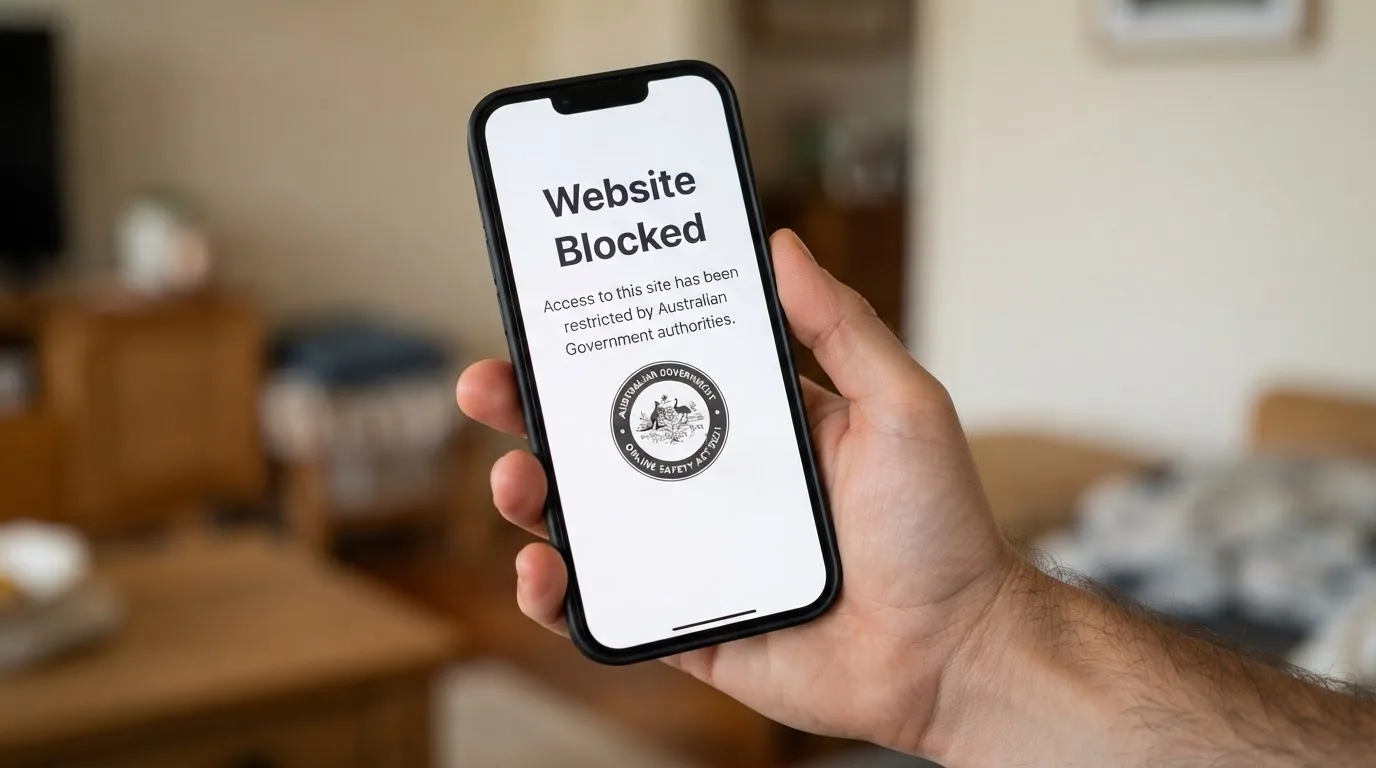
The Interactive Gambling Act 2001, tightened by the Interactive Gambling Amendment Act 2017, makes it an offence to provide online casino games, online pokies or in-play betting to a person physically in Australia. No state or territory licenses online casino games; what is licensable is wagering on races and sporting events placed before the event, lotteries, and keno. The distinction is categorical. A sportsbook licensed in the Northern Territory can lawfully take a pre-match bet from a customer in Sydney; the same operator cannot lawfully offer that customer a spin of keno, a hand of blackjack or a turn of roulette. The IGA targets the provider, not the player, so an Australian punter using an offshore site is not personally at risk of prosecution. The site itself is what the ACMA pursues.
The Northern Territory Racing and Wagering Commission regulates 52 of Australia’s online bookmakers, including Sportsbet, Bet365 and Ladbrokes, licensed in the Territory for tax reasons. The commission has no full-time staff and meets once a month in Darwin, an arrangement the ABC has reported the NT government has moved to reform. The relevant point for keno is narrower: NT licences cover wagering, not casino games. A Curacao-licensed casino brand showing a Northern Territory “wagering” badge on its homepage is licensed to take a horse racing bet, not to deal a keno draw to an Australian customer.
Payment Rules for Licensed Australian Wagering
Since 11 June 2024, credit cards, credit-related products and digital currency have been banned as payment for licensed online wagering in Australia, with penalties up to A$247,500 for operators. The legal deposit routes for a licensed Australian wagering account are debit card, bank transfer, PayID/Osko and BPAY. A keno site asking for a credit card or a Bitcoin deposit is, by definition, not operating inside the Australian rules. The same payment ban does not bind an offshore casino, which is why those sites still advertise crypto deposits to Australian-facing audiences. The payment method a site accepts is a tell of where it sits relative to the IGA.
The 2026 Reform Package
The Interactive Gambling Amendment (Gambling Reform) Bill 2026 passed Parliament on 19 August 2026; its advertising and inducement measures commence on 1 January 2027. The bill is law with a start date, not yet in force on a 2026 page. Its principal effect, once commencement arrives, will be to constrain the kind of bonus and promotional messaging offshore operators use to reach Australian customers through affiliate channels.
The Paytable Behind the Enforcement: ACMA’s Blocking Record
The ACMA’s enforcement tool of choice is the formal warning, followed by a request to Australian internet service providers to block the named domain at the DNS level. According to the ACMA as reported in June 2026, a total of 1,751 illegal gambling and affiliate marketing websites had been blocked since the first blocking request in November 2019. The same reporting cites more than 230 unlicensed gambling services having left the Australian market since enforcement was strengthened in 2017. H2 Gambling Capital’s 2025 report estimates that Australians lose about A$3.9 billion a year to illegal gambling sites, and that the share of gambling going through legal channels fell from 74% in 2021 to 64%.
A June 2026 blocking round alone added 12 sites: 7Signs, ChromaBet, Donbet, Duospin, Freshbet, Slots Gem, Jacks Club, Lucky Start, Pointsbetz, Spinrise, Vinyl Casino and Wildsino. The composition matters. The list is not a stable of repeat-offender brand names; it is a churn. Sites are blocked, the operators rebrand or rotate to a fresh domain, and the next round catches the new names. The blocking rate the ACMA sustains, calculated against the elapsed time since the first blocking request in November 2019, is the meaningful figure for an Australian reader trying to gauge the regulator’s pace.
The Blocking Rate as a Band
Between November 2019 and June 2026, roughly 79 months, the ACMA’s blocking requests cleared 1,751 sites. The arithmetic yields a central figure close to 22 sites blocked per month, but the figure flatters the regulator because the early years carried far fewer requests and the last two years carried most of the total. A reader looking at the pace as a steady rate sees something the data does not support. The honest description is a band: roughly 20 to 25 sites per month over the last two reporting years, against a long-run average dragged down by the slower first half of the period. The exact monthly figure for any single month varies by an order of magnitude depending on which round the ACMA announces, which is why a single number is the wrong way to state the result.
Formal Warnings: The ACMA’s First Step
A formal warning is the ACMA’s step before a blocking request. Once issued, the named operator has a window to remove Australian-facing material before the ACMA asks ISPs to block the domain. The warnings cluster around the same handful of operating companies. In May 2022 the ACMA issued a formal warning to Dama N.V. covering six brands: Bambet, Dazard, Level Up, Rocketplay, Wild Tornado and Cobra Casinos. In March 2025 the ACMA warned Dama N.V. again over Woo Casino; in May 2025, again over Spirit Casino. In July 2025 the ACMA warned Bamboo Media over Ignition Casino and Consolutetish S.R.L. over National Casino and Bizzo Casino, with Bizzo Casino having already been the subject of a 2022 formal warning to TechSolutions (CY) Group Limited and TechSolutions Group N.V. In February 2025 the ACMA warned EOD Code SRL over Instant Casino; in April 2025, Sterplay Holding Ltd over Casino Intense; in March 2026, Pulsup Ltd over RocketPlay; in April 2026, Ryker B.V. over Jackbit and CasinOK; and earlier, in September 2022, Hollycorn N.V. over its Sky Crown and Blue Leo services.
The pattern is what a reader should take from the list. The same operator company surfaces again under a different brand, and the ACMA names the operator, not just the front-of-house website. The brand on the homepage is replaceable; the corporate registration is the lever the regulator pulls.
What Stays Lawful: Keno Under State and Territory Regulation
Australian keno is one of the gambling products that can be offered legally through state- or territory-licensed operators, and the regulatory framework is mature. Keno (QLD) Pty Ltd is the exclusive keno licensee in Queensland, regulated by the state’s Office of Liquor and Gaming Regulation under the Keno Act 1996, the Keno Regulation 2007 and the Keno Rule 2010. New South Wales granted its keno operator and product licence a 28-year extension to 1 April 2050, with the joint licensees agreeing to pay the state more than A$230 million, including a A$25 million upfront fee plus annual licence duty. Victoria issued 20-year keno licences from 15 April 2022 under the Gambling Regulation Act 2003 to Keno (VIC) Pty Ltd and Lottoland Australia Pty Ltd, regulated by the Victorian Gambling and Casino Control Commission, with Lottoland Australia renamed to KenoGo Pty Ltd on 9 September 2025.
Three consequences follow. Keno at an Australian pub, club or land-based casino is a regulated product with a printed paytable and a defined edge, not a marketing promise. The keno lounge is part of the licensed venue’s gaming floor, with the same harm-minimisation requirements that apply to the pokies beside it. And the lawful channel is what a reader in Australia can actually use, which is why the ACMA’s enforcement record matters as much as the law itself.
Keno at the Land-Based Casino
Crown Melbourne’s gaming floor offers keno alongside its baccarat tables, with the keno draw conducted in the licensed venue under VGCCC oversight. The Victorian Gambling and Casino Control Commission replaced the VCGLR as Victoria’s casino regulator on 1 July 2022 and approves the rules of any table game before it is introduced. The same approval framework applies to baccarat variants such as Traditional Baccarat, Crown Baccarat and 2 to 1 Baccarat, which the regulator has cleared for the Melbourne casino. A reader looking at a land-based keno lounge in Crown Melbourne or at a Star Sydney table sees a product whose rules the state regulator has signed off on and whose edge is disclosed in the venue’s printed material, which is exactly the contrast with an offshore instant-keno title where the paytable is whatever the operator loaded into the random number generator.
The Offshore Side: What an ACMA-Warned Site Actually Offers
The brands the ACMA has acted against share a common feature. Each displays a licence badge from a jurisdiction that does not license online casino games for Australian customers (Curaçao, Anjouan, Costa Rica), and each has been the subject of a formal warning over offering prohibited services to people in Australia. The licences those badges refer to are real, in the sense that the regulator named on the badge exists and has issued a registration number. They are not Australian licences, because no Australian licence for online casino games exists. The site accepting Australian deposits and offering keno, pokies or table games is, on the ACMA’s record, in breach of the IGA. The brand on the homepage is one layer of the operation; the corporate registration the ACMA names is another.
The audit trail matters for one practical reason. An Australian punter whose withdrawal is refused by an offshore casino has no Australian complaints body to approach. The ACMA’s enforcement tool is blocking and formal warning; it does not adjudicate individual disputes. A balance sitting on a blocked site is, in practical terms, a balance the player cannot access. That is the consequence the ACMA’s blocking record is the visible signal of.
Brands the ACMA Has Warned
The table below covers the eleven offshore brands the ACMA has named in formal warnings, in the order they appear in the regulator’s published record. The brand column is the public-facing site; the operator column is the corporate registration the ACMA named when it issued the warning. The subject support column reflects whether the operator’s own public material confirms keno as part of the site’s catalogue.
| Brand | ACMA action and date | Operator named by the ACMA | Subject support |
|---|---|---|---|
| RocketPlay | Formal warning, March 2026 (earlier to Dama N.V., May 2022) | Pulsup Ltd | — |
| Level Up Casino | Formal warning, May 2022 | Dama N.V. | Listed by BGaming as a keno-carrying brand |
| Woo Casino | Formal warning, March 2025 | Dama N.V. | — |
| Spirit Casino | Formal warning, May 2025 | Dama N.V. | — |
| National Casino | Formal warning, July 2025 | Consolutetish S.R.L. | Listed in public references as carrying keno |
| Bizzo Casino | Formal warning, July 2025 (earlier to TechSolutions, 2022) | Consolutetish S.R.L. | — |
| Ignition Casino | Formal warning, July 2025 | Bamboo Media | — |
| Instant Casino | Formal warning, February 2025 | EOD Code SRL | — |
| Jackbit | Formal warning, April 2026 | Ryker B.V. | — |
| Casino Intense | Formal warning, April 2025 | Sterplay Holding Ltd | Listed in Australian media and ACMA material |
| Sky Crown | Formal warning, September 2022 | Hollycorn N.V. | — |
The pattern in the operator column is the lesson. Dama N.V. surfaces four times across the eleven entries; Consolutetish S.R.L. twice. The ACMA names the corporate shell, not just the brand skin, which means a brand the ACMA has not yet named under a different corporate registration can still be the same operation.
RocketPlay
RocketPlay received a formal warning in March 2026 over the RocketPlay site, with the ACMA naming Pulsup Ltd as the operator. The same brand had earlier drawn a May 2022 warning to Dama N.V. as part of a six-brand cluster. The site’s keno offering is not separately documented in the ACMA’s warning text, and the operator’s own material does not confirm keno as part of the catalogue. For an Australian reader, the ACMA’s reasoning for issuing the warning applies regardless of which game the player logs in to play; the prohibition is on offering online casino games to Australians, keno included. The mismatch between the site’s promotional positioning and its actual licence posture is the part the player cannot verify from the homepage.
Level Up Casino
Level Up Casino received its formal warning in May 2022 as one of the six Dama N.V. brands the ACMA named together. BGaming, a software provider whose games include keno variants, lists Level Up Casino among the brands carrying its content. The brand’s status as a Dama N.V. property is what matters for the ACMA’s framework: Dama N.V. has been the subject of multiple warnings since 2022 across several brand names, which is the recurring operator pattern the regulator’s record documents. An Australian reader looking at Level Up Casino as a keno option faces the same IGA situation as the rest of the table.
Woo Casino
Woo Casino received a formal warning in March 2025 with Dama N.V. named as the operator. No separate keno documentation is carried in the ACMA’s warning text, and the brand’s own public material does not confirm a keno-specific offering. The brand sits inside the Dama N.V. cluster, the same operator that drew warnings in May 2022, March 2025 and May 2025, and the player-facing implication is the one already noted: the IGA prohibition applies across the operator’s brands.
Spirit Casino
Spirit Casino received a formal warning in May 2025 with Dama N.V. again named as the operator. The brand is the most recent Dama N.V. warning in the ACMA’s published record, and the operator’s continuing pattern of warnings is the regulator’s signal that the formal-warning step has not yet changed the operator’s behaviour toward Australian customers. As with Woo Casino, no separate keno documentation is carried; the brand’s status is the data point.
National Casino
National Casino received a formal warning in July 2025 with Consolutetish S.R.L. named as the operator. Public references list the brand as carrying keno among its table and instant games, which is the only keno-specific signal on the table. The Consolutetish S.R.L. cluster also includes Bizzo Casino, the same operator company drawing two warnings in the same July 2025 round.
Bizzo Casino
Bizzo Casino received a formal warning in July 2025 with Consolutetish S.R.L. named as the operator, having already drawn a 2022 warning to TechSolutions (CY) Group Limited and TechSolutions Group N.V. Two warning rounds separated by three years, against two distinct corporate shells tied to the same brand, is the most direct example of the rebranding pattern the ACMA’s enforcement record documents. The brand’s own material does not separately confirm a keno offering; what the ACMA’s record confirms is that the operator behind the brand has been the subject of warnings across more than one registration.
Ignition Casino
Ignition Casino received a formal warning in July 2025 with Bamboo Media named as the operator. No separate keno documentation is carried in the warning text. The brand sits inside the July 2025 warning round alongside National Casino and Bizzo Casino, three separate brands in a single round, two of which trace to Consolutetish S.R.L. and one to Bamboo Media.
Instant Casino
Instant Casino received a formal warning in February 2025 with EOD Code SRL named as the operator. The brand’s own public material does not confirm a keno-specific offering. The February 2025 timing is the earliest formal warning among the entries on this list, and the brand’s status under the IGA is the same as the rest.
Jackbit
Jackbit received a formal warning in April 2026 with Ryker B.V. named as the operator, in the same round as CasinOK. Jackbit positions itself as a cryptocurrency-friendly casino, which is the segment the cluster’s payment-method signal points to. The ACMA’s warning names the operator, not the payment rails; the IGA prohibition applies regardless of whether the deposit route is a credit card, a debit card, or a Bitcoin transfer. For an Australian reader specifically looking at crypto keno options, the Jackbit entry is the most directly relevant in the table.
Casino Intense
Casino Intense received a formal warning in April 2025 with Sterplay Holding Ltd named as the operator. The brand is referenced in Australian media coverage and in ACMA material as part of the formal-warning cluster for that month. The brand’s keno status follows the same pattern as the others: no separate keno documentation is carried, and the ACMA’s action is what the record holds.
Sky Crown
Sky Crown received a formal warning in September 2022 with Hollycorn N.V. named as the operator, in the same round as Blue Leo casino. The 2022 timing makes Sky Crown one of the earlier entries on the list, and the Hollycorn N.V. cluster also includes Blue Leo, a sibling brand the regulator named together. No separate keno documentation is carried in the warning text.
Responsible Play: The Tools That Bind the Lawful Side
The Australian responsible-gambling framework for keno runs through the venues that offer it and through the state and territory regulators who license those venues, with three national tools layered on top. BetStop, the National Self-Exclusion Register, has been live since August 2023 and binds every Australian-licensed online and phone wagering service. A punter who registers with BetStop is excluded from every licensed bookmaker at once, which is the design point: a single registration that covers the whole licensed channel. An offshore casino is not connected to BetStop, and a self-excluded punter can still reach an offshore site, which is why BetStop is described as covering the lawful side and only the lawful side.
The National Gambling Helpline, 1800 858 858, is free, available 24/7 and offers chat at Gambling Help Online. The helpline is the front door for any Australian, licensed-channel or offshore, who wants support with a gambling problem. State-level support services (Gambling Help NSW, Gambler’s Help Victoria, Gambling Help Queensland and the equivalents in the other jurisdictions) provide the in-person and ongoing counselling underneath the national helpline.
The gap is operational, not rhetorical. A punter who has registered with BetStop and is using an offshore site is using a channel the registration does not reach. The helpline does, which is why the responsible-play framing on the lawful side and on the offshore side is not the same.
Cryptocurrency and Keno: The Crypto-Specific Question
The crypto-specific question for an Australian reader is whether a Bitcoin deposit unlocks a keno draw at an offshore site. The practical answer is yes, in the sense that several offshore casinos (Jackbit among the ACMA-warned set) accept Bitcoin and offer keno. The legal answer is that the deposit method does not change the IGA status of the service being supplied. Bitcoin does not exempt the operator from the prohibition on offering online casino games to Australians, and the ACMA’s formal warnings and blocking requests apply to the site regardless of which wallet funded the deposit.
Since 11 June 2024, credit cards, credit-related products and digital currency have been banned as payment for licensed online wagering in Australia, with penalties up to A$247,500 for operators. The ban applies to the licensed channel. An Australian punter using Bitcoin at an offshore casino is not personally subject to that penalty; the offshore operator is also not subject to it, because the operator is outside the Australian rules. The ban exists because the government wanted to remove the easiest friction-free path from the licensed wagering side, and the friction it removed is exactly the path the offshore side still offers.
The audit-trail consequence of a Bitcoin deposit is what an Australian punter should weigh. A credit-card deposit through a licensed Australian bookmaker carries the consumer protections of the Australian Financial Complaints Authority and the licence conditions the bookmaker operates under. A Bitcoin deposit to an offshore casino carries neither. If the site refuses a withdrawal, the punter has no Australian body to approach, no AFCA case to file, and no balance protection if the ACMA blocks the domain.
Tax, Withdrawals and the Practical Edge Cases
Gambling winnings of a recreational Australian player are not assessable income under section 6-5 of the ITAA 1997, and losses are not deductible, unless the person carries on a business of gambling. The ATO’s position is the model, not the rule of thumb, and any Australian whose gambling activity crosses the line into something the ATO might treat as a business should check with a tax adviser rather than rely on the page-level summary.
The withdrawal edge case for an offshore site is structural. A site the ACMA has blocked is, by definition, no longer reachable through Australian ISPs. A balance sitting on that site at the moment of blocking is a balance the player cannot withdraw through the blocked domain. Some operators maintain mirror domains that are not yet on the ACMA’s blocking list, which is the rebranding pattern the regulator’s enforcement record documents. A punter who has deposited with an offshore site and wants to keep access to the balance is, in practical terms, dependent on the operator maintaining a reachable domain. That is the practical meaning of an ACMA blocking round for a player who has funds in play.
What an Australian Reader Can Actually Do
The honest shortlist for an Australian reader who wants to play keno in 2026 runs through three lawful channels: keno at a licensed pub or club in any state or territory, keno at a land-based casino in the jurisdictions that license one, and licensed online wagering accounts that are licensable under the IGA. Online keno at a casino site, whatever licence the site displays, is a prohibited service on the ACMA’s record. The page is not a recommendation; it is what the law and the regulator’s enforcement history make available.
The Operator Pattern the ACMA Record Documents
Eleven formal warnings, distributed across at least seven distinct operator companies, is the surface of the ACMA’s record for online keno and casino brands. The depth is what the same record shows beneath that surface. Dama N.V. appears four times (Level Up Casino, Woo Casino, Spirit Casino, plus the 2022 six-brand cluster that included Rocketplay). Consolutetish S.R.L. appears twice (National Casino, Bizzo Casino). Hollycorn N.V. appears once (Sky Crown), with Blue Leo as a sibling brand in the same warning. Bamboo Media, EOD Code SRL, Ryker B.V. and Sterplay Holding Ltd each appear once. The recurrence at the corporate level is the regulator’s working evidence that the formal-warning step has not, on its own, changed the behaviour of the operator companies named.
For a reader comparing two offshore brands on the list, the corporate-shell comparison is the more meaningful comparison. Two brands drawing warnings under different operator companies are two separate enforcement tracks; two brands drawing warnings under the same operator company are part of one enforcement track the regulator has been pursuing across rebrandings.
What a 2026 Reader Should Take From the Record
Three things follow from the ACMA’s blocking record and the formal-warning register. The first is that the IGA prohibition is being enforced, with 1,751 sites blocked since November 2019 and the pace accelerating through the most recent reporting rounds. The second is that offshore operators treat formal warnings as a cost of doing business rather than a reason to leave the Australian market, evidenced by the same operator companies drawing multiple warnings across multiple brand names. The third is that the lawful channel, licensed keno at pubs, clubs and land-based casinos, is the only channel where the protections an Australian punter expects (BetStop, AFCA-equivalent complaints routes, the responsible-gambling obligations of a state-licensed venue) actually apply.
A reader who chooses the offshore channel is choosing a service the regulator has named as prohibited, a payment method the licensed channel cannot use, and a complaints path that does not reach Australia. A reader who chooses the lawful channel is choosing a product with a printed paytable, a state regulator’s approval, and the harm-minimisation framework of a licensed venue. The page is a comparison of what is available; the choice is the reader’s.
Frequently Asked Questions
What house edge does keno typically carry compared with other casino games?
Keno carries the widest house edge of the standard casino games. Wizard of Odds places it between 25% and 29%, and Wikipedia’s keno article reports online edges from under 4% to over 35% depending on the title, with in-person casino keno between 20% and 40%. By comparison, baccarat runs 1.06% on the Banker bet, blackjack about 0.28% under liberal Las Vegas Strip rules with optimal strategy, and most slots sit below keno’s range. The wide edge spread is the game’s defining feature.
Is keno available at licensed pubs and clubs in Australia, not just casinos?
Yes. Keno is licensed as a separate product under state and territory regulation, distinct from casino games and from wagering. Keno (QLD) Pty Ltd holds the exclusive Queensland licence under the Keno Act 1996. NSW has a long-term operator and product licence running to 1 April 2050. Victoria issued 20-year keno licences from 15 April 2022 to Keno (VIC) Pty Ltd and Lottoland Australia Pty Ltd (renamed KenoGo Pty Ltd on 9 September 2025). The pub and club keno lounge is the most common place Australians encounter the game.
Is it legal for an online casino to offer keno to players in Australia?
No. The Interactive Gambling Act 2001, as tightened by the Interactive Gambling Amendment Act 2017, prohibits offering online casino games (keno included) to a person physically in Australia, and no Australian jurisdiction issues a licence for it. The ACMA enforces the prohibition through formal warnings and through requests to Australian ISPs to block offending domains. The individual player is not prosecuted; the offshore operator is the target of the law.
How does live keno differ from an automated keno draw?
Live keno draws at fixed intervals from a physical ball machine, with the paytable printed on the venue’s ticket, and is sold as a between-races diversion at pubs, clubs and casino gaming floors. Automated online keno draws on demand using a random number generator, with the paytable set by the operator and the prize ladder rebalanced per title. The pacing difference (every few minutes versus on demand) shows up in how long a bankroll lasts as much as the edge itself does.
Can keno be played with a Bitcoin deposit at an offshore site?
Practically, yes. Several offshore casinos accept Bitcoin and offer keno variants, Jackbit among them on the ACMA’s formal-warning list. Legally, the deposit method does not change the IGA status of the service; the prohibition on offering online casino games to Australians applies regardless of the payment rail. Since 11 June 2024, digital currency is also banned as payment for licensed Australian online wagering, with penalties up to A$247,500, but the ban applies to the licensed side and does not bind the offshore operator.
Why do keno returns vary so widely between venues?
Two structural reasons. First, the paytable varies: a 5-of-6 hit on one title may pay a near-miss return, while another title treats it as a meaningful payout, and the difference moves the house edge by 10 percentage points or more. Second, the draw medium varies: live keno at a land-based venue uses a fixed paytable printed on the ticket, while online instant keno titles rebalance the prize ladder per release. A player who reads the printed paytable at a licensed venue sees a known edge; a player at an offshore site sees whatever the operator loaded into the random number generator.
Written by the editors at Casino Live Dealer Hub.