International casinos serving Australian players in 2026: a reader’s frame
 Available in US
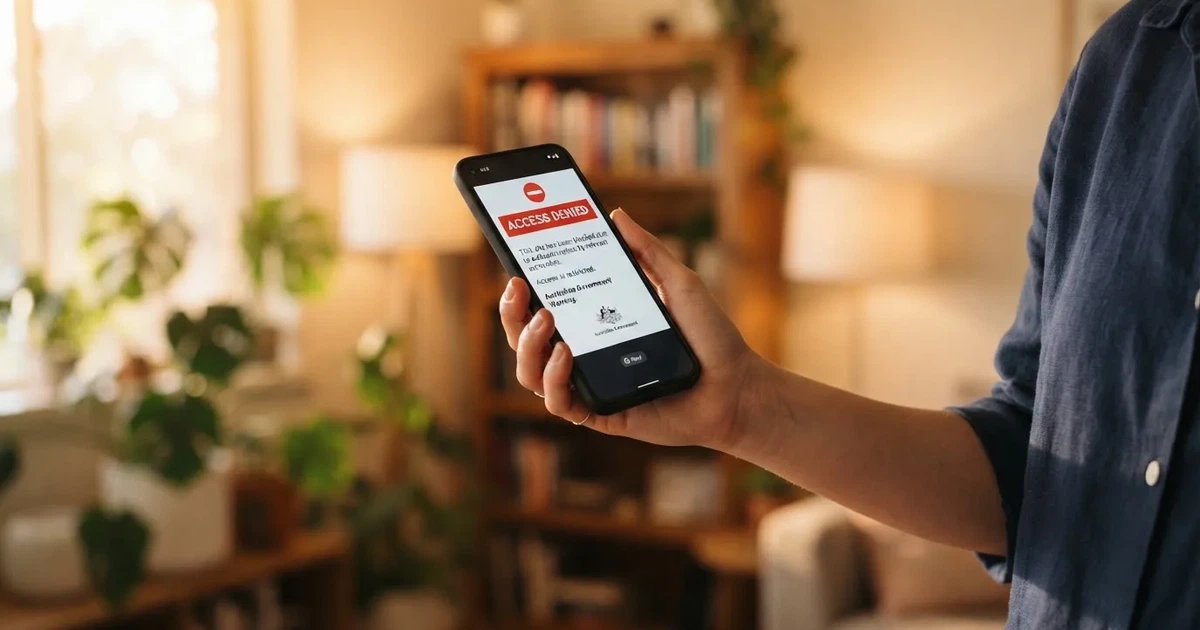
The phrase “international casino” promises something it cannot deliver to a reader sitting in Australia. Every online casino that brands itself as “international” — licensed in Curaçao, Malta, Anjouan, Tobique, the Isle of Man or Kahnawake — is offering a product the Interactive Gambling Act 2001 prohibits a provider from supplying to anyone physically in Australia. The licence the site displays is real. What it does not do is authorise the site to take Australian players.
This page works through that gap honestly. It sets out what “international casino” means as a category, what the IGA and its 2017 and 2023 amendments actually prohibit, how the Australian Communications and Media Authority enforces that prohibition through formal warnings and ISP-level blocking, and what the responsible-gambling tools Australians can actually use — BetStop, the bank-level gambling blocks, the National Gambling Helpline. It then lines up eleven brands the ACMA itself has issued formal warnings over, side by side, with a closing read on what each brand is for a reader who finds their way to it regardless.
It does not rank those brands as places to play. They cannot lawfully be played at from Australia. They are listed because the regulator has named them, and the gap between what the marketing copy promises and what Australian law actually permits is the entire subject of the page.
Current as of 25 September 2026 · verified against the Australian Communications and Media Authority’s register of formal warnings and the Interactive Gambling Act 2001 as it stands after the 2017 and 2023 amendments.
Table of Contents
Fundamentals of “international casino” in the Australian market
An “international casino” is, in plain language, an online casino licensed somewhere other than Australia. The label is the operator’s, not a legal category. An Australian reader who lands on one of these sites will see the offshore licence authority in the footer — Curaçao Gaming Control Board, Malta Gaming Authority, Kahnawake Gaming Commission, Anjouan, Tobique Gaming Commission — and will usually see “we do not target Australian residents” buried somewhere in the terms of service. The licence covers the operator’s right to run a casino in the jurisdiction that issued it. It does not, anywhere in the world, entitle the operator to take bets from a person who is sitting in Sydney.

Why the term exists at all is mostly a marketing distinction. The category has been built around what it is not: it is not a state-licensed Australian wagering provider. Because no Australian state or territory issues a licence for online casino games or online pokies, the products an Australian reader is searching for — roulette, blackjack, baccarat, online slots, live-dealer tables, craps, video poker — have no onshore equivalent at all. The search for an “international casino” is, in effect, a search for the only version of the product that exists, even though that version is unlawful to supply here.
That is the asymmetry the term papers over. An Australian reader who types “international casino” or “online casino Australia” into a search engine is looking for a product that is, in their own country, prohibited. The search results they get back are pages ranking offshore sites whose offer the law specifically rules out. The sites themselves tend to be careful with their wording — “available in your region”, “AUD accepted”, “Bitcoin welcome”, “no verification” — and rarely name the country they have decided not to mention. The marketing works because the prohibition is invisible to the player, not because the law has been waived.
The offshore operators running these sites are concentrated in three corporate patterns. The first is the white-label platform: a Curaçao-licensed operator lets dozens of “skins” run on its licence, each with its own brand name and front end, sharing the same cashier and the same KYC pipeline. Sites like the ones on the ACMA’s warning list — RocketPlay, Level Up, Woo Casino, Spirit Casino, Bizzo, National Casino, Sky Crown, Blue Leo, Casino Intense — all sit inside arrangements of this kind, sometimes several at a time on the same licence. The second is the smaller licensed operation, often Anjouan or Tobique, where the licence has been picked specifically because the regulator is cheaper and faster than the older ones. The third is the no-licence operation, run as a crypto-only product, sometimes with a freshly incorporated shell company as front.
The mechanics for an Australian reader who signs up at one of these sites look familiar enough. They register with an email and a password, deposit in Australian dollars or in a cryptocurrency, claim a deposit-match offer with a wagering requirement attached, and play slots or live casino through a browser or a mobile app. The “welcome package” is the product’s centre of gravity: a 100 per cent match on the first deposit, free spins on a featured slot, a multi-stage structure across the first three or four deposits. The wagering requirements that come with those offers are typically in the 35x to 50x range of the bonus amount, with maximum bet caps while the bonus is active, and a long list of games that either don’t count or count at a reduced rate toward clearing. None of that is shown on the marketing page; all of it is in the bonus terms the player punter rarely reads before clicking accept.
What an Australian reader does not see, when they sign up, is the consumer-protection infrastructure they would have on a domestically regulated site. There is no local complaints body that will order a payout. There is no Australian regulator to appeal to. There is no requirement that the operator segregate player funds from operating capital. The only constraint on the operator’s behaviour is the licence in its own jurisdiction — and that licence is enforced, if at all, by a regulator in another country whose interest in a complaint from a Sydney resident is, in practice, limited. The brand itself is usually registered to a company in Curaçao or Cyprus. The people behind it are not findable from Australia. The moment the operator decides to delay or refuse a withdrawal, the punter has whatever dispute resolution the offshore licence provides, and nothing else.
The cleanest way to read the category is therefore this: the search term the reader typed does describe a real product class — a casino licensed outside Australia, accepting players from several countries, paid in fiat or crypto — but the product class is something Australian law has decided the operator should not be selling here. The next section is about how that prohibition works, and what the regulator has actually done to enforce it.
The mechanics for the player, put together, are a familiar package with one piece missing. The bonus, the cashier, the games, the mobile app — all of it works. The complaints body, the segregated funds, the local ombudsman — none of it does. A reader weighing whether to sign up is weighing, in effect, whether the half of the experience that works is worth the half that does not. The regulator’s view is that the half that does not work is the half that matters; the operator’s marketing is built around the half that does. The page from here on follows the regulator’s view, because the regulator is the one with the law behind it.
Prohibition under the IGA and how the ACMA acts on it
The Interactive Gambling Act 2001 is the central piece of legislation. As originally drafted it targeted interactive gambling services supplied to Australians. The Interactive Gambling Amendment Act 2017 strengthened it considerably by closing a category known as “click-to-pay” warnings — informal notices that did not actually prevent the supply of prohibited services — and replacing them with formal infringement notices, civil penalties and the power to direct Australian internet service providers to block illegal sites at the network level. The 2023 amendments added the prohibition on credit cards and credit-related products as a payment method for licensed online wagering, with effect from 11 June 2024. The Interactive Gambling Amendment (Gambling Reform) Bill 2026 passed Parliament on 19 August 2026 and contains further advertising and inducement measures that commence on 1 January 2027 — law with a start date, not yet in force on a 2026 page.
What the Act prohibits, in plain terms, is the supply of online casino games — slot machines, or “pokies” as they are known in Australia, table games, live-dealer products — to a person who is physically in Australia. It also prohibits in-play betting on sports events, meaning placing a wager after the event has started. It does not prohibit wagering on sports and racing placed before the event begins, lotteries, or keno. Those are the products that can be, and are, licensed in Australia — the Northern Territory Racing and Wagering Commission regulates 52 online bookmakers, including the well-known Sportsbet, Bet365 and Ladbrokes, licenced there because of the Territory’s tax arrangements. The NTRWC runs on the equivalent of a part-time schedule: no full-time staff, a monthly meeting in Darwin.
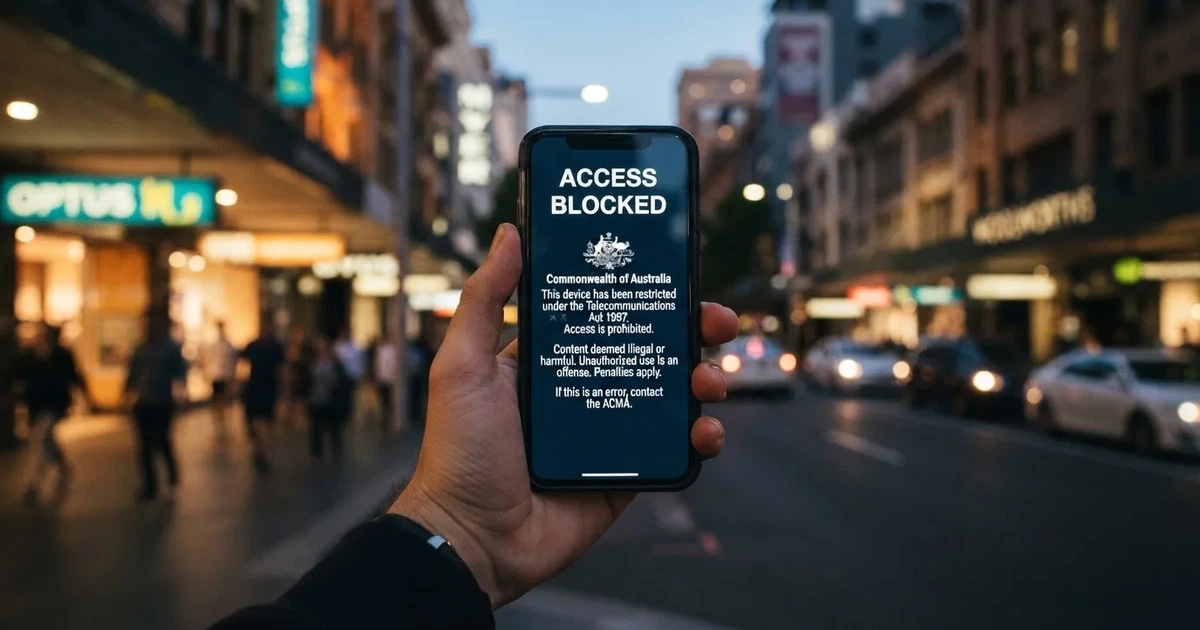
The ACMA is the regulator that enforces the prohibition. Its powers run in three escalating bands. First, it investigates complaints and intelligence reports about sites suspected of offering prohibited services to Australians. Second, it issues formal warnings, which are published on the ACMA’s website with the operator named and the brand named; a formal warning is not a prosecution, but it is a public record that an Australian regulator has found a contravention. Third, the ACMA can request that the Federal Court issue an injunction directing Australian ISPs to block the offending site at the DNS or IP level, taking it offline for Australian users.
The blocking record is the regulator’s most measurable action. As of the round reported on 26 June 2026, the ACMA had asked ISPs to block 1,751 illegal gambling and affiliate marketing websites since the first blocking request in November 2019. More than 230 unlicensed gambling services have left the Australian market since enforcement was strengthened in 2017 — some blocked, some voluntarily withdrawn after a formal warning. The June 2026 round alone added 12 more: 7Signs, ChromaBet, Donbet, Duospin, Freshbet, Slots Gem, Jacks Club, Lucky Start, Pointsbetz, Spinrise, Vinyl Casino and Wildsino. The blocking list is the regulator’s clearest expression of what the prohibition looks like in practice.
The blocking rate, run across the 79 months from November 2019 to June 2026, works out to a rough average of just over 22 sites blocked per month across that whole period — somewhere between 240 and 300 a year, depending on how the affiliate-marketing share is counted. Early rounds were small, sometimes only a handful of sites; some recent rounds have taken out 30 or more at a time. The honest reading is that the pace has accelerated as the regime has matured, and the figure also counts both gambling sites and affiliate marketing sites that promote them — a marketing site that does not itself take bets but pushes traffic toward sites that do. Treated as a band rather than a single number, the ACMA’s enforcement has averaged somewhere in the low-twenties per month across the period the register covers, with the affiliate-marketing share making up a meaningful chunk of the count.
The economic scale of what the ACMA is trying to suppress is large. H2 Gambling Capital’s 2025 estimate puts Australian losses to illegal gambling sites at around A$3.9 billion a year, and the share of gambling going through legal channels has fallen from 74 per cent in 2021 to 64 per cent. The trend is the wrong way around from a regulator’s point of view: enforcement has ratcheted up, the ACMA has named more operators and blocked more sites, and the money has still flowed offshore. The “legal” share dropping ten points in four years suggests the prohibition is real as a piece of law but is not, on its own, closing the market.
The credit-card ban that came into effect on 11 June 2024 was the 2023 amendment’s main practical bite, at least for the licensed side of the market. Australian-licensed online wagering services cannot accept payment by credit card or any other credit-related product, with penalties for operators up to A$247,500 for accepting one. The rule applies to credit-related digital wallets too: Apple Pay, Google Pay and Samsung Pay linked to a credit account are caught by the prohibition, because the underlying credit is what the rule reaches. It does not catch a debit card or a bank transfer through PayID or Osko — those remain the lawful deposit rails for licensed wagering. For an Australian reader using an unlicensed offshore site, the credit-card ban has no effect at all. The operator is outside the regime and accepts whatever payment method it likes, including cryptocurrency.
For a punter, the practical consequence of all this is double-edged. The provider is the one committing the offence — the Act targets the supply, not the customer — so an Australian reader who uses one of these sites is not personally at risk of prosecution. The other side is the absence of protection: an offshore site has no obligation to Australian consumer law, no requirement to keep player funds segregated, no local ombudsman, no regulator to complain to, and no guarantee that the operator will not simply close the account and keep the balance when a withdrawal is requested. If the operator is blocked at ISP level while a balance sits on the account, the punter has whatever is in effect against a company it can no longer reach. That is the calculation underneath every choice to use one of these sites, and it is the one the marketing copy never mentions.
Licensed Wagering vs. Prohibited Casino
| Product Type | Regulatory Status | Licensed Example |
|---|---|---|
| Sports Wagering | Permitted (pre-event) | Sportsbet |
| Online Casino | Prohibited | N/A |
| Racing Wagering | Permitted (pre-event) | Ladbrokes |
| Online Pokies | Prohibited | N/A |
| In-play Betting | Prohibited | N/A |
| Lotteries | Permitted | State-licensed operators |
Wellbeing: self-exclusion, bank blocks and the support that applies
The Australian player-protection framework is real and well-resourced on the licensed side of the market, and almost entirely absent on the other.

BetStop — the National Self-Exclusion Register — has been live since August 2023. A punter who registers with BetStop agrees to be excluded from every Australian-licensed online and phone wagering service, for a period they choose (three months, six months, or up to five years), and the licensed operators are bound to refuse their business. The system is enforced at the operator end: BetStop sends the registered list to each licensed provider, and the provider’s job is to keep the registered person out. The register is a useful, working piece of consumer protection — provided the punter stays on the licensed side of the market.
What BetStop does not do is reach an offshore casino. An international site has no connection to the register, no obligation to check it, and no Australian regulator supervising whether it does. The punter who has registered with BetStop and then opens an account at an offshore casino has self-excluded from one half of the market and remained exposed to the other. That gap is one of the most important things for an Australian reader considering an offshore site to understand: the self-exclusion tool that works for licensed wagering does not work here.
The National Gambling Helpline, 1800 858 858, is free, 24 hours a day, and confidential. It is the single most useful phone number an Australian reader can have to hand if gambling is becoming a problem, and it sits alongside Gambling Help Online, which offers web chat and email counselling. Both are funded by the Australian government and run by qualified counsellors. They are useful whether the gambling in question is on a licensed wagering site or an offshore casino — the helpline does not ask which side the punter is on, and the counsellors are experienced with both.
The third layer is bank-level gambling blocks. Australian banks have spent the last several years building them into their apps, and the technology has matured enough that they are worth knowing about. Westpac’s gambling block works at the card-network level: it refuses authorisation of any transaction registered under the merchant category code “Betting/Casino Gambling” on an eligible personal credit or debit card. The block is set in the Westpac app and applies to the card, not to the merchant, so a transaction at an offshore casino that runs through a payment processor which files under that MCC will be declined.
ANZ’s gambling block, activated in the ANZ app, goes one step further: it blocks gambling transactions made through a digital wallet like Apple Pay on an eligible card, not just transactions on the physical card. The ANZ block is harder to remove than to put on — turning it off requires a 48-hour cooling-off period, and the bank itself warns that not every gambling transaction will be blocked and that some non-gambling transactions may be blocked in error. Commonwealth Bank offers the equivalent, a gambling lock on eligible cards via the CommBank app, with the same caveat that the bank cannot guarantee every gambling-related purchase will be stopped.
The reason these blocks matter on this page is that they are the one piece of player-protection infrastructure that may actually fire against an offshore casino. A licensed wagering site, after 11 June 2024, will not even let the punter reach a credit card; an offshore site accepts almost any payment method. A gambling block on a debit card is the closest thing an Australian punter has to a technical barrier between themselves and an offshore casino’s cashier. The banks themselves, in both ANZ’s and CBA’s published wording, are careful to point out that it is not a guarantee. The blocks catch most gambling transactions; they do not catch all of them.
The architecture behind those blocks is worth understanding. Card transactions are routed through merchant category codes — four-digit numbers that classify the type of business. “Betting/Casino Gambling” is one such MCC. When a bank enables a gambling block, it instructs its card processor to decline any transaction that files under that MCC, regardless of the merchant’s actual business name. An offshore casino that processes payments through an aggregator which files under the gambling MCC will be caught; one that uses a payment processor filing under a different code will not. The banks cannot publish a list of which offshore sites file under which code, because the operators change their processors regularly. The blocks are a sieve, not a wall.
None of these tools — BetStop, the helpline, the bank blocks — is a substitute for the basic fact that the products an Australian reader is searching for are prohibited for supply here. They reduce the harm when someone uses one anyway, and they provide a route back for someone who wants to stop. They do not make the offshore site legal to use.
For an Australian reader weighing whether to use one of these sites, the honest accounting is this. The licensed side of the market carries every protection listed above — BetStop, the bank block, the helpline, the local regulator, the segregated funds, the ombudsman. The offshore side of the market carries none of them. The marketing on the offshore side is louder because the protections are quieter; the marketing on the licensed side is quieter because the protections are louder. The reader’s choice is not between two products but between two regulatory environments, and only one of them extends to Australians.
Landscape of brands the ACMA has acted against
The table below lists eleven offshore casino brands the ACMA has named in formal warnings or blocking requests. It is not a ranking and it is not a recommendation. The brands are listed because the regulator has acted against each of them; their inclusion here is an editorial decision to show the shape of the regulator’s record rather than to suggest where an Australian reader should play.
The column marked “Australian-side support” names the third-party listings in which the brand has appeared — Gambling Insider’s affiliate catalogue, the ACMA’s own warning register, BetStop’s register of providers, AUSTRAC’s reporting guidance, the PayID and EcoPayz payment-services directories. For brands where the research did not surface such a listing, the cell carries an em dash.
| Brand | ACMA action and date | Operator named by the ACMA | Australian-side support |
|---|---|---|---|
| RocketPlay | Formal warning, March 2026 (earlier Dama N.V., May 2022) | Pulsup Ltd (RocketPlay) | Gambling Insider listing |
| Level Up Casino | Formal warning, May 2022 | Dama N.V. | Westpac gambling-block guidance |
| Woo Casino | Formal warning, March 2025 | Dama N.V. | — |
| Spirit Casino | Formal warning, May 2025 | Dama N.V. | — |
| National Casino | Formal warning, July 2025 (earlier TechSolutions, 2022) | Consolutetish S.R.L. | ACMA register, AUSTRAC guidance, BetStop register |
| Bizzo Casino | Formal warning, July 2025 (earlier TechSolutions, 2022) | Consolutetish S.R.L. | Gambling Insider listing |
| Ignition Casino | Formal warning, July 2025 | Bamboo Media | — |
| Instant Casino | Formal warning, February 2025 | EOD Code SRL | EcoPayz directory, PayID directory |
| Jackbit | Formal warning, April 2026 | Ryker B.V. | — |
| Casino Intense | Formal warning, April 2025 | Sterplay Holding Ltd | AUSTRAC guidance, BetStop register, Gambling Insider listing |
| Sky Crown | Formal warning, September 2022 | Hollycorn N.V. | — |
The brand-by-brand write-ups below work through each of these in turn. The format is the same — what the ACMA named, when, what other regulator action the brand has picked up, and a closing read on what the brand is, given that an Australian reader should not be using it. None of the write-ups ends with a verdict that recommends the brand as a place to play.
RocketPlay — the brand the ACMA has warned twice
RocketPlay is the only brand on this list with two formal warnings to its name. The first came in May 2022, when the ACMA issued a warning to Dama N.V. covering six brands: Bambet, Dazard, Level Up, Rocketplay, Wild Tornado and Cobra Casinos. The second came in March 2026, this time addressed to Pulsup Ltd over Rocketplay.com.au specifically — the ACMA’s standard practice when an operator has been re-launched under a new corporate wrapper. Gambling Insider’s affiliate catalogue lists the brand, which is the only Australian-side listing the research surfaced.
For an Australian reader, the relevant fact is not the licence RocketPlay displays but the regulator’s view of it. A brand that has been the subject of two formal warnings, four years apart, under two different operating companies, is a brand the ACMA has not been able to remove from the Australian-facing market by warning alone. That is the practical limit of what a formal warning does, and RocketPlay is the cleanest illustration on this list of how the limit operates in practice.
Level Up Casino — one of the 2022 Dama N.V. six
Level Up was one of the six brands named in the ACMA’s May 2022 formal warning to Dama N.V. The Westpac gambling-block guidance references Level Up Casino by name as an example of the kind of merchant the card-level block is designed to catch — useful evidence that the brand was, at the time the guidance was drafted, processing transactions against Australian debit cards under a betting/casino MCC.
The 2022 warning is now four years old. The brand is still operating; the licence is still Curaçao; the ACMA has not had to issue a second warning specifically against Level Up. That is not the same as saying Level Up has stopped accepting Australian players — it is the same as saying the regulator has not had to go through the warning process again. The age of the warning is therefore not a clearance. It is the absence of a second finding, which is a different thing from a finding that no contravention is occurring.
Woo Casino — a March 2025 Dama N.V. warning
The ACMA issued a further formal warning to Dama N.V. over Woo Casino in March 2025 — the second warning to Dama N.V. in three years, the first having covered the 2022 six. The research surfaced no third-party listing for Woo Casino specifically. The brand sits inside the same corporate cluster as Level Up, Spirit Casino, and (until recently) the Rocketplay.com.au operation, and the regulator’s pattern is to warn the corporate wrapper rather than the brand alone.
The reason Woo Casino appears here is the recency of the warning. March 2025 is well into the post-2023 enforcement regime, with credit-card prohibition, ISP blocking, and the formal-warning regime all running at full pace. A brand the ACMA had to act against in that environment is a brand the regulator had not yet managed to keep out. The recency tells the reader that this brand was operating to a point at which the regulator had every tool available — and still had to name it.
Spirit Casino — a May 2025 Dama N.V. warning
Two months after Woo, the ACMA issued a formal warning to Dama N.V. over Spirit Casino in May 2025. The warning pattern across Dama N.V. is now dense: six brands in 2022, two more across 2025, Rocketplay separately in 2026 under a different corporate name. The regulator has, in effect, run out of warning rounds to give the operator under the original corporate structure and has begun warning the successor entities.
The brand itself, from an Australian reader’s perspective, is what the regulator has said it is. There is no third-party listing to soften that finding, and there is no operator on the Australian side that will give the brand a different reading. What Spirit Casino’s warning shows, alongside Woo Casino’s, is that the regulator’s patient file on Dama N.V. is not closing — each warning is another entry on a corporate wrapper that has been named in formal regulator action across multiple years.
National Casino — a 2025 warning and a 2022 earlier one
National Casino is the second brand with two ACMA touch-points. The earlier warning was issued in 2022 to TechSolutions (CY) Group Limited and TechSolutions Group N.V. The 2025 warning was issued to Consolutetish S.R.L. — a different corporate name, an indication that the brand has changed hands in the offshore structure. The 2025 warning names the brand explicitly alongside Bizzo Casino under the same Consolutetish wrapper.
The Australian-side support for National Casino is the broadest on this list: the ACMA’s own warning register, AUSTRAC’s transaction-reporting guidance, and BetStop’s provider register all reference the brand. AUSTRAC’s threshold-transaction-report rule applies only to physical cash transfers of A$10,000 or more and not to electronic bank transfers, but the brand’s appearance in AUSTRAC’s material is consistent with the regulator’s wider pattern of watching the cash flows. BetStop’s register, similarly, lists the brand because National Casino has, at some point, presented itself as connected to a self-exclusion framework that does not actually apply to offshore casinos. The width of the third-party footprint tells the reader this is one of the more visible brands in the marketing channels an Australian punter encounters — and the visibility is exactly why the regulator has acted twice.
Bizzo Casino — the same 2025 Consolutetish warning
Bizzo was named in the same July 2025 formal warning to Consolutetish S.R.L. as National Casino. The earlier 2022 warning was issued to TechSolutions (CY) Group Limited and TechSolutions Group N.V. — Bizzo is, alongside National Casino, one of the two brands the ACMA has now formally warned twice under different operators. The Gambling Insider affiliate catalogue lists the brand, which is consistent with the marketing footprint that got the operator noticed the first time.
The read for an Australian reader is the same as for National Casino, with one additional layer: the same brand, the same regulator, twice. Two warnings across two corporate wrappers is the regulator’s clearest signal that reincorporation has not put the brand outside its reach. The third-party listing only confirms that the brand is in the marketing channels an Australian punter is most likely to encounter when searching for these products.
Ignition Casino — a July 2025 Bamboo Media warning
The ACMA issued a formal warning to Bamboo Media over Ignition Casino in July 2025. Bamboo Media is a different operator wrapper from Dama N.V. and Consolutetish S.R.L., which suggests the brand has either been acquired or has run on a separate licence arrangement altogether. The research surfaced no third-party listing for Ignition Casino in the sources consulted.
The warning itself is straightforward: the brand has offered prohibited services to Australians, the regulator has said so, the record is published. There is no second warning in the file and no further detail on what product the regulator found. For an Australian reader, the only piece of information the regulator’s record adds is confirmation that the brand was operating to a point the ACMA had to act on — and that the operator behind it is one the regulator had not previously had on file. A single, narrowly-scoped warning is a thinner record than the twice-warned brands carry, but it is still a record.
Instant Casino — a February 2025 EOD Code SRL warning
The ACMA issued a formal warning to EOD Code SRL over Instant Casino in February 2025. Instant Casino’s third-party footprint is the most payment-oriented of any brand on this list: EcoPayz’s merchant directory and PayID’s directory both reference the brand. That is consistent with the brand’s positioning as a cashier-led product — Instant Casino has, historically, presented itself as a frictionless deposit-and-play site, with the payment method the marketing hook.
The PayID listing is interesting in its own right. PayID is a real-time Australian bank-transfer service, available at over 100 Australian financial institutions, with more than 25 million identifiers registered on the New Payments Platform as of April 2025. The Australian Payments Plus operator warns that being asked to transfer money to a PayID on an illegal gambling site almost certainly means a scam site. An offshore casino listing a PayID as a deposit method is, on the operator’s own framing, the kind of thing a punter should walk away from. The EOD Code SRL warning suggests the regulator agrees. The payment-method listings here are not endorsements; they are the trail the brand has left in Australian payment infrastructure, and the warning is the regulator’s view of where that trail leads.
Jackbit — an April 2026 Ryker B.V. warning
The ACMA issued a formal warning to Ryker B.V. over Jackbit and CasinOK in April 2026. Jackbit is one of the crypto-led brands on the list — the kind of operator that has built its product around Bitcoin and other digital assets, with the licence picked (Anjouan, Tobique, or similar) because that is what the product requires. The research surfaced no third-party listing for Jackbit in the consulted sources.
The relevant fact for an Australian reader is the timing and the architecture. April 2026 is recent, the regulator is still naming brands, and a crypto-led operator is the kind of brand the licensed side of the market — where credit-card prohibition, debit-card bank blocks and BetStop all run — does not reach. The 11 June 2024 credit-card prohibition does not apply to an offshore site; an offshore crypto site does not even need a credit card. The architecture of Australian consumer protection simply does not extend to where this brand sits, and the regulator’s warning is closer to a flag than a remedy.
Casino Intense — an April 2025 Sterplay Holding warning
The ACMA issued a formal warning to Sterplay Holding Ltd over Casino Intense in April 2025. Casino Intense’s third-party footprint is, alongside National Casino’s, the broadest on this list: AUSTRAC’s transaction-reporting guidance, BetStop’s provider register, and the Gambling Insider affiliate catalogue all reference the brand. That is the same combination as for National Casino, with the addition of Gambling Insider on the marketing side.
The pattern across brands with broad third-party listings is consistent: these are the brands the affiliate-marketing layer has picked up and pushed, the brands an Australian punter is most likely to encounter when searching for “international casino” terms, and the brands the ACMA has therefore had to warn publicly. A wider third-party footprint is not a softer finding from the regulator — it is the reason the regulator has had to act. The cost of broad visibility is broad regulator attention, and Casino Intense carries both.
Sky Crown — a September 2022 Hollycorn N.V. warning
The ACMA issued a formal warning to Hollycorn N.V. over Sky Crown and Blue Leo in September 2022. The brand has not picked up a second formal warning since, and the research surfaced no third-party listing for Sky Crown in the consulted sources. Hollycorn N.V. is a Curaçao-licensed operator running several brands; the Sky Crown and Blue Leo warning was the ACMA’s first significant action against the operator.
The Sky Crown warning is now more than three years old, which is the longest gap on this list between a warning and any subsequent regulator action. That does not mean the brand has stopped offering prohibited services to Australians — it means the regulator has not had to warn again. The gap should be read as quiet on the regulator’s side, not as a clearance for the brand. The longer the quiet period, the more an Australian reader should weight the original finding rather than its absence, because absence of further warning is a measure of regulator workload, not of operator behaviour.
What the table and the write-ups together add up to
Eleven brands, three operator patterns, three years of regulator action. The cluster that recurs most often is the white-label platform under Dama N.V. and its successor wrappers, which accounts for four of the eleven. The cluster that recurs next is the brand acquired and re-wrapped under a new operator, which is the National Casino and Bizzo pattern. The cluster that recurs least is the single-brand crypto-led operation, which is Jackbit’s pattern.
The common feature across all eleven is that the ACMA has acted, has named the brand and the operator, and has published the record. The marketing on each of these sites, whatever it claims about licensing, regulation and player protection, sits on top of a public Australian regulator finding that the operator has offered a prohibited service to Australians. A reader weighing any of these brands is weighing them against a record the regulator has already written.
Frequently asked questions
What does “international casino” actually mean compared to an Australian-licensed site?
An “international casino” is an online casino licensed outside Australia — typically Curaçao, Malta, Anjouan, Tobique, the Isle of Man or Kahnawake — that accepts players from multiple countries. An Australian-licensed site, in the casino space, does not exist: no state or territory issues a licence for online casino games or online pokies. The Australian-licensed products that do exist are wagering on sports and racing before the event, lotteries and keno, regulated mostly by the Northern Territory Racing and Wagering Commission through 52 online bookmakers.
Can an international online casino legally accept players located in Australia?
No. The Interactive Gambling Act 2001 makes it an offence for a provider to supply online casino games or in-play betting to a person in Australia. The offshore licence the casino displays does not change the location of the player, and the operator is the party committing the offence, not the player. The ACMA enforces the prohibition through formal warnings and ISP-level blocking, with 1,751 sites blocked since November 2019.
Does an overseas gambling licence carry any weight for an Australian player?
The licence authorises the operator to run a casino in the jurisdiction that issued it. It does not entitle the operator to take bets from a person in Australia, and it does not give an Australian player any consumer protection under Australian law. The dispute resolution available to a player is whatever the offshore licence provides in its own jurisdiction — typically a regulator in another country with limited interest in a complaint from a Sydney resident, and with no power to compel an Australian-focused payout.
What protections apply to an Australian using an international casino site?
None under Australian law. The site is outside the Australian regulatory regime; there is no local complaints body, no requirement to segregate player funds, no ombudsman, and no guarantee the operator will pay out a withdrawal. The bank-level gambling blocks offered by Westpac, ANZ and Commonwealth Bank may catch some transactions, but the banks themselves state they cannot guarantee every gambling transaction will be blocked. BetStop does not reach an offshore casino.
Who can an Australian contact if an international casino site will not pay out?
The first stop is the operator’s own complaints process and the dispute-resolution body named in the licence. Beyond that, there is no Australian regulator with the power to compel a payout from an offshore site. The National Gambling Helpline on 1800 858 858 can advise on next steps; Gambling Help Online offers chat and email counselling. The substantive answer is that the offshore site’s behaviour is, from an Australian-law perspective, almost entirely outside any local framework, which is exactly why the marketing copy never mentions it.
Written by the editors at Casino Live Dealer Hub.