Three-reel slots and the Australian market in 2026: where the format ends and the enforcement begins
 Available in US
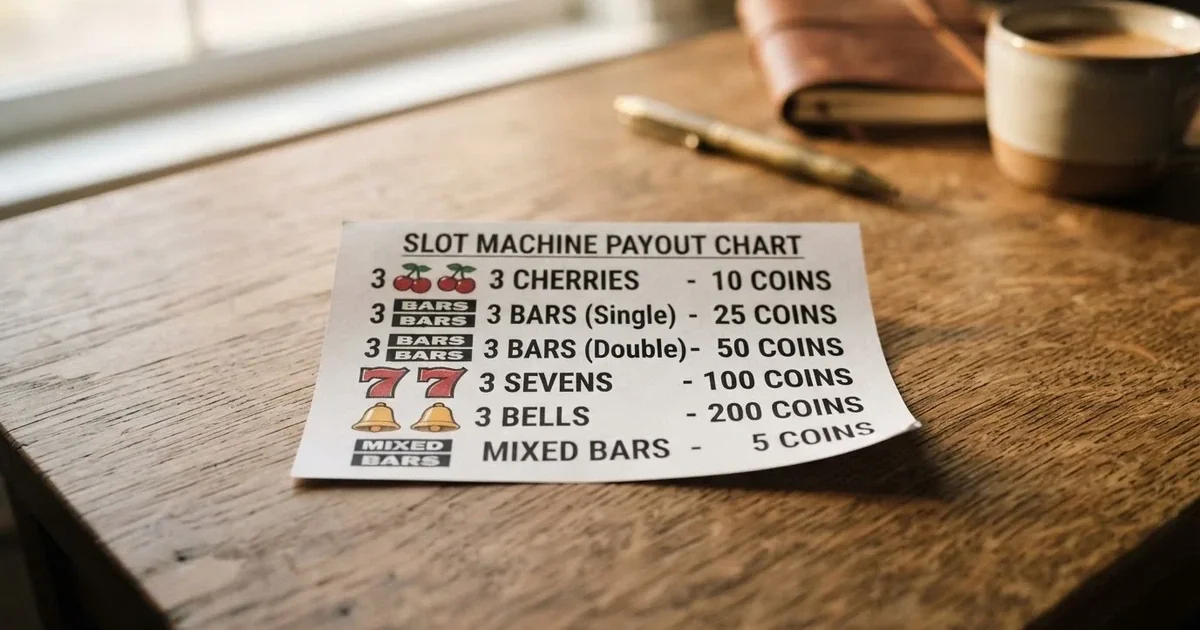
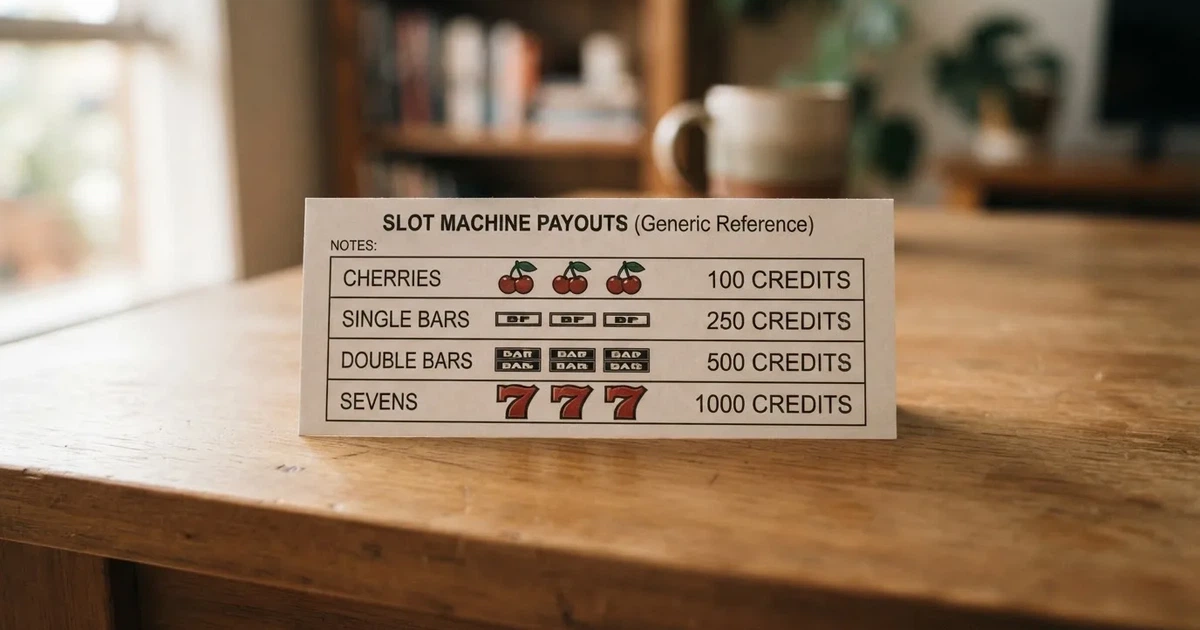
A three-reel slot is the older, simpler shape of the game: three vertical strips of symbols spinning behind a single payline, or a handful of them, with one winning line highlighted and a flat payout table printed across the glass. The format predates video slots by decades and still turns up on casino floors. Online, the picture is different — and in Australia it is different again, because no operator anywhere can be licensed to offer casino games or pokies to a person physically in the country. That single fact shapes what every other section of this page is about.
The page closes what the format means mechanically, why a player should not expect to find it on a lawful Australian site, which offshore brands the regulator has named in formal warnings, what protections disappear the moment a site sits outside the regime, and how a player who feels the habit starting to slide can act before it does. A worked figure sits beside the enforcement numbers: the rate at which the Australian Communications and Media Authority has been converting its investigations into blocked domains, expressed as a band rather than a single percentage, because the conditions that drive it are themselves unsettled.
Current as of 25 September 2026; licences and warnings verified against the ACMA’s formal-warning register and the Interactive Gambling Act 2001.
Table of Contents
- The 3-reel format, plainly described
- Why a player cannot lawfully find 3-reel slots online in Australia
- How ACMA enforcement works, and what it has done
- The brands the ACMA has named
- What protection a player gives up offshore
- What the math says about a 3-reel session
- Where three-reel slots live lawfully in Australia
- Bonuses, free spins and what they cost the player
- Help available, and what each route covers
- Tax, winnings and what the ATO says
- What to take from this page
- Frequently asked questions
The 3-reel format, plainly described
A three-reel slot is the mechanical ancestor of every video slot still in play. Charles Fey’s late-nineteenth-century design, built in San Francisco, used three reels and five symbols — horseshoes, diamonds, spades, hearts and the Liberty Bell — with three bells across the centre line paying the top prize of ten nickels. The shape stayed close to that for decades. Bally’s “Money Honey” in 1963 introduced a bottomless hopper that paid out up to 500 coins without an attendant, and the next jump — the first video slot — did not arrive until 1976, when Fortune Coin Co. built it in Kearny Mesa, California.

What separates a three-reel machine from a modern video slot, mechanically, is the number of symbols each reel can carry and the way the paylines are drawn. A classic mechanical three-reel slot runs about ten symbols per reel, which produces roughly a thousand possible combinations of three symbols across a single payline. A modern video slot can carry five or more reels with fifty or more symbols per reel and dozens of paylines running in different shapes, taking the odds of a top combination as high as 300 million to one. The three-reel format, by contrast, keeps combinations countable and the paytable short enough to read at a glance.
That shorter paytable has practical consequences. A three-reel slot typically pays out on fewer combinations, the symbols are weighted differently across the three reels, and the top jackpot tends to be lower in absolute terms than a video slot’s. What it trades for that is legibility — a player can see the price of each combination without scrolling through a help screen. The game is not more generous, in the sense of returning a higher share of wagers; it is just easier to inspect.
What it is not, despite marketing copy, is “more honest” or “fairer.” A paytable is the operator’s contract with the player; the return-to-player percentage is set by the software behind the reels, not by how many reels there are. Reel count changes the shape of the volatility curve — small wins on the single payline, less frequent bonus features, rarer top combinations — but it does not change who has the edge. That is set by the math, and the math sits behind the paytable either way.
Why a player cannot lawfully find 3-reel slots online in Australia
The Interactive Gambling Act 2001, tightened by the Interactive Gambling Amendment Act 2017, makes it an offence to provide online casino games and online pokies to a person in Australia. No state or territory issues a licence for them. The Northern Territory Racing and Wagering Commission regulates fifty-two of Australia’s online bookmakers — including Sportsbet, Bet365 and Ladbrokes — but those licences cover wagering on races and sport, not casino games. The commission has no full-time staff and meets once a month in Darwin; it is, in the words of the ABC’s reporting, a de facto regulator with a thin footprint for the size of what it nominally watches.

What this means in plain language: any operator offering three-reel slots — or any other slot format — to an Australian IP address is doing so outside Australian law. The licence the operator displays on its footer, whether from Curaçao, Anjouan or the Kahnawake Mohawk Territory, is a foreign commercial licence. It does not authorise service to Australia. Players are not the target of the Act — it points at the provider — but the practical consequence is that there is no Australian complaints body for a refused withdrawal, no local supervision of game fairness, no recourse if a balance sits on a blocked site. The site can be cut off at the network edge with money still on it.
H2 Gambling Capital’s 2025 report estimates Australians lose about A$3.9 billion a year to illegal offshore sites, and that the share of gambling going through legal channels fell from 74 per cent in 2021 to 64 per cent. That figure is a background data point — it describes the scale of the offshore market, not any individual operator — but it tells a reader what the prohibition is up against in practice. The legal market has shrunk in share while the dollar volume has grown; the Act is enforced at the boundary, and the boundary is porous.
How ACMA enforcement works, and what it has done
The Australian Communications and Media Authority investigates complaints, issues formal warnings, and directs Australian internet service providers to block illegal sites. As of the ACMA’s June 2026 report, a total of 1,751 illegal gambling and affiliate marketing websites had been blocked since the first blocking request in November 2019, and more than 230 unlicensed gambling services had left the Australian market since enforcement was strengthened in 2017.
In the round reported on 26 June 2026 alone, the ACMA asked ISPs to block twelve more sites: 7Signs, ChromaBet, Donbet, Duospin, Freshbet, Slots Gem, Jacks Club, Lucky Start, Pointsbetz, Spinrise, Vinyl Casino and Wildsino. The pattern across recent rounds is consistent — small batches, one or two operator groups at a time, with formal warnings preceding or accompanying the block. The twelve in this round are all offshore operators; none carries an Australian licence for casino games, because no such licence exists.
Formal warnings have piled up over the past several years against a narrower set of operator groups. In March 2026 the ACMA warned Pulsup Ltd over Rocketplay; in May 2022 the same regulator warned Dama N.V. across six brands, and went back to Dama N.V. again in March 2025 (Woo Casino) and May 2025 (Spirit Casino). In July 2025 it warned Bamboo Media over Ignition Casino and Consolutetish S.R.L. over National Casino and Bizzo Casino, the last of which had already been warned in 2022 under TechSolutions. EOD Code SRL was warned in February 2025 over Instant Casino, Ryker B.V. in April 2026 over Jackbit, Sterplay Holding Ltd in April 2025 over Casino Intense, and Hollycorn N.V. over Sky Crown in 2022. The repetition of operator groups — Dama N.V. warned three times across three years, TechSolutions’ Bizzo warned under two different corporate shells — shows that formal warnings do not, on their own, retire a brand from the Australian market.
The blocking rate, worked through
The arithmetic that follows sets the published ACMA dates against one another to derive an enforcement trend.
The ACMA’s first blocking request was issued in November 2019. By June 2026 the cumulative count of blocked sites was 1,751. That is roughly eighty-one months of blocking activity, against a count of 1,751 domains. The simple average works out to about 21.6 sites blocked per month, or roughly 260 per year.
That average is a band, not a point. The June 2026 round alone added twelve, which is the size of a quiet month’s work compressed into one enforcement action. Earlier years moved faster once the 2017 amendments had teeth: 2017 to 2019 was the build-up, with enforcement gaining rhythm in 2020 and 2021 once the regulator had cleared its early casework. The current rate sits somewhere around the long-run average; the trend within the last two years is uneven, with bigger rounds and quieter months trading places. A reader who watches the ACMA’s monthly notices will see the pace change — sometimes two or three new blocks in a week, sometimes nothing for a month — and the long-run number is what reconciles those.
The condition the rate does not show is the one that matters most: a blocked site does not stay blocked forever. Operators re-emerge under new domains, and the ACMA has to chase them. Each new round names a dozen sites that have, by and large, taken the place of sites blocked a year earlier. The 1,751 figure is the count of distinct domains blocked since 2019, not the count of distinct operator groups still serving Australians today. The blocking rate measures the regulator’s output, not the size of the market it is shutting down.
The brands the ACMA has named
This section walks through the eleven brands the ACMA has issued formal warnings against for offering prohibited casino services to Australians. None carries an Australian licence, because none can. Each is a separate enforcement event, not a ranking; each is what the regulator has published about it, not what an affiliate marketing page claims about its bonuses or payout speed. The order is the order in which the warnings appear in the regulator’s record, with the most recent first.
RocketPlay
Pulsup Ltd was the operator named in the ACMA’s March 2026 warning over Rocketplay. The brand sits inside the wider Dama N.V. group, which the regulator warned in May 2022 across six brands including Rocketplay itself — meaning the same casino has now been the subject of two separate formal warnings under two different operator-company names. Rocketplay is also a brand that carries no published Australian licence for casino games, because no such licence exists. The page has no information on payment-method support specific to this brand; readers comparing options should treat that gap as a sign that the comparison cannot be made on that axis at all.
Level Up Casino
Level Up was one of six brands named in the ACMA’s May 2022 warning to Dama N.V. No newer warning to that specific brand has been published in the regulator’s record since then, but the operator behind it has been warned repeatedly under different brand shells. Level Up is the kind of brand where the corporate wrapper shifts and the URL stays — a reader looking at a site today may find themselves on a domain that looks new and a back-end that looks identical to one the regulator named two or three years ago.
Woo Casino
Dama N.V. was warned over Woo Casino in March 2025, three years after the same operator group’s first warning. Woo sits inside an operator group whose pattern of formal warnings is the longest in the ACMA’s recent record. A reader considering Woo today is looking at a site whose operator has been on the regulator’s published warning list, on and off, for the better part of three years.
Spirit Casino
Dama N.V. was warned over Spirit Casino in May 2025, two months after Woo and within the same wave of enforcement against the operator group. The pattern — Dama N.V. warned, then warned again, then warned again under different brand shells — is what a reader should weigh when deciding whether to take an offer from a brand whose operator has been on the regulator’s list more than once.
National Casino
Consolutetish S.R.L. was warned over National Casino in July 2025, alongside Bizzo Casino, in a single enforcement round. National Casino is the brand name that survived the corporate shift from the earlier TechSolutions-era warnings; the underlying operator group has changed, but the brand has not. A reader who knew the site under its earlier corporate name is looking at the same product, with a different company behind it.
Bizzo Casino
Consolutetish S.R.L. was warned over Bizzo Casino in July 2025; the same brand had already been the subject of a 2022 formal warning to TechSolutions (CY) Group Limited and TechSolutions Group N.V. Bizzo is the clearest example on this list of a brand that has crossed two operator groups and two warnings without leaving the regulator’s published record. Any reader weighing an offer from Bizzo is weighing a brand with two warnings on the ACMA’s file under two different corporate shells.
Ignition Casino
Bamboo Media was warned over Ignition Casino in July 2025. Ignition is the brand most closely associated with the Australian-facing offshoot of a US-facing poker-and-casino operator; the warning sits in the same regulatory wave as the National Casino and Bizzo warnings, but the operator group is unrelated. A reader comparing Ignition to the others on this list is comparing it to brands the regulator has not named under the same operator.
Instant Casino
EOD Code SRL was warned over Instant Casino in February 2025, the earliest of the 2025 enforcement actions on this list. The warning preceded the wider Dama N.V. round of March and May 2025; Instant Casino sits outside that operator group, in a separate corporate shell. A reader comparing it to the Dama N.V. brands is comparing one operator to several under one umbrella.
Jackbit
Ryker B.V. was warned over Jackbit in April 2026, alongside CasinOK. Jackbit is one of two brands in a single April 2026 warning, and the operator group is one the regulator had not named before in this round of enforcement. The two-brand-per-warning pattern repeats throughout 2025 and 2026 — operators tend to run a portfolio, and warnings tend to name two or three at a time.
Casino Intense
Sterplay Holding Ltd was warned over Casino Intense in April 2025. The operator group is a separate corporate shell from Dama N.V., Consolutetish S.R.L., Bamboo Media and EOD Code SRL — meaning each of the four most prominent operator groups the ACMA has named in the past two years is a different company.
Sky Crown
Hollycorn N.V. was warned over Sky Crown in 2022, alongside Blue Leo. Hollycorn’s 2022 warning is the oldest on this list; the brand has not appeared in a more recent enforcement round, but the absence of a newer warning does not mean the site has left the Australian market. A reader weighing Sky Crown today is weighing the same brand the regulator named in 2022.
What protection a player gives up offshore
Three protections exist for an Australian player using a locally licensed wagering service, and all three disappear when the site sits outside the regime.
The first is consumer recourse. A licensed Australian wagering provider answers to a state or territory regulator and to the Australian Financial Complaints Authority. A refused withdrawal, a bonus dispute, a voided bet — there is a path. An offshore casino has none of those paths available to an Australian player; the licence the site displays is in a foreign jurisdiction and the regulator behind it has no authority over Australian customers.
The second is the National Self-Exclusion Register, BetStop, which has been live since August 2023. BetStop binds Australian-licensed online and phone wagering services; a player who registers is excluded across all of them at once. An offshore casino is not connected to BetStop, which means registering on BetStop does not exclude a player from any of the brands on this list. That asymmetry is the most consequential one for a player who feels the habit starting to slip: the national register covers the legal market and the legal market is not where 3-reel slots sit.
The third is payment-method discipline. From 11 June 2024, credit cards, credit-related products and digital currency are banned as payment for licensed online wagering, with penalties up to A$247,500 for operators. Legal deposit routes are debit card, bank transfer, PayID and Osko, and BPAY. A site asking an Australian for a credit card or a crypto deposit is operating outside the Australian rules; the request itself is a signal that the site is not licensed for Australian customers, regardless of what its footer says.
A 2026 reform is in motion. The Interactive Gambling Amendment (Gambling Reform) Bill 2026 passed Parliament on 19 August 2026; its advertising and inducement measures commence 1 January 2027. That is law with a start date, not yet in force on this page. A reader checking back in 2027 will see the inducement rules live; today, they are a future obligation the operator has not yet been required to meet.
What the math says about a 3-reel session
A three-reel session on a slot has a defined cost in expectation. Suppose a player runs 200 spins at A$0.50 per spin on a single-line three-reel slot with a 95 per cent return-to-player percentage — a figure in the band typical of online three-reel slots. The wagered amount is 200 × A$0.50 = A$100. The expected loss, on a long-run average, is A$100 × (1 − 0.95) = A$5. That A$5 is the house edge expressed in dollars for the session.
A session at A$1 per spin over the same 200 spins and the same RTP doubles both: wagered A$200, expected loss A$10. A session of 1,000 spins at A$0.50 quadruples both, with the expected loss reaching A$25. The relationship is linear: expected loss grows with the total wagered, and the RTP sets the proportion. No arrangement of bets changes the proportion; only the total wagered changes the dollar number.
What that means for a player who has registered on BetStop is that the offshore site is the only place a session of this shape can occur, and there is no equivalent of the national register to stop it. A player who has excluded themselves from every Australian-licensed wagering service can still place 1,000 spins on a three-reel slot at any offshore site, with no Australian register tracking the activity. The protection BetStop offers is structural: it covers the legal market, and the legal market is not where 3-reel slots are.
Where three-reel slots live lawfully in Australia
They do not live online. The Interactive Gambling Act 2001 closes that door. They live on licensed premises — pubs, clubs and casinos in states and territories that permit them. New South Wales had 87,298 pokies-style slot machines outside casinos as of June 2023; Victoria had 26,380 in 2021–22; Queensland 21,122 in October 2023; South Australia 11,672 in September 2023; and the ACT 3,587 in November 2023. Australia’s 2010 count was an estimated 97,103 gaming machines outside casinos, a per-capita rate about five times that of the United States. The format is deeply embedded in Australian venue culture, and that is part of why the offshore market for the same product persists: there is an established audience for the gameplay shape, and only part of that audience has a lawful local option.
Crown Melbourne offers three baccarat variants — Traditional Baccarat, Crown Baccarat and 2 to 1 Baccarat — as approved table games regulated by the Victorian Gambling and Casino Control Commission, which replaced the VCGLR as Victoria’s casino regulator on 1 July 2022. Blackjack sits under the same approval regime: the VGCCC’s log of approved changes to Crown Melbourne’s blackjack variants includes renaming the “Perfect Pairs” side bet to “Crown Pairs” on 23 December 2024 and introducing a “Free Bet” option with a new “Pot of Gold” side bet on 25 March 2024. The pattern, on the licensed side, is rules submitted to the regulator, rules approved, and the change logged publicly. None of that approval machinery reaches an offshore site, and that is the structural difference a player is operating inside when they leave it.
Bonuses, free spins and what they cost the player
Bonuses on three-reel slots, where they are offered, carry the same structural shape as bonuses on any other slot: a credit added to the player’s balance, a wagering requirement, a maximum-cashout cap, sometimes a game-weighting restriction that de-rates the bonus contribution on certain titles. The marketing language around them is the same everywhere — “free,” “bonus,” “reward” — and the practical effect is the same everywhere too: a player has to run a multiple of the bonus amount through the wagering requirement before any of it converts to withdrawable cash.
The wagering multiple is the lever. A 35x bonus requirement on a A$100 bonus means A$3,500 in required wagering before withdrawal; on a 50x requirement the same bonus demands A$5,000. At A$0.50 per spin on a single-line three-reel slot, that is 7,000 or 10,000 spins respectively, which is between roughly 9.7 hours and 13.9 hours of continuous play assuming a five-second spin interval. The bonus is not free; it is a volume commitment, and the volume commitment is paid for out of the player’s bankroll while the wagering clears.
A maximum-cashout cap — common on no-deposit offers and on free-spin bundles — limits what can be withdrawn even after the wagering clears. A A$100 bonus with a 10x maximum-cashout cap means a maximum of A$1,000 can ever be withdrawn from bonus-derived funds, regardless of how the wagering ends. The cap sits below the theoretical upside, which is the part of the bonus structure most often missed in marketing language.
These mechanics are described here as background reading. The page’s subject is the offshore gap, and the offshore gap is where these offers exist; the offers themselves are not something the page recommends acting on. A reader who has decided to play should know the shape of what an offer costs, and that is what this section is for. Whether to claim one is a separate decision, and the offshore frame around it shapes that decision too.
Help available, and what each route covers
If thinking about three-reel slot play — online, in a venue, or in any form — ever starts to feel compulsive or stressful, free confidential help is available around the clock. Gambling Help Online runs the National Gambling Helpline on 1800 858 858, free, twenty-four hours a day, with chat available through the same service. The advice is not contingent on whether the play was legal, online, in a venue or offshore; the line covers all of it.
BetStop, the National Self-Exclusion Register, has been live since August 2023 and binds Australian-licensed online and phone wagering services. A player who registers is excluded across all of them at once, for a chosen period, with a cooling-off before reactivation. The exclusion does not reach offshore casinos; a player using BetStop and an offshore site is excluding themselves from the legal market while still being able to play the offshore one. That asymmetry is the limit of what BetStop does, and it is the reason a player who feels the habit starting should think about both channels, not just one.
The protections attached to a venue session — opening-hours rules, venue staff who can ask a player to leave, the social visibility of play on a licensed premises — do not exist in the offshore online frame. A session at home, alone, at any hour, on a site with no Australian presence, has none of those external checks. That is what the offshore gap looks like at the player level: the same game, played in the same room, with all the venue-side guardrails removed.
Tax, winnings and what the ATO says
Gambling winnings of a recreational player are not assessable income in Australia, under section 6-5 of the ITAA 1997. Losses are not deductible. A player who makes a habit of professional gambling — placing bets as a business — sits under a different regime and should check with the ATO. The default position for an occasional player is that winnings are tax-free and losses are personal. That is true whether the play was at Crown Melbourne, at a suburban club, or at an offshore site whose legality is the subject of the section above. The tax treatment is not the enforcement lever; the Interactive Gambling Act 2001 is.
What to take from this page
Three-reel slots are a real game format with a long history and a real audience in Australia. They are not, in 2026, a lawful online product in this country — the Interactive Gambling Act 2001 closes that door and no state or territory issues a licence that would open it. The 1,751 domains blocked since November 2019 are the regulator’s response to the gap that prohibition has not closed, and the eleven formal warnings on the operator groups above are the ACMA’s record of which brands the regulator has named for serving the gap.
A reader who came to this page looking for where to play a 3-reel slot online in Australia has found, instead, the shape of the legal frame around not being able to do so lawfully. A reader who came to understand the format has the history, the paytable shape, the volatility profile, and the comparison against five-reel video slots. A reader who came because the habit feels like it is starting to slide has the helpline number, the national register, and the asymmetry between what each one reaches and what it does not.
The format itself is honest about its edges; the offshore market around it is not.
Frequently asked questions
What makes a 3-reel slot different from a standard five-reel video slot?
A three-reel slot typically runs about ten symbols per reel and pays out on a small number of paylines — often a single line across the centre. A modern five-reel video slot can carry fifty or more symbols per reel with dozens of paylines running in different shapes. The three-reel format has fewer combinations and a shorter paytable; the five-reel video slot has more symbols per reel, more combinations, and more bonus-feature mechanics layered on top of the base game. The house edge is set by the math in both cases; reel count changes the shape of the volatility curve, not who holds the edge.
Can 3-reel slot machines be found in licensed Australian pubs and clubs?
Yes. New South Wales had 87,298 pokies-style slot machines outside casinos as of June 2023; Victoria had 26,380 in 2021–22; Queensland 21,122 in October 2023; South Australia 11,672 in September 2023; and the ACT 3,587 in November 2023. The format is embedded in venue gambling across the country. What is not available is the same product online from an Australian-licensed operator, because the Interactive Gambling Act 2001 prohibits online casino games and online pokies.
Do 3-reel slots typically pay out differently than newer five-reel formats?
In shape, yes; in long-run return, not necessarily. A three-reel slot tends to pay smaller amounts more frequently on the single payline and reserve the top combination for a rarer event; a five-reel video slot spreads payouts across more combinations and layers bonus features on top. The return-to-player percentage is set by the software, not the reel count. A player comparing two games should compare their published RTPs directly, not infer from the reel count which is more generous.
Is a 3-reel slot online the same game as a 3-reel machine on a casino floor?
Mechanically, the underlying math can be the same — reels, symbols, paytable. The frame around the game is not. A venue machine operates under state regulatory supervision, with venue staff, opening hours, and consumer recourse through Australian regulators. An online 3-reel slot on an offshore site operates under a foreign commercial licence, with no Australian consumer recourse, no connection to BetStop, and no guarantee of payout if the site is blocked while a balance remains. The game is similar; the protections around it are not.
Are 3-reel slots for real money available legally from an Australian-based site?
No. The Interactive Gambling Act 2001, as amended in 2017, makes it an offence to provide online casino games and online pokies to a person in Australia; no state or territory issues a licence for them. The Northern Territory Racing and Wagering Commission regulates wagering on races and sport, not casino games. Any site offering real-money 3-reel slots to an Australian IP address is doing so outside Australian law, regardless of the foreign licence it displays.
Do reel count and paytable structure affect how a slot’s volatility is described?
Yes. A three-reel slot with a single payline and a short paytable typically produces smaller, more frequent wins with a rarer top payout — a tighter volatility profile around the centre of the distribution. A five-reel video slot with bonus features and multiple paylines spreads wins more widely and layers variance through the bonus mechanics. Reel count is one input into the volatility description; RTP, hit frequency, and bonus-feature weighting are the others. None of them changes the long-run house edge, which is set by the math behind the paytable.
Created by the ”Casino Live Dealer Hub” editorial team.