
A high roller casino, an Australian reader, and a law that says no
There is no licensed online high-roller casino in Australia. The Interactive Gambling Act 2001 prohibits offering online casino games and online pokies to anyone in Australia, no state or territory issues the licence that would let one operate, and the Australian Communications and Media Authority has spent the last decade quietly turning that prohibition into blocked web pages and formal warnings. A reader searching for the “best high roller casino with bonus” is asking for a shortlist of a product that, on this side of the regulator’s desk, does not exist. That gap is the page. Everything below — the ACMA’s enforcement record, the payment rails the law leaves open, the bonus mechanics a high roller usually meets offshore, the comparison of the offshore brands the ACMA has named — is built around it.

The page is current as of 6 November 2026 and checked against the public ACMA register, the Reserve Bank of Australia’s payment-cost review and Australian Payments Plus material on PayID and Osko.
Table of Contents
- What “high roller” actually means at an online casino
- The Australian legal frame, stated plainly
- How the ACMA has applied the prohibition
- Responsible gambling, Australian version
- Money in, money out
- The bonus mechanics a high roller is actually being sold
- Mobile and app play
- The specific games a high-roller page would normally cover
- The eleven brands the ACMA has acted against
- What the reader should actually do with this page
- Frequently asked questions
What “high roller” actually means at an online casino
Online casinos do not share one definition of high roller. Across the offshore sites the ACMA has formally warned over the last few years, the threshold for what gets labelled VIP or high-roller play moves with the brand. Some treat a few hundred dollars a deposit as the entry point; others set the floor at several thousand; a handful reserve the label for players moving tens of thousands a week through the cashier. There is no industry body, no Australian regulator and no card scheme setting the line. The word is a marketing segment, not a regulatory category, and the same deposit can be ordinary at one brand and “VIP” at the next.

That matters because most of what gets sold under the high-roller banner is not the table limit or the slot stake. It is the offer attached to the deposit: a larger matched bonus, a personal account manager, faster withdrawals, higher table caps, and sometimes a tier of perks that runs from cashback through event invitations to a dedicated host. None of that changes the underlying arithmetic of the games — every slot still has a house edge, every bonus still carries turnover conditions — but it does change how much a player can lose in a session, and how quickly. A reader who treats “high roller” as a status to chase rather than a stake bracket they actually meet is reading the marketing, not the game.
The catalogue itself is also wider than the casual player sees. High-roller slot titles are usually high-volatility games with a single maximum line win in the thousands of times the stake — the kind of title a casual player would burn through a bankroll on in minutes. Live-dealer tables for high rollers push the maximum bet per hand to several thousand dollars, with side bets and private rooms for the largest stakes. The casino high-roller segment is, in practice, a different product from the mainstream lobby, and it asks for a different bankroll.
The Australian legal frame, stated plainly
Australia’s online gambling regime has two clean edges. The first is what can be licensed: wagering on racing and sport placed before the event, lotteries, and keno. These are licensed in practice by the Northern Territory Racing and Wagering Commission, which regulates 52 of Australia’s online bookmakers — Sportsbet, Bet365 and Ladbrokes among them — and which has no full-time staff of its own, meeting once a month in Darwin. The second edge is what cannot: online casino games, online pokies, and in-play betting. The Interactive Gambling Act 2001, strengthened by the Interactive Gambling Amendment Act 2017, makes it an offence to provide any of those to a person who is physically in Australia.
The provider is the target. The individual player is not prosecuted under the IGA, and an Australian reader does not face criminal liability for opening an offshore account. What they give up is everything the Australian regime exists to give: no Australian consumer protection, no local complaints body, no recourse if a withdrawal stalls, and a real chance the site is blocked mid-session with money still on it. None of the offshore licences a casino displays — Curaçao, Anjouan, Kahnawake, the Philippines — is an Australian licence, and none of them bind the operator to Australian rules.
The reform cycle keeps moving. The Interactive Gambling Amendment (Gambling Reform) Bill 2026 passed Parliament on 19 August 2026; its advertising and inducement measures commence on 1 January 2026, so as of right now it is a Bill that has become law with a start date that has not yet arrived. Its effect on the offshore high-roller market will be felt mostly in how Australian-facing marketing is run, not in whether the underlying product is lawful. The underlying prohibition already exists.
How the ACMA has applied the prohibition
The ACMA does not publish every investigation, but it publishes the actions it takes, and the record is large enough to describe the shape of enforcement rather than the detail of any single case. Three numbers do most of the work.
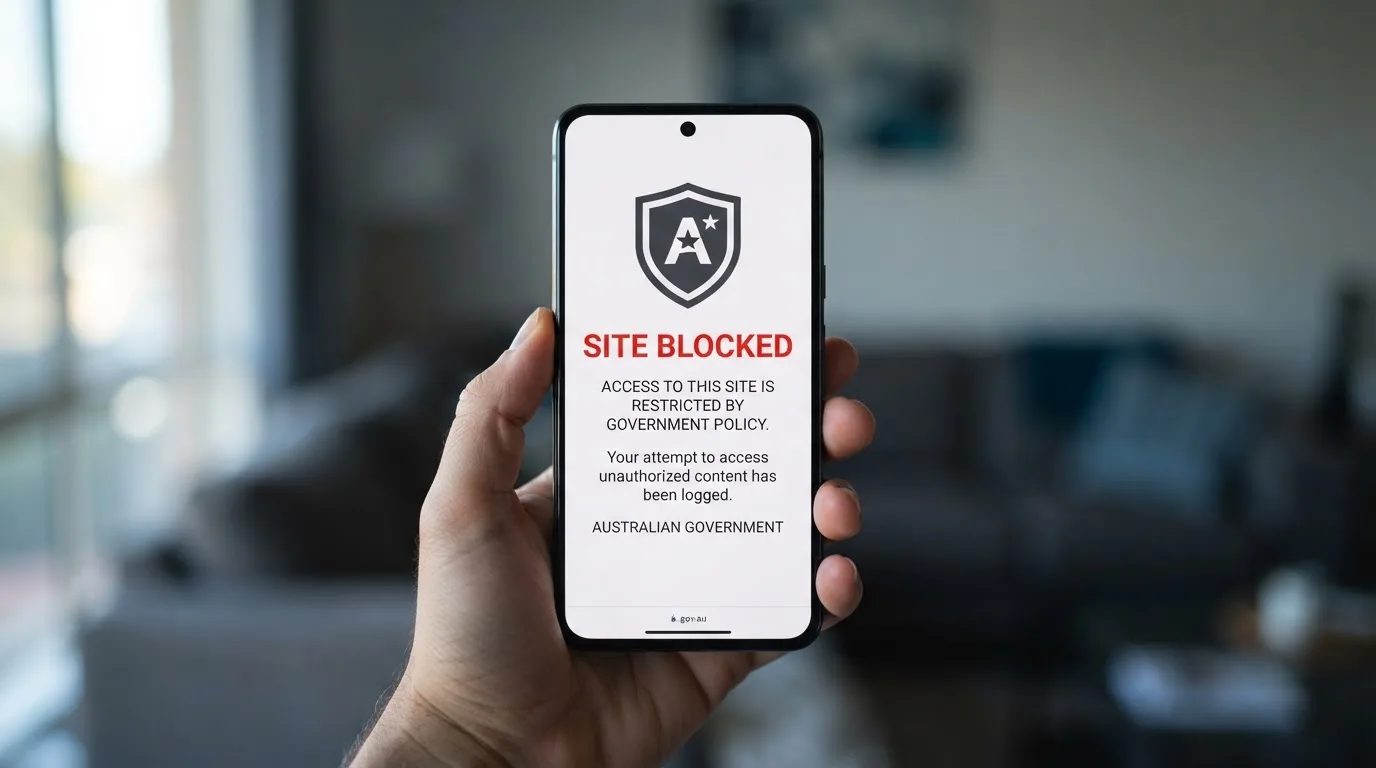
First, the blocking list. As reported in June 2026, the ACMA had asked Australian internet service providers to block 1,751 illegal gambling and affiliate marketing websites since the first blocking request in November 2019, and more than 230 unlicensed gambling services had left the Australian market since enforcement was strengthened in 2017. The June 2026 round alone added twelve names — 7Signs, ChromaBet, Donbet, Duospin, Freshbet, Slots Gem, Jacks Club, Lucky Start, Pointsbetz.com, Spinrise, Vinyl Casino and Wildsino — in a single set of directions to ISPs.
Second, the formal warnings. The ACMA publishes each one with the operator’s name, the brand and the date, and a reader can build a picture of who has been told to stop. The 2026 file alone includes Rocketplay.com.au (Pulsup Ltd, March 2026) and Jackbit and CasinOK (Ryker B.V., April 2026). The 2025 file includes Woo Casino and Spirit Casino (both Dama N.V., March and May 2025), Ignition Casino (Bamboo Media, July 2025), National Casino and Bizzo Casino (Consolutetish S.R.L., July 2025), Instant Casino (EOD Code SRL, February 2025) and Casino Intense (Sterplay Holding Ltd, April 2025). The 2022 file is the foundation the later warnings sit on: Bambet, Dazard, Level Up, Rocketplay, Wild Tornado and Cobra Casinos (Dama N.V., May 2022), the first TechSolutions warning over Bizzo Casino, and the Hollycorn N.V. warning covering Sky Crown and Blue Leo.
Third, the consumer cost. H2 Gambling Capital’s 2025 report puts annual Australian losses to illegal gambling sites at about A$3.9 billion, and tracks the share of gambling flowing through legal channels from 74% in 2021 down to 64%. The legal channels are losing ground to the offshore product, and the page that helps a reader pick between them needs to start from that direction of travel, not from the assumption the law has held the line.
The ACMA record is also where the practical answer to “which offshore brands keep coming up” lives. The eleven brands listed further down this page are not a recommendation; they are the operators the regulator itself has named in formal warnings, in the order those warnings were published. The table in this page’s comparison section is built from that public record, not from affiliate material.
The blocking rate since 2019
A reader who knows only that “the ACMA blocks sites” cannot read the enforcement record well. The arithmetic that gives the record shape is the blocking rate — the running total of blocked sites divided by the time elapsed since the first blocking request. November 2019 to June 2026 is roughly 79 months; 1,751 sites blocked over that period works out to an average of about 22 blocked sites a month, or just over five a week. The figure sits in a band: in months the ACMA announces a fresh round, the rate spikes; in quieter months it sits well below that average.
That average matters for the enforcement side, because it converts a single cumulative number — impressive on its own — into a pace. Five sites a week is fast enough that any offshore brand an Australian reader is considering is, on the ACMA’s own behaviour, more likely than not to be the subject of a future blocking request or a formal warning. It is not a guarantee for any one site, and it is not a forecast — the ACMA’s enforcement priorities shift — but it is the rate at which the regulator is currently working.
Responsible gambling, Australian version
The Australian player-protection layer is real, and it is built around licensed wagering, not around the offshore casino product the ACMA has spent a decade warning against.
BetStop — the National Self-Exclusion Register — has been live since August 2023. Its effect is binding, but only on the operators it binds: Australian-licensed online and phone wagering services. An offshore casino is not connected to it, and a BetStop registration does not block an offshore account. The National Gambling Helpline is 1800 858 858, free and available around the clock; Gambling Help Online carries the chat channel.
The Australian banks have built their own layer on top. Westpac’s gambling block works at card level, refusing authorisation of transactions carrying the merchant category code “Betting/Casino Gambling” on eligible personal credit and debit cards. ANZ’s gambling transaction block, toggled on in the ANZ app, blocks gambling transactions through a digital wallet such as Apple Pay on an eligible card, not just the physical card; turning the block off requires a 48-hour waiting period, and ANZ warns that not every gambling transaction will be blocked, and that some non-gambling transactions might be blocked in error. Commonwealth Bank lets a customer apply a gambling lock to eligible cards through the CommBank app, with the same caveat that not every gambling transaction can be stopped. These blocks are the most reliable automated protection an Australian reader has against their own card funding an offshore casino, and they sit inside the bank’s own app, independent of the offshore operator.
What self-exclusion actually covers
A BetStop registration is a commitment from a person to every Australian-licensed wagering operator, on every channel they take. It is not a ban on gambling; it is a ban on those operators accepting that person’s bets. The same person can still attend a land-based casino, still buy a lottery ticket at a newsagent, still place a bet at a licensed retail outlet if that outlet’s own rules allow it. The offshore layer is not covered, because the offshore operator is not licensed in Australia and is not connected to the register. A reader who relies on BetStop to keep themselves out of offshore play is relying on a tool that does not reach that product, and that is the single most consequential limit on the Australian self-exclusion regime.
Money in, money out
The Australian payment system is built so that ordinary bank transfers between participating Australian banks arrive in under a minute, 24/7, addressed either to a BSB and account number or to a PayID. That is Osko, and it is the rail most Australian readers will use for anything they send to an offshore casino — if they send anything at all. Paying to a PayID shows the name of the account holder before the transfer is sent, and Australian Payments Plus warns that being asked to transfer money to a PayID on an illegal gambling site almost certainly means a scam site. By April 2025 more than 25 million PayID identifiers had been registered on the New Payments Platform, and over 100 Australian financial institutions offer PayID-based instant transfers.
BPAY sits beside it for the bill-payment use case: the payer enters the Biller Code and the Customer Reference Number printed on the bill. BPAY has run since 1997, sits in the online banking of over 140 Australian banks and financial institutions, and is offered by over 95,000 businesses. Both are run by Australian Payments Plus, the merged entity the ACCC authorised in 2021.
The payment side of the law is sharper than the casino side. Under the Interactive Gambling Act 2001 as amended in 2023, Australian-licensed online wagering services cannot accept payment by credit card or other credit-related products; that restriction also reaches linked digital wallets like Apple Pay. Credit cards, credit-related products and digital currency are banned as payment for licensed online wagering from 11 June 2024, with penalties up to $247,500 for operators. Legal deposit routes for licensed wagering are debit card, bank transfer, PayID/Osko and BPAY. An offshore casino asking an Australian for a credit card or a crypto deposit is not asking through the Australian rulebook at all.
The major Australian banks have built their own block layer on top of that. The mechanics matter here: Westpac’s block works at card level by refusing authorisation on the merchant category code for betting and casino gambling. ANZ’s block, set on in the app, blocks gambling transactions through Apple Pay on an eligible card — which closes the obvious end-run of paying through a digital wallet. Commonwealth Bank’s CommBank-app gambling lock does the same for CommBank cards. None of the three banks promises every gambling transaction will be stopped, and ANZ in particular warns that some non-gambling transactions might be blocked in error. The protection is broad; it is not perfect.
Apple Pay, Google Pay and the surcharge question
By the end of 2025, Apple Pay, Google Pay and Samsung Pay transactions together accounted for around 45% of all card payments in Australia by number. Apple itself does not charge consumers for using Apple Pay in stores, online or in apps — any surcharge on an Apple Pay transaction comes from the merchant’s own card-processing fees, not from Apple. Transaction limits and PIN requirements for Apple Pay purchases are set by the card issuer or the merchant, not by Apple.
That last point matters for a high-roller reader. A casino that takes Apple Pay is not the same as a casino that takes Visa; the underlying card is the same, and the bank’s gambling block sits on that card, not on the wallet. ANZ’s gambling block reaches Apple Pay transactions on an eligible card, which is why the wallet is not an end-run around the block. The Reserve Bank of Australia’s July 2025 review proposes removing surcharges only on eftpos, Mastercard and Visa card transactions; American Express is explicitly left outside the scope of the proposed surcharge ban, and Amex itself operates as a three-party scheme — it issues cards and processes transactions itself, rather than the four-party arrangement Visa and Mastercard run. None of that changes the legal status of using any of these methods at an offshore casino; it changes the cost and the audit trail of paying.
PayID, AUSTRAC and the A$10,000 reporting line
AUSTRAC’s threshold-transaction-report rule requires reporting of transfers of A$10,000 or more, but the rule applies only to physical cash. Ordinary electronic bank transfers are not subject to that per-transaction reporting requirement, regardless of the amount sent. A high roller moving several thousand dollars a week through PayID or Osko to an offshore casino does not, on that basis alone, trigger a threshold report. The rule a high roller is more likely to brush against is the bank’s own monitoring of gambling transactions on a card, which sits at the merchant category code level and not at the A$10,000 line.
The bonus mechanics a high roller is actually being sold
The high-roller bonus is, in mechanical terms, the same product as the ordinary welcome bonus, scaled up. The casino offers to match a percentage of the deposit with bonus funds, on condition the player turn the combined deposit and bonus over a set multiple of times before withdrawing. The marketed number — “100% match up to A$5,000, 40× bonus” — is the surface; the conditions are where the offer is either worth taking or worth walking away from.
The arithmetic of clearing a bonus is straightforward. Required turnover is the bonus multiplied by the wagering factor. A A$5,000 bonus at 40× is A$200,000 in bets that must be placed before any withdrawal is permitted. At a typical slot stake of A$1 per spin, that is 200,000 spins; at five seconds a spin, it is about 278 hours of continuous play. A player who treats the bonus as a fast route to a higher balance is reading the headline; the requirement is the whole story.
The cost is where the marketing language falls down. A bonus carries an expected loss equal to the required turnover multiplied by one minus the RTP of the game being played. A 200,000-turnover requirement on a 96% RTP slot carries an expected loss of 8,000 — that is the statistical cost of clearing the bonus, on average, over many spins. It is not a guaranteed loss on any individual session, and a single run can finish well above or well below that average. It is the price of the bonus in expectation, and it is the number the headline never quotes.
A high-roller bonus that looks generous against a casual player’s welcome offer is almost always the same percentage match at a higher ceiling, with a wagering multiple that does not fall as the ceiling rises. The offer is bigger; the conditions are not softer. A reader comparing two bonuses by the match percentage alone is comparing the wrong field; the comparison that matters is the expected loss per dollar of bonus, which depends on the wagering multiple and the RTP of the games the player will actually use.
The turnover trap on high-volatility slots
High-roller slots are usually high-volatility titles. The edge against the player is the same as on any other slot — set by the RTP, not by the volatility — but the path to that edge is different. A high-volatility session runs longer between significant wins, and the bankroll swings further in both directions. The expected loss per spin is the same as on a low-volatility slot at the same RTP, but the variance is higher, which means a session that needs 200,000 spins to clear turnover will see much wider balance swings than the headline suggests. A player whose bankroll is sized for the expected loss but not for the variance can be wiped out before the turnover is complete, and walk away having cleared nothing.
The games on which turnover is cleared also matter. Some bonus terms exclude high-RTP table games from turnover entirely, or weight table-game turnover at a fraction of slot turnover — 10% is a common figure. A player who plans to clear a bonus at the blackjack table will, under those terms, need to bet ten times as much as a slots player for the same turnover credit, and the expected loss on the blackjack will be lower per dollar bet, but the path to the turnover requirement will be much longer. The terms decide which game the bonus pushes the player toward, and that is usually the game with the worst expected loss per spin.
Mobile and app play
High-roller play happens on phones as often as on desktops, and the offshore brands the ACMA has named tend to lead with a mobile-first product. A high-roller casino app, where one is offered, is most often a web wrapper — a mobile site packaged as an app — rather than a native build, and it carries the same payment, bonus and licence terms as the desktop site. An Australian reader who downloads an offshore casino app is downloading a product that, on the ACMA’s view, cannot lawfully be offered to them in Australia, and that the ACMA can direct Australian ISPs to block at any time.
The Australian banks’ gambling blocks do not change on mobile. ANZ’s block covers Apple Pay transactions on an eligible card; Westpac’s block works on the card regardless of the device; the CommBank-app lock is set on the card. A mobile session that uses a blocked card will fail at the deposit step, not at the gameplay step, which is the point. The block is the most reliable automated layer an Australian reader has, and it works the same way on a phone as it does on a laptop.
The specific games a high-roller page would normally cover
A casino review written for an unrestricted market would, at this point, get into the specific slots and live tables a high-roller reader should be looking at: the high-volatility titles, the live-dealer rooms with the highest table caps, the providers whose catalogues sit behind most of those games. On a page written for an Australian reader that comparison is built on a foundation the regulator says is not lawful, and the page does not run it. The catalogue a high-roller reader sees on an offshore site is not a list of products that can be recommended from inside Australia; it is a list of products the ACMA has, in several cases, formally warned the operator about. What is worth saying is what the reader should look at instead.
Licensed Australian pokies venues are the legal product the page routes toward. They are land-based — pubs, clubs and the casino floors of Crown Melbourne, The Star Sydney, Jupiters Gold Coast, Crown Perth, The Star Gold Coast and the smaller state-based venues. The high-roller rooms on those floors carry table caps the offshore sites do not match, with on-site dispute resolution through the state regulator and the venue’s own responsible-gambling officers. The licensed Australian online wagering market, for the reader who wants the phone-screen experience, sits on sports and racing — not on casino games. That is the legal ceiling, and it is the ceiling the page stops at.
The eleven brands the ACMA has acted against
What follows is not a ranking. The order is the order the ACMA’s formal warnings were published, and the brands are here because the regulator itself named them, not because this page endorses them. Every brand in the list has had a formal warning issued over it for offering prohibited interactive gambling services to Australians; none of them is licensed in Australia; and the page is written so a reader can see what the regulator has actually said about each one, not what the operator’s own marketing claims.
| Brand | ACMA action and date | Operator named by the ACMA | Subject support |
|---|---|---|---|
| RocketPlay | Formal warning, March 2026 (Pulsup Ltd over Rocketplay.com.au); earlier May 2022 warning over Dama N.V. brands including Rocketplay | Pulsup Ltd (March 2026); Dama N.V. (May 2022) | listings-only |
| Level Up Casino | Formal warning, May 2022, covering six Dama N.V. brands including Level Up | Dama N.V. | listings-only |
| Woo Casino | Formal warning, March 2025 | Dama N.V. | — |
| Spirit Casino | Formal warning, May 2025 | Dama N.V. | — |
| National Casino | Formal warning, July 2025 | Consolutetish S.R.L. | listings-only |
| Bizzo Casino | Formal warning, July 2025 (Consolutetish S.R.L.); earlier 2022 warning to TechSolutions | Consolutetish S.R.L. (July 2025); TechSolutions Group (2022) | listings-only |
| Ignition Casino | Formal warning, July 2025 | Bamboo Media | — |
| Instant Casino | Formal warning, February 2025 | EOD Code SRL | listings-only |
| Jackbit | Formal warning, April 2026 | Ryker B.V. | — |
| Casino Intense | Formal warning, April 2025 | Sterplay Holding Ltd | listings-only |
| Sky Crown | Formal warning, September 2022, covering Sky Crown and Blue Leo | Hollycorn N.V. | — |
Three things the table makes visible. First, the ACMA’s record is built mostly from a small number of operators repeating across brands — Dama N.V. alone accounts for six of the eleven entries, and the Hollycorn and TechSolutions groups cover several more. Second, the warnings cluster in 2025 and 2026; the enforcement pace has been accelerating, not slowing. Third, the brands that have only a single warning against them and no current listing in the Australian-facing materials are not necessarily cleaner than the rest; they are simply less documented in the public sources this page is built from.
A reader who has landed on one of these brands through an affiliate link or a search result is reading a site the regulator itself has told to stop. The page does not recommend any of them; it names them because the ACMA has named them, and because the offshore marketing that surrounds them is the product the rest of this page is built against.
RocketPlay — the Dama N.V. lineage
Rocketplay appears twice in the ACMA record: as part of the May 2022 Dama N.V. warning that covered six brands, and as the subject of its own March 2026 warning under Pulsup Ltd. The intervening years saw the brand’s Australian-facing operations continue despite the earlier warning, and the 2026 escalation is what the table records. A reader who sees a Rocketplay bonus offer today is seeing an offer from an operator the ACMA has told to stop, in writing, twice.
Level Up Casino — same Dama N.V. file, no fresh escalation
Level Up Casino’s only formal warning is the May 2022 Dama N.V. action. The absence of a later warning is not the same as a clean record; it is the absence of a published later warning. The same operator group has been told to stop across six brands, and the table reflects that grouping rather than treating Level Up as an isolated case.
Woo Casino and Spirit Casino — Dama N.V.’s 2025 warnings
Woo Casino was warned in March 2025, Spirit Casino in May 2025; both under Dama N.V. The two warnings landed within two months of each other, which is the pace the ACMA has settled into for the operators it returns to. A reader who treats the lack of a 2026 escalation as a sign of compliance is reading the absence of news rather than the regulator’s own view.
National Casino and Bizzo Casino — Consolutetish S.R.L.
Both brands were warned in July 2025 under Consolutetish S.R.L., and Bizzo Casino was already on the ACMA’s file from the 2022 TechSolutions warning. The brand has been through two operators and two warnings, with the most recent action landing in the same month as the National Casino warning. The pattern is the same as the Dama N.V. file: an operator group that the regulator has returned to.
Ignition Casino — Bamboo Media
The July 2025 warning to Bamboo Media over Ignition Casino is the only published ACMA action against this brand. The page carries the warning as the regulator’s own statement; it does not extrapolate from it.
Instant Casino — EOD Code SRL
Instant Casino was warned in February 2025 under EOD Code SRL. The early-2025 timing places it ahead of the 2025 cluster the ACMA published through the rest of the year, and it is the brand the regulator acted on first in that cycle.
Jackbit — Ryker B.V., 2026
Jackbit was warned in April 2026 under Ryker B.V., in the same action that covered CasinOK. The April 2026 timing places it in the same enforcement cycle as the June 2026 blocking round reported by the ACMA. A reader landing on Jackbit through a search result is reading a brand the regulator told to stop less than a year ago.
Casino Intense — Sterplay Holding Ltd
The April 2025 warning to Sterplay Holding Ltd is the only ACMA action against Casino Intense on the public record this page draws from. As with the other single-warning entries, the absence of later escalation is not the same as a clean record.
Sky Crown — Hollycorn N.V.
The September 2022 warning to Hollycorn N.V. covered both Sky Crown and Blue Leo. Hollycorn is one of the longer-running operator groups on the ACMA’s file, and the warning covers more than one brand from the same parent.
What the reader should actually do with this page
The shortest version: there is no legal online high-roller casino in Australia, the offshore brands the ACMA has named are not licensed here, and the page’s job is to make that gap visible rather than to dress it up. The longer version runs through the choices an Australian high-stakes player has, in the order the regulator would want them considered.
The first choice is the licensed Australian wagering market — sports and racing, before the event, through an operator licensed by the Northern Territory Racing and Wagering Commission. That market does not carry online casino games or pokies, and the high-roller reader looking for a slots session will not find it there. What it does carry is the full Australian consumer-protection layer: a local regulator, a local complaints path, BetStop binding the operator, the bank’s gambling block sitting on the card, and the credit-card ban already in force.
The second choice is the licensed Australian pokies venues — pubs, clubs and the casino floors in each state. These are land-based, they are regulated by state authorities, and they carry the highest table caps available in the country. The high-roller rooms on those floors are the only legal Australian product that matches the offshore segment on stakes.
The third choice is the offshore market the rest of this page is built around. An Australian reader who goes that way is accepting that the product is unlawful to offer, that the ACMA can direct ISPs to block the site at any time, and that there is no Australian consumer protection behind the bonus terms. The bank-side gambling blocks, the merchant category code refusals and the BetStop registration do not reach an offshore account. The bonus terms are what the operator wrote, the dispute path is the operator’s own, and the balance is real money that an Australian reader may not be able to get out if the site stops paying.
The reader’s actual decision is whether the product the offshore market offers — the casino games, the pokies, the live-dealer rooms — is worth taking on those terms, given that the licensed Australian market does not carry it at all. The page presents that choice; it does not make it for the reader.
Frequently asked questions
What deposit level usually marks a high roller at an online casino?
There is no industry-wide definition. Different brands set the floor at different levels — from a few hundred dollars at the entry tier to several thousand for the top VIP bracket — and the same deposit can be ordinary at one site and “high roller” at the next. The word is a marketing label, not a regulatory one, and the offer attached to it is what actually separates the segment.
Do high-roller bonuses usually carry higher wagering requirements?
Often yes, and even when the percentage match is the same as a casual welcome offer, the wagering multiple rarely falls as the bonus ceiling rises. The expected cost of clearing a bonus is the required turnover multiplied by one minus the RTP of the game being played; a larger bonus at a similar multiple costs more in expectation, in proportion to the size of the bonus rather than to the percentage.
Is it legal for an online casino to offer high-roller bonuses to Australians?
No. The Interactive Gambling Act 2001 prohibits offering online casino games and online pokies to anyone in Australia; no state or territory issues the licence that would let an operator do so. The individual player is not prosecuted under the IGA, but the offshore operator is offering a product the Australian regulator says it cannot lawfully offer, and the ACMA has spent the last several years issuing formal warnings and directing ISPs to block sites that try.
Can a high-roller status be reached through a PayID deposit?
The deposit method does not change the regulatory status of the casino. PayID itself is a fast Australian bank transfer rail — transfers between participating banks arrive in under a minute, 24/7, and over 100 Australian financial institutions support it — but paying to a PayID at an illegal gambling site is, on Australian Payments Plus’s own warning, a strong sign the site is a scam. The payment rail reaches the offshore operator; it does not legalise the product on the other end.
Are high-roller tables offered at Australian land-based casinos?
Yes, at the state-licensed casino floors — Crown Melbourne, The Star Sydney, Jupiters Gold Coast, Crown Perth, The Star Gold Coast and the smaller state venues. Those rooms carry table caps well above the offshore segment and operate under state regulator oversight, with on-site responsible-gambling officers and a local complaints path. They are the legal Australian product for the high-roller reader, and the only one with Australian consumer protection behind it.
What should a high-spending player check before trusting a casino site?
Three layers. The legal layer: whether the operator is licensed in Australia, which no offshore casino is. The payment layer: whether the casino’s deposit method fits inside the Australian rules — no credit card, no crypto for licensed wagering, and the bank’s own gambling block applies to the card regardless of the wallet on top. The protection layer: whether the operator is bound by BetStop and the state complaints bodies, which an offshore casino is not. A site that fails any of those three is, on the Australian reader’s side, a site to walk away from.
A high roller casino, an Australian reader, and a law that says no — More on this topic at casino live dealer .
See also High cashback bonuses, Australian law, and what an offer is actually… .