Best live casino online Australia 2026: what the law actually permits
 Available in US
A reader searching for the “best live casino online Australia” is asking a question Australian law has already answered. The Interactive Gambling Act 2001 prohibits offering online casino games — including the live-dealer blackjack, roulette and baccarat tables that make up most of what the offshore market calls a live casino — to anyone physically in Australia. No state or territory issues a licence for that product. The brand list that the rest of the world ranks simply does not exist for an Australian reader at a lawful site, and what does exist is a long ACMA enforcement record against the brands that take Australian traffic anyway.

This page works through that gap honestly. It walks the eleven offshore brands the ACMA has formally warned over the past four years, explains what those warnings actually do, lays out the genuine licensed alternatives — the live-dealer tables at Crown Melbourne, the licensed wagering on races and sport that does fall under Australian supervision — and points to the self-exclusion and counselling pathways that the law has built around gambling in this country. The page is an analysis of what an Australian reader can and cannot do in 2026, not a ranking of offshore casinos as if they were a normal choice.
Current as of 25 September 2026 against the ACMA’s published register of formal warnings and blocking requests.
Table of Contents
- What a live casino actually is, and why the streaming setup matters
- The Australian legal frame, in plain language
- The ACMA’s enforcement record, and what it actually does
- How to read the table of formally warned brands
- The arithmetic behind the blocking rate
- Bonuses, free spins and what they cost in the live-dealer setting
- The mobile experience, and what changes on a phone
- The licensed Australian alternative
- Player protection in Australia: BetStop and the help lines
- Tax, winnings and the recreational player
- What the page is not
- Frequently asked questions
What a live casino actually is, and why the streaming setup matters
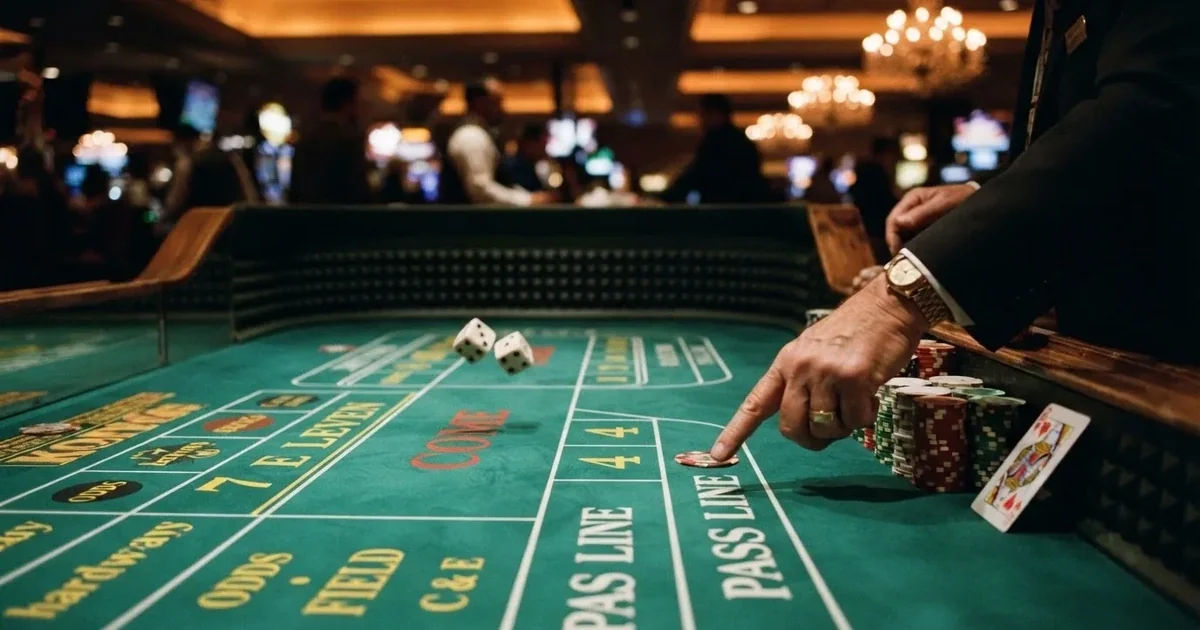
A live casino is not a different game from an online slot. It is a different delivery mechanism for the same game. Optical camera recognition — sensors and barcodes on cards, readers on the roulette wheel, RFID in the chip tray — translates the dealer’s physical actions into data that the player’s screen renders as cards and outcomes, with a real human dealing the cards in a real studio, generally operating around the clock. The player’s bet, the dealing and the resolution all happen in real time, which is the only thing the term “live” actually refers to. A random number generator running in the background does not; this is video, not a simulation, with the house edge sitting in the table’s rules rather than in the maths behind a slot reel.

Three games account for almost every live-dealer table that streams out of the major studios: baccarat, blackjack and roulette. Baccarat’s banker bet carries a house edge of 1.06% and the player bet 1.24%; the tie bet pays higher but the edge is 14.36%. Blackjack, played with optimal strategy under liberal Las Vegas Strip rules, comes in around 0.28%; Atlantic City rules put it at about 0.43%. Roulette’s edge is fixed by the wheel layout rather than by player decision — 2.7% on a single-zero European wheel, 5.26% on a double-zero American wheel, since the green zero is the house’s cut on every spin. The games are honest; the edge is small enough to be ignored for an evening of play, large enough to be the casino’s living.
Evolution, the dominant supplier, was founded in 2006 and now states that more than 700 gambling platforms worldwide stream its live tables. The group owns the NetEnt, Red Tiger, Big Time Gaming, Nolimit City and Ezugi studio brands as well, having completed the NetEnt acquisition in December 2020. The same handful of studios produce almost every live-dealer game an offshore casino in Australia will display, which is why most “different casinos” actually offer the same lobby of tables.
That centralisation is what makes the ACMA’s enforcement record meaningful. The warning goes to the operator running the site, not to Evolution, but a site that has been warned once and continues to accept Australian traffic is choosing to remain findable; the studio behind it has no Australian exposure to lose.
The Australian legal frame, in plain language
The Interactive Gambling Act 2001, as tightened by the Interactive Gambling Amendment Act 2017, makes it an offence to provide an interactive casino-style gambling service to a person in Australia. Online blackjack, roulette, baccarat, sic bo and the live-dealer variants of all of them sit inside that prohibition; so do online pokies, online keno and in-play betting on sport. The prohibition targets the provider, not the player — no Australian has been prosecuted for placing a bet on an offshore site — but the prohibition also means no Australian regulator can force a refund if a withdrawal is refused, hear a complaint about a voided win, or hold an offshore operator to the consumer-protection rules a domestic licence would carry.
What is licensable is wagering on races and sporting events placed before the event, lotteries and keno. In practice the licensing is concentrated in the Northern Territory, where the Racing and Wagering Commission regulates 52 online bookmakers — Sportsbet, Bet365 and Ladbrokes among them — licensed in the Territory for tax reasons. The commission has no full-time staff and meets once a month in Darwin, which is why reform of that de facto regulator has been on the agenda in recent years. Minimum age is 18 across every channel.
Two pieces of 2026 legislation matter for what an Australian reader actually meets online. The first is the ban on credit cards, credit-related products and digital currency as a payment method for licensed online wagering that took effect on 11 June 2024 — penalties for operators of up to A$247,500. Legal deposit routes for licensed wagering are debit card, bank transfer, PayID/Osko and BPAY. A site that asks for a credit card or a crypto deposit is operating outside the Australian rules, and that fact alone is enough to put the transaction outside anything the consumer-protection framework would cover. The second is the Interactive Gambling Amendment (Gambling Reform) Bill 2026, which passed Parliament on 19 August 2026; its advertising and inducement measures commence on 1 January 2027, which puts them outside any claim an article in 2026 can honestly make about present-day practice.
The ACMA’s enforcement record, and what it actually does
The ACMA — the Australian Communications and Media Authority — investigates complaints, issues formal warnings, and asks Australian internet service providers to block illegal sites under section 313 of the Telecommunications Act 1997. The cumulative picture, as reported in June 2026, was that 1,751 illegal gambling and affiliate-marketing websites had been blocked since the first blocking request in November 2019, and more than 230 unlicensed gambling services had left the Australian market since enforcement was strengthened in 2017. The most recent round before that snapshot asked ISPs to block another twelve sites: 7Signs, ChromaBet, Donbet, Duospin, Freshbet, Slots Gem, Jacks Club, Lucky Start, Pointsbetz, Spinrise, Vinyl Casino and Wildsino.
A formal warning is the ACMA’s least public step but the most pedagogically useful: it puts the operator on the record, names the legal basis, and signals that further non-compliance will move to civil penalties or blocking. A warning is not a finding of guilt and it is not a court order; it is a regulator telling a brand it has been seen. Some warnings lead to quiet withdrawal from the Australian market — the 230 services that have left since 2017 — and some do not, which is when the ACMA moves to blocking. Blocking under the Telecommunications Act applies at the ISP level; it does not require the cooperation of the offshore operator, and it does not refund any balance a player has left on the site.
The pattern of warnings over the past four years shows the same handful of operator groups cycling through different brand names. Dama N.V. alone has been warned over six casino brands in May 2022, then again over Woo Casino in March 2025 and Spirit Casino in May 2025. TechSolutions (CY) Group Limited and TechSolutions Group N.V. were warned over Bizzo Casino in 2022; Consolutetish S.R.L. was warned over both National Casino and Bizzo in July 2025. Bamboo Media drew a warning over Ignition Casino in July 2025; EOD Code SRL over Instant Casino in February 2025; Ryker B.V. over Jackbit and CasinOK in April 2026; Sterplay Holding Ltd over Casino Intense in April 2025; Pulsup Ltd over Rocketplay.com.au in March 2026; Hollycorn N.V. over Sky Crown and Blue Leo in September 2022. Different brand, same studio deal, same regulatory exposure.
How to read the table of formally warned brands
The eleven brands below are not ranked. Each has been the subject of an ACMA formal warning over offering prohibited interactive gambling services to Australians; none holds an Australian licence, because no such licence exists for online casino games. The order follows research’s record of the ACMA’s actions. Where research’s listings section named the brand on a particular site — a studio listing, a media mention — that is noted as the source; where research carried no such listing, the brand has no attached observation beyond the warning itself, and the article does not invent one.
| Brand | ACMA action and date | Operator named by the ACMA | Subject support |
|---|---|---|---|
| RocketPlay | Formal warning, March 2026 (Pulsup Ltd); earlier Dama N.V., May 2022 | Pulsup Ltd | — |
| Level Up Casino | Formal warning, May 2022 | Dama N.V. | Listed by BGaming as a partner |
| Woo Casino | Formal warning, March 2025 | Dama N.V. | — |
| Spirit Casino | Formal warning, May 2025 | Dama N.V. | — |
| National Casino | Formal warning, July 2025 | Consolutetish S.R.L. | Wikipedia mentions the brand |
| Bizzo Casino | Formal warning, July 2025 (Consolutetish S.R.L.); earlier TechSolutions, 2022 | Consolutetish S.R.L. and TechSolutions | — |
| Ignition Casino | Formal warning, July 2025 | Bamboo Media | — |
| Instant Casino | Formal warning, February 2025 | EOD Code SRL | — |
| Jackbit | Formal warning, April 2026 | Ryker B.V. | — |
| Casino Intense | Formal warning, April 2025 | Sterplay Holding Ltd | Mentioned in ABC and ACMA reporting and Crown Melbourne coverage |
| Sky Crown | Formal warning, September 2022 | Hollycorn N.V. | — |
The empty cells in the right-hand column are not gaps in the ACMA’s record; they are the gap the research itself shows. Where a brand appears on a third-party listing site — Bgaming.com naming Level Up Casino as a partner, a Wikipedia mention of National Casino, ABC and ACMA references to Casino Intense — that is what the page can honestly report, because it is what the input sources record. Where research carries nothing beyond the warning, the brand carries the same; a reviewer’s opinion is not a substitute for a fact.
RocketPlay
RocketPlay was the subject of a formal warning in March 2026 against Pulsup Ltd over Rocketplay; it had previously been warned as a Dama N.V. brand in May 2022, alongside Bambet, Dazard, Level Up, Wild Tornado and Cobra Casinos. The 2022 warning pre-dated the 2026 brand transfer. The site presents itself with an offshore Curaçao licence; that licence has no standing in Australia, and the page can confirm the ACMA’s action without commenting on whether the underlying licence is genuine in any other jurisdiction. Australian players are not the target audience this page recommends to anyone.
Level Up Casino
Level Up Casino was one of six Dama N.V. brands warned in May 2022. Research notes that BGaming lists Level Up Casino among its partner operators, which is the only third-party listing the research carries beyond the ACMA’s own record. The BGaming partnership tells a reader what studio supplies the site’s RNG slots; it says nothing about live-dealer coverage or about the site’s current status with respect to Australian traffic. The five-year-old warning places the brand well inside the cohort the ACMA has tracked longest.
Woo Casino
Woo Casino drew a formal warning in March 2025 against Dama N.V., one of three warnings that operator has collected over four years for Dama brands alone. The 2025 warning followed a quieter two-year gap from that operator, which is itself useful information: the ACMA’s enforcement is reactive to where Australians are actually being signed up, and a brand surfacing again in 2025 means new affiliate marketing or new promotional spend pointed back at Australian traffic. No studio listing or media mention is attached in the research.
Spirit Casino
Spirit Casino falls into the same Dama N.V. cluster as Woo Casino, with a formal warning in May 2025 against the same operator. Two warnings against the same operator five years apart, with two different brand names, is the pattern the ACMA’s enforcement record is built on: a parent operator rebrands, the marketing cycle restarts, and the regulator repeats the warning. No third-party listing is attached in the research for Spirit Casino beyond the ACMA’s own record.
National Casino
National Casino was warned in July 2025 against Consolutetish S.R.L., the same operator warned over Bizzo Casino in the same round. The research carries a Wikipedia mention of the brand, which is the only listing note available beyond the regulator’s own action. Wikipedia mentions are a low bar — the entry exists, the brand is searchable, and the page can name it without overstating what that mention means. National Casino is also the kind of brand that has appeared in Australian-facing affiliate marketing for several years, which is part of why the ACMA moved against it.
Bizzo Casino
Bizzo Casino is the only brand in the table with two formal warnings to its name: an earlier 2022 warning to TechSolutions (CY) Group Limited and TechSolutions Group N.V., and a 2025 warning to Consolutetish S.R.L. in the same July round as National Casino. A brand that has been warned twice under different operator names over a three-year span is not a brand that withdrew voluntarily after the first warning. The brand remains a fixture of offshore affiliate marketing aimed at Australian players and is exactly the kind of name the ACMA continues to surface for review.
Ignition Casino
Ignition Casino was warned in July 2025 against Bamboo Media. The brand has a longer English-language profile than most of the table — it has been visible in Australian-facing affiliate marketing for several years under its current operator — but the ACMA’s record is the only independent source on the brand’s Australian exposure. The Ignition brand is one of the more recognisable names in the offshore live-dealer market, which is partly why its warning matters: a reader who knew the brand from prior affiliate coverage now has a regulator’s record to attach to it.
Instant Casino
Instant Casino drew a formal warning in February 2025 against EOD Code SRL. The 2025 date places it among the earliest of the warnings the ACMA has issued in the period research covers, and Instant Casino is a brand that has been actively promoted into Australian traffic during the period. Other than that official regulatory action, the research carries no third-party mentions. For an Australian reader, the warning date and the warning operator are the only sourced facts on the table.
Jackbit
Jackbit was warned in April 2026 against Ryker B.V., the same operator warned in the same round over CasinOK. Pairing two brand warnings in a single round against the same operator is the ACMA’s standard way of handling a parent operator that runs multiple brands through the same pipeline. This action is the only formal note the research provides for this operator. Jackbit’s recent warning date puts it at the front of the cohort of brands the ACMA has had to revisit in the past twelve months.
Casino Intense
Casino Intense was warned in April 2025 against Sterplay Holding Ltd. The research carries a slightly stronger third-party trail than most of the table — references in ABC reporting, ACMA publications and Crown Melbourne’s own site context — but the page treats those references as background, not as endorsement of the brand. The ABC mention is media coverage rather than operator endorsement; the Crown Melbourne reference is part of broader Australian-market reporting rather than a tie-up. The page confirms the ACMA’s action and stops there.
Sky Crown
Sky Crown was warned in September 2022 against Hollycorn N.V. in the same action as Blue Leo Casino, the ACMA’s first formal warning over that operator group. The 2022 date makes Sky Crown the longest-standing entry in the table in terms of regulator exposure, which is not the same as saying the brand is the largest or the most visible; it is the brand the ACMA has had on its radar for the longest continuous period. There are no additional independent listings or references attached in the research.
The arithmetic behind the blocking rate
The ACMA’s blocking record is the one piece of enforcement data on which the page can do real arithmetic, because the inputs are public and the period is long. The first blocking request was made in November 2019; by the snapshot reported in June 2026, the cumulative total of blocked illegal gambling and affiliate-marketing websites had reached 1,751. That is 79 months of enforcement, 1,751 sites, and an average blocking rate that works out at roughly 22 sites blocked per month across the whole period, or about 265 sites per year.
That figure is a band, not a single number. The early years were quieter than the later ones: the legal infrastructure under section 313 of the Telecommunications Act was being built, and the ACMA was still accumulating the case law that would let it move quickly against affiliate marketing as well as the sites themselves. The 230 unlicensed services that have left the Australian market since enforcement was strengthened in 2017 are a separate but overlapping count — services that withdrew without being blocked — and they imply a higher enforcement rate than the blocking numbers alone show. A reader should treat the 22-per-month figure as the lower bound of what the regime actually does; the upper bound, counting voluntary withdrawals, runs several hundred sites per year.
The arithmetic has a direct consequence for any reader considering an offshore casino. A site that has been formally warned and continues to accept Australian traffic is, on the ACMA’s record, on a path that ends in blocking. A blocked site does not pay out a balance voluntarily — the operator has no Australian obligation to do so — and the player has no Australian forum in which to chase it. The blocking rate is also the rate at which an “active” offshore brand in Australia becomes inaccessible, sometimes mid-account, with no warning beyond an ISP error page.
Bonuses, free spins and what they cost in the live-dealer setting
A live-casino bonus is structured around a turnover requirement — sometimes called a wagering requirement — applied to the bonus amount, the deposit, or both. A typical package advertises a percentage match on the first deposit, with the bonus credited as restricted funds and a multiplier attached to the wagering before any of it becomes withdrawable cash. A 100% match up to A$200 with a 40x wagering multiple on the bonus is the shape most live-casino welcome packages take; the marketing headline says “A$200 bonus”, the terms say “play through A$8,000 before the bonus becomes cash”, and the two sentences describe the same product from different angles.
Free spins are usually credited against a single named slot rather than against a live-dealer table, which is itself a tell about how the bonuses are designed. The promotional budget funds the high-volume, high-edge slot product; live-dealer games, with their lower house edge and their higher per-spin cost, are usually excluded from the free-spin credit and often count at a reduced percentage — sometimes 10% rather than 100% — toward any wagering requirement that does cover them. A reader who sees a live-casino welcome offer advertised alongside a free-spin package is being shown two promotions of different sizes joined for marketing convenience; the live-casino component is usually the smaller of the two.
The arithmetic on a live-casino bonus is straightforward because the games are honest. A bonus of A$200 at a 40x wagering multiple means A$8,000 of turnover is required before the bonus clears; at an average live-roulette bet of A$5, that is 1,600 individual bets at a 2.7% house edge on a European wheel, which costs roughly A$216 in expected losses against the wagering requirement before any of the A$200 becomes withdrawable. The arithmetic does not need to defeat the player; it only needs to be slightly worse than the bonus is worth, and live-dealer bonuses are routinely designed to be exactly that.
The same arithmetic is why the page does not present a ranked bonus table. The terms of a bonus package are the only honest measure of its value, and the ACMA-warned brands do not have sourced bonus terms in the research — affiliate marketing pages do carry such terms, but the research explicitly declines to use them as the only source. The honest comparison is structural: a bonus on a prohibited product is not a comparable proposition, no matter how generous the headline number.
The mobile experience, and what changes on a phone
A live-dealer game streams video, which means bandwidth matters in a way it does not for an animated slot. On a 4G connection in good Australian coverage, a live-dealer table runs at around 4–6 Mbps with a sub-second latency on the betting window; on a stable Wi-Fi connection, the same table is smoother still. On a 3G connection or in patchy coverage, the video stream downgrades and the betting window can lag, which is when a player makes a bet on the previous hand rather than the current one. The studio’s hardware is the same; the player’s experience is entirely a function of the network.
An app versus a mobile browser is the next choice, and on the offshore market the choice usually makes itself. The Google Play and Apple App Store policies prohibit real-money gambling apps in Australia for any operator that does not hold an Australian licence, which excludes every brand on this page. An offshore site has to be reached through a mobile browser — typically Chrome on Android or Safari on iOS — with the casino running as a web app rather than a native install. The browser experience is functional; the betting interface is touch-tuned; the live stream loads in the same way it would on a desktop. What is missing is push notification, biometric login, and the kind of native phone integration a licensed Australian wagering app offers through the regular app stores.
The licensed Australian alternative is a different product. The Northern Territory-licensed bookmakers have native apps in the Australian stores because they hold an Australian licence, and their product is wagering on races and sport rather than live-dealer casino games. There is no licensed Australian app for live-dealer blackjack or live-dealer roulette, because there is no licence to grant.
The licensed Australian alternative
The genuine live-dealer casino product in Australia is a land-based one, and the strongest of them is Crown Melbourne in Victoria. The complex offers three baccarat variants as approved table games — Traditional Baccarat, Crown Baccarat and 2 to 1 Baccarat — under the regulation of the Victorian Gambling and Casino Control Commission, which replaced the VCGLR as Victoria’s casino regulator on 1 July 2022. The VGCCC maintains a public log of approved changes to Crown’s blackjack variants, including the renaming of the “Perfect Pairs” side bet to “Crown Pairs” in December 2024 and the introduction of a “Free Bet” option with a new “Pot of Gold” side bet in March 2024.
The regulatory frame for those changes is the Casino Control Act 1991 in Victoria, which requires the VGCCC to approve any rules for table games, including blackjack, and any change to those rules, before they are introduced. In NSW, the equivalent is section 66 of the Casino Control Act 1992, which prohibits a casino operator from permitting a game to be played unless the game and its rules are approved by the regulator, and obliges the operator to make a copy of the approved rules available to patrons on request. Those are the rules a patron at Crown Melbourne or The Star Sydney is playing under, with a regulator behind the rule book and a complaints path inside Australia.
For wagering — races and sport, not casino games — the licensed Australian market is the one the Northern Territory Racing and Wagering Commission supervises. Sportsbet, Bet365 and Ladbrokes are the three names most Australian readers will recognise; the rest of the 52 operators are smaller, regional, or specialist. The licensed wagering product is genuinely different from the offshore casino product: no live-dealer tables, no online pokies, no in-play betting on the casino side, but consumer protections that include debit-only deposits, PayID and BPAY support, and BetStop coverage.
Player protection in Australia: BetStop and the help lines
BetStop — the National Self-Exclusion Register — has been live since August 2023. It binds Australian-licensed online and phone wagering services, allowing a player to exclude themselves from every licensed wagering operator in the country for a period of their choice (three months, six months, one year, or a permanent exclusion). The exclusion is enforced by the operator: a self-excluded player cannot open a new account with a participating operator, and an existing account is closed and any balance returned. BetStop does not bind an offshore casino, because an offshore casino has not signed up to the register and is not subject to Australian direction.
The National Gambling Helpline is 1800 858 858, free and available 24 hours a day, with web chat at Gambling Help Online. The helpline is the right first call for a reader who is worried about their own gambling, the gambling of someone close to them, or the financial consequences of a session that did not go as planned. Counselling, financial counselling and referral to face-to-face support are all available through the same number. The page lists the helpline here because it is the one Australian service that connects a reader to actual, in-country help, regardless of what platform or product they have been using.
For an Australian reader who has been playing on an offshore casino and wants to stop, the practical order is straightforward. Register with BetStop first — this closes the licensed Australian accounts in one step. Then contact the helpline for the counselling layer, which an offshore casino cannot provide and which the ACMA’s enforcement regime is not designed to provide. Finally, contact the bank: most Australian banks will block gambling-related transactions on a debit card at the customer’s request, which is a separate layer of protection that closes off the offshore payment routes as well.
Tax, winnings and the recreational player
Gambling winnings of a recreational player in Australia are not assessable income under section 6-5 of the Income Tax Assessment Act 1997; the ATO treats recreational gambling as a private activity rather than as income. Losses are similarly not deductible, because a private activity does not produce income to deduct them against. The position changes only if the person is carrying on a business of gambling — a professional poker player, a sports trader working full-time on the markets — at which point the ATO’s normal business-income rules apply. For a reader placing occasional bets on the Melbourne Cup, spinning a few hundred dollars through a pokies session, or sitting at a live-dealer blackjack table once a year, the tax position is simply that there is no taxable event to report.
The caveat is that the offshore casino does not file any Australian tax information. A win on an offshore site is still not assessable income; a loss is still not deductible; the player has no Australian withholding to recover. The tax position does not change with the platform; the platform’s absence from the Australian system is what removes the protection, not the tax treatment.
What the page is not
This is not a ranking of offshore casinos. Every brand on the table has been the subject of an ACMA formal warning; none holds an Australian licence because no such licence exists; the comparison the page makes is between the ACMA’s record and the licensed alternative, not between one offshore brand and another. A reader who wants a normal casino review of any of these brands is looking for a different product than this page is offering.
This is also not a guide to circumventing the blocking regime. The blocking applies at the ISP level and is enforced on Australian carriers; the page assumes the reader is in Australia and reading it as an Australian reader. A reader travelling outside Australia who wishes to play one of these brands does so under the law of the country they are in, which the page is not qualified to advise on.
Finally, this is not a guide to the offshore payment system. Crypto deposits are banned under the credit-and-digital-currency rules that took effect on 11 June 2024 for licensed wagering, and an offshore casino asking for a crypto deposit is asking for an Australian to do something the licensed Australian system has explicitly closed off. The page notes the rule because the rule is the difference between an Australian-licensed transaction and a transaction outside the Australian framework entirely.
Frequently asked questions
What makes a live casino game different from a standard online slot?
A live casino streams a real dealer dealing real cards or spinning a real wheel from a studio, with optical camera recognition converting the physical action into data the player’s screen renders. A standard online slot runs a random number generator behind an animated reel set; the symbols and the outcomes are both software. The house edge on a slot is set by the math of the game; on a live-dealer table it is set by the table’s rules. Live-dealer games stream 24/7 from a handful of major studios — Evolution is the dominant supplier — and most offshore casinos carry the same lobby of tables.
Who is Evolution and why does its name come up around live casino games?
Evolution is a Swedish live-casino supplier founded in 2006, which states that more than 700 gambling platforms worldwide offer its live tables. The Evolution Group also owns NetEnt, Red Tiger, Big Time Gaming, Nolimit City and Ezugi. Live-dealer games from different offshore casinos are usually Evolution tables; the brand on the front of the site is not the brand of the game being played. The studio matters because the ACMA’s warnings go to the operator running the site, not to Evolution, but the studio is the same one across most of the warned brands.
Is it legal for an online casino to stream live dealer games to players in Australia?
No. Under the Interactive Gambling Act 2001, providing an interactive casino-style gambling service — including live-dealer blackjack, roulette, baccarat and similar games — to a person in Australia is a prohibited interactive gambling service. The prohibition targets the provider, not the player, but it means no Australian regulator can compel a refund, hear a complaint about a voided win, or hold an offshore operator to Australian consumer-protection rules. The ACMA’s enforcement record — warnings, blocking requests, voluntary withdrawals — is the practical consequence of that prohibition.
Can a live casino app be used on a mobile browser?
The Google Play and Apple App Store policies prohibit real-money gambling apps in Australia for any operator that does not hold an Australian licence, which excludes every offshore brand on this page. Offshore live casinos are reached through a mobile browser — typically Chrome on Android or Safari on iOS — running as a web app rather than a native install. The browser experience is functional and touch-tuned, but does not offer push notification, biometric login, or the native integration a licensed Australian wagering app offers. There is no licensed Australian app for live-dealer casino games, because there is no licence to grant one.
What welcome offers are commonly advertised for live casino play?
Live-casino welcome offers typically combine a deposit-match bonus with a free-spin package attached to a named slot. The bonus carries a wagering — turnover — multiple of 30x to 50x the bonus amount, and live-dealer games often count at a reduced percentage toward that requirement, sometimes 10% rather than 100%. Free-spin credit is usually restricted to a single named slot rather than to a live-dealer table, which means the headline promotional budget funds the slot product rather than the live product. The bonus headline and the bonus terms describe the same offer from different angles, and the terms are the only honest measure of what the offer is worth.
Prepared by the Casino Live Dealer Hub editorial staff.