
Offshore casinos for Australian players in 2026: the gap between the marketing and the law
There is no honest way to type “best offshore casino for Australians” into a search box and receive a working shortlist in return. The Interactive Gambling Act 2001 makes it an offence to provide online casino games to anyone physically in Australia, no state or territory issues a licence for the product, and the Australian Communications and Media Authority has spent the years since 2017 turning that prohibition into blocked domains, formal warnings and quiet exits. A reader landing on this page from Sydney, Perth or a coastal town in between is not looking for a loophole; they are looking for what to do about a product that is sold to them anyway. That is the question this page answers, in the order the evidence actually supports.
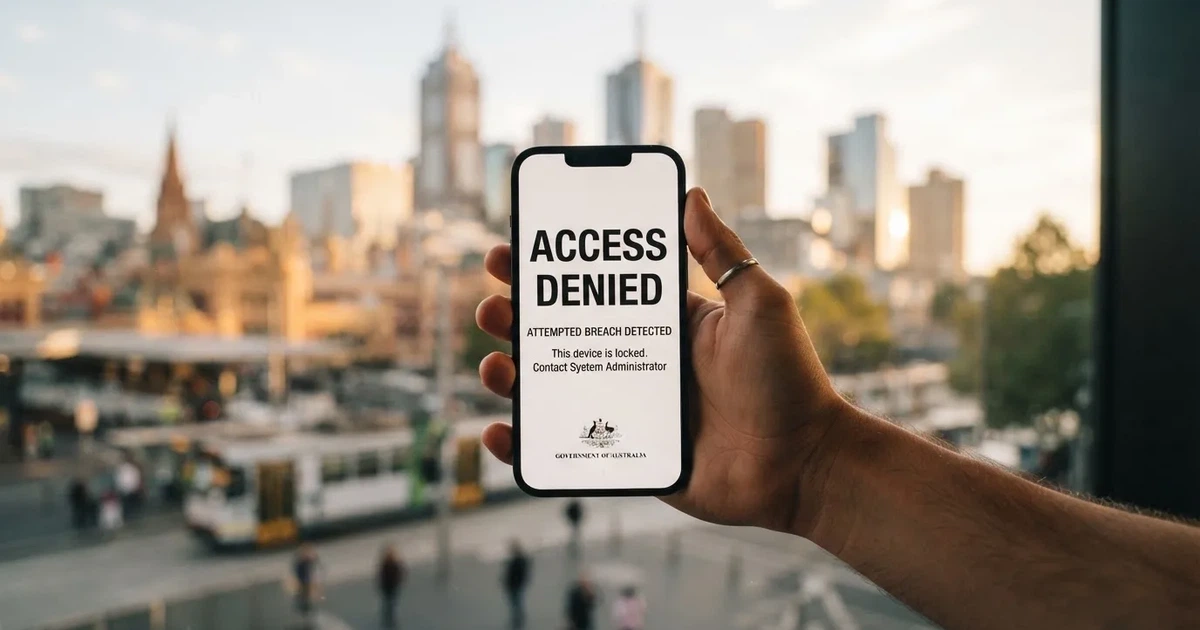
The position taken here is straightforward. No casino on the offshore market can be lawfully offered to an Australian reader, regardless of the Curacao or Anjouan licence tag on the footer. The ranking below is therefore not a recommendation. It is the ACMA’s own enforcement record, transcribed and sorted by date, with a short verdict on each entry. Where the law points elsewhere — licensed wagering, land-based pokies, BetStop self-exclusion — that is named in full, because it is the only part of this subject on which a reader can act.
Current as of 9 November 2026. Data checked against the Australian Communications and Media Authority’s published formal-warning register and blocking-round notices.
Table of Contents
- The shape of the market, and why “best” does not compute
- The legal frame: IGA 2001, enforcement, and what it costs the player
- Player wellbeing: what works when the casino does not
- The ACMA’s enforcement record, brand by brand
- Where this leaves a reader choosing what to do
- How these brands compare on what the ACMA has published
- The takeaways a reader can act on
- Frequently asked questions
The shape of the market, and why “best” does not compute
Searches in this corner of the web reach Australian readers through one of three doors. Some land on affiliate review pages that rank offshore casinos by bonus size and payout speed, as if any of those were licensable. Others arrive via a paid social ad promising a “no verification” casino or a crypto deposit that “skips the bank”. A third group has been sent a link by a friend who used the brand overseas and saw no issue with it from a Melbourne address. None of these doors leads to a lawful Australian offer. The law does not bend because a payment method is private, because a brand is well-reviewed abroad, or because the player believes the offshore operator “should be allowed to compete”.

What the law does, in practice, is push the entire market into a grey zone where every operator the ACMA has named is one formal warning away from being asked to leave, and every Australian player using one is one domain block away from a balance they cannot reach. The ranking further down this page treats that as a feature rather than an edge case, because treating it as anything else would mean recommending a product the regulator has spent nine years telling Australians not to use.
What “offshore” actually means here
An offshore casino, for an Australian reader, is any online casino site that operates from a jurisdiction outside Australia and offers — or accepts Australian customers for — online casino games, online pokies, live dealer tables or in-play betting. The licence tag is almost always Curacao, sometimes Anjouan or the Kahnawake Gaming Commission, occasionally Malta, and never an Australian one because no Australian one exists for this product. “Offshore” therefore does not describe the brand’s quality. It describes the legal vacuum the player steps into the moment they deposit.
This is the line that an honest page has to draw first. The rest of the analysis — payments, game selection, self-exclusion, the ACMA record — only makes sense once the reader knows they are standing in unprotected space.
Why no Australian jurisdiction licenses online casino games
Australia’s online wagering framework treats racing and sport as licensable, and casino games as prohibited. The Northern Territory Racing and Wagering Commission regulates 52 of Australia’s online bookmakers — Sportsbet, Bet365 and Ladbrokes among them — because the territory collects the point-of-consumption tax that funds the scheme, not because the territory licenses casino content. The commission itself is part-time: no full-time staff, meetings once a month in Darwin, and a remit that excludes the very product most offshore casinos sell. No state or territory has moved to license online pokies, online blackjack or online roulette since the IGA was strengthened in 2017, and the Interactive Gambling Amendment (Gambling Reform) Bill 2026, passed on 19 August 2026, tightens advertising and inducement rules rather than opens the market.
The upshot is structural, not political. The market does not exist for Australian regulators to oversee. Every offshore brand a reader sees named in this guide sits outside that system entirely.
The legal frame: IGA 2001, enforcement, and what it costs the player
The Interactive Gambling Act 2001 is the spine of this subject. It prohibits the supply of online casino games, online pokies and in-play betting to anyone in Australia, regardless of where the supplier is incorporated. The 2017 amendments gave the ACMA the tools it has used since: investigations, formal warnings, civil penalty orders, and the power to ask Australian internet service providers to block illegal sites at the DNS level. The 2023 amendments added a credit-card ban on all Australian-licensed online wagering. The 2026 reform bill layered advertising and inducement rules on top. Each layer narrowed what is lawfully offered; none opened the door.
The point worth holding on to is who the law targets. The IGA aims at the provider, not the player. No Australian reader has been prosecuted for placing a bet with an offshore casino. What they have lost, in documented cases, is the balance on the account when the site was blocked mid-session, the winnings when the operator refused a withdrawal, and the recourse to complain when something went wrong. The law is asymmetric in the reader’s favour on criminal exposure and asymmetric against them on consumer protection.
What the ACMA has actually done
The ACMA’s enforcement record is the most concrete evidence in this subject, because it is published, dated and searchable. Three figures give it scale.
According to the ACMA, a running total of 1,751 illegal gambling and affiliate marketing websites had been blocked since the first blocking request in November 2019, with more than 230 unlicensed gambling services having left the Australian market since enforcement was strengthened in 2017. In a single round reported on 26 June 2026, the ACMA asked Australian ISPs to block 12 more: 7Signs, ChromaBet, Donbet, Duospin, Freshbet, Slots Gem, Jacks Club, Lucky Start, Pointsbetz, Spinrise, Vinyl Casino and Wildsino. H2 Gambling Capital’s 2025 report puts the financial gravity of that record at A$3.9 billion a year in losses to illegal sites, with the share of gambling going through legal channels falling from 74% in 2021 to 64%.
Two cautions on those numbers. The 1,751 total counts every blocked domain including affiliate marketing pages, not unique casino brands. The A$3.9 billion is an estimate, not an audited figure. Both are still the best public measure of how the prohibition is being applied.
The blocking rate, in plain terms
The arithmetic that supports this figure is simple. The ACMA’s first blocking request went out in November 2019; by 26 June 2026 the running total stood at 1,751 blocked sites and affiliate pages. That is roughly 218 blocked domains a month, or seven a day, every day, since the regime began. The condition attached to that figure is honest and worth saying: it is the average of a programme that started at zero and grew, with several rounds of more than fifty blocks at a time. The rate at the start of 2024 was lower than the rate in the first half of 2026. The figure holds as a band, not as a constant.
A reader who sees an offshore brand advertised today is looking at a domain that, on the ACMA’s current pace, has a meaningful chance of being unreachable from an Australian IP within months. That is the practical cost of the gap the marketing never mentions.
| Method | Available for Licensed Wagering |
|---|---|
| Debit Card | Yes |
| Bank Transfer | Yes |
| PayID / Osko | Yes |
| BPAY | Yes |
| Credit Card | No |
| Crypto | No |
The credit-card ban that took effect on 11 June 2024 was written for Australian-licensed wagering services, not for offshore casinos. In practice it shapes how an Australian reader funds any gambling account, because the banks have built transaction blocks around the same idea. Westpac’s gambling block refuses authorisation of transactions registered under the merchant category code “Betting/Casino Gambling” on eligible personal credit and debit cards. ANZ’s gambling block, activated in the ANZ app, blocks gambling transactions made through a digital wallet such as Apple Pay on an eligible card, and removing it requires a 48-hour waiting period. Commonwealth Bank offers a gambling lock through the CommBank app that automatically blocks most gambling transactions, with the same caveat the others carry: not every gambling-related purchase will be stopped, and some non-gambling ones may be blocked in error.
Two further pieces complete the wall. The Reserve Bank of Australia’s July 2025 review proposed removing surcharges only on eftpos, Mastercard and Visa transactions, leaving American Express outside the scope of the proposed ban — which is why Amex surcharging at Australian merchants remains a working rule, and why a reader comparing payment methods on an offshore casino should not assume the same surcharge economics apply. The other is digital wallets: by the end of 2025, Apple Pay, Google Pay and Samsung Pay transactions collectively accounted for around 45% of all card payments in Australia by number, which means an Australian trying to fund a casino account from a phone is overwhelmingly reaching for one of those wallets, and the banks have built their blocks to follow that path. The casino page offering “deposit with Apple Pay” is, in practice, deposit subject to the same merchant-code block that catches the underlying card.
What the player loses when the operator is offshore
Three things, all real, all documented in complaints bodies and consumer-affairs write-ups.
First, the operator’s licence is not enforceable from Australia. A Curacao or Anjouan licence is an agreement with a foreign regulator that the Australian player cannot ring up, and the courts in those jurisdictions do not sit in Sydney or Melbourne. A refused withdrawal becomes an email to a customer-service address that may or may not answer, in a language the player may or may not read, with no Australian complaints body to escalate to.
Second, the ACMA can block the site at any time. When that happens, an Australian player with a positive balance cannot log in to withdraw it. The blocks are DNS-level: the domain stops resolving. The operator may continue running for customers in other countries, and Australian players find they cannot reach the cashier they last used.
Third, no Australian consumer protection applies. There is no recourse to the Australian Financial Complaints Authority, no path to the Victorian or NSW gambling regulators for an unlicensed product, no chargeback right that survives a deposit routed through PayID or Osko into an account that turns out to belong to a shell company. That asymmetry is the price of using an offshore site, paid in full when something goes wrong and not refunded afterwards.
Player wellbeing: what works when the casino does not
The reader who reached this page because something went wrong with an offshore brand — a refusal to pay, a closed account, a balance trapped on a blocked domain — is the reader the responsible-gaming shelf is for. The Australian framework offers three concrete tools, none of which depend on the offshore operator’s cooperation.

BetStop, the National Self-Exclusion Register, has been live since August 2023. It binds every Australian-licensed online and phone wagering service, which means every licensed bookmaker that takes a bet over the phone or online is required to refuse the registered person’s account. BetStop does not cover offshore casinos, because no offshore casino has connected to it. The exclusion period runs from a minimum of three months up to a lifetime, and registration is free. For a reader whose problem is the licensed market, BetStop is the lever that stops new accounts from being opened.
The National Gambling Helpline, 1800 858 858, is free, available 24/7 and routes to Gambling Help Online for chat and email support. The line is for anyone affected by their own or someone else’s gambling, including people whose gambling is offshore. It is the first call to make when a balance is missing, an account has been closed without explanation, or the urge to chase losses is becoming a plan.
The third tool is the bank-level gambling block, already described above. ANZ, Westpac and Commonwealth Bank each let a customer switch a block on through their app. ANZ’s block reaches Apple Pay and Google Pay transactions on the same card; Westpac’s block is keyed to the merchant category code; Commonwealth Bank’s lock is set through the CommBank app. The blocks are not perfect — the banks say so themselves — but they turn the deposit side of the cycle from a one-tap reflex into a deliberate step.
What BetStop, the helpline and the bank blocks have in common is that they work without the offshore casino’s permission. That is also their limit: a player determined to keep using an offshore site can register with BetStop and still find the offshore site accessible, because BetStop has no jurisdiction over it. The exclusion only does what the player lets it.
The ACMA’s enforcement record, brand by brand
The ranking below is built from the ACMA’s own formal-warning register, not from affiliate review pages, payout-speed trackers or bonus comparisons. Each entry is a brand the regulator has named in writing, for offering prohibited services to Australians, on the date shown. The column on the right records what other listings say about each brand, on the understanding that “the affiliate page lists it” is a different fact from “the operator is licensed to take Australian money”.
Mechani at a glance
| Brand | ACMA action and date | Operator named by the ACMA | Subject support |
|---|---|---|---|
| RocketPlay | Formal warning, March 2026 | Pulsup Ltd | Listed on Gambling Insider only |
| Level Up Casino | Formal warning, May 2022 | Dama N.V. | Listed on Westpac only |
| Woo Casino | Formal warning, March 2025 | Dama N.V. | — |
| Spirit Casino | Formal warning, May 2025 | Dama N.V. | — |
| National Casino | Formal warning, July 2025 | Consolutetish S.R.L. | Listed on the ACMA, AUSTRAC, and BetStop |
| Bizzo Casino | Formal warning, July 2025; previously 2022 | Consolutetish S.R.L.; previously TechSolutions | Listed on Gambling Insider only |
| Ignition Casino | Formal warning, July 2025 | Bamboo Media | — |
| Instant Casino | Formal warning, February 2025 | EOD Code SRL | Listed on EcoPayz and PayID |
| Jackbit | Formal warning, April 2026 | Ryker B.V. | — |
| Casino Intense | Formal warning, April 2025 | Sterplay Holding Ltd | Listed on AUSTRAC, BetStop, and Gambling Insider |
| Sky Crown | Formal warning, September 2022 | Hollycorn N.V. | — |
The table’s empty cells are doing real work. Where the subject-support column carries a dash, no third-party listing was found in the consulted set that named the brand alongside an Australian-facing service; the absence is recorded, not filled in. Where a name is listed, the listings say so — they do not certify the operator as lawful in Australia, because no third-party listing can.
RocketPlay — the most recent Dama-adjacent name on the register
The ACMA’s formal warning over RocketPlay was issued in March 2026 to Pulsup Ltd, adding RocketPlay to a set of brands the regulator has pursued across multiple operators. Dama N.V., the operator named in an earlier 2022 warning that included six brands — Bambet, Dazard, Level Up, Rocketplay, Wild Tornado and Cobra Casinos — is no longer the only corporate entity on the regulator’s radar. The picture for an Australian reader is that RocketPlay is on its second operator-facing warning in four years. The “Subject support” column records that Gamblinginsider.com lists the brand; that listing does not extend the law’s protection to anyone using it.
Verdict: a brand that has now been named in two ACMA formal-warning rounds under two different operators. A reader landing on RocketPlay from an Australian IP is depositing into a site the regulator has asked to stop taking Australian money more than once.
Level Up Casino — early Dama warning, ten years of operator history
Level Up Casino was named in the May 2022 ACMA warning to Dama N.V. alongside five other Dama brands. The Dama group was, at that point, the operator the ACMA had named most often. The single third-party listing in the consulted set is on Westpac’s gambling-block page, which is itself an indicator of how the bank’s MCC filter classifies the brand’s transactions. There is no positive claim about the brand here — only that the regulator has named it and the bank’s block recognises it.
Verdict: a brand named in the first major Dama round, with no further ACMA action recorded against it under a different operator. The 2022 warning does not expire, and the operator has continued to serve other markets.
Woo Casino — fresh warning, same operator
Woo Casino received a fresh ACMA formal warning over the brand in March 2025, still under the Dama N.V. corporate umbrella. The warning was issued as part of the ACMA’s continuing pressure on Dama, the operator the regulator has pursued more than any other. The “Subject support” listing is empty in the consulted set, which means there is no third-party page to point to as evidence the brand is treated as anything other than what the ACMA has called it. A reader who recognises the brand from a streaming sponsorship overseas will find no Australian angle that changes that.
Verdict: a brand the ACMA returned to in 2025 after naming the operator in 2022. The marketing proposition has not changed; the regulator’s view of it has not changed either.
Spirit Casino — Dama, again, two months later
Spirit Casino is the third Dama N.V. brand the ACMA has moved against in the most recent two-year window, with the formal warning issued in May 2025. The pattern across Woo, Spirit and the original 2022 set is the same operator under increasing pressure. There is no third-party listing in the consulted set for Spirit Casino, and the marketing pages that do carry it describe a Curacao-licensed operation that does not, in any sense, reach into Australian consumer law. The verdict here is short: a brand whose operator has been named three times by the regulator in three years, with no Australian listing to soften that record.
National Casino — the Consolutetish warning and what it replaces
The ACMA issued a formal warning to Consolutetish S.R.L. over National Casino in July 2025, replacing an earlier 2022 warning to TechSolutions (CY) Group Limited and TechSolutions Group N.V. over the same brand. Two formal warnings, three years apart, two different corporate entities, one brand. The “Subject support” column shows National Casino listed on the ACMA’s own page, on AUSTRAC’s threshold-transaction materials and on BetStop — three places that list it as a brand an Australian might encounter, not as a brand an Australian can lawfully use.
Verdict: a brand that has outlived one warning and one operator already. The marketing pitch is unchanged, the regulator’s verdict on the offering is unchanged, and an Australian reader picking it up in 2026 is dealing with the third corporate iteration of the same product.
Bizzo Casino — the 2022 warning’s second life
Bizzo Casino received the same July 2025 Consolutetish S.R.L. warning as National Casino, but its history runs further back: TechSolutions Group N.V. was warned by the ACMA in 2022 over Bizzo, and the brand has now been the subject of two formal warnings across two operators in three years. The “Subject support” listing is Gamblinginsider.com only, which is a directory page rather than a consumer protection. The verdict here tracks National Casino’s — a brand that has cycled through two operators without changing the offering, and an Australian reader choosing it is choosing the same product twice-over.
Ignition Casino — the Bamboo Media warning
The ACMA’s formal warning over Ignition Casino, issued in July 2025, names Bamboo Media as the operator. Ignition is a brand better known in the United States market, where it has operated under various state-level licences. The “Subject support” column is empty in the consulted set, which is consistent with the brand not being marketed to Australians through any channel the consulted sources cover. The Australian-facing piece of the picture is the ACMA warning itself, which exists because the brand was offered to Australians regardless of whether the marketing reached them through an affiliate page.
Verdict: a brand better known in the US market, named by the ACMA for offering prohibited services to Australians, with no third-party listing in the consulted set to dispute that.
Instant Casino — the early 2025 warning over EOD Code SRL
The ACMA issued a formal warning to EOD Code SRL over Instant Casino in February 2025, the earliest warning in the 2025 batch. The “Subject support” column lists Instant Casino on Ecopayz.com and Payid.com.au — the latter is significant, because PayID’s own materials warn that being asked to transfer money to a PayID on an illegal gambling site almost certainly means a scam site. The inverse of that warning is that a brand appearing on PayID-facing pages alongside legitimate banking products is, by PayID’s own alert, an indicator worth taking seriously.
Verdict: a brand whose name surfaces on payment-rail pages next to warnings about illegal gambling. The regulator named it in February 2025; the payment-rail warnings reinforce what the regulator said.
Jackbit — the April 2026 warning, no third-party listings
The ACMA issued a formal warning to Ryker B.V. over Jackbit and CasinOK in April 2026, making Jackbit the most recent brand in the ranking alongside RocketPlay. The “Subject support” column is empty in the consulted set, and the brand’s presence in the ranking is the regulator’s warning alone. A reader recognising the name from a crypto-focused campaign is reading marketing aimed at a market where the regulator has now stepped in twice in three months across two of its brands.
Verdict: a brand the ACMA moved against in April 2026, with no third-party listing to argue the regulator’s case was unwarranted.
Casino Intense — the 2025 Sterplay warning
The ACMA’s formal warning to Sterplay Holding Ltd over Casino Intense was issued in April 2025. Casino Intense is the brand with the most populated “Subject support” column in the ranking outside National Casino: listed on AUSTRAC’s threshold-transaction materials, on BetStop, and on Gamblinginsider.com. The AUSTRAC and BetStop listings are not endorsements — they are pages where the brand is named as something an Australian might encounter, which carries the same warning as a regulatory page naming it. The Gamblinginsider.com listing is the only directory-style entry.
Verdict: a brand that has surfaced on regulatory and registry pages alongside its ACMA warning. The breadth of those listings does not soften the regulator’s verdict; it confirms how widely the brand has been marketed.
Sky Crown — Hollycorn’s September 2022 warning
The ACMA issued a formal warning to Hollycorn N.V. over Sky Crown and Blue Leo in September 2022, making it the earliest warning in the ranking alongside Level Up. The “Subject support” column is empty in the consulted set, which means the brand’s Australian footprint is the regulator’s warning alone. Hollycorn has continued to operate in other markets without further ACMA action recorded in the consulted set, but the original warning has not been withdrawn and the offering has not been relicensed for Australia.
Verdict: a brand named by the regulator in 2022 with no third-party listing in the consulted set, and no recorded follow-up action on either side since.
Where this leaves a reader choosing what to do
The reader’s real choice is not between RocketPlay and Woo Casino. Both are prohibited; the regulator has named both; neither can be lawfully used from Australia. The choice is between continuing to use offshore brands in spite of that, or moving to the legal alternatives.
For racing and sports wagering, the licensed bookmakers regulated by the Northern Territory Racing and Wagering Commission take bets before the event under Australian consumer law, with obligations on advertising, affordability and dispute resolution. The credit-card ban and the bank-level gambling blocks apply to them too, which means the legal route is also the one a player can fund from a normal Australian debit card or PayID without bypassing their own bank’s protections.
For casino games, the legal alternatives are land-based. Crown Melbourne, Crown Perth, The Star Sydney, The Star Gold Coast, Adelaide Casino and the Wrest Point and Country Club Tasmania venues operate pokies and table games under state licences, with the state-based gambling regulator in each jurisdiction providing a complaints path. None of these offer online casino games to Australians; that gap is what the offshore market exists to fill, and what the law prohibits it from filling.
For self-exclusion, BetStop is the lever. For crisis support, the National Gambling Helpline at 1800 858 858 is free and 24/7. For payment friction, the bank-level gambling blocks on ANZ, Westpac and Commonwealth Bank are the practical tool. These are the resources a reader can actually use, and they are the resources this page exists to surface, because they are the only ones that work without the offshore operator’s cooperation.
How these brands compare on what the ACMA has published
Three patterns jump out of the table when it is read as a set rather than row by row.
First, the ACMA’s 2022 warnings and 2025–2026 warnings name different operators for what is, in marketing terms, the same product. RocketPlay moved from Dama N.V. to Pulsup Ltd between 2022 and 2026; Bizzo moved from TechSolutions to Consolutetish S.R.L. in the same window. The brand survives the warning; the operator changes. A reader using the brand in 2026 is using the third or fourth iteration of a product the regulator has asked to stop three times.
Second, the most recent warnings — RocketPlay in March 2026, Jackbit in April 2026 — were issued under operators that had not previously appeared on the register. The regulator is moving beyond Dama and TechSolutions into Pulsup, Ryker B.V. and others. The implication is that the warnings of 2026 are not the warnings of 2022; the ACMA is now naming the corporate vehicles that have taken over from the first round.
Third, the “Subject support” column tells its own story. Brands that appear on regulator and registry pages — AUSTRAC, BetStop, the ACMA’s own register — are also the brands the regulator has named. The listings track the warnings, they do not contradict them.
The takeaways a reader can act on
The page has argued, in evidence, that no offshore casino listed here can be lawfully offered to an Australian player, and that every operator in the ranking has been named by the ACMA at least once for offering prohibited services. That is the legal frame, and it does not bend for a brand’s reputation abroad, for a Curacao licence tag, or for a bonus code advertised by an affiliate.
The reader’s decision tree is therefore short. If gambling is a problem, BetStop and the National Gambling Helpline are the first calls; the bank-level gambling block is the practical deposit-side lever; the licensed bookmakers and land-based casinos are the legal alternatives for wagering and gaming respectively. If gambling is not a problem, the offshore market is still unlawful, and the ACMA’s enforcement record shows what “unlawful” looks like in practice — a domain blocked mid-session, a withdrawal refused with no recourse, a balance lost.
There is no “best offshore casino for Australians” because there is no offshore casino Australians can lawfully use. There is the ACMA’s register, the legal alternatives, and the responsible-gaming tools that work without the operator’s permission. This page is the third of those three, with the first two named in full above.
Frequently asked questions
What makes a casino offshore rather than Australian-licensed?
An offshore casino operates from a jurisdiction outside Australia and holds a licence from a foreign regulator — usually Curacao, sometimes Anjouan or another small jurisdiction. No Australian state or territory issues a licence for online casino games, online pokies or in-play betting, because the Interactive Gambling Act 2001 prohibits the supply of those products to anyone physically in Australia. The licence tag on an offshore casino’s footer is not an Australian endorsement and does not extend Australian consumer protection to a player who deposits.
Does the ACMA block offshore casino websites for Australian users?
Yes. The ACMA can ask Australian internet service providers to block illegal gambling websites at the DNS level, and has done so since 2017. According to the ACMA, a running total of 1,751 illegal gambling and affiliate marketing websites had been blocked since the first blocking request in November 2019, with more than 230 unlicensed gambling services having left the Australian market since enforcement was strengthened. A single round reported on 26 June 2026 added 12 more domains to the block list. The blocks take the site offline for Australian users but do not touch balances already on the account.
Is it legal for an offshore online casino to accept Australian players?
No. The Interactive Gambling Act 2001 makes it an offence to provide online casino games, online pokies or in-play betting to anyone in Australia, regardless of where the operator is incorporated. The law targets the provider, not the player, so an Australian reader is not criminally liable for placing a bet — but the offshore site is breaking Australian law by accepting the bet, and the player gets no Australian consumer protection, no complaints body and no recourse to an Australian court if the operator refuses a withdrawal.
What enforcement action has the ACMA taken against offshore casino operators?
The ACMA has issued formal warnings to the operators behind the brands listed on this page, asked Australian ISPs to block illegal sites, and pursuant to civil penalty proceedings forced unlicensed operators out of the Australian market. Specific named actions include the May 2022 warning to Dama N.V. over six brands, the September 2022 warning to Hollycorn N.V. over Sky Crown and Blue Leo, the February 2025 warning to EOD Code SRL over Instant Casino, the March and May 2025 warnings to Dama N.V. over Woo Casino and Spirit Casino, the April 2025 warning to Sterplay Holding Ltd over Casino Intense, the July 2025 warnings to Bamboo Media and Consolutetish S.R.L. over Ignition Casino, National Casino and Bizzo Casino, the March 2026 warning to Pulsup Ltd over RocketPlay, and the April 2026 warning to Ryker B.V. over Jackbit and CasinOK.
Why doesn’t BetStop cover offshore online casino sites?
BetStop, the National Self-Exclusion Register, has been live since August 2023 and binds every Australian-licensed online and phone wagering service. It works because licensed operators are required by their licence conditions to check BetStop before opening an account. Offshore casinos do not hold Australian licences and are not bound by those conditions, so they are not connected to BetStop at all. A player registered with BetStop can still be accepted by an offshore casino. BetStop protects against the licensed market, not against the offshore one.
What should someone do instead of chasing a new offshore casino after a bad experience?
Three steps, in this order. First, register with BetStop at betstop.gov.au if the gambling has become a problem; the minimum exclusion period is three months and registration is free. Second, call the National Gambling Helpline on 1800 858 858 (free, 24/7) or use the chat at Gambling Help Online, particularly if there is a balance trapped on a blocked offshore site or a withdrawal refused — the helpline can route to financial counselling. Third, switch on the gambling block in the relevant banking app — ANZ, Westpac and Commonwealth Bank all offer one — so the deposit side of the cycle requires a deliberate step rather than a one-tap reflex. Land-based venues and licensed bookmakers remain available as legal alternatives for those who want to keep gambling within Australian consumer protection.