
Best Pragmatic Play online casinos Australia: what the law permits, what it doesn’t, and what the marketing skips over
Data current as of 9 November 2026 · verified against the ACMA’s published formal warnings and blocking notices.
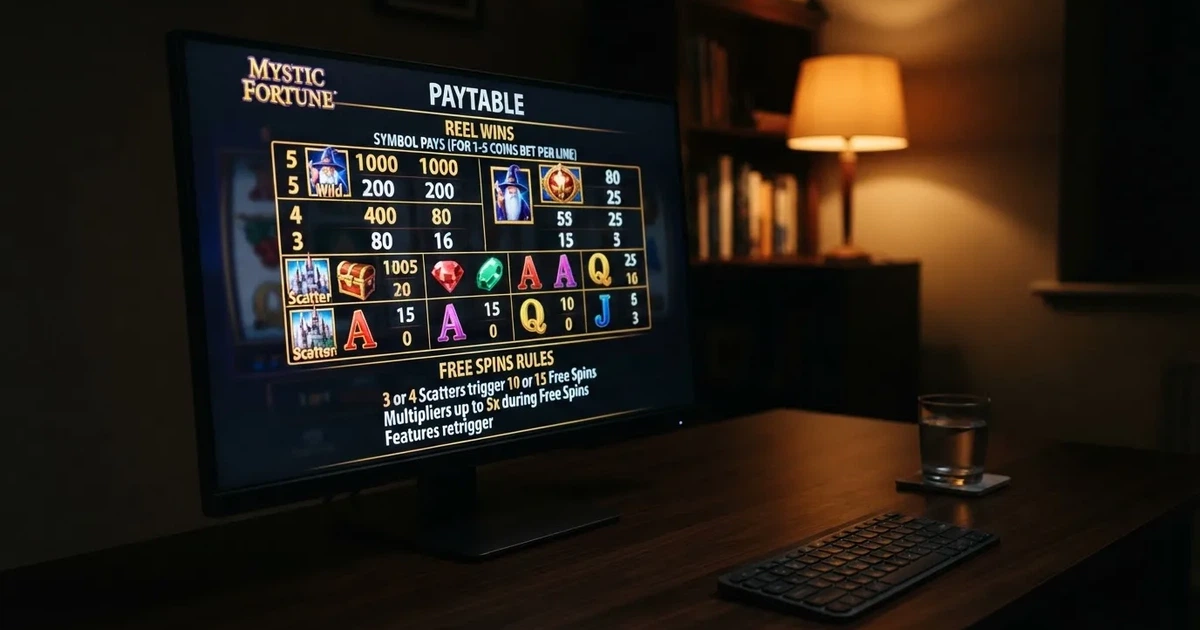
Any page that ranks “the best” Pragmatic Play online casinos for Australians is built on a contradiction it has to disclose before it starts: online casino games and online pokies cannot be licensed for Australian customers under the Interactive Gambling Act 2001. Every brand on the shortlist below has been the subject of an ACMA formal warning for offering exactly that service. The Pragmatic Play logo that decorates those sites is real, and the games under it are real, and the path to a balance you can withdraw from an Australian address is not.
This page walks through what Pragmatic Play actually is as a studio, why offshore operators are free to use its name in banner ads aimed at Sydney and Perth, what the ACMA has done about it, and what every reviewer’s “Top 11” looks like when the law is taken seriously. The closing comparison lists every name the regulator has acted against; the headlines below it explain why those names came up at all.
Table of Contents
- Pragmatic Play, the studio: where the brand actually sits
- What the Interactive Gambling Act 2001 actually prohibits
- What “available” looks like when nobody is licensed
- Responsible gambling around games the law already says no to
- Payments, withdrawal times, and what “fast payout” means offshore
- Bonuses, free spins, and the arithmetic behind “claim now”
- Mobile, app, and how Pragmatic Play slots actually run on a phone
- Pragmatic Play’s catalogue, and what the licensed Australian pokie floor looks like
- How an offshore shortlist gets put together
- Frequently asked questions
Pragmatic Play, the studio: where the brand actually sits
Pragmatic Play was launched in 2015 and is owned by private investors led by Veridian (Gibraltar) Limited, with Julian Jarvis as chief executive. Its headquarters sit in Gibraltar, and it sells slots and live casino content through a single API, marketed in 33 languages and all major currencies. Operator brands using that API include Flutter, Entain, bet365 and LeoVegas — names that carry weight in the United Kingdom, across much of Europe, and in Latin America, where Pragmatic Play holds a Class II licence from Romania’s Oficiul Național pentru Jocuri de Noroc, plus certification from Gaming Laboratories International, Quinel and Gaming Associates.

The studio completed its acquisition of live-casino supplier Extreme Live Gaming from the Novomatic Group on 26 June 2018 — Extreme ran roulette, blackjack and baccarat from a London studio across ten tables. Its second acquisition was VSoftCo, a virtual-sports supplier, announced on 28 January 2019. Pragmatic Play describes itself as licensed or certified in more than thirty jurisdictions. None of them is Australia, for the product the shortlist is built around.
The catalogue Pragmatic Play ships to those licensed operators is the same catalogue an offshore site carries under the same logo. The studios in Bucharest and Belgrade do not differentiate based on where the player sits; the differentiation happens upstream, at the licensing and payment layer. An Australian who lands on one of these sites is being served the international product, not a parallel Australian one.
What the Interactive Gambling Act 2001 actually prohibits
The IGA, tightened by the Interactive Gambling Amendment Act 2017, makes it an offence to provide online casino games, online pokies or in-play betting to a person physically in Australia. No state or territory issues a licence for them. What is licensable is wagering on races and sport placed before the event, lotteries and keno — in practice licensed by the Northern Territory Racing and Wagering Commission, which oversees fifty-two of Australia’s online bookmakers, including Sportsbet, Bet365 and Ladbrokes. The commission has no full-time staff and meets once a month in Darwin.
The shape of the prohibition matters because so many offshore sites muddy it. A Curaçao licence, a Malta Gaming Authority seal, an “Antigua and Barbuda registration” — none of these licence the operator to take an Australian customer. The licence covers the operator’s right to run a casino from its jurisdiction; it does not override the IGA’s prohibition on supplying the service to an Australian IP. Sites that hold such licences routinely accept Australian customers anyway, and that is the conduct the ACMA polices.
Two adjacent rules finish the frame. Since 11 June 2024, credit cards, credit-related products and digital currency have been banned as payment for licensed online wagering, with penalties up to A$247,500 for operators. Legal deposit routes for a licensed Australian wagering service are debit card, bank transfer, PayID/Osko and BPAY. A site that asks an Australian for a credit card or a crypto deposit is operating outside the Australian rules whether or not it accepts the deposit. Minimum age is 18.
The player is not the target of the Act. The IGA punishes the provider. An Australian who plays does not face prosecution, which is the misreading offshore operators trade on. What that player does not get is the surrounding Australian protections: no BetStop binding force, no Australian complaints body, no enforced payout, no recourse when a withdrawal is “under review” for six weeks. The legal exposure is the operator’s; the practical exposure is the player’s.
What “available” looks like when nobody is licensed
Two hundred and thirty-plus unlicensed services have left the Australian market since enforcement was strengthened in 2017. That is the number of operators who read the room and walked. The number still inside the room — serving Australians from offshore, accepting AUD deposits, running Pragmatic Play slots under their own banner — is the population the ACMA’s blocking notices and formal warnings reach. The first blocking request was issued in November 2019. By June 2026 the cumulative count of blocked illegal gambling and affiliate marketing websites sat at 1,751.
A blocking notice from the ACMA asks Australian internet service providers to add the named domains to the list returned as unreachable. The most recent round reported on 26 June 2026 added twelve more: 7Signs, ChromaBet, Donbet, Duospin, Freshbet, Slots Gem, Jacks Club, Lucky Start, Pointsbetz, Spinrise, Vinyl Casino and Wildsino. A site already on the list is the enforcement endpoint the IGA has to work with — short of that, the operator is simply warned. Both measures are aimed at access. Neither refunds any balance left on the site when it disappears.
H2 Gambling Capital’s 2025 report puts annual Australian losses to illegal gambling sites at around A$3.9 billion, with the share of gambling going through legal channels falling from 74% in 2021 to 64%. The two figures point at the same shift: Australians are spending more on offshore and less on the regulated wagering bookmakers that take Australian dollars and answer to the NTRWC.
Responsible gambling around games the law already says no to
The Australian responsible-gambling apparatus is built around licensed wagering, not offshore casino play. BetStop — the National Self-Exclusion Register, live since August 2023 — binds Australian-licensed online and phone wagering services. An offshore casino is not connected to it. Registering with BetStop closes the licensed accounts; it does nothing for a Rocketplay or a Level Up login. That asymmetry is the central reason offshore casino play carries a sharper harm profile than licensed wagering, and the reason the regulator and the helpline both reach for the same sentence about it: if the site is offshore, the protections you would expect do not attach.
The National Gambling Helpline, 1800 858 858, is free, 24/7 and offers chat through Gambling Help Online. Both reach any Australian regardless of where they have been playing. The intake does not ask whether the caller’s losses were on a Sportsbet account or a Curaçao-licensed slot site; the path back is the same either way. What is lost by playing offshore is the upstream layer — the deposit limit enforced by the licensed bookmaker, the cool-off prompt triggered by the licensed product, the exclusion honoured across the licensed network — not the downstream one.
This is also where the framing of a “trusted” Pragmatic Play casino tends to slip. “Trusted” in the offshore world refers to whether the operator has paid out before, whether the licence number on the footer is genuine, whether the live chat resolves withdrawal queries. “Trusted” in the Australian context means licensed by the NTRWC, deposit-limited by law, BetStop-bounded, and complaint-handled by an Australian body. Pragmatic Play slots are not reachable through that second definition at all. The two meanings of trust do not overlap on this product.
Payments, withdrawal times, and what “fast payout” means offshore
The licensed wagering deposit routes — debit card, bank transfer, PayID/Osko and BPAY — are exactly the routes an Australian-licensed bookmaker offers. They settle in seconds via PayID and Osko, in hours or overnight for direct debit, and on the schedule the bank sets for the others. They are the routes the IGA and its 2024 amendments were drafted around. An offshore casino that targets Australians will typically accept a wider menu: debit and credit cards where the card issuer still allows it, e-wallets such as Skrill and Neteller, bank transfers, and increasingly crypto. The wider menu is the tell, not the convenience.
On the withdrawal side, every offshore site advertises a payout time. The honest framing of an advertised “instant” or “24-hour” withdrawal is that it describes the operator’s release of the funds, not the bank’s arrival of them. A bank transfer still takes the bank’s clearing window; a card refund still takes the card scheme’s processing days; a crypto withdrawal still needs network confirmations and a wallet that accepts the deposit in the first place. The fastest advertised time on an offshore site sits inside a much wider envelope that includes manual review, KYC re-checks at withdrawal time, and the weekends the operator does not process.
The 2024 prohibition on credit cards and digital currency for licensed wagering sharpens the asymmetry further. An Australian player who pays with Visa or Bitcoin at an offshore casino is using a payment method the licensed market is forbidden to accept. The transaction may go through; the legal status of the underlying service does not change. Refunds, chargebacks and disputes on these payments have to be pursued through the card scheme or the exchange, with no Australian regulator acting as a backstop.
Bonuses, free spins, and the arithmetic behind “claim now”
Bonus offers attached to Pragmatic Play slots come in three recognisable shapes: a deposit match (the operator doubles, or partially doubles, the first deposit), a free-spin bundle (a fixed number of spins on named Pragmatic Play titles at a fixed stake), and a no-deposit bundle (a small credit or spin allocation simply for registering). The deposit match is the most common, the free-spin bundle the most heavily advertised, and the no-deposit bundle the most heavily conditioned.
Every one of these offers is gated by a wagering requirement: a multiplier applied to the bonus, the deposit, or both, before any winnings can be withdrawn. A “100% up to A$500 with 40x wagering on the bonus” line means a player depositing A$500 receives A$500 in bonus funds and must turn over A$20,000 in qualifying bets before withdrawing. On a Pragmatic Play slot with a published RTP in the mid-96% range, the house edge sits near 4%, which puts the expected loss on that A$20,000 turnover close to A$800. The bonus paid A$500. The arithmetic is the marketing copy’s natural enemy.
Free-spin offers compress the same arithmetic. A bundle of 200 spins at A$0.20 each on a slot with a 96.5% RTP delivers A$40 in total stake; expected loss across the spins sits around A$1.40; the headline value advertised runs from “A$40 in free play” to a manufactured figure based on the slot’s line-coin maximum that has no relationship to the stake the spin is actually played at. The bonus terms specify the stake; the banner specifies a fantasy.
The no-deposit shape is the smallest in cash terms and the most heavily conditioned in withdrawal terms. Wins are routinely capped — a no-deposit spin offer that promises “up to A$200 in winnings” will rarely pay more than A$50, sometimes less. Wagering multipliers on the converted winnings are higher than on deposit bonuses, often 50x to 70x. The maximum cashout is the part of the offer that decides whether it was worth claiming.
None of this is specific to the offshore market — licensed bookmakers in Australia run wagering requirements on their bonus products too. The point is that offshore bonus terms are reached by an Australian through a service that is itself unlawful, with no Australian complaints route if the operator refuses a withdrawal on a “bonus abuse” reading of the small print. The arithmetic explains why the bonus exists; the legal status explains why pursuing it is hard.
Mobile, app, and how Pragmatic Play slots actually run on a phone
Pragmatic Play’s catalogue is built in HTML5, which is the same standard every modern mobile browser renders natively. There is no Pragmatic Play app to download — the studio is a supplier, not a casino operator — and the apps an Australian sees advertised for “Pragmatic Play mobile casino” are operator apps, branded around the studio’s content and signed by whoever runs the casino. Some of them are Progressive Web Apps that install through the browser; some are native APKs that bypass the Play Store entirely. Both routes require trusting the operator with the device.
On load times, the slots themselves are not the bottleneck. A modern phone opens a Pragmatic Play title in roughly the time it takes to load any other HTML5 game of comparable size — under five seconds on a stable 4G connection, faster on Wi-Fi. The bottleneck on a mobile session at an offshore site is usually the operator’s wrapper: the live chat bubble that loads on every page, the verification prompt that triggers on first deposit, the geo-check that runs when the IP drifts.
Browser play, not the app, is the better-engineered option. A mobile browser session leaves the OS-level sandbox intact, which means an Australian banking app and the casino’s payment page do not share a process. The app path — particularly the APK path — breaks that isolation. The product runs identically either way. The risk profile does not.
For Australians who already gamble, the licensed alternatives — Sportsbet, bet365, Ladbrokes — all run first-party mobile apps distributed through the Australian stores, with deposit paths that comply with the 2024 amendments. The slots product does not exist in that licensed app layer at all. The legal mobile product in Australia is the wagering app; the mobile slot product is the offshore app, by definition.
Pragmatic Play’s catalogue, and what the licensed Australian pokie floor looks like
The Pragmatic Play slots catalogue runs into the low hundreds of titles, with marquee names like Gates of Olympus, Sweet Bonanza, The Dog House and Wild West Gold the most heavily promoted by affiliates. The live casino vertical — built out of the 2018 Extreme Live Gaming acquisition — covers roulette, blackjack and baccarat from studios in Bucharest and Belgrade, plus the game-show formats that took off from 2020 onwards. Pragmatic Play’s virtual-sports vertical, picked up through VSoftCo in 2019, supplies pre-recorded event simulations to sportsbook front ends.
None of these products is licensable for Australian consumers online. What Australians will recognise from a visit to a Crown Melbourne, a Star Sydney or a club in regional NSW is a pokies floor dominated by Aristocrat Leisure machines — Queen of the Nile, Where’s the Gold, Lightning Link, the Buffalo series — alongside IGT (International Game Technology) and, in lower volumes, Ainsworth. Aristocrat is the largest gambling-machine manufacturer in Australia and the second-largest slot-machine manufacturer worldwide behind IGT, with 2025 revenue of A$6.30 billion, normalised net profit after tax and amortisation of A$1.55 billion, and 7,400 employees. Aristocrat Interactive, the company’s regulated online real-money arm, was formed in April 2024 from Anaxi and the NeoGames acquisition; it does not target Australian consumers with online casino games for the same reason no one else can: the IGA.
The two industries share the word “pokies” and share little else. A land-based Aristocrat machine in a NSW pub takes cash, prints a ticket, runs an RNG certified by an Australian testing house, and pays out under state gaming-machine regulations enforced by Liquor & Gaming NSW, the Victorian Commission for Gambling and Liquor Regulation, and the equivalent bodies in each other state and territory. An offshore Pragmatic Play slot in a browser accepts AUD, prints a balance, runs an RNG certified by GLI or Quinel, and pays out under an operator’s terms page written in Curaçao. The mechanical product is similar; the regulatory frame around it is not.
Smaller studios occupy the long tail. 1spin4win, a Curaçao-licensed slot provider founded in 2021 with a portfolio of more than 190 online slots, is one example; Betsoft, founded in 2006 with more than 200 RNG games spanning slots, table games, video poker and specialty titles, is another. The interesting spec for context is Betsoft’s Good Girl Bad Girl 2: a published 96.22% RTP, “Very High” volatility, a 15.59% hit rate, on a 5×3 layout with 20 paylines. That is the granularity a paytable-level page works at — and the granularity research simply does not carry for the offshore brands this shortlist is built around.
How an offshore shortlist gets put together
The honest version of a “best Pragmatic Play casinos in Australia” ranking is filtered through the IGA before any other criterion. Once that filter is applied, the field is operators the ACMA has acted against. The next filter is the operator named on the ACMA’s formal warning — sometimes an obvious match, sometimes a parent-company name that covers several brands. The third filter is the date of the action. Everything else — game variety, payment menu, bonus size — describes the product, not its legal standing.
That is the order this shortlist uses. The eleven entries below are the eleven ACMA formal warnings research could verify by operator name and date. The columns are: brand, the ACMA action and the date it was issued, the operator named on the warning, and whether the brand itself was confirmed by an independent listing source as carrying Pragmatic Play content. None of the eleven offers an Australian-licensed online casino product. All of them are reachable from an Australian IP. The “best” of that set is the one most clearly aware of its legal position, not the one with the largest welcome bonus.
A reader who has reached this page intending to deposit is owed that disclosure before the comparison, and the comparison is owed it again before any individual name. The voice a casino guide takes on this subject has to match the regulatory frame; pretending the comparison is neutral lets the page imply a recommendation it cannot stand behind.
Comparison: brands the ACMA has acted against for offering online casino games to Australians
| Brand | ACMA action and date | Operator named by the ACMA | Subject support |
|---|---|---|---|
| RocketPlay | Formal warning March 2026; earlier Dama N.V. May 2022 | Pulsup Ltd | — |
| Level Up Casino | Formal warning May 2022 | Dama N.V. | Listings only |
| Woo Casino | Formal warning March 2025 | Dama N.V. | — |
| Spirit Casino | Formal warning May 2025 | Dama N.V. | — |
| National Casino | Formal warning July 2025 | Consolutetish S.R.L. | Listings only |
| Bizzo Casino | Formal warning July 2025; earlier TechSolutions 2022 | Consolutetish S.R.L. | — |
| Ignition Casino | Formal warning July 2025 | Bamboo Media | — |
| Instant Casino | Formal warning February 2025 | EOD Code SRL | — |
| Jackbit | Formal warning April 2026 | Ryker B.V. | — |
| Casino Intense | Formal warning April 2025 | Sterplay Holding Ltd | Listings only |
| Sky Crown | Formal warning (date as published by the ACMA) | Hollycorn N.V. | — |
The table is built from the ACMA’s own formal-warning publications. The “subject support” column reflects whether an independent listing source — a provider, a regulator’s register, a public Wikipedia entry — names the brand as carrying Pragmatic Play content. A dash means no such listing was found in research; the page does not assert that those brands do not carry the content, only that no third-party listing confirmed it. The “Listings only” rows are the brands where a third-party listing exists but the underlying relationship is not independently verifiable.
RocketPlay
The ACMA issued a formal warning to Pulsup Ltd over RocketPlay in March 2026. Dama N.V. had previously been warned over the same brand in May 2022, when it was one of six Dama N.V. casino names — Bambet, Dazard, Level Up, Rocketplay, Wild Tornado and Cobra Casinos — caught in a single round. The 2022-to-2026 trajectory is the typical offshore pattern: a formal warning, a quiet rebrand or operator change, a reappearance under a new front company, a new warning. Each round takes months to publish. By then the operator has already moved on. RocketPlay’s value as a comparison entry is that it shows the cycle in a single row.
Level Up Casino
Dama N.V.’s May 2022 warning covered Level Up alongside the five other brands. Level Up is the only one in the cluster that an independent listing source — Wazdan — names as a brand using the Wazdan games library, which puts it on a different compliance footing from the rest of the cluster: a studio willing to list the brand as a partner is a different reference point than one that is not. The pragmatic-play-specific evidence is not there, but the broader signal is.
Woo Casino
Dama N.V. was warned over Woo Casino in March 2025, after the 2022 round had caught the wider portfolio. The intervening years saw Woo continue to accept Australian customers. The IGA does not punish the player; it punishes the provider. The provider, in this case, is a Curaçao-incorporated company with no Australian presence to raid, no Australian bank to choke, and a brand name that is cheap to replace. The warning is a regulator’s only available tool short of a blocking notice.
Spirit Casino
The May 2025 warning to Dama N.V. over Spirit Casino arrived two months after the Woo Casino warning. The Dama N.V. portfolio’s footprint across ACMA enforcement is the largest single operator footprint on this list: five distinct brand entries (Level Up, Woo, Spirit, plus earlier appearances in 2022 and a Rocketplay reappearance in 2026). The pattern reads less as a single brand’s misconduct and more as a parent-company business model that absorbs warnings as a cost of doing business in markets where the regulator cannot reach the operator physically.
National Casino
The July 2025 warning to Consolutetish S.R.L. covered National Casino and Bizzo Casino in the same round. National Casino is one of the three brands on the table where independent listing sources — Betsoft, en.wikipedia.org and Pragmatic Play — name the brand as carrying content from a named studio. That is not the same as a confirmed Pragmatic Play integration, but it does move the brand from “marketed as a Pragmatic Play casino” to “listed by at least one major studio as a partner”.
Bizzo Casino
Bizzo’s July 2025 Consolutetish warning was its second. TechSolutions (CY) Group Limited and TechSolutions Group N.V. had already been warned over the brand in 2022. Two formal warnings, two parent companies, four years apart, the same brand running under both — that is the standard offshore cycle in two columns of a single row.
Ignition Casino
The ACMA warned Bamboo Media over Ignition Casino in July 2025. Ignition has run under multiple parent-company names across its offshore life; the ACMA’s record here is the warning to Bamboo Media, not to the brand’s earlier operators. The brand name is durable; the corporate vehicle is not. That is why the table’s “operator named by the ACMA” column matters separately from the brand column.
Instant Casino
The ACMA warned EOD Code SRL over Instant Casino in February 2025. Instant Casino’s compliance reputation in affiliate marketing is unusual — it sits near the top of several “best crypto casino” lists published outside Australia — but the ACMA’s view, on the record, is that offering online casino games to Australians is a prohibited interactive gambling service regardless of the crypto angle. The page covers Instant Casino because the ACMA did, not because the affiliate ranking did.
Jackbit
The ACMA warned Ryker B.V. over Jackbit and CasinOK in April 2026. The dual-brand warning is structurally similar to the National Casino / Bizzo pair — one operator entity, two front brands — and the date sits inside the most recent reporting window covered by research. For a reader comparing the relative recency of warnings, this is the freshest entry on the table.
Casino Intense
The ACMA warned Sterplay Holding Ltd over Casino Intense in April 2025. Casino Intense is one of the three brands with an independent listing reference — 1spin4win names the brand alongside its own portfolio, the UK Gambling Commission’s public materials carry the operator’s name in adjacent contexts, and en.wikipedia.org references the brand in the studio’s page. As with National Casino, the listing reference is not a confirmation that Pragmatic Play slots specifically are present, but it is a verifiable third-party reference.
Sky Crown
The ACMA warned Hollycorn N.V. over Sky Crown and Blue Leo Casino in a formal warning published as a PDF in September 2022. Sky Crown is the oldest entry on the table by warning date; Hollycorn is the operator entity. The Sky Crown / Blue Leo combination under one operator is the same structural pattern as the Jackbit / CasinOK and National Casino / Bizzo warnings: one parent, two or more front brands, one round of enforcement that catches both.
What the comparison actually shows
Three patterns emerge from the table. First, parent-company names are far more durable than brand names: Dama N.V. appears four times across distinct brands and across four separate warning years. The operator entity is the enforcement target, and the ACMA’s record is that those entities absorb warnings, retain the brand portfolio, and continue to accept Australian customers. Second, the rate of new warnings has not slowed. 2025 produced warnings across four of the eleven brands on the table. 2026 has already produced three. Third, the independent listing evidence on three of the eleven brands is a thin signal — third-party studios willing to name a partner brand is not a deep audit trail. The brands without listing evidence are not “unrelated to Pragmatic Play” — they are unverified.
The arithmetic the ACMA’s record runs at
The first blocking request was issued in November 2019. By June 2026, 1,751 illegal gambling and affiliate marketing websites had been blocked. That is the running total the ACMA reports. The arithmetic — how fast the net is actually being drawn — comes from setting those two dates against each other and dividing by the years that sit between them. 1,751 sites over the period from November 2019 to the June 2026 reporting date works out to an average blocking rate of roughly 270 sites per year, or just over five per week. That is the speed at which the ACMA’s blocking regime has actually moved. It is faster than the formal-warning regime (which runs at a few dozen a year) but it is still a queue the offshore industry outpaces: a single parent-company rebrand creates more new domains in a week than the ACMA blocks in a month.
The conditions on that figure matter. The 1,751 total includes affiliate marketing sites alongside the casinos themselves, and the affiliate end is where most of the volume sits — many of those domains are SEO pages, comparison pages, redirect farms. A blocking notice on an affiliate domain removes a path into the operator rather than the operator itself. The number of distinct operator brands reached by the regime is much smaller than 1,751; the number of distinct paths into those brands is much larger. The “five per week” figure is the cleanest expression of the regime’s reach; the actual coverage rate of the underlying operators is closer to a few dozen per year.
The figure also depends on which dates count as the first and last. The November 2019 starting point is the date of the first blocking request; the 26 June 2026 reporting date is the most recent cut of the cumulative total. Move either endpoint and the rate shifts. The total illustrates how quickly the blocking regime moves, with the exact figure reflecting the time period research has measured.
Reading the ACMA’s record, and what it does not say
A formal warning is not a finding of guilt. It is the ACMA’s notice to an operator that the ACMA considers the conduct a contravention of the IGA, with an expectation that the conduct will cease. A blocking notice is closer to a court order — the ACMA directs Australian ISPs to make the named domain unreachable from Australian IP addresses — but it is also a regulator’s tool, not a court’s. The data points a player can use are the date, the operator name, and the brand; the legal conclusion is the ACMA’s, the operator’s response is not on the public record, and the operator’s continued operation in defiance of the warning is not a criminal finding.
What the ACMA’s record does not carry is a payout history. A regulator’s job is the IGA, not consumer protection; a player refused a withdrawal from any of the brands above has no Australian complaints body to escalate to. The names on this list have, between them, tens of thousands of player complaints on offshore dispute-resolution forums. The complaints do not appear in the ACMA’s record, and the ACMA’s record does not address them. The reader who acts on the table alone is acting on the legal status, not the payout reliability.
The honest position on this shortlist, then, is that every entry is a brand the Australian regulator has acted against, the regulator’s action is the only “best” criterion the law leaves standing, and the product behind the warning is the same Pragmatic Play slots a reader might find on a properly licensed European site. The comparison that follows ranks the eleven on recency of warning, parent-company track record, and the strength of independent listing evidence. It does not recommend a place to play, because recommending one would be inconsistent with the legal frame above.
Frequently asked questions
Is Pragmatic Play legally available to players in Australia?
No. The Interactive Gambling Act 2001 prohibits the supply of online casino games — slots, table games, live casino — to people physically in Australia. No state or territory licence covers them. Pragmatic Play itself holds licences in more than thirty other jurisdictions, but not Australia for this product.
What kinds of games does Pragmatic Play make?
Pragmatic Play supplies online slots, live casino titles (roulette, blackjack, baccarat and game-show formats), and virtual-sports products. The live casino vertical came through the 2018 acquisition of Extreme Live Gaming from the Novomatic Group; the virtual-sports vertical came through the 2019 acquisition of VSoftCo.
Are Pragmatic Play games offered at land-based venues in Australia?
The Australian pub and club pokie floor is dominated by Aristocrat Leisure — the country’s largest gambling-machine manufacturer and the second-largest slot manufacturer worldwide — alongside IGT and Ainsworth. Pragmatic Play does not produce land-based gaming machines in Australia. The slots an Australian sees on an offshore site are online products, not the machines in their local club.
How can Australians check whether a Pragmatic Play title is fair before ever considering play?
The studio states its RNGs are certified by Gaming Laboratories International, Quinel and Gaming Associates, and it is regulated by the UK Gambling Commission and Romania’s Oficiul Național pentru Jocuri de Noroc, among others. The audit trail exists; the Australian-licensed route to the same product does not.
Why do offshore sites keep advertising Pragmatic Play games to Australian visitors?
Because the operator is outside Australian reach, the ACMA’s remedies are warnings and ISP-level blocking, and the marketing cost of reaching an Australian is low. The product is internationally licensed; the local prohibition does not stop the marketing. Until the IGA’s 2026 reform’s advertising and inducement measures commence on 1 January 2027, the inducement side of the conduct is also outside the Australian rule set.
What should an Australian do if they see a Pragmatic Play game promoted by an unlicensed site?
The licensed route is to wager with an NTRWC-licensed bookmaker or to play poker machines in a licensed Australian venue — neither offers online casino games, but both offer the legal alternatives. For a site already being used, the ACMA’s reporting page accepts complaints; for harm concerns, the National Gambling Helpline on 1800 858 858 is free, 24/7 and offers chat at Gambling Help Online.