
Playson at Australian online casinos in 2026: what the law actually allows
Currency stamp: data current as of 9 November 2026, cross-checked against the Australian Communications and Media Authority’s published register of formal warnings and blocking requests.
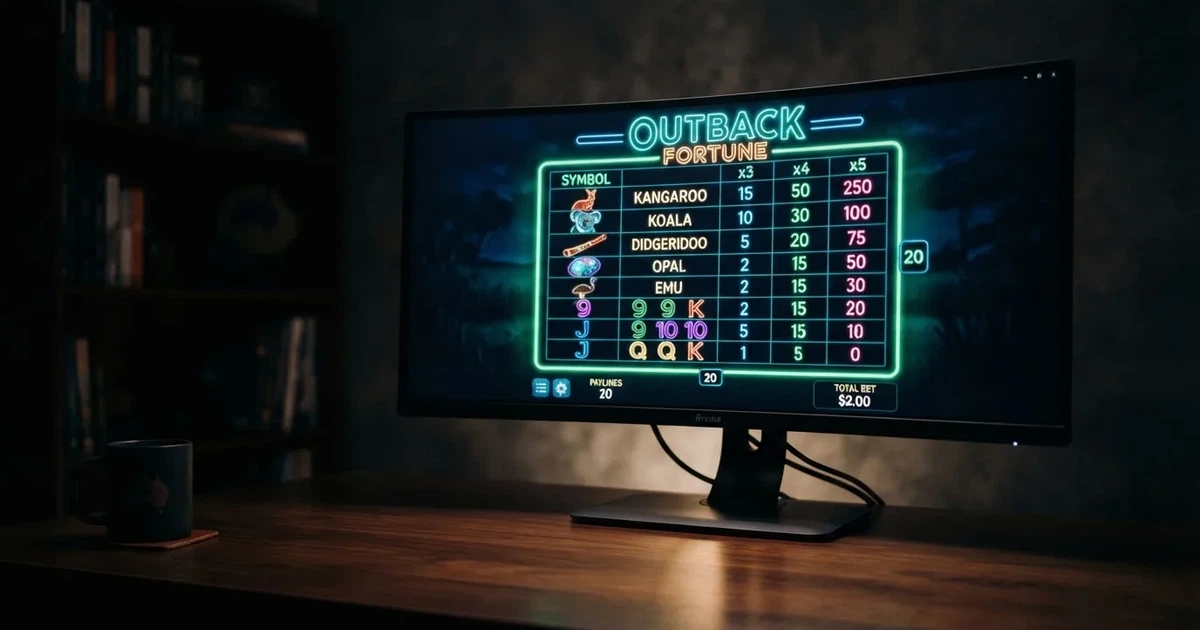
Playson is a real game studio, with a real Malta office, a UK Gambling Commission software licence and a catalogue of video slots you can verify on the regulator’s own page. What it is not, in Australia, is a click-and-play option. The Interactive Gambling Act 2001 prohibits anyone from supplying online casino games — pokies, table games, instant-win titles — to a person physically in Australia. No state or territory issues such a licence. Every “best Playson online casino Australia” list that resolves to a real-money site you can sign up to from a Sydney address is, by definition, a list of offshore operators the regulator has spent the last seven years blocking. That is the shape of this market, and a reader who knows it before signing up avoids a category of loss the marketing pages will not warn them about.
This page does not recommend a place to play Playson online. It lays out, in the order a player meets them, what the law actually forbids, what the offshore sites that ignore it have cost Australians, what the ACMA has done about the eleven most-cited ones, and where the equivalent product lives inside Australia instead. The angle is consequence: each section ends with what the rule or warning actually costs a person, and when that cost becomes visible — at the cashier, at the cashier’s locked balance, at the moment a withdrawal never arrives.
Table of Contents
- Playson, in plain terms: what the studio is and where it sits
- The Australian law in one paragraph
- Playson at Australian-licensed venues: the legal alternative
- The ACMA’s blocking record, in numbers and in consequence
- The financial shape of the illegal market
- The eleven Playson-brand operators on the ACMA’s record
- What an offshore Playson casino’s “fast payout” actually means
- Bonuses, free spins and what they cost an Australian
- Mobile and app access: what works and what is blocked
- Playson-style slots from other studios in the offshore mix
- How an Australian can verify a Playson title before considering play
- What the ACMA’s enforcement record has cost the operators named above
- What an Australian should do when an unlicensed site promotes Playson games
- Responsible-gambling support, written for the reader the ACMA’s record describes
- Playson-style play in Australia: the legal shape in summary
- Frequently asked questions
Playson, in plain terms: what the studio is and where it sits
Playson Limited is a B2B slot supplier, not an online casino. Its registered office is at 12 Tigne Place, Office M4, Tigne Street, Sliema, Malta, and it holds an active UK Gambling Commission remote gambling software licence (account 041337-R-321523-016), live since 1 July 2015, plus a UK remote casino licence under the same account, in force since 14 April 2016. The Commission’s public register is the place a player can confirm both, with the licence numbers above and the dates the licences were first issued. Playson itself does not take bets from Australians and never has: it licences its games to operators, and the operator, not the studio, is the entity on the wrong end of an ACMA formal warning.

The studio’s catalogue is a set of video slots — 5-reel, fixed-payline HTML5 builds — with branded mechanics such as Hold and Win, Multi-Level Bonus games and the various “Jackpot” configurations that recur across its releases. Playson does not publish an Australia-facing casino list, and Playson does not run a real-money site of its own. A reader who lands on a page selling “Playson online casino Australia” is looking at an offshore operator that has integrated Playson games alongside dozens of other studios, marketed the bundle under the studio name, and reached an Australian IP through a payment route the licensed wagering channels here have not allowed since 11 June 2024.
For a player, the practical question is therefore not “which Playson casino is best” — that is an offshore question with an Australian legal answer — but “what does the equivalent product look like inside Australia, and what is the offshore shortcut actually costing me”. Both questions are answered below; the first in the section on Australian-licensed alternatives, the second in the section on what the ACMA’s blocking record has produced so far.
The Australian law in one paragraph
The Interactive Gambling Act 2001, as tightened by the Interactive Gambling Amendment Act 2017, makes it an offence to provide an “interactive gambling service” to a person physically in Australia. Online casino games, online pokies and in-play betting are prohibited interactive gambling services. No state or territory regulator can license them. What is licensable, and is in fact licensed here, is pre-event wagering on races and sport, lotteries and keno — categories administered in practice by the Northern Territory Racing and Wagering Commission, which regulates 52 of Australia’s online bookmakers (Sportsbet, Bet365, Ladbrokes among them) and runs on a once-a-month meeting in Darwin and no full-time staff. The IGA targets the provider, not the player: no Australian has been prosecuted for placing an online casino bet, and the risk a player carries is commercial and unprotected, not criminal.

That distinction is the one the offshore marketing pages erase. They present a Curaçao or Anjouan licence number as if it were an Australian one, accept credit cards and crypto deposits that licensed Australian wagering has been barred from since 11 June 2024, and offer bonuses and free spins the Australian regime prohibits by design. The player is the one whose recourse evaporates the moment a withdrawal stalls, because the operator is outside any Australian complaints body and the ACMA’s enforcement arm is the site going dark — not a refund appearing.
Playson at Australian-licensed venues: the legal alternative
Playson does not distribute to land-based Australian venues, and that has consequences for where a player who wants the closest legal equivalent actually plays. The slot machines Australians encounter in pubs, clubs and casinos are made by Aristocrat Leisure — the largest gambling-machine manufacturer in Australia and the second-largest slot-maker worldwide, behind International Game Technology. Aristocrat was founded in 1953 by Leonard Ainsworth, listed on the ASX in 1996 under the ticker ALL, and reported 2025 revenue of A$6.30 billion on a normalised net profit after tax and amortisation of A$1.55 billion across 7,400 employees. Its machines carry the famous “pokies” branding, the “Queen of the Nile” and “Buffalo” lines and the Lightning Link family that has reshaped pub floors across the country.
The reader-relevant point is not that Aristocrat is bigger. It is that Aristocrat titles are the Playson equivalent available inside the legal envelope: same reel format, same hold-percentage setting, same kind of bonus round, played on a regulated machine inside a venue that answers to a state or territory gaming regulator. Aristocrat Interactive, the company’s regulated online real-money arm formed in April 2024 from its Anaxi unit and the acquired NeoGames group, supplies the licensed wagering operators with HTML5 builds of the same titles that ship on the machines — but those builds are integrated into Australian-licensed sports and racing products, not into standalone online casinos, because standalone online casinos do not exist here.
The two domains — the pub machine regulated by, say, Liquor & Gaming NSW or the Victorian Commission for Gambling and Liquor Regulation, and the offshore slot hosted by an Anjouan-licensed operator — sit on opposite sides of the IGA. A player who wants the regulated version of what Playson markets online finds it in a licensed club or casino floor, not on a browser tab labelled “Playson casino Australia”. The next section explains what the regulator has been doing about that browser tab.
The ACMA’s blocking record, in numbers and in consequence
The Australian Communications and Media Authority is the body that investigates suspected breaches of the IGA, issues formal warnings to operators and directs Australian internet service providers to block illegal sites. The numbers behind that work are the most concrete read on how much of the “Playson online casino” market for Australians is actually offshore and how active the enforcement has been. By June 2026, the ACMA had asked ISPs to block 1,751 illegal gambling and affiliate marketing websites since the first blocking request in November 2019, and more than 230 unlicensed gambling services had left the Australian market since enforcement was strengthened in 2017.
The blocking rate since the first request is the cleanest way to translate that running total into a pace. From November 2019 to June 2026 — 79 months — the ACMA moved from zero blocked domains to 1,751. That works out to an average of roughly 22 sites blocked per month, or about one site every 33 hours over the seven-year window, with the rate tilting higher in the last two reporting cycles than the cumulative average. The number is a band rather than a fixed figure: ACMA rounds go out in bursts of roughly a dozen sites at a time, and a quiet two months can sit next to a fortnight in which fifteen go dark, so any single month’s count is more variable than the 22-per-month average suggests. The consequence for an Australian considering signing up is direct — the operator’s domain that resolves today may be the same one the ACMA’s next blocking list names tomorrow, and a balance left on it when the block lands is, in practical terms, gone.
The same reporting cycle that gave the 1,751 total also named the twelve sites blocked in that round: 7Signs, ChromaBet, Donbet, Duospin, Freshbet, Slots Gem, Jacks Club, Lucky Start, Pointsbetz, Spinrise, Vinyl Casino and Wildsino. None of those twelve are Playson-branded storefronts in the narrow sense — they are generalist offshore casinos that integrate Playson alongside a dozen other studios — but they are the shape Playson-brand play in Australia actually takes, and the rate at which they vanish is the rate at which any chosen “Playson casino” link can break.
The financial shape of the illegal market
The H2 Gambling Capital estimate cited in 2025 puts Australians’ annual losses to illegal gambling sites at about A$3.9 billion, against a fall in the share of gambling going through legal channels from 74% in 2021 to 64%. The 10-percentage-point slide over four years is the trend line that explains why the ACMA’s blocking round has been getting longer rather than shorter: every percentage point of legal share that migrates offshore is a percentage point the regulator cannot tax, cannot oversee and cannot refund when a withdrawal goes wrong. The illegal-market figure is an estimate, and H2 Gambling Capital’s methodology does assume a particular channel-split, so the A$3.9 billion is best read as a ballpark — but the direction is unambiguous, and the figure’s existence is what a reader compares an offshore site’s marketing line against.
For a single player, the consequence of the A$3.9 billion figure is what the illegal market cannot do for them when something goes wrong. A licensed Australian wagering operator answers to the ACMA and to the state regulator that issued the licence; complaints can be lodged, decisions escalated and balances enforced through Australian courts. An offshore operator answers to the regulator that issued its remote licence — usually Curaçao or Anjouan — and the dispute resolution path runs through that jurisdiction’s own mechanisms, with the Australian player footing the cost of any foreign proceedings out of pocket and at their own risk. The marketing page’s “fast payouts” line and the operator’s actual record on a stalled withdrawal are different documents, and the A$3.9 billion is the price Australian players have paid to find that out.
The eleven Playson-brand operators on the ACMA’s record
The ACMA’s published register of formal warnings is the cleanest cross-reference for any “Playson online casino” name an Australian reader sees in an affiliate list or in a paid search result. The eleven operators below are the ones the ACMA itself has named in a formal warning, in the order the regulator published them; they are not ranked, they are not recommended and their inclusion here is a regulatory fact, not an endorsement. Each card carries the ACMA action and date, the operator entity named in the warning, and whether Playson-brand content is supported according to the only source a reader can verify — the listing pages of the studios whose catalogues integrate the games.
| Brand | ACMA action and date | Operator named by the ACMA | Subject support |
|---|---|---|---|
| RocketPlay | Formal warning under the IGA, March 2026 (Pulsup Ltd); earlier Dama N.V. warning, May 2022 | Pulsup Ltd; previously Dama N.V. | — |
| Level Up Casino | Formal warning under the IGA, May 2022 | Dama N.V. | Listed by Wazdan among partner casinos |
| Woo Casino | Formal warning under the IGA, March 2025 | Dama N.V. | — |
| Spirit Casino | Formal warning under the IGA, May 2025 | Dama N.V. | — |
| National Casino | Formal warning under the IGA, July 2025 | Consolutetish S.R.L. | Listed by Betsoft, Pragmatic Play and other studio catalogues |
| Bizzo Casino | Formal warning under the IGA, July 2025; earlier TechSolutions warning, 2022 | Consolutetish S.R.L.; previously TechSolutions Group | — |
| Ignition Casino | Formal warning under the IGA, July 2025 | Bamboo Media | — |
| Instant Casino | Formal warning under the IGA, February 2025 | EOD Code SRL | — |
| Jackbit | Formal warning under the IGA, April 2026 | Ryker B.V. | — |
| Casino Intense | Formal warning under the IGA, April 2025 | Sterplay Holding Ltd | Listed by 1spin4win and other studio catalogues |
| Sky Crown | Formal warning under the IGA, September 2022 | Hollycorn N.V. | — |
The “Subject support” column is intentionally sparse. Playson itself does not publish a per-operator integration list, and the listings that do exist are studio pages whose own presence on a casino site does not make that site legal in Australia — the ACMA’s position is that an offshore operator offering interactive gambling services to Australians is in breach of the IGA regardless of which game providers it bundles. The em-dash entries are not refusals on the part of the operator; they are the table’s honest answer to the question “does the operator show Playson games on its own pages or in studio listings”, where neither the operator nor any verifiable catalogue supplies the figure. The two listings-only entries — Level Up and Casino Intense — are there because the studios named in research’s footnote list them as partner casinos on their own corporate pages, not because the listing implies any Australian legal standing.
RocketPlay
Pulsup Ltd, the operator named in the March 2026 ACMA formal warning over RocketPlay, is a separate entity from the Dama N.V. group the regulator had previously warned in May 2022 over the same brand, and the brand has cycled through operator shells without leaving the ACMA’s enforcement queue. A player signing up to RocketPlay today signs up under whichever entity the registration page names, against the same Australian legal backdrop the regulator has acted against twice. The page does not list Playson games in any studio-side source a reader can verify, and the offshore marketing line on “fast crypto payouts” sits against a withdrawal path that runs outside any Australian dispute mechanism. RocketPlay is the case where the regulator’s repeated action is the operator’s history, not a one-off event.
Level Up Casino
Level Up was named in the May 2022 ACMA formal warning to Dama N.V., the same round that named Bambet, Dazard, Rocketplay, Wild Tornado and Cobra Casinos. It is also one of the partner casinos listed in Wazdan’s corporate catalogue, which confirms the integration side without altering the Australian legal position: the studio’s listing is a commercial fact about the platform, not a defence against the IGA. For an Australian reader, the consequence of the Dama N.V. connection is that the same operator entity that ran Level Up in 2022 also runs the other five names in that round, and Dama N.V. has surfaced in subsequent ACMA actions (Woo Casino in March 2025, Spirit Casino in May 2025) under its own brand cycle.
Woo Casino
Dama N.V. picked up a fresh ACMA formal warning over Woo Casino in March 2025, three years after the original 2022 round. The pattern matters: an offshore operator group that has been warned, kept operating, and been warned again is not a player-friendly outlier. Woo Casino’s marketing continues to run in Australia via paid search and affiliate lists, and the ACMA’s continued action is what an Australian reader comparing it to a licensed alternative should weigh. There is no verifiable Playson-side listing for Woo Casino, so the “Playson casino” label is effectively a reliance on the studio’s broader catalogue rather than any specific integration.
Spirit Casino
Spirit Casino is the May 2025 entry in the Dama N.V. sequence, and the third formal warning the group has received over a separate brand name. The marketing line on Spirit Casino emphasises fast withdrawals and crypto, both of which the Australian regime does not allow through licensed wagering channels — the credit-card and crypto ban that took effect on 11 June 2024 was specifically a ban on the deposit route, not on the marketing claim. Spirit Casino’s Playson content is not verifiable through any studio-side source, and the operator’s presence on the ACMA register is the most recent Dama N.V. action the regulator has published in this set.
National Casino
The July 2025 formal warning named Consolutetish S.R.L. as the operator behind National Casino, alongside Bizzo Casino in the same round. National Casino’s footprint in studio catalogues is the more visible of the two — Betsoft, Pragmatic Play and other named studios list it as a partner — but “partner casino” on a studio page is a marketing relationship, not an Australian licence, and the ACMA’s action under the IGA is unaffected by the number of studios that integrate it. For a player, the practical reading is that the more visible an offshore operator is in the studio ecosystem, the larger its Australian marketing footprint is likely to be — and the more likely the regulator has already taken a position on it.
Bizzo Casino
Bizzo’s ACMA file is the longest in the table. Consolutetish S.R.L. drew a formal warning over it in July 2025, and TechSolutions (CY) Group Limited and TechSolutions Group N.V. drew a separate formal warning over the same brand in 2022 — two operator entities, three years apart, both ruled out of the Australian market by the regulator. The pattern is the same as Dama N.V.’s: an operator shell change does not reset the regulatory record, and an Australian reader looking at the current registration page cannot infer that the brand is “new” simply because the named operator differs from the 2022 warning. Bizzo has no verifiable Playson-side listing in the sources research could check.
Ignition Casino
The July 2025 warning to Bamboo Media named Ignition Casino alongside National Casino and Bizzo, but the operator shell is separate — Bamboo Media, not Consolutetish S.R.L. — which is a reminder that the ACMA’s enforcement is per operator entity, and that the same brand name re-emerging under a different corporate wrapper does not insulate it from a fresh warning. Ignition Casino’s Australian-facing marketing runs on the same offshore pattern as the rest of the table: credit card deposits, crypto rails, bonus offers the licensed Australian market does not allow. There is no Playson-side listing of Ignition Casino in any source research could verify.
Instant Casino
EOD Code SRL drew an ACMA formal warning over Instant Casino in February 2025, and the brand’s Australian marketing — “instant withdrawals”, “no verification” — is the marketing language the regulator’s action most directly contradicts. The “no verification” pitch in particular is the inverse of what Australian licensed wagering does require, because licensed wagering carries identity verification as a condition of operating under the IGA. The warning was the regulator’s first published action over Instant Casino in this set, and the brand appears in no studio catalogue that research could substantiate.
Jackbit
Ryker B.V. picked up a formal warning over Jackbit in April 2026, the most recent ACMA action in the table and the one that gives the table its late-2025/early-2026 enforcement shape alongside RocketPlay and the National Casino / Bizzo / Ignition Casino round. Jackbit’s crypto-first positioning is what makes the April 2026 warning consequential for a reader who saw a Playson-branded slot advertised on the platform: the Australian credit-card and crypto deposit ban applies to licensed wagering, and an offshore operator accepting crypto from an Australian IP is operating on the side of the line the ACMA acts against. Jackbit has no Playson-side listing in any verifiable source.
Casino Intense
Sterplay Holding Ltd drew an ACMA formal warning over Casino Intense in April 2025, and Casino Intense is the second of the two operators in the table with a verifiable studio-side listing — 1spin4win, among others, names it in its partner catalogue. The studio listing confirms the integration side; the ACMA warning settles the Australian side. The two facts sit in different columns and answer different questions, and a reader who lets one substitute for the other is making the substitution the marketing page relies on. Casino Intense is the table’s clearest example of why “Playson casino” framing and “Australian legal casino” framing cannot both be true at once.
Sky Crown
Hollycorn N.V. drew the ACMA’s formal warning over Sky Crown (alongside Blue Leo) in September 2022, the earliest action in the table by date. The three-year gap between the Sky Crown warning and the April 2026 Jackbit warning is the kind of stretch a reader can use to compare the regulator’s pace in 2022 against the pace in 2026, and the more recent end of that range is the busier one. Sky Crown has no verifiable Playson-side listing in research’s source set, and the brand’s Australian marketing has continued across the warning period without any change in legal status.
What an offshore Playson casino’s “fast payout” actually means
The pitch that recurs across the offshore sites named above is “fast payouts” — typically “instant” or “within 24 hours” — and the figure is real in the sense that the operator can release funds quickly once it decides to. It is misleading in the sense that the operator’s decision to release is the gate, and the operator is the only party that can open it. Three payment-side consequences fall out of the offshore structure, and each is invisible from the marketing page:
First, the payment rails themselves. An Australian depositing with a credit card or a cryptocurrency at an offshore site is using a rail that licensed Australian wagering operators have been prohibited from accepting since 11 June 2024, with operator penalties of up to A$247,500 per breach. The deposit goes through; the operator accepts a liability it would not be allowed to take on a licensed Australian platform. The player is not prosecuted, but the deposit is sitting in an account whose status changes if the site is added to the next ACMA blocking list.
Second, the dispute resolution path. Licensed Australian wagering operators sit inside the ACMA’s complaints regime, with escalation to the relevant state or territory regulator and, ultimately, recourse through Australian courts. An offshore operator sits inside the regulator that issued its remote licence, and any dispute — a refused withdrawal, an unexplained bonus clawback, a voided win — runs through that jurisdiction’s own mechanisms. An Australian player who escalates a complaint to the ACMA will be told the regulator has no jurisdiction over the operator; the operator’s home regulator is the only body with standing, and the cost of pursuing a complaint there falls on the player.
Third, the blocking consequence. The 22-sites-per-month pace the ACMA has run since November 2019 is the rate at which the operator’s domain can go dark. A balance sitting on the platform when the blocking request is published is not refunded — it is stranded behind a domain Australian ISPs no longer resolve. The regulator’s enforcement arm is the site going dark, not a refund appearing, and the player carries the cost of the disruption even if the operator’s own terms promise a withdrawal path that the block has just made unavailable.
Bonuses, free spins and what they cost an Australian
The bonus pitch at an offshore Playson casino reads the same way as the bonus pitch at any offshore online casino: a deposit match, often 100% or higher, plus a tranche of free spins on a named slot, plus a wagering requirement expressed as a multiple of the bonus or the deposit-plus-bonus. The bonus terms at offshore operators are typically published only on the operator’s own page, the affiliate review that links to it, or both — and the figures that surface there are not the figures an Australian regulator has reviewed, because the Australian regulator has no jurisdiction over the operator’s bonus design. The “no deposit bonus” framing in particular is the one most often recycled across the affiliate list for Playson-brand play, and the page that runs it tends to carry a promo code, an expiry date and a wagering multiple that the reader cannot verify against any third-party source.
For an Australian reader the consequence is structural. A bonus on an offshore site is a contract between the player and an entity outside Australian consumer law, and the wagering requirement that gates any withdrawal sits in that contract as written. A free-spin tranche on a Playson slot adds a second variable: the slot’s own RTP and volatility apply to the free-spin rounds, the operator’s bonus terms apply to anything the free spins win, and the two interact in ways the marketing page does not enumerate. The arithmetic of “how much turnover does the bonus need” and “how long does that take at the named stake” depends on the operator’s published terms, and the operator’s published terms are the only terms that govern. When research carries no verifiable bonus terms for an operator, the absence is the point — the figure is unknown because the figure is not checkable.
The same is true of the deposit route the bonus is claimed against. A bonus claimed with a credit card or a crypto deposit at an offshore site uses a payment rail that licensed Australian wagering cannot offer, and the bonus is therefore claimed under a deposit mechanism the Australian regime does not endorse. The bonus terms are the operator’s; the deposit mechanism is also the operator’s; the dispute path on either is the operator’s home regulator, and the ACMA’s enforcement record on the operator is the third-party record that sits against the bonus promise.
Mobile and app access: what works and what is blocked
Playson builds its games in HTML5, which is the same technical standard Aristocrat, Betsoft, BGaming and 1spin4win use for their own catalogues — 1spin4win markets the HTML5 build specifically for low-bandwidth connections. The “Playson casino app” framing in the search results resolves, on inspection, to one of three things: an offshore operator’s mobile-web wrapper, an offshore operator’s native iOS or Android app, or a generic casino-aggregator app that integrates multiple studios. None of these are Australian-licensed apps, because no Australian licence for online casino games exists. The Playson catalogue itself is accessible from any Australian IP via a mobile browser — the studio does not geofence its games, the operator does — and what changes with the offshore operator is the marketing surface (the bonus pop-up, the deposit prompt, the “install our app” push), not the underlying game.
The practical consequence for a player on a mobile device is that the “Playson casino app” download linked from an affiliate page is an app distributed by an offshore operator outside the Australian app-store regime, and the operator’s withdrawal path — the one that matters when a win is queued — runs through the same offshore entity. A player who has installed the app has not obtained an Australian regulatory relationship; they have given an offshore entity a permanent icon on their home screen and a payment instrument that the licensed Australian regime does not allow.
Playson-style slots from other studios in the offshore mix
The search results a Playson-branded query returns in Australia are not all Playson. They are a mix of Playson and other studios whose catalogues share the same reel-and-bonus format, and the same offshore operators integrate them all under the same marketing umbrella. The four that recur most often in the studio-side listings are worth naming for the reader who has been told a site is a “Playson casino” and wants to check whether it is, in fact, one.
1spin4win is a Curaçao-licensed slot provider founded in 2021 by iGaming professionals with fifteen years’ prior experience, headquartered at Scharlooweg 39, Willemstad. Its portfolio spans more than 190 online slots, all built in HTML5 for low-bandwidth connections, and the company reports more than 1,000 partnerships with online casinos and aggregators, with total bet sum up 46% in the first half of 2025 against the first half of 2024.
Aristocrat Leisure is the Australian-listed incumbent, with its administrative and research headquarters in North Ryde, Sydney, and offices in South Africa, Russia and the United States. It develops electronic gambling machines, casino management systems, online real-money gambling technology, iLottery products and social casino games; its online arms are Product Madness (social) and Aristocrat Interactive (regulated real money). The 2025 financials — A$6.30 billion revenue, A$1.55 billion normalised net profit after tax and amortisation, 7,400 employees — sit behind a 1953 founding and a 1996 ASX listing under ALL. Aristocrat Interactive was formed in April 2024 by combining the Anaxi unit with the NeoGames group, which included Aspire Global, BtoBet and Pariplay, and is the regulated online arm through which licensed Australian wagering operators receive HTML5 builds of Aristocrat titles.
Betsoft was founded in 2006 and describes a catalogue of more than 200 RNG games — slots, table games, video poker and specialty titles. Two of its named slot releases carry verifiable RTPs and volatility ratings on Betsoft’s own pages: Good Girl Bad Girl 2 (96.22% RTP, “Very High” volatility, 15.59% hit rate, 5 reels, 20 paylines) and The Slotfather, live since 13 December 2012 (95.69% RTP, “Medium” volatility, 8.17% hit rate, 5 reels, 30 paylines). The studio describes compliance with licensing authorities including Italy’s ADM (Customs and Monopolies Agency), RNG certification from Quinel and Gaming Labs International, and partnerships with more than 500 operators across regulated European, Scandinavian, Latin American and African markets.
BGaming, operated by Stable Games Ltd of Valletta, Malta, holds a Malta Gaming Authority Critical Gaming Supply Licence (MGA/B2B/785/2020) for Type 1 B2B gaming services, issued 18 March 2021. The BGaming team has worked on games since 2012, with the BGaming brand debuting in 2018; the current catalogue lists 250+ certified games including video slots, video poker, lottery, card, scratch, crash and casual titles, with proprietary mechanics such as TRUEWAYS (up to 262,144 ways to win), MultiDice X and Merge UP. The studio states its games are used by more than 3,000 operators, including Blaze, Pin-Up and Gamdom.
The four studios are not equivalent to Playson in the Australian legal sense — none of them licenses online casino games to Australians either — but they are the catalogues an Australian reader meets most often when an offshore “Playson casino” page turns out to be a Playson-plus-everything-else bundle. The HTML5 standard is shared, the reel format is shared, and the offshore operator integrating all four is the same offshore operator.
How an Australian can verify a Playson title before considering play
A Playson-branded slot that an Australian can verify independently of any marketing page is verifiable through three sources, and the verification chain looks the same for every studio in the offshore mix.
First, the studio’s own licence. Playson Limited’s UK Gambling Commission account is the public record: the Commission’s business-detail page lists the licence number, the licence type, the date the licence was issued and the current status. A reader who can name the studio can name the licence, and a studio that cannot be matched to a regulator’s register is not the studio it claims to be.
Second, the slot’s own RTP and volatility. Where the studio publishes per-title RTPs and volatility ratings — as Betsoft does for The Slotfather and Good Girl Bad Girl 2 — the figure is verifiable against the studio’s own page. Where the studio does not publish per-title figures, the absence is itself information: a reader comparing two Playson releases has no studio-side number to compare.
Third, the independent testing lab. Quinel and Gaming Labs International are the labs named in Betsoft’s compliance description, and any Playson release integrated by a regulated operator will have been tested by an equivalent lab. The test certificate sits on the regulator’s register rather than on the slot’s marketing page, and the reader’s path to it runs through the regulator rather than through the operator.
For an Australian reader, the verification chain that lands on a Curacao- or Anjouan-licensed offshore operator’s site is the chain that resolves to the ACMA’s blocking record rather than to an Australian licence. The Playson side of the chain is verifiable; the operator side of the chain, in the Australian context, is the side the regulator has acted against.
What the ACMA’s enforcement record has cost the operators named above
The pattern across the eleven operators in the table is the pattern the regulator’s blocking pace predicts: a formal warning is the first regulatory step, a blocking request is the second, and a re-named operator shell is the third. Dama N.V. has cycled through Level Up, Woo Casino, Spirit Casino and the earlier Rocketplay warning; Consolutetish S.R.L. has cycled through National Casino and Bizzo; TechSolutions has cycled through Bizzo under a separate entity; Hollycorn N.V. has cycled through Sky Crown; Bamboo Media has cycled through Ignition Casino. The brand names the Australian reader sees in search results are the latest iteration of a cycle the ACMA has tracked across operator entities, and the cycle does not reset when the operator shell changes.
The cost the operator carries is operational: domains blocked in Australia, payment processors terminated, affiliate relationships severed. The cost the player carries is different — a balance stranded behind a blocked domain, a withdrawal path that closes when the block lands, a dispute mechanism that runs through the operator’s home regulator rather than through an Australian one. The marketing page promises fast payouts; the regulator’s record on the same brand is the third-party figure the marketing page does not name.
What an Australian should do when an unlicensed site promotes Playson games
The practical response sits in three steps, and the order matters. First, do not deposit. The deposit is the moment the player gives the offshore operator a payment instrument the licensed Australian regime does not allow, and the deposit is also the moment the player enters a contract governed by the operator’s terms rather than by Australian consumer law.
Second, report the site to the ACMA. The regulator investigates complaints and uses the resulting intelligence to prioritise blocking rounds; the 1,751 blocked domains since November 2019 are the cumulative output of that process, and a report from an Australian reader is one of the inputs. The ACMA’s online complaint form is the place the report goes.
Third, if a balance is already on the site, attempt a withdrawal immediately. The withdrawal path that runs today may not run after the next blocking round, and the operator’s home regulator is the only dispute mechanism with standing once the Australian ISP block has landed. A withdrawal that arrives is a recovery; a withdrawal that does not arrive is a dispute the player carries at their own cost.
The fourth step — and the one the ACMA does not require but the responsible-gambling frame recommends — is to register with BetStop, the National Self-Exclusion Register. BetStop binds Australian-licensed online and phone wagering services, not offshore sites, but it is the Australian register that exists, and it sits alongside the National Gambling Helpline (1800 858 858, free, 24/7) and Gambling Help Online for anyone who has been playing on offshore sites and wants to stop.
Responsible-gambling support, written for the reader the ACMA’s record describes
The ACMA’s 1,751 blocked domains and the H2 Gambling Capital A$3.9 billion annual loss figure describe a population of Australians playing on offshore sites, and the support structure for that population is the same one that supports any Australian whose gambling has become a problem. Gambling Help Online is the national web portal, with live chat and self-help tools. The National Gambling Helpline — 1800 858 858 — is free, runs 24/7 and routes callers to the state or territory counselling service that covers their area. BetStop, the National Self-Exclusion Register, has been live since August 2023 and binds every Australian-licensed online and phone wagering service, which is the limit of what it does — an offshore site is not bound by it, and a player who wants a single Australian-side self-exclusion gets the binding it provides without the offshore coverage they might also want.
State and territory registers add a layer for the land-based side: a state-level self-exclusion from pubs and clubs sits alongside BetStop, and the gaming regulator in each state runs its own register for venues. The combination — BetStop for online wagering, the state register for venues, Gambling Help Online for the helpline and chat — is the responsible-gambling structure that exists for Australians who want it. It does not cover offshore sites, and the ACMA’s enforcement record on offshore sites is the regulatory response to that gap.
Playson-style play in Australia: the legal shape in summary
A Playson-branded slot is a real game, made by a real studio with verifiable UK Gambling Commission licences and an HTML5 catalogue accessible on any device with a browser. In Australia, the legal shape of playing that game is the legal shape of any online casino game: it cannot be supplied to a person physically in Australia under the Interactive Gambling Act 2001, no state or territory issues such a licence, and the ACMA’s enforcement response is to issue formal warnings, direct ISPs to block illegal sites and publish the names of the operators it has acted against. The eleven operators in the table above are the ACMA’s named record on Playson-brand play, and the 22-sites-per-month blocking pace is the regulatory cadence that determines how long any chosen site remains reachable.
The closest legal equivalent — Aristocrat machines on a regulated pub or club floor, with Aristocrat Interactive builds inside licensed wagering operators — is the alternative the IGA leaves room for. It is not the same marketing experience as an offshore casino; it is the experience that sits inside the Australian regulatory envelope, and the envelope is what makes a dispute resolvable, a withdrawal enforceable and a self-exclusion effective. For a reader comparing the two, the comparison is not between products but between legal regimes, and the regime is what the comparison turns on.
Frequently asked questions
Is Playson legally available to players in Australia?
No. The Interactive Gambling Act 2001 prohibits the supply of online casino games — including Playson-branded slots — to a person physically in Australia, and no state or territory issues a licence for such a product. Playson itself holds UK Gambling Commission licences but does not distribute to Australian players, and every offshore site marketing Playson games to Australians is operating in breach of the IGA.
What kinds of games does Playson make?
Playson is a B2B slot supplier whose catalogue is built around HTML5 video slots with 5 reels, fixed paylines and branded mechanics such as Hold and Win and Multi-Level Bonus configurations. The studio does not operate its own real-money site and does not publish a per-operator integration list, so a player verifying a Playson title is verifying the studio’s licence, not the operator’s.
Are Playson games offered at land-based venues in Australia?
Not by Playson itself. The slot machines Australians encounter in pubs, clubs and casinos are made by Aristocrat Leisure, the largest gambling-machine manufacturer in Australia and the second-largest slot-maker worldwide, with 2025 revenue of A$6.30 billion and a regulated online arm in Aristocrat Interactive. Aristocrat machines are the legal-land-based equivalent of what offshore marketing pages sell under the Playson brand.
How can Australians check whether a Playson title is fair before ever considering play?
The studio’s licence is the first check: Playson Limited holds UK Gambling Commission account 041337-R-321523-016, live since 1 July 2015, plus a UK remote casino licence under the same account since 14 April 2016, both visible on the Commission’s public register. The slot’s RTP and volatility, where the studio publishes them, are the second check; the independent testing lab’s certificate is the third. None of those checks convert an offshore operator into an Australian-licensed one — the ACMA’s enforcement record on the operator is the third-party figure that sits against the bonus promise.
Why do offshore sites keep advertising Playson games to Australian visitors?
Because the offshore model is built on the gap between Australian law and the operator’s home licence. The marketing pitch recurs across every brand in the table — fast payouts, crypto deposits, no-verification sign-up — and each element is the inverse of what licensed Australian wagering allows. The ACMA’s 1,751 blocked domains since November 2019 are the regulator’s answer, and the 22-sites-per-month pace is the rate at which any chosen site can go dark.
What should an Australian do if they see a Playson game promoted by an unlicensed site?
Do not deposit, report the site to the ACMA through its online complaint form, and if a balance is already on the platform attempt a withdrawal immediately — the next blocking round is the deadline, not a date on the operator’s terms page. For ongoing support, Gambling Help Online and the National Gambling Helpline on 1800 858 858 are the Australian-side services; BetStop, the National Self-Exclusion Register, binds every Australian-licensed wagering service from August 2023 onward and is the register to use for self-exclusion within the Australian regulatory envelope.