
What “best Platipus online casino Australia” really asks — and what the answer is in 2026
The honest version of this question has two halves. The first half is easy: Platipus is a real games studio, founded in 2014, headquartered in the European Union, with more than 170 HTML5 slot and table titles, certified by iTech Labs for regulated markets including the UK, Italy, Malta, Sweden and the AGCC, and pitched at operators in 20 languages and both fiat and crypto currencies. The second half is where Australian readers get told the word they searched for is asking for something the law does not let them have.
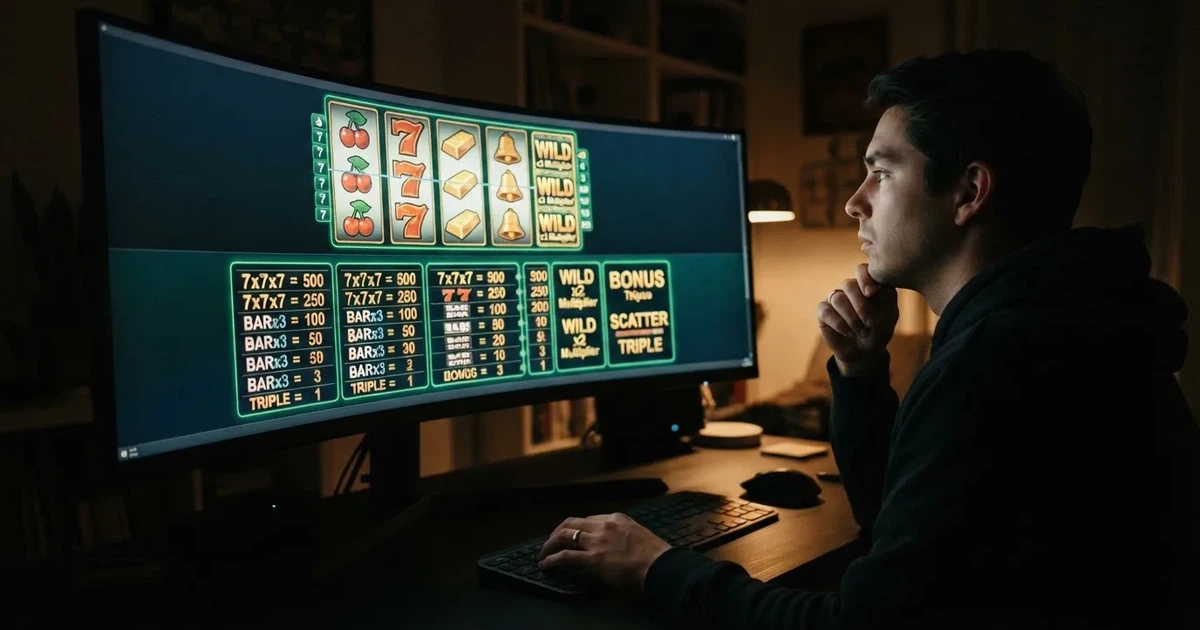
Under the Interactive Gambling Act 2001, as tightened by the Interactive Gambling Amendment Act 2017, no operator may provide online casino games — slots, table games, live dealer rooms — to a person physically in Australia. The product is prohibited, not restricted, and no licence to offer it exists in any state or territory. The Australian Communications and Media Authority does not warn providers because they broke a rule they could have fixed; it warns them because they are offering something no Australian licence can cover. This page sets out that frame, the ACMA’s enforcement record against the offshore sites that market Platipus titles to Australian visitors, and the difference between those sites and the regulated Australian ecosystem where equivalent slot machines actually operate. A page titled “best Platipus online casinos Australia” reads, in 2026, as a question that has no answer — and that is the answer.
Data current as of 9 November 2026, cross-checked against the ACMA’s published list of formal warnings and the most recent blocking round.
Table of Contents
- The legal landscape Australians are playing inside
- Where Platipus actually sits in this picture
- Responsible gambling and the limits of the offshore offer
- Payments: what the offshore site asks for, and what an Australian can lawfully pay with
- Bonuses, free spins and what the inducement actually costs
- Mobile play on the offshore product
- The slots themselves: paytables, mechanics, and the studios that surround Platipus
- Comparing the offshore brands the ACMA has named
- Blocking rate: the arithmetic the ACMA’s record supports
- What this leaves an Australian reader with
- Frequently asked questions
The legal landscape Australians are playing inside
Why “online casino” and “Australia” do not combine in 2026
| Service Type | Licensed in Australia? | Regulatory Oversight |
|---|---|---|
| Online Casino / Pokies | No | Prohibited |
| Sports / Racing Betting | Yes | NT Racing & Wagering Commission |
| Lotteries / Keno | Yes | State / Territory Regulators |
The Interactive Gambling Act 2001 carves a sharp line between two products. Wagering on racing and sporting events placed before the event, lotteries and keno can be licensed and offered online to Australians, and the bulk of that licence stock sits with the Northern Territory Racing and Wagering Commission. Everything else — casino games, online pokies, in-play betting, the live-dealer rooms that sit behind a “Platipus lobby” on an offshore site — is a prohibited interactive gambling service. The 2017 amendment closed the loopholes the offshore industry had been driving through, and the 2024 payment ban tightened the financial side: credit cards, credit-related products and digital currency cannot fund a licensed Australian wagering account, with penalties up to A$247,500 for any operator that takes them.

The shape that produces is simple. If a site is offering slots or table games to a person in Australia, it is offering a product no Australian licence covers. The licence it does display — Curaçao, Anjouan, the occasional Malta number — authorises it somewhere else. None of those authorisations extend to an Australian customer.
Who actually regulates what Australians can play
The Northern Territory Racing and Wagering Commission sits at the centre of the legal market, and the ABC’s 7 April 2026 report described how thin that centre is: 52 of Australia’s online bookmakers are licensed through the Territory, including Sportsbet, Bet365 and Ladbrokes, and the commission meets once a month in Darwin with no full-time staff of its own. The state and territory gambling regulators — Liquor & Gaming NSW, the Victorian Commission for Gambling and Liquor Regulation, the Queensland Office of Liquor and Gaming Regulation, the South Australian Consumer and Business Services, the Western Australian Department of Local Government, Sport and Cultural Industries — handle pubs, clubs and casinos inside their borders, including the electronic gaming machines that look and play like online slots but sit inside a licensed venue. Aristocrat Leisure, the largest gambling-machine manufacturer in Australia, makes many of those machines from its North Ryde headquarters; the slot product an Australian actually plays inside a club is, more often than not, an Aristocrat title.
What does not exist in that regulatory picture is a federal or state authority that hands out online casino licences. The closest is the ACMA itself, but the ACMA’s job is the opposite — to investigate breaches of the prohibition and to direct internet service providers to block the sites that breach it.
What enforcement has actually done, in numbers
The ACMA’s blocking programme began with the first blocking request in November 2019. As of the round reported on 26 June 2026, a running total of 1,751 illegal gambling and affiliate-marketing websites had been blocked, and more than 230 unlicensed gambling services had left the Australian market since enforcement was strengthened in 2017. That 26 June round alone asked ISPs to block twelve sites: 7Signs, ChromaBet, Donbet, Duospin, Freshbet, Slots Gem, Jacks Club, Lucky Start, Pointsbetz, Spinrise, Vinyl Casino and Wildsino.
The blocking is the visible end of a longer process. Before a site is blocked it usually receives a formal warning naming the operator and the breach. The published warnings read like a roll call of the offshore industry: Dama N.V. over Bambet, Dazard, Level Up, Rocketplay, Wild Tornado and Cobra Casinos in May 2022; Hollycorn N.V. over Sky Crown and Blue Leo in September 2022; Dama N.V. again over Woo Casino in March 2025 and Spirit Casino in May 2025; EOD Code SRL over Instant Casino in February 2025; Sterplay Holding Ltd over Casino Intense in April 2025; Bamboo Media over Ignition Casino, and Consolutetish S.R.L. over National Casino and Bizzo Casino, in July 2025; Pulsup Ltd over RocketPlay in March 2026; Ryker B.V. over Jackbit and CasinOK in April 2026. The ACMA’s published register is what the table further down this page is built from.
What an offshore site does not give an Australian customer
The IGA targets the provider, not the player, so an Australian punter does not face prosecution for opening an account. What they give up is the entire protective layer that an Australian licence sits on top of. There is no Australian complaints body to take a dispute to, no ADR scheme an offshore licence binds to in any practical way, no recourse if a withdrawal stalls or a bonus term is read against the player at cash-out. A site can be blocked by an ISP while a balance is still sitting in the account, and the ACMA’s blocking order does not include a refund mechanism — the blocking is a remedy against the operator, not a payment plan for the player. H2 Gambling Capital’s 2025 estimate put Australians’ annual losses to illegal gambling sites at roughly A$3.9 billion, and the share of gambling going through legal channels fell from 74% in 2021 to 64%.
Where Platipus actually sits in this picture
The studio itself
Platipus Gaming is an EU-based slot and table-game provider founded in 2014, with a stated catalogue of more than 174 HTML5 titles across fiat and crypto currencies, RNG certification from iTech Labs for markets that include the UK, Italy, Malta, Gibraltar, Sweden, Romania, Denmark, the Isle of Man and the AGCC, more than 500 operator customers, and round-the-clock technical support. The studio’s recent development has been focused on Asian-oriented games, and its public-facing material positions it firmly in the offshore and crypto-casino ecosystem — the operator customer list reads like a who’s-who of the brands the ACMA has warned. That positioning is the studio’s choice and it is legal in the markets it targets. It is not legal for the product to reach an Australian customer from any of those operators.
What “subject support” actually looks like, brand by brand
The ACMA’s published register is the only list an Australian reader can rely on for who has been warned over what, and the operator entries further down this page are drawn from it. Several of the warned brands list Platipus on third-party game-listing sites; a few list studios that are clearly not Platipus at all (the research files note National Casino lists Betsoft and Pragmatic Play on its own pages, and Casino Intense lists 1spin4win). Those mismatches are themselves the point: a brand’s own marketing page is a marketing artefact, not a regulator’s finding, and a regulator’s finding is the only datum that holds up. Where the research could not confirm Platipus on a brand’s own material, the brand write-up below simply does not assert it.
Aristocrat, Ainsworth, and the slots Australians do play
The slots an Australian plays inside a licensed club or casino are predominantly Aristocrat Leisure titles. Aristocrat was founded in 1953 by Leonard Ainsworth, listed on the ASX in 1996 under the ticker ALL, and reported 2025 revenue of A$6.30 billion and a normalised net profit after tax and amortisation of A$1.55 billion against 7,400 employees. Its administrative and research headquarters sit in North Ryde in Sydney, with marketing and development offices in South Africa, Russia and the United States. It is the largest gambling-machine manufacturer in Australia and the second-largest slot-machine manufacturer worldwide, behind International Game Technology. The acquisition history — Video Gaming Technologies in 2014 for roughly US$1.3 billion, Plarium in 2017 for US$500 million, Big Fish Games in 2017 for US$990 million — tells the same story the slot floor does: Aristocrat has been buying its way into the digital and online space for a decade. The April 2024 completion of the roughly US$1 billion NeoGames deal formed Aristocrat Interactive, the regulated online real-money gambling arm, by folding Anaxi together with Aspire Global, BtoBet and Pariplay. None of that gives an Australian a legal route to Aristocrat Interactive’s online casino product; what it gives is the catalogue of regulated online real-money gambling the group operates in jurisdictions outside Australia. The Playtech bid Aristocrat took to shareholders in 2021 — US$3.7 billion, rejected — was the closest the group came to a UK-facing online gambling footprint of its own.
Responsible gambling and the limits of the offshore offer
What BetStop does, and what it does not do
BetStop, the National Self-Exclusion Register, has been live since August 2023 and binds every Australian-licensed online and phone wagering service. A person who registers is excluded from opening new accounts and from marketing contact across the legal market; the obligation sits with the licensed operator, and the register is enforced by the ACMA. An offshore casino is not connected to BetStop. Self-excluding at BetStop does not stop an offshore site from accepting deposits, sending bonus emails or paying out a withdrawal if it feels like it, and the offshore site has no obligation to honour the Australian register at all. The only thing an Australian self-excluded from the legal market gets by visiting an offshore site is the loss of every protection BetStop gives them.
Where to get help, and what the law says about the player
The National Gambling Helpline — 1800 858 858 — is free, runs 24/7, and offers chat through Gambling Help Online. State and territory services sit alongside it: GambleAware NSW, the Victorian Responsible Gambling Foundation, Gambling Help Queensland, the South Australian Problem Gambling Service, and the Western Australian Gambling Help Line. The minimum age to gamble in Australia is 18, and an offshore site does not enforce an Australian age floor in any meaningful way — most accept whoever passes their payment step.
Tax sits on the recreational player’s side cleanly: gambling winnings are not assessable income (section 6-5 ITAA 1997) and losses are not deductible, unless the person carries on a business of gambling. The ATO is the place to check any situation where that line might be crossed; a one-off punter on an offshore site is the recreational case, not the business case.
What changes on 1 January 2027
The Interactive Gambling Amendment (Gambling Reform) Bill 2026 passed Parliament on 19 August 2026. Its advertising and inducement measures commence on 1 January 2027 — a written law with a start date that has not yet arrived on the page a reader is reading in 2026. The page does not need to project the 2027 framework forward to make the point in 2026: in 2026, the prohibition is the prohibition, the enforcement record is the enforcement record, and the offshore sites are still offering a product no Australian licence covers.
Payments: what the offshore site asks for, and what an Australian can lawfully pay with
The 11 June 2024 payment ban
Since 11 June 2024, credit cards, credit-related products and digital currency cannot be used to fund a licensed Australian wagering account. The legal deposit routes for a licensed wagering service are debit card, bank transfer, PayID/Osko and BPAY. If a site marketing itself to an Australian asks for a credit card or a crypto deposit, it is not operating inside the Australian rules — it is operating outside them. The offshore casino that markets Platipus titles to an Australian visitor takes payment in exactly the instruments the Australian ban prohibits, because those are the instruments the offshore rails run on.
The settlement times an offshore site promises, and what those promises rest on
Offshore marketing material typically advertises instant or near-instant deposits and withdrawal times ranging from a few hours for e-wallets and crypto to several business days for bank transfers. The promise sits on rails the operator controls. There is no Australian statutory minimum payout time, no Australian binding ADR, and no Australian regulator to complain to if the operator stops replying. The “fast payout” an offshore site advertises is a marketing claim, and the claim’s only enforcement is the operator’s own decision to keep paying — which can change with the operator’s payment processor, banking relationship, the size of the withdrawal, or the appearance of a bonus term the player did not read. The published record of warnings above shows how lightly some of those operators sit on the Australian register; the same operators can sit as lightly on a withdrawal queue.
What a player cannot recover once the site is blocked
The ACMA’s blocking order against a site does not include a refund mechanism for player balances. A balance trapped on a site the ACMA has just had blocked sits where it sat, and the operator that held it is the operator the player cannot reach. The remedy the ACMA provides is forward-looking — the site is no longer reachable from Australian ISPs — not retrospective. Any complaint about a withheld withdrawal would need to go to the operator’s own licensing authority, in the operator’s own jurisdiction, on the operator’s own terms. For a Curaçao-licensed operator, that is the Curaçao Gaming Control Board; the practical value of that route for an Australian customer is small.
Bonuses, free spins and what the inducement actually costs
Why the inducement is the marketing surface
The bonus is the first thing an offshore site puts in front of an Australian visitor, because the bonus is what the prohibition does not let the site put in front of them legally. The product is unlawful to offer, so the offer has to do the persuading instead. Welcome packages, deposit matches, no-deposit free-spin bundles, “Platipus free spins” promotions — they are the inducement layer of a transaction the IGA already prohibits. Reading them as ordinary casino marketing misses the structure: in Australia, the bonus is the hook on a product the law says does not exist.
What the typical terms look like
Offshore bonus terms, where they are readable, cluster around the same handful of mechanics: a deposit match of 100% to 200% with a cap, a wagering requirement in the 30x to 50x range applied to the bonus or to the deposit-plus-bonus, a maximum cash-out cap on free-spin or no-deposit winnings (frequently in the A$100 to A$500 range), game-weighting that reduces slot play to a fraction of its nominal contribution, and an expiry window measured in days. A 100% match up to A$500 with a 40x wagering requirement on the bonus amount means A$20,000 of turnover before the bonus is withdrawable; a maximum cash-out of A$200 on a “free” no-deposit bonus means A$10,000 of cleared wagering pays out at most A$200. These are the kinds of numbers a player meets at cash-out, not at sign-up.
The wagering arithmetic in plain terms
A A$200 bonus with a 40x wagering requirement requires A$8,000 of qualifying turnover before any withdrawal. At a A$1 stake per spin on a 96% RTP slot, that is 8,000 spins, or roughly 11.1 hours of play at a 5-second spin interval. The bonus is not free money; it is roughly a full day’s focused play at a flat stake before the balance is even allowed to move. A maximum-cashout cap turns the bonus into something else entirely: the same A$200 bonus, capped at A$100 withdrawable, gives a player who clears the wagering a guaranteed ceiling rather than a chance. The marketing word is “free”; the arithmetic is “busywork with a ceiling.”
Why “no deposit” still costs
A no-deposit bonus does not cost the player a deposit; it costs them the time to clear the wagering requirement under a cap. The terms above apply to the no-deposit case as well — the wagering multiple is the same shape, the maximum cash-out is tighter, and the game-weighting list is shorter. A player who reads a “A$20 no-deposit free spin” offer as free has not read the term that sits behind it. The marketing name and the cash-out reality are not the same document.
Mobile play on the offshore product
What the experience actually is
Offshore casinos that market Platipus titles typically run a mobile-responsive browser site, with a small minority offering a downloadable app through a direct APK or a third-party store. Load times on a modern handset over a 4G or 5G connection are competitive — the HTML5 build of a modern slot is built for exactly this — and the touch interface maps a slot’s spin button, bet selector and paytable cleanly onto a phone screen. What the experience does not change is the legal frame around it. A slot that plays smoothly on a phone in Sydney is still a prohibited interactive gambling service when the operator offering it is not licensed in Australia.
Why the dedicated app is rarely worth the install
A dedicated app asks for storage permissions, push-notification access and often a permissions footprint broader than the browser version, on an operator that is not bound by Australian privacy law, that may store its data outside Australia, and that may be blocked by an Australian ISP at any time. The browser version, with a one-tap bookmark and no installed footprint, carries the same product with less to lose. The install decision is the kind of decision a player should make once, not repeatedly, and the answer rarely changes.
What the touch interface does well and badly
What the touch interface does well is the spin cycle itself, the bet-stepper and the paytable navigation; Platipus titles are built in HTML5 and read a phone’s screen geometry cleanly. What it does badly is anything that requires reading a multi-page bonus term, scrolling a long game-weighting table, or comparing a deposit cap to a withdrawal cap — the long-form legal material is the part that gets squeezed off the screen on the device the player is most likely to be reading it on. The bonus terms are where the offer’s cost lives, and the mobile form factor pushes that material furthest from the eye.
The slots themselves: paytables, mechanics, and the studios that surround Platipus
Reading a Platipus-style paytable
A modern slot paytable — Platipus or otherwise — reads as a fixed object: a 5-reel, 20-to-30-payline layout, a published RTP in the 95% to 97% range, a volatility class (Low, Medium, High, “Very High”), a hit rate as a percentage of spins, a maximum win expressed as a multiplier of the stake, and a feature list (free spins, multipliers, bonus-buy where the jurisdiction permits). The numbers are set by the developer’s math model and certified by the testing house for the jurisdiction the operator is licensed in. For an Australian reader, the certification that matters is the one the ACMA accepts, and the ACMA does not accept any of them for an offshore operator serving Australian customers.
How the surrounding studios shape the offer
The slots that sit around Platipus on an offshore lobby come from a small set of studios. Betsoft, founded in 2006, publishes a catalogue of more than 200 RNG games across slots, table games, video poker and specialty titles, with RNG certification from Quinel and Gaming Labs International, and states it partners with more than 500 operators across regulated markets in Europe, Scandinavia, Latin America and Africa. The Slotfather, live on Betsoft’s books since 13 December 2012, carries a published RTP of 95.69%, “Medium” volatility and an 8.17% hit rate across 5 reels and 30 paylines; Good Girl Bad Girl 2, a newer Betsoft title, carries an RTP of 96.22%, “Very High” volatility and a 15.59% hit rate across 5 reels and 20 paylines. BGaming’s brand debuted in 2018 on top of a team that had worked on games since 2012, and the studio now lists more than 250 certified games across video slots, video poker, lottery, card, scratch, crash and casual. 1spin4win, founded in 2021 by a team with 15 years of iGaming experience, holds a Curaçao gaming licence and reports a portfolio of more than 190 online slots, more than 1,000 partnerships with online casinos and aggregators, and a 46% year-on-year rise in total bet sum between the first halves of 2024 and 2025. These studios are the surrounding furniture on the same offshore lobby that lists Platipus; they are not the reason an Australian reader can play there.
What the certification does and does not do
The certification the studios carry — iTech Labs for Platipus, Quinel and GLI for Betsoft, and the equivalent for the rest — confirms the math model is what the studio says it is. It does not confirm the operator serving the games to a customer is licensed to do so. The two are entirely separate authorisations, and only one of them is meaningful for an Australian reader: the operator’s authorisation to offer the product to an Australian customer. The offshore studios’ certifications are real and the offshore operator’s authority to serve Australians is not.
Comparing the offshore brands the ACMA has named
The table below is not a ranking. It is a record. Each row is a brand the ACMA has named in a published formal warning, the operator entity the ACMA named in that warning, the date the ACMA published it, and whether research could confirm Platipus or a closely-adjacent studio on a third-party game-listing page for that brand. Brands the research could not confirm Platipus for are still on the list because the ACMA’s action stands on its own; the “subject support” column is the only place where the table admits what it cannot confirm.
| Brand | ACMA action and date | Operator named by the ACMA | Subject support |
|---|---|---|---|
| RocketPlay | Formal warning, March 2026; earlier warning to Dama N.V., May 2022 | Pulsup Ltd (RocketPlay); earlier Dama N.V. | — |
| Level Up Casino | Formal warning, May 2022 | Dama N.V. | Wazdan listed (third-party listing) |
| Woo Casino | Formal warning, March 2025 | Dama N.V. | — |
| Spirit Casino | Formal warning, May 2025 | Dama N.V. | — |
| National Casino | Formal warning, July 2025 | Consolutetish S.R.L. | Betsoft and Pragmatic Play listed (brand’s own material) |
| Bizzo Casino | Formal warning, July 2025; earlier warning, 2022 | Consolutetish S.R.L.; earlier TechSolutions | — |
| Ignition Casino | Formal warning, July 2025 | Bamboo Media | — |
| Instant Casino | Formal warning, February 2025 | EOD Code SRL | — |
| Jackbit | Formal warning, April 2026 | Ryker B.V. | — |
| Casino Intense | Formal warning, April 2025 | Sterplay Holding Ltd | 1spin4win listed (third-party listing) |
| Sky Crown | Formal warning, September 2022 | Hollycorn N.V. | — |
The pattern the table makes is the point. Eleven brands, eleven different operator entities behind them, a publication date that runs from September 2022 to April 2026, and a list of subjects that mostly reads as a dash because the ACMA’s action does not depend on a brand listing Platipus and a brand listing Platipus does not depend on the ACMA’s action. The two records sit in different filing cabinets. The one that matters for an Australian reader is the ACMA’s.
RocketPlay — a brand the ACMA has warned twice
The ACMA’s published record on RocketPlay is unusual: two formal warnings, separated by four years, against two different operator entities pointing at the same brand surface. The May 2022 warning named Dama N.V. as the operator behind RocketPlay; the March 2026 warning named Pulsup Ltd over Rocketplay.com.au specifically. That the regulator has had to warn the brand twice, under two different company names, against the same kind of breach, is itself a finding a reader can act on. The subject-support column for the brand is a dash because research could not confirm Platipus on the brand’s own material — a finding that cuts both ways: the brand’s own page is not a reliable source, and the ACMA’s record does not require a Platipus listing to stand up. For an Australian reader, RocketPlay is a brand the regulator has returned to, and the reason the regulator returned is the reason the brand stays on the list.
Level Up Casino — the original Dama N.V. set
Level Up was named in the May 2022 Dama N.V. warning alongside Bambet, Dazard, Rocketplay, Wild Tornado and Cobra Casinos — a six-brand batch the ACMA handled as a single action because the operator was the same. The third-party listing research found for Level Up lists Wazdan, not Platipus; the brand surface and the regulator’s finding are not the same object, and the regulator’s finding is the one a reader keeps. The pattern of a single warning against a multi-brand operator is the shape of the offshore industry: one corporate vehicle, several brand surfaces, one enforcement action.
Woo Casino and Spirit Casino — Dama N.V.’s return engagements
Dama N.V. is back on the ACMA’s register in March 2025 over Woo Casino and again in May 2025 over Spirit Casino — three years after the original six-brand warning. The intervening years did not move Dama N.V. out of the ACMA’s enforcement scope; they added two more entries to it. For an Australian reader, the read is not that Dama N.V. is a brand to avoid but that the operator behind a brand is the thing that gets warned, and the operator does not always leave the market when warned. Woo and Spirit both sit at “no data” on subject support because research could not confirm Platipus on the brands’ own material; the warnings stand without that confirmation.
National Casino and Bizzo Casino — a single operator, two brands, two warnings
Consolutetish S.R.L. was named by the ACMA in July 2025 over both National Casino and Bizzo Casino. Bizzo Casino has a second entry on the register: a 2022 warning to TechSolutions (CY) Group Limited and TechSolutions Group N.V. Two operators, two warnings, the same brand — the same pattern as Dama N.V. and RocketPlay, repeated at the next layer down. National Casino’s own material lists Betsoft and Pragmatic Play, neither of which is Platipus; the brand’s own page is not where Platipus is, and the ACMA’s register is not conditional on Platipus being there. The point is the operator behaviour, not the game catalogue.
Ignition Casino, Instant Casino, Jackbit — single warnings, single operators
Bamboo Media was named over Ignition Casino in July 2025; EOD Code SRL over Instant Casino in February 2025; Ryker B.V. over Jackbit (and CasinOK) in April 2026. Each is a single-operator warning, with no prior entry on the register for the same operator, and no third-party confirmation of Platipus on the brand’s own material. The register is the only reliable source for what these operators have done; the brands’ own marketing pages do not show up as that source.
Casino Intense — a brand whose own page lists the wrong studio
Casino Intense’s third-party listing carries 1spin4win, the Curaçao-licensed studio founded in 2021 by a team with 15 years of iGaming experience. The 1spin4win connection is real; the Platipus connection is not what the third-party page shows. The ACMA’s April 2025 warning to Sterplay Holding Ltd stands on the operator’s behaviour, not on the studio the brand lists. A reader scanning a third-party listing for “Platipus” against Casino Intense would miss the warning, and miss the operator.
Sky Crown — Hollycorn N.V.’s September 2022 entry
Sky Crown was named in the September 2022 formal warning to Hollycorn N.V. alongside Blue Leo. Hollycorn is the operator entity; Sky Crown is the brand surface. Research could not confirm Platipus on the brand’s own material. The Hollycorn entry is the oldest on the table after the May 2022 Dama N.V. warnings and the September 2022 Hollycorn warning itself, and the gap between 2022 and 2025–2026 is the gap during which the offshore industry the table describes kept growing.
What the table’s shape says
Eleven brands, six different operator entities, a date range from September 2022 to April 2026, and a subject-support column that is mostly a dash. The dashes are not the table failing; they are the table being honest. A brand warning the ACMA has published stands on the operator’s behaviour, not on which studio’s games the brand happens to list today; a third-party listing shows what the brand is marketing, not what the regulator has found. Reading the two together — the ACMA’s register and a third-party listing — is what gives the table its shape. Reading either one alone gives a different shape, and the shape from the regulator’s record is the one an Australian reader needs.
Blocking rate: the arithmetic the ACMA’s record supports
The blocking programme began with the first blocking request in November 2019 and reached a running total of 1,751 blocked sites as of the round reported on 26 June 2026. That is roughly 80 months of enforcement, and a simple band falls out of those two numbers. The lower bound divides the total by the full window and gives roughly 22 blocked sites per calendar month across the life of the programme; the upper bound assumes the bulk of the 1,751 figure accumulated after enforcement was strengthened in 2017 in cooperation with ISPs, with the monthly run-rate closer to the pace of recent rounds (the June 2026 round alone blocked 12 sites). The honest answer is a band — roughly 20 to 30 blocked sites per month across the programme’s life, with the recent pace sitting towards the top of that range — and the honest caveat is that the band assumes the ACMA’s blocking rate has been broadly steady, which it has not been. Some months produce no published round; some produce a dozen. The blocking programme is a press-release-driven counter, not a metronome, and the page reads its arithmetic that way.
What the band actually says to a reader is closer to a rate of attrition than a rate of prevention. Roughly 20 to 30 sites per month blocked, against an offshore industry that spins up new brand surfaces faster than the regulator can publish against them — the same operator entity under a fresh name, the same payment rail under a fresh aggregator — means the visible count grows while the visible product behind it keeps cycling. The 230-plus unlicensed services that have left the Australian market since 2017 is a more durable measure of the programme’s effect than the monthly blocking rate, and that figure sits at the bottom of the regulator’s own messaging for a reason.
What this leaves an Australian reader with
The legal frame is the legal frame, and the ACMA’s enforcement record is the ACMA’s enforcement record; neither of those changes because an offshore site has a Platipus lobby and a welcome bonus. What an Australian reader can do, in 2026, is to read the page as a guide to a product that is not lawfully available, rather than as a buyer’s guide to one that is. The regulated Australian slot product sits inside pubs, clubs and casinos, on machines Aristocrat and its peers make and state regulators oversee. The online slot product an Australian is being marketed is the prohibited interactive gambling service the Interactive Gambling Act 2001 prohibits, offered by the brands in the table above and many more like them, with no Australian complaints body, no Australian payout guarantee, and no Australian answer if the operator stops replying. The page’s conclusion is the same conclusion the IGA reaches: there is no legal way to answer the search query asks, and the brands the list below are the brands the regulator has been warning for the last four years.
Frequently asked questions
Is Platipus legally available to players in Australia?
No. Under the Interactive Gambling Act 2001, online casino games — including slots — cannot be lawfully offered to a person physically in Australia by any operator, regardless of the licence the operator displays. Platipus itself is a real, RNG-certified studio; the prohibition is on the offer of its games as an online casino product to Australians, not on the studio’s existence.
What kinds of games does Platipus make?
Platipus produces more than 170 HTML5 slot and table-game titles for fiat and crypto currencies, with RNG certification from iTech Labs for markets that include the UK, Italy, Malta, Sweden and the AGCC. The studio’s recent development has focused on Asian-oriented games, and its public-facing customer list reads across the offshore and crypto-casino ecosystem rather than the regulated Australian market.
Are Platipus games offered at land-based venues in Australia?
No. Platipus is an online slot and table-game studio; the slots Australians actually play inside pubs, clubs and casinos are predominantly Aristocrat Leisure titles, made by the largest gambling-machine manufacturer in Australia and the second-largest slot-machine manufacturer worldwide, from its North Ryde headquarters.
How can Australians check whether a Platipus title is fair before ever considering play?
The studios’ RNG certifications — iTech Labs for Platipus, Quinel and GLI for Betsoft and the equivalent for adjacent studios — confirm the math model is what the studio says it is. They do not, however, authorise any offshore operator to serve those games to an Australian customer, and an Australian reader looking at the certification alone will miss the operator-side question the IGA actually answers.
Why do offshore sites keep advertising Platipus games to Australian visitors?
Because the inducement is the only part of the offer the IGA leaves them. The product is unlawful to provide, so the welcome package, the deposit match and the free-spin bundle do the persuading the licence cannot. The ACMA’s blocking programme and its formal-warning register are the regulator’s answer, and the register has added entries every year since 2022.
What should an Australian do if they see a Platipus game promoted by an unlicensed site?
Treat the promotion as the regulator treats it: a breach of the Interactive Gambling Act 2001 by the operator. The ACMA’s published register is the place to confirm whether the brand has already been named, and the National Gambling Helpline (1800 858 858) and Gambling Help Online are the places to find support if the promotion has already cost more than it should.