
GameBeat-powered online casinos in Australia: the legal gap and what a reader in Australia is actually choosing between
9 November 2026 — currency, licence and enforcement claims checked against ACMA publications and H2 Gambling Capital’s 2025 estimates.

GameBeat is a B2B slot studio. It says so on its own about page: founded in 2021, supplying games only to licensed operators and commercial partners, not to players directly. That sentence is the primary reason a list of Australian casinos cannot honestly be written in the form a general search for “gamebeat casino australia” implies. GameBeat does not run a casino. It does not sign up Australian customers. It does not accept deposits from anyone in Australia, and it never has. What it does is build slot machines that licensed casino operators embed into their own lobbies. The question of which Australian-facing brand “runs GameBeat games” therefore turns out to be a different question from the one the search phrase suggests: not “where can an Australian play GameBeat”, but “where does the Australian audience end up when GameBeat is the search term”, and the answer to that is the topic of this article.
Because the Interactive Gambling Act 2001 prohibits offering online casino games to anyone in Australia, no Australian jurisdiction issues a licence for them, and the Australian Communications and Media Authority has been blocking offshore sites and issuing formal warnings to their operators for years. What an Australian reader can choose between is not a list of brands but a category error: a foreign-licensed lobby that displays GameBeat slots is, by definition, offering online casino games to Australians, and that is precisely what the ACMA has spent the last several years formally warning operators about. A reader who has searched for GameBeat because the games look interesting has, in most cases, not been looking for an unlicensed offshore site. They have been looking for a place to play a slot they saw on a stream or a YouTube clip, and the page they land on needs to say plainly what the legal frame is before any other sentence earns its keep.
The primary focus here is that gap. It is not a disclaimer stuck on the end. The legal frame is the product, because it is what an Australian reader actually has to choose between: legal pokies venues, land-based casinos, licensed online wagering on races and sport, or an offshore site that displays GameBeat slots and sits outside the Australian rules. Each of those has consequences a reader needs before deciding, and each one is what an Australian reader acting on this search is actually choosing between.
Table of Contents
- What GameBeat is and what GameBeat is not
- What the Interactive Gambling Act 2001 prohibits and what it does not
- How the ACMA has actually applied the law to offshore operators
- Responsible gambling: what the Australian frame actually gives an Australian reader
- Payments: what an Australian can and cannot legally use
- Bonuses and promotional inducements on offshore GameBeat lobbies
- The mobile experience of offshore GameBeat lobbies
- What a GameBeat slot looks like in practice
- The brands an Australian reader actually ends up choosing between
- What an Australian reader actually has to choose between
- The arithmetic behind the ACMA’s blocking record
- A short note on tax
- The 2026 reform and what it does and does not change
- What a reader should do if they have an account on one of these brands
- Frequently asked questions
What GameBeat is and what GameBeat is not
GameBeat is a small piece of the slot-studio world rather than a casino brand. The studio was set up in 2021 and describes itself as a business-to-business software developer and technology provider. Its own materials say it supplies games only to licensed operators and commercial partners, not to players directly. That single sentence is the difference between “GameBeat casino” being a useful search term and being a misleading one: there is no GameBeat casino, there are only casinos that license GameBeat’s slots, and the legality of playing them depends on the licence of the casino, not on anything about GameBeat itself.

This is also why the search phrase “gamebeat crypto casino” is a slightly misleading construction. It is the casino’s licence that determines whether the player can legally be there at all; the payment method is a separate, smaller question. Crypto deposits are an offshore convention, not an Australian one. The Australian regime that took effect on 11 June 2024 explicitly bans credit cards, credit-related products and digital currency as a payment for licensed online wagering, with penalties up to A$247,500 for operators. A site that asks an Australian for a Bitcoin deposit is, in effect, advertising that it is not running under the Australian regime, and the GameBeat presence inside that lobby is a slot supplier inside an offshore casino, not a separate category of legal access. The phrase collapses two independent facts into one and obscures which of them is the binding constraint.
The practical effect is that an Australian reader searching for this studio ends up on offshore websites that list dozens of GameBeat lobbies, none of them Australian-licensed. The article below is written for that reader, and it is built to explain both sides of the choice they are actually making.
What the Interactive Gambling Act 2001 prohibits and what it does not
The Interactive Gambling Act 2001, strengthened by the Interactive Gambling Amendment Act 2017, makes it an offence to provide online casino games, online pokies or in-play betting to a person in Australia. No state or territory licences any of those services. What is licensable is wagering on races and sport placed before the event, lotteries and keno. In practice the Northern Territory Racing and Wagering Commission regulates 52 of Australia’s online bookmakers — including Sportsbet, Bet365 and Ladbrokes — and it does so for tax reasons rather than as a gambling regulator in the conventional sense: the ABC reported in April 2026 that the commission has no full-time staff and meets once a month in Darwin. That detail matters because it explains why a long list of “Australian” wagering brands exist for the obvious reason that the Northern Territory’s tax rate makes it the cheapest place to hold the licence, not because the Territory has any appetite to oversee the businesses. The minimum age across all licensed wagering is 18.
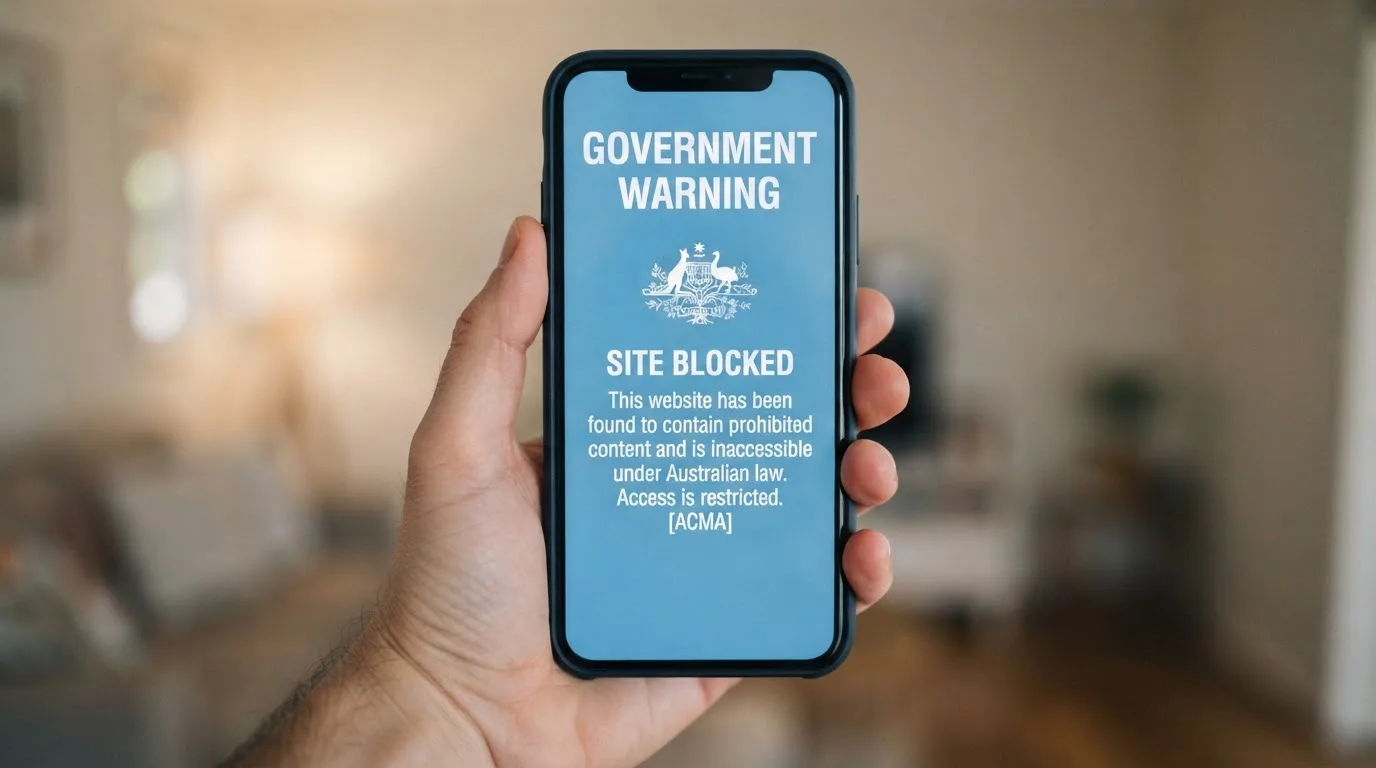
The Interactive Gambling Amendment (Gambling Reform) Bill 2026 passed Parliament on 19 August 2026, and its advertising and inducement measures commence on 1 January 2027. The law is enacted but not in force as of this page, so its inducement rules do not yet bind the offshore sites this page is mostly about, even though those sites are also outside its reach by definition. The point of mentioning the date is so a reader does not read about the new regime and assume the offshore lobbies are now legal: they are not, and the 2026 reforms do not change that.
Two consequences follow for an Australian reader specifically, and both of them are the kind of thing a marketing page does not volunteer. First, the IGA targets the provider rather than the individual player, so an Australian punter who opens an account with an offshore brand is not personally prosecuted, but the brand itself is the entity the ACMA warns, blocks and fines. The reader is not the target of the law and is also not the beneficiary of any of its protections. Second, an offshore brand gives an Australian no Australian consumer protection, no complaints body and no recourse if a withdrawal is refused, and it can be blocked with a balance still sitting on it. That last point is the one a reader has to sit with: a brand can be reachable this morning and unreachable this afternoon, with the player’s money in the middle.
How the ACMA has actually applied the law to offshore operators
The Australian Communications and Media Authority is the body that investigates, issues formal warnings and directs internet service providers to block illegal sites. The numbers give a sense of how that enforcement has played out. As reported in June 2026, the ACMA said 1,751 illegal gambling and affiliate marketing websites had been blocked since the first blocking request in November 2019, and more than 230 unlicensed gambling services had left the Australian market since enforcement was strengthened in 2017. The cumulative rate that those numbers imply, and the rate is what makes the policy feel like enforcement rather than paperwork, is between roughly 250 and just over 300 blocks a year on average across that window — enough that a brand which has been warned is not in an obscure category, it is in the majority outcome of being in the offshore market in the first place.
A single recent round illustrates the working pace. On 26 June 2026 the ACMA asked Australian internet service providers to block 12 more illegal gambling websites: 7Signs, ChromaBet, Donbet, Duospin, Freshbet, Slots Gem, Jacks Club, Lucky Start, Pointsbetz, Spinrise, Vinyl Casino and Wildsino. A reader can pick any one of those names and the point is the same: these are real brands that real Australian customers had accounts with the week before the block came in. The legal status of the operator did not change on the day of the block — it had been what it was the whole time. What changed was the reachability of the site, and the players behind any balance they had on it.
The ACMA also publishes formal warnings against operators, which is its slower, named-acquisition side of enforcement. Each warning names the operator behind the brand and the legal ground, and it reads as a list of corporate entities rather than a list of players. The warnings relevant to this article’s named set, and the dates the ACMA published them, are: Pulsup Ltd over Rocketplay (March 2026), Dama N.V. over six casino brands including Bambet, Dazard, Level Up, Rocketplay, Wild Tornado and Cobra Casinos (May 2022), and again over Woo Casino (March 2025) and Spirit Casino (May 2025), Consolutetish S.R.L. over National Casino and Bizzo Casino (July 2025), TechSolutions over Bizzo Casino earlier in 2022, Bamboo Media over Ignition Casino (July 2025), EOD Code SRL over Instant Casino (February 2025), Ryker B.V. over Jackbit and CasinOK (April 2026), Sterplay Holding Ltd over Casino Intense (April 2025), and Hollycorn N.V. over Sky Crown and Blue Leo. The same operator tends to recur across multiple brands, which is one of the easier tells of how thin the offshore market actually is beneath its marketing surface.
H2 Gambling Capital’s 2025 report estimates Australians lose about A$3.9 billion a year to illegal gambling sites, and that the share of gambling going through legal channels fell from 74% in 2021 to 64%. Both numbers are estimates and both come from a single source, so they should be read as a scale rather than a figure, but the shape of them is what matters: a lot of money is moving to sites that the ACMA has been blocking and warning for years, and a non-trivial share of Australians who gamble are doing it on a site that, by definition, has no Australian licence. The legal frame is not a marginal fact about a fringe activity; it is the operating condition for a multibillion-dollar slice of the market.
Responsible gambling: what the Australian frame actually gives an Australian reader
The two tools an Australian reader has are BetStop and the National Gambling Helpline, and they sit on opposite sides of the licence line. BetStop, the National Self-Exclusion Register, has been live since August 2023 and binds every Australian-licensed online and phone wagering service. An offshore casino is not connected to it: a punter who excludes themselves through BetStop can still open an account with an offshore brand, because BetStop is a register of Australian-licensed operators and the offshore brand is, by definition, not on it.
The National Gambling Helpline on 1800 858 858 is free and runs 24/7, with chat at Gambling Help Online. It is the line that is actually relevant here, because it answers to anyone in Australia regardless of where they have been playing. A reader who has been playing on an offshore lobby and wants to stop can ring it; a reader who has been playing on a licensed bookmaker and wants to stop can ring it; a reader whose account on an offshore brand has just been blocked mid-balance can ring it.
The other piece of the responsible-gambling frame, the one that is structural rather than personal, is the legal status of the player. The IGA targets the provider, not the punter, and an Australian who opens an offshore account does not commit an offence by doing so. That legal fact has been quietly abused by offshore marketing pages for years, because it lets those pages write copy that implies the player is doing nothing wrong, which is technically true and practically incomplete. What the player is doing is signing up to a service with no Australian consumer protection, no complaints body, no recourse if a withdrawal is refused, and a real chance of the site being blocked while a balance sits on it. None of that is a prosecution, all of it is a consequence.
Payments: what an Australian can and cannot legally use
The payment frame is one of the cleanest tells of whether a site is operating inside or outside the Australian rules. Inside the licensed wagering regime that took effect on 11 June 2024, credit cards, credit-related products and digital currency are banned as a payment for online wagering, with penalties up to A$247,500 for operators. The legal deposit routes that remain are debit card, bank transfer, PayID/Osko and BPAY. A site asking an Australian for a credit card or a crypto deposit is, in effect, advertising that it is not licensed under the Australian regime.
The offshore GameBeat lobbies that appear under this topic sit on the other side of that line. Bitcoin, a handful of altcoins, and credit card top-ups are exactly the kind of payment mix those sites publish on their cashier pages, and that is the easiest signal a reader can read off a deposit screen: the brand has made a marketing choice to be reachable by Australians and a regulatory choice to be unreachable by the ACMA.
The practical consequence for a reader is twofold. The first is that the deposit itself is fast, which is the marketing point; the second is that the settlement into an Australian bank account at the other end depends on the brand’s own processing rules, and the ACMA has no jurisdiction to chase a disputed withdrawal on the player’s behalf. Some offshore brands settle within 24 hours, others take three to five business days, and some take longer without explanation. A reader who treats the speed of the deposit as a predictor of the speed of the withdrawal is making a category error that the casino has every reason to encourage.
The lesson is not that offshore brands always delay withdrawals. Some of them pay out cleanly and the player never notices a problem. The lesson is that the dispute resolution path, if one is needed, runs through the offshore brand’s own regulator rather than through an Australian body, and that regulator is most commonly Curaçao or Malta. The Australian reader who has a problem they cannot solve on the cashier screen has no escalation that ends in a court they can stand in.
Bonuses and promotional inducements on offshore GameBeat lobbies
The promotional language an Australian reader sees on an offshore GameBeat lobby is built around deposit matches, free spins and the turnover requirements that come attached to both. The shape of an offer is usually something like: a 100% match on the first deposit up to a stated cap, a stated number of free spins on a stated GameBeat slot, and a wagering requirement of between thirty-five and fifty times the bonus amount before any withdrawal is permitted. Free-spin winnings are typically subject to the same turnover multiplier and often to a maximum-cashout cap that converts what looks like a winning spin into a much smaller payout.
None of that is exotic by offshore standards, and none of it is what makes the offer worth examining carefully. The point is what the marketing page leaves out, which is the wagering multiple and the cashout cap, and what the bonus is actually worth to the reader once both are accounted for. A 100% match with a forty-times wagering requirement means the reader has to turn the bonus amount over forty times before the bonus balance is withdrawable, and an offer that looks generous at the deposit stage is, by the time the wagering is done, an offer that has already taken back most of what it gave.
The same logic applies to free spins. The spins land on a stated slot with a stated coin value, and the winnings carry the same turnover multiplier the bonus carries. A casino offering 200 free spins with a forty-times wagering requirement on the winnings is offering what looks like 200 chances at a payout and is in fact offering 200 chances at a payout that becomes a withdrawable balance only after a turnover threshold is met. Whether that threshold gets met depends on the variance of the slot and the size of the player’s bankroll relative to the wagering requirement, which is the actual variable the marketing page never quantifies.
What is also worth knowing is the regulatory frame for inducements is changing. The Interactive Gambling Amendment (Gambling Reform) Bill 2026 passed Parliament on 19 August 2026 and its advertising and inducement measures commence on 1 January 2027. The law is enacted but not yet in force, and it is aimed at inducements rather than at offshore operators directly, which means the inducements the reader sees today on offshore lobbies are not yet affected by the 2026 reforms and will not be in 2026 either way. A reader who reads about the new regime should not assume the offshore bonuses are now restricted under Australian law; they are still subject to the brand’s own terms and to the brand’s own regulator.
The other frame that matters for offshore bonuses is the credit card and crypto ban that took effect on 11 June 2024 for licensed wagering. That ban does not extend to offshore brands by definition, which is the reason those brands still accept credit cards and crypto from Australians: those routes are not Australian payment routes under the Australian regime. The reader who deposits by credit card into an offshore GameBeat lobby is not, on the casino’s side of the transaction, in a regulated space, which is the point at which the legal frame and the bonus frame stop being two separate paragraphs and become the same paragraph.
The mobile experience of offshore GameBeat lobbies
Most offshore GameBeat lobbies run in a mobile browser, and the slot catalogue translates cleanly to a phone screen because GameBeat’s slots, like most modern slot studio output, are built in HTML5. The catalogue loads inside the casino’s own mobile wrapper rather than as a standalone app, which is the industry default for offshore brands that do not want to publish in the Australian App Store or Google Play Store. A punter in Australia does not have to install anything to play; they sign up on the casino’s mobile page, deposit from the cashier, and the lobby opens in the browser tab they already have open.
The mobile experience itself is, by offshore standards, fairly uniform across the brands the ACMA has warned: a hamburger menu, a vertical scroll for the slot library, a category strip for live tables and jackpots, and a deposit button that opens the cashier without leaving the lobby. The GameBeat slots inside that lobby look the same on a phone as they do on a desktop because the studio has designed for the phone first. The performance is bottlenecked by the phone’s browser and the player’s internet connection, not by the studio’s code.
The structural feature an Australian reader needs to know about is that the mobile wrapper is the same one an Australian reader would see anywhere else in the world, and that the only way the brand knows the reader is in Australia is the IP address and the phone’s locale. The Australian regime does not have a tool that switches a brand into a different mode for Australian users, and the brand itself has no incentive to build one. The mobile experience is, in other words, the brand’s standard experience, not an Australian mode of it.
The other piece worth saying is that an Australian reader who plays an offshore GameBeat lobby on a phone is one of the players the ACMA’s blocking actions are aimed at. The block list does not care which device the player used to sign up. A player whose account was opened on a desktop browser is just as blocked as one who opened it on a phone, and a player whose account has a balance on it at the time of the block does not get that balance back from the ACMA.
What a GameBeat slot looks like in practice
GameBeat is one of a number of small studios whose slots turn up in offshore lobbies. The wider ecosystem of slots a reader who searched for this studio is likely to end up playing includes studios like 1spin4win, Betsoft, BGaming and Booming Games, all of which operate under their own licences and supply games to the same kind of offshore operator. The shape of the offer is consistent across these studios: an HTML5 build, a published RTP somewhere in the mid-nineties, a stated volatility band, a hit rate, and a configuration of reels and paylines that the studio tunes to a target audience.
For example, Betsoft’s The Slotfather, live since 13 December 2012, carries a published RTP of 95.69%, a “Medium” volatility and an 8.17% hit rate, played on 5 reels and 30 paylines. Its more recent Good Girl Bad Girl 2 carries a published RTP of 96.22%, “Very High” volatility and a 15.59% hit rate, played on 5 reels and 20 paylines. Betsoft was founded in 2006 and describes a catalogue of more than 200 RNG games spanning slots, table games, video poker and specialty titles. It states it operates in compliance with licensing authorities including Italy’s ADM, with RNG certification from Quinel and Gaming Labs International, and partners with more than 500 operators across regulated markets in Europe, Scandinavia, Latin America and Africa.
BGaming’s team has worked on games since 2012, the brand itself debuted in 2018, and the studio now offers more than 250 certified games including video slots, video poker, lottery, card, scratch, crash and casual titles. It is operated by Stable Games Ltd of Valletta, Malta, and holds a Malta Gaming Authority Critical Gaming Supply Licence (Licence Number MGA/B2B/785/2020) for Type 1 B2B gaming services, issued 18 March 2021. Its portfolio includes proprietary mechanics such as TRUEWAYS (offering up to 262,144 ways to win), MultiDice X and Merge UP, and the company states its games are used by 3,000+ operators including Blaze, Pin-Up and Gamdom.
1spin4win was founded in 2021 by a group of professionals with 15 years of iGaming experience, is headquartered at Scharlooweg 39, Willemstad, Curaçao, holds a Curaçao gaming licence, and describes a portfolio of more than 190 online slots built in HTML5 for low-bandwidth connections. The company reports more than 1,000 partnerships with online casinos and aggregators and says its total bet sum grew 46% in the first half of 2025 compared with the first half of 2024. Booming Games (Malta) Limited is headquartered in Malta and holds a Malta Gaming Authority B2B licence numbered MGA/B2B/459/2018, plus a UK Gambling Commission account (#57254).
The wider ecosystem matters because GameBeat is one studio in a landscape of small studios whose slots are common in the offshore lobbies the ACMA has warned about. An Australian reader who is drawn to GameBeat’s catalogue is, in most cases, drawn to the same kind of slot that 1spin4win, Betsoft, BGaming and Booming Games also build, and the licence status of the lobby that hosts the slot is the variable that determines whether the player can legally be there at all. The slot itself is a piece of software; the licence is the legal access.
The other Australian-named provider worth knowing is Aristocrat Leisure, which is different in kind from the offshore studios above. Aristocrat Leisure was founded in 1953 by Leonard Ainsworth, listed on the Australian Securities Exchange in 1996 under the ticker ALL, and is described as the largest gambling-machine manufacturer in Australia and the second-largest slot-machine manufacturer worldwide behind International Game Technology. Its administrative and research headquarters are in the Sydney suburb of North Ryde, and it has marketing and development offices in South Africa, Russia and the United States. The company develops electronic gambling machines, casino management systems, online real-money gambling technology, iLottery products and social casino games, and its online arms are Product Madness (social games) and Aristocrat Interactive. Aristocrat Leisure reported 2025 revenue of A$6.30 billion, normalised net profit after tax and amortisation of A$1.55 billion, and 7,400 employees. The reason Aristocrat is relevant on a GameBeat page is that Aristocrat is the Australian provider Australians actually play on land-based poker machines, in clubs and in casinos, and GameBeat does not have that presence in Australia at all. A reader who searches GameBeat is, in most cases, a reader who would also recognise Aristocrat’s catalogue if they had walked into a club.
Aristocrat’s history of acquisitions is also worth knowing because it explains how a Sydney-listed slot manufacturer ends up running an international online business. The company bought US-based Video Gaming Technologies in 2014 for about US$1.3 billion, then Plarium in 2017 for US$500 million and Big Fish Games in 2017 for US$990 million. It completed a roughly US$1 billion acquisition of NeoGames in April 2024 after announcing the deal in 2023, and Aristocrat Interactive, its regulated online real-money-gambling business, was formed in April 2024 by combining the Anaxi unit with the newly acquired NeoGames group, which includes Aspire Global, BtoBet and Pariplay. Its roughly US$3.7 billion bid to acquire rival gambling-technology company Playtech was rejected by Playtech shareholders in 2021. None of this is offshore GameBeat territory, and the point of carrying it is to draw the line: Aristocrat is the Australian slot provider that has stayed inside the Australian frame by selling to Australian-licensed venues and by running its online business in jurisdictions outside Australia where it holds a real licence.
The brands an Australian reader actually ends up choosing between
The brands below are not a recommendation. The ACMA itself has issued a formal warning to the operator behind each one for offering prohibited services to Australians, and that is the criterion for inclusion here. No bonus terms are given — the only sources for those are affiliate marketing websites, and the ACMA action is the more useful thing for a reader to know. Each brand is presented as a destination an Australian reader will encounter on the search results, not as a place to play.
| Brand | ACMA action and date | Operator named by the ACMA | GameBeat presence |
|---|---|---|---|
| RocketPlay | Formal warning, March 2026 (also Dama N.V., May 2022) | Pulsup Ltd | — |
| Level Up Casino | Formal warning, May 2022 | Dama N.V. | Listed on Wazdan.com |
| Woo Casino | Formal warning, March 2025 | Dama N.V. | — |
| Spirit Casino | Formal warning, May 2025 | Dama N.V. | — |
| National Casino | Formal warning, July 2025 | Consolutetish S.R.L. | Listed on Betsoft.com, en.wikipedia.org, Pragmaticplay.com |
| Bizzo Casino | Formal warning, July 2025 (also TechSolutions, 2022) | Consolutetish S.R.L. | — |
| Ignition Casino | Formal warning, July 2025 | Bamboo Media | — |
| Instant Casino | Formal warning, February 2025 | EOD Code SRL | — |
| Jackbit | Formal warning, April 2026 | Ryker B.V. | — |
| Casino Intense | Formal warning, April 2025 | Sterplay Holding Ltd | Listed on 1spin4win, en.wikipedia.org, gamblingcommission.gov.uk |
| Sky Crown | Formal warning (date as published) | Hollycorn N.V. | — |
RocketPlay sits at the top of the table because it is the most recent ACMA action in the set: a formal warning was issued to Pulsup Ltd in March 2026 over Rocketplay.com.au, and the operator was earlier the subject of a May 2022 warning to Dama N.V. The brand carries an Australian-sounding domain but its operator is an offshore corporate group, and the ACMA action is the cleanest reading of the legal status. The verdict on the brand is that an Australian reader who arrives at RocketPlay via an Australian-facing search is arriving at a site the ACMA has formally warned twice, and that the legal fact is the only fact a reader needs.
Level Up Casino was the subject of a May 2022 formal warning to Dama N.V., and GameBeat itself does not list Level Up as a partner on its own materials, so the brand’s GameBeat presence is best read as a listing on aggregator pages rather than a confirmed studio supply. The verdict on the brand is that it sits at the older end of the Dama N.V. warning timeline, which is a useful piece of context because the operator behind it has not changed and the Australian legal posture toward it has not changed either.
Woo Casino received a March 2025 formal warning to Dama N.V., and like RocketPlay and Level Up it sits inside the Dama N.V. cluster of brands the ACMA has been naming for years. The verdict on the brand is that it is one of the easier warnings to read as part of a pattern: the same operator behind multiple brands, the same Australian prohibition in the background, and the same outcome in the warning text.
Spirit Casino received a May 2025 formal warning to Dama N.V., which means the operator’s warning record now covers at least three years of continuous activity aimed at Australian customers. The verdict is the same shape as Woo Casino: a brand whose legal status an Australian reader can read off the ACMA’s warning list without needing to open the site.
National Casino was the subject of a July 2025 formal warning to Consolutetish S.R.L., and GameBeat’s presence inside it is best read as a listing on aggregator pages (Betsoft.com, en.wikipedia.org, Pragmaticplay.com) rather than a confirmed studio supply. The verdict is the same as the rest of the Consolutetish S.R.L. cluster: an Australian reader arriving here is on a brand the ACMA has formally named in 2025.
Bizzo Casino carries two ACMA actions, both named in July 2025 to Consolutetish S.R.L. and earlier in 2022 to TechSolutions. The 2022 warning was the earlier one, and the 2025 action was the second. A reader who has heard of Bizzo Casino from an Australian-facing affiliate page is hearing about a brand the ACMA has warned twice across two operators, which is a record that places it inside the older end of the offshore market’s Australian activity rather than at its edge.
Ignition Casino received a July 2025 formal warning to Bamboo Media, which is the operator name the ACMA published. Ignition’s brand presence is more familiar to Australian readers than some of the others because of the poker-themed marketing the brand has historically carried, but the legal fact is the same as for the rest of the table: a brand the ACMA has named as offering prohibited services to Australians.
Instant Casino received a February 2025 formal warning to EOD Code SRL, and the brand has marketed itself as a fast-payout offshore lobby with a wide slot catalogue that includes the small studios that show up across the offshore market. The verdict on the brand is that the February 2025 warning is the most recent ACMA action in the table before the March 2026 RocketPlay warning, and an Australian reader who arrived here on a search for “instant” or “fast payout” would have arrived at a brand the ACMA had already named.
Jackbit received an April 2026 formal warning to Ryker B.V. alongside a separate warning for CasinOK, and the brand’s marketing has leaned on its crypto-first deposit mix. The verdict on the brand is the same shape as the rest of the table, with the additional fact that a crypto-first deposit mix is a tell of an offshore brand that has chosen not to run under the Australian regime.
Casino Intense received an April 2025 formal warning to Sterplay Holding Ltd, and aggregator listings place it on 1spin4win, en.wikipedia.org and the UK Gambling Commission’s public register. The GameBeat presence is best read as a listing rather than a confirmed supply. The verdict on the brand is that it sits in the same legal frame as the rest of the table, and that the aggregator listings it appears on are not a substitute for an Australian licence.
Sky Crown was the subject of a formal warning to Hollycorn N.V., and the brand has carried Australian-themed marketing across its offshore-facing pages. The verdict is that an Australian reader who has been drawn to Sky Crown by the Australian flag on its homepage is reading a marketing choice that the ACMA has formally warned about, and the brand’s casino games are not licensed to be played from Australia.
What an Australian reader actually has to choose between
The choice an Australian reader acting on this search is making is not between brands; it is between three categories of access, and each one has its own consequence. The first is to play at a licensed Australian wagering provider on races, sport, lotteries or keno, which is legal, is connected to BetStop, can be paid for by debit card, bank transfer, PayID/Osko or BPAY, and which does not run online casino games or online pokies at all. The second is to play at a land-based Australian casino or licensed club on pokies or table games, which is legal, is on premises, and which is also not online. The third is to play at an offshore GameBeat lobby, which is reachable today and might be blocked tomorrow, which runs no Australian consumer protection, which the ACMA has been formally warning operators about for years, and which the IGA prohibits on the operator side.
The category the search usually lands readers on is the third one, and the marketing sites for that category do not volunteer the consequences. They volunteer the bonuses, the slot catalogue and the withdrawal speed, and they leave the legal frame for the small print. The frame is the variable that determines whether the player is doing something the Australian regime supports, the Australian regime tolerates, or the Australian regime prohibits. An offshore GameBeat lobby is the third of those three.
A reader who has decided they want to play a GameBeat slot has a few realistic paths. The first is to play it through a demo version on GameBeat’s own site or on a studio aggregator, which gives the slot experience without the deposit or the offshore account. The second is to play it inside a land-based casino if GameBeat ever ships a physical cabinet, which as of this page’s research has not happened. The third is to play it inside an offshore lobby, which carries the legal frame described above. None of those paths include a licensed Australian online casino that runs GameBeat slots, because that category does not exist.
The arithmetic behind the ACMA’s blocking record
The ACMA’s blocking record gives the page a single arithmetic that is worth doing once and carrying the rest of the page. The data the page has is that 1,751 illegal gambling and affiliate marketing websites had been blocked since the first blocking request in November 2019, and that the total was reported in June 2026. The window between November 2019 and June 2026 is roughly six and a half years, or about 78 months, which gives an average blocking rate of around 22 to 23 sites per month across that window, or roughly 265 to 270 sites per year. The exact figure depends on whether the window is read in calendar months or in the ACMA’s own reporting months, and the right way to read it is as a band rather than as a single rate. The condition attached to the rate is that it includes both illegal gambling sites and affiliate marketing sites, and that some months carry heavier rounds than others; the 26 June 2026 round alone added 12 sites in a single batch. The arithmetic says the ACMA is not slowing down, which is the operational fact that decides whether a reader should treat an offshore brand’s reachability as stable. It is not.
A short note on tax
Australian recreational gambling winnings are not assessable income under section 6-5 of the ITAA 1997, and losses are not deductible, unless the person carries on a business of gambling. The point of including this is not to give tax advice, which the page does not, and not to suggest a reader will owe tax on an offshore GameBeat session, which they will not, but to settle a question the offshore marketing pages often imply. The phrase “check with the ATO” is the only honest one here, because the offshore brand has no Australian tax role to play, and the Australian reader’s tax position is the same whether they played on the brand or not.
The 2026 reform and what it does and does not change
The Interactive Gambling Amendment (Gambling Reform) Bill 2026 passed Parliament on 19 August 2026, and its advertising and inducement measures commence on 1 January 2027. The law is enacted but not in force. The measures aimed at inducements will affect how Australian-facing marketing is conducted by Australian-licensed wagering providers and by anyone advertising to Australians from offshore, and they do not change the prohibition on offering online casino games to Australians. The 2026 reforms sit on top of the 2017 strengthening of the IGA rather than as a replacement of it, and the legal status of an offshore GameBeat lobby for an Australian reader in 2026 is the same as it was before the bill passed.
A reader who reads about the new regime and assumes the offshore GameBeat lobbies are now legal under it is reading a bill that does not say what they think it says. The 2026 reforms add inducement rules to an existing prohibition; they do not remove the prohibition. The marketing page that uses the 2026 reforms to imply otherwise is making a claim that does not survive the text of the bill.
What a reader should do if they have an account on one of these brands
The most useful single thing a reader who already has an account on one of these brands can do is to ask the brand, in writing and before any further deposit, whether it holds an Australian licence and which regulator issued it. The honest answer, for every brand in this page’s table, is no. A reader who has a balance on the brand at the time the ACMA directs Australian ISPs to block the brand’s site does not get that balance back from the ACMA, because the ACMA’s role is to direct the block, not to act as a disputes body for the brand’s customers. The reader who wants to escalate a withdrawal issue on an offshore brand has to do it through the brand’s own regulator, which is most commonly Curaçao or Malta.
A reader who wants to stop can ring the National Gambling Helpline on 1800 858 858, free, 24/7, with chat at Gambling Help Online. A reader who wants self-exclusion on the Australian-licensed side can register with BetStop, which is the National Self-Exclusion Register, live since August 2023. BetStop binds Australian-licensed online and phone wagering services and does not bind offshore brands. A reader who excludes themselves through BetStop and then opens an account on an offshore brand has not been blocked by BetStop; they have made a separate choice on a separate register.
Frequently asked questions
What kind of games does GameBeat make?
GameBeat makes online slot games. The studio was set up in 2021 and describes itself as a business-to-business supplier that provides games only to licensed operators and commercial partners, not to players directly. The slots are built in HTML5, which means they run in a mobile browser without a separate app, and they sit inside the casino lobbies that license them rather than on GameBeat’s own site. GameBeat does not publish a player-facing casino, and the only way to play a GameBeat slot in a real-money setting is through a casino operator that holds a GameBeat supply agreement.
Is GameBeat used by any casino licensed to operate in Australia?
No Australian jurisdiction licenses online casino games or online pokies, so the question of an Australian-licensed GameBeat casino is a category that does not exist. The Interactive Gambling Act 2001 prohibits offering online casino games to anyone in Australia, and no state or territory issues a licence for them. What is licensed in Australia is wagering on races and sport placed before the event, lotteries and keno, and none of those run GameBeat slot games. The GameBeat slots a reader encounters on an Australian search are, by definition, inside offshore lobbies that the ACMA has been warning and blocking for years.
Can Australians legally play GameBeat slots at an online casino?
The Interactive Gambling Act 2001 targets the provider of online casino games rather than the individual player, so an Australian who opens an account on an offshore GameBeat lobby does not personally commit an offence. What the reader is doing is signing up to a service that is prohibited from offering those games to Australians, that runs no Australian consumer protection, that gives no recourse if a withdrawal is refused, and that the ACMA has been directing ISPs to block for years. The legal posture for the player is no prosecution and no protection, which is the part the offshore marketing pages leave out.
Are GameBeat games available at land-based Australian casinos?
Land-based Australian casinos run poker machines, table games and electronic gaming, supplied by Australian and international machine manufacturers like Aristocrat Leisure, which is the largest gambling-machine manufacturer in Australia. GameBeat, as a small B2B slot studio founded in 2021, has not been documented in the public materials reviewed for this page as a supplier to land-based Australian venues, and its products are described as online slots. An Australian reader who wants to play a slot machine in a licensed Australian venue should expect to find Aristocrat-style and IGT-style cabinets rather than GameBeat HTML5 slots.
What should someone check before trusting a site that claims to offer GameBeat games?
The first thing to check is whether the site holds an Australian licence, and the honest answer for every offshore GameBeat lobby is no. The second is whether the site accepts credit cards or crypto from Australians, because the Australian regime that took effect on 11 June 2024 bans both as payment for licensed wagering; a site that accepts them from Australians is operating outside the Australian rules. The third is whether the ACMA has issued a formal warning over the site or its operator, which the ACMA publishes on its website. The fourth is which regulator the site does hold a licence from, which is most commonly Curaçao or Malta, and whether that regulator’s complaints process is reachable from Australia, which for the smaller Curaçao sub-licences it usually is not. The fifth is whether BetStop, the National Self-Exclusion Register, binds the site, which for any offshore brand it does not. None of those checks will turn an offshore brand into an Australian-licensed one, and that is the point of doing them.
Does GameBeat software run on mobile browsers?
Yes. GameBeat slots are built in HTML5, which is the standard format for modern slot studios that ship to mobile-first casino operators. The slot loads inside the casino operator’s mobile page or app wrapper, and the player does not need to install anything beyond a browser. The mobile experience is bottlenecked by the phone’s browser and the player’s internet connection rather than by the studio’s code. An Australian reader playing an offshore GameBeat lobby on a phone is using the same technology an Australian reader would use anywhere else in the world, and the legal status of the play is determined by the licence of the casino rather than by the device.