
Best Video Slots Australia 2026: The Consequence of Choosing Offshore
Anyone searching for the best video slots Australia has to offer in 2026 is going to land on offshore casino sites within a few clicks. The marketing on those sites speaks a different language from the law that governs them. This page works through what an offshore “video slots” offer actually delivers in Australia, what it costs the punter when the regulator catches up with it, and where the licensed alternative sits on the same shelf. The angle is consequence: every claim gets followed to where it lands — on the bankroll, on the withdrawal, on the evening a balance vanishes behind a block notice.
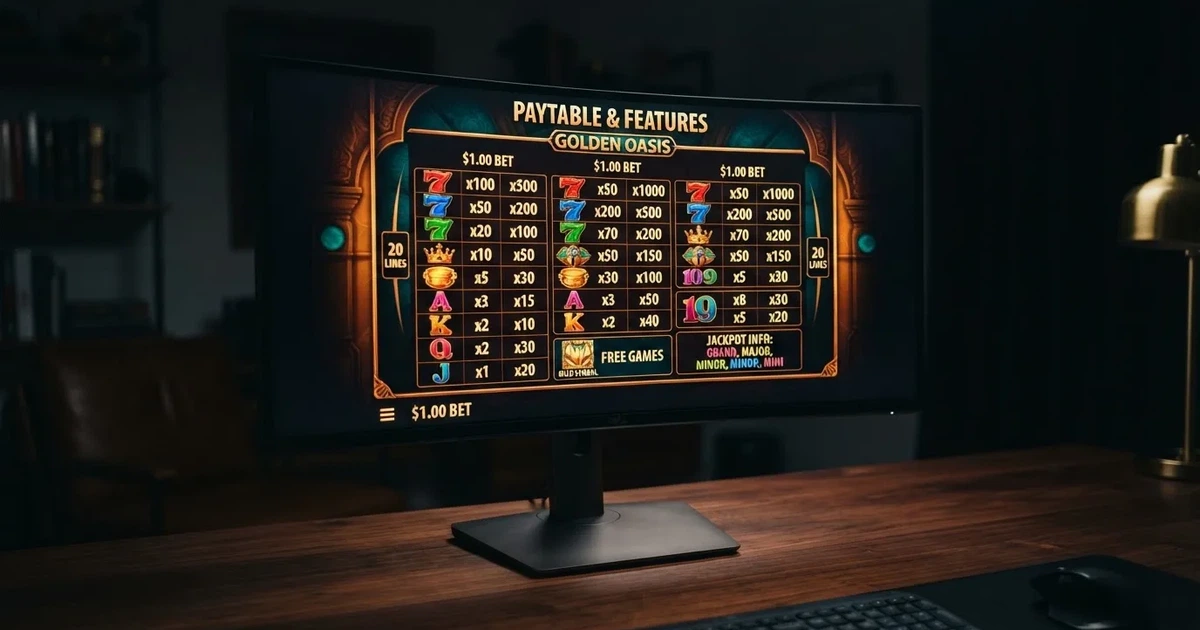
Data current as of 9 November 2026; cross-checked against the Australian Communications and Media Authority’s formal warning register and the published blocking list.
Table of Contents
- Responsible Gaming Around Video Slots: What the Tools Actually Cover
- Bonuses and Free Spins: How the Inducement Is Built
- Mobile and App Play: Where the Experience Actually Happens
- Specific Games, Providers, and What the Catalogue Actually Carries
- How the Shortlist Is Built — and What the Comparison Reveals
- The Brands, in the Order the ACMA Named Them
- Overview: What a Video Slot Actually Is, and What the Word Hides
- Legality and Regulation: What the Interactive Gambling Act Actually Says
- The Blocking Rate, Put Plainly
- A Final Note on the Marketing
- Frequently Asked Questions
Responsible Gaming Around Video Slots: What the Tools Actually Cover
A modern video slot moves faster than a poker machine did two decades ago. Reels spin in two or three seconds, bonus rounds retrigger, and a session can swallow an hour before the punter has registered what happened. That speed is the first thing responsible-gaming guidance speaks to, and it is the first thing offshore marketing buries under screenshots of cascading wins.

What an Australian player can actually use, today, runs along three tracks. The first is BetStop, the National Self-Exclusion Register, live since August 2023. A punter who registers with BetStop is barred from every Australian-licensed online and phone wagering service for a chosen period — three months, nine months, or permanently. That list covers licensed bookmakers and the licensed online wagering market. It does not cover an offshore casino, because the offshore casino is not connected to the Australian register. Registering with BetStop closes one door; it does not close the offshore door. The punter who feels the urge to play during an exclusion period and reaches for an offshore site will find the site still accepts the deposit. There is no Australian register that bars an offshore operator from taking it.
The second track is the spending and time controls that licensed Australian wagering operators must offer: deposit limits, loss limits, session reminders, and time-out tools that lock an account for a cooling-off window. These are mandated by the National Consumer Protection Framework and apply to Australian-licensed operators. On an offshore casino, none of these are required, and the site’s own voluntary tools, where they exist, sit outside any Australian complaint process. A punter who has set a A$200 weekly limit on a licensed bookmaker and then moves to an offshore site for the video slots has, in practical terms, removed the limit. The licensed operator’s guardrail ends at the licensed operator’s door.
The third track is help when gambling stops being entertainment. The National Gambling Helpline — 1800 858 858 — is free, runs 24/7, and routes callers to Gambling Help Online, which carries live chat. Financial Counselling Australia and the state-based Gambler’s Help services sit on the same referral path. None of these services ask whether the punter played at a licensed or an offshore venue; they ask what is happening and what would help. The line is worth saving before it is needed.
The consequence that rarely makes the marketing: the offshore video slot is precisely the product responsible-gaming frameworks do not reach. The faster the reels, the longer the session, the more the punter benefits from the Australian tools — and the more those tools fail to apply offshore.
Bonuses and Free Spins: How the Inducement Is Built
“Free spins” is the phrase that does the most work on an offshore video slots page. The punter sees a number — 100 free spins, 200 free spins — and reads the offer as a free chance at a real-money payout. What sits behind the number is the wagering requirement, and the wagering requirement is where the offer either becomes a small gift or a quiet cost.

A free-spin package typically pays out as bonus money, not cash. To turn the bonus into withdrawable cash, the punter must wager the bonus amount — sometimes the bonus plus the deposit — a fixed number of times. A 35x requirement on a A$100 bonus means A$3,500 of wagering before any withdrawal. A 50x requirement on the same bonus means A$5,000. The number of spins required is the wagering divided by the stake per spin. At A$1 a spin and a 35x requirement on A$100, that is 3,500 spins. At five seconds a spin, that is roughly 4.9 hours of continuous play. The free spins themselves are only the entry; the play that follows is the cost.
Game weighting is the second lever. Many video slots count 100% toward wagering. Some — especially the high-RTP or low-edge titles — count at 10%, 20%, or 0%. A bonus that “must be wagered on video slots” may quietly exclude the slot the punter actually wants to play. The terms page carries the weighting table, and the punter who has not opened it learns the weighting when the withdrawal is refused.
A maximum cashout cap is the third lever. Some offers — deposit bonuses especially — cap the winnings from bonus play at a multiple of the bonus or at a flat ceiling. A 10x cap on a A$100 bonus means anything above A$1,000 from bonus play is removed at withdrawal. A punter who hits a large win during the wagering window and then withdraws discovers the ceiling when only the ceiling arrives. Free-spin offers without a cap exist; they are rarer, and they are the ones worth taking on their own terms.
Time limits finish the structure. Most bonus wagering must be completed inside a window — seven days, fourteen days, thirty. Any bonus balance left when the window closes is removed. The punter who returns after a week finds the bonus gone and the deposit only partially wagered. A short window multiplies the effective cost of a high wagering requirement, because the punter must play faster and accept whatever variance that speed brings.
The terms that decide whether the offer is a free chance or an expensive detour: the wagering multiple, the game weighting, the maximum cashout, and the time limit. Four numbers, all written in plain English on the terms page, all the difference between a gift and a trap.
Mobile and App Play: Where the Experience Actually Happens
Most video slot sessions in Australia now happen on a phone. The screen is small, the thumb does the work, and the session lives in a pocket rather than at a desk. Three things decide whether the mobile experience is smooth or shabby: load time, interface scale, and whether the punter is using a browser or an app.
A modern video slot built in HTML5 loads in roughly three to five seconds on a mid-range Australian phone over 4G. The load depends on the game size — a 50-MB title with detailed animation loads slower than a 25-MB title with simpler reels — and on whether the casino’s mobile wrapper is built for speed or for ornament. The casino sites that load fastest strip their landing page to a lobby; the ones that load slowest load a hero banner first and the game second. The punter who cares about speed picks the former.
Interface scale decides whether the slot is playable on a 6-inch screen. A well-built mobile slot puts spin, bet size, and paytable on a single thumb-reachable cluster. A poorly built one nests the spin button inside a menu, or makes the paytable open in a sideways-scroll format that needs two hands. The desktop version is usually the better-designed version, because desktop has more room; the mobile version is the one that reveals whether the studio cared about the smaller screen at all.
Browser versus app is the choice the punter is often given. A web app loads through the browser, takes no storage, and updates when the casino updates. A native app downloads through the App Store or Google Play, runs faster, and sends push notifications. On offshore casino sites, the native app is rarely available through the Australian App Store or Play Store — Apple and Google have restrictions on real-money gambling apps in Australia — so the punter is usually redirected to a direct download from the casino’s own site. The direct download is the legal landmine: the casino is asking the punter to install software from a non-official source, and the app is not part of the Australian app ecosystem that scans for malware or signs of fraud. The browser version avoids that landmine.
The consequence that does not appear on the casino’s mobile landing page: the same offshore site that asks for a browser session on the punter’s laptop is asking for a direct download on the punter’s phone. The download request is itself a sign that the site is operating outside the Australian app stores for a reason.
Specific Games, Providers, and What the Catalogue Actually Carries
A video slot catalogue at an offshore casino runs into the thousands, and the names are mostly studio brands rather than individual titles. Pragmatic Play, NetEnt, Microgaming, Play’n GO, Yggdrasil, BGaming, Betsoft, Evolution (for live tables), Hacksaw Gaming, Push Gaming — these are the studios whose logos fill the lobby. The punter rarely knows which studio made a specific slot; the studio name appears in the game’s info panel, and the punter who ignores it cannot tell which slots are from the same maker.
The mechanics that distinguish a video slot from a classic three-reel machine are the same across studios. Five reels is now the floor; six and seven are common. Paylines have moved from a fixed handful to dozens, hundreds, or — in the “ways to win” format — thousands. Megaways, a licensed mechanic from Big Time Gaming, varies the number of symbols per reel on every spin and produces up to 117,649 ways to win on a single title. Cluster pays replaces paylines entirely: wins form from groups of adjacent matching symbols rather than from a line. Cascading reels remove winning symbols after a win and drop new ones into place, allowing chains of wins on a single paid spin. Each mechanic adds volatility — the gap between an average outcome and an extreme one — and each is sold as a feature.
Bonus rounds are the other major addition. A classic three-reel machine has one outcome per spin. A modern video slot has at least one bonus mode — free spins, a pick-and-click game, a wheel spin, a trail bonus — and many have several that trigger in sequence. The bonus round is where the largest advertised payouts sit, and the bonus round is what the marketing screenshots. A 5,000x top payout reads as a life-changing figure; it is the top of a long tail that almost never lands, and the marketing does not show the 1,000 quiet spins underneath.
Return to player, or RTP, is the figure the punter who reads the paytable will find. A 96% RTP means the slot returns, on average over millions of spins, A$96 of every A$100 wagered. The remaining A$4 is the house edge, and the house edge is constant — the punter cannot beat it through strategy, because there is no decision in the spin. What the punter can choose is the volatility: a low-volatility slot returns small wins often, a high-volatility slot returns small wins rarely and large wins occasionally. High volatility costs less per spin in expectation; it costs more per session in patience.
Two examples ground the range. A typical low-volatility title in the 96% RTP band pays out in small, frequent wins and keeps the session moving. A typical high-volatility title in the same RTP band pays out rarely and consumes bankroll quickly between wins. The punter who picks a high-volatility slot with a small bankroll runs out of money before the high-volatility payout arrives, regardless of the advertised RTP.
How the Shortlist Is Built — and What the Comparison Reveals
Any honest shortlist of “best video slots Australia” 2026 runs into the same wall: the offshore casinos that market video slots to Australians are prohibited from doing so under the Interactive Gambling Act 2001, and the ACMA has issued formal warnings over every brand that appears prominently in a search for the term. The shortlist below is therefore not a ranking. It is the list of brands the ACMA itself has acted against for offering the prohibited product, with the action and date as the regulator recorded them.
The comparison that matters is between the brand’s marketing and the regulator’s record. Every brand in the table below has been the subject of a formal warning under the Interactive Gambling Act 2001, the step the ACMA takes when an offshore operator is found offering prohibited interactive gambling services to Australians. A formal warning is not the final step — the ACMA can ask Australian internet service providers to block the site, can refer the matter to the Australian Federal Police, and can pursue civil penalties — but it is the recorded step that has already happened.
The table below carries, for each brand the ACMA has named: the brand as the punter would see it, the formal warning action and date as the ACMA published it, the operator entity the warning named, and the subject-support marker the research could verify. Empty cells are deliberate; a brand without a verifiable catalogue or licence attribution is not given one.
| Brand | ACMA action and date | Operator named by the ACMA | Subject support |
|---|---|---|---|
| RocketPlay | Formal warning, March 2026 | Pulsup Ltd (Rocketplay.com.au); earlier Dama N.V., May 2022 | — |
| Level Up Casino | Formal warning, May 2022 | Dama N.V. | listings report (BGaming) |
| Woo Casino | Formal warning, March 2025 | Dama N.V. | — |
| Spirit Casino | Formal warning, May 2025 | Dama N.V. | — |
| National Casino | Formal warning, July 2025 | Consolutetish S.R.L. | listings report (Wikipedia) |
| Bizzo Casino | Formal warning, July 2025; earlier 2022 | Consolutetish S.R.L.; earlier TechSolutions | — |
| Ignition Casino | Formal warning, July 2025 | Bamboo Media | — |
| Instant Casino | Formal warning, February 2025 | EOD Code SRL | — |
| Jackbit | Formal warning, April 2026 | Ryker B.V. (Jackbit, CasinOK) | — |
| Casino Intense | Formal warning, April 2025 | Sterplay Holding Ltd | listings report (ABC, ACMA, Crown Melbourne) |
| Sky Crown | Formal warning, September 2022 | Hollycorn N.V. | — |
The single thing the table makes visible at a glance: every brand on the shortlist has been formally warned by Australia’s media and communications regulator for offering the prohibited product. The brands carry licences from Curaçao, Anjouan, or similar offshore jurisdictions — those licences permit the operator to run the site from those jurisdictions, they do not permit the operator to offer online casino games to Australians. The offshore licence is not a workaround for the IGA. It is irrelevant to it.
What the marketing pages add is the catalogue, the bonus, and the live-dealer lobby. What the regulator’s record adds is the warning, the date, and the operator entity behind the brand. The punter who reads both is the punter who makes an informed choice. The punter who reads only the marketing is reading a sales page about a product that cannot lawfully be sold to them.
The Brands, in the Order the ACMA Named Them
RocketPlay — the warning that landed six months ago
RocketPlay appeared on the ACMA’s register twice: in May 2022 under Dama N.V., and again in March 2026 under Pulsup Ltd over the .com.au domain. Two warnings over the same brand, four years apart, indicate a brand that changed operator hands without changing the offering. The punter who arrived at RocketPlay via a search engine in 2026 is looking at a site the ACMA had warned its operator about three months earlier.
The catalogue carried behind the RocketPlay brand sits inside the Dama N.V. and Pulsup Ltd operations. Research could not verify a specific catalogue for the current iteration, so the brand is left without a catalogue attribution. The published ACMA record stands.
Verdict: the most recent warning of the set, and the one closest to the punter’s current visit.
Level Up Casino — one warning, six years standing
Level Up Casino received a formal warning from the ACMA in May 2022, named as a Dama N.V. brand alongside Bambet, Dazard, Rocketplay, Wild Tornado and Cobra Casinos. The warning is one of the older ones on the list, and the brand has continued to operate.
BGaming, the studio whose games appear in many Dama N.V. lobbies, lists Level Up Casino among its partner operators. That listing is the only catalogue attribution research could verify; it tells the punter which studio’s games appear in the lobby, not whether the games are available to an Australian player.
Verdict: the warning is old, the operator is unchanged, and the brand is still accessible.
Woo Casino — the 2025 warning
Woo Casino received a formal warning from the ACMA in March 2025, again under Dama N.V. The warning came in the same wave as several other Dama N.V. brands and reflects the operator’s pattern of re-flagging brands after the previous one is warned. The punter who has seen “Woo Casino” on a comparison page saw a brand whose operator was warned three months earlier in 2025.
Research carries no catalogue attribution for Woo Casino; the brand sits on its ACMA action alone.
Verdict: the brand is part of an operator group the ACMA has warned repeatedly under different brand names.
Spirit Casino — the second 2025 Dama N.V. warning
Spirit Casino received a formal warning in May 2025, again under Dama N.V. The pattern — Dama N.V. brand, formal warning, continued operation — is the same as for Woo Casino, and the two warnings sit two months apart in 2025.
The brand carries no verified catalogue attribution. The warning stands.
Verdict: another Dama N.V. brand on the same trajectory.
National Casino — a new operator, the same product
National Casino received a formal warning in July 2025, this time under Consolutetish S.R.L., not Dama N.V. The shift in operator entity suggests a re-organisation behind the brand: the same marketing surface, a different corporate vehicle. The product offered is unchanged — prohibited online casino games to Australians.
The Wikipedia entry on National Casino is the only catalogue attribution research could verify. The brand sits at the intersection of a new operator and an old offering.
Verdict: the brand surfaces a new operator name without changing what the punter sees on the landing page.
Bizzo Casino — warned twice, by two operators
Bizzo Casino received a formal warning from the ACMA in July 2025 under Consolutetish S.R.L. The same brand had already been the subject of a 2022 formal warning to TechSolutions (CY) Group Limited and TechSolutions Group N.V. Two warnings, two operators, one brand. The pattern is the cleanest in the set.
There is no catalogue attribution for Bizzo Casino. The two warnings are the load-bearing fact.
Verdict: the most thoroughly warned brand in the set, and a clean illustration of the operator-rebrand cycle.
Ignition Casino — the Bamboo Media warning
Ignition Casino received a formal warning in July 2025 under Bamboo Media. Ignition is a long-running offshore brand name, and the warning is its first appearance on the ACMA’s record.
No verifiable catalogue exists for Ignition Casino. The brand’s standing rests on the warning alone.
Verdict: a familiar brand name, a single warning, and the same prohibited product behind both.
Instant Casino — the EOD Code SRL warning
Instant Casino received a formal warning in February 2025 under EOD Code SRL. The warning sits early in the 2025 wave and preceded several others on the table.
Research does not link Instant Casino to a verified catalogue; the brand sits on its warning.
Verdict: one of the earlier 2025 warnings, with the same standing as the others.
Jackbit — the warning the ACMA published alongside CasinOK
Jackbit received a formal warning from the ACMA in April 2026 under Ryker B.V., in the same notice that named CasinOK. Two brands, one operator, one warning. The Jackbit brand is younger than most on the list and carries the most recent Ryker B.V. attribution.
Jackbit carries no research-backed catalogue attribution, relying instead on the warning.
Verdict: a recent warning, a young brand, and the same product the ACMA has been naming for years.
Casino Intense — the Sterplay warning
Casino Intense received a formal warning in April 2025 under Sterplay Holding Ltd. The brand surfaces in several Australian-context listings — ABC reporting, the ACMA’s own record, and Crown Melbourne’s game-rules page — though the appearances are scattered and the catalogue attribution is thin.
Verdict: a brand with a thin research trail and a clear ACMA action.
Sky Crown — the Hollycorn warning
Sky Crown received a formal warning from the ACMA in September 2022 under Hollycorn N.V., the same notice that named Blue Leo. Hollycorn is one of the longer-running operator names on the list.
Sky Crown lacks a verified catalogue, and the warning stands.
Verdict: one of the older warnings, an operator with several brands, and the same product underneath.
Overview: What a Video Slot Actually Is, and What the Word Hides
A video slot is a slot machine whose outcome is determined by software rather than by physical reels. The first video slot was developed in 1976 by Fortune Coin Co. in Kearny Mesa, California, and the format took decades to displace the mechanical three-reel machine that Charles Fey had built in late-19th-century San Francisco. Fey’s original had five symbols on three reels — horseshoes, diamonds, spades, hearts and the Liberty Bell — and three bells in a row paid the top prize of ten nickels. Bally’s “Money Honey” in 1963 added the bottomless hopper and automatic payout. The video slot that emerged from those two predecessors now defines the genre: a software-driven machine, a random number generator producing outcomes the player cannot predict, and a presentation layer that can show anything the studio chooses.
What the word “video slots” hides, in the Australian context, is the difference between the licensed product and the offshore product. The licensed product is the electronic gaming machine — the Australian term is “pokies” — found in pubs, clubs, and casinos. The pokies sit under state and territory regulation, with each jurisdiction setting its own rules: New South Wales had 87,298 pokies outside casinos as of June 2023, Victoria had 26,380 in 2021–22, Queensland had 21,122 in October 2023, South Australia had 11,672 in September 2023 and the ACT had 3,587 in November 2023. Australia outside casinos operated an estimated 97,103 gaming machines by 2010 — a per-capita rate about five times that of the United States. The product is regulated, the venues are licensed, and the consumer protection framework applies.
The offshore product uses the same word — “video slots” — but offers it through an unlicensed website to an Australian punter. The product is the same in shape: five reels, bonus rounds, free spins. The product is different in standing: the operator has no Australian licence, no Australian regulator to answer to, no Australian complaints body, and no obligation to honour a withdrawal that the operator decides not to honour. The marketing pages describe the product as if the standing were the same. The regulator’s record describes the product as what it is.
The consequence, stated plainly: a punter searching for video slots in Australia lands on a market that is prohibited at the provider level and unprotected at the consumer level. The licensed alternative — the pub pokies, the club pokies, the casino table games — is regulated, taxed, and reachable without a VPN. The offshore alternative is none of those.
Legality and Regulation: What the Interactive Gambling Act Actually Says
The Interactive Gambling Act 2001, strengthened by the Interactive Gambling Amendment Act 2017, makes it an offence to provide online casino games, online pokies or in-play betting to a person physically in Australia. No state or territory licenses online casino games. The law targets the provider, not the individual punter; an Australian who plays at an offshore casino is not prosecuted. What the punter loses, in return, is the entire consumer-protection layer that Australian regulation provides.
The regulator is the Australian Communications and Media Authority, the ACMA. The ACMA investigates complaints, issues formal warnings, and can direct Australian internet service providers to block illegal sites. The cumulative blocking tally, as reported in June 2026, had reached 1,751 websites blocked since the first blocking request in November 2019 — a span of roughly six and a half years, averaging around 265 websites blocked per year or roughly 22 per month. The condition on that figure: it counts distinct blocking requests, not distinct operators, and the rate has accelerated in waves. In the round reported on 26 June 2026 alone, the ACMA asked ISPs to block twelve more sites — 7Signs, ChromaBet, Donbet, Duospin, Freshbet, Slots Gem, Jacks Club, Lucky Start, Pointsbetz, Spinrise, Vinyl Casino and Wildsino.
The scale of the enforcement, set against the scale of the demand: H2 Gambling Capital’s 2025 report estimated that Australians lose about A$3.9 billion a year to illegal gambling sites, and that the share of gambling going through legal channels fell from 74% in 2021 to 64%. The legal channel shrank, the illegal channel grew, and the regulator’s response is a treadmill of warnings and blocks rather than a single decisive action.
The Interactive Gambling Amendment (Gambling Reform) Bill 2026 passed Parliament on 19 August 2026. Its advertising and inducement measures commence 1 January 2027 — law with a start date, not yet in force on a 2026 page. The punter who sees new rules promised should know the date: 1 January 2027.
What is licensed, in Australia, is wagering on races and sport placed before the event, lotteries and keno. The Northern Territory Racing and Wagering Commission, the NTRWC, regulates 52 of Australia’s online bookmakers — Sportsbet, Bet365 and Ladbrokes among them — licensed in the Territory for tax reasons. The commission has no full-time staff and meets once a month in Darwin. That single commission, sitting monthly, is the regulator of most of the licensed online wagering market.
The payments regime tells the same story. Credit cards, credit-related products and digital currency are banned as payment for licensed online wagering since 11 June 2024; penalties for operators reach A$247,500. Legal deposit routes for licensed wagering are debit card, bank transfer, PayID/Osko and BPAY. A site that asks an Australian punter for a credit card or a crypto deposit is operating outside the Australian rules — and the offshore video slots sites almost always accept both, because the offshore operator is not bound by the credit-card or crypto bans.
The minimum age for any form of Australian wagering is 18. The punter who is under 18 and playing at an offshore casino is not just outside the consumer protection — they are outside every age-verification check that the licensed operators are required to run.
The consequence, again: the offshore video slots offer is unlawful at the provider level, unprotected at the consumer level, and increasingly visible to the regulator. The punter who accepts the offer accepts all three.
The Blocking Rate, Put Plainly
From November 2019 to June 2026, the ACMA directed the blocking of 1,751 illegal gambling and affiliate marketing websites. That span is roughly 79 months. The arithmetic: 1,751 websites divided by 79 months gives an average of about 22 websites blocked per month — or, in annual terms, roughly 265 sites per year across the period.
The condition the figure carries: it is an average across the full period, and the actual monthly rate has moved in waves. The June 2026 round alone named 12 sites; other months have named fewer. The punter who wants to know how often a brand on the shortlist above might be added to a block list should read the figure as: the ACMA is, on average, asking ISPs to block around twenty illegal gambling sites every month, and the request, once made, takes effect within days for an Australian customer.
The consequence for a punter with a balance at an offshore casino: the block is the moment the withdrawal channel narrows. The site can still be reached from a non-Australian IP address, the customer’s account still exists, and the customer’s balance still shows on the screen — but the customer’s Australian bank, card, or PayID may no longer reach the deposit or withdrawal page. The punter who holds a balance when the block lands is the punter who discovers what “no Australian consumer protection” means in practice.
A Final Note on the Marketing
The offshore casino marketing pages are built to convert a search into a deposit. They open with a jackpot figure, a welcome bonus, a list of providers, a live-dealer lobby. The pages describe a product the operator is prohibited from selling to the reader. The regulator’s record describes the same product as the ACMA has formally warned against. The punter reading both is the punter who can choose.
The licensed alternative in Australia is not a “video slots online” product. It is the pub pokies, the club pokies, and the casino table games under state and territory regulation. The licensed product does not advertise itself with welcome bonuses; it does not need to. It is the product the punter reaches by walking in, and the product the punter leaves behind at closing time.
Frequently Asked Questions
What makes a video slot different from a classic three-reel pokies machine?
A classic three-reel machine has three spinning reels with a handful of symbols per reel — Fey’s original had five symbols on each — and a single payline across the centre. A video slot runs on software, uses five or more reels with dozens or hundreds of symbols per reel, and replaces the single payline with dozens, hundreds, or thousands of ways to win. The video slot also layers on bonus rounds, free-spin modes, and cascading reels, none of which exist on a mechanical three-reel.
Do video slots typically include bonus rounds that classic machines don’t have?
Yes. A bonus round is a separate game mode that triggers from the base reels — free spins with a multiplier, a pick-and-click game, a wheel spin, or a trail bonus — and it is where the largest advertised payouts sit. A classic three-reel machine pays out on the reels and nowhere else; the bonus round is the feature that defines the video slot format and the one the marketing screenshots most heavily.
Are video slots on a mobile browser the same game as the desktop version?
The underlying random number generator and the mathematics of the game are the same. What changes is the presentation: the layout is rebuilt for a vertical screen, the spin and bet-size controls are clustered for thumb reach, and the paytable opens in a mobile-friendly panel. A punter who switches from desktop to mobile browser on the same site is playing the same game with a different interface — not a different RTP or a different volatility.
How many paylines does a typical modern video slot use?
The range is wide. A traditional video slot might use 20 or 25 paylines. A “ways to win” slot might use 243, 1,024, or up to 117,649 — the last figure is the Megaways ceiling, a licensed mechanic where the number of symbols per reel varies on every spin. Cluster-pay slots replace paylines with adjacent-symbol groups and have no fixed payline count at all. The payline count on a specific title is shown in the game’s info panel.
Why do video slots vary in volatility even within the same provider’s catalogue?
Volatility is a design choice, not an accident. A studio decides, when building a slot, how often the slot pays out and how large the payouts are when they land. A low-volatility slot pays out small wins often — a high-volatility slot pays out rarely and larger. The mathematics, the bonus structure, and the symbol distribution are all tuned to deliver the chosen volatility. Two slots from the same studio can sit at opposite ends of the scale because the studio made two different design choices, not because one is better than the other. The punter who picks high volatility with a small bankroll will run out of money before the high-volatility payout arrives.
Which Australian state has the most licensed gaming machines outside casinos?
New South Wales. As of June 2023, NSW had 87,298 pokies-style slot machines outside casinos, more than three times the next-largest jurisdiction (Victoria at 26,380 in 2021–22). Queensland sat third at 21,122 in October 2023, South Australia at 11,672 in September 2023, and the ACT at 3,587 in November 2023. The figures cover machines in pubs and clubs; casino-floor machines are licensed separately under each state’s casino control legislation.