
Best RTP Slots Australia 2026: What a Slot’s Return Number Actually Costs a Player
The “best RTP slots” promise a number, and that number has become a marketing weapon. Sites post return-to-player percentages the way a bottle of wine posts a vintage: as if the figure tells you what you are getting. For an Australian player, the more important number sits a few lines below, and almost nobody prints it: under the Interactive Gambling Act 2001, online casino games — every slot game an offshore site offers — are a prohibited interactive gambling service. No Australian licence covers them, no state and territory regulator approves them, and the Australian Communications and Media Authority has been issuing formal warnings and ordering internet service providers to block them at a steady pace since 2017. So the first cost of chasing a “best RTP slot” online from Australia is that the page offering it sits outside Australian consumer law entirely. Current as of 29 October 2026 against the ACMA’s published register of formal warnings and blocking orders.
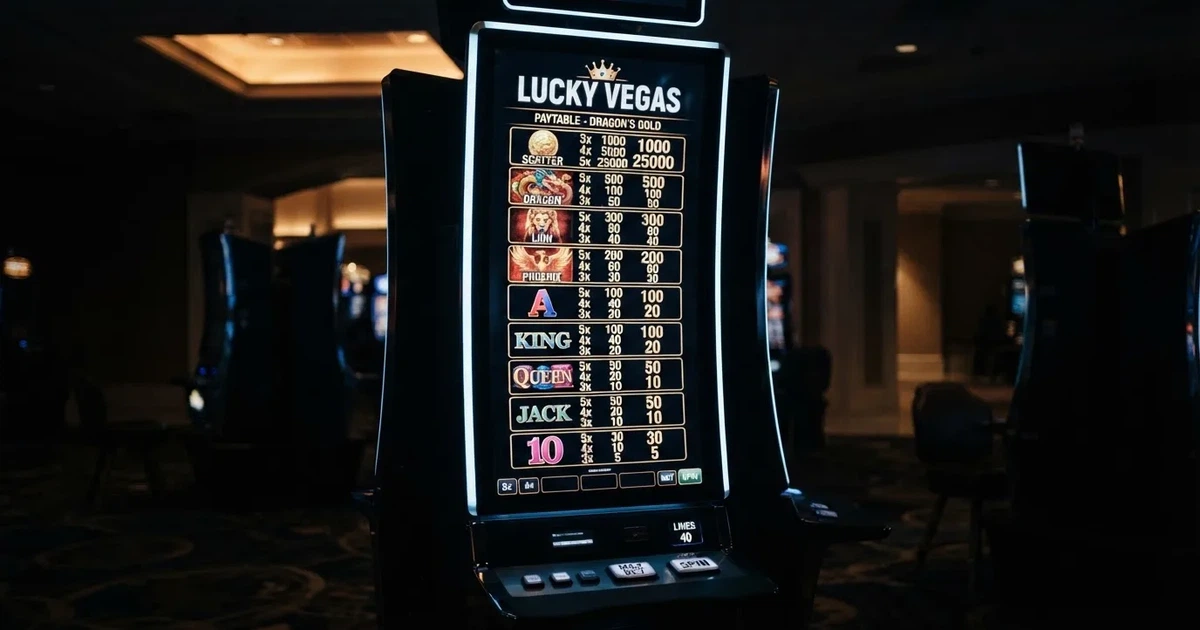
Table of Contents
- How the Interactive Gambling Act Shapes Every RTP Page a Punter Sees
- RTP as a Long-Run Average, Not a Session Guarantee
- How the Figure Gets Built, and Why Two Slots with the Same Theme Can Disagree
- The Offshore Slot Landscape: What the ACMA Has Actually Done
- Where Australian Players Can Actually Find a Legal Slot Machine
- What Happens When an Offshore Site Is Blocked Mid-Session
- The Brands the ACMA Has Named
- The Mechanics Behind an RTP Audit
- Why a “Best RTP” List Is Always a Marketing Construct
- Responsible Gambling Supports Available to Australian Players
- Reading the ACMA’s Formal Warnings as a Cost Signal
- The Cost a Punter Actually Pays on a “Best RTP” Slot Page
- What This Page Is Not For
- Frequently Asked Questions
How the Interactive Gambling Act Shapes Every RTP Page a Punter Sees
The Interactive Gambling Act 2001, tightened by the Interactive Gambling Amendment Act 2017, makes it an offence to provide online casino games, online pokies or in-play betting to a person physically in Australia. The Act targets the provider, not the player — no individual punter has been prosecuted for clicking through to an offshore slot — but that distinction does less work than it looks. The same Act also gives the ACMA the power to direct Australian ISPs to block illegal services, and to publish formal warnings naming the operator behind each one. The relevant fact for any RTP discussion: the only slots that can legally be offered to an Australian over the internet are the ones that are not slots in this sense at all — pre-event wagering products, lotteries, keno — and the licensing of those products runs through a small set of wagering operators, almost all of them Northern Territory-licensed.
So the “best RTP slot” market an Australian punter encounters on a Google results page is, with rare exceptions, a market the ACMA has already looked at and found to be operating outside the local regime. The figures those sites quote — 96.5%, 97%, 98% — are real disclosures from the game studios. The page publishing them is not.

This is also the lens that decides what the rest of this page does. A reader who has come here looking for a list of high-return slot titles can leave with three things that the marketing material rarely gives them together: a working sense of how an RTP figure is built, the legal frame that decides which of those slots they can actually sit down and play from inside Australia, and a record of which offshore brands have already drawn an ACMA formal warning — because every brand reviewed further down has.
RTP as a Long-Run Average, Not a Session Guarantee
The return-to-player percentage is the share of every dollar wagered that a slot returns to players across the full population of spins the machine will ever produce. A 96% slot is, on average, designed to return A$96 of every A$100 that goes through it across its operating life. The “across” is the load-bearing word: the figure describes a population of bets, not a bet, and not a sitting. A player in a one-hour session will see their bank move in either direction by an amount the figure predicts only weakly.
Casino mathematics formalises this through expected value. For a single A$1 spin on a 96% slot, the expected return is A$0.96 and the expected loss is A$0.04. Across ten thousand spins, the law of large numbers compresses the variance, and the realised return converges on 96%. Across one hundred spins, the realised return can be anything from 30% to 300%, because the slot’s design space covers small wins, occasional large wins and long stretches where nothing lands at all. Players who have ever felt that a “96% slot” is taking them for more than 4% have not been lied to; they have been on the wrong side of a sample.
That is the first real cost a marketing-grade RTP claim hides: it names a property of the machine and lets the punter assume it is a property of their evening. The same error is what makes a “98% RTP” headline read as a recommendation when, in any individual session of meaningful length, it is statistical noise either side of a long-run average the player will not reach.
How the Figure Gets Built, and Why Two Slots with the Same Theme Can Disagree
A modern video slot is a virtual reel mechanism: a random number generator picks a result on every spin, and a paytable maps that result to a payout. The RTP is the sum, across every possible result, of (probability × payout). Five reels, fifty symbols per reel, and the odds against the top combination can run as high as 300 million to one — a long way from the original three-reel Liberty Bell, where Charles Fey’s 1890s design offered roughly a thousand possible outcomes and a top prize of ten nickels for three bells in a row.
Two slot releases can share a theme — ancient Egypt, fishing, fruit machines — and still carry different RTP figures, because the underlying math varies. The studio picks a target RTP, then designs the symbol weights, the bonus triggers and the top-prize frequency until the math adds up. The same theme can ship as a 94% release in one jurisdiction and a 96% release in another, and sometimes a third figure elsewhere; the look and feel is the same because the symbols are the same, but the math underneath is a different game. Independent testing laboratories — GLI, eCOGRA, BMM Testlabs among them — audit the published RTP before a slot is released, and the figure a player sees on a paytable is the result of that audit, not the studio’s own back-of-envelope.
This matters more in Australia than in most markets because the games an Australian punter can actually access offline — electronic gaming machines in licensed clubs, hotels and casinos — publish their RTP on the machine’s help screen, and the figure is the result of state-level approval. A 90% pokie in a western Sydney hotel and a 92% pokie in a Melbourne casino are not the same product even when the theme looks identical, and the difference comes from this math, not the cabinet art.
The Offshore Slot Landscape: What the ACMA Has Actually Done
The relevant data point is not how many offshore slot sites advertise an RTP of 96% or higher. It is how many of them the ACMA has investigated, warned and ordered blocked — and how many of those sites are still actively soliciting Australian customers from new web addresses the moment the old ones go dark.
The blocking programme started with the first request to ISPs in November 2019. By the ACMA’s own published count, as reported in June 2026, the cumulative number of illegal gambling and affiliate marketing sites blocked since that first request had reached 1,751. More than 230 unlicensed gambling services had left the Australian market since enforcement was strengthened in 2017, either because they withdrew on receiving a formal warning or because the ACMA’s blocking order made the Australian market uneconomic. The June 2026 round alone added twelve domains — 7Signs, ChromaBet, Donbet, Duospin, Freshbet, Slots Gem, Jacks Club, Lucky Start, Pointsbetz, Spinrise, Vinyl Casino and Wildsino — to the block list.
That arithmetic is the information this page adds beyond a marketing roundup. The blocking-rate, computed as the ACMA’s reported total blocked sites (1,751) divided by the months elapsed since the first blocking request in November 2019, comes out to roughly 22 blocked sites per calendar month across the years the programme has run. Stated as a band rather than a single figure — because each round blocks a different number of domains, and a single month can carry a spike — the rate sits in the order of twenty blocked domains per month as a working average, and has been climbing. The pace tells a reader something the round-by-round list does not: every site the marketing industry promotes in the Australian search results is one blocking order away from going dark, and the ACMA is adding to that list on a roughly monthly cadence.
The cost to a punter who has deposited with one of those sites is sharp. When an offshore service is blocked in Australia, the ISP-level block cuts the connection between Australian customers and the site. Any balance still sitting in the player’s account becomes difficult or impossible to withdraw, because the same offshore operator that took the deposit has no obligation to honour it under Australian consumer law and no local complaints body to answer to. That is the second real cost the RTP headline conceals.
Where Australian Players Can Actually Find a Legal Slot Machine
The only slots that are not prohibited interactive gambling services in Australia are the ones in licensed venues: electronic gaming machines in casinos, clubs and hotels, regulated state by state. New South Wales had 87,298 pokies-style machines outside casinos as of June 2023, Victoria had 26,380 in 2021–22, Queensland 21,122 in October 2023, South Australia 11,672 in September 2023 and the ACT 3,587 in November 2023. By 2010 the country operated an estimated 97,103 gaming machines outside casinos, a per-capita density about five times that of the United States — the densest slot-machine population of any developed market. New South Wales itself legalised slot machines in 1956, and the legal machine count in clubs and hotels has grown almost every year since.
These are the only slots where the punter has a real layer of protection. Each state and territory regulator — the NSW Casino Control Authority, Liquor & Gaming NSW, the Victorian Gambling and Casino Control Commission, the Queensland Office of Liquor and Gaming Regulation — publishes the approved RTP for the games operating under its licence, and a patron can ask the venue for the help screen that prints the figure. The help screen is not a marketing claim; it is a regulatory disclosure backed by an audit.
The NSW Casino Control Act 1992 makes the point explicitly: under section 66, a casino operator must not permit a game such as baccarat to be played unless the game and its rules are approved by the regulator, and the operator must make a copy of the approved rules available to patrons on request. The same logic extends to every approved table game and every EGMs in the state. Victoria’s Casino Control Act 1991 routes the same approval through the Victorian Gambling and Casino Control Commission, which took over from the VCGLR on 1 July 2022. Where the offshore slot page publishes an RTP as a marketing flourish, the local machine publishes it because the regulator told it to.
That is also why the Australian venue figure is the figure worth taking seriously. The house edge on a poker machine in a licensed venue is set in the math, audited by the regulator’s approved testing house and disclosed on the machine. The RTP on an offshore slot page is set in the same math, but the page offering it has been issued an ACMA formal warning or is one blocking round away from one. The number is the same shape; the consumer protection is not.
What Happens When an Offshore Site Is Blocked Mid-Session
The ACMA’s blocking power is built into the Interactive Gambling Act itself. Section 313 of the Telecommunications Act 1997 lets the ACMA give ISPs a formal direction to block an illegal service, and the ISP complies at the network level. From the punter’s side, the blocked site stops resolving: the page does not load, any open session drops, and any app the punter installed stops talking to the offshore backend. Australian payment processors are also subject to separate ACMA work — credit cards, credit-related products and digital currency have been banned as a payment method for licensed online wagering since 11 June 2024, with penalties of up to A$247,500 for operators that breach the rule, and the same ban effectively closes the legitimate debit-card rails to illegal offshore sites as well.
What this means in practice: a punter who has deposited with an offshore slot site and is part-way through meeting a wagering requirement has, at the moment of an ACMA blocking order, no Australian consumer law to fall back on. The Interactive Gambling Act does not give the punter a private right of action. The site is not a licensed Australian wagering provider, so it is not bound by the Australian licensed wagering code, and the national self-exclusion register BetStop — live since August 2023 — only covers Australian-licensed online and phone wagering services, which an offshore casino is not. The punter is outside the regime on the way in and outside the regime on the way out.
That is the structural cost the RTP headline carries. A 97% return-to-player figure on a page that gets blocked next month is not a better deal than a 90% pokie in a Sydney pub; it is a worse deal, because the 90% pokie is paid out under a regulator’s eye and the 97% slot is paid out at the operator’s discretion, on a site the punter can be locked out of by a regulator they will never have a contract with.
The Brands the ACMA Has Named
The brands below are not recommendations and not a ranking. Each one is on this page because the ACMA itself issued a formal warning naming it for offering prohibited interactive gambling services to Australians, and because the only public, auditable record of what these sites do in the Australian market is the ACMA’s own register. A formal warning is the ACMA’s step before a blocking request, and the same warning is published with the operator’s legal name. Where the same operator has been warned more than once — Dama N.V. across multiple brands — each brand is shown with the date of its own warning.
RocketPlay
The ACMA issued a formal warning in March 2026 to Pulsup Ltd over Rocketplay, naming the operator by its corporate entity rather than the brand. The site had previously drawn an earlier warning to Dama N.V. in May 2022 as part of a six-brand batch. The brand falls under the same prohibition as every other offshore slot page on this list: online casino games are not licensable to Australians, whatever offshore licence the footer prints.
Level Up Casino
The ACMA’s May 2022 formal warning to Dama N.V. covered six brands in one notice, and Level Up Casino was one of them. Subsequent ACMA action against the same Dama N.V. corporate entity — over Woo Casino in March 2025 and Spirit Casino in May 2025 — has not changed Level Up’s status under that earlier notice. The site’s listing in Bgaming’s developer catalogue is the only public source connecting the brand to a specific game studio, and that connection describes the publisher relationship rather than any Australian-licensable product.
Woo Casino
The ACMA issued a formal warning to Dama N.V. over Woo Casino in March 2025, naming the operator as the entity behind the brand. The brand had not appeared in the earlier May 2022 batch of six, so the Woo Casino warning is a fresh action against a different Dama N.V. property rather than a renewal of an old one.
Spirit Casino
The ACMA’s May 2025 warning to Dama N.V. over Spirit Casino is the most recent action against this operator in the published register, and is the second Dama N.V. warning of 2025 after Woo Casino in March. The same legal frame applies as for every other site on this list: online casino games are not licensable to Australians, and the warning names the offshore operator rather than licensing the product.
National Casino
The ACMA issued a formal warning in July 2025 to Consolutetish S.R.L. over National Casino, alongside a parallel warning covering Bizzo Casino. The brand’s only public connection to a specific game provider is its listing in Wikipedia’s coverage of the online gambling market, and that listing is a description of the site rather than an Australian licence or an RTP audit. National Casino is the kind of page that publishes a “97% RTP” headline; it is also the kind of page that the ACMA has found to be offering prohibited services.
Bizzo Casino
The ACMA’s July 2025 warning to Consolutetish S.R.L. over Bizzo Casino was a second action against the brand, following an earlier 2022 warning to TechSolutions (CY) Group Limited and TechSolutions Group N.V. Two warnings separated by three years tell a reader something about the brand’s persistence: the offshore operator continued to solicit Australian customers after the first warning and drew a second. The product on offer is the same prohibited product as on every other site on this list.
Ignition Casino
The ACMA issued a formal warning in July 2025 to Bamboo Media over Ignition Casino. The operator is named in the warning as the entity behind the brand; the brand itself has not appeared on this page from any other source, and the ACMA warning is the primary public record of what the site has been doing in the Australian market.
Instant Casino
In February 2025 the ACMA issued a formal warning to EOD Code SRL over Instant Casino. The operator name on the warning is the corporate entity, not the brand. Like the other sites on this list, Instant Casino offers online casino games from an offshore jurisdiction and has no Australian licence; the ACMA’s action is the public record of that mismatch.
Jackbit
The ACMA issued a formal warning in April 2026 to Ryker B.V. over both Jackbit and CasinOK in a single notice. The operator is named as Ryker B.V.; both brands sit under the same offshore entity. The April 2026 date makes this one of the most recent formal warnings in the ACMA’s register and the freshest entry on this list.
Casino Intense
In April 2025 the ACMA issued a formal warning to Sterplay Holding Ltd over Casino Intense. The brand is named in published reports covering the formal warning, along with the regulator’s own notice page and broader Australian gambling coverage. The product — slot games and other casino titles offered from outside Australia — is the same prohibited product category the ACMA acts against.
Sky Crown
The ACMA issued a formal warning to Hollycorn N.V. over its Sky Crown and Blue Leo casino services, with the formal notice published as a PDF in September 2022. Hollycorn is named as the corporate operator behind both brands; the warning sits earlier in the ACMA’s register than the others on this list but covers the same prohibited product category.
| Brand | ACMA action and date | Operator named by the ACMA | Subject support |
|---|---|---|---|
| RocketPlay | Formal warning — March 2026; earlier May 2022 | Pulsup Ltd (2026); Dama N.V. (2022) | — |
| Level Up Casino | Formal warning — May 2022 | Dama N.V. | Listings mention Bgaming |
| Woo Casino | Formal warning — March 2025 | Dama N.V. | — |
| Spirit Casino | Formal warning — May 2025 | Dama N.V. | — |
| National Casino | Formal warning — July 2025 | Consolutetish S.R.L. | Listings mention en.wikipedia.org |
| Bizzo Casino | Formal warning — July 2025; earlier 2022 | Consolutetish S.R.L. (2025); TechSolutions (2022) | — |
| Ignition Casino | Formal warning — July 2025 | Bamboo Media | — |
| Instant Casino | Formal warning — February 2025 | EOD Code SRL | — |
| Jackbit | Formal warning — April 2026 | Ryker B.V. | — |
| Casino Intense | Formal warning — April 2025 | Sterplay Holding Ltd | Listings mention media reports, ACMA, and Crown Melbourne |
| Sky Crown | Formal warning — September 2022 | Hollycorn N.V. | — |
The Mechanics Behind an RTP Audit
| Activity | Regulatory Status |
|---|---|
| Online Casino Games | Prohibited |
| Online Pokies | Prohibited |
| In-play Betting | Prohibited |
| Pre-event Sports Wagering | Licensed |
| Lotteries and Keno | Licensed |
Independent testing laboratories are the only reason an RTP number a punter sees on a paytable is more than a marketing claim. Before a slot is released, the studio submits the game math — symbol weights, bonus triggers, paytable mapping — to a lab such as GLI, eCOGRA or BMM Testlabs. The lab runs a simulated population of millions of spins, sometimes hundreds of millions, and confirms that the realised return converges on the figure the studio has claimed. The audit does not predict a player’s session, and it does not certify that the operator running the slot is honest; it certifies that the math behind the game produces the figure the page advertises.
The same auditing chain applies to Australian-licensed EGMs. Each state and territory regulator requires that the math behind any EGM installed in a licensed venue has been certified by an approved testing house, and the certified figure is the one the help screen prints. The punter in a Melbourne Crown casino asking the dealer for the RTP of a particular baccarat variant — Traditional, Crown Baccarat or 2 to 1 Baccarat, all approved by the VGCCC under the Victorian Casino Control Act 1991 — gets back a number the regulator has signed off on. The punter on an offshore slot page asking for the RTP of a particular title gets back a number the game studio signed off on; the operator, the regulator and the consumer protection behind the page are different questions.
That is also why a reading of an offshore site’s RTP disclosure has to come with a caveat the local venue’s disclosure does not need. Both figures are the same shape. Only one of them is a regulatory disclosure; the other is a marketing claim on a page the ACMA has already acted against.
Why a “Best RTP” List Is Always a Marketing Construct
The phrase “best RTP slots” implies a ranking that the underlying data does not support. A studio can publish a 98% RTP for a game and ship a 94% RTP configuration of the same game for a different market; an operator can list the 98% version on its lobby page and the 94% version is the one the player is actually spinning. Several major studios publish RTP bands across multiple jurisdictions, and the operator — not the player, not the regulator — chooses which configuration to host.
For Australian punters, the ranking problem is sharper. The legal alternative is not “the best offshore slot” but “the licensed pokie in your nearest licensed venue”. The licensed venue’s EGM may publish a lower headline RTP than the offshore page’s marketing slot — 90% versus 96% is a real gap — but the consumer protection behind the 90% is a regulator’s approved math, an enforceable complaint path, and a venue whose licence depends on it. The 96% on the offshore page sits on top of an ACMA formal warning and a network-level block that can land any month.
A reader who has reached this page looking for the “best” should read the word as: best under Australian consumer law, the only regime in which a slot game’s payout is an enforceable promise. That answer is not a list of offshore titles. It is the local venue.
Responsible Gambling Supports Available to Australian Players
The national support infrastructure is built around the legal Australian market, and an offshore slot page sits outside it. The supports worth knowing:
- National Gambling Helpline: 1800 858 858. Free, 24/7, with chat counselling available through Gambling Help Online. The helpline is run by the state and territory health departments and is the front door for crisis support, financial counselling referral and self-exclusion advice.
- BetStop — the National Self-Exclusion Register. Live since August 2023, BetStop lets a punter exclude themselves from every Australian-licensed online and phone wagering service in one registration. The register binds only Australian-licensed operators; an offshore casino is not a participant, so a BetStop registration does not stop an offshore slot page from accepting the same punter’s deposits.
- State and territory self-exclusion schemes. Each state runs its own venue-level exclusion for casinos, clubs and hotels — separate from BetStop and covering the EGMs in those venues. In Victoria the scheme runs through the VGCCC; in NSW it runs through Liquor & Gaming NSW; in Queensland through the Office of Liquor and Gaming Regulation.
- Financial counselling. The National Debt Helpline (1800 007 007) and the state financial counselling associations provide free, independent advice for any punter whose gambling spend has outrun their budget. The financial counsellors are not aligned with any operator.
The structural point: every one of these supports applies to the legal Australian market. The offshore slot page sits outside all of them, which is also the reason the ACMA acts against the page rather than relying on the support infrastructure to absorb the fallout.
Reading the ACMA’s Formal Warnings as a Cost Signal
The ACMA’s formal-warning register is published on the regulator’s own website, with the operator named by corporate entity and the date of the warning. Reading the register as a list of offshore brands to avoid is one use; reading it as a cost signal is the use this page makes of it.
The cost is not in the warning itself. A formal warning carries no fine and no licence consequence, because the offshore operator holds no Australian licence to lose. The cost is in the next step the ACMA takes when a warning is not heeded: a blocking direction to Australian ISPs. The same register shows the cumulative count of blocked sites climbing past 1,751 since November 2019, and the rate at which it climbs — in the order of twenty blocked sites per month, with spikes — tells a reader that any site on the warning list is a small step from the block list, and any site on the block list is functionally inaccessible to an Australian customer.
For a punter who has deposited with one of these sites, the cost is the loss of access to the balance the moment the blocking order lands. For a punter considering one, the cost is the absence of Australian consumer protection from the first deposit. The RTP figure on the page is a third cost, in the sense that it inflates the expected value of the offer into a marketing claim rather than a regulated disclosure.
The Cost a Punter Actually Pays on a “Best RTP” Slot Page
The arithmetic the marketing does not show. Take a slot page advertising a 96.5% RTP and assume the punter plays through A$1,000 in a session. The expected loss under the math is A$35. The realised loss can be anything from A$1,000 (if the session is a long stretch of misses and the punter keeps spinning to chase) down to a small positive number (if a top combination lands early). The expected value of A$35 is honest. The risk of A$1,000 is honest. The marketing page reports only the first number, and the punter sees only the first number until the second number lands on them.
Layer on top the offshore risk: the operator can refuse a withdrawal, the ACMA can block the site with a balance still on it, and the punter has no Australian consumer law to appeal to. The expected loss on the math becomes a hard loss on the access. A licensed Australian venue with a 90% EGM has a higher expected loss per A$1,000 (A$100) but a real regulator, a real audit and a real complaints path. The math is worse; the protection is better; the page comparison collapses on the protection line every time.
What This Page Is Not For
This page is not a list of offshore slot titles for an Australian punter to play. Every title an offshore slot page offers is a prohibited interactive gambling service under the Interactive Gambling Act 2001, and the ACMA has been acting against that category of service continuously since 2017. The brands reviewed here appear because the ACMA has named them in formal warnings, and they are not endorsed as places to play.
This page is also not an RTP ranking. The studios that publish RTP figures for their slots do so across multiple jurisdictions and configurations, and the configuration an offshore operator hosts is not one a punter can verify before depositing. The licensed Australian alternative — the EGM in a club, hotel or casino — has an audited and disclosed figure the punter can read on the help screen, and that is the figure worth taking seriously.
What the page is for: explaining what an RTP figure is and is not, recording what the ACMA has actually done in the offshore slot market, and giving a reader the legal frame in which any RTP discussion has to sit for an Australian punter. The number on the marketing page is real math; the page offering it is the part of the offer that costs the punter.
Frequently Asked Questions
How is a slot’s RTP percentage calculated over the long run?
RTP is the share of every dollar wagered that a slot returns across the full population of spins it produces. The studio builds the math — symbol weights, bonus triggers, paytable — and an independent testing lab simulates millions of spins to confirm the figure converges on the studio’s claim. The result is a property of the machine, not of any single session.
Does a slot’s RTP figure guarantee any result over a single session?
No. A 96% RTP slot returns A$0.96 on average per A$1 wagered across the full population of spins. In a session of any practical length — a few hundred or a few thousand spins — the realised return can sit well above or well below that figure, because variance dominates the sample. The RTP is a long-run average, not a session guarantee.
Are RTP figures independently tested before a slot is released?
Yes. Independent testing laboratories — GLI, eCOGRA and BMM Testlabs among them — audit the math behind a slot before release and confirm the realised return matches the studio’s claim. For Australian-licensed EGMs, the same auditing chain runs through state and territory regulators, who publish the certified figure on the machine’s help screen.
How many licensed gaming machines operate outside casinos in Queensland compared with New South Wales?
New South Wales had 87,298 pokies-style machines outside casinos as of June 2023. Queensland had 21,122 in October 2023. The NSW figure is roughly four times the Queensland figure, reflecting the much earlier legalisation of slot machines in NSW (1956) and a longer build-out of the licensed club and hotel estate.
Why do two slots with the same theme sometimes carry different RTP figures?
A studio designs a slot to a target RTP, then tunes the symbol weights, bonus triggers and top-prize frequency until the math adds up. The same theme can ship as a 94% configuration in one market and a 96% configuration in another, and the operator — not the player — chooses which configuration to host. The look is identical; the math underneath is a different game.
Can a player request the RTP figure for a specific licensed pokies machine in Australia?
Yes. Under state casino and gaming legislation — including section 66 of the NSW Casino Control Act 1992 and the Victorian Casino Control Act 1991 — a venue must make the approved game rules available on request, and the EGM help screen prints the certified RTP. The figure is a regulatory disclosure backed by an audit, not a marketing claim by the operator.