
How a Pokies Machine Decides What It Pays Back, and Why the Figure on an Offshore Site Is Not the Same Thing
Data current as of 1 November 2026 · cross-checked against the ACMA’s published formal warnings register and the state-by-state gaming-machine data held by the relevant Australian regulators
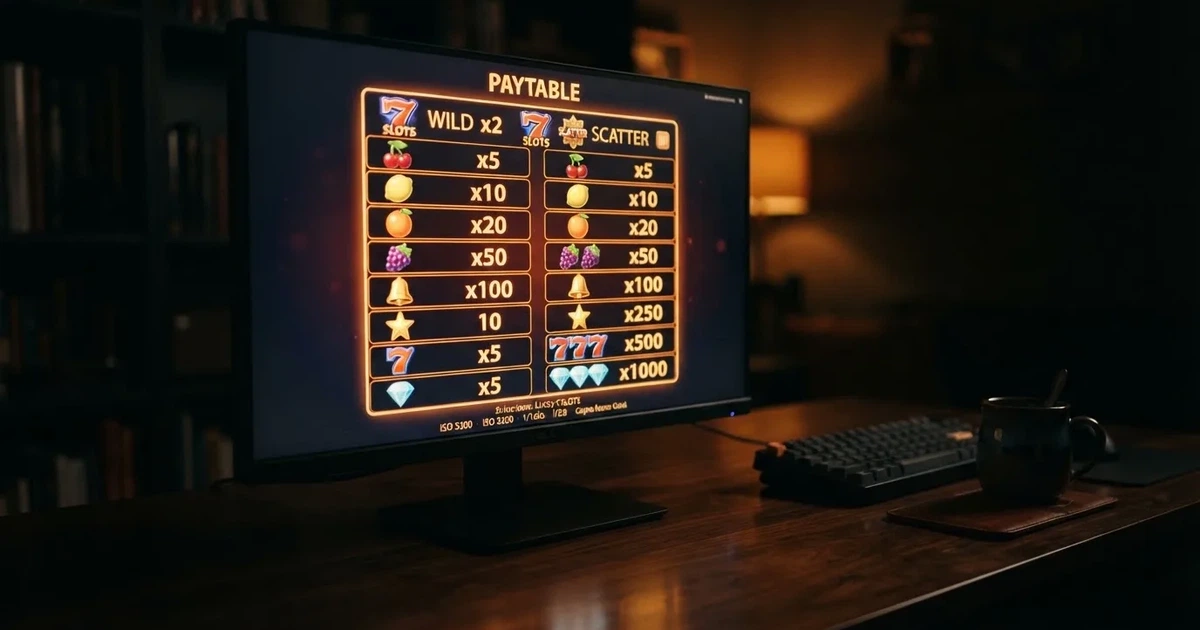
A pokies machine has a number attached to it called the return-to-player, and that number is doing a job most players only half understand. It is not a promise. It is not the chance of winning on the next spin. It is the slice of every dollar the machine takes in that the design returns to players, calculated across millions of spins. On Australian pub, club and casino machines the figure is set by a regulator and disclosed on the paytable. On offshore casino sites marketing themselves to Australian players, the figure is whatever the operator’s website says it is, and the ACMA has spent the last several years telling those operators, by name, to stop.
The two things are not the same thing. They sit at the centre of every RTP conversation an Australian player has, and the rest of this page is about how they diverge, what each one costs, and what the reader actually walks away with from the choice between them.
Table of Contents
- The Legal Frame: Why Offshore “Online Pokies” Sit Outside the Australian Arrangement
- ACMA Enforcement: What the Blocking List Has Actually Done
- The State of the Pokies: Where the Machines Actually Are, and What State Law Says About Their RTP
- What “High RTP” Means on a Pokies Machine
- The Offshore Sites: What Their RTP Claims Are and What They Are Not
- What the ACMA’s Record Says About the Offshore Brands in This Space
- The Cost of a Pokies Session, in Time and Money
- Responsible Gambling: Where to Get Help and What the Self-Exclusion Register Actually Covers
- What the Page Has Actually Established
- The Operators the ACMA Has Named, in the Order the Register Lists Them
- The Closing Frame
- Frequently Asked Questions About Pokies RTP in Australia
The Legal Frame: Why Offshore “Online Pokies” Sit Outside the Australian Arrangement
Under the Interactive Gambling Act 2001, the federal statute that governs what can and cannot be offered to a person physically in Australia, an offshore operator cannot lawfully provide online casino games, online pokies or in-play betting to Australians. No state or territory licenses them. The only licensable online gambling products are wagering on races and sporting events placed before the event, lotteries and keno — and in practice online wagering is licensed mostly through the Northern Territory Racing and Wagering Commission, which regulates 52 of Australia’s online bookmakers including Sportsbet, Bet365 and Ladbrokes, has no full-time staff and meets once a month in Darwin. The National Consumer Protection Framework applies to that licensed wagering, not to anything an offshore casino site sells.

Enforcement runs through the Australian Communications and Media Authority. The ACMA investigates complaints, issues formal warnings to offshore operators, and directs Australian internet service providers to block illegal services at the network level. The individual player is not prosecuted — the IGA targets the provider, not the customer — but the consequence for the player who keeps a balance on a blocked site is straightforward: the balance becomes very difficult to recover, because there is no Australian complaints body, no local regulator to escalate to, and no contractual mechanism that follows the site back across borders.
H2 Gambling Capital’s 2025 estimate puts annual Australian losses to illegal offshore gambling sites at about A$3.9 billion, with the share of gambling going through legal channels falling from 74% in 2021 to 64%. That gap is the gap the IGA was written to close, and it is the gap the ACMA’s blocking list keeps trying to close operationally.
ACMA Enforcement: What the Blocking List Has Actually Done
According to the ACMA, a total of 1,751 illegal gambling and affiliate marketing websites had been blocked since the first blocking request in November 2019, and more than 230 unlicensed gambling services had left the Australian market since enforcement was strengthened in 2017. In a single round reported on 26 June 2026 the ACMA asked ISPs to block twelve more sites: 7Signs, ChromaBet, Donbet, Duospin, Freshbet, Slots Gem, Jacks Club, Lucky Start, Pointsbetz, Spinrise, Vinyl Casino and Wildsino.
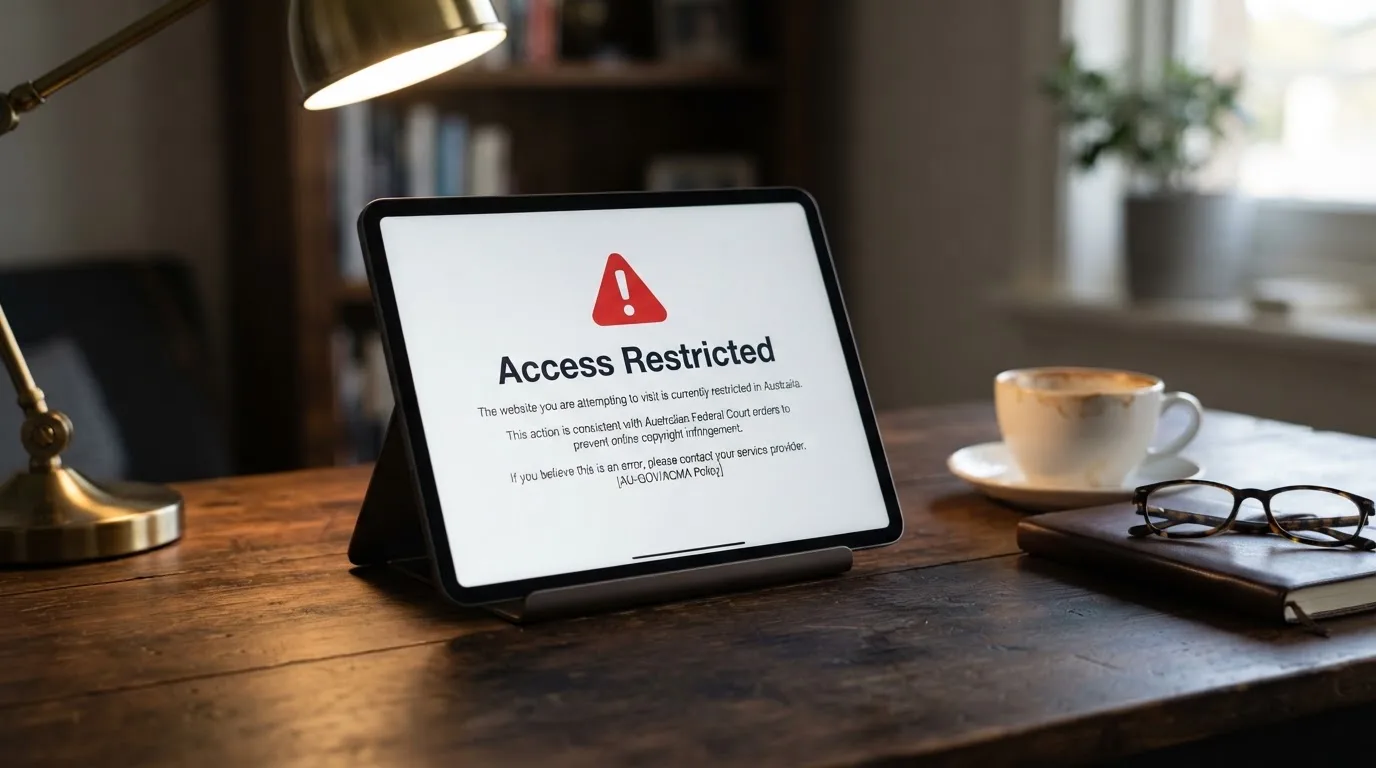
The blocking request from November 2019 was the first such direction the ACMA issued under the amended IGA; the running total of 1,751 blocked sites accumulated over the roughly six-and-a-half years between then and the most recent published count. That works out to a blocking rate of about 270 sites per year averaged across the period, and about 12 sites per round at the pace the ACMA has been running its blocking directions through 2026. The figure carries one condition the reader should hold onto: the rate assumes the November 2019 first blocking request is the only zero-point that counts, and any back-correction by the ACMA in its own counting methodology would shift the average. The rate is a running average against a starting point the regulator set, not a forecast of how many will be added next.
Most of the names the ACMA has acted against are familiar only to readers who already follow offshore casino marketing. The formal-warning register is published on the ACMA’s own site and names the operator, the date and the brand the warning was issued over. The pattern is consistent enough to be worth naming: the same operator holding companies appear across multiple brands, and the warnings are issued to the holding company, not to the brand.
A Snapshot of Recent ACMA Formal Warnings
| Brand | ACMA action and date | Operator named by the ACMA | Subject support |
|---|---|---|---|
| RocketPlay | Formal warning, March 2026 | Pulsup Ltd (Rocketplay.com.au); earlier Dama N.V. May 2022 | — |
| Level Up Casino | Formal warning, May 2022 | Dama N.V. | listed by BGaming among brand integrations |
| Woo Casino | Formal warning, March 2025 | Dama N.V. | — |
| Spirit Casino | Formal warning, May 2025 | Dama N.V. | — |
| National Casino | Formal warning, July 2025 | Consolutetish S.R.L. | listed in third-party brand directories |
| Bizzo Casino | Formal warning, July 2025; earlier TechSolutions 2022 | Consolutetish S.R.L. | — |
| Ignition Casino | Formal warning, July 2025 | Bamboo Media | — |
| Instant Casino | Formal warning, February 2025 | EOD Code SRL | — |
| Jackbit | Formal warning, April 2026 | Ryker B.V. (Jackbit and CasinOK) | — |
| Casino Intense | Formal warning, April 2025 | Sterplay Holding Ltd | listed in Australian press coverage and on the ACMA register |
| Sky Crown | Formal warning, September 2022 | Hollycorn N.V. | — |
The ACMA register is the place to check the most recent action against any of these names. None of the brands carries a “subject support” claim about high-RTP pokies the research is willing to put on the page as the operator’s own statement, and that absence is itself information — the marketing claims that appear on these sites are not claims the regulator has any mechanism to verify.
The State of the Pokies: Where the Machines Actually Are, and What State Law Says About Their RTP
Electronic gaming machines operate in every Australian state and territory, and each jurisdiction regulates their design and operation separately. In 2020–21 Australians bet almost A$150 billion through gaming machines and lost A$12.18 billion on them; the country has about 3% of the world’s pub and club poker machines with 0.3% of the global population. The concentration is its own fact, separate from any RTP figure.
New South Wales had 87,298 gaming machines outside casinos across 2,195 venues as of June 2023, with player losses of A$8.18 billion in 2022–23 — by volume the largest pokies market in the country. Queensland had 21,122 gaming machines operating in 351 venues in October 2023. Victoria had 26,380 outside Crown Casino in 488 venues during 2021–22, under a 30,000-machine statewide limit. Western Australia banned poker machines in pubs and clubs when Crown Perth opened in 1985; Crown Perth’s own machine count has grown from about 200 in 1985 to roughly 2,500, all approved by the state’s Gaming and Wagering Commission.
The minimum RTP for poker machines varies by Australian jurisdiction. New South Wales, the Northern Territory and Queensland set the floor at 85%, with Victoria generally at 85% as well but 87% at Crown Melbourne. The Australian Capital Territory and Tasmania set the floor at 87%, South Australia at 87.5%, and Western Australia at 90%. The figures are the floor, not the actual return on any given machine — most machines sit above the floor because the operator chooses a higher theoretical return to compete with other venues on the same strip, but the floor is what the regulator enforces.
RTP Floors by Australian Jurisdiction
| Jurisdiction | Minimum RTP | Notable additional rule |
|---|---|---|
| New South Wales | 85% | Largest machine population, by far |
| Northern Territory | 85% | Licensing hub for online wagering |
| Queensland | 85% | 21,122 machines across 351 venues (October 2023) |
| Victoria | 85% (87% at Crown Melbourne) | 30,000-machine statewide cap outside Crown |
| Australian Capital Territory | 87% | — |
| Tasmania | 87% | Pre-commitment cards delayed to late 2025 |
| South Australia | 87.5% | — |
| Western Australia | 90% | Only Crown Perth may operate machines |
The 90% floor in Western Australia sits five points above the eastern-seaboard minimum. That is the regulator’s way of saying the same thing the data already says: a pokies machine in a Crown Perth gaming floor is the closest thing Australian players can find to a “high RTP” machine on home soil. Whether a 90% theoretical return is “high” is a different question, and one the FAQ answers.
Registered clubs operated Australia’s first legal poker machines from 1956, in New South Wales. The Federal Group held a monopoly licence over all of Tasmania’s poker machines from 1968; legislation passed in November 2021 ended that monopoly, moving oversight to the Tasmanian Liquor and Gaming Commission. Tasmania planned nation-leading mandatory pre-commitment cards for its poker machines, but implementation of the reform was delayed until late 2025 — a delay that matters because pre-commitment is the mechanism by which a regulator forces a player to set a loss limit before the machine will accept play, and it is the closest the Australian regime has come to a structural answer to the volume of losses the state-by-state data records.
What “High RTP” Means on a Pokies Machine
A theoretical return-to-player of 90% means that across a very large number of spins — millions, sometimes tens of millions — the machine returns 90 cents of every dollar it takes in to players as winnings. The remaining 10 cents is the house edge, which is the operator’s gross margin before costs, taxes and compliance.
Three things follow from the figure, and they are easy to confuse.
First, the RTP is a long-run average. A machine with a 95% RTP does not return 95 cents on every dollar any individual player puts in during any given session. A player who bets A$100 across 200 spins could be up, could be down, or could be close to flat — the spread is wide, and what matters is what happens across enough sessions that the law of large numbers starts to bite.
Second, the RTP is set by the designer and disclosed on the machine. Australian regulators approve the game and the rules, including the RTP setting. The figure has to appear on the paytable, which is the information screen accessible to any patron on the venue floor. On offshore casino sites the figure is whatever the operator’s website lists in the game’s information panel — sometimes the same figure as the land-based version, sometimes a different one, sometimes not disclosed at all.
Third, the RTP says nothing about how the wins are distributed. Two machines can both have a 95% RTP and feel completely different to play. One might return most of its payout in frequent small wins — the design of a low-volatility game. Another might return most of its payout in rare large wins — a high-volatility design. The math is the same; the experience is not. The volatility is a separate specification the machine’s information screen also discloses, and a player who treats RTP as the only number worth looking at is missing the second number.
How RTP Is Set in Practice
A pokies game’s theoretical return is built into the math of its reel layout, its symbol weights, its paylines and any feature-game mechanics. The designer builds the game to a target return, the regulator tests it against the published figure, and the venue installs it at that setting. Whether a venue can change the RTP setting after installation is the kind of question the regulator’s approval process is designed to answer, and in most Australian jurisdictions the answer is no — the game’s RTP is the game’s RTP, and a venue cannot quietly dial it down to a lower setting the way an offshore website can quietly serve a different RTP to a different player.
The Offshore Sites: What Their RTP Claims Are and What They Are Not
The marketing language on offshore casino sites targeting Australian players runs to figures like “96% RTP”, “97.5% RTP”, “98% RTP”. Those numbers are typically drawn from the same game catalogue that supplies the land-based machines — the maths is the maths — but the operating environment is not the same.
The legal environment: the Interactive Gambling Act 2001 makes the offering itself an offence. The ACMA’s enforcement register records the warning history of nearly every brand in this space, and a site advertising an Australian-facing URL is a site the ACMA can direct ISPs to block. The player’s contract: an offshore site is governed by the law of whatever jurisdiction the operator is registered in, often Curaçao, and the player has no Australian complaints body to escalate to. The site’s RTP figure is what the operator’s website says, and nothing tests it. The site’s withdrawal policy is what the operator’s terms say, and there is no Australian regulator to enforce it.
The payment environment: since 11 June 2024 credit cards, credit-related products and digital currency have been banned as payment for licensed online wagering in Australia, with penalties up to A$247,500 for operators that breach the rule. Legal deposit routes for licensed wagering are debit card, bank transfer, PayID/Osko and BPAY. An offshore casino site asking an Australian for a credit card or a crypto deposit is operating outside the Australian rules, regardless of what its own terms say. The block on credit cards is the rule that closes the loop on the offshore marketing pitch — most of these sites cannot lawfully process an Australian player’s deposit through the rails a licensed operator would use.
The consumer protection environment: BetStop, the National Self-Exclusion Register, has been live since August 2023. It binds Australian-licensed online and phone wagering services. It does not bind an offshore casino site. A player who has registered for BetStop can be confident the licensed wagering operators will not let them open an account or place a bet; the same player has no equivalent assurance from an offshore casino.
What the Numbers Look Like When Set Side by Side
On a Crown Perth machine with a 90% RTP floor, the design’s theoretical edge for the house is 10 cents in the dollar. On an offshore casino site advertising a 96% RTP figure, the design’s theoretical edge for the house is 4 cents in the dollar. The 6-point gap is real on the math, but it does not survive the trip across the regulatory boundary — the offshore figure is what the site claims, not what the regulator has tested, and the offshore site offers no Australian consumer protection, no local complaints body and no guarantee the RTP figure published is the RTP figure being served.
What the ACMA’s Record Says About the Offshore Brands in This Space
The ACMA’s formal-warning register is the most concrete piece of evidence Australian readers have about which offshore operators are currently marketing to Australians, and the pattern in the register is consistent. The same holding companies appear across multiple brands. Dama N.V. was warned in May 2022 over six casino brands — Bambet, Dazard, Level Up, Rocketplay, Wild Tornado and Cobra Casinos — and was warned again in March 2025 over Woo Casino and in May 2025 over Spirit Casino. Consolutetish S.R.L. was warned in July 2025 over National Casino and Bizzo Casino; Bizzo had already been the subject of a 2022 warning to TechSolutions (CY) Group Limited and TechSolutions Group N.V. The pattern is not that the warnings stop the marketing. The pattern is that the marketing rebrands and the holding company changes, and the next round of warnings names a different corporate wrapper over a recognisable product.
The ACMA’s blocking direction is the closer-to-final answer. A site on the blocking list stops loading for Australian customers at the network level, and the ACMA’s published total of 1,751 blocked sites since November 2019 is the running count of how many sites have been told to stop. Some of the brands on the formal-warning register do not currently appear on the blocking list, because the regulator’s two mechanisms — formal warning and blocking direction — are not the same mechanism, and a formal warning is the regulator’s first step before a blocking direction is sought.
Reading the ACMA’s Action Record
Three things to hold onto from the action record:
- A formal warning is published on the ACMA’s website, names the operator and the brand, and gives the date. It is a public record.
- A blocking direction is sent to Australian ISPs and is not always published with the same granularity. The 1,751 total is the cumulative count of sites blocked; the per-site breakdown is in the ACMA’s media releases.
- The formal-warning register covers a wider set of operators than the blocking list, because a warning does not always lead to a block — some operators change their Australian-facing marketing in response, and the ACMA records the warning without escalating.
For the reader, the practical question is not which operator the ACMA has warned. The practical question is whether the offer the operator is making is licensable in Australia at all, and the answer to that question is no — none of these brands is licensed to offer online pokies to Australians, because the law does not allow any brand to be licensed to do so.
The Cost of a Pokies Session, in Time and Money
The reader who lands on a high-RTP figure on a pokies machine, or on a casino site advertising one, is making a decision about how much of their money the design returns, on average, across a long enough sample of spins. The math is straightforward, and the page should walk through it.
A typical Australian pub or club session might run 200 to 400 spins on a 1c–5c denomination machine, with total stakes per spin ranging from 20 cents to A$2 depending on lines played and credits per line. A Crown Melbourne or Crown Perth high-limit session might run 100 to 300 spins at A$5 to A$50 per spin. The theoretical cost of a session — what the design expects to retain from the player — is stakes multiplied by (1 − RTP). On a 90% RTP machine with A$200 in total stakes across a session, the design expects to retain A$20 over a long enough sample of identical sessions; on a 95% RTP machine with the same A$200 in stakes, the design expects to retain A$10. The 5-point RTP difference is the difference between A$20 and A$10 in expected house retention over the same stake.
The expected loss figure assumes the player makes no cashout during the session — every dollar bet is a dollar fully exposed to the design. In practice, players cash out at various points, and the realised loss on a single session will rarely match the theoretical figure exactly. Across enough sessions, however, the realised loss converges on the theoretical figure, and that is what the design expects.
A high-RTP machine does not promise a player wins. It lowers the rate at which the design expects to take the player’s money over a long enough sample, and it does not change the volatility of the session. A player who picks a 96% RTP slot over a 90% RTP slot is picking a game that gives back, on average, 6 cents more of every dollar — but is not picking a game that will pay out on the next spin. The figure is a long-run number and reads as one.
Responsible Gambling: Where to Get Help and What the Self-Exclusion Register Actually Covers
The National Gambling Helpline — 1800 858 858 — is free, available 24 hours a day, and offers chat via Gambling Help Online. The line is staffed by counsellors trained to work with gambling harm specifically, and the call is confidential.
BetStop, the National Self-Exclusion Register, has been live since August 2023. A player who registers with BetStop is excluded from Australian-licensed online and phone wagering services for the period they nominate, with a minimum exclusion period of three months and options up to a lifetime exclusion. BetStop does not bind offshore casino sites — a player registered with BetStop can still access an offshore site, because the offshore operator is not part of the Australian regulatory framework and has no obligation to check BetStop. The exclusion is enforceable against the licensed wagering operators, who run a registration check before allowing any new account or deposit.
State-level self-exclusion schemes also exist — each state and territory runs its own venue-level exclusion scheme for pubs, clubs and casinos. A player who walks into a Crown casino in any state and asks to be excluded is recorded on the casino’s exclusion register and is refused entry to the gaming floor for the period nominated. The state-level scheme operates at the venue, and the venue is responsible for enforcement. It is the most reliable mechanism available because the venue’s staff physically check the register at entry.
The structural problem BetStop cannot solve: a player who wants to stop gambling entirely has fewer options the moment the gambling product moves offshore. The licensed wagering operators can be excluded; the offshore casino sites cannot. The state-level venue exclusion covers pubs, clubs and Crown casinos; it does not cover an offshore site accessed from the same player’s living room. The Australian framework is built around the licensed wagering operator and the licensed venue, and the offshore offer sits outside both.
What the Page Has Actually Established
The reader who came to this page looking for the highest-RTP pokies in Australia has, by the end, three things in front of them.
First: the highest theoretical RTP available on a regulated Australian machine is 90%, at Crown Perth under Western Australia’s Gaming and Wagering Commission rules. The next-highest regulated floor is 87.5% in South Australia, 87% in the Australian Capital Territory and Tasmania, and 85% in the four largest eastern-seaboard jurisdictions, with 87% at Crown Melbourne as a single-venue carve-out.
Second: the figures an offshore casino site advertises — 96%, 97.5%, 98% — are not figures any Australian regulator has tested. The site is offering a product the Interactive Gambling Act 2001 makes it an offence to offer to a person in Australia, and the ACMA’s enforcement register names most of the brands doing the offering.
Third: a higher RTP figure does not change the volatility of the machine, does not change the chance of winning on the next spin, and does not change the regulator who can help if a withdrawal is refused. What it changes is the rate at which the design expects to take the player’s money over a long enough sample, and only on machines the player has a regulatory path to complain about when something goes wrong.
The page is built on the assumption the reader wants to make a decision with all three of those facts in view. The next section sets out the brands the ACMA has acted against most recently, and the closing sections address the questions the FAQ has gathered from the research.
The Operators the ACMA Has Named, in the Order the Register Lists Them
The eleven brands that follow are not a ranking and not a recommendation. They are the brands the ACMA has issued formal warnings over for offering prohibited interactive gambling services to people in Australia, ordered by recency of action. Each brand is offshore, each brand’s product is prohibited, and each brand’s own RTP claims sit outside any mechanism an Australian regulator can test.
RocketPlay
The ACMA issued a formal warning over RocketPlay in March 2026, naming Pulsup Ltd as the operator behind Rocketplay.com.au. Dama N.V., the operator group that held the brand earlier, received a warning in May 2022 covering six casino brands that included Rocketplay. The brand has been the subject of two separate ACMA actions under two different operators in four years.
RocketPlay sits on the same prohibited-product side of the line as every brand in this list, with the marketing the ACMA’s enforcement record describes. The reader considering the brand sits in the position every reader considering an offshore site sits in: no Australian regulator covers the offer, no Australian complaints body is available, and any balance on the account at the moment an ISP-level blocking direction lands becomes difficult to recover. Rocketplay is a recognisable offshore product sold under a name the ACMA has named twice.
Level Up Casino
The ACMA issued a formal warning to Dama N.V. in May 2022 covering six casino brands, one of which was Level Up Casino. The brand is listed by BGaming among the casino brands the provider’s games are integrated into, which is a commercial fact about the brand’s game catalogue rather than a regulatory one.
Level Up is one of the brands the ACMA warned as part of the May 2022 batch — the same batch that covered Bambet, Dazard, Rocketplay, Wild Tornado and Cobra Casinos under Dama N.V. The batch was the ACMA’s first significant action against the holding company’s casino portfolio, and the warnings were followed by further actions against other Dama brands in 2025.
Woo Casino
The ACMA issued a formal warning to Dama N.V. in March 2025 over Woo Casino, in addition to the earlier May 2022 warning that had covered a different set of Dama brands. The pattern is the same as the Rocketplay pattern — the holding company returns to the ACMA’s register under a new brand name.
Woo Casino sits on the prohibited-product side. The site’s RTP claims are its own. The reader considering the brand faces the same consumer-protection gap every reader on this list faces.
Spirit Casino
The ACMA issued a formal warning to Dama N.V. in May 2025 over Spirit Casino. Spirit is the third Dama N.V. brand the ACMA has acted against in 2025 alone, after Woo Casino in March. The Dama group is the most prominent holding company in the ACMA’s recent enforcement record.
Spirit Casino, like every brand in this list, is an offshore operator marketing an Australian-facing product the IGA prohibits. The site is not licensed to offer online pokies to Australians because no site can be.
National Casino
The ACMA issued a formal warning to Consolutetish S.R.L. in July 2025 over National Casino and Bizzo Casino. National Casino is listed in third-party brand directories that aggregate offshore casino data, which is a commercial fact about its catalogue and marketing footprint rather than a regulatory one.
National Casino sits on the prohibited-product side of the IGA. The site’s RTP claims are unverified by any Australian regulator. Any player weighing this option faces the identical lack of local protection.
Bizzo Casino
The ACMA issued a formal warning to Consolutetish S.R.L. in July 2025 over Bizzo Casino. Bizzo had already been the subject of a 2022 formal warning to TechSolutions (CY) Group Limited and TechSolutions Group N.V. — the same brand, a different operator wrapper.
Bizzo is the clearest case in the ACMA’s register of a brand that has cycled through operators and remained the subject of warnings across the cycle. The reader considering Bizzo is considering a brand the ACMA has named twice under two different operators in three years.
Ignition Casino
The ACMA issued a formal warning to Bamboo Media in July 2025 over Ignition Casino. Ignition sits in a small group of brands in the ACMA’s register aimed at the Australian-facing poker market rather than the casino-only market — the brand’s name suggests a broader product focus.
Ignition Casino, like every brand here, is an offshore operator with no Australian licence for the product it is offering. The site’s own RTP claims are unverified.
Instant Casino
The ACMA issued a formal warning to EOD Code SRL in February 2025 over Instant Casino. The brand was one of the earlier sites in the 2025 cycle of warnings, and the operator name EOD Code SRL has not appeared in earlier ACMA batches.
Instant Casino sits on the prohibited-product side. The site’s RTP claims are its own. Those weighing it find themselves without any recourse to an Australian complaints body.
Jackbit
The ACMA issued a formal warning to Ryker B.V. in April 2026 over Jackbit and CasinOK. The warning named both brands in the same action, suggesting a shared marketing operation across the two names.
Jackbit is the most recent brand the ACMA has acted against in this set, with the April 2026 warning the most recent formal action on the list. The brand sits on the prohibited-product side of the IGA with no Australian regulatory coverage of its offer.
Casino Intense
The ACMA issued a formal warning to Sterplay Holding Ltd in April 2025 over Casino Intense. Casino Intense appears in Australian press coverage of the ACMA’s enforcement record and on the ACMA’s own register.
Casino Intense is an offshore operator marketing to Australians under a product the IGA prohibits. The brand has appeared in Australian media coverage of offshore gambling enforcement, which is the closest the brand gets to public visibility outside its own marketing.
Sky Crown
The ACMA issued a formal warning to Hollycorn N.V. over its Sky Crown and Blue Leo casino services. The warning was issued in September 2022 and is the earliest formal warning on this list.
Sky Crown is the longest-running entry in the ACMA’s register of warnings against the brands in this set, with a formal action dating back to 2022. The brand sits on the prohibited-product side of the IGA with the same consumer-protection gap every other brand on the list carries.
The Closing Frame
The numbers that matter at the end of this page are not the 96% and 98% figures the offshore sites use to draw attention. The numbers that matter are the 85% and 87.5% and 90% floors the Australian regulators enforce, the A$12.18 billion Australians lost on gaming machines in 2020–21, and the 1,751 sites the ACMA has blocked since November 2019. The numbers that matter are the A$3.9 billion H2 Gambling Capital estimates Australians lose annually to illegal offshore sites, and the 230 unlicensed services that have left the Australian market since 2017.
The reader who walked onto this page looking for the highest-RTP pokies in Australia now knows the answer in three layers. The regulated machines: 90% at Crown Perth is the ceiling, with a state-by-state gradient that drops to 85% on the eastern seaboard. The offshore sites: advertised RTP figures in the 96–98% range sit on a product the IGA prohibits, sold by operators the ACMA’s enforcement register names by date and corporate wrapper. The structural gap: a higher RTP figure on an unregulated machine is a higher theoretical return on a game the player has no Australian complaints body to escalate to and no regulator to enforce a withdrawal on.
The decision is the reader’s. The numbers are the numbers.
Frequently Asked Questions About Pokies RTP in Australia
What counts as a “high” RTP figure on an Australian pokies machine?
The minimum return-to-player set by Australian regulators ranges from 85% in the largest eastern-seaboard jurisdictions to 90% in Western Australia, where only Crown Perth may operate machines. A “high” RTP figure is one that sits at or above the floor in the relevant jurisdiction — meaning, in practice, the closer a venue machine is to 90%, the higher the figure is on the regulated scale. Offshore casino sites marketing to Australians routinely advertise figures in the 96–98% range, and those figures are not tested by any Australian regulator.
Is RTP the same thing as the chance of winning on any single spin?
No. The RTP is a long-run average calculated across millions of spins and represents the share of every dollar the design returns to players. On any single spin the chance of winning depends on the reel layout, the symbol weights and the paylines of the specific game. A player can win or lose on any given spin regardless of what the RTP figure says; the figure describes the design’s behaviour averaged across a very large sample, not a single outcome.
Where is a pokies machine’s RTP figure legally required to be disclosed in Australia?
The RTP is disclosed on the paytable of every regulated Australian pokies machine. The paytable is the information screen accessible to any patron on the venue floor and is the regulatory-mandated disclosure mechanism. State and territory regulators approve the game and the RTP setting, and the venue cannot change the setting after installation in the way an offshore website can quietly serve a different RTP to a different player.
Can a venue change a machine’s RTP setting after it’s installed?
The Australian regulatory approval process is built around preventing that. The game and its RTP setting are approved by the regulator as a single package, and venues cannot quietly change the setting on an approved game. Offshore casino sites face no equivalent restriction — the RTP served can be different from the RTP advertised, and there is no Australian regulator to test the difference.
Does a high RTP figure mean smaller or larger individual wins?
RTP says nothing about the size or frequency of individual wins. Two machines can both carry a 95% RTP and feel completely different to play — one returning most of its payout in frequent small wins, another returning most of its payout in rare large wins. The volatility is a separate specification the machine’s information screen also discloses, and a player who treats RTP as the only number worth looking at is missing the second number.
How does the number of pokies machines vary between Australian states?
New South Wales had 87,298 gaming machines outside casinos across 2,195 venues as of June 2023, the largest population in the country. Queensland had 21,122 gaming machines in 351 venues in October 2023, and Victoria had 26,380 outside Crown Casino in 488 venues during 2021–22 under a 30,000-machine statewide cap. Western Australia allows machines only at Crown Perth, where the count has grown from about 200 in 1985 to roughly 2,500 today. Tasmania, South Australia and the ACT operate under separate state-level frameworks with smaller machine populations.