
High volatility slots in Australia: what the format costs, and where it is lawful
Most pages on this subject promise a shortlist of offshore casinos and a quick verdict. This one cannot do that honestly. Under the Interactive Gambling Act 2001, offering online casino games — including online pokies and online slots of any volatility profile — to a person physically in Australia is a prohibited interactive gambling service. No state or territory issues a licence for it. The ACMA has been warning providers and directing Australian ISPs to block illegal sites for years, and the running total of blocked services now sits in the thousands. A reader typing “best high volatility slots Australia 2026” is therefore asking the right question for the wrong market. The honest job here is to set out what high volatility slots are, name what is and is not lawful on Australian soil, and point the reader to the legal alternatives that actually exist.
Current as of 29 October 2026, licence claims verified against the ACMA register of formal warnings.
Table of Contents
- The legal frame for online slots in Australia
- Player protection under Australian law
- The format itself: what makes a slot “high volatility”
- High volatility slots in Australian venues: the legal path
- The shortlist: brands the ACMA has acted against
- What a high volatility slot actually costs the player
- The reform in front of Parliament
- What this page leaves on the table
- Frequently asked questions
The legal frame for online slots in Australia
How the Interactive Gambling Act 2001 draws the line
The Interactive Gambling Act 2001 (the IGA), strengthened by the Interactive Gambling Amendment Act 2017, makes it an offence for a provider to supply online casino games, online pokies or in-play betting to anyone in Australia. What is licensable in practice is wagering on races and sport placed before the event, lotteries and keno — and the Northern Territory Racing and Wagering Commission regulates the majority of those wagering operators (52 online bookmakers including Sportsbet, Bet365 and Ladbrokes), licensed there for tax reasons while meeting once a month in Darwin with no full-time staff. The asymmetry is the shape of the market: licensed wagering on one side, unlicensed casino on the other, and the player on the unprotected side of that line.

The IGA targets the provider, not the individual player. An Australian reader is not prosecuted for opening an offshore site. What the reader loses is the entire consumer-protection layer that a licensed market carries: no complaints body, no Australian recourse if a withdrawal is refused, and no guarantee the site will be reachable tomorrow. The ACMA has, in fact, blocked services with player balances still sitting on them. Reading this page from inside Australia, the practical question is not whether the offshore site will accept you — most will — but whether anything you load into it can be retrieved on terms you control.
What the ACMA has actually done
The ACMA’s enforcement record is the cleanest window into what the prohibition means in practice. As of June 2026, the ACMA had directed Australian ISPs to block 1,751 illegal gambling and affiliate marketing websites since the first blocking request in November 2019, and more than 230 unlicensed gambling services had exited the Australian market since enforcement was strengthened in 2017. The latest round reported on 26 June 2026 added twelve more names to the block list: 7Signs, ChromaBet, Donbet, Duospin, Freshbet, Slots Gem, Jacks Club, Lucky Start, Pointsbetz, Spinrise, Vinyl Casino and Wildsino. The pattern is not occasional. The ACMA moves in rounds, and the rounds are dense.

Formal warnings sit one step earlier in the escalation. A warning names the corporate operator behind the brand and signals that further action follows if the service continues. The ACMA has issued warnings over Dama N.V. (Bambet, Dazard, Level Up, Rocketplay, Wild Tornado and Cobra Casinos in May 2022; Woo Casino in March 2025; Spirit Casino in May 2025), over Bamboo Media for Ignition Casino in July 2025, over Consolutetish S.R.L. for National Casino and Bizzo Casino in July 2025 (Bizzo had already been warned under TechSolutions in 2022), over EOD Code SRL for Instant Casino in February 2025, over Sterplay Holding for Casino Intense in April 2025, over Ryker B.V. for Jackbit and CasinOK in April 2026, over Pulsup Ltd for RocketPlay in March 2026, and over Hollycorn N.V. for Sky Crown and Blue Leo in September 2022. None of those warnings removes a balance already deposited; the ACMA blocks the service, it does not unwind the transaction.
Why “licensed offshore” is not the loophole it sounds like
A site displaying a Curaçao or Anjouan licence at the footer is making a statement about its regulator, not about its permission to take Australian customers. The Interactive Gambling Act turns on where the customer is, not where the licence was issued, and no offshore licence alters that. The marketed “licensed” status is true at one level and meaningless at the level an Australian reader actually cares about: there is no Australian complaints channel for it, no BetStop binding, and no Australian court with a clean route to a payout dispute.
Player protection under Australian law
BetStop and the limits of self-exclusion
BetStop, the National Self-Exclusion Register, has been live since August 2023 and is the central Australian tool for anyone trying to put distance between themselves and wagering. Its reach is exact. BetStop binds every Australian-licensed online and phone wagering service — bookmakers licensed in the Northern Territory and the equivalent operators in other states — and it excludes a person from those services for a chosen period, with minimums and removals set by the regulator. It does not bind offshore casinos. An offshore site, including any of the brands the ACMA has acted against, is not connected to BetStop, and a self-exclusion registered through BetStop does not stop an offshore site from accepting a deposit. The exclusion tool Australian readers have is the right tool for the legal market and the wrong tool for the offshore market.
The National Gambling Helpline on 1800 858 858 is free, available 24/7, and the chat service at Gambling Help Online sits beside it. Both are Australian-funded and Australian-staffed, and they are the right first call for someone whose play has moved past where they wanted it. Neither service judges a reader for what brought them to the line.
Payment rules that constrain the legal market
Since 11 June 2024, credit cards, credit-related products and digital currency have been banned as payment for licensed online wagering in Australia, with penalties up to A$247,500 for operators who breach the rule. The legal deposit routes for a licensed wagering service are debit card, bank transfer, PayID/Osko and BPAY. A site asking an Australian reader for a credit card or a crypto deposit is, on the payment question alone, signalling that it is not running under the Australian regime. The same signal recurs across withdrawal friction, bonus terms and dispute resolution. Offshore sites set their own house rules; Australian rules do not apply.
Losses to illegal channels
H2 Gambling Capital’s 2025 report estimates Australians lose about A$3.9 billion a year to illegal gambling sites, and the share of gambling flowing through legal channels fell from 74% in 2021 to 64%. Two numbers, two readings: the absolute figure is large in any currency, and the falling share suggests the legal market is losing ground to offshore alternatives rather than gaining it. The page that names those figures without explaining the law has not earned the right to print them.
The format itself: what makes a slot “high volatility”
Volatility as the shape of the variance curve
Slot volatility describes how a game’s returns are distributed across play, not how much the game returns overall. A low-volatility slot pays out often, with most wins small relative to the stake. A high-volatility slot pays out rarely, with a long tail of meaningful prizes on top of the frequent misses. The return to player (RTP) — the long-run percentage the game returns across millions of spins — can sit at similar levels across low and high volatility titles; the difference is in how those returns arrive. High volatility concentrates the return in a few large hits. Low volatility spreads it across many small ones. A player with A$200 to spend will meet a very different session on each.
Modern video slots amplify the gap. Where Charles Fey’s late-19th-century three-reel mechanism used five symbols and produced about 1,000 possible combinations, a modern video slot can run five reels with fifty or more symbols each and produce odds as high as 300 million to one against the top combination. Bally’s 1963 “Money Honey” introduced the bottomless hopper and the first automatic payout of up to 500 coins without an attendant, and the 1976 Fortune Coin video slot opened the format that high-volatility design now lives inside. The mechanical era was low-variance by construction. The video era is where the long-tail hit became possible.
House edge and why the math does not blink
The house edge is the long-run percentage the casino keeps from every dollar staked, and it sits on the slot regardless of volatility. A high-volatility slot does not have a higher house edge than a low-volatility slot by default; both are set at the design stage. What a player pays for a high-volatility profile is not a worse return but a rougher ride to it. The arithmetic of expected loss is unchanged: turnover multiplied by (1 minus RTP) gives the long-run cost of the play, and that figure is the same in expected terms whether the variance is wide or narrow. The variance changes the experience of losing, not the average of it. A player who treats high volatility as a way to “win bigger” is reading the marketing copy and not the math.
The bankroll question
A high-volatility slot suits a player who can absorb a long quiet stretch without chasing it. That is the practical reader behind the format: someone whose bankroll can sit through several hundred dead spins waiting for a feature, who treats the slot as a low-frequency, high-payoff experience rather than a stream of small entertainments. The same slot, played by a reader with A$40 to spend, will most likely burn the bankroll before any feature lands. The format rewards patience; it punishes a tight roll. There is no RTP setting at which this changes, only stake sizes and session lengths that fit the bankroll the reader actually has.
High volatility slots in Australian venues: the legal path
Pokies in pubs and clubs
Outside the casino floor, pokies-style slot machines are a major feature of Australian public life. New South Wales alone had 87,298 of them outside casinos as of June 2023; Victoria had 26,380 in 2021–22; Queensland had 21,122 in October 2023; South Australia had 11,672 in September 2023; and the ACT had 3,587 in November 2023. New South Wales legalised the machines in 1956, and by 2010 Australia was operating an estimated 97,103 gaming machines outside casinos, a per-capita rate about five times that of the United States. These are not theoretical numbers. They are the actual machine count behind the bar at the local pub, and they include both low and high volatility titles by design.
The regulatory frame for these machines is state-based. Each state sets its own approval regime, machine specifications, monitoring requirements and harm-minimisation measures. The NSW Casino Control Act 1992 governs the casino side; for pubs and clubs the relevant authorities are state liquor and gaming regulators. The high volatility titles that appear on this side of the Australian market are licensed and approved for the venue, with no offshore route involved.
Crown Melbourne and other land-based casinos
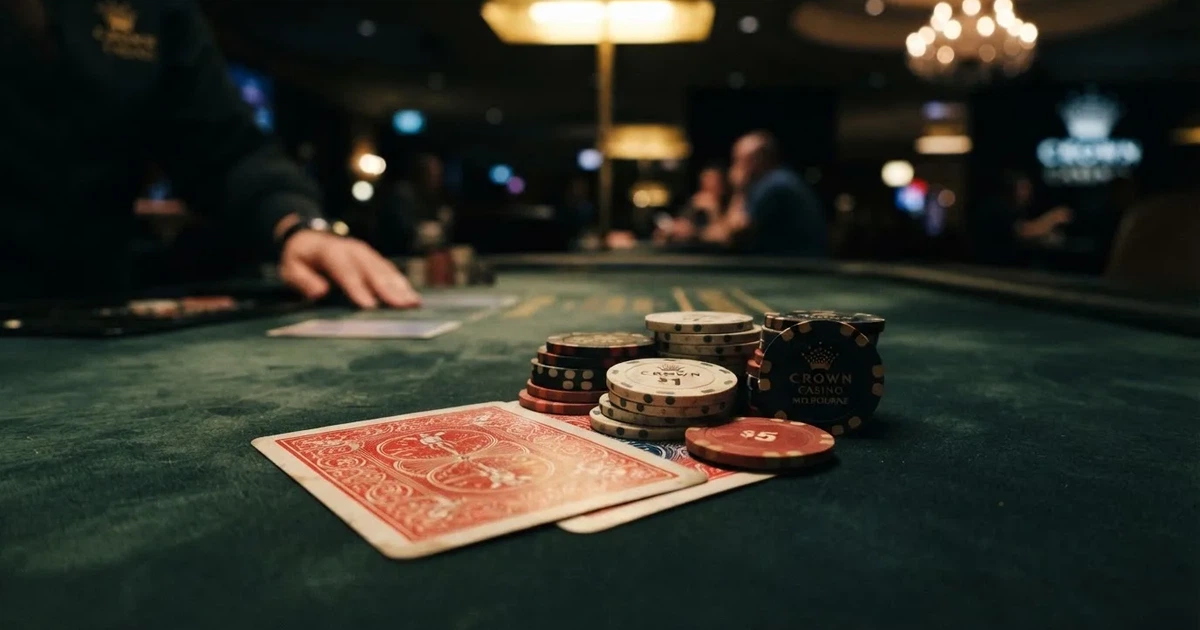
Crown Melbourne offers table games, including baccarat variants (Traditional Baccarat, Crown Baccarat and 2 to 1 Baccarat) and blackjack, regulated by the Victorian Gambling and Casino Control Commission, which replaced the VCGLR as Victoria’s casino regulator on 1 July 2022. The VGCCC’s public log of approved rule changes includes renaming Crown Melbourne’s “Perfect Pairs” blackjack side bet to “Crown Pairs” on 23 December 2024 and introducing a “Free Bet” option with a new “Pot of Gold” side bet on 25 March 2024. The point of naming this is not the side bet — it is that the regulator’s approval log is public, the rules are visible to the player on request, and the regulator is an Australian one. That is the structural difference between a venue under Crown’s licence and a site whose footer names Curaçao.
In NSW, section 66 of the Casino Control Act 1992 requires a casino operator not to permit a game such as baccarat to be played unless the game and its rules are approved by the regulator, with a copy of the approved rules available to patrons on request. The principle is the same as in Victoria: the regulator approves the format, the venue displays the rules, and the player has a venue within Australian jurisdiction if anything goes wrong. None of that travels with an offshore site.
The arithmetic of the ACMA’s blocking rate
The blocking-rate calculation helps clarify the enforcement record, making the scale of the ACMA’s work legible. The ACMA’s running total of blocked sites stood at 1,751 as of June 2026, with the first blocking request dated November 2019. Across roughly 79 months of active enforcement, the average blocking rate works out to roughly 22 sites per month — not a single figure, because the ACMA moves in rounds of roughly a dozen names at a time, but a band: somewhere between a quiet month with no new blocks and a heavy round like the twelve names added in June 2026. Read as a band rather than a point, the rate shows what the prohibition looks like in practice: not a wall, but a steady drip of names being removed from reach, with the occasional larger round. The legal wagering market is what stays; the illegal casino market is what the ACMA chips away at.
The shortlist: brands the ACMA has acted against
The brands below are not a ranking. They are named because the ACMA itself issued a formal warning over each of them for offering prohibited services to Australians, and a reader who already knows one of these names deserves to see it on a page about high volatility slots in Australia, with the ACMA action stated plainly. No bonus terms are included: the only sources for them were affiliate marketing pages, and this page is not built on affiliate marketing. Where research records a “subject support” token, the table reflects that research honestly.
| Brand | ACMA action and date | Operator named by the ACMA | Subject support |
|---|---|---|---|
| RocketPlay | Formal warning, March 2026 (also Dama N.V., May 2022) | Pulsup Ltd | — |
| Level Up Casino | Formal warning, May 2022 | Dama N.V. | Listed by BGaming as a carrying brand |
| Woo Casino | Formal warning, March 2025 | Dama N.V. | — |
| Spirit Casino | Formal warning, May 2025 | Dama N.V. | — |
| National Casino | Formal warning, July 2025 | Consolutetish S.R.L. | Listed in Wikipedia’s gambling coverage |
| Bizzo Casino | Formal warning, July 2025 (also 2022) | Consolutetish S.R.L. (also TechSolutions) | — |
| Ignition Casino | Formal warning, July 2025 | Bamboo Media | — |
| Instant Casino | Formal warning, February 2025 | EOD Code SRL | — |
| Jackbit | Formal warning, April 2026 | Ryker B.V. | — |
| Casino Intense | Formal warning, April 2025 | Sterplay Holding Ltd | Listed in background coverage |
| Sky Crown | Formal warning, September 2022 | Hollycorn N.V. | — |
Every brand in this table is on the page because the ACMA has acted. Three things the table does not contain, and the absence is the point: no bonus figures, no wagering multiples, no payout times. Affiliate marketing is the only place those numbers live, and a page that reproduced them would be repeating the marketing it is supposed to be reading critically. The empty cells in the right-hand column are the editorial position: where research carried no clean subject-support evidence, this page says so rather than padding it.
RocketPlay
The ACMA’s March 2026 warning over RocketPlay named Pulsup Ltd as the operator; an earlier May 2022 warning over the RocketPlay brand named Dama N.V. Two operators, two warnings, the same brand — a sign that ownership churn is itself a feature of this market and that the ACMA’s records can show it. The IGA prohibits the supply of online casino games to a person in Australia regardless of the licence the site displays at the footer, and the ACMA’s record of action against the brand is the cleanest available evidence of where the brand sits. Subject support is not documented in the sources this page draws on.
Level Up Casino
The May 2022 ACMA warning over Dama N.V. covered six casino brands at once, of which Level Up Casino was one. BGaming’s own site lists Level Up among the operators carrying its games, which is consistent with the brand operating under a multi-provider casino model. The warning is the ACMA’s record; the game provider listing is the operator’s own self-description. Neither alters the legal position: offering casino games to Australians is a prohibited service, and the ACMA has acted.
Woo Casino
Dama N.V. was warned over Woo Casino in March 2025, a year and a half after the same operator was warned over its other six brands. The pattern — repeated warnings across the same corporate umbrella — is what gives the enforcement record its weight: the ACMA does not warn once and move on. Each warning is a step in a longer sequence that ends in a block request if the service continues.
Spirit Casino
The May 2025 ACMA warning over Spirit Casino is another entry in the Dama N.V. cluster, the third warning over a brand operated by the same corporate entity in three years. The picture this draws is not of a single bad operator but of a parent group running multiple brands at the same address, with the ACMA catching up to them one warning at a time.
National Casino
The July 2025 ACMA warning named Consolutetish S.R.L. over National Casino. Wikipedia’s coverage of gambling in Australia lists the brand among those operating in the offshore market. The brand has no documented relationship with an Australian licence regime, and the ACMA’s action is the public record.
Bizzo Casino
The July 2025 warning over Consolutetish S.R.L. covered National Casino and Bizzo Casino together; Bizzo had already been the subject of a 2022 formal warning, at that time over TechSolutions (CY) Group Limited and TechSolutions Group N.V. Two operators, the same brand, three years apart — the same pattern of ownership migration that runs through RocketPlay and the Dama N.V. cluster.
Ignition Casino
Bamboo Media was warned over Ignition Casino in July 2025. The brand has been visible to Australian-facing affiliate marketing for years, which is what drew the ACMA’s attention. The legal position is unchanged by marketing reach: the service is prohibited and the warning is on the public record.
Instant Casino
EOD Code SRL was warned over Instant Casino in February 2025. The brand’s name suggests immediacy; the regulatory reality is a formal warning from an Australian authority, followed by the ACMA’s standard escalation if the service continues to take Australian customers.
Jackbit
Ryker B.V. was warned over Jackbit and CasinOK together in April 2026. Two brands, one operator, one warning — the standard shape of an ACMA action against an offshore group running multiple casino skins under one corporate roof.
Casino Intense
Sterplay Holding Ltd was warned over Casino Intense in April 2025. The brand surfaces in a small set of background listings on Australian outlets, which is enough for the page to record the brand’s presence in the market the warning covers.
Sky Crown
Hollycorn N.V. was warned over Sky Crown and Blue Leo in September 2022, the earliest warning still on this page. Three and a half years on, the ACMA’s record of action against the operator is the load-bearing fact; the legal frame is unchanged.
What a high volatility slot actually costs the player
The expected-loss arithmetic
The expected-loss formula is the page’s bluntest instrument and the one that earns its place when a reader asks why the format matters. Expected loss over a session equals total turnover multiplied by (1 minus RTP). For a high volatility slot with a 96% RTP and A$200 staked across a session, the expected loss is A$8 in the long run — small in absolute terms, but small only because the stake is small. The same RTP with A$2,000 staked gives an expected loss of A$80. The house edge is the long-run take across millions of spins; it is not a per-session refund. The figure that matters is the stake the reader actually plays, not the headline RTP printed on the paytable.
A session on a high volatility slot will not look like that average. Some sessions will return almost nothing. A small number of sessions will return multiples of the stake. The expected loss is the average across many such sessions, not the outcome of any single one. Reading the figure as a per-session promise is the error the marketing is built around.
The stake-to-feature distance
High volatility slots are built around features — bonus rounds, free spin retriggers, expanding wilds — that pay the bulk of the return. The distance from the first spin to the first feature is typically hundreds of spins, and the bankroll required to reach that feature is what the format actually tests. A reader with A$100 to spend on a slot with a A$1 base stake will reach most features, and most features will return less than A$100. A reader with A$40 on the same slot will most likely exhaust the bankroll before the feature triggers. The format does not penalise small bankrolls uniformly; it penalises them by making the feature unreachable. The high volatility label is, in this sense, a stake recommendation encoded into the design.
Where the marketing word lands
The marketing language around high volatility slots plays on the upside. It talks about “massive wins,” “epic features” and the chance of a life-changing payout. The arithmetic gives the reader the missing half: most sessions will not hit the feature, and the ones that do will most often pay less than a feature-marketing reel suggests. The format is not a lie. The wins are real and the features are real. They are simply less frequent than the marketing implies, and they are bought at the cost of the long quiet stretch the marketing does not show. A reader who walks into a high volatility slot with the expectation the marketing plants will leave with the arithmetic the format enforces.
The reform in front of Parliament
The Interactive Gambling Amendment (Gambling Reform) Bill 2026 passed Parliament on 19 August 2026. Its advertising and inducement measures commence on 1 January 2027. As of this page, that is a law with a start date rather than a law in force, and a page written in 2026 cannot speak of it as operative. What it will change, once live, is the surface around online casino marketing in Australia: how operators advertise, what inducements are permitted and where the line sits between legitimate and prohibited messaging. The prohibition on supply remains, and the ACMA’s enforcement record is the mechanism that has been doing the work in the meantime.
What this page leaves on the table
A reader who came here for a recommended shortlist of online casinos will leave without one. That is the editorial position, not a gap. The Interactive Gambling Act prohibits the supply, the ACMA’s record shows the enforcement, and the brands the ACMA has acted against are the brands this page could honestly name. Recommending one over another would require consumer-protection data the page does not have and that the offshore market does not produce. The recommendation that holds is to read this page from inside Australia, take the legal alternatives seriously, and treat the offshore list as a record of warnings rather than a starting point.
Frequently asked questions
What does high volatility mean for a slot machine?
A high volatility slot pays out rarely and pays larger amounts when it does. The long-run return to player can sit at the same percentage as a low volatility slot, but the distribution across sessions is wider: most sessions will return little, and a small number of sessions will carry most of the return. The format suits a player who can absorb a long quiet stretch; it punishes a tight bankroll. The volatility label is a stake recommendation encoded in the design.
How wide are the swings on a high volatility slot compared with a steadier one?
A low volatility slot returns small wins often, with most outcomes within a few multiples of the stake. A high volatility slot returns small wins rarely, with a long tail of bigger wins concentrated in features and bonus rounds. The expected loss over a session is similar at the same RTP; the experience of loss is not. A player who has never sat through several hundred dead spins will find the format unforgiving; a player who treats the quiet stretch as the cost of admission will read it differently.
Is it legal to play high volatility slots at an online casino from Australia?
The Interactive Gambling Act 2001 makes it an offence to provide online casino games, including online pokies and online slots of any volatility profile, to a person in Australia. No state or territory issues a licence for the supply. The ACMA enforces through formal warnings and ISP blocking. The individual player is not prosecuted, but no Australian consumer protection covers the offshore site, no complaints body is reachable, and the service can be blocked with a balance still on it.
Are high volatility pokies-style machines common in Australian pubs and clubs?
Pokies outside casinos numbered 87,298 in NSW, 26,380 in Victoria, 21,122 in Queensland, 11,672 in South Australia and 3,587 in the ACT across the most recent state-level counts from 2021 to 2023. New South Wales legalised the machines in 1956, and by 2010 Australia operated an estimated 97,103 gaming machines outside casinos. High volatility titles are part of that machine base, licensed by the relevant state regulator, with no offshore route involved.
New South Wales had over 87,000 pokies outside casinos as of mid-2023 — how does that compare with other states?
NSW sits well clear of the next-largest jurisdiction. Victoria reported 26,380 in 2021–22, Queensland 21,122 in October 2023, South Australia 11,672 in September 2023 and the ACT 3,587 in November 2023. NSW is roughly 3.3 times Victoria’s count, 4.1 times Queensland’s, 7.5 times South Australia’s and 24.3 times the ACT’s. The per-capita rate across Australia was about five times the United States as of 2010, and NSW carries a large share of that density.
Why might a high volatility slot suit a player with a bigger bankroll?
A larger bankroll can absorb several hundred dead spins without exhausting the stake, which is what a high volatility format typically requires before the first feature lands. A player with a small bankroll will most likely exhaust it before any meaningful hit. The format does not reward the patient reader more than the impatient one in any single session, but it gives the patient reader enough sessions to reach the long tail that carries the return. Bankroll size is the variable the format is built around.