
Best Australian Online Pokies 2026: What the Market Actually Looks Like From the Outside
Anyone typing “best Australian pokies online 2026” into a search bar is looking for a ranked list of pokies sites to play at tonight. The honest finding of this page is shorter than that: no such licensed list exists. Online pokies are prohibited outright for anyone in Australia under the Interactive Gambling Act 2001, strengthened by the 2017 amendments. No state or territory issues a licence for them, which means every “Australian online pokies” site the search returns is operating from offshore, outside Australian consumer protection law, and on the Australian Communications and Media Authority’s radar.
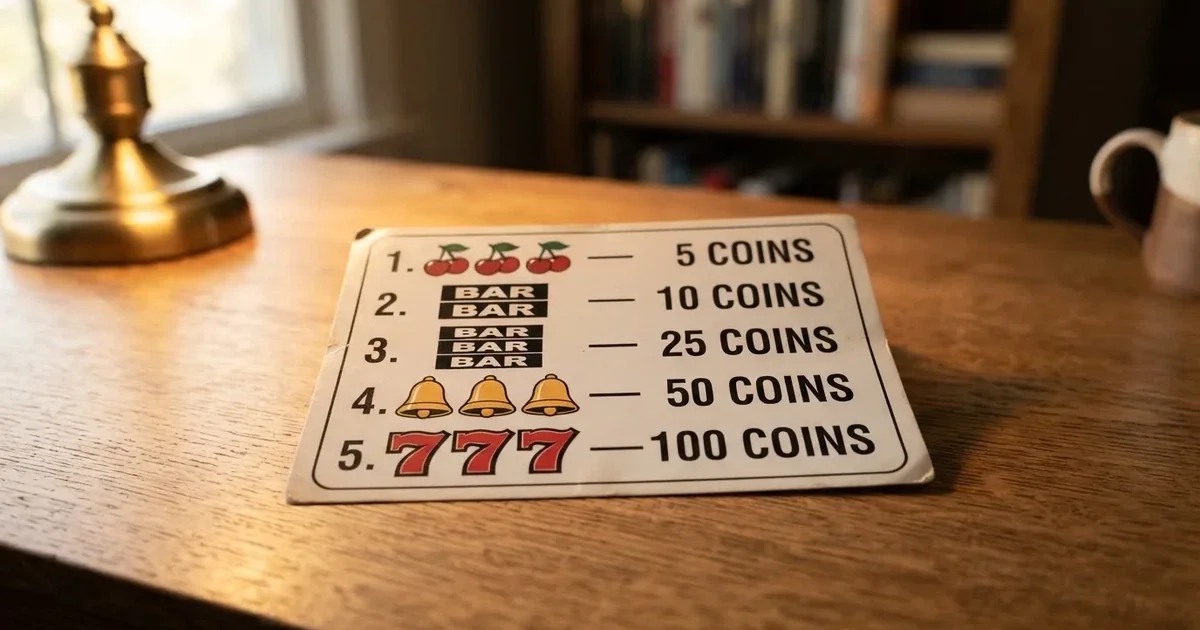
So the page below is not a ranking of places to play. It is a structured look at what the market actually is — what the law permits, what the ACMA has acted against in the last two years, what offshore brands display in lieu of an Australian licence, and what the responsible-gambling and payment side of the picture looks like when the legal product is a poker machine in a pub or club rather than a website at 2 am.
Data current as of 30 October 2026, cross-checked against the ACMA’s published register of formal warnings and blocking requests, the Victorian Gambling and Casino Control Commission’s public game register, and the Wikipedia entry on gambling in Australia as it stood on 18 September 2026.
Table of Contents
- Why “Online Pokies” Returns No Australian-Licensed Sites
- What the ACMA Has Actually Done Lately
- What “Licensed” Means on an Offshore Pokies Site
- The Payments Picture: PayID, Cards and the New Bans
- Bonus Terms as Background Reading
- The Mobile and App Picture
- The Pokies Game Itself
- Responsible Gambling in a Prohibited Market
- What’s Coming in 2027
- The Verdict on the Market as a Whole
- RocketPlay
- Level Up Casino
- Woo Casino
- Spirit Casino
- National Casino
- Bizzo Casino
- Ignition Casino
- Instant Casino
- Jackbit
- Casino Intense
- Sky Crown
- Frequently Asked Questions
Why “Online Pokies” Returns No Australian-Licensed Sites
The phrase itself is the first problem. “Pokies” in Australia is short for poker machines — the electronic gaming machines that sit inside licensed pubs, clubs and casinos in every state and territory. They are regulated state by state, with separate design rules, return-to-player minimums and venue caps. New South Wales alone had 87,298 machines outside casinos across 2,195 venues as of June 2023, with player losses of A$8.18 billion in 2022-23. Queensland had 21,122 machines in 351 venues in October 2023. Victoria capped its non-Crown total at 26,380 across 488 venues in 2021-22, against a 30,000 statewide ceiling. Western Australia, unusually, banned machines in pubs and clubs altogether when Crown Perth opened in 1985 — and Crown Perth’s own machine floor has since grown from roughly 200 in 1985 to about 2,500 today, every one of them approved individually by the state’s Gaming and Wagering Commission.

Each state sets its own minimum return-to-player. The published floor is 85% in NSW, the Northern Territory, Queensland and (generally) Victoria, with Crown Melbourne’s machines held to 87%; 87% in the ACT and Tasmania; 87.5% in South Australia; and 90% in Western Australia. Those are the legal machines. The legal minimum is one thing; the machine a player sits at in a pub is licensed by Liquor & Gaming NSW, the Victorian Gambling and Casino Control Commission, the Tasmanian Liquor and Gaming Commission or their state equivalent. Nothing equivalent exists for an online version.
The Interactive Gambling Act 2001 closes the gap by making it an offence to provide online casino games — including online pokies — to a person physically in Australia. The 2017 amendments widened the offence and gave the ACMA its modern enforcement powers. The minimum age for any legal gambling product is 18. What the law does leave licensable is wagering on races and sporting events placed before the event, lotteries and keno — in practice licensed by the Northern Territory Racing and Wagering Commission, which oversees 52 of Australia’s online bookmakers including Sportsbet, Bet365 and Ladbrokes. The commission has no full-time staff and meets once a month in Darwin, which is itself a useful reminder of how lightly regulated wagering sits compared with the brick-and-mortar pokies trade.
What the ACMA Has Actually Done Lately
This is where the page gets concrete. The ACMA’s job is to investigate, issue formal warnings and direct Australian internet service providers to block illegal sites. Two figures from the authority’s published record frame the scale: as reported in June 2026, 1,751 illegal gambling and affiliate marketing websites had been blocked since the first blocking request in November 2019 — a six-and-a-half-year arc — and more than 230 unlicensed gambling services had left the Australian market since enforcement was strengthened in 2017. The most recent published round, on 26 June 2026, asked ISPs to block 12 more sites: 7Signs, ChromaBet, Donbet, Duospin, Freshbet, Slots Gem, Jacks Club, Lucky Start, Pointsbetz, Spinrise, Vinyl Casino and Wildsino.

The blocking rate as a band
Treating the blocking record as a rate, the ACMA has asked ISPs to block roughly 269 illegal gambling sites per year on average over the full span (1,751 ÷ 6.58 years ≈ 266.4). Read against the most recent full year of activity reported, the rate runs higher — closer to 300 per year — as enforcement has tightened in the back half of the period. Either way, the figure is a running total: it does not predict the next round, and it does not say anything about whether any specific brand on this page is currently reachable from an Australian IP. What it does say is that blocking is no longer a one-off and that the brands named below are operating in a market where the regulator is actively, repeatedly and visibly at work. The rate is a band, not a single number, and its lower bound is set by the full six-and-a-half-year span while its upper bound reflects the steeper pace of the recent rounds.
Formal warnings over named operators
Formal warnings are the ACMA’s earlier-stage enforcement tool — published before any blocking request, naming the operator behind the brand. The register has been busy through 2024, 2025 and into 2026, and the brands in the table below each carry at least one. The list is the ACMA’s, not this page’s; nothing here is a recommendation, and every entry should be read as the regulator’s own record of an action against a service that cannot lawfully be supplied to a person in Australia.
| Brand | ACMA action and date | Operator named by the ACMA | Subject support |
|---|---|---|---|
| RocketPlay | Formal warning, March 2026 (Pulsup Ltd); earlier Dama N.V. action, May 2022 | Pulsup Ltd | — |
| Level Up Casino | Formal warning, May 2022 | Dama N.V. | BGaming listing notes the brand |
| Woo Casino | Formal warning, March 2025 | Dama N.V. | — |
| Spirit Casino | Formal warning, May 2025 | Dama N.V. | — |
| National Casino | Formal warning, July 2025 | Consolutetish S.R.L. | Wikipedia mentions the brand |
| Bizzo Casino | Formal warning, July 2025 (Consolutetish S.R.L.); earlier 2022 action against TechSolutions | Consolutetish S.R.L. | — |
| Ignition Casino | Formal warning, July 2025 | Bamboo Media | — |
| Instant Casino | Formal warning, February 2025 | EOD Code SRL | — |
| Jackbit | Formal warning, April 2026 | Ryker B.V. | — |
| Casino Intense | Formal warning, April 2025 | Sterplay Holding Ltd | ABC and ACMA coverage plus Crown Melbourne |
| Sky Crown | Formal warning, September 2022 | Hollycorn N.V. | — |
The same operator name appearing under more than one brand is the pattern worth noticing. Dama N.V. accounts for four entries in the table — Level Up, Woo, Spirit and the original 2022 RocketPlay action — and Consolutetish S.R.L. accounts for two. Hollycorn N.V., Bamboo Media and Ryker B.V. each carry a single brand entry but are operators whose other brands have appeared on the ACMA’s published list in other reporting. The regulator names the operator behind the domain; the player sees the brand. They are not always the same thing.
A separate warning was issued in April 2026 against Ryker B.V. covering both Jackbit and CasinOK, and a September 2022 warning against Hollycorn N.V. covered Sky Crown and Blue Leo together. Two brands, one operator, one published action — that is the structure the warnings take when the ACMA has traced the parent company. Brand names rotate faster than corporate shells do, which is why the table’s operator column is the part that ages least badly.
What “Licensed” Means on an Offshore Pokies Site
Every offshore brand the ACMA has warned displays a licence. None of them are Australian, because no Australian licence exists for what they sell. The most common jurisdictions on the displayed licence pages are Curaçao and Anjouan, both offshore regulators with lighter oversight than the UK Gambling Commission or the Malta Gaming Authority. A licence displayed on the footer of a pokies site is therefore a statement about the operator’s chosen regulator, not about its legal right to take Australian customers — which it does not have. The IGA targets the provider, not the player, but it does make the act of supplying the service unlawful on the Australian side of the transaction.
This is the part of the market that H2 Gambling Capital’s 2025 estimates sized at about A$3.9 billion a year in Australian losses — money going to illegal offshore sites rather than to the legal Australian product. The same source put the share of Australian gambling going through legal channels at 74% in 2021, falling to 64% by the time of the report. The legal share is shrinking; the illegal share is what is doing the growing.
There is no Australian complaint body for an offshore site that refuses a withdrawal, no local court with straightforward jurisdiction over a Curaçao-licensed operator, and no Australian deposit guarantee if the balance sits on a site that gets blocked next Tuesday. That is the consumer-protection picture of the market this page is describing — and it is the reason the rest of the page reads as background rather than as a list of places to deposit.
The Payments Picture: PayID, Cards and the New Bans
The payment side of a “best Australian pokies online” page would normally be a section about how fast a brand pays out. For an offshore market, the meaningful payment content is the bans the legal Australian wagering market already has, and the way they don’t reach offshore sites.
PayID, Osko and the legal deposit channels
PayID and Osko are real-time bank-transfer services run through Australia’s New Payments Platform. They settle in seconds, run 24/7 and let a punter send money from their bank account using a phone number, email or ABN rather than a BSB-and-account number. For legal Australian wagering, PayID is one of the approved deposit channels alongside debit card, bank transfer and BPAY.
What is banned for legal wagering
Since 11 June 2024, credit cards, credit-related products and digital currency have been banned as payment methods for licensed online wagering in Australia. The penalty for an operator accepting them runs up to A$247,500. A licensed Australian wagering operator that asked for a credit-card deposit or a Bitcoin deposit is breaking its own licence conditions. The rules apply to licensed wagering only — an offshore casino is not licensed by anyone in Australia, and the same prohibition does not bind it.
What this means at an offshore site
An offshore pokies site that markets itself as “PayID-friendly” is not PayID-friendly in the way a Sportsbet or a Ladbrokes is. It will sometimes route a PayID transfer through an intermediary, sometimes process through a third-party payment processor that settles the PayID leg, and sometimes quietly ask for a card or a crypto deposit on the way through. The brand’s promise of an Australian deposit method is rarely a direct connection to the customer’s bank. A withdrawal the other way sits in a different risk category entirely: there is no Australian ePayments Code obligation on the offshore operator, and a withdrawal that stalls has no local ombudsman to escalate to.
Bonus Terms as Background Reading
The bonus side of a pokies-site comparison normally lives in the headline. “100% match up to A$500 plus 200 free spins” reads as the offer the page is built around. For an offshore Australian-facing site, the bonus market exists, but the terms research was able to confirm came from affiliate marketing pages rather than from the operators themselves, and the ACMA has acted against most of the brands that would be carrying them. What follows is the shape of the market, not a price list.
How a pokies welcome package is usually structured
The standard offshore welcome package layers a matched deposit bonus, a free-spins tranche, and a reload offer for the second and sometimes third deposit. The matched deposit is expressed as a percentage of the deposit, with a cap, and the free spins are tied to a small set of named slots. The whole package is then subject to a wagering requirement — typically expressed as a multiple of the bonus, the deposit, or both — with a maximum-bet rule during play, a list of excluded games, and a max-cashout cap on winnings from the free spins.
The arithmetic in plain prose
For a hypothetical A$500 welcome bonus with a 40-times wagering requirement on the bonus only, the player has to turn over A$20,000 in qualifying bets before any of the bonus money converts to withdrawable cash. On a typical five-reel online pokie played at A$1 a spin with a return-to-player around 96%, that is 20,000 spins at roughly five seconds each — about 27.8 hours of continuous play. The expected loss over those 20,000 spins, at a 4% house edge, is A$800 — larger than the bonus itself. The bonus is not free money; it is a coupon for a larger volume of play at the house edge the game already carries. The arithmetic is the arithmetic of any wagered bonus anywhere; what changes between markets is the multiple and the max-cashout cap, not the structure.
What an Australian player does not get
There is no Australian regulator to complain to if an offshore brand refuses to honour its own advertised bonus terms, no local ADR scheme to escalate to, and no BetStop binding that brand to anything. The bonus is whatever the site’s terms page says it is, on the day the player tries to withdraw. That is the whole picture of consumer protection on this market, and it is why this section reads as background rather than as a recommendation.
The Mobile and App Picture
“Australian online pokies app” returns a string of offshore apps in app stores that accept Australian accounts, plus a number of mobile browser sites that mimic app behaviour. None of them are licensed in Australia. What is licensed in Australia is the small set of wagering apps run by the Northern Territory-licensed bookmakers — Sportsbet, Bet365, Ladbrokes and their peers — and they do not offer pokies.
What an offshore “pokies app” actually is
Most offshore pokies brands offer either a downloadable Android APK (side-loaded outside the Play Store, which prohibits real-money gambling apps for Australian accounts) or a mobile browser site that runs HTML5 games in full-screen mode. A few also maintain iOS apps through test-flight arrangements in jurisdictions where the App Store allows them. None of these are Australian products. The Google Play and Apple App Store policies treat real-money gambling apps for Australian users as restricted content; an APK that lands as a download link in an email or on a brand site is the standard workaround.
What an Australian player gets from a mobile browser site
A modern mobile pokies site built in HTML5 will load a vertical-format game on a phone, accept deposits through the same payment processors the desktop site uses, and let the player spin at the same RTP. What it does not give is any of the protections of an Australian-licensed product: no BetStop binding, no Australian ADR, no local data-handling rules under the Privacy Act for an offshore operator that handles the data offshore. The browser site is functionally a casino in your pocket; the legal wrapper around it is empty.
The Pokies Game Itself
A “pokie” is an Australian-English shorthand for a poker machine, which in turn is a slot machine. The online version is the same game in a different housing — reels, paylines, a return-to-player set by the developer, a volatility profile, and a bonus feature set.
What a paytable shows
The paytable lists every symbol and what it pays for combinations of three, four and five on a payline, plus the rules for any wild symbols, scatter symbols and bonus triggers. A typical five-reel, three-row online pokie has between 10 and 50 paylines, with paylines running left-to-right across the reels. A scatter symbol is one that pays regardless of position; a wild substitutes for other symbols; a bonus symbol triggers a separate feature round — free spins, a pick-em game, a wheel spin, a cascading-tumble mechanic. A paytable also states the return-to-player (the percentage of wagered money the game returns to players over a long run) and the volatility (low, medium, high or a developer’s own descriptor).
The house edge, by game
A land-based Australian pokies machine is licensed to a minimum return-to-player of 85% to 90% depending on the state, which is a house edge of 10% to 15%. The online equivalent sits closer to a 4% house edge — return-to-player figures in the mid-90s are standard across the major developers. Online baccarat carries a house edge of 1.06% on the Banker bet, 1.24% on the Player bet and 14.36% on the Tie. Online blackjack under liberal Las Vegas Strip rules sits at about 0.28% with optimal strategy, and about 0.43% under Atlantic City rules. The numbers matter because the house always has the edge, and the gap between a 4% edge and a 14% edge is the gap between an ordinary session and a fast one.
The volatility question
Volatility is the shape of the payout curve, not the size of the house edge. A low-volatility pokie pays small amounts often; a high-volatility one pays larger amounts rarely. The published RTP is the same over a long enough run; the experience in any given hour is not. A player who wants to spin at A$1 a spin for an hour and see steady small wins is on a low-volatility game; a player who wants the chance at a larger payout and accepts long dry stretches is on a high-volatility one. Both have the same house edge over the long run. The difference is how the losses feel on the way there.
Baccarat and blackjack at Crown Melbourne
For completeness on the legal Australian product, Crown Melbourne offers three baccarat variants — Traditional Baccarat, Crown Baccarat and 2 to 1 Baccarat — as approved table games regulated by the Victorian Gambling and Casino Control Commission, which replaced the VCGLR as Victoria’s casino regulator on 1 July 2022. Blackjack sits alongside baccarat on the same approved-table framework. The games are run under section 66 of the NSW Casino Control Act 1992 in NSW, which requires the regulator to approve the game and its rules before it can be played, and the operator to make a copy of the approved rules available on request. None of this extends to an online channel.
Responsible Gambling in a Prohibited Market
The responsible-gambling frame for an Australian player looks different depending on which market the player is in.
The legal Australian frame
BetStop, the National Self-Exclusion Register, has been live since August 2023. It binds Australian-licensed online and phone wagering services — the same operators that take PayID deposits and that accept bets only before the event. A person registered with BetStop cannot open a new account with any of them, and existing accounts are closed. The National Gambling Helpline at 1800 858 858 is free, runs 24/7 and offers chat through Gambling Help Online. None of this binds an offshore casino.
The offshore picture
An offshore casino is not connected to BetStop, has no obligation to honour an Australian self-exclusion, and runs its own responsible-gambling tools to whatever standard its own regulator requires. A “responsible gambling” page on an offshore brand is a marketing line about a feature set; it is not an Australian consumer protection.
Where to get help
Anyone who feels their gambling is moving past enjoyment into compulsion or stress can call the National Gambling Helpline on 1800 858 858 or use the chat service at Gambling Help Online. The service is free and confidential. BetStop registration is free and is the Australian tool that closes the legal side of the market to a self-excluded person. The offshore side is closed only by personal choice — which is the harder closing to make, and the one a reader considering offshore play should know about before they start.
What’s Coming in 2027
The Interactive Gambling Amendment (Gambling Reform) Bill 2026 passed Parliament on 19 August 2026. Its advertising and inducement measures commence 1 January 2027. The bill is law with a start date, not law in force on a 2026 page, and the section of the market most affected is the inducement side — the kind of bonus terms, free-spins offers and sign-up promotions that drive a player to one offshore brand over another. The bill’s intent is to reduce the surface area of those inducements, particularly the kind aimed at Australian accounts. What it does not do is change the underlying prohibition on supplying online casino games to Australian customers, which remains the IGA’s position. The market this page describes in 2026 is the market that 2027’s reforms will land on; the prohibition stays put.
The Verdict on the Market as a Whole
The “best Australian pokies online” question does not have the answer the searcher is hoping for. The legal answer is: there are no licensed Australian online pokies, because the IGA prohibits the supply of them, and no state or territory issues a licence for them. The illegal answer — what the offshore market actually offers — runs in the A$3.9 billion-a-year bracket by H2 Gambling Capital’s 2025 estimate, with 1,751 sites blocked since November 2019 and 12 more added in the most recent reported round. The market is large, the regulator is active, and the brands at the top of any search-result page are the ones the ACMA has been publishing formal warnings against.
For a player who wants pokies play in Australia, the legal alternative is the licensed poker machine in a pub, club or casino, with state-by-state regulation and BetStop self-exclusion available. For a player who wants online play, the offshore market exists and is operating, but it operates outside Australian consumer protection law, with no Australian complaints body and no recourse if a withdrawal stalls. The right comparison is not between offshore brands on payout speed and bonus size — it is between a legal Australian machine with a regulator and an offshore site without one. The two markets are different in kind, not in degree.
RocketPlay
The ACMA’s published record on RocketPlay is two actions against two operators carrying the same brand. The first, in May 2022, was against Dama N.V. covering a list of six casino brands that included RocketPlay. The second, in March 2026, was against Pulsup Ltd over the .com.au variant of the site. Two operators, same brand name, four years apart. The brand has been on the regulator’s radar for the better part of a decade, and the most recent action was six months before the date this page was prepared. What that says to a reader: nothing about payout speed, nothing about the size of the welcome package, nothing about the games catalogue — because the sources for any of those claims on an offshore brand are affiliate marketing pages, and the ACMA has acted against the brand twice. The right comparison is between this brand and the legal product, not between this brand and another offshore brand.
Level Up Casino
Level Up was one of the six brands named in the May 2022 warning against Dama N.V., sitting alongside Bambet, Dazard, Rocketplay, Wild Tornado and Cobra Casinos. The brand carries a BGaming listing in the developer-side records, which is a useful marker of how the brand presents itself — a BGaming partnership means BGaming’s games are on the platform, which is a content fact rather than a consumer-protection one. The brand has not, on the ACMA’s published record, been the subject of a more recent warning, which is not the same as the brand having left the Australian market; it is the same as the brand having not yet attracted a fresh published action. Read it the same way as any other entry in this section: an offshore operator that has been warned, that displays a non-Australian licence, and that operates outside the Australian consumer-protection frame.
Woo Casino
Woo Casino was the subject of a March 2025 formal warning against Dama N.V. The action is on the ACMA’s register; the date is recent enough to read as current. The brand sits in the same Dama N.V. group of warnings as Spirit Casino, Level Up Casino and the original 2022 RocketPlay action. Dama N.V. is a name that appears repeatedly on the regulator’s published list, which is the strongest available signal of how much enforcement attention the operator group attracts. The brand is not the operator; the operator is what the ACMA names, and the operator is what stays in the enforcement frame across brand changes.
Spirit Casino
Spirit Casino was the subject of a May 2025 formal warning against Dama N.V. — two months after the Woo Casino action against the same operator. Two warnings, two months apart, same operator. The brand is the second of the pair that established the pattern of the ACMA working through the Dama N.V. group methodically through 2025. Read alongside Woo Casino, the picture is an operator group whose Australian-facing activity has attracted repeated regulator attention in a short window. The same caveat applies as on every other entry: no Australian consumer protection, no Australian complaint body, no Australian recourse if a withdrawal stalls.
National Casino
National Casino was warned by the ACMA in July 2025, with Consolutetish S.R.L. named as the operator. The brand appears on Wikipedia’s gambling-in-Australia page, which is a marker of how visible the brand has been to Australian-facing coverage rather than of any local endorsement. The Consolutetish S.R.L. action also covered Bizzo Casino, which the ACMA had previously warned in 2022 under TechSolutions (CY) Group Limited and TechSolutions Group N.V. Two operators, same brand, same warning structure as RocketPlay above. The brand has not been pulled from the Australian market by the warning; what the warning does is establish the regulator’s position on the supply of the service to Australian customers.
Bizzo Casino
Bizzo Casino carries the most layered enforcement record in the table. The ACMA issued a formal warning against TechSolutions (CY) Group Limited and TechSolutions Group N.V. in 2022. The same brand was the subject of a second formal warning in July 2025, this time against Consolutetish S.R.L. Two operators, same brand, two warnings four years apart. The 2022 warning was the older of the two TechSolutions warnings the ACMA published that year, and the 2025 warning is one of two Consolutetish S.R.L. warnings the regulator published in the same July 2025 round (the other being National Casino). The brand has moved between operators and stayed on the regulator’s list through both. The right reading is the same as for any entry in this section: an offshore brand with a layered warning history, no Australian licence, no local consumer protection.
Ignition Casino
Ignition Casino was the subject of a formal warning in July 2025 against Bamboo Media. The brand sits outside the Dama N.V. group and outside the Consolutetish S.R.L. group — the ACMA names a different operator for each warning. The brand is the cleanest entry in the table in the sense that there is one operator, one warning, and a recent date. That does not change the underlying position: the brand is offshore, the service is prohibited, the regulator has acted, and the brand has no Australian licence. What a recent warning does is signal that the regulator is treating the brand as currently active in its Australian-facing supply, which is the part of the picture that ages.
Instant Casino
Instant Casino was warned in February 2025, with EOD Code SRL named as the operator. The brand has a single published action on the ACMA’s register. The operator name is otherwise less prominent on the published list than Dama N.V. or Consolutetish S.R.L., which is a useful marker — the regulator’s published actions are clustered around a small number of operator names, and Instant Casino sits in a single-action cluster. The warning is recent enough to read as current; the underlying prohibition is the same as on every other entry in this section.
Jackbit
Jackbit was warned in April 2026 against Ryker B.V., in the same published round as CasinOK. Two brands, one operator, one action. The warning is the most recent in the table alongside the RocketPlay March 2026 action, which means both brands sit on the freshest end of the ACMA’s published list. A player seeing the brand on a search-result page today is seeing a brand the regulator named less than a year before this page was prepared. The brand is offshore, the service is prohibited, the operator has been named, and there is no Australian licence on display that would change any of those facts.
Casino Intense
Casino Intense was warned in April 2025 against Sterplay Holding Ltd. The brand carries ABC coverage in the Australian media record, ACMA coverage in the regulator’s record, and a cross-reference to Crown Melbourne — which is the licensed Australian casino offering baccarat and blackjack under the Victorian Gambling and Casino Control Commission. The cross-reference matters because it is the marker that an Australian reader can check the legal alternative against a named Australian venue rather than against another offshore brand. Casino Intense is the offshore side of that comparison; Crown Melbourne is the legal side.
Sky Crown
Sky Crown was the subject of the ACMA’s September 2022 formal warning against Hollycorn N.V., which also covered the Blue Leo brand. The warning is the oldest in the table, which is not the same as the brand having left the Australian market; it is the same as the ACMA having not updated its published action against the brand since 2022. The brand sits in a single-action Hollycorn N.V. cluster, and the underlying position is the same as on every other entry: offshore, prohibited service, no Australian licence, no local consumer protection.
Frequently Asked Questions
Is “Australian pokies online” a licensed category recognised by any state regulator?
No. Online pokies — the online version of the poker machines that operate in Australian pubs, clubs and casinos — are prohibited outright under the Interactive Gambling Act 2001, strengthened by the 2017 amendments. No state or territory issues a licence for them, and no Australian regulator recognises an “Australian online pokies” operator as a lawful supplier of the product. The licensed product is the land-based poker machine, regulated state by state.
Is there a legal Australian online pokies app?
No. The Google Play and Apple App Store policies treat real-money gambling apps for Australian accounts as restricted content, and the IGA prohibits the supply of online casino games — including pokies — to a person in Australia. What does exist as licensed Australian gambling apps is the small set of wagering apps run by Northern Territory-licensed bookmakers, and those apps offer sports and racing bets, not pokies.
What’s the difference between “Australian pokies online” and pokies in an Australian venue?
A pokies machine in an Australian venue is a licensed electronic gaming machine regulated by a state or territory regulator — Liquor & Gaming NSW, the Victorian Gambling and Casino Control Commission, the Tasmanian Liquor and Gaming Commission or their equivalents — with a published minimum return-to-player, a published maximum stake, and the venue’s responsible-gambling obligations. An “Australian pokies online” site is an offshore website operating outside the IGA, displaying a non-Australian licence, and offering the same kind of game from outside Australian consumer protection law.
Do sign-up bonuses on “Australian pokies online” sites come from a local operator?
No. The bonus offers on these sites come from offshore operators — most commonly Curaçao- or Anjouan-licensed — and the terms come from those operators’ own terms pages. There is no Australian regulator to complain to if the terms are not honoured, and the ACMA has acted against most of the brands that would be offering them. Read the bonus terms against the offshore terms page, not against any Australian consumer-protection standard.
Can a PayID-friendly “Australian pokies online” site still be operating from offshore?
Yes. PayID is a real-time bank-transfer service that works regardless of where the receiving business is incorporated. An offshore pokies site that markets itself as “PayID-friendly” is using PayID as a deposit-rail through an intermediary; the offshore status of the operator does not change. The licensed Australian wagering market accepts PayID as a standard deposit channel, and that is the version of PayID-deposit that runs inside Australian consumer protection law.
Does the word “Australian” in a pokies site’s name indicate its actual licensing jurisdiction?
No. A brand name carrying the word “Australian” — or “Aussie,” “Down Under,” or any other domestic marker — does not indicate the brand is licensed in Australia. The Interactive Gambling Act 2001 prohibits the supply of online casino games to Australian customers, and no Australian licence exists for the product. The licensing jurisdiction is the one displayed on the site’s footer — most often Curaçao or Anjouan — and that is the regulator with jurisdiction over the operator, not an Australian authority.