
Best aussie pokies online Australia: why the shortlist is the regulator’s list
The honest answer to a search for the best aussie pokies online is that no such licensed shortlist exists. Online pokies are prohibited outright under Australian law. What does exist is a register of brands the Australian Communications and Media Authority (ACMA) has caught offering them, a banking system that has been reshaped to starve those sites of credit and crypto, and a network of pubs, clubs and casinos in every state and territory where the same machines are licensed and regulated. This page works through all three: what offshore “Aussie” branding really signals, what the regulator has done about it, and where a player who wants pokies under Australian rules actually sits down.
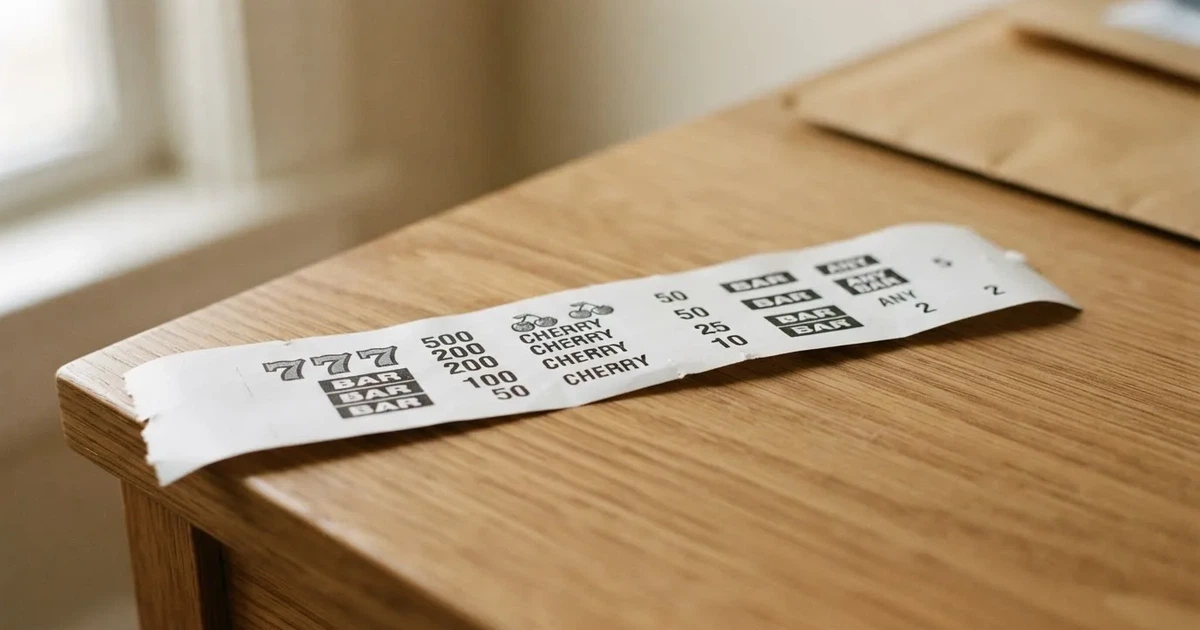
Verified against the ACMA’s enforcement record and the Interactive Gambling Act 2001 as published, current as of 29 October 2026.
Table of Contents
- Responsible gambling and where to get help
- Payments and payout speed on offshore pokies sites
- Bonuses and free spins under Australian law
- Paytables and how online pokies catalogues are organised
- What a fair comparison would actually weigh
- How much of the offshore market the ACMA has actually cleared
- Pokies in Australia: how the legal market is actually organised
- The Interactive Gambling Act and what it actually prohibits
- Brands the ACMA has formally warned
- What this leaves a player who actually wants to play
- Frequently asked questions
Responsible gambling and where to get help
If pokies play has started to affect sleep, mood or money, free confidential help is available any time through Gambling Help Online (chat on the website) or the National Gambling Helpline on 1800 858 858. Both services run 24/7 and are free from any Australian phone. BetStop, the National Self-Exclusion Register, has been live since August 2023 and bars a registered user from every Australian-licensed wagering service. The catch is one that matters: BetStop binds only operators licensed under Australian law. An offshore online pokies site is not connected to it, so a self-exclusion request sent to a Curacao-licensed brand has no Australian regulator behind it. That single fact is the cleanest summary of the gap this page keeps coming back to: the protection exists, and it stops at the border.

Payments and payout speed on offshore pokies sites
The Australian payments story has two halves, and the gap between them is what an offshore site depends on.
For licensed Australian wagering, debit card, bank transfer, PayID/Osko and BPAY are the legal deposit routes. Credit cards, credit-related products and digital currency have been banned as payment for licensed online wagering since 11 June 2024, with penalties up to A$247,500 for operators that breach. That is a hard line: a licensed bookmaker asking an Australian for a credit card or a Bitcoin deposit is operating outside the Australian rules.

For unlicensed offshore pokies sites, the picture is the inverse. These brands accept the very methods the licensed market is banned from taking: credit cards, a handful of cryptocurrencies, and sometimes e-wallet rails that route around the card networks. The pitch on the homepage often pairs this with “instant deposits” and “PayID accepted.” Two things follow from that. First, an offshore site offering PayID is using an Australian rail for settlement on a transaction that is itself illegal to offer to an Australian — the rail is open, the offer is not. Second, “instant deposit” is the easy half of the story. Withdrawal speed on the same site is whatever the operator’s payments team feels like approving: some take hours, some take days, some stall on the first cashout and demand fresh ID, and the player has no Australian complaints body to appeal to when they do. The Australian bank may also flag and block transactions to known illegal gambling merchants under its own monitoring obligations, which means a “pending” balance can become a frozen one with no recourse from the regulator. The single practical rule of thumb: speed of deposit tells a player nothing about speed of payout, and on an unlicensed site, neither speed tells them anything about whether their money will come back at all.
Bonuses and free spins under Australian law
A bonus credit, a free-spins bundle and a “no deposit” offer are all inducements. Under the Interactive Gambling Act 2001 they are something no licensed Australian product may extend, because the underlying activity they would induce is itself prohibited. So there is no legitimate onshore version of any of them, and there is no fair comparison to make between brands on bonus size: the market is a set of offshore operators competing on a product they have all been formally warned about for offering to Australians.
The mechanics, for background reading only, are uniform across the offshore market. A welcome package matches a first deposit by some multiple, often 100%, with a stated maximum. Free spins attach to a named slot title at a fixed coin value. The wagering requirement — the multiplier applied to bonus funds before they convert to withdrawable cash — typically runs from the high 30s to the high 60s across the offshore market. Game weighting reduces the contribution of table games and sometimes live casino, so the slots-only contribution is what actually clears the requirement. Maximum cashout caps apply on no-deposit offers and on free-spin wins. None of this is small print in the ordinary sense; on an unlicensed site, it is the only contract the player has, and the operator writing it is the only party to it.
A note on the form these offers take: codes, promo links and “Aussie-exclusive” bundles all describe the same mechanism, and none of them changes the legal status of the underlying offer.
Paytables and how online pokies catalogues are organised
A paytable is the small information panel that opens from inside a slot and tells the player what each symbol pays, how the bonus features trigger and what the rules are for any gamble or feature buy. Three details on it are worth knowing before any session.
Return to player (RTP) is the long-run percentage of all wagered money a title returns to players as winnings. A 96% RTP slot returns A$96 across every A$100 wagered in aggregate; in a single session the actual result can be anything. Volatility describes how the RTP is distributed: a high-volatility slot pays rarely and in larger chunks, a low-volatility slot pays often and in smaller ones, and the published RTP is the same. Maximum exposure is the cap on what a single spin can pay, usually expressed as a multiple of the stake.
Land-based pokies in Australia are governed by their own RTP minima, set jurisdiction by jurisdiction. The legal minimum return-to-player sits at 85% in New South Wales, the Northern Territory and Queensland; 87% in the Australian Capital Territory and Tasmania; 87% at Crown Melbourne and 87.5% in South Australia; and 90% in Western Australia, where poker machines were banned outside the casino when Crown Perth opened in 1985. None of those minima apply to an offshore online pokie. The RTP printed on an unlicensed game’s paytable is whatever the studio published, and there is no Australian lab behind the figure.
A catalogue is usually grouped the same way across the offshore market: classic three-reel fruit machines at one end, five-reel video slots with feature buys in the middle, and jackpot or “mega ways” titles at the other. Live dealer tables sit separately, and the same offshore operator usually offers baccarat, blackjack and roulette alongside the slots. Baccarat, for context, banks 1.06% on the Banker bet, 1.24% on the Player bet and 14.36% on the Tie; blackjack under liberal Strip rules banks about 0.28% with optimal play. Both figures are the casino’s edge under perfect strategy; a real session drifts above that. None of this changes the legal point: the games are offered by operators the ACMA has warned, and the maths is the same maths a player would find at a licensed table.
What a fair comparison would actually weigh
A shortlist of “the best aussie pokies sites” is a thing a reader can build, but not from anything published in Australia. Three filters do most of the work.
The first is the ACMA register. Every brand on the regulator’s formal-warning list is, by definition, an operator the ACMA has found to be offering prohibited services to Australians. That is a negative filter, not a ranking, and applying it shrinks the candidate set to brands the regulator has not yet named. The second is the licence footprint. A Curaçao-registered company is operating outside Australian law; a Malta Gaming Authority licence does the same for casino games; an Australian state or territory licence for online casino games does not exist. The third is payment behaviour. A site asking for a credit card, a crypto deposit or both is taking the exact routes the Australian rules ban for licensed wagering, and that is a strong signal the operator is not running to Australian rules at all.
What those three filters do not produce is a shortlist. They produce a null result and a path to the licensed alternatives: pubs, clubs and casinos in the player’s own state or territory, where the machines on the floor are regulated by the local gaming authority, the bank transfer goes through an Australian institution, and a complaint goes to a body that can act on it. The “top N” on this page is therefore not a ranking of offshore brands to visit. It is a roster of the brands the regulator has named, with the regulator’s own reasons for naming them, because that is the only honest list of “aussie pokies sites” that exists in the public record.
How much of the offshore market the ACMA has actually cleared
The arithmetic is the regulator’s, and it is the one figure on this page that earns its place.
The ACMA first asked Australian internet service providers to block illegal gambling websites in November 2019. As of the round reported on 26 June 2026, the running total sat at 1,751 blocked sites and affiliate pages, with more than 230 unlicensed services having left the Australian market since enforcement was strengthened in 2017. The most recent round added 12 more names — 7Signs, ChromaBet, Donbet, Duospin, Freshbet, Slots Gem, Jacks Club, Lucky Start, Pointsbetz.com, Spinrise, Vinyl Casino and Wildsino — and took the total from 1,739 to 1,751. Expressed as a band rather than a single figure: across roughly 80 months between November 2019 and the latest round in mid-2026, the ACMA’s blocking actions cleared an average of just under 22 sites and affiliate pages per month from the addressable Australian market, with the cumulative exit of offshore services running at several operators per month over the same period. The condition on that band is that it measures blocking actions and self-reported exits, not unique operators — the same company can own several of the blocked domains.
H2 Gambling Capital’s 2025 estimate puts Australian losses to illegal gambling sites at around A$3.9 billion a year, with the share of gambling going through legal channels falling from 74% in 2021 to 64% over the same window. A blocking rate of roughly 22 sites per month does not, on its own, dent a loss number of that size, and that is the point of it being on the page: enforcement is real, the catalogue keeps refilling, and the player is the one whose bank balance decides which side of that gap they sit on.
Pokies in Australia: how the legal market is actually organised
The phrase “pokies” in Australia refers to electronic gaming machines — the slot-style cabinets with spinning reels and button-or-touchscreen play that sit in pubs, clubs and casinos. They have been legal in registered clubs since 1956, when the first machines went live in New South Wales, and they are now in venues in every state and territory. The shape of the legal market, by machine and venue count, looks roughly like this.
New South Wales reported 87,298 gaming machines outside casinos across 2,195 venues in June 2023, with player losses of A$8.18 billion in 2022-23. Queensland had 21,122 machines in 351 venues in October 2023. Victoria had 26,380 machines outside Crown Casino in 488 venues for 2021-22, operating under a 30,000-machine statewide cap. Western Australia’s pubs and clubs have been poker-machine-free since Crown Perth opened in 1985, and the casino’s own count has grown from roughly 200 machines to about 2,500, all approved by the state’s Gaming and Wagering Commission. Tasmania broke a long monopoly when legislation passed in November 2021 ended Federal Group’s hold over the state’s machines, moving oversight to the Tasmanian Liquor and Gaming Commission; a nation-leading mandatory pre-commitment card scheme was planned for the machines, with implementation delayed into late 2025. In 2020-21 Australians bet close to A$150 billion through gaming machines and lost A$12.18 billion on them — a per-capita figure that puts Australia at about 3% of the world’s pub and club machines for roughly 0.3% of the global population.
The licensed online wagering market sits alongside the land-based one, not on top of it. The Northern Territory Racing and Wagering Commission regulates 52 of Australia’s online bookmakers — Sportsbet, Bet365 and Ladbrokes among them — under Territory licences taken out for tax reasons; the commission runs with no full-time staff and meets once a month in Darwin. What those 52 licences cover is wagering on races and sport placed before the event, plus lotteries and keno. Online casino games, online pokies and in-play betting are not in that set, and no state or territory licence covers them.
The Interactive Gambling Act and what it actually prohibits
The Interactive Gambling Act 2001 (IGA), strengthened by the Interactive Gambling Amendment Act 2017, makes it an offence to provide online casino games, online pokies or in-play betting to a person physically in Australia. The Act targets the provider, not the player: no individual Australian has been prosecuted for placing a bet online, but the Act gives the regulator the power to issue formal warnings, direct Australian internet service providers to block offending sites, and refer serious cases for civil penalty proceedings. The next reform wave is already law and not yet in force: the Interactive Gambling Amendment (Gambling Reform) Bill 2026 passed Parliament on 19 August 2026, and its advertising and inducement measures commence on 1 January 2027. On a page read in 2026, that is legislation with a start date, not a current restriction.
What the IGA permits is narrower than most marketing suggests. Pre-event wagering on racing and sport, lotteries and keno can be offered by Australian-licensed operators. Online casino games, online pokies, online table games and in-play betting cannot. The distinction matters because a licensed Australian bookmaker will refuse an in-play bet or a casino spin, and an unlicensed brand offering both is the brand the regulator is acting against.
The 2026 enforcement record is dense enough to set the pattern. In February 2025 the ACMA issued a formal warning to EOD Code SRL over Instant Casino. In April 2025 the ACMA named Sterplay Holding Ltd over Casino Intense. In July 2025 the ACMA named Bamboo Media over Ignition Casino and Consolutetish S.R.L. over National Casino and Bizzo Casino — Bizzo having already been the subject of a 2022 warning to TechSolutions. The March 2025 and May 2025 warnings over Woo Casino and Spirit Casino brought Dama N.V.’s total to four brands named in a single year. In March 2026 the ACMA named Pulsup Ltd over Rocketplay.com.au, and in April 2026 the ACMA named Ryker B.V. over Jackbit and CasinOK. Hollycorn N.V. was named over Sky Crown and Blue Leo in September 2022. None of the warnings converts into a conviction without further process, but each one is the regulator’s published finding that the brand was offering prohibited services to Australians.
On tax, a recreational player’s gambling winnings are not assessable income under section 6-5 of the Income Tax Assessment Act 1997, and losses are not deductible. The position changes for anyone carrying on a business of gambling; that is a separate question and worth raising with the ATO.
Brands the ACMA has formally warned
The list below is not a ranking. Each brand is named because the ACMA itself issued a formal warning over it for offering prohibited services to Australians. The columns are: brand, the ACMA action and its date, the operator entity the ACMA named, and whether any third-party listings connect the brand to a specific game provider or coverage. An em dash in the last column means no such listing was returned for that brand.
| Brand | ACMA action and date | Operator named by the ACMA | Subject support |
|---|---|---|---|
| RocketPlay | Formal warning, March 2026 (earlier Dama N.V., May 2022) | Pulsup Ltd | — |
| Level Up Casino | Formal warning, May 2022 | Dama N.V. | listings-only (Bgaming.com) |
| Woo Casino | Formal warning, March 2025 | Dama N.V. | — |
| Spirit Casino | Formal warning, May 2025 | Dama N.V. | — |
| National Casino | Formal warning, July 2025 | Consolutetish S.R.L. | listings-only (en.wikipedia.org) |
| Bizzo Casino | Formal warning, July 2025 (earlier TechSolutions, 2022) | Consolutetish S.R.L. | — |
| Ignition Casino | Formal warning, July 2025 | Bamboo Media | — |
| Instant Casino | Formal warning, February 2025 | EOD Code SRL | — |
| Jackbit | Formal warning, April 2026 | Ryker B.V. | — |
| Casino Intense | Formal warning, April 2025 | Sterplay Holding Ltd | listings-only (Abc.net.au, acma.gov.au, Crownmelbourne.com.au) |
| Sky Crown | Formal warning, September 2022 | Hollycorn N.V. | — |
RocketPlay
The ACMA named Pulsup Ltd over Rocketplay.com.au in March 2026. The brand had already appeared in the May 2022 warning to Dama N.V. alongside Bambet, Dazard, Level Up, Wild Tornado and Cobra Casinos. No third-party listing was returned linking RocketPlay to a specific game provider or coverage, and the brand carries no Australian licence of any kind. The brand’s offer is an offshore Curaçao registration pitching to Australians, on a product the IGA prohibits.
Level Up Casino
Level Up was named in the same May 2022 Dama N.V. warning as RocketPlay. The brand’s only third-party listing is a presence on the BGaming provider’s catalogue page, which means the slots side of the site is supplied by a studio that also services licensed offshore markets — it does not place Level Up inside Australian law. The same offshore registration applies.
Woo Casino
Woo Casino was named by the ACMA in March 2025, with Dama N.V. as the operator on the warning. Woo is the first of two Dama N.V. brands the regulator acted against in 2025, with Spirit Casino following in May. No independent database or studio catalogue links Woo to a verified game supply chain.
Spirit Casino
Spirit Casino is the second Dama N.V. brand named in 2025, with the ACMA’s formal warning issued in May 2025. The pattern — same operator, different brand, separate warning — is the operator-level structure behind the long warning list.
National Casino
The ACMA named Consolutetish S.R.L. over National Casino in July 2025. The brand’s only third-party listing is a mention in a general-purpose encyclopedia article; no studio catalogue links the brand to a specific game provider.
Bizzo Casino
Bizzo was named by the ACMA in July 2025, with Consolutetish S.R.L. as the operator on the warning. The 2025 warning is the second time Bizzo has appeared: the brand was already the subject of a 2022 formal warning to TechSolutions (CY) Group Limited and TechSolutions Group N.V. Two warnings to two operators for the same brand is the clearest signal on the table that rebranding does not reset the regulator’s file.
Ignition Casino
The ACMA named Bamboo Media over Ignition Casino in July 2025. This brand appears in no independent database of approved game software or provider catalogues.
Instant Casino
The ACMA named EOD Code SRL over Instant Casino in February 2025. Instant Casino is the brand flagged in the regulator’s earliest 2025 enforcement round, and the one the next round came in behind.
Jackbit
The ACMA named Ryker B.V. over Jackbit in April 2026, in the same enforcement round that named CasinOK. The site lacks any connection to verified third-party provider platforms or auditor lists.
Casino Intense
The ACMA named Sterplay Holding Ltd over Casino Intense in April 2025. Casino Intense is one of three brands in this list with third-party listings, and the listings that exist are news and regulator pages — ABC reporting, the ACMA’s own warning and Crown Melbourne’s baccarat table page — rather than game-provider catalogues.
Sky Crown
The ACMA named Hollycorn N.V. over Sky Crown and Blue Leo in September 2022. Hollycorn N.V. is the only operator in this set whose formal warning predates the 2025 enforcement wave, and Sky Crown is the earliest-named brand on the list. No external catalogue or game developer directory lists Sky Crown among its active partners.
What this leaves a player who actually wants to play
The honest shortlist, for a player in Australia who wants pokies under Australian rules, is the licensed venue in their own state or territory. The 87,298 machines in 2,195 NSW venues, the 21,122 in 351 Queensland venues and the 26,380 in 488 Victorian venues outside Crown are the bulk of the licensed floor, with the ACT, Tasmania, South Australia and the Northern Territory contributing the rest. Each is regulated by its own gaming authority, and a complaint about a machine, a payout or a venue goes to that body. Crown Melbourne’s baccarat variants — Traditional Baccarat, Crown Baccarat and 2 to 1 Baccarat — are approved table games under the Victorian Gambling and Casino Control Commission, which replaced the VCGLR as Victoria’s casino regulator on 1 July 2022. Section 66 of the NSW Casino Control Act 1992 sets the equivalent rule for NSW: a casino operator must not permit a game to be played unless the regulator has approved the game and its rules.
For online play, the licensed product is wagering on racing and sport before the event, plus lotteries and keno. The 52 brands under Northern Territory Racing and Wagering Commission licences are the licensed online wagering market; the deposit rails are debit card, bank transfer, PayID/Osko and BPAY. What is not in the licensed product is the online pokie. A reader searching for that product is being routed by the marketing layer of offshore brands the ACMA has named, and the cleanest way to describe what those brands offer is what the regulator has said about them.
Frequently asked questions
Does calling an online pokies site “Aussie” change where it is actually licensed?
No. “Aussie” in a brand name, a “.com.au” domain or an Aussie-themed homepage is a marketing layer. The licence the site displays is the licence it has, and none of the brands on the ACMA’s warning list carry an Australian licence for online casino games, because no such licence is issued.
Are the bonus credits and free spins on an “Aussie pokies” site legal to advertise here?
No. The Interactive Gambling Act 2001 prohibits the offer of inducements to use a prohibited interactive gambling service, and online pokies are a prohibited service for anyone in Australia. An offshore brand advertising a welcome package, free spins or a no-deposit bonus to an Australian audience is advertising an inducement to an activity the regulator treats as prohibited.
Is there a dedicated app for Aussie-branded online pokies that’s legal to install locally?
No dedicated legal app exists, because the underlying product is not licensable in Australia. Apps branded for Australian players are offshore products distributed outside the Australian app-store frameworks, and installing them puts the player outside Australian consumer protection for any subsequent dispute.
Do state gaming regulators recognise any “Aussie online pokies” brand as licensed?
No. State and territory gaming regulators in Australia cover land-based venues and, in the Northern Territory’s case, online wagering on racing and sport. No state or territory issues a licence for online casino games or online pokies, and the ACMA’s enforcement record is the regulator’s published view that offshore brands offering these products are operating unlawfully when they accept Australian customers.
How does an Aussie-branded online pokies catalogue differ from a licensed pub’s machines?
The maths is similar at a category level — a slot is a slot — but the regulatory frame is not. A pub or club pokie in NSW returns at least 85% over its lifetime, runs under state-level game approval, and a complaint goes to Liquor & Gaming NSW. An offshore online pokie returns whatever the studio publishes, sits outside every state gaming framework, and the player has no Australian complaints body to approach. The legal minimum return-to-player for land-based machines ranges from 85% to 90% depending on the jurisdiction, with Western Australia at the top of the band and the largest states at the floor.
Can an Aussie-branded online pokies site accept a PayID deposit and still be unlicensed?
Yes. PayID is an Australian payments rail sitting on top of the New Payments Platform, and it is open to any account holder, including accounts held by companies incorporated outside Australia. A PayID deposit on an offshore site is an Australian settlement on a transaction the IGA prohibits; the rail works, and the underlying offer does not become lawful because the deposit cleared.