
PayID Pokies No Deposit Bonus Offers in Australia: The Legal Position Behind the Marketing
Current as of 6 November 2026. Data cross-checked against the Australian Communications and Media Authority register and Reserve Bank of Australia publications.
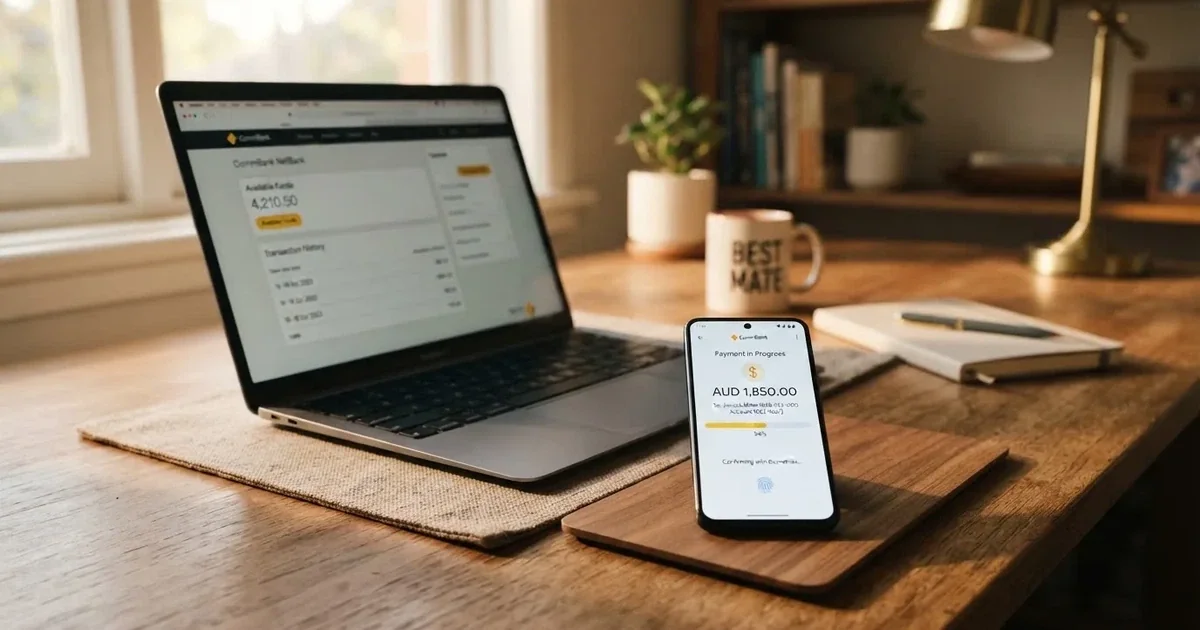
“PayID pokies no deposit bonus Australia 2026” reads like a search for a specific deal — a way to spin real-money slots with no money down, settled through the instant-transfer system most Australians already use for splitting the rent. The phrase bundles three things that do not bundle cleanly in Australian law. PayID is a domestic payments rail, open to anyone with a bank account at a participating institution. No-deposit bonus claims are a marketing construct, attached by the offshore casino industry to almost every new signup flow. Pokies in the online casino sense are prohibited interactive gambling services, and no state or territory in Australia issues a licence to provide them. The combination a searcher types, in other words, describes a product Australian law does not permit to be sold, marketed at Australians, or paid out through Australian payment infrastructure — which is what makes the search itself a useful artefact of how this corner of the internet is promoted.
This page reads through that bundle carefully. It does not point readers toward any offshore operator, list a working code, or rank the eleven brands in §6 of the research as if they were comparable choices. Those brands appear here because the ACMA itself named them in formal warnings for offering prohibited services to Australians. What the page does do is set out, in plain terms, the mechanics of PayID, the legal frame around online casino offers, the responsible-gambling supports that do reach Australians, and the specific details of each ACMA warning — the operator named, the date, and the brand under which the warning was issued. The arithmetic the plan prescribes is the ACMA’s own blocking rate, computed from the running total of sites blocked and the months elapsed since the first request.
The angle taken throughout is cost — what an offer that names PayID and “no deposit” actually costs the reader who follows it. In an offshore setting, the cost is not a wagering multiple. It is the absence of Australian consumer protection, the absence of a complaint body, and the real possibility that an account with a balance on it will be cut off the next time the ACMA asks an ISP to block the site.
Table of Contents
- The Prohibition That Frames Every Offer
- What PayID Is and Is Not
- The Blocking Rate as a Measure of Scale
- Responsible Gambling Where Australians Actually Have Standing
- Reading the ACMA’s Formal Warnings
- Brand-by-Brand Reading
- What the Research Does and Does Not Cover
- What a Reader Can Actually Do
- Frequently Asked Questions
The Prohibition That Frames Every Offer
Australia’s position on online casino games and online pokies is older than PayID and unchanged by it. The Interactive Gambling Act 2001, strengthened by the Interactive Gambling Amendment Act 2017, makes it an offence to provide online casino games, online pokies or in-play betting to a person physically in Australia. No state or territory issues a licence for these products. What is licensable is wagering on races and sport placed before the event, lotteries and keno — in practice licensed by the Northern Territory Racing and Wagering Commission, which regulates 52 of Australia’s online bookmakers, including Sportsbet, Bet365 and Ladbrokes, though the commission has no full-time staff and meets once a month in Darwin.
This division matters for any reader running this search. A licensed Australian wagering service may accept PayID-linked bank transfers. An unlicensed offshore casino cannot lawfully target Australians at all, which means the offer is not illegal because of the bonus structure or the payment rail; the offer is illegal because the underlying product — online pokies marketed to Australians — has no legal pathway to a licence in the first place. A page comparing “no deposit bonus” mechanics from operator to operator, in this light, is comparing the marketing layers of a product none of the listed operators are licensed to sell.
The enforcement side of that prohibition has produced a specific body of public action. The Australian Communications and Media Authority investigates complaints, issues formal warnings under the IGA, and directs Australian internet service providers to block illegal sites. According to the ACMA’s tally as reported in June 2026, 1,751 illegal gambling and affiliate marketing websites had been blocked since the first blocking request in November 2019, and more than 230 unlicensed gambling services had left the Australian market since enforcement was strengthened in 2017. In the round reported on 26 June 2026 alone, the ACMA asked ISPs to block a further twelve sites: 7Signs, ChromaBet, Donbet, Duospin, Freshbet, Slots Gem, Jacks Club, Lucky Start, Pointsbetz.com, Spinrise, Vinyl Casino and Wildsino.
H2 Gambling Capital’s 2025 estimate puts annual Australian losses to illegal gambling sites at about A$3.9 billion, and reports that the share of gambling going through legal channels fell from 74 per cent in 2021 to 64 per cent. The trend line runs against the legal market, which is the trend the enforcement action above is trying to reverse.
What PayID Is and Is Not
A PayID is an easy-to-remember identifier — a mobile number, an email address, an ABN or an Organisation Identifier — linked to a bank account. It is operated by Australian Payments Plus, the domestic payments provider, and is offered by more than 100 Australian financial institutions, already built into their online banking. When a payer sends money to a PayID, the name on the receiving account is shown before the transfer is sent; that confirmation step is the anti-scam check that distinguishes PayID from a BSB-and-account-number transfer.

PayID runs on Australia’s New Payments Platform, which the Reserve Bank of Australia oversees and which launched in February 2018 to let households, businesses and government agencies make simply-addressed, near-real-time payments around the clock. With Osko, transfers between participating banks typically arrive in under a minute, 24/7, whether addressed to a BSB and account number or to a PayID. The RBA also owns and operates the Fast Settlement Service, which settles NPP transactions individually in close to real time.
As of April 2025 there were more than 25 million registered PayIDs in Australia — a substantial share of the adult population. By the end of 2025, Apple Pay, Google Pay and Samsung Pay together accounted for around 45 per cent of all card payments in Australia by number, which is why the gambling blocks at Australian banks increasingly name digital wallets as well as physical cards.
PayID is a payment rail. It is not a licence. It is not a guarantee about who is on the other end of a transfer. AP+ itself warns directly about this: “If you are asked to transfer funds to a PayID on an illegal gambling site, it is almost certainly a scambling website.” The slang “scambling” — used by AP+ — covers illegal online gambling platforms advertised on social media and messaging apps that trick people into gambling on a scam site. AP+ advises anyone who suspects they have been scambled to contact their financial institution. PayID will never contact a customer directly, and any email or text claiming to be from PayID is itself a scam; PayID never asks anyone to send money in order to receive money, and there is no “account upgrade” for PayID to ask for.
The legal layer adds a further constraint. Under the Interactive Gambling Act 2001 as amended in 2023, Australian-licensed online wagering services cannot accept credit cards or other credit-related products; the restriction also constrains gambling use of linked digital wallets such as Apple Pay. Legal deposit routes for licensed wagering are debit card, bank transfer, PayID/Osko and BPAY. The Interactive Gambling Amendment (Gambling Reform) Bill 2026 passed Parliament on 19 August 2026; its advertising and inducement measures commence on 1 January 2027. On a page dated 2026, those measures are law with a start date, not yet in force — a distinction that matters if a reader is comparing what is current against what is incoming.
The Blocking Rate as a Measure of Scale
The plan’s prescribed calculation is the ACMA’s blocking rate: the running total of blocked sites and affiliate pages per month since the first blocking request. The arithmetic belongs to the page because it makes the enforcement trajectory legible without requiring the reader to do the division.
As of the ACMA tally reported in June 2026, 1,751 illegal gambling and affiliate marketing websites had been blocked since the first blocking request in November 2019. The interval from November 2019 to June 2026 is 79 months. The arithmetic — 1,751 sites and affiliate pages divided by 79 months — yields a blocking rate of roughly 22.2 sites and affiliate pages per month across the full period. That is the long-run average.
The figure is more honestly read as a band, because the monthly pace has not been flat. The June 2026 round alone added 12 sites. Earlier rounds have added similar batches; some months added none. Across the full 79 months, the pace averages a little over twenty per month, with individual months ranging from zero to a dozen or more. The block list grows faster than the long-run average would suggest in a busy round, and more slowly than it in a quiet one.
The honest summary is the band: roughly 20–25 illegal gambling and affiliate sites blocked per month on average since the ACMA began making blocking requests in late 2019, with single-round batches of a dozen or so in active periods. That figure is the background against which any “PayID pokies no deposit bonus Australia 2026” search result sits. The same month a reader types that phrase is the same month another dozen offshore sites are being added to a list that has been growing since November 2019.
Responsible Gambling Where Australians Actually Have Standing
A page that catalogues prohibited offers without pointing readers toward the supports that do apply to them would stop one sentence short of its job. The Australian frame for player protection is built around the licensed wagering market, and offshore casinos are not part of it — which is itself the point.
BetStop, the National Self-Exclusion Register, has been live since August 2023. It binds every Australian-licensed online and phone wagering service: a person who registers is excluded from placing bets with any participating operator for a chosen period, and the operator must take reasonable steps to enforce the exclusion. An offshore casino is not connected to BetStop. Registering with BetStop does not stop a person from opening an account with an offshore operator, which is one reason offshore play is a route that bypasses the Australian self-exclusion system rather than a route through it.
The National Gambling Helpline, 1800 858 858, is free, available 24/7, with online chat through Gambling Help Online. It is the line that reaches an Australian regardless of where the gambling has actually happened — licensed, offshore, or somewhere in between. For anyone whose reading of an offer on this page prompts a question about their own play or someone else’s, that is the line worth saving.
On the payment side, Australian banks have moved in the same direction. Westpac’s gambling block works at card level and refuses authorisation of transactions registered under the merchant category code “Betting/Casino Gambling” on eligible personal credit and debit cards. ANZ’s gambling transaction block, activated through the ANZ app, blocks gambling transactions made through a digital wallet such as Apple Pay on an eligible card — not just the physical card. ANZ’s own warning is plain: not all gambling transactions will be blocked, and some non-gambling transactions might be blocked in error. Once ANZ’s block is on, removing it requires a 48-hour waiting period. The shape of the protection is to make it harder to undo than to put in place, which is the deliberate design.
A note on tax. Gambling winnings of a recreational player are not assessable income under section 6-5 of the ITAA 1997, and losses are not deductible — unless the person is carrying on a business of gambling, which is a different matter entirely and one to take up with the ATO or a registered tax agent. The default position is that recreational winnings stay outside the tax system.
Reading the ACMA’s Formal Warnings
Eleven brands appear in §6 of the research, each because the ACMA itself issued a formal warning for offering prohibited interactive gambling services to Australians. The table below shows what was named, when, and by which operator the ACMA recorded it. A few of these warnings repeat: a brand warned in 2022 can be warned again under a different parent company, and Bizzo Casino has been warned under two different operators.
| Brand | ACMA action | Operator named by the ACMA | Subject support |
|---|---|---|---|
| RocketPlay | Formal warning, March 2026; earlier warning under prior operator, May 2022 | Pulsup Ltd (Rocketplay.com.au); earlier Dama N.V. | — |
| Level Up Casino | Formal warning, May 2022 | Dama N.V. | Westpac listing only |
| Woo Casino | Formal warning, March 2025 | Dama N.V. | — |
| Spirit Casino | Formal warning, May 2025 | Dama N.V. | — |
| National Casino | Formal warning, July 2025 | Consolutetish S.R.L. | AUSTRAC listing only |
| Bizzo Casino | Formal warning, July 2025; earlier warning, 2022 | Consolutetish S.R.L.; earlier TechSolutions | — |
| Ignition Casino | Formal warning, July 2025 | Bamboo Media | — |
| Instant Casino | Formal warning, February 2025 | EOD Code SRL | EcoPayz and PayID listings only |
| Jackbit | Formal warning, April 2026 | Ryker B.V. (Jackbit and CasinOK) | — |
| Casino Intense | Formal warning, April 2025 | Sterplay Holding Ltd | AUSTRAC, iTnews, NAB listings only |
| Sky Crown | Formal warning, September 2022 | Hollycorn N.V. (Sky Crown and Blue Leo) | — |
The “Subject support” column does not rate the offer. It records whether research found any third-party listings that name the brand alongside PayID, AUSTRAC monitoring pages, bank gambling-block pages, or comparable directories. Where the column is blank, the research did not surface those listings — it does not mean the brand is not advertised that way elsewhere, only that the curated sources did not capture it. “Listings only” means a third-party listing page names the brand in connection with PayID or with Australian regulatory monitoring, which is reporting what the listings say rather than confirming the operator’s own claims.
What the table does not show is the common form across all eleven rows. In every case, the ACMA warning cites the operator as offering prohibited interactive gambling services to Australians, and in every case the underlying product is online casino games or online pokies, which no state or territory licenses. None of the brands carries an Australian licence for the product it is offering. Several carry licences in other jurisdictions — Curaçao, Anjouan, Kahnawake — which is the offshore industry’s normal footprint, and which is not Australian consumer protection.
RocketPlay appears twice in the register: an earlier warning to Dama N.V. in May 2022 and a more recent warning to Pulsup Ltd in March 2026, when the brand sat at Rocketplay.com.au. The pattern is worth naming. A warning does not always close the brand, because the same product can resurface under a new parent, a new domain or a new operator of record, and the ACMA has to warn it again. Bizzo Casino shows the same arc under a single brand: warned in 2022 under TechSolutions, then again in July 2025 under Consolutetish S.R.L.
Brand-by-Brand Reading
The eleven brands above are not ranked, not recommended, and not compared as though choosing among them were a real consumer choice. Each entry reads what the ACMA record says about it, and where the research surfaced a relevant listing, what that listing shows.
RocketPlay
The ACMA warned Pulsup Ltd over Rocketplay.com.au in March 2026, and warned Dama N.V. over Rocketplay (alongside Bambet, Dazard, Level Up, Wild Tornado and Cobra Casinos) in May 2022. The brand is one of the more instructive cases in the set: it has been warned, re-emerged under new corporate ownership, and been warned again under the new operator. Research did not surface any PayID-flavoured listings naming this brand — the entry sits on its ACMA record and on the prohibitions that record already names.
Level Up Casino
A May 2022 formal warning to Dama N.V., in the same batch as RocketPlay, Bambet, Dazard, Wild Tornado and Cobra Casinos. Research’s third-party listings show Level Up Casino named on a Westpac merchant-category page — that is a listing, not a licence, and it does not bring the brand inside Australian regulation. The brand’s standing is exactly what the ACMA warning says it is.
Woo Casino
A March 2025 formal warning to Dama N.V., following the earlier 2022 round against the same operator. Woo Casino is one of the more direct examples of a single operator accumulating warnings across multiple brands over time. Research did not surface relevant listings beyond the ACMA record itself.
Spirit Casino
A May 2025 formal warning to Dama N.V., the third Dama N.V. brand in this set to be warned in 2025 after Woo Casino in March. The pattern across Dama N.V. — six brands in 2022, then Woo and Spirit in 2025 — is the kind of repetition that builds the ACMA’s monthly blocking rate described above.
National Casino
A July 2025 formal warning to Consolutetish S.R.L. Research surfaced an AUSTRAC listing naming National Casino, alongside an English-language Wikipedia reference. Neither listing constitutes an Australian consumer protection; both are reporting what those sources record about the brand’s footprint.
Bizzo Casino
Two warnings across three years: the first to TechSolutions (CY) Group Limited and TechSolutions Group N.V. in 2022, and the second to Consolutetish S.R.L. in July 2025. Bizzo is the clearest example in this set of a brand surviving a regulatory action by moving to a new operator of record, only to attract a second warning.
Ignition Casino
A July 2025 formal warning to Bamboo Media, in the same round as the warnings over National Casino and Bizzo Casino. The batch of three against three different parent companies is the kind of round that pushes the blocking rate above its long-run average.
Instant Casino
A February 2025 formal warning to EOD Code SRL. Research surfaced PayID- and EcoPayz-flavoured third-party listings naming Instant Casino, which is reporting what those listings say — not endorsing the offer, and not bringing it inside Australian consumer protection.
Jackbit
An April 2026 formal warning to Ryker B.V., covering Jackbit and CasinOK together. The brand is the most recently warned in the table along with RocketPlay’s March 2026 warning. Research did not surface relevant listings beyond the ACMA record.
Casino Intense
An April 2025 formal warning to Sterplay Holding Ltd. Research surfaced AUSTRAC, iTnews and NAB listings naming Casino Intense — three Australian-side records of the brand’s footprint, none of them a licence.
Sky Crown
A September 2022 formal warning to Hollycorn N.V., covering Sky Crown and Blue Leo together. Hollycorn is the parent in the formal warning publication. Research did not surface relevant third-party listings beyond the ACMA record.
What the Research Does and Does Not Cover
Honesty about what is known and what is not is itself part of the page. The brands above appear because the ACMA warned them. They do not appear with bonus terms, wagering multiples, withdrawal times or game libraries, because the research did not return those specifics from sources that would stand up to a reader’s trust.
Where research found third-party listings — Westpac merchant-category pages, AUSTRAC monitoring references, EcoPayz and PayID directory entries — those listings are reported as what they are: directory records, not endorsements. They show the brand has a footprint that some Australian-side data sources have noted; they do not show the brand is licensed, regulated or protected for Australian consumers. They are listed as “listings only” in the table for that reason.
Where research did not surface those listings — for RocketPlay, Woo Casino, Spirit Casino, Bizzo Casino, Ignition Casino, Jackbit and Sky Crown — the table leaves the column blank. The absence is not a finding; it is the absence of a finding. Brands that operate offshore and have been warned by the ACMA will surface on affiliate pages and SEO-bait listicles in any case; the column reflects what the curated research captured, not what the open web contains.
None of this is to make the eleven brands a credible shortlist. They are not a shortlist at all — they are a register. A reader comparing two of them as if the choice were between, say, Woo Casino and Casino Intense is comparing two products neither of which is licensed to be sold to them in Australia. The frame is the prohibition, not the differences between the two.
What a Reader Can Actually Do
The page has described what PayID is, what the prohibition says, what the ACMA has done, and which brands have been warned. The reader who came here looking for an offer is the reader most worth addressing directly.
If the search was for an Australian-licensed wagering product that accepts PayID — a bookmaker betting on races or pre-event sport — the licensed route exists and uses PayID legitimately as a deposit method. Sportsbet, Bet365 and Ladbrokes are licensed through the Northern Territory. BetStop applies to them. Credit cards do not. The protection is real, including a complaint body in the event of a dispute.
If the search was for online pokies with no deposit up front, the legal route does not exist. The eleven brands in this register, and the others like them, are not licensed to provide that product to Australians, which is what the ACMA warnings record. The reader who treats an offshore “no deposit” claim as a free sample is treating a prohibited product as a marketing offer, and the marketing offer’s only legal status is the warning that names it.
If the search was prompted by a PayID-linked message — a social-media DM, a text, a message in an app — the AP+ guidance is the right reading. Being asked to transfer money to a PayID on an illegal gambling site almost certainly means a scam site, and the right move is to contact the financial institution and to report it. PayID itself never contacts customers, never asks for an “upgrade”, and never asks anyone to send money to receive money.
If the search was prompted by a worry about one’s own play, or someone else’s, the National Gambling Helpline at 1800 858 858 is free, 24/7, with chat at Gambling Help Online. BetStop is the formal self-exclusion route for the licensed wagering market. Neither of these tools undoes an offshore account or unblocks a site the ACMA has directed ISPs to block — but they are the supports an Australian reader can actually reach.
Frequently Asked Questions
Does pairing PayID with a no-deposit bonus claim change anything about an ordinary no-deposit pokies offer?
No. PayID is the payment rail a deposit or withdrawal would move through; it does not license the underlying product. Online pokies offered to Australians are prohibited interactive gambling services regardless of the rail named in the offer, and no state or territory licences them. The pairing is marketing layering on top of a product Australian law does not permit to be sold.
How fast would a PayID withdrawal move if a no-deposit bonus win were ever actually paid out?
PayID transfers between participating banks settle in under a minute 24/7 through Osko. That is the rail’s speed. Whether a withdrawal ever actually clears is a different question, because the offshore operator sits outside Australian consumer protection and outside any dispute resolution body a reader can compel. A fast rail does not guarantee a willing counterparty at the other end.
Is a PayID no-deposit bonus offer from an offshore pokies site something an Australian can lawfully accept?
No. The IGA targets the provider, not the player, so an individual Australian is not prosecuted for placing a bet. The product itself is prohibited to provide to Australians, and the offer sits outside Australian consumer protection, dispute resolution and self-exclusion. The lawful wagering products in Australia are pre-event sports and race betting, lotteries and keno.
What is the usual cap on withdrawing winnings from a PayID pokies no-deposit bonus?
Research did not return withdrawal caps from sources that would hold up to a reader’s trust. Affiliate pages around these brands quote figures, but the figures vary, the terms change, and the operator’s own fine print is the only place a cap is recorded. That absence is itself the answer: a reader who cannot check the cap from a regulated disclosure cannot rely on the cap being honoured.
Why would a site need PayID at all if the bonus itself requires no deposit?
No-deposit claims attract signups and KYC details. PayID is a familiar Australian rail that lowers the friction on the eventual deposit a player may be steered toward, and gives the operator a direct bank-account link to chase. AP+ itself warns that being asked to transfer to a PayID on an illegal gambling site is almost certainly a scam indicator, which is the rail’s own operator flagging the use case.
What should someone check before assuming two PayID pokies no deposit bonus pages describe the same offer?
The operator of record, the licence the operator actually holds, and whether the offer is being made to a person in Australia. The eleven brands in this register share the same ACMA status — formal warnings for offering prohibited services — which is what two pages describing “PayID pokies no deposit bonus” offers have in common when both pages are pointing at offshore operators. The page that names the operator and the ACMA record is the page a reader can verify; the page that does not is the page a reader cannot.