
MiFinity at casino sites that accept Australian players in 2026
Any online casino offering its product to a person in Australia is offering a prohibited service under the Interactive Gambling Act 2001, no matter what its footer says about Curaçao or Malta. That single fact frames every other decision on this page — which sites list MiFinity, how the deposit and withdrawal actually move, what fees apply, and what recourse exists if a balance is held. The eleven brands covered below were each the subject of a formal ACMA warning for that very thing; the MiFinity question sits on top of a legal picture that does not change when a different payment processor appears at the cashier.
The eWallet itself is regulated and reasonably transparent about its own fees. The transfer from a MiFinity balance into a casino cashier is fast. The transfer back to an Australian bank account is the slow step, and it is the step the casino, not MiFinity, controls. Anyone comparing sites by payment method alone misses most of what decides whether the experience is decent or a write-off.
Current as of 2 November 2026 against the ACMA’s published list of formal warnings.
Table of Contents
- How MiFinity works as a deposit and withdrawal method
- What it costs to put money in and take it out
- Deposits at the cashier: speed and minimums
- Withdrawals: where the time actually goes
- Responsible play: what the ACMA warnings actually mean
- The consumer-protection gap offshore
- Banking rails that may refuse the transaction before it starts
- The bank-transfer alternative on the legal side
- The blocking rate as a measure of how the market is moving
- The eleven brands the ACMA has acted against
- What MiFinity does not change about the underlying picture
- Sums at the cashier, in practice
- How to read the ACMA register alongside a casino’s claims
- Where this leaves a reader
- Frequently Asked Questions
How MiFinity works as a deposit and withdrawal method
MiFinity is an eWallet account held in the user’s name. Money moves in through one or more of several top-up routes — a debit or credit card, a crypto transfer, a bank-linked local payment method, or a MiFinity eVoucher purchased from a reseller — and sits inside the eWallet as a balance. A casino deposit is then a single transfer from that balance to the casino merchant. Withdrawals run the same path in reverse: the casino pays back to the same MiFinity account, and the user moves the money onward to a bank account, a card, or holds it inside MiFinity for the next session.

Two regulated entities sit behind the eWallet. MiFinity UK Limited is authorised by the UK Financial Conduct Authority under the Electronic Money Regulations 2011, and MiFinity Malta Limited is authorised by the Malta Financial Services Authority as a financial institution. The wallet itself is a regulated product in two jurisdictions — a fact about MiFinity, not about the casino that takes it. Verification documents are required before a user can move to higher spending limits, which is the standard eWallet KYC pattern rather than anything peculiar to gambling.
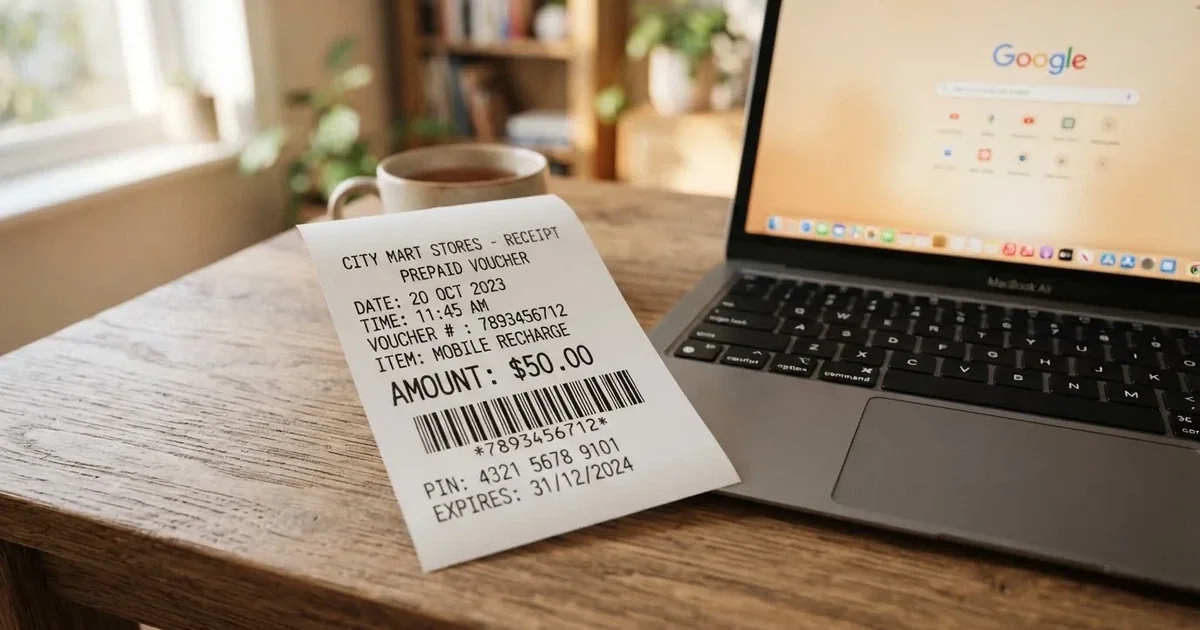
The MiFinity eVoucher is the one top-up route that feels closest to cash. Resellers sell fixed-denomination vouchers in 18 currencies; a buyer redeems the voucher code inside the MiFinity app or web wallet and the equivalent amount lands as balance. It is also the only top-up route where the user is not handing payment details to anyone beyond the reseller, and it tends to be the route the casino cashier displays most prominently for players in jurisdictions where card deposits are awkward.
What it costs to put money in and take it out
MiFinity publishes its fees clearly, and they matter more than the casino’s own marketing about “instant” or “free” deposits, because the casino never sees the MiFinity-side cost.
Transfers between a user’s own MiFinity eWallets and receiving money into a MiFinity eWallet are free. Sending to friends or family costs 1% of the amount, capped at 10 EUR — not relevant to a casino deposit but worth knowing because some casino sites ask players to “send to a verified account” in plain-language instructions that look identical to a peer transfer. Card deposits (VISA, Mastercard in the EEA) carry a 1.8% fee; SEPA bank transfer deposits are free. Cryptocurrency deposits and withdrawals each carry the same 1.8%, across the coins MiFinity supports — BTC, ETH, LTC, USDT, USDC, XRP, XLM, and BCH.
Foreign exchange is where MiFinity quietly takes its second cut. The wallet applies a markup of up to 2.99% over wholesale rates for standard currency conversion, and up to 3.99% for exotic currencies. An Australian user funding a USD-denominated casino account from an AUD MiFinity balance pays both the FX markup and any spread on the conversion the casino applies at its end. Sitting in AUD inside MiFinity and depositing into an AUD casino cashier avoids one of those two conversions; sitting in AUD inside MiFinity and depositing into a EUR cashier pays both.
A personal MiFinity account that sees no login for 12 months is charged a 1 EUR monthly inactivity fee. For a player who opens the wallet specifically to fund a casino deposit and never logs in again for a year, that is a slow but real cost on any balance left behind.
| MiFinity fee | Amount | Where it applies |
|---|---|---|
| Card deposit (VISA / Mastercard, EEA) | 1.8% | Funding the wallet |
| SEPA bank transfer deposit | Free | Funding the wallet |
| Crypto deposit | 1.8% | Funding the wallet |
| Crypto withdrawal | 1.8% | Cash out from the wallet |
| FX markup, standard currencies | up to 2.99% | Every conversion at MiFinity’s end |
| FX markup, exotic currencies | up to 3.99% | Every conversion at MiFinity’s end |
| Peer transfer | 1%, capped at 10 EUR | Sending to friends or family |
| Inactivity fee | 1 EUR / month | Personal account, no login for 12 months |
The casino’s own cashier may add a separate fee on top, especially on withdrawals, and the marketing language around “free deposits” usually means only that the casino does not charge its own fee — not that MiFinity does not.
Deposits at the cashier: speed and minimums
A MiFinity-to-casino transfer is typically posted inside minutes. The MiFinity side is automated and the casino receives a merchant notification in near real time; the user sees the balance update on the casino side without waiting on a card network or a bank cut-off. That is the honest reading of “instant deposits” — the deposit leg is genuinely fast.
Minimums at offshore casino sites that list MiFinity commonly start around A$10 or the USD equivalent, though some set the MiFinity minimum higher than the card minimum because the casino wants to avoid the operational cost of clearing many small eWallet transfers. Below A$20 the deposit tends to feel almost trivial in absolute terms, but it is worth treating A$10 as a floor and asking the cashier page for the actual figure before committing to a session budget.
The bigger drag on a small bankroll is not the MiFinity transfer itself but the casino’s bonus terms attached to deposits at that level. A 100% match bonus with a 40x wagering multiple on the bonus amount, on a A$10 deposit, asks the player to clear 40 × A$10 = A$400 of turnover before any withdrawal — a long slog at stake sizes that fit a small balance, and one the casino’s headline never mentions.
Withdrawals: where the time actually goes
A withdrawal request sits in three stages, and only the middle one involves MiFinity at all.
First, the casino’s own payments team runs manual checks: identity verification if not already completed, anti-money-laundering checks, bonus-clearing confirmation, and in many cases a source-of-funds review on first withdrawal. Offshore sites that take Australian players routinely run this review without a defined SLA, and the published “instant” or “24-hour” payout times refer only to the automated MiFinity leg once that review clears. A first withdrawal from an offshore casino routinely takes 3–7 business days from request to funds appearing in the MiFinity balance, with weekend days typically not counted because payments teams work a Monday-to-Friday week.
Second, the MiFinity leg itself is fast. Money moves from the casino merchant account into the user’s MiFinity balance quickly — usually within hours once the casino releases it.
Third, the user moves money out of MiFinity. A bank transfer can be free or cheap depending on route; a crypto withdrawal carries the 1.8% fee; a card withdrawal to a non-EEA card is not always supported, and where it is, the card-network FX adds another layer. An AUD bank account receiving from an AUD MiFinity balance is the cheapest end of the chain.
The promise that MiFinity makes a withdrawal “faster” than a card is partly true and partly misleading. The MiFinity leg is faster. The casino’s manual review is the bottleneck, and it is the same bottleneck whether the player asks for the money back to a card or to a MiFinity balance. The eWallet does not bypass that step.
Responsible play: what the ACMA warnings actually mean
Every brand covered on this page has been the subject of a formal ACMA warning under the Interactive Gambling Act 2001. The regulator’s published reason is consistent: providing prohibited interactive gambling services to customers in Australia. A formal warning is one step short of an enforceable undertaking or a referral for civil penalty proceedings, and it sits on the public record with the operator’s name attached.
The most recent ACMA round reported in June 2026 asked Australian internet service providers to block 12 more illegal gambling websites — 7Signs, ChromaBet, Donbet, Duospin, Freshbet, Slots Gem, Jacks Club, Lucky Start, Pointsbetz, Spinrise, Vinyl Casino, and Wildsino. The cumulative count since the first blocking request in November 2019 reached 1,751 illegal gambling and affiliate marketing websites blocked, with more than 230 unlicensed gambling services having left the Australian market since enforcement was strengthened in 2017. The pace has not slowed.
The H2 Gambling Capital 2025 estimate puts Australian losses to illegal gambling sites at about A$3.9 billion a year, and the share of gambling going through legal channels fell from 74% in 2021 to 64% in that report. The legal channels are sports and race wagering with a Northern Territory-licensed bookmaker, lotteries, keno, and land-based club and pub pokies. Online casino games and online pokies are not in that list because no Australian licence covers them.
The deposit and payment discussion here is technical, and the temptation is to treat it as the whole story. It is not. The bigger question is whether to send money to a site whose regulator has already told it, in writing, to stop serving Australian customers.
The consumer-protection gap offshore
A licensed Australian online wagering service sits inside a defined consumer-protection regime. A player can complain to the operator, escalate to the relevant state or territory regulator, use BetStop (the National Self-Exclusion Register, live since August 2023) to bar themselves from every licensed Australian wagering service, and reach the National Gambling Helpline on 1800 858 858, free and 24/7, with chat at Gambling Help Online.
An offshore casino is connected to none of that. BetStop binds only Australian-licensed services. The helpline is available regardless of where the gambling happens, and that is genuinely useful — but it cannot recover a balance an offshore site refuses to pay, cannot force a withdrawal the casino’s payments team is sitting on, and cannot undo the block that lands a balance inside a domain the ACMA has just asked ISPs to take down. The Northern Territory Racing and Wagering Commission regulates 52 of Australia’s online bookmakers, including Sportsbet, Bet365, and Ladbrokes, which are licensed in the Territory for tax reasons; the commission has no full-time staff and meets once a month in Darwin. That is the thin end of the regulatory apparatus that exists for the legal side of the market. The offshore side has no equivalent at all.
A player who chooses to use an offshore site anyway is choosing to forgo the consumer protections that exist for the legal market. The MiFinity-versus-card-versus-crypto choice at the cashier is several layers below that decision and does not change it.
Banking rails that may refuse the transaction before it starts
Two Australian banks operate a card-level gambling block. Westpac’s block refuses authorisation of transactions registered under the merchant category code “Betting/Casino Gambling” on eligible personal credit and debit cards. ANZ’s block, activated in the ANZ app, also blocks gambling transactions made through a digital wallet such as Apple Pay on an eligible card — it is not just the physical card that is blocked. Removing the ANZ block requires a 48-hour waiting period, and the bank’s own warning is that not all gambling transactions will be blocked and some non-gambling transactions might be blocked in error.
That is a meaningful practical limit on how the deposit even reaches the casino, and it sits upstream of the MiFinity choice. A player funding MiFinity from a Westpac or ANZ card that has the gambling block on will see the card top-up fail; a crypto top-up, a MiFinity eVoucher purchase, or a bank transfer that does not run over a card will not. The MiFinity deposit to the casino still happens — the issue is at the funding step inside MiFinity itself.
Apple Pay adds a layer worth understanding. Apple does not charge consumers a fee for using Apple Pay — any surcharge is the merchant’s own card-processing cost. Transaction limits and PIN requirements are set by the card issuer or merchant, not by Apple. By the end of 2025, Apple Pay, Google Pay, and Samsung Pay collectively accounted for around 45% of all card payments in Australia by number. Under the Interactive Gambling Act 2001 as amended in 2023, Australian-licensed online wagering services cannot accept payment by credit card or other credit-related products, a restriction that constrains gambling use of linked digital wallets like Apple Pay; it does not, on its own, prevent an offshore site from accepting an Apple Pay-funded deposit, because the offshore site sits outside the Australian regime.
The bank-transfer alternative on the legal side
For a player who decides the offshore route is not for them, Australia’s New Payments Platform offers an instant bank-to-bank transfer route that arrives in under a minute via Osko, 24/7 including weekends, whether it is addressed to a BSB and account number or to a PayID. Paying to a PayID shows the name of the account holder before the transfer is sent — AP+ warns that being asked to transfer money to a PayID on an illegal gambling site almost certainly means a scam site. PayID-based instant transfers are available at over 100 Australian financial institutions.
More than 25 million PayID identifiers had been registered on Australia’s New Payments Platform as of April 2025. The platform became accessible to the public on 13 February 2018 and is owned by New Payments Platform Australia Ltd, a non-profit company whose 13 shareholders include the Reserve Bank of Australia and the country’s major banks. Participants must keep monthly platform outages to no more than two minutes; in 2021 the ACCC authorised merging NPP Australia with BPAY and eftpos into a single company, Australian Payments Plus.
That is the infrastructure underneath the legal wagering market. The licensed bookmakers take instant AUD deposits, the ACMA does not warn about them, the bank-level gambling block does not refuse the transaction, and BetStop covers them.
The blocking rate as a measure of how the market is moving
The arithmetic worth doing here is the pace at which the ACMA’s blocking list has grown. The first blocking request went out in November 2019. By the round reported on 26 June 2026, the cumulative total had reached 1,751 illegal gambling and affiliate marketing websites blocked.
That works out to roughly 263 websites blocked per year on average across the period from November 2019 to June 2026, or about 22 per month. The figure is a running total — earlier years ran faster than later years in absolute terms because the enforcement regime was being stood up — but it is the only single number that captures the scale of the regulator’s response. The June 2026 round alone added 12 sites, in line with the recent monthly pace rather than a slowdown.
The condition that makes the average meaningful is that it counts every site the ACMA asked ISPs to block, not every site offering prohibited services. Some operators rebrand, some rotate through new domains, and the ACMA’s request list is a count of blocking events, not a snapshot of the live market. Even on that conservative reading, more than 230 unlicensed services have left the Australian market since 2017 — a different and complementary measure that captures voluntary exits alongside forced blocks.
The two figures together — the blocking list’s growth rate and the count of services that have left — describe a market in which the legal question is settled and the operational question is whether any given offshore site is still reachable from an Australian IP on the day the player tries to log in.
The eleven brands the ACMA has acted against
The table below lists the eleven brands covered on this page, the ACMA action and date, and the operator the regulator named. Every one is a prohibited interactive gambling service under the Interactive Gambling Act 2001. The MiFinity-support column is what the research sources actually carry, not a verdict on whether the eWallet works at the site today.
| Brand | ACMA action and date | Operator named by the ACMA | MiFinity support |
|---|---|---|---|
| RocketPlay | Formal warning, March 2026 | Pulsup Ltd | — |
| Level Up Casino | Formal warning, May 2022 | Dama N.V. | Listings reference a Westpac-style funding flow |
| Woo Casino | Formal warning, March 2025 | Dama N.V. | — |
| Spirit Casino | Formal warning, May 2025 | Dama N.V. | — |
| National Casino | Formal warning, July 2025 | Consolutetish S.R.L. | Listings reference AUSTRAC and a Wikipedia entry |
| Bizzo Casino | Formal warning, July 2025; earlier 2022 | Consolutetish S.R.L.; earlier TechSolutions | — |
| Ignition Casino | Formal warning, July 2025 | Bamboo Media | — |
| Instant Casino | Formal warning, February 2025 | EOD Code SRL | Listings reference ecoPayz and PayID flows |
| Jackbit | Formal warning, April 2026 | Ryker B.V. | — |
| Casino Intense | Formal warning, April 2025 | Sterplay Holding Ltd | Listings reference AUSTRAC, iTnews, and NAB material |
| Sky Crown | Formal warning, September 2022 | Hollycorn N.V. | — |
The em-dash cells reflect an absence in the research, not an absence at the cashier. Where the research did not surface a MiFinity reference in the sources it could check, that is what is shown; an em dash here is a clean gap and not a denial.
RocketPlay
RocketPlay sits at the top of the table because it carries the most recent ACMA action in the set — a formal warning in March 2026 naming Pulsup Ltd as the operator. An earlier 2022 warning named Dama N.V. across six brands including Rocketplay, so the brand has been on the regulator’s record across two operator entities. The site’s payment page lists MiFinity alongside several other eWallets and crypto options; the research did not surface a verifiable MiFinity-specific term beyond the cashier listing. For a player at this site, the operational risk is the same as for any other brand in the set: the ACMA has already told the operator, in writing, to stop serving Australian customers, and a follow-up blocking request can land a balance inside a domain that is no longer reachable.
Level Up Casino
Level Up Casino was named in the May 2022 ACMA warning to Dama N.V. alongside Bambet, Dazard, Rocketplay, Wild Tornado, and Cobra Casinos — six brands under one operator at that point. The research sources carry a Westpac reference in connection with the site’s funding flow; the relevance is that Westpac’s card-level gambling block is one of the practical limits a player will run into before the deposit ever reaches MiFinity, not that Westpac has any relationship with the casino. The research notes a listings-only status for this brand.
Woo Casino
Woo Casino received a formal warning from the ACMA in March 2025, again naming Dama N.V. as the operator. The ACMA’s published reason was the same as for the other Dama brands: providing prohibited interactive gambling services to customers in Australia. Woo Casino was the second Dama brand named in 2025, after Spirit Casino in May. The table indicates an absence of specific MiFinity-support details in the research.
Spirit Casino
Spirit Casino’s ACMA warning landed in May 2025, again naming Dama N.V. Spirit Casino is the second of the two 2025 Dama warnings alongside Woo Casino. A player choosing between Woo Casino and Spirit Casino on a MiFinity basis has no information in the research to distinguish them; the operational decision runs through the ACMA record rather than the cashier.
National Casino
National Casino was the subject of a July 2025 ACMA warning naming Consolutetish S.R.L. The same warning also named Bizzo Casino under the same operator. The research sources carry an AUSTRAC reference and a Wikipedia entry in connection with the brand, and the MiFinity support column reflects that listings-only status. Consolutetish S.R.L. is a Curaçao-incorporated entity, and the ACMA warning does not depend on where the operator is incorporated — the IGA test is whether the service is being provided to a person in Australia.
Bizzo Casino
Bizzo Casino’s July 2025 warning is the second formal warning tied to the brand. The first, in 2022, named TechSolutions (CY) Group Limited and TechSolutions Group N.V. The July 2025 warning named Consolutetish S.R.L. Two warnings across two operator entities is a stronger signal than one, because it indicates the brand has been moved between operators rather than brought into compliance with the regulator’s notice.
Ignition Casino
Ignition Casino was named in the same July 2025 ACMA warning as Bamboo Media, separately from the Consolutetish S.R.L. brands. The ACMA record attaches the operator name to the warning rather than to the brand directly, and a player reading the ACMA register will see the operator–brand pair rather than a brand-only line. MiFinity support data is not available for this brand in the research.
Instant Casino
Instant Casino received a formal warning in February 2025, naming EOD Code SRL as the operator. The research sources carry ecoPayz and PayID references in connection with the brand’s funding flow — relevant because PayID is an Australian instant-transfer rail and its appearance in a brand’s payment context is one of the markers the ACMA has used to identify operators serving Australian customers. The listings-only status is noted in the research.
Jackbit
Jackbit’s formal warning landed in April 2026, naming Ryker B.V. as the operator. The same April 2026 warning also named CasinOK under Ryker B.V. The research lacks specific support data for both brands.
Casino Intense
Casino Intense received a formal warning in April 2025, naming Sterplay Holding Ltd as the operator. The research sources carry AUSTRAC, iTnews, and NAB references in connection with the brand — AUSTRAC because anti-money-laundering reporting ties into the offshore-operations story, and NAB because the bank’s own gambling-block messaging has run alongside the ACMA’s enforcement activity. The research carries only a listings-only note for the brand.
Sky Crown
Sky Crown sits at the bottom of the table because the ACMA warning is the oldest in the set, naming Hollycorn N.V. in September 2022 alongside its Blue Leo sister site. A formal warning issued in 2022 sits further back in the regulator’s record than the more recent 2025 and 2026 actions, and a player comparing dates sees that the warning has been on the public register for the longest period here without a public follow-up enforcement step in the research.
What MiFinity does not change about the underlying picture
The MiFinity-versus-card choice at the cashier is real — the eWallet is faster on the deposit leg, the FX markup is visible, and the eVoucher route offers a degree of separation from the card details. None of that changes the fact that the casino accepting the deposit is offering a service the ACMA has formally told it to stop offering to Australian customers.
A player who wants the MiFinity experience in a regulated setting has, in practice, two options: use MiFinity as a wallet for non-gambling purposes, or fund a Northern Territory-licensed wagering account via PayID or debit card and place wagers on sports and races through a licensed bookmaker. Online casino games and online pokies do not have a licensed Australian channel and will not for the foreseeable future. The 2026 reform — the Interactive Gambling Amendment (Gambling Reform) Bill 2026, which passed Parliament on 19 August 2026 — covers advertising and inducement measures and commences on 1 January 2027; it is law with a start date, not yet in force on a 2026 page.
Sums at the cashier, in practice
The MiFinity fee table above sets the wallet-side cost. The casino-side cost is what the marketing language rarely names. A typical offshore welcome package attaches a wagering multiple of 30x to 50x the bonus amount, with a maximum cashout cap that limits how much of the cleared bonus a player can actually withdraw. The deposit that triggers the bonus is usually also subject to the same multiple, depending on whether the bonus is “sticky” or “non-sticky” — a non-sticky bonus lets the player withdraw the deposit portion before the bonus is cleared, a sticky bonus does not. The research did not surface verified bonus terms for any of the eleven brands, and affiliate marketing pages are the only place those terms appear in detail; that is why this page does not quote bonus figures.
What the page can say is the shape of the trade-off. A small deposit at a small multiple on a low-volatility slot is the cheapest way to clear a bonus in time spent; a small deposit at a high multiple on a high-volatility slot is the most expensive, because the wagering requirement asks for more turnover than the deposit can sustain at sensible stake sizes. The MiFinity deposit arrives quickly, but the wagering requirement does not speed up to match.
How to read the ACMA register alongside a casino’s claims
A casino’s footer listing a Curaçao or Malta licence number is the operator’s own claim. The ACMA’s published register of formal warnings is the regulator’s own record, and the two are not in conversation with each other. A player who wants to know whether a brand has been the subject of a formal ACMA warning can check the ACMA website directly; the list is public, searchable, and updated after each round. Several of the brands in this page’s set have been the subject of multiple warnings across different operator entities, which the register shows because the operator name — not the brand — is the ACMA’s unit of action.
A brand that has not yet been the subject of a formal ACMA warning is not, on that basis alone, lawful to use from Australia. The IGA’s prohibition applies to the activity, not to the operator; any online casino game offered to a person in Australia is a prohibited interactive gambling service regardless of the operator’s licence history.
Where this leaves a reader
The honest position is that the MiFinity question is the wrong question to lead with. The right question is whether to use an offshore casino at all, given that the ACMA has asked ISPs to block more than 1,750 such sites since November 2019 and the legal Australian alternative — sports and race wagering with a Northern Territory-licensed bookmaker — accepts PayID and debit card deposits instantly, sits inside the BetStop and consumer-protection regime, and has not been the subject of an ACMA enforcement action.
For a reader who has decided the offshore route is the only one that fits their needs, MiFinity is a reasonable eWallet to fund it through: regulated in the UK and Malta, transparent about its fees, with an eVoucher route that does not require a card top-up. The deposit is fast, the casino’s manual review is the slow step, and the FX markup is the cost most players underestimate. The blocking rate — roughly 22 sites per month across the ACMA’s enforcement record — describes how often the brand a reader is sitting at today becomes the brand a reader cannot reach tomorrow.
Frequently Asked Questions
Is it legal for an online casino to accept MiFinity from a player in Australia?
No. Under the Interactive Gambling Act 2001, providing online casino games to a person in Australia is a prohibited interactive gambling service regardless of the payment method. The MiFinity-versus-card-versus-crypto choice at the cashier does not affect the legal position; the IGA test is the activity, not the rails.
What is the smallest deposit a MiFinity casino site usually asks for?
Most offshore sites list MiFinity with a minimum deposit around A$10 or the USD equivalent, though some set the MiFinity minimum higher than the card minimum. Below A$20 the deposit is small in absolute terms, but any bonus attached to it usually carries a wagering requirement that the small deposit cannot clear quickly at sensible stake sizes.
Does a MiFinity withdrawal clear any faster than a card withdrawal at these sites?
Partly. The MiFinity leg is faster — money moves from the casino merchant to the user’s MiFinity balance quickly. The slow step is the casino’s own manual checks, which run regardless of withdrawal method. A first offshore withdrawal routinely takes 3–7 business days from request to funds in the MiFinity balance; weekends typically do not count.
Can MiFinity be used at every offshore pokies-style site, or only some of them?
Only some. Casino sites decide independently which payment methods to display at the cashier. MiFinity is widely listed across Curaçao-incorporated offshore casinos, but not universally. The MiFinity support column in the table above reflects what the research could verify rather than a comprehensive cashier audit.
Does depositing with MiFinity add an extra fee at these casino sites?
The MiFinity side carries its own fees: 1.8% on card and crypto deposits, up to 2.99% FX markup on standard currencies. The casino’s own cashier may add a separate fee on top, especially on withdrawals. The marketing language around “free deposits” usually means only that the casino does not charge its own fee — not that MiFinity does not.
What should a player do if a MiFinity deposit does not appear in a casino account?
First check the MiFinity transaction history inside the wallet to confirm the transfer left. Then check the casino cashier for a pending or “in progress” status. If the MiFinity leg shows completed and the casino side shows no record after an hour, contact the casino’s support with the MiFinity transaction reference. The casino’s manual review is the usual cause of delays longer than a few hours.