
Apple Pay at Australian-facing casinos in 2026: how the picture actually sits
Apple Pay now sits inside almost every checkout an Australian taps through, and the country has spent years building the rails for it. By the end of 2025, Apple Pay, Google Pay and Samsung Pay together accounted for around 45 % of all card payments in Australia by number. The technology is normal. The casino side of it is not. Under the Interactive Gambling Act 2001, no online casino game, no online pokies product and no in-play betting service may be supplied to a person physically in Australia — a prohibition that bites whether the operator lists Apple Pay, a bank transfer or a card in its cashier. The brands that surface when a reader searches for an Apple Pay-accepting Australian casino are exactly the ones the Australian Communications and Media Authority has spent the last decade telling to stop.
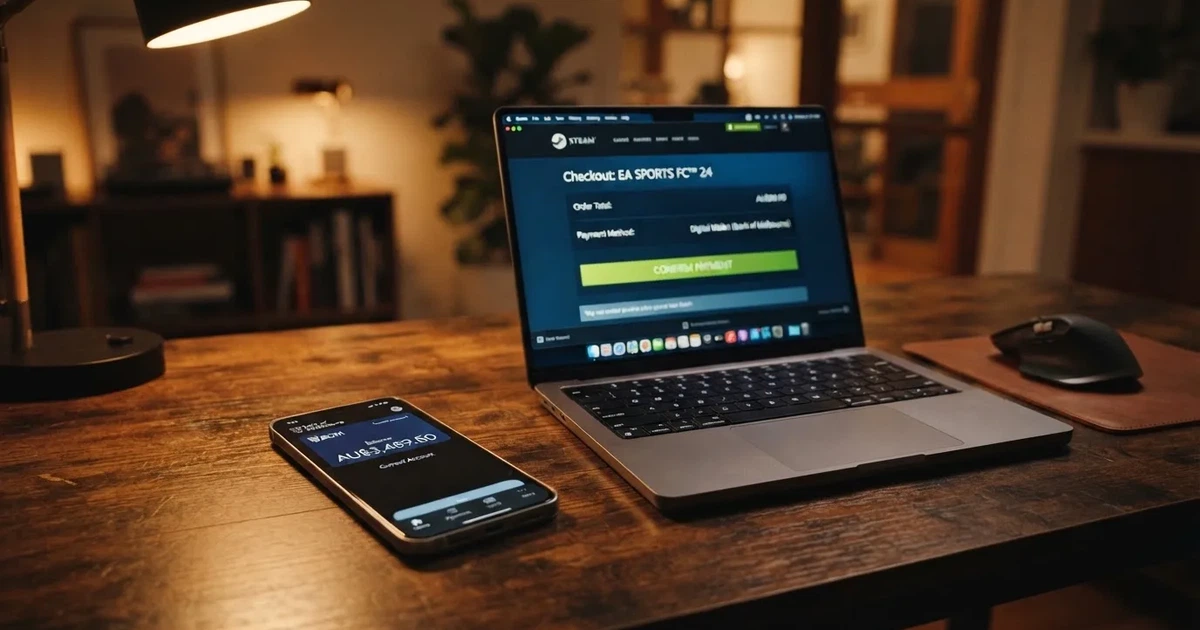
Data current as of 1 November 2026; licence claims and ACMA enforcement actions checked against the ACMA’s published formal warnings register and the iGaming Business report on the June 2026 blocking round.
Table of Contents
- Legality: what the Interactive Gambling Act 2001 actually covers
- The ACMA’s enforcement record and what each warning means
- Responsible play: where a player who has already started can pull the brake
- Payments: what Apple Pay actually does, and where it stops at the casino door
- The landscape: what an Australian reader actually sees when they search
- Payment Options Comparison
- Operator notes: the eleven brands the ACMA has acted against
- The bigger picture: what the 2025 gambling market figures tell a reader
- What the bank-side controls actually do to the Apple Pay flow
- Tax, winnings, and the practical question a reader asks last
- Where the picture leaves a reader
- Frequently asked questions
Legality: what the Interactive Gambling Act 2001 actually covers
The Interactive Gambling Act 2001, tightened by the Interactive Gambling Amendment Act 2017, makes it a criminal offence to provide online casino games, online pokies or in-play betting to a person in Australia. No state or territory licence covers those products. What is licensable in Australia is wagering on races and sport placed before the event, lotteries and keno — and the body that licenses most of that activity is the Northern Territory Racing and Wagering Commission, the regulator that signs off on 52 of Australia’s online bookmakers including Sportsbet, Bet365 and Ladbrokes. The commission has no full-time staff, meets once a month in Darwin, and exists for the tax base the Northern Territory draws from it rather than for any active supervision.

That carve-out is why a reader will see Sportsbet and Bet365 advertised as “Australian-licensed” while offshore casinos are not. The distinction is product-specific: a licensed Australian bookmaker may not offer a casino game, and an offshore casino offering casino games to Australians is offering a prohibited interactive gambling service whether its cashier says Apple Pay or anything else. The ACMA’s enforcement record over the last three years is built entirely around that line.
The Interactive Gambling Amendment (Gambling Reform) Bill 2026 passed Parliament on 19 August 2026 and its advertising and inducement measures commence on 1 January 2027. Law with a future start date, not in force on a 2026 page. Until those provisions turn on, the regulator’s tools are still investigation, formal warning, civil penalty and, ultimately, an order to an Australian internet service provider to block the offending site at the DNS level.
The ACMA’s enforcement record and what each warning means
A formal warning from the ACMA is a published document, not a private letter. It names the operator, the brand, the date, and the section of the Interactive Gambling Act 2001 that the regulator believes has been breached. Once a warning is on the public register, the ACMA can escalate — to enforceable undertakings, civil penalties, or a request to an ISP to block the site entirely. The blocking tool is the one that has done most of the visible work.
According to the ACMA as reported in June 2026, a total of 1,751 illegal gambling and affiliate marketing websites had been blocked since the first blocking request in November 2019, and more than 230 unlicensed gambling services had left the Australian market since enforcement was strengthened in 2017. In the round reported on 26 June 2026, the regulator asked Australian ISPs to block a further twelve sites: 7Signs, ChromaBet, Donbet, Duospin, Freshbet, Slots Gem, Jacks Club, Lucky Start, Pointsbetz, Spinrise, Vinyl Casino and Wildsino. The pace of new blocks has not slowed — twelve more in a single round, against a starting total that sat under two hundred when the regime began.
The pace is itself the information. Over the six and a half years between November 2019 and June 2026, the ACMA has averaged roughly 269 blocks per year — a figure that translates to about 22 new sites a month told to disappear from Australian internet connections. That arithmetic assumes the blocking rate has held roughly even across the whole window, which it has not; the count of blocks has been front-loaded into enforcement rounds since 2023. A reader who treats “blocked once” as a one-off event misreads the curve: the same operator group tends to reappear under a new domain after a block, and the ACMA’s list keeps growing.
The formal warning register tells the same story at the operator-company level. Dama N.V., the Curacao-incorporated group behind a long list of offshore brands, has received four published warnings: one in May 2022 covering Bambet, Dazard, Level Up, Rocketplay, Wild Tornado and Cobra Casinos; one in March 2025 over Woo Casino; and one in May 2025 over Spirit Casino. Each new warning on the same operator is the regulator telling the same company to stop, under the same statute, on a fresh brand. Hollycorn N.V. has a published warning from September 2022 over Sky Crown and Blue Leo. Consolutetish S.R.L. was warned in July 2025 over both National Casino and Bizzo Casino — the second time Bizzo Casino itself had been named in an ACMA document, after a 2022 warning to TechSolutions (CY) Group Limited and TechSolutions Group N.V. Other recent entries: Bamboo Media over Ignition Casino, July 2025; EOD Code SRL over Instant Casino, February 2025; Ryker B.V. over Jackbit and CasinOK, April 2026; Sterplay Holding Ltd over Casino Intense, April 2025; and Pulsup Ltd over Rocketplay.com.au, March 2026.
What the published warnings do not do is target the individual player. The Interactive Gambling Act 2001 is aimed at the provider — the person or company supplying the prohibited service to someone in Australia. A punter using Apple Pay at one of these offshore sites is not the subject of a criminal prosecution. The cost the punter pays is not legal but practical: an offshore site gives no Australian consumer protection, no complaints body, and no recourse if a withdrawal stalls or a balance disappears, and the ACMA can order the site blocked in Australia with money still sitting in the account.
The blocking math, stated plainly
The blocking arithmetic belongs on the page because the regulator’s own published numbers carry it. From the first blocking request in November 2019 to the running total of 1,751 sites reported in June 2026, the ACMA’s enforcement effort has averaged roughly 269 blocks per year — a band that runs from the early single-round years through to the more recent twelve-at-a-time rounds. Read as an annual rate rather than a month-by-month count, the curve is steeper than it looks from the headline figure: more than two hundred newly-blocked sites in a year is the standing pace, and the regulator has not yet hit a year in which the total stops climbing.
That pace is the reason the formal warning register keeps growing. Block the domain, the operator group registers a new one, the ACMA catches up, and the round begins again. A reader weighing the credibility of an Apple Pay-accepting casino that targets Australians should treat the existence of a published warning as evidence that the regulator has already had to spend time on this brand, and that the operator has chosen to keep offering the same prohibited service under the same company name.
Responsible play: where a player who has already started can pull the brake
Three tools sit on the Australian side of the fence, and none of them reach an offshore casino. The first is BetStop, the National Self-Exclusion Register, which has been live since August 2023 and binds every Australian-licensed online and phone wagering service. A punter who registers with BetStop is supposed to be locked out of those licensed channels for the exclusion period they choose. The second is the National Gambling Helpline on 1800 858 858, free, 24/7, with chat through Gambling Help Online. The third is the bank-level gambling block.
The bank block is the most relevant tool for the Apple Pay question, because Apple Pay sits on top of the card it was set up with. Westpac’s gambling block operates at card level: it refuses authorisation of transactions registered under the merchant category code “Betting/Casino Gambling” on eligible personal credit and debit cards. ANZ’s block, activated through the ANZ app, also blocks gambling transactions made through a digital wallet such as Apple Pay on an eligible card, not just the physical card. Commonwealth Bank lets customers apply a gambling lock to eligible cards via the CommBank app, which automatically blocks most gambling transactions, though the bank warns it cannot guarantee every gambling-related purchase will be stopped. The mechanics differ slightly across the four majors, but the architecture is the same: turn the block on at the bank, and the transaction declines at the merchant category code before it ever reaches Apple Pay’s payment rail.
Two limits on the tool. Removing ANZ’s gambling block requires a 48-hour waiting period, which is a deliberate friction against impulse reversals, and ANZ warns that not all gambling transactions will be blocked and some non-gambling transactions might be blocked in error. ANZ’s gambling block is also specifically scoped to transactions on eligible cards, so a punter who holds multiple cards at the same bank has to set the block on each. The bank block cannot help a player who uses a card issued overseas, and it does not block crypto or, in most configurations, BPAY or direct bank transfers to an account the casino holds at an Australian neobank. Read as one tool among several, not a complete barrier.
A reader who has already sent a deposit to an offshore Apple Pay casino and wants out should register with BetStop first, even though it will not block the offshore brand — registering closes the licensed channels a player might be tempted into next, and that closing changes what is available to a player at the moment of weakness. The gambling block on the bank cards that fund the Apple Pay wallet is the next step: it is the only one of these tools that touches the actual payment rail.
Payments: what Apple Pay actually does, and where it stops at the casino door
Apple Pay is a wallet on top of a card. It does not move money on its own; it tokenises the card and presents that token at the merchant’s checkout. The casino never sees the underlying card number — it sees a device-specific token authorised by the card network. That is the technical reason an Apple Pay deposit looks “cardless” at the cashier, and it is also the technical reason a casino’s own withdrawal policy still applies once the deposit clears: the wallet is the entry point, the casino’s terms are what govern everything that follows.
The relevant Australian facts about that rail sit across three documents. Apple states that it does not charge fees to consumers for using Apple Pay in stores, online or in apps; any surcharge that does appear comes from the merchant’s own card-processing fees, not from Apple. Apple also states that transaction limits and PIN requirements for Apple Pay purchases are set by the card issuer or merchant, not by Apple. Australian Payments Plus, the operator of the country’s New Payments Platform, runs the Osko and PayID services that make bank transfers settle in under a minute between participating banks, 24/7, and it operates the BPAY bill-payment service. None of that matters to the question of legality, but it matters to the question of what an Australian punter’s alternatives are if the Apple Pay route to a casino disappears.
What does the legal gate on the casino side look like? Since 11 June 2024, Australian-licensed online wagering services cannot accept payment by credit card or other credit-related products, with penalties of up to A$247,500 for operators that breach the rule. The ban constrains gambling use of linked digital wallets like Apple Pay, because a credit-funded wallet is still a credit-funded transaction at the merchant. For the offshore casino that is offering a prohibited product in the first place, the credit-card ban is the rule it is not subject to — but it is the rule a reader should know exists, because it explains why the licensed wagering channel looks the way it does. A licensed Australian bookmaker takes debit card, bank transfer, PayID/Osko and BPAY. It does not take Apple Pay funded from a credit card, and it does not take credit at all.
The Apple Pay flow at an offshore site is simpler than the licensed version, which is part of why it works. A punter opens the casino cashier, selects Apple Pay, confirms with Face ID or Touch ID, and the deposit lands. There is no Australian merchant category code check on the way out — the gambling block is what catches the transaction at the card level, not the wallet. There is no Australian identity check. There is no BetStop cross-reference. The transaction clears because the card network has no rule against it; the regulator’s rule is on the casino, not the card.
A note on Apple Pay withdrawal
The research on this question is uniform: an Apple Pay withdrawal request still needs the casino’s own manual checks completed before settlement lands back in an Australian account. Some offshore sites do not offer Apple Pay as a withdrawal rail at all — the deposit goes through the wallet, but the payout comes back by bank transfer or, in some configurations, by the same card the wallet was funded from. A reader who deposits with Apple Pay expecting the balance to return through the same wallet in minutes is making an assumption that very few of these sites honour. The honest reading: the wallet is a deposit rail at most of these brands, and the withdrawal rail is whatever the casino’s cashier actually supports for Australian accounts.
The landscape: what an Australian reader actually sees when they search
The table below summarizes the formal enforcement actions the ACMA has taken against operators frequently mentioned in the context of offshore casino gaming.
| Brand | ACMA action and date | Operator named by the ACMA |
|---|---|---|
| RocketPlay | Formal warning March 2026; earlier Dama N.V. warning May 2022 | Pulsup Ltd (March 2026); Dama N.V. (May 2022) |
| Level Up Casino | Formal warning May 2022 | Dama N.V. |
| Woo Casino | Formal warning March 2025 | Dama N.V. |
| Spirit Casino | Formal warning May 2025 | Dama N.V. |
| National Casino | Formal warning July 2025 | Consolutetish S.R.L. |
| Bizzo Casino | Formal warning July 2025; earlier warning 2022 | Consolutetish S.R.L. (July 2025); TechSolutions (2022) |
| Ignition Casino | Formal warning July 2025 | Bamboo Media |
| Instant Casino | Formal warning February 2025 | EOD Code SRL |
| Jackbit | Formal warning April 2026 | Ryker B.V. |
| Casino Intense | Formal warning April 2025 | Sterplay Holding Ltd |
| Sky Crown | Formal warning September 2022 | Hollycorn N.V. |
Payment Options Comparison
| Payment Method | Availability at Licensed Sites | Availability at Offshore Sites |
|---|---|---|
| Debit Card | Available | Available |
| Bank Transfer | Available | Available |
| PayID | Available | Limited |
| BPAY | Available | Not Available |
The table is built from the ACMA’s published formal warning register. The fourth column is narrower than the marketing pages would suggest: out of eleven brands, four have any reference to Apple Pay in third-party listings, and none of those references is the operator’s own confirmation that the wallet is supported as either a deposit or a withdrawal rail. The dominant signal across the eleven is the regulator’s own document, repeated at the same operator under fresh brand names.
The repetition is the story. Dama N.V. appears four times in the table — Level Up Casino, Woo Casino, Spirit Casino, and as the predecessor operator on RocketPlay. The 2022 warning covered six brands, the 2025 warnings cover two more, and the regulator has had to keep telling the same company the same thing. Hollycorn N.V., Consolutetish S.R.L. and the TechSolutions group account for three more entries between them. A reader looking at the table should see an industry in which the operator behind the brand rotates the URL while leaving the corporate owner intact — which is also how the ACMA ends up publishing four warnings against the same legal entity.
Operator notes: the eleven brands the ACMA has acted against
RocketPlay — repeated under the same operator name
RocketPlay is the most recently named brand in the ACMA register: a March 2026 formal warning to Pulsup Ltd over Rocketplay.com.au. The regulator had already had to publish a warning covering this brand once, in May 2022, when Dama N.V. was told that the prohibited interactive gambling service it was supplying to Australian customers included six brands, Rocketplay among them. The same brand, named twice, four years apart, under two different corporate owners — which is what an offshore operator’s rotation looks like in practice. There is no published confirmation that the brand accepts Apple Pay, and the regulator’s own document says nothing about the deposit rail; the prohibition on the product is independent of which wallet the cashier displays.
Level Up Casino — Dama N.V.’s 2022 cohort, still listed
Level Up Casino is one of the six brands named in the May 2022 formal warning to Dama N.V. The warning is the ACMA’s oldest surviving entry on this operator group, and the brand is still being marketed to Australian searchers under the same name. Apple Pay does appear in third-party listings of payment methods at this brand, though those listings are not the operator’s own confirmation. The Westpac gambling block applies at card level regardless of what wallet sits on top, which is the practical limit a reader encounters when they try to deposit at any of the brands in this cohort.
Woo Casino — Dama N.V. again, two and a half years later
The March 2025 formal warning to Dama N.V. over Woo Casino is the second warning the regulator has had to issue against this operator group, and the second on the same legal entity after the 2022 cohort. The product prohibition does not depend on the brand name being new. The marketing does: Woo Casino surfaces in fresh search results under a clean URL, but the company behind it is the company the ACMA has already addressed.
Spirit Casino — Dama N.V. once more, May 2025
The May 2025 formal warning to Dama N.V. over Spirit Casino makes it the third published warning on the same operator group in three years. At that pace, the question is not whether Dama N.V. will be told again, but which brand name the next warning will carry. Spirit Casino is the brand name on the May 2025 document.
National Casino — Consolutetish S.R.L.’s July 2025 entry
The July 2025 formal warning to Consolutetish S.R.L. covers National Casino and Bizzo Casino jointly. The same operator group, two brands named on the same document. Third-party references list Apple Pay among the deposit methods at National Casino; the operator’s own confirmation is not in the public record. The AUSTRAC and Wikipedia entries those listings rely on are background references, not statements from the casino.
Bizzo Casino — the second formal warning, four years on
Bizzo Casino was named in an ACMA warning to TechSolutions (CY) Group Limited and TechSolutions Group N.V. in 2022, and again in the July 2025 warning to Consolutetish S.R.L. Two warnings, two different corporate owners, four years apart, same brand. A reader who saw the brand in 2022 and sees it again now should know that the ACMA has had to spend time on it twice.
Ignition Casino — Bamboo Media, July 2025
The July 2025 formal warning to Bamboo Media over Ignition Casino is a single-brand entry on the regulator’s register. There is no prior warning on this operator group under the same corporate name in the public register. The brand is not a familiar name to Australian searchers in the same way the Dama N.V. brands are, which is itself a reason the ACMA’s first move on it is the published warning.
Instant Casino — EOD Code SRL, February 2025
The February 2025 formal warning to EOD Code SRL over Instant Casino is the first published entry on this operator. Third-party references — Ecopayz.com and Payid.com.au — name Apple Pay among the brand’s listed deposit methods; the references are not the operator’s own confirmation. PayID-based instant transfers are available at over 100 Australian financial institutions, which is why a casino’s marketing material mentioning PayID sounds Australian even when nothing else about the operator is.
Jackbit — Ryker B.V., April 2026
The April 2026 formal warning to Ryker B.V. covers Jackbit and CasinOK. Ryker B.V. is a new name in the ACMA register. There is no published confirmation that Jackbit supports Apple Pay as a deposit or withdrawal rail; the warning covers the prohibited product, not the payment method.
Casino Intense — Sterplay Holding Ltd, April 2025
The April 2025 formal warning to Sterplay Holding Ltd over Casino Intense is the first published entry on this operator group. Third-party references — AUSTRAC, Itnews.com.au and Nab.com.au — name Apple Pay among the brand’s listed payment methods, without any of those references being the operator’s own statement.
Sky Crown — Hollycorn N.V., September 2022
Sky Crown and Blue Leo are named together in the ACMA’s September 2022 formal warning to Hollycorn N.V. The warning is the regulator’s first entry on this operator, and it is the oldest published warning in this table that has not been escalated further. The regulator’s published document says nothing about the deposit rail, and the brand’s own site has no published confirmation of Apple Pay support.
The bigger picture: what the 2025 gambling market figures tell a reader
H2 Gambling Capital’s 2025 report estimates that Australians lose about A$3.9 billion a year to illegal gambling sites, and that the share of gambling going through legal channels fell from 74 % in 2021 to 64 %. A ten-percentage-point fall in four years, against a backdrop of more than 230 unlicensed gambling services having left the Australian market since enforcement was strengthened in 2017, tells a reader something the regulator’s own publications do not. Enforcement is real and the ACMA keeps publishing its work, but the volume of money leaving the licensed channel is still growing — which means the readers searching for Apple Pay casinos are part of a flow that has not slowed.
The licensed alternative — the NTRWC-licensed online bookmaker offering sports and racing before the event — does not accept Apple Pay through a credit card and does not offer casino games. That is the constraint the Interactive Gambling Act 2001 puts on a punter who wants to stay inside the Australian rules: no casino, no pokies, no in-play betting, and no credit-funded wallet at the cashier. Everything else, including the offshore Apple Pay casino, is the prohibited interactive gambling service that the ACMA’s blocking register is built around.
What the bank-side controls actually do to the Apple Pay flow
The cleanest summary of the bank block is a Westpac one: the merchant category code for “Betting/Casino Gambling” is what the block targets, and the block is set on the card, not the wallet. ANZ extends the same idea to a digital wallet like Apple Pay when the underlying card is blocked. Commonwealth Bank’s gambling lock works the same way. NAB and the rest of the majors offer their own versions. The architecture means the Apple Pay flow at an offshore casino is broken at exactly the same point as the card flow: the merchant category code check is what determines whether the authorisation goes through, and the card-level block is what determines whether the MCC check ever runs.
There are two failure modes the bank blocks do not catch. The first is the bank transfer / PayID / BPAY deposit, which never touches the card network and therefore never sees the merchant category code — a punter whose gambling block is on can still send money to an account number held at an Australian neobank or to a PayID the operator publishes. The second is the use of a card that is not on the block list: the gambling block is per-card, so a punter who has a primary card blocked can still attempt the transaction on a secondary card the block has not been set on. The architecture is robust against the specific threat it is designed for (card-funded casino deposits) and silent against the threats it was not designed for.
Tax, winnings, and the practical question a reader asks last
Gambling winnings of a recreational player are not assessable income under section 6-5 of the Income Tax Assessment Act 1997, and losses are not deductible, unless the person carries on a business of gambling. A punter who hits a withdrawal from an offshore Apple Pay casino in Australia does not owe tax on the payout, and the losses on the way in cannot be claimed against other income. The “check with the ATO” caveat is a real one only when the gambling stops being recreational — a professional gambler’s losses and winnings sit in a different reporting regime, and the ATO’s published guidance on that point is the only authority a reader in that position should rely on.
What the ATO does not cover is the offshore withdrawal that does not arrive. An offshore casino with no Australian consumer protection is also an offshore casino with no Australian complaints body, and an AUSTRAC threshold transaction report, which would catch cash transfers of A$10,000 or more, applies only to physical cash — ordinary electronic bank transfers do not trigger the threshold report regardless of amount. The reader who chooses the offshore route is choosing a payment environment with no Australian backstop.
Where the picture leaves a reader
The honest version of the question this page is built around sits in three sentences. Apple Pay is a wallet that works at the cashier of any site that accepts it, and several of the offshore casinos the ACMA has named in published warnings do list Apple Pay in third-party references. The Interactive Gambling Act 2001 prohibits the product those sites offer to Australian customers, and the ACMA has been enforcing that prohibition for the better part of a decade at a pace of more than 200 blocks a year. The Australian licensed alternative takes a debit card, a bank transfer or a PayID for pre-event sports and racing wagers, and does not offer casino games at all.
A reader who wants to stay inside Australian law does not have an Apple Pay casino option to stay inside. A reader who wants Apple Pay casino play has to accept that the operator is on the ACMA’s published warning register and that the regulator is still telling it to stop.
Frequently asked questions
Is it legal for an online casino to accept Apple Pay from a player in Australia?
No. The Interactive Gambling Act 2001 prohibits supplying online casino games, online pokies and in-play betting to a person physically in Australia, and the prohibition covers the operator, not the payment method. The casino’s choice of Apple Pay, card or bank transfer does not change the product it is offering; the regulator’s enforcement record is built around the product, not the rail. Australian-licensed bookmakers that take Apple Pay via debit card are restricted to pre-event wagering, lotteries and keno.
What is the smallest deposit an Apple Pay casino site usually asks for?
The deposit minimum varies by brand and is set by the casino’s cashier, not by Apple Pay itself. Apple states that transaction limits and PIN requirements for Apple Pay purchases are set by the card issuer or merchant, not by Apple. Offshore casinos marketing to Australian customers typically list minimums in the A$10 to A$30 range in their published terms, though the ACMA’s warnings are about the product rather than the minimum, and a low minimum does not change the legal position.
Does an Apple Pay withdrawal clear any faster than a card withdrawal at these sites?
No. The casino’s own manual checks apply to every withdrawal rail, and an Apple Pay withdrawal request still needs those checks completed before the settlement lands back in an Australian account. Some offshore brands do not offer Apple Pay as a withdrawal rail at all, so the deposit goes through the wallet and the payout returns by bank transfer. The wallet speeds up the deposit side and does not change the withdrawal side.
Can Apple Pay be used at every offshore pokies-style site, or only some of them?
Only at the sites that list Apple Pay in their cashier. Third-party references name the wallet at a handful of the eleven brands the ACMA has acted against — Level Up Casino, National Casino, Instant Casino and Casino Intense — without any of those references being the operator’s own confirmation. The dominant pattern across the eleven is the absence of a published operator confirmation rather than a confirmed wallet integration.
Does depositing with Apple Pay add an extra fee at these casino sites?
Apple states that it does not charge fees to consumers for using Apple Pay in stores, online or in apps; any surcharge that appears comes from the merchant’s own card-processing fees, not from Apple. Whether a particular offshore casino passes a surcharge on to the deposit is a matter of the casino’s own published terms, and the ACMA’s published warnings do not address surcharging. A reader who sees a fee at the cashier should treat it as the casino’s fee, not Apple’s.
What should a player do if an Apple Pay deposit does not appear in a casino account?
The first step is the casino’s own support channel, because the deposit rail is the casino’s responsibility once the wallet authorisation clears. The second is the card-issuing bank, because the merchant category code check and the bank’s own gambling block are what determined whether the authorisation went through. The third is the relevant consumer protection body — except that an offshore casino gives no Australian consumer protection, no complaints body and no recourse if the casino refuses to credit the deposit or release a withdrawal. A punter who has reached step three is the punter for whom the offshore route was always going to end badly.