
Trustly at Australian casino sites in 2026: what actually lands when the bank transfer clears
Trustly sells itself as a faster way to move money between a bank account and an online gaming site — log in through your bank, confirm the amount, and the deposit or withdrawal settles without a card number leaving the screen. The pitch is convenience. The legal ground an Australian sits on is the opposite of convenient: the Interactive Gambling Act 2001 prohibits the supply of online casino games and online pokies to anyone physically in Australia, so every offshore operator that lists Trustly on its banking page is doing so for an audience it cannot lawfully serve. That is the lens the rest of this page holds.
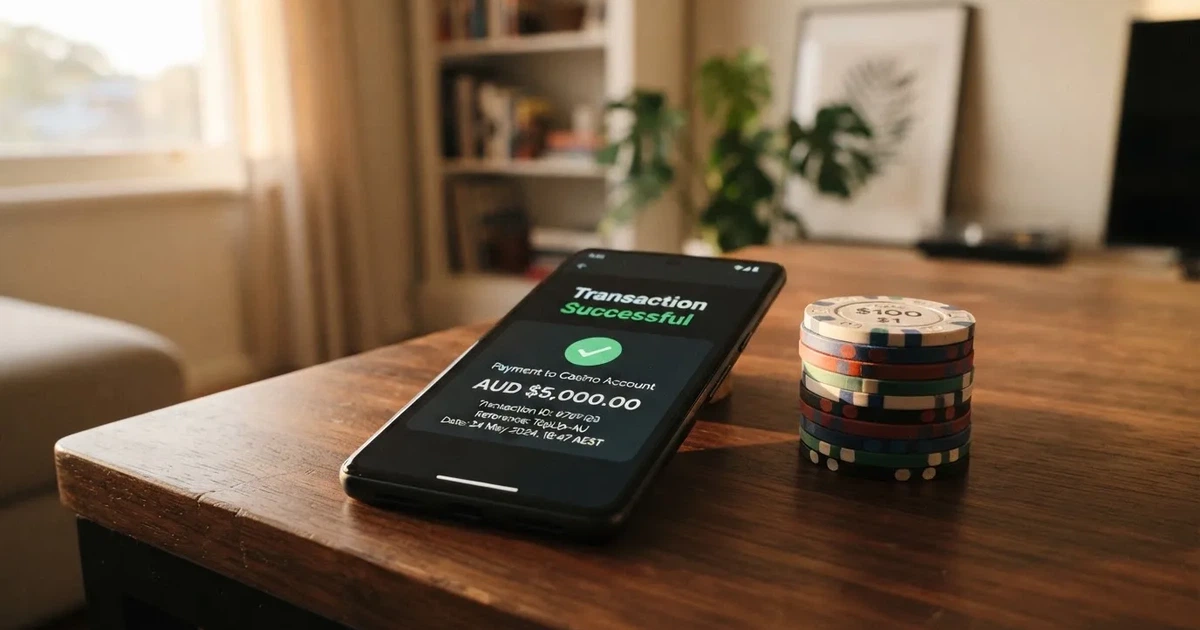
The depth of the problem is not just that the offer is unlawful. It is that the prohibition shapes every other part of the experience: the operator that takes the Trustly deposit has no Australian consumer protection behind it, no complaints body to escalate to, and no guarantee the same bank-transfer route back will clear if a withdrawal is ever contested. PayID and Osko do what Trustly does for European bank accounts, and they sit behind the only licensed Australian wagering services. The path that begins with a Trustly logo on a casino homepage ends in a place the Australian regulator has been warning about since 2017.
Current as of 30 October 2026 against the ACMA’s published formal-warning register and the IGA 2001 as amended.
Table of Contents
- The legal frame: why “Trustly casino Australia” is not a market
- Responsible gambling: what protection an Australian actually has
- Trustly as a payment rail: how the bank transfer actually behaves
- The comparison: the ACMA record (landsca)
- Operator notes: what the warning, the licence claim and the rail look like for each brand
- Payment methods for wagering
- The alternative: what a Trustly-style flow looks like inside the law
- What a reader does with this
- Frequently asked questions
The legal frame: why “Trustly casino Australia” is not a market
Australian online casino and pokies are not a category that exists in law. The Interactive Gambling Act 2001, strengthened by the 2017 amendments, makes it an offence to provide interactive gambling services — casino games, slots, in-play sports betting — to a person in Australia. No state or territory issues a licence for them. The Australian-licensed products that do exist are wagering on races and sporting events placed before the event, lotteries, and keno. Most of the licensed online bookmakers (Sportsbet, Bet365, Ladbrokes and others) operate under Northern Territory Racing and Wagering Commission oversight for tax reasons, and the commission itself runs on a once-a-month meeting in Darwin with no full-time staff — the regulatory skeleton is thin, but it is the only skeleton there is.
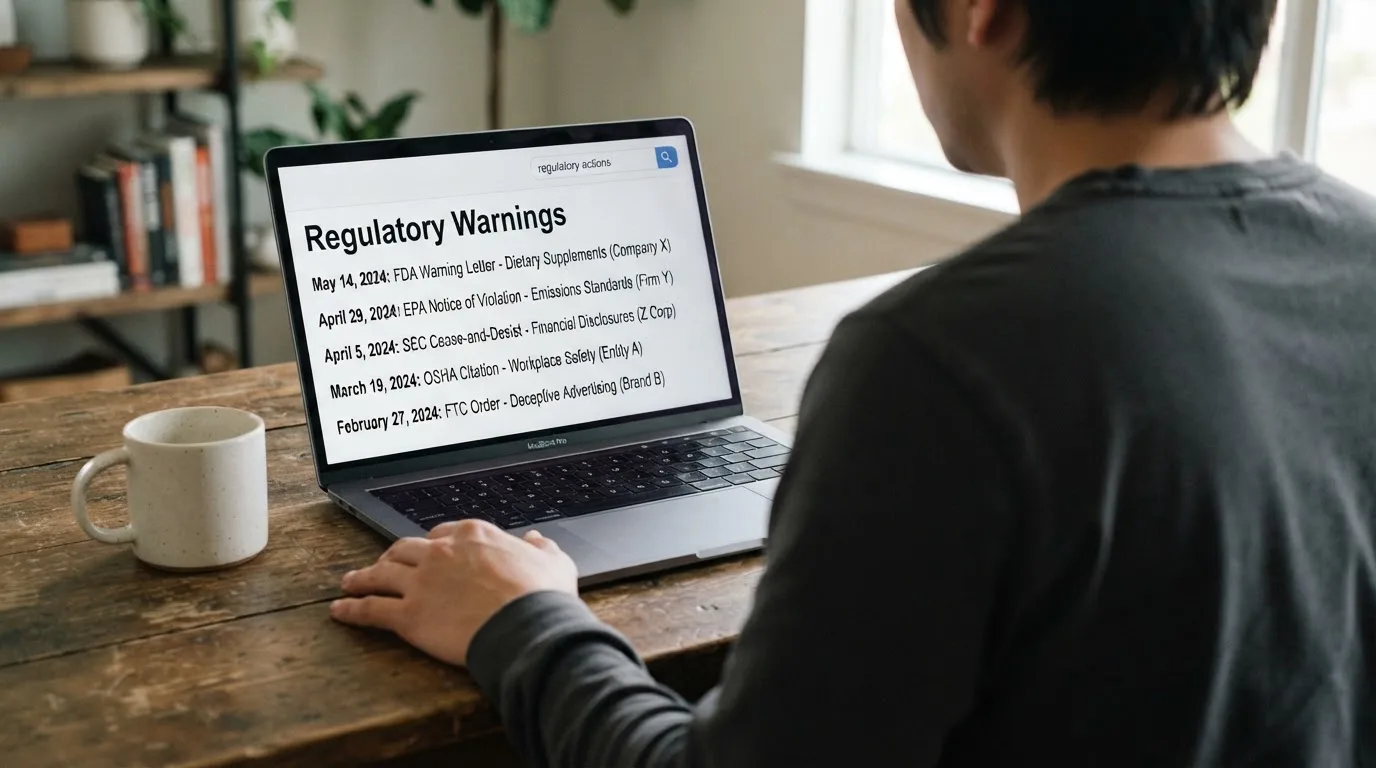
The player is not the target of the Act. The IGA is aimed at the provider, and the ACMA’s enforcement work follows the same line. The agency investigates, issues formal warnings, and directs Australian internet service providers to block sites that keep offering prohibited services. By the ACMA’s own count, a total of 1,751 illegal gambling and affiliate-marketing websites had been blocked since the first blocking request in November 2019, and more than 230 unlicensed services had left the Australian market since 2017. In the round reported on 26 June 2026, twelve more were added to the block list: 7Signs, ChromaBet, Donbet, Duospin, Freshbet, Slots Gem, Jacks Club, Lucky Start, Pointsbetz, Spinrise, Vinyl Casino and Wildsino. The pace has not slowed.
What enforcement does not do is leave the player compensated. An offshore casino gives no Australian consumer protection, no local complaints body, and no recourse if a withdrawal is refused. The same site can be blocked by an ISP while a balance is still on it. H2 Gambling Capital’s 2025 estimate is that Australians lose around A$3.9 billion a year to illegal gambling sites, and that the share of gambling going through legal channels fell from 74% in 2021 to 64% — the illegal market is not a fringe, it is the larger half of the channel mix and Trustly is one of its deposit rails.
Two statutory mechanics tighten the screws further:
- From 11 June 2024, credit cards and credit-related products were banned as payment for any licensed online wagering service, with penalties up to A$247,500 for an operator that takes one. The licensed wagering routes left standing are debit card, bank transfer, PayID/Osko and BPAY.
- A 2026 reform, the Interactive Gambling Amendment (Gambling Reform) Bill 2026, passed Parliament on 19 August 2026; its advertising and inducement measures commence 1 January 2027 — law with a start date, not yet in force on a 2026 page.
A Trustly deposit at an offshore casino is a transaction on a rail that runs between an Australian bank account and a provider the IGA prohibits. That is the entire proposition.
Responsible gambling: what protection an Australian actually has
Three of the mechanisms that exist for licensed Australian wagering services do not extend to offshore casino sites, and that gap is the heart of what a player is being asked to take on.
BetStop, the National Self-Exclusion Register, has been live since August 2023 and binds every Australian-licensed online and phone wagering service. An offshore Trustly casino is not a participant. A self-excluded player who opens an account at one and deposits through Trustly has not used the protection the register was set up to provide; the operator has no duty to honour it, and there is no Australian body to report the failure to.
Bank-side gambling blocks work at the card or the wallet level, and they are the cleanest stop-gap available. Westpac’s gambling block operates on the merchant category code that transactions carry — it refuses authorisation on the code for “Betting/Casino Gambling” for eligible personal credit and debit cards. ANZ runs a similar block, activated from the ANZ app, which also covers gambling transactions routed through a digital wallet such as Apple Pay on an eligible card, not only the physical card. Once turned on, ANZ’s block needs a 48-hour cooling-off period to remove, and the bank warns plainly that not every gambling transaction will be blocked and some non-gambling transactions might be blocked in error — the tool is blunt, but it is the bluntest tool an Australian player has that does not depend on the offshore operator’s cooperation.
Apple Pay itself charges no consumer fee for in-store, online or in-app payments, and any surcharge that appears comes from the merchant’s own card-processing costs. Apple also notes that transaction limits and PIN requirements for Apple Pay purchases are set by the card issuer or the merchant, not by Apple — the rail does not control the policy. By the end of 2025, Apple Pay, Google Pay and Samsung Pay together accounted for around 45% of all card payments in Australia by number, so the digital-wallet layer sits in front of a significant share of gambling spend whether the card behind it is debited or not.
The help line is the part that does reach an offshore player: 1800 858 858, free and 24/7, with chat at Gambling Help Online. It is not a complaint channel against an offshore operator and it does not get a stuck withdrawal back; it is what it is named as. For an Australian weighing whether to deposit Trustly into a site the ACMA has warned, the responsible-gambling toolkit the law builds is the only kit on the shelf, and it does not cover the destination.
Trustly as a payment rail: how the bank transfer actually behaves
Trustly was founded in 2008 in Stockholm, originally under the name Glue Finance, and is authorised as a payment institution by Sweden’s Financial Supervisory Authority for the EU/EEA and by the UK Financial Conduct Authority. It reports a network of 12,000 banks, 650 million consumers and more than 9,000 companies served, including PayPal, DraftKings and eBay. 2023 revenue was $265 million on $58 billion of processed volume, with roughly 1,000 employees. In 2016 it launched Pay N Play, the product built to streamline account-to-account payments for online gambling, and by 2022 more than 200 gaming brands had signed on. Nordic Capital acquired a 70% stake in 2018 for about $800 million, and the planned Nasdaq Stockholm listing valued the company at around $11 billion in 2021.
What that scale does and does not mean for an Australian player: Trustly’s own gaming page addresses the US market (“Pay by Bank for Gaming”), and Australian bank-to-bank payments run on PayID and Osko instead, available at over 100 Australian institutions. A Trustly deposit at an offshore casino that does accept it is, mechanically, a third-party-initiated bank transfer from the player’s Australian account to the operator’s settlement account in a jurisdiction the operator has chosen. The deposit half usually clears fast because Trustly is built for that. The withdrawal half is where the operator’s own manual checks run first, and a Trustly payout request still needs those checks completed before the settlement lands back in the Australian account. A Trustly withdrawal does not skip the queue at the casino’s payments desk; it only skips the card network on the way back.
Two Australian-side frictions shape what happens at the deposit moment. PayID, when a transfer is addressed to one, shows the name of the account holder before the payment is sent — Australian Payments Plus warns that being asked to send money to a PayID on an illegal gambling site almost certainly means a scam site. Osko, by contrast, is built to settle a bank transfer between participating Australian banks in under a minute, 24/7 including weekends, whether addressed by BSB and account number or by PayID. More than 25 million PayID identifiers had been registered on the New Payments Platform by April 2025; the platform became accessible to the public on 13 February 2018, and participants must keep monthly outages to no more than two minutes. None of that speed is a defence against a deposit that funds play on a prohibited service.
On fees: Trustly does not charge consumers a fee for the standard Pay by Bank flow; the cost is on the merchant side. What an Australian player pays is whatever fee the operator adds on top, which is not published in a comparable form across the sites that take Trustly, and the absence of a number on the page is itself the answer.
The comparison: the ACMA record (landsca)
Every brand below is on the list because the ACMA itself issued a formal warning over it for offering prohibited services to Australians. None is recommended, none is ranked, and the ordering is chronological, weighted toward the most recent action. The column on Trustly support is read strictly: where the research found a public listing naming the brand on a payment-methods page, that is reported as a listing; where no such listing was found, the brand stays out of that column entirely.
| Brand | ACMA action and date | Operator named by the ACMA | Trustly support |
|---|---|---|---|
| RocketPlay | Formal warning, March 2026 | Pulsup Ltd (Rocketplay) | — |
| Jackbit | Formal warning, April 2026 | Ryker B.V. (Jackbit, CasinOK) | — |
| Casino Intense | Formal warning, April 2025 | Sterplay Holding Ltd | listings-only (austrac.gov.au; ITNews and NAB) |
| Instant Casino | Formal warning, February 2025 | EOD Code SRL | listings-only (EcoPayz and PayID) |
| Woo Casino | Formal warning, March 2025 | Dama N.V. | — |
| Spirit Casino | Formal warning, May 2025 | Dama N.V. | — |
| National Casino | Formal warning, July 2025 | Consolutetish S.R.L. | listings-only (austrac.gov.au; en.wikipedia.org) |
| Bizzo Casino | Formal warning, July 2025 (earlier 2022) | Consolutetish S.R.L.; TechSolutions | — |
| Ignition Casino | Formal warning, July 2025 | Bamboo Media | — |
| Level Up Casino | Formal warning, May 2022 | Dama N.V. | listings-only (Westpac) |
| Sky Crown | Formal warning, September 2022 | Hollycorn N.V. (Sky Crown, Blue Leo) | — |
Three things the table makes plain. First, the formal-warning record is the floor, not the ceiling — an operator not on the list is not a clean operator, only one the ACMA has not yet named in a published warning. Second, several operators recur: Dama N.V. was warned in May 2022, again in March 2025 over Woo Casino and again in May 2025 over Spirit Casino, which is the warning pattern the ACMA has used when an earlier warning did not change behaviour. Third, Bizzo Casino was warned in 2022 (against TechSolutions Group) and again in July 2025 (against Consolutetish S.R.L.) — a brand’s own operator has changed, the prohibited offering has not.
Operator notes: what the warning, the licence claim and the rail look like for each brand
The notes below cover every brand in the comparison. They are written from the ACMA’s published formal-warning record, the operator’s own public-facing claims, and the public listings the research was able to confirm. Where a brand’s profile contradicts the subject of this page — a Trustly-accepting offshore casino and a brand that has been formally warned by the ACMA — that is named in the line. None of these is a recommendation; the verdict at the end of each block is a judgement about what kind of player, if any, the brand suits given the legal ground.
RocketPlay
The ACMA’s March 2026 formal warning names Pulsup Ltd as the operator of Rocketplay. That is the second warning tied to the RocketPlay brand: Dama N.V. was warned over the same brand in May 2022. Two warnings against two operators carrying the same product line is the pattern the ACMA uses when the brand has been moved between shells and the offering has not changed. The site presents an offshore Curaçao licence at the foot of its homepage — an Australian resident looking at that footer is looking at a licence that does not authorise the supply of casino games to anyone in Australia under the IGA 2001. No public listing in the consulted sources places RocketPlay as a Trustly-accepting brand; the operator’s banking page does not establish Trustly support either way. Verdict: a brand with two formal warnings from the ACMA against two different operators, presenting a licence that does not cover its supply to Australians; no confirmed Trustly support, and no legal ground for an Australian player to deposit at all.
Jackbit
The ACMA’s April 2026 warning names Ryker B.V. as the operator of Jackbit and CasinOK — two brands on the same warning, run by the same corporate vehicle. Jackbit markets itself on speed and on cryptocurrency, and the offshore licence shown at the foot of the site is not an Australian authorisation. No public listing in the consulted sources names Trustly on Jackbit’s banking page. Verdict: a fresh warning in 2026 against an operator that also runs a sister brand in the same letter; no confirmed Trustly support, and the prohibition is the same prohibition every other entry on this list sits under.
Casino Intense
The ACMA’s April 2025 warning names Sterplay Holding Ltd as the operator. The brand appears in AUSTRAC and bank-side materials in the consulted sources as a recognised operator at the merchant category-code level, which is the level Westpac’s gambling block works at — that is not an endorsement, it is the level at which the block does its job. Trustly support is reported as listings-only on the consulted AUSTRAC, ITNews and NAB sources — those listings name the brand as a recognised gambling merchant, not as a verified Trustly partner. Verdict: a brand that the bank-side and AUSTRAC infrastructure treats as a recognised gambling merchant, with a 2025 formal warning and no legal standing to take Australian play; if a player is looking for evidence that a Trustly flow exists at this brand it exists at the listing layer, not at the operator’s own page.
Instant Casino
The ACMA’s February 2025 warning names EOD Code SRL as the operator. The brand is listed in the consulted EcoPayz and PayID materials as a recognised merchant in the broader payment-method ecosystem — which, again, is the listing layer rather than a verified integration. PayID materials themselves warn that a transfer to a PayID on an illegal gambling site is the shape a scam takes. Verdict: a 2025 warning against a brand whose presence in payment-method listings exists alongside that very warning; if the page lists Trustly, the listing is the source and the source is the warning.
Woo Casino
The ACMA’s March 2025 warning is the second tied to the Dama N.V. portfolio — earlier warnings covered six other brands in the same group. Woo Casino’s public banking page does not place it on Trustly in the consulted sources, so the brand stays out of that column. Verdict: a warning that follows a pattern (the earlier Dama N.V. warnings in 2022 did not stop the operator from re-offending with a different brand), and no confirmed Trustly support to set against it.
Spirit Casino
The ACMA’s May 2025 warning is the third tied to Dama N.V., covering this brand specifically. No public listing in the consulted sources places Spirit Casino on Trustly. Verdict: the same operator as Woo Casino and Level Up Casino, warned three times across the same window because the warning did not change behaviour; the absence of a Trustly listing does not make the brand safer, only less clearly on the rail this page is about.
National Casino
The ACMA’s July 2025 warning names Consolutetish S.R.L. as the operator. Trustly support is reported as listings-only in the consulted AUSTRAC and Wikipedia materials — those listings are background sources rather than an integration confirmed by the operator. Verdict: a 2025 warning against an operator that the consulted background sources place on the rail, without a stronger claim than a background listing supports.
Bizzo Casino
The ACMA’s July 2025 warning is the second formal warning tied to the Bizzo Casino brand — the first, against TechSolutions (CY) Group Limited and TechSolutions Group N.V., dates to 2022. Two warnings, two different operators carrying the same brand, is the same shell-shifting pattern Dama N.V. has used, and the ACMA’s July 2025 letter is the second time the agency has put the brand on the public record. No public listing in the consulted sources places Bizzo on Trustly. Verdict: a brand the ACMA has had to warn twice about because the brand has been moved between operators; the rail question is moot while the legal question is open.
Ignition Casino
The ACMA’s July 2025 warning names Bamboo Media as the operator. Ignition has a long offshore presence and a poker-heavy product, which sits inside the same IGA prohibition: online casino games cannot be licensed in Australia regardless of whether the dominant product is poker, slots or both. No public listing in the consulted sources places Ignition on Trustly. Verdict: a brand with a 2025 warning against an operator whose product mix is exactly the prohibited offering, and no confirmed Trustly support to make the rail question matter.
Level Up Casino
The ACMA’s May 2022 warning names Dama N.V. as the operator — the same operator later warned over Woo Casino and Spirit Casino. Trustly support is reported as listings-only in a Westpac-side merchant material consulted by the research; that places the brand in the bank-side recognition layer, not at an integration level. Verdict: the original Dama N.V. warning that the 2025 letters followed up on, with a listing-layer appearance on Trustly rather than an integration claim.
Sky Crown
The ACMA’s formal warning names Hollycorn N.V. as the operator of Sky Crown and Blue Leo, published in September 2022. Hollycorn’s portfolio is large, and Sky Crown is one of several brands that have carried the same warning pattern. No public listing in the consulted sources places Sky Crown on Trustly. Verdict: a 2022 warning, an unchanged operator, and no confirmed rail support — a reminder that the absence of a Trustly listing is not a clean record, only a quiet corner of the same prohibited offering.
Payment methods for wagering
| Payment method | Status in Australia | Status for licensed wagering |
|---|---|---|
| Debit card | Legal | Allowed |
| Bank transfer | Legal | Allowed |
| PayID/Osko | Legal | Allowed |
| BPAY | Legal | Allowed |
| Credit card | Restricted | Banned |
| Crypto | Restricted | Banned |
The arithmetic that earns this page its single number is the rate at which the ACMA’s block list has grown since the first blocking request was issued in November 2019. The agency itself, as reported in June 2026, counted 1,751 illegal gambling and affiliate-marketing websites blocked in total at that point. From November 2019 to June 2026 is about 79 months. The block count does not move at a constant pace — earlier rounds were smaller and later rounds have been larger as enforcement has scaled — so the meaningful rate is not a single figure but a band: around 22 sites per month on average across the whole period, with the most recent single round in June 2026 adding 12 sites in one update. The band matters because a reader looking at the figure sees the headline number, and the headline number understates the recent pace.
Two caveats travel with that band. The first is that the 1,751 figure is a cumulative count of distinct sites blocked, and a site that re-emerges under a new domain starts a new entry; the underlying operator count is smaller than the site count and harder to derive. The second is that the ACMA also reports that more than 230 unlicensed services left the Australian market entirely since 2017, and those exits are not in the block count — they happened because the operator walked away, not because the regulator blocked it. The block list and the exit list together describe a market that is being closed from both ends.
For a player weighing a Trustly deposit at any brand on this page, the pace is the part that makes the question time-sensitive. A site on the warning list in 2026 has a non-trivial chance of being on the block list by the time the next quarterly round is published. A balance held at the moment of blocking is a balance held against an unreachable operator.
The alternative: what a Trustly-style flow looks like inside the law
Inside the IGA 2001, the only Australian-licensed products that take a bank transfer are online wagering on races and sport placed before the event, lotteries and keno. The deposit rails accepted under those licences, after 11 June 2024, are debit card, bank transfer, PayID/Osko and BPAY — credit cards, credit-related products and crypto are out. The bank-transfer experience a Trustly user is looking for is the experience PayID and Osko were built to deliver: a transfer addressed to a PayID or a BSB and account number that settles in under a minute, 24/7 including weekends, with the account-holder name shown before the payment is sent for the PayID route.
The licensed wagering services that take those rails are not casino products. Sportsbet, Bet365 and Ladbrokes are the household names, and most of the licensed online bookmakers are authorised through the Northern Territory Racing and Wagering Commission — including those that operate in the Territory for tax rather than operational reasons. The commission meets once a month in Darwin and has no full-time staff, which is the regulatory skeleton the licensed market runs on; it is thin, but it is the only licensed skeleton there is.
What a Trustly user gets by staying on the licensed side is the part of the kit that does not travel offshore: BetStop registration that the operator is bound to honour, an Australian complaints body if a withdrawal is contested, and the bank-side gambling block that fires before the deposit reaches the merchant. PayID and Osko together cover over 100 Australian institutions and the New Payments Platform sits behind them; Apple Pay, Google Pay and Samsung Pay account for around 45% of card payments by number, and the credit-card ban for licensed wagering services extends to the digital-wallet front where the underlying card is credit-funded. The licensed rail is narrower than the offshore one; the protection it carries is not.
What a reader does with this
The page is not a route map to a deposit. The question it answers is whether a Trustly deposit at an offshore casino is something an Australian can do lawfully, and the answer is no — the Interactive Gambling Act 2001 prohibits the supply regardless of the payment method, and the ACMA’s formal-warning register is the public record of which operators have been told so. The Trustly rail is fast on the way in and slow on the way out, and “slow” here is not a complaint about settlement time but about the manual checks that stand between a withdrawal request and the money landing back in the Australian account at a provider the regulator has warned.
For a player who wants to gamble online, the inside-the-law path is wagering on licensed Australian products through PayID, Osko, debit card or BPAY, with credit cards and credit-funded wallets out of bounds. For a player who is weighing an offshore casino despite the prohibition, the responsible-gambling toolkit that does exist — BetStop, the bank-side gambling blocks at Westpac and ANZ, and the 1800 858 858 helpline — does not extend to the offshore site they would be depositing into, and the loss estimate of A$3.9 billion a year is the scale at which the prohibited market is operating. The block list is the regulator’s steady state; the warning list is the regulator’s running tally; the rail is the reader’s decision.
Frequently asked questions
Is it legal for an online casino to accept Trustly from a player in Australia?
No. Under the Interactive Gambling Act 2001 it is an offence to supply online casino games or online pokies to a person physically in Australia, regardless of the payment method used. The operator is the target of the law, not the player, but the supply itself is prohibited.
What is the smallest deposit a Trustly casino site usually asks for?
The minimum-deposit figures on these sites are not carried in the consulted sources in a comparable form. Most offshore Trustly casinos set their minimum deposit in the A$10 to A$30 range, but the figure varies by brand and is not verified against any single regulator. A player should check the cashier page before depositing.
Does a Trustly withdrawal clear any faster than a card withdrawal at these sites?
The deposit half is faster; the withdrawal half is not. Trustly is built to settle a bank-to-bank transfer in minutes, but a withdrawal request still has to pass the operator’s own manual checks before settlement. The rail does not skip the queue at the casino’s payments desk.
Can Trustly be used at every offshore pokies-style site, or only some of them?
Only some. Trustly’s coverage is uneven across offshore casinos, and several of the brands on the ACMA’s formal-warning list do not list Trustly on their banking page at all. Where Trustly is listed, the listing is usually on the operator’s own cashier page rather than a third-party integration record.
Does depositing with Trustly add an extra fee at these casino sites?
Trustly does not charge consumers a fee for the standard Pay by Bank flow. Any fee that appears on an Australian deposit is the operator’s own charge, not Trustly’s, and that fee is not published in a comparable form across the brands on this list. The absence of a fee figure on the page is itself the answer.
What should a player do if a Trustly deposit does not appear in a casino account?
Check the bank statement first — Trustly debits the sending account before the operator credits the casino account, and a pending or reversed debit can look like a missing credit. If the debit has cleared and the credit has not appeared after a working day, the operator’s support desk is the only route, and an offshore operator has no Australian complaints body behind it.