
Live roulette with English-speaking dealers in Australia: how the wheels and the rules interact for the player
A live dealer roulette table is not a software product. A real wheel turns, a real person reads the bets, and a camera carries the result to your screen in the same second the ball settles into a pocket. That is the appeal and the reason pages like this exist. It is also the reason an Australian reader looking for one has to think about more than the camera angle, the stake size and whether the dealer speaks English clearly enough to follow the round.
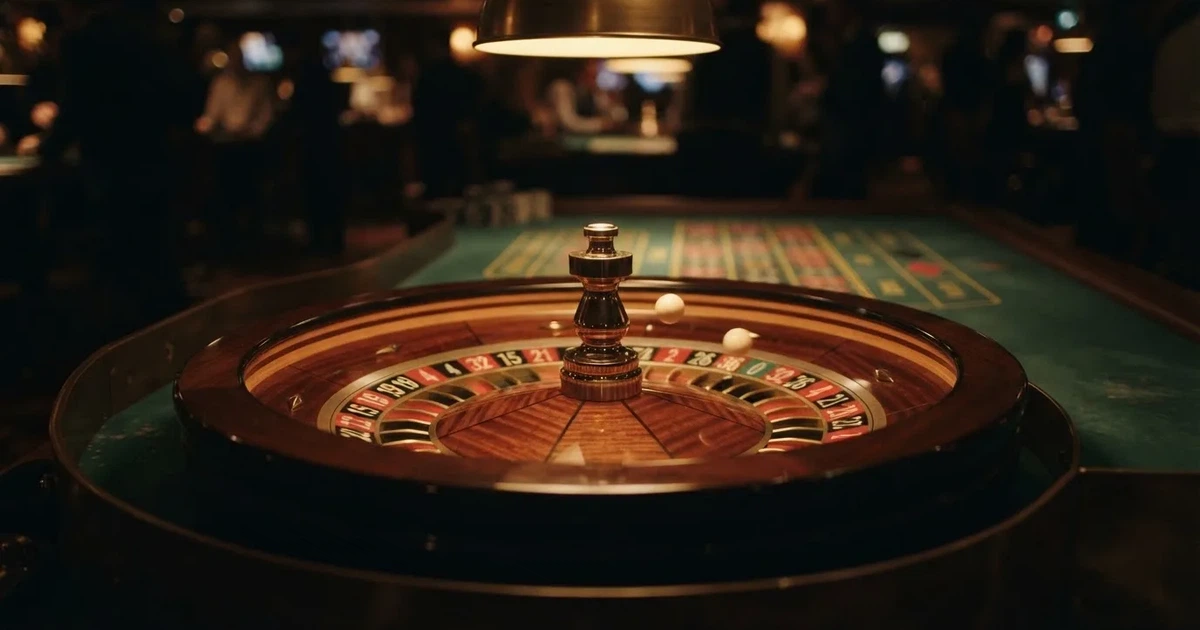
This page works through what the market actually offers, how the wheels differ, what it costs the player, and where Australian law stands on the entire arrangement. The same prohibition that blocks a software roulette spin blocks a live dealer spin streamed into Australia — the dealer speaking English is a feature of the studio, not a licence. The shape of the offer and the rules around it sit in different places in the reader’s mind and that is why both are here.
As of 29 October 2026, the ACMA register and its published list of formal warnings were the reference for every operator line on this page.
Table of Contents
- What an Australian player can actually do at a live roulette table
- The wheels themselves: single-zero, double-zero, and what the dealer reads
- Bitcoin and crypto deposits on a live roulette table
- PayID and the practical shape of a live roulette payout
- Where the ACMA has acted: the brands this page lists
- Reading the actual table: what a live dealer round looks like
- What it costs the player: the calculation behind the bonus
- Responsible play on a spinning wheel
- Side bets, side games, and what the dealer does not announce
- Australian-licensed alternatives that are not casino games
- Where the market is going: the 2027 reform
- Comparing the ACMA’s enforcement record
- The arithmetic the ACMA’s blocking pace shows
- Frequently asked questions
What an Australian player can actually do at a live roulette table
Before the wheel types and the studio brands, the legal frame decides everything else. The Interactive Gambling Act 2001 (IGA), tightened by the Interactive Gambling Amendment Act 2017, makes it an offence to provide online casino games to a person physically in Australia. A live dealer roulette table streamed to a Canberra apartment is the same prohibited service as a slot machine in the same browser tab. No state or territory licences either. The Department of Infrastructure, Transport, Regional Development, Communications and the Arts has been consistent on that reading for years, and the ACMA enforces it.

What is licensable in Australia is wagering on races and sport placed before the event, plus lotteries and keno. The Northern Territory Racing and Wagering Commission is the regulator behind most of it: it oversees 52 online bookmakers, including Sportsbet, Bet365 and Ladbrokes, and the commission itself has no full-time staff and meets once a month in Darwin. A roulette table is not in that frame, live dealer or otherwise.
Enforcement runs through the ACMA. It investigates, it issues formal warnings under the Interactive Gambling Act 2001, and it directs Australian internet service providers to block sites. A site that has been warned once and continues to take Australian play can be blocked with money still on it. The individual player is not prosecuted — the IGA targets the provider, not the punter — but an offshore operator gives no Australian consumer protection, no local complaints body, and no Australian recourse if a withdrawal is refused. The consumer protection on a blocked site is essentially zero.
Player protection that does exist, in the form of BetStop (the National Self-Exclusion Register), binds only Australian-licensed online and phone wagering services — it went live in August 2023, but it does not connect to an offshore casino. A player who has registered with BetStop and then opens an offshore live roulette table has self-excluded from licensed Australian wagering and not from the offshore casino, which is the one they actually opened. The National Gambling Helpline on 1800 858 858 is free, runs 24/7 and offers chat at Gambling Help Online for anyone who wants support outside the formal exclusion system.
Payments add a second hard line. Credit cards, credit-related products and digital currency have been banned as a way to fund licensed online wagering since 11 June 2024, with penalties of up to A$247,500 for operators that take them. Legal deposit routes for licensed wagering are debit card, bank transfer, PayID/Osko and BPAY. A site asking an Australian player for a credit card or a crypto deposit is not on the licensed side of that line.
The Interactive Gambling Amendment (Gambling Reform) Bill 2026 passed Parliament on 19 August 2026, with its advertising and inducement measures commencing on 1 January 2027. Law with a start date, not yet in force, so the inducement landscape on a 2026 page is still the pre-amendment one. The rules around what can be shown to an Australian and how it can be marketed will tighten from 1 January 2027, but the underlying prohibition on providing online casino games is not new — it predates the reform bill by nearly two decades.
The financial side has one straightforward rule and one that catches people out. Recreational gambling winnings are not assessable income under section 6-5 of the ITAA 1997, and losses are not deductible, unless the person is carrying on a business of gambling. The “check with the ATO” caveat applies — the ATO is the only authority that can read a specific situation, but the recreational baseline is fixed.
The wheels themselves: single-zero, double-zero, and what the dealer reads
A live dealer roulette table spins one of three wheel formats, and the difference between them is not cosmetic. The dealer does the same job on each, but the numbers on the wheel change what every straight-up bet pays.
The single-zero wheel, sometimes called European roulette, has 37 pockets: a single 0 plus the numbers 1 to 36. The house edge sits at 2.70%. The double-zero wheel, called American roulette, has 38 pockets: 0, 00, and 1 to 36. The extra zero lifts the house edge to 5.26%. A third format, the triple-zero wheel, runs 39 pockets (0, 00, 000 plus 1 to 36) and pushes the house edge up to 7.69%.
The arithmetic behind those figures is simple: every straight-up bet pays 35 to 1, and the missing number or numbers are how the house collects its edge. With one zero, the house collects on 1 of 37 outcomes per spin. With two zeros, on 2 of 38. With three zeros, on 3 of 39. Each zero is a slice the house keeps on every spin regardless of where the player put their chips.
For the player, this is the part of the table to read before the dealer clears the bets. A double-zero wheel pays the same 35 to 1 on a straight-up number but does it 5.26% of the time on average in the house’s favour. A single-zero wheel does it 2.70% in the house’s favour. Over thousands of spins, that gap is the difference between losing A$2.70 and losing A$5.26 for every A$100 staked. For a player who wants to stretch a bankroll on a session, the single-zero wheel is the cheaper wheel to sit at, and many studios run both.
Some European tables add an “en prison” or “la partage” rule on the even-money outside bets (red, black, odd, even, high, low). Under en prison, an even-money bet that loses to a single zero is held on the table for one more spin; if it wins on the second spin, the stake returns. Under la partage, the stake is half returned on the spot. Either rule cuts the effective house edge on those particular bets below the 2.70% baseline. The dealer announces the rule on opening and the table cloth usually carries the label — “la partage” or “en prison” written across the layout. Players who want the lowest edge available in the studio should look for it.
The history of the wheel is a footnote worth knowing. Roulette likely developed from an Italian game called Biribi. Blaise Pascal may have built a primitive form in the 17th century during his work on perpetual motion. The modern game emerged in 18th-century France, with documented play in Paris from 1796. The double-zero wheel is an American invention from the 19th century. The triple-zero wheel is a 21st-century invention, largely seen in some North American venues — Australian live dealer tables are almost universally single-zero or double-zero, and the triple-zero layout is rare outside the United States.
A session at a single-zero wheel with la partage, with even-money outside bets only, runs at roughly half the house edge of a double-zero wheel on inside bets. That gap matters at the table the same way it matters in every other casino game — the dealer reads the bets and the chips move, but the wheel has already decided what the player pays for the privilege of sitting there.
Bitcoin and crypto deposits on a live roulette table
A bitcoin-funded live roulette table spins the same physical wheel as a card-funded one. The studio puts a dealer at the same wheel, the camera angle is the same, the payouts pay the same, and the house edge on the wheel itself is unchanged. What changes is the route the deposit and the withdrawal take.
Crypto deposits move through the bitcoin, ethereum, tether or similar networks rather than through a card processor. The table does not know or care which route funded the balance. A straight-up bet on number 17 pays 35 to 1 on either deposit method. A withdrawal request goes back along the same route the deposit came in on, in most cases, after the casino runs the same review process any other withdrawal goes through.
That last clause is the part a player underestimates. Crypto deposits are often presented as instant and anonymous. The deposit itself usually is — bitcoin settled on the base layer is hard to reverse and does not require a name to send. The withdrawal is a different process. A casino that holds a balance in fiat and pays out in crypto still runs the same review (identity checks, anti-money-laundering flags, source-of-funds questions) it runs on a card withdrawal. The review time on the operator’s side is not changed by the deposit method. A player who put A$200 in via bitcoin and asked for the balance back an hour later will still wait on the operator’s payout process, and the operator’s payout process is not always faster for crypto than for card.
The legal frame in Australia makes the question simpler. Digital currency is a banned payment method for licensed online wagering as of 11 June 2024. A licensed Australian bookmaker cannot take bitcoin. An offshore casino can. The offshore casino is not licensed in Australia. A live dealer roulette table asking an Australian for bitcoin is an offshore casino outside the Australian rules.
The implication for a player who wants a crypto-funded live roulette session is that the table is operating outside the Australian consumer protection regime regardless of the deposit method. The crypto adds anonymity on the way in, not on the way out. The withdrawal still has to clear the operator’s review, and the operator’s review is the same review a card withdrawal runs through. A player who treats crypto as a way around withdrawal friction is treating the wrong stage of the process — the friction is on the operator’s side, not on the payment rail’s side.
PayID and the practical shape of a live roulette payout
PayID/Osko is the Australian instant bank transfer system, built on the New Payments Platform. It moves money between bank accounts in seconds using a phone number, email address or ABN as the identifier instead of a BSB and account number. For a licensed Australian wagering service, PayID is one of the legal deposit routes — the others being debit card, bank transfer and BPAY. For a credit card, that route is closed.
For a live roulette payout, the payment rail is the easy part. The hard part is the operator’s review process. A live roulette payout, whether requested via PayID or any other method, waits on the same review as any other casino withdrawal. The casino runs identity checks on first withdrawal, anti-money-laundering flags on any withdrawal that looks unusual, and source-of-funds questions on any withdrawal that crosses a threshold the operator has set internally. The PayID leg of the transfer moves in seconds once it is released. The wait before that leg is the review, and the review is set by the operator, not by the payment system.
A player who has already verified identity at deposit and has no unusual activity on the account will see a PayID payout faster than a player who has not. The fastest realistic path is: verify identity at deposit, make one withdrawal under the operator’s threshold, request PayID as the route, see the money in seconds once the operator releases it. A player who waits until withdrawal to verify, who deposits and withdraws through different routes, or who hits a threshold that triggers a source-of-funds review will see that PayID leg of the transfer sit in the operator’s queue for as long as the review takes — and the review time is set by the operator.
On a no-deposit bonus specifically, the practical shape of a live roulette payout is the same — except the bonus terms usually cap the maximum cashout from the bonus money at a multiple of the bonus, or at a fixed ceiling. A live roulette spin funded by a no-deposit bonus pays the same as a spin funded by a cash deposit; the difference is what the player can take out at the end. The bonus payout ceiling is what stops the no-deposit offer from being a free ride at the table, and it is the one number on the offer that is worth more than the headline bonus amount.
The Australian licensed wagering services running PayID are bookmakers, not casinos. A live roulette payout from a PayID-accepting Australian-licensed entity is a contradiction in terms — there is no such entity. The PayID rail works on the licensed wagering side; on the live roulette side, it is an offshore operator, and the offshore operator is not on the Australian licensed rails at all.
Where the ACMA has acted: the brands this page lists
Eleven brands appear on this page, listed because the ACMA itself issued a formal warning over each for offering prohibited services to Australians. This is not a ranking and not a recommendation. Each brand is a data point in the ACMA’s enforcement record, and the ACMA’s enforcement record is the reference for what the regulator has acted on.
As of the ACMA’s June 2026 blocking round, a total of 1,751 illegal gambling and affiliate marketing websites had been blocked since the first blocking request in November 2019. More than 230 unlicensed gambling services had left the Australian market since enforcement was strengthened in 2017. The June 2026 round added 12 more sites to the blocking list: 7Signs, ChromaBet, Donbet, Duospin, Freshbet, Slots Gem, Jacks Club, Lucky Start, an unnamed betting service, Spinrise, Vinyl Casino and Wildsino.
H2 Gambling Capital’s 2025 report estimates Australians lose about A$3.9 billion a year to illegal gambling sites, and that the share of gambling going through legal channels fell from 74% in 2021 to 64%. That gap is the size of the market the ACMA’s enforcement is reaching into, and it is the size of the market a player sits inside when they open a live dealer table streamed from outside Australia.
The brands the ACMA has warned
The table below lists each brand covered in this guide, the operator the ACMA named in its formal warning, and the date of the warning as published. Every brand on this list is an offshore operator offering prohibited online casino services to Australian residents.
| Brand | ACMA action and date | Operator named by the ACMA | Provider reach in Australia |
|---|---|---|---|
| RocketPlay | Formal warning, March 2026 (earlier Dama N.V. warning, May 2022) | Pulsup Ltd | — |
| Level Up Casino | Formal warning, May 2022 | Dama N.V. | BGaming listings |
| Woo Casino | Formal warning, March 2025 | Dama N.V. | — |
| Spirit Casino | Formal warning, May 2025 | Dama N.V. | — |
| National Casino | Formal warning, July 2025 | Consolutetish S.R.L. | Wikipedia listings |
| Bizzo Casino | Formal warning, July 2025 (earlier TechSolutions warning, 2022) | Consolutetish S.R.L. | — |
| Ignition Casino | Formal warning, July 2025 | Bamboo Media | — |
| Instant Casino | Formal warning, February 2025 | EOD Code SRL | — |
| Jackbit | Formal warning, April 2026 | Ryker B.V. | — |
| Casino Intense | Formal warning, April 2025 | Sterplay Holding Ltd | ABC, ACMA, Crown Melbourne listings |
| Sky Crown | Formal warning, September 2022 | Hollycorn N.V. | — |
RocketPlay is the brand most recently warned — the ACMA acted in March 2026 and named Pulsup Ltd as the operator. The site had already been the subject of a May 2022 warning when it sat under Dama N.V., which means the ACMA has come back to the same brand twice under different parent operators. For a reader comparing operators on recency, RocketPlay is the freshest ACMA entry on the list.
Level Up Casino is one of the older entries — the ACMA warning dates from May 2022 and named Dama N.V. as the operator. Level Up’s provider footprint in Australia is recorded by BGaming listings rather than by the operator’s own claims, which is the way a reader should expect this market to look.
Woo Casino and Spirit Casino are both Dama N.V. brands, warned separately in March 2025 and May 2025 respectively. The ACMA has been willing to come back to the same operator under different brand names, which is the pattern a reader should expect from a Dama N.V. brand.
National Casino and Bizzo Casino are both Consolutetish S.R.L. brands, warned in the same July 2025 round. Bizzo had an earlier 2022 warning under TechSolutions, which means the ACMA has also come back to a brand under a different operator’s name. National Casino’s Australian footprint is recorded in Wikipedia listings; Bizzo’s is not in the listings the data sources cover.
Ignition Casino, Instant Casino, Jackbit, Casino Intense and Sky Crown round out the list. Ignition sits under Bamboo Media; Instant under EOD Code SRL; Jackbit under Ryker B.V.; Casino Intense under Sterplay Holding Ltd; Sky Crown under Hollycorn N.V. Casino Intense carries the most Australian press footprint of the eleven — ABC reporting, the ACMA’s own publications, and Crown Melbourne’s coverage all reference it.
The pattern across the eleven is what the table shows: the ACMA acts on the operator rather than the brand, and operators rebrand or transfer their brands to new operators. A reader looking at a live roulette table on any of these eleven sites is reading a brand the ACMA has already named in a formal warning. The latest warning, by date, is the strongest signal of current Australian exposure.
The two warnings that mattered twice
Two ACMA actions on this list are worth singling out because the regulator came back to the same brand twice.
The first is RocketPlay. The ACMA warned Dama N.V. in May 2022 covering six casino brands — Bambet, Dazard, Level Up, Rocketplay, Wild Tornado and Cobra Casinos. Rocketplay moved to Pulsup Ltd between 2022 and 2026 and the ACMA came back to it in March 2026 with a fresh warning. Same brand name, different operator name, two ACMA actions.
The second is Bizzo Casino. TechSolutions (CY) Group Limited and TechSolutions Group N.V. were the subjects of a 2022 formal warning over Bizzo Casino. By July 2025 the brand sat under Consolutetish S.R.L. and the ACMA came back with another formal warning. Same brand name, different operator name, two ACMA actions.
The practical reading for a player is that a brand moving to a new operator is not a clean slate. The ACMA’s enforcement history follows the brand as well as the operator, and the player sits at a table that has been warned at least once under its current operator and, in two cases, more than once across its lifetime.
Reading the actual table: what a live dealer round looks like
A live dealer roulette session has a rhythm that runs regardless of the wheel type or the deposit method. The dealer clears the bets, calls “no more bets”, spins the wheel, calls the result, settles the bets and starts the next round. The studio broadcasts it on a continuous loop and the player chips in from a betting grid overlaid on the video.
The pace is roughly one round every 45 to 60 seconds at a busy table, slower at quiet tables where the dealer waits for late bets. A player who wants to put a flat A$5 stake on every spin and watch the table for two hours will see around 120 to 160 spins. At a single-zero wheel with a 2.70% house edge, expected loss on A$5 per spin for 140 spins sits around A$18.90. At a double-zero wheel with a 5.26% house edge, the same pattern expected-losses around A$36.82. Both are statistical averages, not what any individual session will lose; the variance on roulette is high enough that any given session can sit well above or well below its expected loss.
The English-speaking-dealer angle is worth thinking about separately from the wheel. A studio that hires English-speaking dealers and announces them on the camera is selling clarity at the table, not a different game. The bets settle the same way regardless of the dealer’s language. What changes is what the player hears — the call of the result, the announcement of “no more bets”, the resolution of disputes about where a chip sat. A player who has not played roulette before and wants to follow each round in real time is the audience for an English-speaking dealer; an experienced player who reads the layout can play the same table without caring what the dealer says.
Some studios run tables with dealers from specific countries, others run multi-language tables where the dealer switches between English and another language depending on the bettor mix. The English-language angle is not always advertised at the table itself; it is sometimes a filter at the lobby level, where the player picks a table by language. A reader looking for English-speaking dealers in a specific market is reading for a filter and a feature, not for a different wheel.
The wrong-way to read a live dealer table is to read it as if it were a slot machine. Slots are software; roulette at a live dealer table is a physical wheel. The house edge on the wheel is fixed by the layout and cannot be loosened or tightened by the casino during play. The casino can change the payouts on offer (some promotional tables offer a “la partage” rule to attract players), but the wheel itself is what determines the house edge on a straight-up bet. A player who treats the table as a software product will misread the variance, the payouts, and what the dealer can and cannot change about the round.
What it costs the player: the calculation behind the bonus
The live roulette offers that exist offshore come with bonuses the player can opt into or skip. The bonuses carry wagering requirements — a multiple of the bonus amount that has to be turned over before the bonus money converts to withdrawable cash. The arithmetic behind the requirement is straightforward and worth doing before the player claims the bonus.
Assume a bonus of A$100 with a wagering requirement of 40 times the bonus amount. Required turnover is A$100 × 40 = A$4,000. At a flat A$5 stake per spin, the player needs 800 spins to clear the bonus. A live dealer round runs roughly 50 seconds end to end, which puts the time to clear the bonus at 800 × 50 seconds ÷ 3600 = around 11.1 hours of play. At a single-zero wheel with a 2.70% house edge, expected loss on A$4,000 of turnover is A$4,000 × 0.0270 = A$108. At a double-zero wheel with a 5.26% house edge, the same turnover expected-losses A$4,000 × 0.0526 = A$210.40.
The expected loss is a statistical average over the wagering period, not a guaranteed outcome for the session — the player can come in below it or above it. What the arithmetic makes plain is that the bonus’s real cost is the expected loss during wagering, not the bonus amount. A A$100 bonus with a 40x wagering requirement costs the player around A$108 to A$210 in expected loss, depending on the wheel, before the bonus money converts to withdrawable cash. The player ends the bonus conversion period with the bonus money in cash, having paid somewhere in that band to clear it. That is the cost the headline bonus number does not show.
The same calculation runs on a no-deposit bonus. A A$20 no-deposit bonus with a 60x wagering requirement puts required turnover at A$20 × 60 = A$1,200. At A$5 per spin that is 240 spins, or around 3.3 hours. Expected loss on a single-zero wheel is A$1,200 × 0.0270 = A$32.40. The player ends the conversion period with A$20 in cash after an expected loss of around A$32.40. The free bonus has cost the player more than its headline value.
The number that matters when reading an offer is the wagering multiple, because it multiplies directly into the required turnover. A bonus with a 20x wagering requirement halves the play time and the expected loss against the same bonus amount at 40x. A bonus with a 60x requirement doubles them. The expected loss figure is what the bonus is worth, not the bonus amount, and the expected loss figure is driven by the wagering multiple, the wheel type and the stake size.
The calculation also assumes the player is wagering only the bonus amount and not a deposit alongside it. A player who deposits and plays through both the deposit and the bonus carries the wagering requirement on the bonus alone but is also exposing the deposit to the house edge on every spin. That is a separate expected loss on top of the bonus’s expected loss, and the two together are what the player pays to play through the bonus.
Responsible play on a spinning wheel
Watching a spinning wheel repeatedly can create a false sense of a pattern forming. The ball lands in clusters that look like a streak, a “hot” number, a “due” number. None of it is signal — each spin is independent of the last, the wheel has no memory, and the house edge on every spin is what the layout says it is, regardless of the last ten results. A player who bets more because red has come up five times in a row is paying the same house edge per spin for no return on the streak read.
A fixed loss limit matters more at a roulette table than reading the last few results. The mechanic that costs the player money is the house edge per spin, applied to every spin; the streak read is not a mechanic that saves the player money. A player who walks away at a fixed loss and not at the end of a streak is the player whose variance sits closer to expected. A player who extends the session to “win back” what the streak cost is paying more house edge on the way back.
The gambler’s fallacy is the named version of the pattern error, and it is the most common reason a session runs longer than the player planned. The math is what it is on every spin, regardless of the streak, and the discipline is the same on a single-zero wheel as on a double-zero wheel. The double-zero wheel is more expensive per spin, which makes the discipline matter more, but the mechanism is the same on both.
Set a deposit cap before opening the table. Set a session time limit before the first spin. Treat the session as entertainment bought at a known per-hour cost, not as a return-on-stake decision. The National Gambling Helpline on 1800 858 858 is the route if the discipline starts to slip; BetStop is the route if the slip has already happened and the player wants to be excluded from Australian-licensed wagering. Neither route touches an offshore casino, which is the live dealer table the player is sitting at — for that, the only exclusion is the operator’s own self-exclusion, if it offers one, and the discipline is the player’s.
Side bets, side games, and what the dealer does not announce
A live roulette table is sometimes surrounded by side bets the dealer does not read out — promotional bets, jackpot side bets, lucky-number side bets tied to a particular table. The dealer clears the main layout, calls “no more bets”, and the side bet grid runs alongside. The payouts on these side bets are usually higher than a straight-up number, and the house edge is usually higher too — a 35-to-1 payout that looks generous can sit at 15% or 20% house edge because the bet hits rarely enough that the house collects more often.
The dealer does not announce the side bet payouts on opening. The table cloth usually carries the rules in small print at the edge of the layout, and the rules page of the operator carries them in finer print. A player who reads only the main layout and not the side bet grid is reading only part of the table. A player who plays the side bets without reading the rules is paying a house edge they have not measured.
Some live dealer studios run side games inside the roulette round — a slot spin triggered by a particular pocket landing, a bonus round on a streak of reds, a wheel-of-fortune on a “hot” number. These are separate from the roulette round in payout terms and are usually tied to a separate house edge the studio does not publish at the table. The dealer does not announce them as part of the main round; they appear as overlays.
A clean read of a live dealer table is the main layout, the wheel type, the even-money rules (la partage or en prison if present), and the dealer’s call on each round. The side bets and side games are additions on top, and a player who wants to know what they cost should read the rules page of the operator before sitting down.
Australian-licensed alternatives that are not casino games
A reader looking at a live dealer roulette table in Australia and asking what is licensable is reading the wrong side of the question. The licensable side is wagering on races and sport placed before the event, plus lotteries and keno. The Northern Territory Racing and Wagering Commission is the regulator for most of the online bookmaking that exists in Australia. A player who wants to wager on Australian sport, horse racing or greyhound racing sits inside that licensed frame, takes PayID or debit card deposits, falls under BetStop if they self-exclude, and pays no credit card or crypto route because those are closed.
The licensed frame is not a live dealer roulette table. The two are different products. The licensed frame is a sportsbook; the live dealer roulette table is an offshore casino product. A player who wants the licensed frame has to give up the roulette table and play the sportsbook. A player who wants the roulette table has to leave the licensed frame and accept the offshore risks.
The Australian-licensed alternative for entertainment gambling spend is the casino floor at Crown Melbourne, the casino floor at The Star Sydney, the casino floor at The Star Gold Coast, and the casino floor at Crown Perth. Each is regulated by its state regulator — Crown Melbourne under the Victorian Gambling and Casino Control Commission, which took over from the VCGLR on 1 July 2022 and operates under the Casino Control Act 1991. Live dealer roulette on those floors is run by a physical dealer at a physical wheel, broadcast within the venue, and is not an online service. Online live dealer roulette streamed into an Australian home is the prohibited product, whatever the studio name.
Where the market is going: the 2027 reform
The Interactive Gambling Amendment (Gambling Reform) Bill 2026 passed Parliament on 19 August 2026, with its advertising and inducement measures commencing on 1 January 2027. On a 2026 page, that is law with a start date — written into the statute books, but not yet in force. The reform tightens what can be shown to an Australian and how an inducement can be marketed, but it does not legalise online casino games. The underlying prohibition stays.
For a player reading this page in 2026, the reform changes the marketing landscape from 1 January 2027, not the legal status of the product. The product stays prohibited, and the enforcement frame stays the ACMA. The inducement side — the bonus offers, the free spin bundles, the deposit-match advertisements that an offshore casino runs against an Australian audience — is the side the reform targets.
The reform also comes in the context of a market that has already moved. H2 Gambling Capital’s 2025 estimate puts illegal gambling losses at around A$3.9 billion a year and the share of gambling through legal channels at 64% in 2025, down from 74% in 2021. The reform is the policy response to that gap. The ACMA’s blocking list of 1,751 sites since November 2019 and the 230-plus services that have left the market since 2017 are the enforcement side of the same response. The two run in parallel.
The practical reading for a player is that the offshore live dealer market in 2026 is the market the reform targets, not the market the reform legalises. A player who wants the licensed frame stays inside the sportsbook and the lottery. A player who wants the live dealer table sits in the offshore market the reform is acting against, and the inducement landscape around them changes from 1 January 2027.
Comparing the ACMA’s enforcement record
The ACMA’s enforcement record across the eleven brands on this page is the data the regulator publishes, not a ranking by play quality. The chronological read of the table shows the regulator acting on the same operator under multiple brand names (Dama N.V. across Level Up, Rocketplay, Woo Casino, Spirit Casino and the May 2022 cluster) and coming back to the same brand under a different operator (RocketPlay under Pulsup Ltd in 2026, Bizzo Casino under Consolutetish S.R.L. in 2025).
The freshest ACMA action is the March 2026 warning to Pulsup Ltd over RocketPlay. The earliest on this list is the May 2022 cluster around Dama N.V., covering Bambet, Dazard, Level Up, Rocketplay, Wild Tornado and Cobra Casinos — four years before the regulator came back to RocketPlay under a new operator.
The ACMA’s blocking record sits alongside the warning record. As of the June 2026 round, 1,751 sites had been blocked since November 2019, and the June 2026 round alone added 12 more: 7Signs, ChromaBet, Donbet, Duospin, Freshbet, Slots Gem, Jacks Club, Lucky Start, Spinrise, Vinyl Casino and Wildsino. None of those twelve sit on this page’s eleven-brand table — they are the parallel blocking action against brands the ACMA did not name in a formal warning to a specific operator.
A reader who wants to know whether a brand has been acted on can read the ACMA’s formal warning register. A reader who wants to know whether a site is currently reachable from Australia can read the ACMA’s blocking list. The two lists overlap but are not identical, and the practical reach of an offshore casino into an Australian home is what the blocking list measures, not the warning register.
The arithmetic the ACMA’s blocking pace shows
The ACMA’s first blocking request went out in November 2019. As of the June 2026 round, 1,751 sites had been blocked across roughly 80 months. That works out to a blocking pace of around 21 to 22 sites per month on average over the full period, with the rounds clustered rather than evenly distributed — the ACMA acts in batches when the investigation cycle closes, not on a daily cadence.
The pace runs faster in some years than others. The 2017 strengthening of enforcement under the Interactive Gambling Amendment Act 2017 produced the 230-plus services leaving the market by 2026. The blocking side — the 1,751 sites since November 2019 — runs on a different clock, with the 2026 round alone adding 12 sites. A reader who wants the rate at which the regulator is shutting down access can compute it against the latest published round: 12 sites in the June 2026 round, against the running total of 1,751.
The arithmetic does not produce one figure for the pace — it produces a band, and the band depends on whether the count is averaged across the full period or read at the most recent round. The block-rate band from 2019 to mid-2026 sits roughly at 21 to 22 sites per month when averaged, with single-round clusters varying widely around that average.
Frequently asked questions
Is it legal to play live roulette for real money at an online casino in Australia?
No. The Interactive Gambling Act 2001 prohibits providing online casino games to a person in Australia, and a live dealer roulette table streamed into an Australian home sits under that prohibition. The enforcement side runs through the ACMA; the player is not prosecuted but the site can be blocked.
What is the practical difference between a single-zero and a double-zero roulette wheel?
A single-zero wheel has 37 pockets and a house edge of 2.70%; a double-zero wheel has 38 pockets and a house edge of 5.26%. Both pay 35 to 1 on a straight-up number, but the extra zero on the double-zero wheel collects more often in the house’s favour.
Why might a live roulette table specifically advertise English-speaking dealers?
A studio that hires English-speaking dealers sells clarity at the table — the announcement of “no more bets”, the call of the result, the resolution of disputes about where a chip sat. The wheel type, payouts and house edge do not change. It is a feature of the studio rather than a licence or a different game.
Does a bitcoin-funded live roulette table use a different wheel to a card-funded one?
No. The studio puts the same dealer at the same physical wheel regardless of the deposit route. What changes between bitcoin and card is the payment rail. The withdrawal still runs through the operator’s review process on either route, and digital currency is not a legal deposit method for licensed Australian wagering.
Can betting patterns based on previous spins improve the odds on a live roulette table?
No. Each spin is independent of the last and the house edge on every spin is fixed by the wheel layout. Reading the last few results as a streak or a “due” number is the gambler’s fallacy — the math does not change with the recent history, and the player pays the same house edge regardless.
How is a live roulette payout processed compared with a slot machine payout?
Both wait on the operator’s review process, which runs identity checks, anti-money-laundering flags and source-of-funds questions before releasing the funds. The payment rail (PayID, debit card, bitcoin) is the fast leg once the operator releases the withdrawal; the wait before that leg is the operator’s review, which is set by the operator rather than by the payment system.