
Same day payout casino Australia 2026: how fast the money actually moves when an offshore site is involved
Anyone searching for a same day payout casino in Australia wants a straight answer to a simple question: when I hit withdraw, when does the cash land? The honest version of that answer sits between two uncomfortable truths. The first is that no online casino game or online pokie is licensed for Australian customers, so every site advertising “same day payout” to a person in Australia is doing so from offshore. The second is that the underlying payment rails — Osko, PayID, BPAY, eftpos — already settle in seconds for transactions between Australian accounts, so the bottleneck in any same-day payout is the offshore operator’s own internal processing, not the bank transfer itself.

This page is built around the cost angle: what the “same day” promise actually costs a player who decides to chase it. The cost is paid in three currencies — money, time and recourse — and only one of them is usually printed in the marketing.
The data in this guide is current as of 3 November 2026, cross-checked against the ACMA register, AusPayNet’s published Osko and PayID descriptions, the major Australian banks’ gambling-block pages, and the relevant AUSTRAC and RBA materials.
Table of Contents
- Why a “same-day payout” casino in Australia cannot also be a legal casino
- What player protection actually looks like when the casino is offshore
- Payment rails in Australia — what “same day” actually rides on
- The mechanics of a same-day withdrawal at an offshore casino
- The 11 brands the ACMA has warned, and the comparison that follows
- The blocking-rate arithmetic, and the trend behind it
- What a same-day offer costs the player, in three currencies
- FAQ
Why a “same-day payout” casino in Australia cannot also be a legal casino
The Interactive Gambling Act 2001, as tightened by the 2017 amendments, makes it an offence to provide online casino games, online pokies or in-play betting to a person physically in Australia. None of the eight state and territory regulators license online casino product. What is licensed, and only in the Northern Territory Racing and Wagering Commission’s regime in practice, is wagering on races and sport placed before the event, lotteries and keno. A site that wants Australians to spin slots or hit a live dealer from the lounge is, by definition, an offshore operator reaching in.

This is the central fact any same-day payout comparison in Australia has to start from, because it decides every other fact on the page. The minimum age for any licensed gambling product is 18. The site asking for your card is breaking Australian law before any question of payout speed arises.
How ACMA enforcement has actually played out
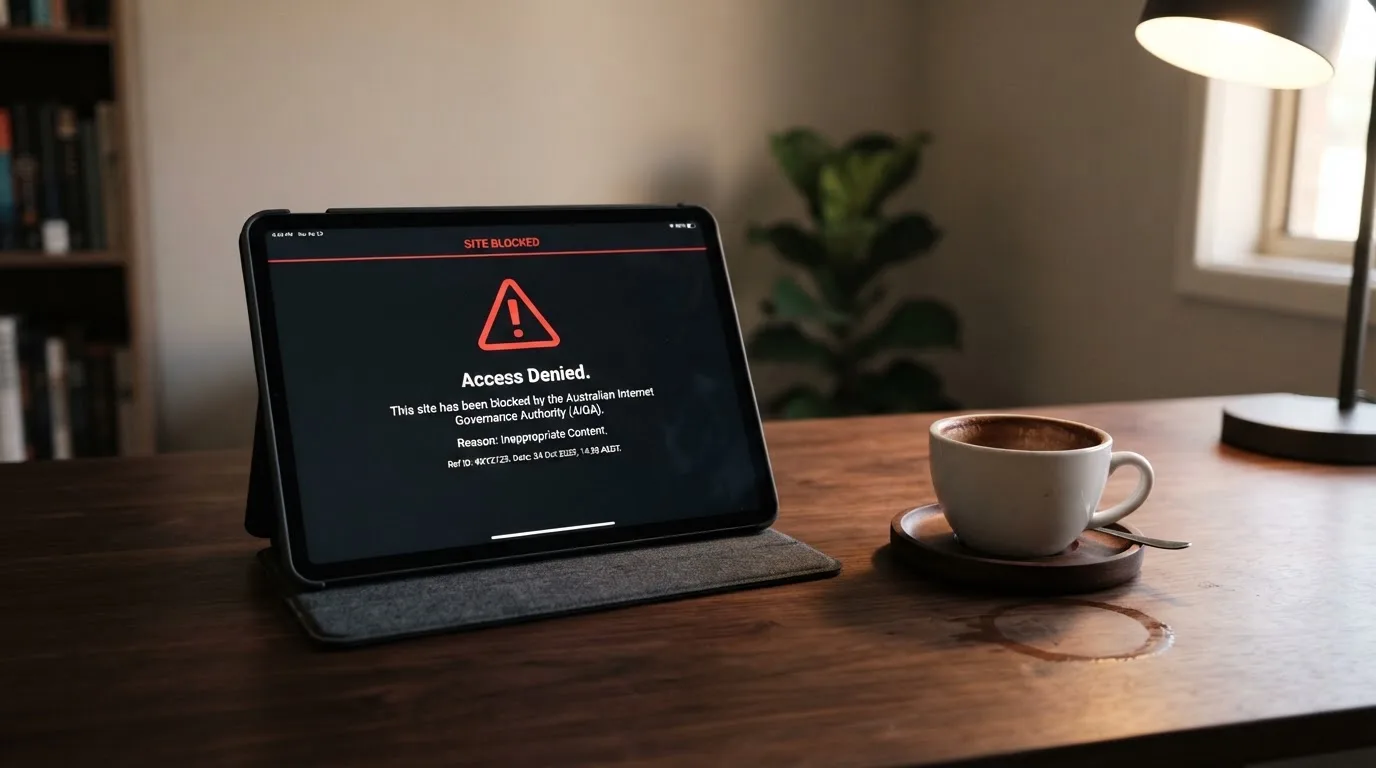
Enforcement against offshore operators that keep advertising to Australians is carried out by the Australian Communications and Media Authority. The ACMA’s two main levers are formal warnings published against named operators and directions to Australian internet service providers to block specific URLs. As of the round reported on 26 June 2026 a total of 1,751 illegal gambling and affiliate marketing websites had been blocked since the first blocking request in November 2019, and more than 230 unlicensed services had left the Australian market since the 2017 strengthening of the regime. The same June 2026 round added 12 more domains to the block list: 7Signs, ChromaBet, Donbet, Duospin, Freshbet, Slots Gem, Jacks Club, Lucky Start, Pointsbetz, Spinrise, Vinyl Casino and Wildsino.
H2 Gambling Capital’s 2025 estimate puts annual losses to illegal offshore sites at roughly A$3.9 billion a year, and the share of gambling going through legal channels fell from 74% in 2021 to 64% in that same report — the offshore gap is widening, not closing, and that is the backdrop against which any same-day payout pitch is being made.
What enforcement means for a withdrawal
A blocked domain can vanish overnight with player balances still sitting on it. The ACMA does not pursue individual players — the IGA targets providers — but it also cannot make an offshore operator return money once a blocking order lands. There is no Australian complaints body for an offshore casino, no local dispute resolution scheme and no Australian licence register where a punt can be filed. The same-day promise is therefore a promise from an entity the Australian legal system cannot compel, on a product the Australian legal system says should not be sold here in the first place.
What player protection actually looks like when the casino is offshore
The standard suite of Australian responsible-gambling tools is built around Australian-licensed wagering services. It does not extend to offshore casinos advertising to Australians.
BetStop, the National Self-Exclusion Register, has been live since August 2023 and binds every Australian-licensed online and phone wagering service. An offshore casino is not connected to it. Registering with BetStop does not stop a withdrawal to an offshore site and does not stop an offshore site from marketing to the registered person. The National Gambling Helpline on 1800 858 858 is free, 24/7 and runs chat through Gambling Help Online; both will help with problem gambling however the money is being spent, including at offshore sites, but they cannot recover lost funds from one.
The protections a player does have are at the bank. Australian banks now offer card-level gambling blocks that intercept transactions registered under the merchant category code for betting and casino gambling. Westpac’s gambling block refuses authorisation on that MCC for eligible personal credit and debit cards. ANZ’s block, switched on in the ANZ app, extends to gambling transactions routed through a digital wallet such as Apple Pay on an eligible card, not just the physical card. Commonwealth Bank’s gambling lock in the CommBank app works on the same principle, with the same caveat the banks all repeat: not every gambling transaction will be blocked, and an occasional non-gambling transaction may be blocked in error. Once ANZ’s block is on, removing it again requires a 48-hour cooling-off period.
A useful operational rule falls out of all this. A card-level block is the most reliable boundary an Australian player can place around offshore play, because it sits in front of the offshore site rather than depending on the site to honour a self-exclusion request. It is also imperfect: a casino can rebrand under a different MCC, or push players to bank transfers that the bank’s system cannot flag at the same granularity. The block lowers the surface area; it does not close it.
Where deposits and withdrawals meet the law
Under the Interactive Gambling Act as amended in 2023, Australian-licensed online wagering services cannot accept payment by credit card or other credit-related products; that restriction also constrains gambling use of linked digital wallets such as Apple Pay. The credit-ban penalty regime took effect on 11 June 2024, with operator fines running up to A$247,500. Legal deposit routes for a licensed Australian wagering service are debit card, direct bank transfer, PayID/Osko and BPAY. Crypto is not one of them. A site asking an Australian customer for a credit card or a cryptocurrency deposit is, by that single request, operating outside the Australian rules.
Payment rails in Australia — what “same day” actually rides on
The Australian retail payments system is unusually fast for a country of its size, and any honest read of “same day” has to start from the rails, not from the casino’s marketing.
Osko and PayID: the rails that already settle in under a minute
Osko is the real-time retail transfer service that runs on Australia’s New Payments Platform. With Osko, a bank transfer between participating Australian banks arrives in under a minute, around the clock and through weekends, whether the payment is addressed to a BSB and account number or to a PayID. There is no cut-off, no batch window, no next-business-day delay. PayID is the addressing layer on top: more than 25 million PayID identifiers had been registered on the platform by April 2025, and the service is available at over 100 Australian financial institutions. Paying to a PayID shows the account holder’s name on screen before the transfer is sent, and the operator behind PayID warns that being asked to send money to a PayID on an illegal gambling site is “almost certainly” a sign of a scam site.
The New Payments Platform itself became accessible to the public on 13 February 2018 and is owned by New Payments Platform Australia Ltd, a non-profit whose thirteen shareholders include the Reserve Bank of Australia and the country’s major banks. In 2021 the ACCC authorised the merger of NPP Australia with BPAY and eftpos into a single company, Australian Payments Plus (AP+). Platform participants must keep monthly outages to no more than two minutes. The architecture is, in other words, built for instant settlement — and has been for the best part of a decade.
What this means for a same-day payout pitch is direct. If an Australian player wins at an offshore casino and asks for a withdrawal to a BSB and account number or a PayID, the money can reach the bank account in well under a minute once it has been sent. Any “same day” framing from the operator is therefore about how long they take to press send, not about how long the bank takes to deliver.
BPAY: the bill-payment rail, not a casino rail
BPAY is a bill-payment service that runs through online banking: the payer enters the Biller Code and the Customer Reference Number (CRN) printed on the bill. It has operated in Australia since 1997, is available in the online banking of over 140 banks and financial institutions and is offered by over 95,000 businesses. It was launched on 18 November 1997 and is owned equally, via parent company Cardlink Services Limited, by Australia’s four major banks: ANZ, Commonwealth Bank, National Australia Bank and Westpac. It is run today by Australian Payments Plus.
BPAY is a settlement rail, not a payout rail, and a casino advertising BPAY as a withdrawal method is almost always routing deposits through it, not withdrawals. Withdrawals via BPAY are not standard and the method a player will actually meet at the cash-out screen is bank transfer, PayID/Osko or an e-wallet — the rails that can move money instantly.
Digital wallets, surcharges and the credit-card question
By the end of 2025 Apple Pay, Google Pay and Samsung Pay collectively accounted for around 45% of all card payments in Australia by number. Apple itself does not charge consumers any fee for Apple Pay in stores, online or in apps; any surcharge is the merchant’s own card-processing cost, not Apple’s. Apple also makes clear that transaction limits and PIN requirements for Apple Pay are set by the card issuer or the merchant, not by Apple. The Reserve Bank of Australia’s July 2025 review proposes removing surcharges only on eftpos, Mastercard and Visa transactions, leaving American Express explicitly outside the scope of the proposed ban. Amex itself operates as a three-party scheme — issuer, processor and network under one roof — rather than the four-party model Visa and Mastercard run, which is why it sits outside the RBA’s surcharging push.
The credit-card ban is the part that bites hardest for licensed wagering. Since 11 June 2024, an Australian-licensed wagering service cannot accept a credit card or a credit-related product, and the same rule constrains gambling use of a digital wallet linked to a credit facility. An offshore casino has no such constraint — which is why some of them will happily take an Australian credit card — and is, by taking it, demonstrating that it is operating outside the Australian framework.
AUSTRAC’s threshold rule, and what it does not do
AUSTRAC’s threshold-transaction-report rule requires reporting of physical cash transfers of A$10,000 or more. The rule applies to physical cash, not to ordinary electronic bank transfers. A bank transfer of any size between Australian accounts is not subject to the per-transaction reporting threshold, regardless of the amount sent. A player moving a large withdrawal through Osko is not, by virtue of the amount alone, triggering a report.
The mechanics of a same-day withdrawal at an offshore casino
Stripped of the marketing, a same-day withdrawal runs through four steps, three of which the operator controls and one of which the Australian bank controls.
The first step is the request. The player hits withdraw, picks a method and enters an amount. Some operators cap the amount eligible for same-day processing at a per-day or per-week ceiling; withdrawals above the ceiling are queued and processed on the operator’s own schedule rather than the player’s. The largest withdrawal amount that still falls inside a “same day” promise is therefore almost always lower than the largest withdrawal the site will accept at all.
The second step is internal review. The operator’s payments team checks the request against Know Your Customer and anti-money-laundering rules, against any bonus terms that might still be live on the account and against any maximum-cashout cap the site has set. This is where a same-day claim most often slips, and it slips because the bonus terms the player agreed to at deposit still apply. Verification steps that can still delay a same-day payout in practice include a fresh identity document, a proof of address, a source-of-funds check for larger amounts and a bonus-wagering audit.
The third step is release. The operator pushes the funds through whatever rail they support for Australians: typically a bank transfer to a BSB and account number, sometimes a PayID. Once the funds are sent through Osko, they arrive in under a minute. If the operator sends through a non-instant rail — a SWIFT transfer, for instance, or an older direct-credit scheme — the same-day label stops being accurate even though the operator may still count it as same day by their own clock.
The fourth step is the bank’s. The money lands, the player sees it, the same-day claim is either honoured or not.
The cost of the same-day label, when the operator charges for it, is paid in withdrawal fees, in capped amounts and in the bonus terms that the operator’s review step is checking against. A withdrawal that triggers an unfinalised bonus wagering requirement will be refused or partially paid until the wagering clears; that is the most common way an apparently same-day withdrawal turns into a multi-day wait.
The 11 brands the ACMA has warned, and the comparison that follows
Eleven brands have been named in ACMA formal warnings for offering prohibited interactive gambling services to Australians. The list below is not a ranking and not a recommendation. It is a comparison built around the ACMA record itself, because the ACMA’s published warnings are the most reliable source of operator identity for any of these brands.
| Brand | ACMA action and date | Operator named by the ACMA | Subject support |
|---|---|---|---|
| RocketPlay | March 2026 formal warning; Dama N.V. also warned May 2022 | Pulsup Ltd (Rocketplay); earlier Dama N.V. | listings-only |
| Level Up Casino | May 2022 formal warning | Dama N.V. | listings-only |
| Woo Casino | March 2025 formal warning | Dama N.V. | — |
| Spirit Casino | May 2025 formal warning | Dama N.V. | — |
| National Casino | July 2025 formal warning | Consolutetish S.R.L. | listings-only |
| Bizzo Casino | July 2025 formal warning; 2022 warning to TechSolutions | Consolutetish S.R.L.; earlier TechSolutions (CY) Group Limited and TechSolutions Group N.V. | listings-only |
| Ignition Casino | July 2025 formal warning | Bamboo Media | — |
| Instant Casino | February 2025 formal warning | EOD Code SRL | listings-only |
| Jackbit | April 2026 formal warning | Ryker B.V. | — |
| Casino Intense | April 2025 formal warning | Sterplay Holding Ltd | listings-only |
| Sky Crown | September 2022 formal warning | Hollycorn N.V. | — |
Several patterns jump out of this table, and the cost angle in the intro earns its keep here. First, the operator behind a brand is rarely the same as the brand name itself. Pulsup Ltd runs RocketPlay; Dama N.V. has run Level Up, Woo Casino and Spirit Casino at different points; Consolutetish S.R.L. now operates National Casino and Bizzo Casino, both of which were already on the ACMA’s record under earlier operators. A player who knows the brand but not the operator is reading a label, not a counterparty. Second, the ACMA has issued fresh warnings on this exact list as recently as March and April 2026 — the regime is not a historical artefact. Third, “listings-only” support in the last column means the sources for any further detail about the brand were affiliate marketing pages and payment-method listings, which is the level of evidence an offshore casino typically leaves on the public record.
RocketPlay — the freshest warning on the list
RocketPlay drew a formal ACMA warning under the Interactive Gambling Act in March 2026, with the regulator naming Pulsup Ltd as the operator behind Rocketplay. Dama N.V. had already been warned over the brand in May 2022, so this is at least the second time the ACMA has taken published action over a casino using the RocketPlay name. What listings report about the brand is the only subject support the public record carries. For an Australian player the calculus is straightforward: a fresh ACMA warning in the same calendar year as the search is a strong signal that the operator has not adjusted course after earlier warnings.
Level Up Casino — Dama N.V.’s wider footprint
Dama N.V. was named in the May 2022 ACMA warning covering six brands: Bambet, Dazard, Level Up, Rocketplay, Wild Tornado and Cobra Casinos. Three of those six — Rocketplay, Level Up and Woo Casino — appear in the comparison table above. The pattern across Dama N.V. brands is the pattern across the offshore sector in microcosm: one operator, multiple brand labels, fresh warnings after the older ones.
Woo Casino and Spirit Casino — Dama N.V.’s 2025 warnings
In March 2025 the ACMA issued a formal warning to Dama N.V. over Woo Casino; in May 2025 it issued a further formal warning over Spirit Casino. Both are fresh enough to sit inside the calendar in which most readers will be searching, and both come from the same operator already named in the May 2022 round. The honest read is that the ACMA’s view on Dama N.V. has not changed: it has warned the operator, watched it rebrand and rebrand again, and kept warning.
National Casino and Bizzo Casino — the 2022 carry-over
In July 2025 the ACMA issued formal warnings over National Casino and Bizzo Casino, with Consolutetish S.R.L. named as the operator in both cases. Bizzo Casino had already been the subject of a 2022 formal warning to TechSolutions (CY) Group Limited and TechSolutions Group N.V., so the brand has now been warned under two different operators. A player who switched to the brand after the 2022 warning in the hope of a clean slate is, on the ACMA record, back where they started.
Ignition Casino — Bamboo Media’s first warning on the table
In July 2025 the ACMA issued a formal warning to Bamboo Media over Ignition Casino. The ACMA record carries no prior action against Bamboo Media in the comparison set, but the warning itself is recent and was published alongside the Consolutetish warnings in the same month.
Instant Casino — the EOD Code SRL warning
In February 2025 the ACMA issued a formal warning to EOD Code SRL over Instant Casino. Where the brand has a paper trail beyond the ACMA, it is in payment-method listings rather than in any Australian regulatory document. The same caveat applies to most of the brands in the comparison.
Jackbit and CasinOK — Ryker B.V.’s April 2026 warning
In April 2026 the ACMA issued a formal warning to Ryker B.V. over both Jackbit and CasinOK. CasinOK is the only brand named in this comparison set that is not on the comparison table — its inclusion here is only because it sits in the same ACMA action as Jackbit, and the comparison tracks the regulator’s actions rather than the marketing.
Casino Intense — Sterplay Holding Ltd
In April 2025 the ACMA issued a formal warning to Sterplay Holding Ltd over Casino Intense. Casino Intense is one of the older brand names on the list, and the warning is recent enough that any Australian player still considering the brand is choosing to ignore a warning issued inside the past twelve months.
Sky Crown — Hollycorn N.V.’s 2022 warning
The ACMA issued a formal warning to Hollycorn N.V. over its Sky Crown and Blue Leo casino services, published in September 2022. Sky Crown is the older end of the comparison list and Blue Leo does not appear elsewhere in the set. A 2022 warning is the longest gap between regulator action and the comparison’s publication date, but the IGA itself has not changed in the interim.
The blocking-rate arithmetic, and the trend behind it
The arithmetic the data on this page can support is the rate at which ACMA blocking requests have accumulated since the first one in November 2019. As of the round reported on 26 June 2026, the running total of blocked illegal gambling and affiliate marketing websites was 1,751, drawn across roughly 81 months from the first blocking request to the June 2026 data point.
A simple rate of accumulation lands the running average at roughly 21.6 blocked sites per month across the full enforcement window — in other words, a website has been blocked for every four or five days of the regime’s life. That is a steady drip rather than a one-off purge, and the cadence matters more than the count. A single round in June 2026 added another 12 sites to the total, which is roughly a tenth of the monthly average being absorbed in one reporting cycle. Any same-day payout casino an Australian player considers today is operating inside an enforcement regime that, on average, has added a blocked domain every few days since 2019.
Blocking rate statistics
| Metric | Value |
|---|---|
| Blocked sites since Nov 2019 | 1,751 |
| Average blocks per month | ~21.6 |
What a same-day offer costs the player, in three currencies
Money. The operator’s own withdrawal fee, where one is charged, is the most visible cost. The cost most players miss is the maximum-cashout cap attached to a bonus, which can sit well below the player’s account balance until the wagering requirement is met. The cost a same-day pitch never advertises is the spread between the largest withdrawal still inside the same-day label and the largest withdrawal the site will accept at all — often a 5x to 10x gap, sometimes wider.
Time. The fastest the Australian rails will run is Osko-to-PayID, which delivers in under a minute once the operator has pressed send. The slow leg is the operator’s internal review, which on a fresh account, a bonus-active account or a high-value withdrawal can stretch to a working day or more. A “same day” promise is, in practice, a promise that the operator’s review step will complete inside their own business hours on the day the request is made. The Australian bank is not where the day goes.
Recourse. This is the largest cost and the one the marketing never prices. An offshore casino is not bound by BetStop, by an Australian licence condition or by any local dispute-resolution scheme. When an offshore site refuses a withdrawal, the player’s options are the operator’s own internal complaint process, the operator’s regulator in whatever jurisdiction the licence was issued from, and the Australian bank’s card chargeback. None of those is fast, none of those is certain, and none of those recovers funds once the ACMA blocks the domain. The same-day promise in this context is a promise from an entity that has demonstrated, across the comparison table above, a willingness to keep operating in the face of repeated ACMA warnings.
Where the offer stops being worth it
The decision comes down to a single comparison. The player trades an Australian legal framework that protects their bank balance and connects their self-exclusion to every licensed operator, for the chance of a faster payout from an entity that has been on the ACMA record in the same calendar year, sometimes in the same month. The payment rails are fast already; the operator’s review step is the actual bottleneck; and the recourse asymmetry is what the marketing never prices. For an Australian player with any meaningful balance to withdraw, the trade is unfavourable on its own terms.
For a player with no balance to withdraw and no intention of opening one — the reader who is researching this sector rather than playing in it — the comparison table and the ACMA record are still useful as a picture of how offshore casino marketing lines up against Australian enforcement.
FAQ
What does a casino actually mean by “same day payout” — same calendar day, or within 24 hours?
There is no settled industry definition. Most operators mean “processed by our payments team on the same business day the request is made”, which on a weekend or public holiday can stretch to the next business day. Some mean “funds released within 24 hours of the request” regardless of cut-off. The honest reading of the phrase is that it covers the operator’s internal review step; the Australian bank leg of the journey, on Osko or PayID, is already measured in seconds.
How does a same-day cash-out claim compare with the real Osko transfer times Australian banks describe?
Osko transfers between participating Australian banks arrive in under a minute, 24/7 including weekends, whether addressed to a BSB and account number or to a PayID. The ceiling is therefore the operator’s review and release step, not the bank transfer itself. A same-day claim that does not mention an internal review window is making an implicit promise about a step the marketing usually glosses over.
Is a same-day payout promise from an offshore casino something Australians can hold the operator to?
No. The operator is offshore and the product is prohibited under the Interactive Gambling Act 2001. There is no Australian regulator that can compel a payout, no Australian complaints body to appeal to, and no Australian licence register where a player can file a dispute. The IGA targets providers, not players, so an Australian player is not personally at risk of prosecution — but neither do they have recourse if the operator refuses to pay.
What is the largest withdrawal amount that a “same day” payout claim usually still applies to?
Operators typically cap the amount they will process on the same day well below the largest withdrawal they will accept overall. A common shape is a daily same-day ceiling of around A$2,500 to A$5,000 with larger withdrawals queued onto a slower schedule. The cap is rarely advertised on the withdrawal page itself; it tends to surface only when a player attempts a larger amount.
Why do some sites specifically say “same day cash out” rather than “instant withdrawal”?
“Same day” gives the operator a business-day window that survives weekends and public holidays; “instant” implies a real-time release and is harder to honour when the operator’s review step takes more than a few minutes. “Same day cash out” is the wording the offshore sector has converged on as the safest combination of speed promise and operator flexibility.
What verification steps might still delay a same-day payout claim in practice?
The four delays that recur are a fresh identity document request on a first withdrawal, a proof-of-address check, a source-of-funds request on larger amounts, and a bonus-wagering audit if a deposit bonus has not yet been finalised. Each of these is a step the operator can complete inside the day in the best case and across several days in the worst; none of them is part of the marketing’s “same day” framing.