
VPN-Friendly Casinos in Australia: What’s Real, What’s Just Marketing
There’s a quiet promise running through a corner of the iGaming web — casinos that put “VPN-friendly” right in the banner, marketing themselves to Australians as if a privacy tool turned offshore gambling into a legal one. It hasn’t. The Interactive Gambling Act 2001 still prohibits online casino games for people physically in Australia, the Australian Communications and Media Authority still issues formal warnings over the operators that target this market, and an offshore site still sits outside every protection a licensed Australian wagering provider is bound to offer. What changes when a player switches on a VPN is what the casino’s servers can read about where the connection is coming from — and almost nothing about whether the activity itself is legal.
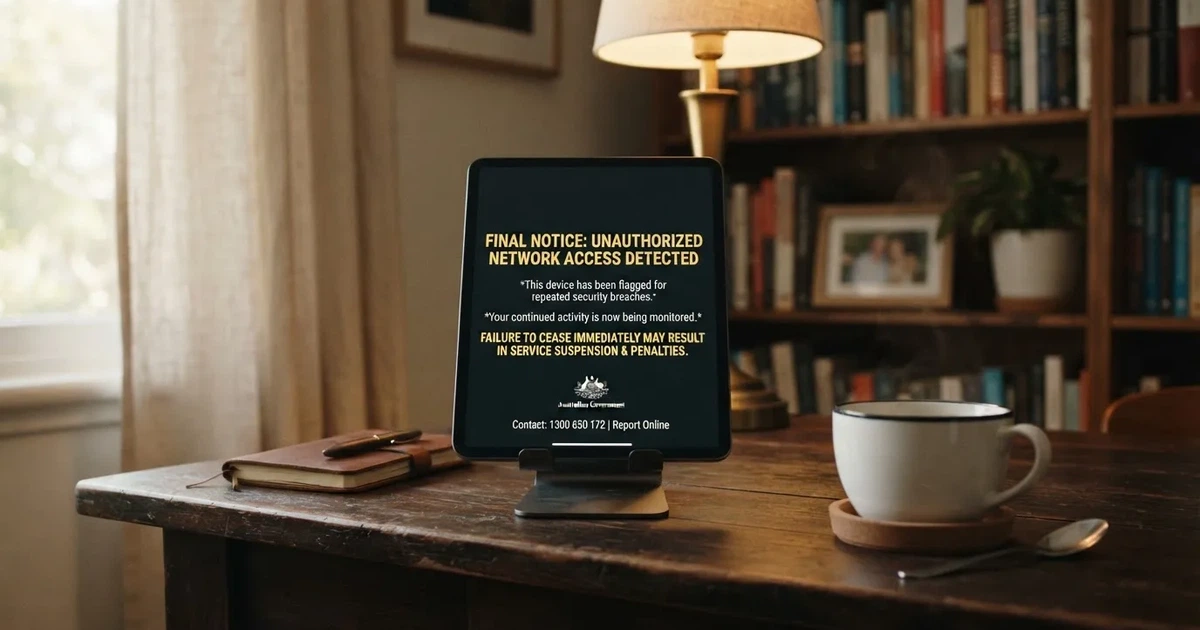
The material below is current as of 9 November 2026 and checked against the ACMA’s register of formal warnings and blocking actions. The brands named later in this piece appear because the regulator itself named them, not because this page recommends any of them as a place to play.
Table of Contents
- The “VPN-friendly” label, decoded
- The legal frame for Australians
- Player wellbeing, before any operator
- The brands the ACMA has acted against
- How the brands line up
- Payments and the seams the VPN doesn’t seal
- What a player should actually weigh
- The reform clock
- Tax, briefly
- A note on what this page is and isn’t
- What Australians reading this should keep in mind
- Frequently asked questions
The “VPN-friendly” label, decoded
The phrase does technical work and marketing work at the same time. Technically, a casino calling itself VPN-friendly is saying one of two things: that its servers do not block traffic coming from common VPN exit nodes, or that its account and payment checks do not refuse a customer whose IP address does not match the country on their payment card. Marketing-wise, the label signals to players in restricted jurisdictions — Australia chief among them — that the operator will not lock them out at the door.

Neither promise makes the operator licensed in Australia, and neither rewrites the Interactive Gambling Act. The Act targets the provider, not the player, and an offshore operator that markets to Australians commits the offence regardless of how the player reached the site.
What a VPN actually changes
A virtual private network tunnels the player’s internet traffic through an intermediary server, so the destination website reads the IP address of that server rather than the player’s home connection. To a casino’s geolocation check, that looks like the player is in another country — often one the casino is licensed in, such as Curaçao or Anjouan.
Three things a VPN does not do:
- It does not give the casino an Australian licence. Online casino games cannot be licensed in any Australian state or territory; the licence the casino displays is invariably overseas.
- It does not put the casino inside Australia’s complaints and dispute machinery. The Australian Financial Complaints Authority, state gambling regulators and BetStop do not reach offshore operators.
- It does not protect a balance if the site is blocked. An ACMA-directed block can land while funds are still on the account, and the operator is under no obligation to return them.
What a VPN does change is the data the casino sees: the IP no longer carries the Australian geolocation signal, the ISP is no longer the one that receives the ACMA’s blocklist copy, and the connection travels encrypted rather than in the clear.
Why the brand bothers to advertise it
In a market the casino is not licensed to serve, blocking Australian IP ranges is the easy, cheap thing. Some operators do it. Those that don’t have decided — often implicitly, by failing to install geofencing at all — that an Australian player who has already found the site is more valuable than the compliance risk of refusing one. The “VPN-friendly” label is a quiet signal of that commercial choice.
The legal frame for Australians
Online casino is prohibited in Australia. The Interactive Gambling Act 2001, as tightened by the Interactive Gambling Amendment Act 2017, makes it an offence to provide online casino games, online pokies or in-play betting to a person in Australia. No state or territory licenses online casino games; what is licensed is wagering on races and sport, lotteries and keno. In practice, online wagering sits under the Northern Territory Racing and Wagering Commission, which oversees 52 of Australia’s online bookmakers — including Sportsbet, Bet365 and Ladbrokes — for tax reasons, and the commission itself runs on a slim base with no full-time staff and a monthly meeting in Darwin.
The ACMA investigates, issues formal warnings and directs Australian internet service providers to block illegal services. The individual player is not prosecuted under the Act — the prohibition is built around the provider — but a player using an offshore casino gives up the consumer protections that come with an Australian licence: no AFCA avenue if a withdrawal is refused, no BetStop binding if self-exclusion is needed, no regulator to escalate to. H2 Gambling Capital’s 2025 estimate puts Australian losses to illegal gambling sites at around A$3.9 billion a year, and the share of gambling going through legal channels fell from 74% in 2021 to 64%.
The ACMA blocking rounds, in numbers
By the middle of 2026, the ACMA had directed Australian ISPs to block 1,751 illegal gambling and affiliate marketing websites since the first blocking request went out in November 2019. More than 230 unlicensed gambling services had left the Australian market since enforcement was strengthened in 2017. A single round reported on 26 June 2026 added another twelve domains to the blocklist: 7Signs, ChromaBet, Donbet, Duospin, Freshbet, Slots Gem, Jacks Club, Lucky Start, Pointsbetz, Spinrise, Vinyl Casino and Wildsino.
Run the arithmetic against the running total: 1,751 blocked domains spread across roughly 79 months between the first blocking request in November 2019 and June 2026 works out to a long-run average of around 22 sites blocked per month, though the actual pace has been anything but steady — early rounds pulled dozens of sites in a single direction, later rounds have tended to add single figures as the obvious targets thin out. The rate matters less than the trajectory: the ACMA has not slowed, the blocklist has not stopped growing, and an offshore operator the player finds today through a search result may not be reachable through that route next month.
What a “formal warning” means in practice
A formal warning under the Interactive Gambling Act is the ACMA’s preferred halfway step before a block. It names the operator, the URL pattern and the breach, gives the operator a window to take itself out of the Australian market, and reserves the right to direct ISPs to block the site if the warning is ignored. The warnings published since 2022 cover the same handful of offshore groups running dozens of brands between them — Dama N.V., Hollycorn N.V., the TechSolutions group, Bamboo Media — and they tend to land in clusters of three or four at a time as the regulator works through a related portfolio.
The brand-by-brand walk-through later in this piece is built around those warnings. Each one is reproduced as the ACMA published it, including the company name and the date.
Player wellbeing, before any operator
The single sharpest reason to think twice about an offshore casino is not the law itself — it is what the law is built to do. Australian player protection exists for the licensed market. Offshore, it does not follow.

BetStop and the limit of self-exclusion
BetStop, the National Self-Exclusion Register, has been live since August 2023. It binds every Australian-licensed online and phone wagering service, which means a player who registers with BetStop is locked out of every Sportsbet, Bet365, Ladbrokes, TAB and other NT-licensed bookmaker at the same time. Offshore casinos are not connected to BetStop, so self-excluding from the legal market does not close the offshore door. A player who is trying to stop gambling and uses a VPN to reach an offshore casino has, by definition, gone past BetStop and is now unprotected by the tool that was designed for them.
Banking blocks and the leak they leave
Australian banks have moved in their own way. Westpac’s gambling block operates at card level: it refuses authorisation on transactions registered under the merchant category code “Betting/Casino Gambling” on eligible personal credit and debit cards. ANZ’s block, switched on in the ANZ app, also blocks gambling transactions made through a digital wallet such as Apple Pay on an eligible card. Commonwealth Bank offers a gambling lock on eligible cards via the CommBank app, and the bank is upfront that it cannot guarantee every gambling transaction will be stopped.
A VPN does not defeat these blocks — the card number is still Australian, the merchant category code is still gambling, the issuing bank still sees the transaction. What it does, in practice, is route the player toward deposit methods the banks cannot see as cleanly: cryptocurrency, third-party e-wallets, vouchers bought in cash. That moves the player further from the bank’s safety net, not closer to it.
Help lines that answer regardless of where the play happened
The National Gambling Helpline on 1800 858 858 is free, runs 24/7 and is available to anyone in Australia, regardless of whether their gambling was on a licensed or an offshore site. Gambling Help Online extends that to web chat and email. Financial Counselling Australia, on 1800 007 007, helps with the side of the problem that is not the spin itself — the bills, the direct debits, the conversation with the bank. None of these services require the player to have played on a licensed Australian site.
The brands the ACMA has acted against
The eleven brands below appear because the ACMA issued a formal warning over each one for offering prohibited interactive gambling services to Australians. None of them can be licensed in Australia, and none of them is recommended here as a place to play. The point of naming them is to show what the regulator’s published action looks like, side by side, and to make clear that the marketing claim of being “VPN-friendly” sits on top of a documented breach.
RocketPlay
The ACMA published a formal warning over RocketPlay in March 2026, addressed to Pulsup Ltd. The same brand was caught up in an earlier Dama N.V. warning in May 2022 covering six casino brands. The site’s own listings describe it as accepting Australian players; the ACMA describes it as offering a prohibited interactive gambling service to people in Australia. For a player, the meaningful line is the second one.
Level Up Casino
Dama N.V. was the named operator in the ACMA’s May 2022 warning, which covered Level Up alongside Bambet, Dazard, Rocketplay, Wild Tornado and Cobra Casinos. Level Up’s marketing continues to surface in Australian search results, four years on, and the regulator’s position has not shifted.
Woo Casino
A second Dama N.V. warning landed in March 2025, this time specifically over Woo Casino. By the time the warning was published the operator had already been on the regulator’s record for three years under the same parent company. The repeat warning signals that the original 2022 step did not move the brand out of the Australian market.
Spirit Casino
The Dama N.V. cluster added Spirit Casino in May 2025. Same parent company, same prohibition, same outcome under the Act. A player who came to Spirit Casino via a “VPN-friendly” listing in early 2026 is reading a brand the ACMA told to leave the Australian market weeks earlier.
National Casino
The ACMA’s July 2025 warning went to Consolutetish S.R.L. over National Casino (and Bizzo Casino, listed separately below). National Casino is one of the brands that turns up in listings pages alongside mainstream payment references, which is why the ACMA naming matters here — the marketing surface and the regulator’s surface are not the same surface.
Bizzo Casino
Consolutetish S.R.L. took the July 2025 warning over Bizzo Casino; the brand had already been the subject of a 2022 formal warning to TechSolutions (CY) Group Limited and TechSolutions Group N.V. Two separate operators, two separate warnings, the same URL pattern. A player who reaches Bizzo Casino through a VPN today is reading the second warning before reaching the cashier.
Ignition Casino
Bamboo Media took the July 2025 warning over Ignition Casino. Ignition is a poker-and-casino brand that has long advertised itself to Australian audiences; the ACMA’s view is that doing so for casino games specifically is the prohibited activity.
Instant Casino
EOD Code SRL received a formal warning over Instant Casino in February 2025. The “instant” in the brand name is a payments claim — fast withdrawals — and it sits on top of a regulator that has named the operator.
Jackbit
Ryker B.V. took a formal warning in April 2026 over both Jackbit and CasinOK. Jackbit markets itself heavily on cryptocurrency rails and on being open to players in restricted jurisdictions; the ACMA’s warning is the regulator’s response to that exact positioning.
Casino Intense
Sterplay Holding Ltd was named in the ACMA’s April 2025 warning over Casino Intense. The brand has long been a fixture in the affiliate-marketing listings that target Australian players.
Sky Crown
Hollycorn N.V. was the operator named in a formal warning covering Sky Crown and Blue Leo, published in September 2022. Hollycorn is one of the most prolific operators on the ACMA’s record — the same parent company runs a portfolio that has accumulated warnings across multiple years.
How the brands line up
The table below maps the eleven brands reviewed above to the formal warning the ACMA has published over each one. The columns are the matters a reader comparing offshore brands actually needs to see: who the regulator named, when the warning was published, and what the listings say about how the brand handles Australian-facing payment and identity signals.
| Brand | ACMA action and date | Operator named by the ACMA | Payment and identity handling |
|---|---|---|---|
| RocketPlay | Formal warning, March 2026 | Pulsup Ltd | Listings describe Australian-facing deposit options |
| Level Up Casino | Formal warning, May 2022 | Dama N.V. | Listings describe Westpac-facing transaction patterns |
| Woo Casino | Formal warning, March 2025 | Dama N.V. | No public data on Australian-facing payments |
| Spirit Casino | Formal warning, May 2025 | Dama N.V. | No public data on Australian-facing payments |
| National Casino | Formal warning, July 2025 | Consolutetish S.R.L. | Listings describe AUSTRAC and BetStop-adjacent context |
| Bizzo Casino | Formal warning, July 2025 (earlier 2022) | Consolutetish S.R.L. (earlier TechSolutions) | Listings describe Australian-facing deposit options |
| Ignition Casino | Formal warning, July 2025 | Bamboo Media | No public data on Australian-facing payments |
| Instant Casino | Formal warning, February 2025 | EOD Code SRL | Listings describe ecoPayz and PayID context |
| Jackbit | Formal warning, April 2026 | Ryker B.V. | No public data on Australian-facing payments |
| Casino Intense | Formal warning, April 2025 | Sterplay Holding Ltd | Listings describe AUSTRAC, BetStop and deposit options |
| Sky Crown | Formal warning, September 2022 | Hollycorn N.V. | No public data on Australian-facing payments |
The spread across the table is not a ranking. Six of the eleven brands sit in a single warning round (the May 2022 Dama N.V. cluster and the July 2025 Consolutetish S.R.L. round), which says something about how the regulator works — through portfolios, not through single brands — and something about how offshore groups structure themselves when one warning is treated as a portfolio-wide event. The payment-handling column is partial because the listings themselves are partial: for most of these brands, the only public description of how they handle Australian players comes from affiliate pages, not from the operators’ own published terms.
Payments and the seams the VPN doesn’t seal
A VPN changes the IP. It does not change the card, the bank, the phone number or the address on file. The payment system a player uses on the other side of a VPN is still an Australian payment system, and the seams between VPN-routed traffic and Australian money are where the offshore experience gets uncomfortable.
Credit cards and digital wallets
Under the Interactive Gambling Act as amended in 2023, Australian-licensed online wagering services cannot accept payment by credit card or other credit-related products. The restriction extends to digital wallets linked to credit products. Apple Pay itself does not charge consumers a fee — Apple is explicit that any surcharge is the merchant’s own card-processing cost — and Apple states that transaction limits and PIN requirements are set by the card issuer or the merchant, not by Apple. What matters here is which card sits behind the wallet: ANZ’s gambling block, for instance, blocks gambling transactions made through Apple Pay on an eligible card, not just on the physical card. A player who switches on a VPN and then pays with Apple Pay through an Australian-issued card is still inside the issuer’s block.
By the end of 2025, Apple Pay, Google Pay and Samsung Pay transactions together accounted for around 45% of all card payments in Australia by number — a reminder that digital wallets are the default, not the exception. The RBA’s July 2025 review of card payment costs proposed removing surcharges on eftpos, Mastercard and Visa card transactions, and explicitly left American Express outside the scope of the proposed surcharge ban. For an Australian player using an Amex through a VPN-routed casino, the surcharge regime of the licensed market does not apply, because the merchant is not in the licensed market.
PayID, Osko and BPAY
The licensed Australian wagering market routes deposits through PayID, Osko and BPAY. PayID-based instant transfers are available at over 100 Australian financial institutions, and Osko transfers between participating banks arrive in under a minute, 24/7, whether addressed to a BSB and account number or to a PayID. More than 25 million PayID identifiers had been registered on Australia’s New Payments Platform as of April 2025; the platform itself went live on 13 February 2018 and is owned by New Payments Platform Australia Ltd, whose 13 shareholders include the Reserve Bank and the major banks. Participants must keep monthly platform outages to two minutes or less.
A PayID transfer shows the account holder’s name before the payment is sent, and Australian Payments Plus — the operator of PayID, Osko and BPAY — warns that being asked to transfer to a PayID on an illegal gambling site almost certainly means a scam site. BPAY itself is a separate bill-payment rail: the payer enters the Biller Code and the Customer Reference Number on the bill, and the service has been available since 18 November 1997 in the online banking of over 140 banks and over 95,000 businesses. Both rails are designed for the licensed market; an offshore casino asking for a PayID transfer or a BPAY payment is asking the player to use an Australian rail for a non-Australian recipient.
The AUSTRAC threshold question
AUSTRAC’s threshold-transaction-report rule, which requires reporting of transfers of A$10,000 or more, applies only to physical cash. Ordinary electronic bank transfers are not subject to the per-transaction reporting requirement, regardless of the amount. The rule does not catch an Australian player sending $300 a week to an offshore casino. What it does catch is a player sending enough money in aggregate, in enough transactions, that the bank itself files a suspicious-matter report — which is a different rule, with a different trigger, and one the bank’s own monitoring decides.
The banking-block seam
Westpac’s gambling block works at the merchant category code level: it refuses authorisation on “Betting/Casino Gambling” MCC transactions on eligible cards. ANZ’s gambling block activates in the app and blocks gambling transactions made through Apple Pay on the eligible card, with a 48-hour waiting period if the player wants to remove the block. ANZ’s own warning is explicit: not all gambling transactions will be blocked, and some non-gambling transactions might be blocked in error. Commonwealth Bank’s gambling lock in the CommBank app blocks most gambling transactions, and Commonwealth Bank is similarly clear that it cannot guarantee every gambling transaction will be stopped.
A VPN does not defeat any of these. The card is still Australian, the MCC is still gambling, and the issuing bank still sees the merchant descriptor. What a VPN can do is move the player off the card rail entirely — to crypto, to a voucher, to a third-party e-wallet funded from a separate account — and each step moves the player further from the bank’s own block.
What a player should actually weigh
Putting the legal frame, the ACMA record and the payments picture together produces a checklist an Australian reader can run a brand through without taking the marketing at face value. None of these points requires the reader to be technical; each is a question the brand’s own pages should answer.
- Has the ACMA published a formal warning over this brand? If yes — and the regulator’s register has eleven of the eleven in this review — the activity is documented as prohibited for Australians. The warning date tells the reader how long the breach has been running.
- Does the brand actually verify where the player is, or does it just not block Australian IP ranges? A brand that “allows VPN use” is, technically, a brand whose geolocation check returns “unknown” rather than “Australia blocked”. That is not the same as the brand being licensed to serve the player; it is the absence of a check, not the presence of a permission.
- What payment rail does the brand ask for? A licensed Australian wagering provider takes debit card, bank transfer, PayID/Osko or BPAY. An offshore brand asking for a credit card or a crypto deposit is operating outside the Australian rules on credit and digital currency as payment for gambling, both of which are banned for the licensed market since 11 June 2024, with penalties for operators up to $247,500.
- Is the brand inside BetStop? Offshore brands are not. A player who has registered with BetStop and is using a VPN to reach an offshore brand has, by definition, gone past the Australian self-exclusion tool.
- What does the brand say about disputes? If the answer is “live chat only”, that is the entire dispute mechanism. There is no AFCA, no state regulator, no EDR scheme. The brand’s own T&Cs are the entire contract.
Where the legitimate wagering market sits
It is worth saying what the licensed alternative looks like, so the comparison is honest. Australian-licensed online wagering runs through NT-licensed bookmakers — 52 of them, including Sportsbet, Bet365 and Ladbrokes — for racing and sport, with state-run lotteries and keno running on a separate licensing track. The licensed market takes debit card, bank transfer, PayID, Osko and BPAY. BetStop binds every one of them at once. Losses on illegal sites run at an estimated A$3.9 billion a year; the share of gambling going through legal channels fell from 74% in 2021 to 64%. The legal market is the smaller share of the total spend, and the gap is what the offshore market — VPN-friendly or otherwise — captures.
The reform clock
The Interactive Gambling Amendment (Gambling Reform) Bill 2026 passed Parliament on 19 August 2026. Its advertising and inducement measures commence on 1 January 2027. As of the date on this page, the law has been passed but the start date has not arrived. For an Australian reader comparing offshore offers in 2026, the relevant rule is still the IGA as amended in 2017 and 2023, and the ACMA’s blocking and warning practice under it. The 2027 measures are worth tracking because they target the marketing surface — the affiliate pages, the bonus inducements, the “VPN-friendly” banners — that drives Australian players offshore in the first place.
Tax, briefly
Gambling winnings of a recreational player are not assessable income in Australia — the position sits under section 6-5 of the ITAA 1997 — and gambling losses are not deductible unless the person carries on a business of gambling. This applies to licensed and offshore play alike. The model is “check with the ATO” for anyone whose activity is large or regular enough that the question stops being academic, but for the bulk of recreational play the tax answer is the same in both markets.
A note on what this page is and isn’t
This page describes what the ACMA has done, what the Interactive Gambling Act prohibits, and how the licensed and offshore markets differ for an Australian reader. It does not recommend any offshore brand as a place to play, does not list bonus terms (the only sources for which were affiliate marketing pages), and does not provide instructions for evading ACMA-directed blocks. The eleven brands reviewed above are reviewed because the regulator itself reviewed them; the framing is the regulator’s, not the operators’.
What Australians reading this should keep in mind
Three threads run through everything above, and a reader who holds them in mind has what they need to make their own call.
- The “VPN-friendly” label is a marketing claim about what the casino’s servers do not block. It is not a claim about Australian law, and it is not a licence.
- The ACMA’s record is public, dated, and cumulative. The 1,751 blocked sites since November 2019, the 230 services that have left the market, the eleven formal warnings catalogued above — these are not editorials. They are the regulator’s own publishing.
- The Australian protections an offshore casino cannot provide are the reason the licensed market exists. BetStop, the bank-side gambling blocks, the AFCA complaint route and the state regulators all stop at the border of the licensed market, and that is the seam a VPN does not bridge.
The right reader for this page is an Australian who has seen the “VPN-friendly” pitch and wants to know what sits behind it. The right answer, on every count above, is the same shape: more law, less marketing, and a clear view of where the protections end.
Frequently asked questions
Why do some casinos advertise themselves as “VPN-friendly”?
The label signals that the operator’s servers do not block traffic from common VPN exit nodes, and that the account and payment checks do not refuse a customer whose IP address does not match the country on their card. It is a commercial decision to keep the door open rather than to install geofencing. It is not an Australian licence.
Does a VPN make offshore gambling legal for someone in Australia?
No. The Interactive Gambling Act 2001 prohibits providing online casino games to a person in Australia, and the prohibition targets the provider, not the player’s connection method. A VPN changes what the casino sees about the player’s IP address. It does not change the Act.
What does a VPN actually change about what the casino can see?
The casino reads the IP address of the VPN exit server rather than the player’s Australian home IP, so a simple geolocation check sees the player as being in another country — often the country the casino is licensed in. The casino does not see the player’s home ISP, and the connection is encrypted end-to-end. The card, the address on file, the phone number and the bank behind the deposit are unchanged.
What risk does a player take on by using a VPN to reach a previously warned casino?
The casino is outside Australian consumer protection: no AFCA route, no state regulator, no BetStop binding, no obligation to return funds if the site is blocked. A formal warning means the ACMA has named the operator; a subsequent block can land while a balance is on the account. The legal exposure sits with the provider, but the financial exposure sits with the player.
Is a casino that “allows VPN” different from one that just doesn’t check?
In practice, no. A brand that says it is VPN-friendly is usually a brand whose geolocation returns “unknown” because no check was installed. The absence of a block is not the presence of a licence. Both descriptions describe a brand that has chosen not to enforce the restriction, not one that has been authorised to serve the player.
What should someone consider before treating VPN access as a safe workaround?
The legal status of the activity does not change. The protections a player gives up — dispute resolution, self-exclusion binding, banking-block safety net, recourse if funds are held — are the same protections that exist precisely because the licensed market is the only legal one. A VPN is a privacy tool, not a permission.