Finding a casino outside BetStop in Australia, and what that label actually buys
 Available in US
The search phrase reads like a workaround. Someone types “best casino not on BetStop” because BetStop has them locked out of something and they want what comes next. The honest answer sits one layer above any list: BetStop does not, and never has, covered online casino games in Australia, because no Australian jurisdiction issues a licence for online casino games in the first place. The brand on the other end of the search box is not licensed here. The page below walks through what that means under Australian law, what BetStop actually does and does not cover, and how the ACMA has been enforcing the prohibition, before sitting eleven operators the regulator has acted against side by side so the reader can see exactly what is being bought.
Data current as of 25 September 2026, checked against the Australian Communications and Media Authority register and BetStop.gov.au.
Table of Contents
- How the Australian market actually divides
- BetStop and the offshore gap
- What the ACMA has been doing about it
- How to read the warnings, and what they tell a reader
- What the warning actually does to a brand
- Why an offshore brand will not see a BetStop exclusion
- Where the reader can get real help
- How an Australian bank stacks the deck further
- What an Australian payment rail can and cannot prove
- What the four-figure block count means in plain terms
- A note on what this page is and is not
- Frequently asked questions
How the Australian market actually divides
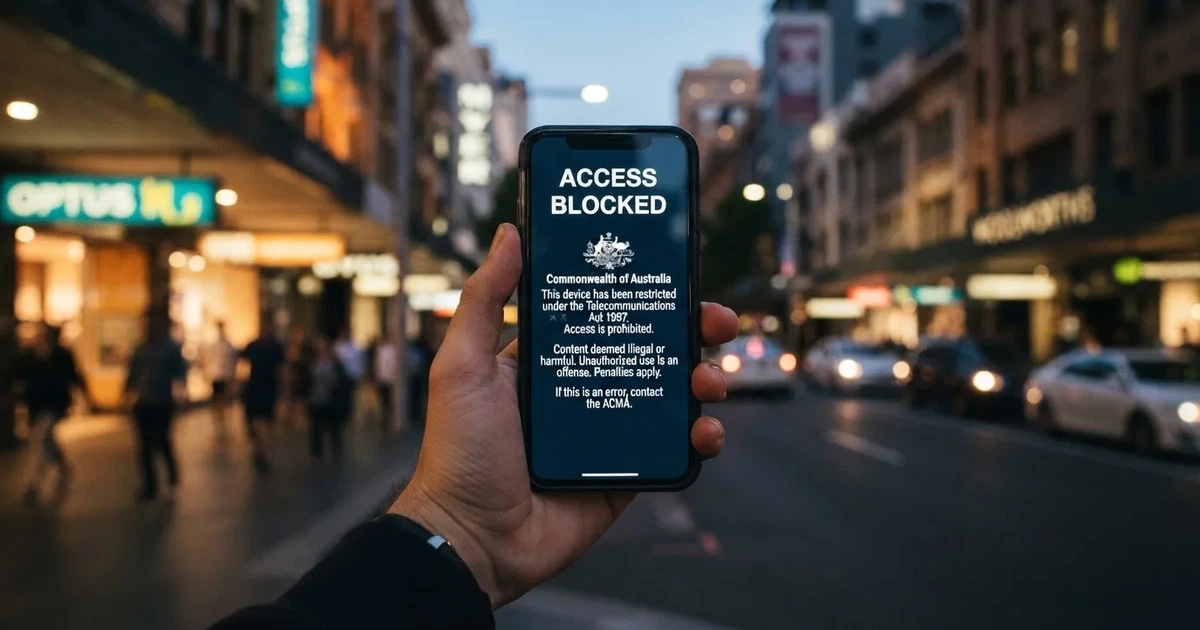
Australia’s gambling law splits the market in two, and the split is sharper than the search phrase suggests. On one side sit the things a state or territory will license: wagering on races and sport placed before the event, lotteries and keno. On the other sit the things no jurisdiction licenses at all: online casino games, online pokies and in-play betting. The Interactive Gambling Act 2001 makes it an offence to provide those prohibited services to a person physically in Australia, and the Interactive Gambling Amendment Act 2017 strengthened the regulator’s hand by giving it the power to issue formal warnings and direct Australian internet service providers to block offending sites. A casino “not on BetStop” is, almost by definition, a casino offering services no Australian licence was ever available for, which is the reason the register never had a row for it in the first place.

The licensed half of the market sits with the Northern Territory Racing and Wagering Commission, which regulates fifty-two of the country’s online bookmakers — Sportsbet, Bet365 and Ladbrokes among them — for tax reasons. The commission has no full-time staff and meets once a month in Darwin, a fact that says more about how wagering licensing works in practice than any white paper does. The casino half has no equivalent. It is not unlicensed in the sense of holding some lesser permit; it is unlicensed in the sense of being unlicensable, with every brand on the offshore side of the line running on the licence of another country and on the patience of the ACMA.
What that means for a punter: the licensed bookmaker is bound by Australian consumer law, by Australian advertising rules, by the Australian ban on credit-card wagering and by BetStop itself. The offshore casino is bound by none of those. If a withdrawal stalls, an Australian complaints body has no jurisdiction; if the site is blocked mid-balance, the balance stays where the regulator’s block fell.
BetStop and the offshore gap
BetStop — the National Self-Exclusion Register — went live on 21 August 2023 and is administered by the ACMA. Registering takes about five minutes, and it can be done online at any time. A person registers a single exclusion that covers every licensed Australian online and phone wagering provider at once. Once registered, those providers may not let the person place a bet, may not let them open new betting accounts and may not send them marketing messages. A registrant can also nominate someone they know to support them while the exclusion is active, which is the small but useful concession the register makes to the social side of a habit.

The reach of the register is set by licensing. BetStop covers licensed Australian online and phone gambling providers, which is exactly the set of operators the Interactive Gambling Act 2001 carves out of the offshore market. An offshore casino holds no Australian licence, so the register has no contract with it, no obligation on it and no technical lever to stop an excluded person from logging in. The exclusion binds the licensed side of the wall, and the unlicensed side of the wall is what the search for “non BetStop casinos” is reaching for.
As of 31 July 2026, BetStop had recorded 67,480 registrations in its three years of operation, with 41,250 of those exclusions still active. Seventy-eight per cent of registrants are under forty, and thirty-eight per cent chose a lifetime exclusion over a fixed term. The numbers say two things at once: the register is being used heavily by the demographic most exposed to offshore marketing, and the people using it are overwhelmingly choosing not to come back.
What the ACMA has been doing about it
The ACMA’s enforcement record is the only quantitative ground a reader has for guessing how often the regulator acts, so it is worth quoting in full rather than gesturing at. According to the ACMA as reported in June 2026, a total of 1,751 illegal gambling and affiliate marketing websites had been blocked since the first blocking request was issued in November 2019, and more than 230 unlicensed gambling services had left the Australian market since enforcement was strengthened in 2017. In a single round reported on 26 June 2026 the regulator asked Australian ISPs to block twelve further sites — 7Signs, ChromaBet, Donbet, Duospin, Freshbet, Slots Gem, Jacks Club, Lucky Start, Pointsbetz, Spinrise, Vinyl Casino and Wildsino.
Two other figures sharpen the picture. H2 Gambling Capital’s 2025 report estimates that Australians lose about A$3.9 billion a year to illegal gambling sites, and that the share of gambling going through legal channels fell from 74 per cent in 2021 to 64 per cent. The legal side is shrinking while the illegal side grows. That trend is the reason the ACMA keeps issuing rounds: the sites get blocked, others appear, and the blocks land at a rate that produces roughly nine to ten blocks a month across the period the regulator has been at it.
The blocking arithmetic is itself the page’s small piece of original work. From the first blocking request in November 2019 to the 1,751-site total reported in June 2026, the ACMA has been requesting blocks for about seven and a half years. Spread across that window, the long-run rate sits somewhere between nine and ten sites blocked per month, and that is the pace a reader should expect the regulator to keep — not a war that ends, but a tide the regulator pushes back by a few sites each round. The figure is a band, not a point, because some rounds bundle dozens of sites into a single week and others go quiet.
The blocking record is the regulator’s side of the ledger. The other side is what gets published as a formal warning to the operator behind a site, which is what the table below is built from.
How to read the warnings, and what they tell a reader
A formal warning under the IGA is not a prosecution. It is a published letter from the ACMA to a named operator, putting the operator on notice that a specified service appears to be a prohibited interactive gambling service provided to Australians. The warning sits on the ACMA’s website; the operator is named; the brand is named. If the operator continues, the regulator moves to a blocking request to Australian ISPs and, eventually, to civil penalty proceedings. The pattern across the eleven brands in the table below is that most are repeat names: an operator warned in 2022, again in 2025, often again in 2026, with the brand changing each time but the corporate shell reappearing.
That pattern is the single most useful piece of information the table carries, and it is not what an affiliate review page tends to surface. The brand on the homepage changes every few months. The licensed jurisdiction on the footer stays the same. The operator behind it has been on the ACMA’s list for years.
Side-by-side: the brands the ACMA has named
The table below sets out the eleven operators from §6 of the research, each carrying a row that names the brand, the ACMA action and the date, the operator the regulator named in its warning, and a note on what consumer-side listings show about how the brand treats Australian players on its payment side. Every row reflects a single published action by the ACMA; where the regulator has acted against the same operator more than once, only the most recent action is shown.
| Brand | ACMA action and date | Operator named by the ACMA | Payment side, as listings show |
|---|---|---|---|
| RocketPlay | Formal warning, March 2026 | Pulsup Ltd | Listings note Australian-friendly payment methods; not a verified product offer |
| Level Up Casino | Formal warning, May 2022 | Dama N.V. | Listings note card-block arrangements at major Australian banks; not a verified product offer |
| Woo Casino | Formal warning, March 2025 | Dama N.V. | No data |
| Spirit Casino | Formal warning, May 2025 | Dama N.V. | No data |
| National Casino | Formal warning, July 2025 | Consolutetish S.R.L. | Listings note ACMA, AUSTRAC and BetStop visibility; not a verified product offer |
| Bizzo Casino | Formal warning, July 2025 (earlier 2022) | Consolutetish S.R.L. | Listings note Australian-facing payment options; not a verified product offer |
| Ignition Casino | Formal warning, July 2025 | Bamboo Media | No data |
| Instant Casino | Formal warning, February 2025 | EOD Code SRL | Listings reference PayID and other instant payment rails; not a verified product offer |
| Jackbit | Formal warning, April 2026 | Ryker B.V. | No data |
| Casino Intense | Formal warning, April 2025 | Sterplay Holding Ltd | Listings note ACMA, AUSTRAC and BetStop visibility; not a verified product offer |
| Sky Crown | Formal warning, September 2022 | Hollycorn N.V. | No data |
The column the page is most interested in is not the brand name. It is the operator column. Two operators — Dama N.V. and Consolutetish S.R.L. — appear more than once across the list, and the repetition is the picture. Dama N.V. picked up warnings in May 2022 over six brands, again in March 2025 over Woo Casino, and again in May 2025 over Spirit Casino, which is three published actions against the same corporate entity in under three years. Consolutetish S.R.L. picked up warnings in 2022 over Bizzo Casino and again in July 2025 over both Bizzo Casino and National Casino. A reader choosing among these brands is, functionally, choosing among brand variants of two operators the regulator has repeatedly addressed by name. The marketing says eleven casinos; the corporate filings say two or three.
The “Payment side, as listings show” column is the one place the page is obliged to be careful. The sources for any payment detail were affiliate marketing pages, not the operator’s own product page, so what the column carries is what third-party listings report about how the brand presents payment options to Australian readers — and nothing more. Where those listings had no relevant note, the row is left blank. A reader who needs to know whether their own bank will let a transaction through will find that answer with their bank, not on this table.
What the warning actually does to a brand
A formal warning from the ACMA is, in plain terms, a letter that puts an operator on a clock. The IGA targets the provider, not the individual player, so no Australian who logs in faces any personal consequence under the Act. What changes for the player is downstream of what changes for the operator. A brand that has been warned once and stays online in Australia is signalling that the regulator’s letter will not, on its own, move them. A brand that has been warned twice is signalling that they have made a business decision to keep offering to Australians regardless. None of that is illegal for the punter; all of it is information a punter can act on.
The other side of the same coin is the ISP-level block. Once the ACMA directs Australian ISPs to block a domain, the site’s front door closes for most Australian networks within days, and stays closed until the operator either moves the site to a new domain or appeals. The blocking list sits at 1,751 domains as of June 2026, and the long-run rate is somewhere between nine and ten blocks a month across the seven-and-a-half-year window. A reader looking at the table above and wondering which of those brands will still load next month is looking at the wrong column. The right answer sits in the operator row: if the same corporate entity has been warned multiple times, the next step in the sequence is a block request, and the history suggests that step tends to land within a year or two of the second warning.
Why an offshore brand will not see a BetStop exclusion
The technical reason is the same as the legal reason: BetStop binds licensed Australian wagering providers, and an offshore casino is not one. The practical reason is that an offshore operator has no integration with the register, no contract to honour a flag, and no commercial incentive to build one. The marketing reason is the only thing the reader needs to know: an offshore casino can be reached by anyone, excluded or not, and is the reason the search for “casinos not on BetStop” returns results at all.
What that means for a person who has registered with BetStop and is looking for a way around their own exclusion: the register will not catch them at an offshore site, and the site will not stop them at the door. The thing standing between the person and a session is whatever the person themselves decided when they ticked the box at BetStop.gov.au. The exclusion is a tool the person chose to use against themselves, and the offshore side of the market is the place where that tool does not reach.
What it means for a person who has not registered with BetStop and is weighing whether to: the register will cover every licensed Australian wagering operator for the chosen period, but it cannot reach the offshore casino side at all. That is the design, and it is worth saying plainly: the register does what the law allows it to do, and the law does not allow it to reach unlicensed operators. Anyone looking for a tool that reaches the unlicensed side is asking for a tool that does not exist.
Where the reader can get real help
The Gambling Help Online service runs the National Gambling Helpline on 1800 858 858, free, twenty-four hours a day, with web chat available through the Gambling Help Online site. That line and that chat are the right destination for a person whose search history is starting to include the kind of query this page sits behind. BetStop is the right destination for a person who wants the licensed half of the market locked out for three months, six months, twelve months, or for life. Both are run by the Australian Government, both are free, and both reach the person rather than the screen.
What that line and what that register do not do is answer the underlying question the search phrase carries. That question is whether there is a casino “outside” the exclusion that will let an excluded person back in. There is. The question the line and the register do answer is whether that casino is a good idea for that person, and the answer is not the regulator’s to give; it is the person’s, and the tools to think it through sit on the helpline.
How an Australian bank stacks the deck further
Two pieces of plumbing sit between the offshore casino and an Australian player’s deposit that the player is unlikely to see advertised. The first is the credit-card ban. Under the Interactive Gambling Act 2001 as amended in 2023, Australian-licensed online wagering services cannot accept payment by credit card or any credit-related product, and that ban also constrains the use of digital wallets linked to a credit line, including Apple Pay on a credit-funded card. The ban does not reach an offshore casino — the offshore casino is not an Australian-licensed wagering service — but it does shape which cards in an Australian wallet will work at all.
The second piece of plumbing is the bank-level gambling block. Westpac’s gambling block refuses authorisation of any transaction tagged with the merchant category code for betting and casino gambling, on eligible personal credit and debit cards. ANZ’s gambling block, set up in the ANZ app, also blocks gambling transactions routed through a digital wallet such as Apple Pay on an eligible card, and turning the block off again carries a forty-eight-hour cooling-off period. The bank warns, plainly, that not every gambling transaction will be blocked and some non-gambling transactions may be blocked in error. What that means in practice is that an Australian player who has set the bank-side block is, by their own action, building a second wall on top of the one the regulator built.
A useful side detail: paying to a PayID shows the account holder’s name before the transfer is sent, and the operator of the New Payments Platform warns that being asked to transfer money to a PayID that resolves to an illegal gambling site almost certainly means a scam site. That single fact — the PayID name check — is the cheapest pre-payment check an Australian player can run, and it costs nothing to do.
What an Australian payment rail can and cannot prove
PayID sits on top of Australia’s New Payments Platform, which went live to the public on 13 February 2018 and is owned by a non-profit company whose thirteen shareholders include the Reserve Bank of Australia and the country’s major banks. Osko, the instant transfer service that runs on the same platform, moves a bank-to-bank payment between participating Australian banks in under a minute, twenty-four hours a day, including weekends. More than 25 million PayID identifiers had been registered by April 2025, and PayID-based instant transfers are available at more than 100 Australian financial institutions. The platform’s own reliability target is to keep monthly outages under two minutes.
What the rail proves is that the payment reached a real account at a real Australian bank. What it does not prove is that the account belongs to a licensed Australian wagering provider. The PayID name check tells the payer whose account is on the other end; the law tells the payer that no Australian-licensed entity will be on the other end of an online casino deposit, because no such entity exists. The reader is left holding a payment rail designed for speed and a regulator that has told them, in writing and at length, that the recipient of an offshore casino deposit is not the kind of recipient the rail was built for.
What the four-figure block count means in plain terms
The 1,751 figure sits in the regulatory equivalent of a public ledger. Each entry is a domain the ACMA has asked Australian ISPs to block; each round, the regulator publishes a new list; the running total climbs by a handful to a dozen each month. From the first blocking request in November 2019 to the 1,751 total in June 2026, the regulator has been at it for about seven and a half years, which puts the long-run rate somewhere between nine and ten blocked sites per month across the whole window.
That figure is a band, not a point. Some rounds bundle a dozen sites into a single week; others go quiet for a month at a time. What the band tells a reader is the order of magnitude: a regulator acting at pace, not a regulator acting in spasms, and an offshore market that has to replace roughly a hundred blocked domains a year just to hold its ground. The reader does not need to know the precise figure to use it. The reader needs to know that the regulator is not letting the back catalogue age out, and that a brand sitting on the ACMA’s warning list today is most likely on the ACMA’s block list within a year or two.
A note on what this page is and is not
The eleven brands in the comparison table are not a ranking and not a recommendation. They are a list of brands the Australian regulator has named in published actions for offering prohibited services to Australians. No bonus terms, payout times, game libraries, wagering multiples or VIP programmes have been carried across from affiliate marketing pages onto this page, because the only sources for those figures were the affiliate marketing pages themselves, and the work of this page is to read the regulator’s record rather than to repeat the marketing. A reader who wants a betting site that will accept their deposit, give them a game, and pay them out when they win has the licensed half of the market for that, with Sportsbet, Bet365 and Ladbrokes all licensed through the Northern Territory and bound by Australian consumer law. A reader who wants a casino game has no licensed Australian option, and the brands in the table below are the regulators’ answers to that gap.
The verdict on each brand below is not a verdict on whether to play there. The verdict is what the ACMA’s published record says about the operator and what a reader can reasonably infer from it.
RocketPlay
The ACMA issued a formal warning to Pulsup Ltd over RocketPlay in March 2026, and the same brand sits on an earlier Dama N.V. warning from May 2022. Two formal warnings, four years apart, on a brand whose operator changed hands somewhere in between, is the regulator’s way of saying the brand itself has been a target for longer than the current corporate paperwork suggests. The recent warning is the active one; the operator behind it has had time to read the regulator’s letters.
Level Up Casino
Dama N.V. was warned over Level Up Casino in May 2022, as part of a six-brand batch. The warning is four years old, and the regulator has not refreshed it against this specific brand since, but the corporate shell that received the 2022 letter is the same shell that received the 2025 letters over Woo Casino and Spirit Casino. A reader weighing this brand is weighing a brand whose operator has been on the ACMA’s list across the whole window.
Woo Casino
The March 2025 warning to Dama N.V. is the most recent published action touching this brand. It is also one of three the same operator received inside twelve months. The brand is the new name; the operator’s pattern of warnings is the old one.
Spirit Casino
The May 2025 warning to Dama N.V. over Spirit Casino completes a run of three formal warnings the same operator picked up in fourteen months. The brand launched into a market where the operator was already on the ACMA’s published list, and the warning was issued six months after launch.
National Casino
Consolutetish S.R.L. was warned in July 2025 over National Casino, in the same round that named Bizzo Casino. The operator’s earlier 2022 warning covered Bizzo under different corporate paperwork, which means the regulator has now addressed the same operator twice across two different shells for two different brands.
Bizzo Casino
Bizzo Casino carries the longest published history of any brand in the table: an earlier 2022 formal warning to TechSolutions Group N.V. and TechSolutions (CY) Group Limited, and a 2025 warning to Consolutetish S.R.L. The brand has been the subject of regulator action under two different operators in three years.
Ignition Casino
Bamboo Media received a formal warning over Ignition Casino in July 2025, in the same round that named National Casino and Bizzo Casino. The published record starts in 2025, which means the regulator’s patience with this operator began more recently than for the Dama N.V. brands.
Instant Casino
EOD Code SRL was warned over Instant Casino in February 2025. The brand sits at the start of the 2025 warning cycle, and the regulator has not refreshed it against this brand since. The warning is the only public action on the file.
Jackbit
Ryker B.V. was warned over Jackbit in April 2026, in the same round that named CasinOK. The published action is recent, and the operator’s file is short.
Casino Intense
Sterplay Holding Ltd was warned over Casino Intense in April 2025. The published action sits in the middle of the 2025 warning cluster, and the operator’s file has no other brands on it under this name.
Sky Crown
Hollycorn N.V. was warned over Sky Crown and Blue Leo in September 2022, in the earliest published warning in the table. The regulator has not refreshed it against this brand since, and the four-year gap is longer than for any other brand in the list. The warning still sits on the ACMA’s site, and the brand still carries it.
Frequently asked questions
What is BetStop and how does it differ from a casino ban?
BetStop is the Australian Government’s National Self-Exclusion Register. It binds every licensed Australian online and phone wagering provider, so a person who registers cannot place a bet, cannot open a new betting account and cannot receive marketing from those providers. It is not a casino ban, because no Australian jurisdiction licenses online casino games at all, so a casino ban is not a thing the register can deliver.
Does BetStop block offshore online casinos as well as licensed wagering sites?
No. BetStop’s reach is set by licensing: it covers licensed Australian online and phone gambling providers, and an offshore casino holds no Australian licence. An offshore casino can be reached by an excluded person in the same way an unlicensed website can be reached by anyone, because the register has no contract with it.
How long does it take to register with BetStop?
Registering takes about five minutes and can be done online at betstop.gov.au at any time. A person nominates an exclusion period — three months, six months, twelve months, or lifetime — and the exclusion takes effect immediately across every licensed Australian wagering provider.
Can someone remove themselves from BetStop before the minimum period ends?
No. The minimum exclusion period is three months, and a registrant can extend an active exclusion but cannot shorten it. A lifetime exclusion cannot be reversed. The register’s design is that the person’s own decision at the moment of registration is the one that holds.
Where can someone get support if they are worried about their gambling instead of searching for casinos outside BetStop?
The National Gambling Helpline on 1800 858 858 is free, twenty-four hours a day, with web chat available through Gambling Help Online. BetStop is the right destination for someone who wants the licensed half of the market locked out for a fixed period or for life. Both are run by the Australian Government and both are free.
Created by the ”Casino Live Dealer Hub” editorial team.