
Booongo and the Australian player in 2026: the offer no one can lawfully make
Searching for “Booongo online casinos in Australia” runs straight into a wall that doesn’t move. The studio behind those slots — now operating publicly as 3 Oaks Gaming — is real, the games are real, and the offshore sites that advertise them to Australian players are real. What isn’t real is an Australian licence for any of it. The Interactive Gambling Act 2001, as tightened in 2017, makes the provision of online casino games and online pokies to anyone in Australia a contravention, and no state or territory issues the licence that would turn that provision legal. The page that follows treats the question seriously: what Booongo actually is as a studio, why the offshore sites keep turning up in Australian search results, and what the regulator has done about it.
Data current as of 9 November 2026; cross-checked against the ACMA’s register of formal warnings and blocking requests, and against the operator names published by the ACMA itself.
Table of Contents
- What Booongo is — and what it became
- The legal frame around online casino in Australia
- The payment side, and why it can’t be local
- What the ACMA has actually done
- The blocking rate, read as a number
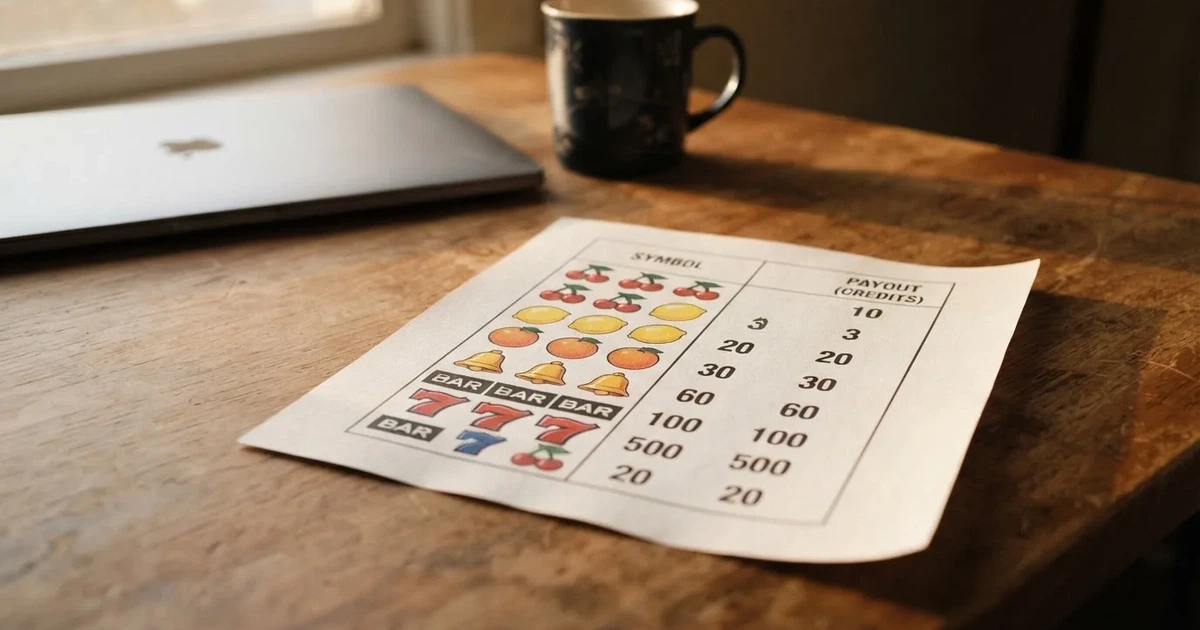
- What a paytable actually shows
- Bonuses, free spins, and the arithmetic behind them
- The mobile shape, without a recommendation
- Responsible play, and the help that’s actually available
- The eleven brands on the ACMA’s record
- The comparison, plain
- Tax, briefly
- Reading the page
- Frequently Asked Questions
What Booongo is — and what it became
Booongo was the working name of a slot developer that reorganised in 2021. The regulated-market successor brand is 3 Oaks Gaming, and the public filings now travel under that name. The portfolio is the giveaway: titles such as Sun of Egypt 4, Coin UP: Lightning, 3 Hot Chillies, 3 Pots of Egypt, Storm of Olympus, 777 Fruity Classic and Hawaii Riches are 3 Oaks products in the regulated record, even when affiliate pages still label them “Booongo”. The studio is licensed, not the casinos using it.

That distinction matters in Australia because the studio has been building a regulated footprint at exactly the moment Australian search interest has stayed flat. The UK Gambling Commission granted 3 Oaks Gaming a remote operating licence on 9 February 2024 under licence number 063055-R-338209-005, and certified more than 50 of its slot titles in the same round. The Malta Gaming Authority issued a recognition notice on 4 August 2025, after earlier approvals in Portugal and Romania. The Australian arm of the global market is conspicuously absent from that list — and not by oversight. The local regime doesn’t accommodate it.
For an Australian reader, the practical upshot is straightforward: the games exist, the studios that hold licences in other jurisdictions exist, and the offshore sites that aggregate them exist. What doesn’t exist is the licensed Australian venue that would put them on the same side of the law as the player. Searches that conflate “Booongo casino” with a place to play treat the studio’s name as if it were the venue. It isn’t.
The legal frame around online casino in Australia
The relevant statute is the Interactive Gambling Act 2001 (the IGA), tightened by the Interactive Gambling Amendment Act 2017. Section of itself prohibits the supply of “prohibited interactive gambling services” — a defined term that, in plain English, covers online casino games, online pokies and in-play betting. None of those services can be licensed in any Australian state or territory, because the prohibition bites at the federal level; the local regimes don’t have authority to legalise what the Commonwealth has banned.

What is licensed, and is licensed heavily, is pre-event wagering on racing and sport, plus lotteries and keno. The venue of choice for the largest operators is the Northern Territory: the Northern Territory Racing and Wagering Commission (NTRWC) regulates 52 of Australia’s online bookmakers — Sportsbet, Bet365 and Ladbrokes among them — because the Territory’s tax settings suit the operators’ balance sheets. The same commission runs on a skeleton staff: no full-time employees, one monthly meeting in Darwin. That thin regulator handles a bookmaking sector, not a casino sector, because there is no casino sector to handle.
The enforcement arm is the ACMA — the Australian Communications and Media Authority. The ACMA investigates complaints, issues formal warnings under the IGA, and can direct Australian internet service providers to block offending sites. As of the round reported on 26 June 2026, the ACMA had asked ISPs to block 1,751 illegal gambling and affiliate marketing websites since the first blocking request in November 2019. More than 230 unlicensed gambling services had left the Australian market entirely since enforcement was strengthened in 2017. The latest blocking round alone added 12 sites: 7Signs, ChromaBet, Donbet, Duospin, Freshbet, Slots Gem, Jacks Club, Lucky Start, Pointsbetz.com, Spinrise, Vinyl Casino and Wildsino.
For the reader, two consequences follow from that enforcement posture. First, the law targets the provider, not the player: an Australian punter using an offshore site is not personally at risk of prosecution. Second, the same offshore status that takes the site outside Australian law also takes the player outside Australian consumer protection — no local complaints body, no local dispute resolution, no recourse if a withdrawal is refused or a balance disappears when the site is blocked.
The 2026 reform to watch is the Interactive Gambling Amendment (Gambling Reform) Bill 2026, which passed Parliament on 19 August 2026. Its advertising and inducement measures commence on 1 January 2027. That’s law with a start date, not yet in force on a 2026 page — but it sharpens the question of how aggressively Australian-facing affiliates will keep marketing the offshore sites in the year to come.
The payment side, and why it can’t be local
The IGA’s prohibition is reinforced by a payments ban that took effect on 11 June 2024: credit cards, credit-related products and digital currency are banned as funding for any licensed Australian online wagering service. Penalties reach A$247,500 for operators that break the rule. Legal funding routes for licensed wagering are debit card, bank transfer, PayID/Osko and BPAY.
That rule, on its face, applies to licensed operators. In practice it draws a line that any reader can read across: a site asking an Australian customer to deposit by credit card, by cryptocurrency, or through an e-wallet funded from any of those, is operating outside the Australian framework. The site’s Curaçao or Anjouan licence may be in good standing under that jurisdiction’s rules, but it has no bearing on whether the transaction is one an Australian bank or payment processor would recognise.
For an offshore casino marketed to Australians, the practical banking path is typically: e-wallet or voucher on the way in, e-wallet or crypto on the way out, with the player carrying the exchange-rate risk both ways. Withdrawal times quoted by the site itself are not the same as withdrawal times the player experiences — the marketing copy reads in hours, the support tickets tend to read in weeks. There is no Australian complaints body to escalate to if a payout stalls, which is the practical shape of “no local protection” in the wallet.
The bottom line on money is the same as the bottom line on law: there is no Australian banking counterpart to an offshore casino, and there is no Australian consumer protection standing behind the offshore cashier.
What the ACMA has actually done
The ACMA publishes its formal warnings on its own site, naming the operator entity behind each service. The list that follows draws from those publications only — it is not a ranking of casinos, it is the regulator’s own record of who has been warned, and for what. Some of the operators have been warned more than once, across different corporate vehicles.
In March 2026 the ACMA issued a formal warning to Pulsup Ltd over Rocketplay.com.au. The same brand had already been warned in May 2022, when the ACMA addressed Dama N.V. over six properties — Bambet, Dazard, Level Up, Rocketplay, Wild Tornado and Cobra Casinos — in a single action.
In March 2025 the ACMA warned Dama N.V. over Woo Casino; in May 2025 the same operator was warned over Spirit Casino. In July 2025 the ACMA addressed Bamboo Media over Ignition Casino and Consolutetish S.R.L. over National Casino and Bizzo Casino. Bizzo Casino had already been the subject of an earlier 2022 warning to TechSolutions (CY) Group Limited and TechSolutions Group N.V. — a reminder that corporate reshuffles tend to follow ACMA action rather than precede it.
In February 2025 the ACMA warned EOD Code SRL over Instant Casino. In April 2026 the ACMA warned Ryker B.V. over Jackbit and CasinOK. In April 2025 the ACMA warned Sterplay Holding Ltd over Casino Intense. And the ACMA has warned Hollycorn N.V. over its Sky Crown and Blue Leo services.
The pattern is consistent: the operator entity changes name, sometimes twice in a single year; the brand on the front of the site changes too, sometimes more often; the underlying conduct — offering online casino games to Australians — does not. That’s the record a reader is choosing against when the marketing copy is in one column and the ACMA’s register is in another.
The blocking rate, read as a number
By 26 June 2026, the ACMA had asked ISPs to block 1,751 illegal sites since the first blocking request in November 2019. That is roughly 80 months of enforcement, which works out to an average blocking rate in the low-20s per month across the full enforcement window. The band is wide because enforcement isn’t uniform: some rounds block a single site, others block a dozen, and the early years ran slower than the post-2017 period after the Amendment Act came into force.
Read the figure as a rate, not as a count: more than 230 unlicensed services have left the Australian market entirely over the same window — some by choice, most by blocking or by the regulator’s attention becoming unsustainable. The arithmetic favours the regulator in volume terms. The arithmetic favours neither side in reach terms: a single site that re-emerges under a new domain can absorb the marketing budget of the ten it replaced, and the ACMA’s block list catches the new domain on a lag. The reader’s reading of the rate should be that the direction is firmly against the offshore sites, and that the gap between a site’s appearance and its block is the window of exposure the player is standing in if they click through.
What a paytable actually shows
For a slot, the paytable is the document a player can read in plain language before they stake anything. It lists each symbol, its payout at each combination count, the wild and scatter behaviour, the bonus triggers, and the theoretical return-to-player (RTP) — usually stated as a percentage of wagered amount across a very long run of spins. Volatility, where the studio publishes it, sits separately: a high-volatility slot pays less often but in larger chunks, a low-volatility slot pays more often but in smaller chunks.
Booongo’s successor catalogue, as carried on affiliate pages and on the studio’s own product pages, leans toward high-volatility hold-and-win mechanics with progressive-style bonus features. Sun of Egypt 4 and Coin UP: Lightning are typical of the line — Egyptian-themed, three fixed jackpot tiers above the bonus game, free-spins rounds that retrigger. The pattern repeats across most 3 Oaks titles, which is the practical reason affiliate pages sell the studio to players who like long, dry stretches punctuated by larger bonus payouts. The pattern is also why the frequency of any given bonus hit is lower than the value of the hit when it lands.
A reader who wants to evaluate a slot on its paytable alone — without playing it — can do three things. They can read the listed RTP and treat the figure as a long-run average, not a session outcome. They can read the volatility band and decide whether the slot’s payout cadence suits their budget tolerance. And they can read the bonus-trigger frequency, where it’s published, and decide whether the bonus structure is a meaningful component of their session or a marginal one. None of those reading steps require the player to be in front of a real-money machine, which is one reason paytable literacy is worth more in this market than the marketing wants to admit.
Bonuses, free spins, and the arithmetic behind them
The offers that recur on Australian-facing affiliate pages follow a familiar shape. A welcome package, usually staged over the first three or four deposits, with a matched-percentage bonus capped at some dollar amount. Free spins bundled in, tied to a small set of named titles. A wagering requirement expressed as a multiple of the bonus amount, sometimes of the bonus-plus-deposit, sometimes with the deposit itself locked out of play until the requirement is met. A maximum-cashout cap above which winnings from the bonus balance cannot be withdrawn. A time limit inside which the bonus must be cleared or it expires.
The arithmetic of a bonus is rarely the arithmetic the marketing copy writes. A 100% match on a A$200 deposit with a 40x wagering requirement on the bonus amount means A$8,000 of qualifying turnover before any bonus-derived winnings become withdrawable. At a slot stake of A$1 per spin, that’s 8,000 spins. At 5 seconds per spin on a standard mobile client, that’s 11.1 hours of continuous play to clear the bonus alone — and the wagering requirement is the minimum the player must do, not the maximum. A session that hits a long cold streak before the requirement is met simply resets.
Free spins change the shape rather than removing it. A 50-free-spin bundle on a single title at A$0.20 per spin delivers A$10 of qualifying action, with whatever that title’s RTP and volatility band say about how that A$10 tends to resolve. Free-spin winnings almost always land in a bonus balance that itself carries a wagering multiple, so the headline “50 free spins” rarely translates to A$50 of withdrawable cash — closer to A$10 of stake against a slot’s published RTP, gated by whatever clearing multiple the bonus terms attach.
The marketing word that recurs across these offers is “free”. The arithmetic that follows from the terms is rarely free in the colloquial sense. A reader who treats the headline as the offer and the terms as the fine print tends to discover the difference at the withdrawal screen, when the bonus balance has cleared and the cash balance hasn’t.
The mobile shape, without a recommendation
For an Australian reader, the mobile experience an offshore casino offers is the experience most readers will actually have — desktop play is the minority. A modern offshore site runs as a browser-based client in HTML5, which means the same game library loads in a mobile browser without a separate download. The trade-off is performance on lower-spec devices and the slot-machine-style “landscape” layout that some titles assume.
Native apps are a different case. Some offshore casinos offer iOS and Android apps, which deliver a smoother interface but add a download step the browser version doesn’t require. Both shapes are common; both load the same game portfolio in practice. Neither changes the legal position: the app is delivered by an offshore provider, the deposit is processed outside the Australian payments framework, and the player’s consumer protection sits where it sat before the download.
What the mobile shape does change is the practical window in which play happens. A reader who would have walked past a desktop casino in 2015 can sit with a phone on a train in 2026 and play a hold-and-win slot for the duration of the commute. The mechanics haven’t changed; the friction has. The responsible-gaming tools the site itself offers — deposit caps, session timers, cool-off periods — are the only friction the player has, because the Australian self-exclusion register doesn’t reach an offshore site.
Responsible play, and the help that’s actually available
The Australian framework assumes a licensed operator on the other end. Where that licensed operator doesn’t exist, the help that does exist is independent of the operator, and it is free.
Gambling Help Online offers 24/7 confidential support — chat and phone — and runs the National Gambling Helpline on 1800 858 858. The service is free and operates around the clock. It covers online gambling as readily as venue-based gambling, and the conversation is with a counsellor, not with a casino.
BetStop, the National Self-Exclusion Register, has been live since August 2023. It binds every Australian-licensed online and phone wagering service, which is to say: it doesn’t bind an offshore casino. A player who self-excludes via BetStop is excluded from licensed Australian operators only; an offshore site has no integration with the register and continues to accept deposits during the exclusion period. For a player using only offshore venues, BetStop is useful as a record of intent, not as a binding mechanism.
The Australian minimum age for any gambling product is 18. Offshore sites may set their own age floor; the Australian floor still applies in Australian law.
A useful test, when play starts to feel compulsive or stressful: if the player is hiding the activity, chasing losses, or borrowing to fund it, the test has already answered itself. The 1800 number is the next step.
The eleven brands on the ACMA’s record
The list below is the ACMA’s list, not a ranking. Each brand is included because the regulator has published a formal warning against the operator entity behind it for offering prohibited services to Australians. The Subject support column states where the page can confirm a link between the brand and a named slot studio or platform; where the connection cannot be confirmed, the column is blank.
RocketPlay
The brand sits behind Rocketplay.com.au. The ACMA issued a formal warning to Pulsup Ltd over the domain in March 2026. An earlier warning in May 2022 named Dama N.V. — the same operator entity that addressed six other brands in that single action. The legal posture is unchanged: the site displays a Curaçao-issued licence, which is in good standing under Curaçao’s rules and irrelevant to whether the provision is lawful under the IGA. Subject support is unverified on this page. The site’s continued appearance in Australian search results is the operative fact, not the licence it displays; the regulator’s record of action against the same brand under two different operator names is the longer fact.
Level Up Casino
The ACMA’s May 2022 warning over Dama N.V. listed Level Up among six brands. Wazdan.com, a slot provider with its own portfolio, lists the brand in third-party aggregations. That listing is a marketing placement by a slot studio, not a statement that the casino is licensed in Australia; the casino itself is a Dama N.V. property operating outside Australian law. The two facts are independent and don’t contradict each other — the slot studio is licensed in its own jurisdiction, the casino is unlicensed in Australia. Reading the listing as an endorsement of the casino’s legal status is the mistake the marketing copy invites.
Woo Casino
Woo Casino is a Dama N.V. property. The ACMA addressed Dama N.V. over Woo Casino in March 2025 and over Spirit Casino in May 2025 — the same operator entity, two distinct brands, two distinct warning dates. The pattern of Dama N.V. operating multiple brands and rotating them through ACMA attention has been a fixture of the regulator’s record since 2022. Subject support on this page is unverified.
Spirit Casino
A second Dama N.V. brand, addressed by the ACMA in May 2025. The operator-entity overlap with Woo Casino — same parent company, separate front-of-site branding — is the relevant fact. Subject support is unverified.
National Casino
The ACMA addressed Consolutetish S.R.L. over National Casino in July 2025. The brand appears in third-party aggregations on Betsoft.com, in Wikipedia’s coverage of the studio landscape, and on Pragmaticplay.com’s distribution lists. The presence in those listings confirms the brand’s commercial relationships with major slot studios; it does not alter the brand’s legal status in Australia. The IGA targets the provider; the aggregator listings do not change that.
Bizzo Casino
The ACMA addressed Consolutetish S.R.L. over Bizzo Casino in July 2025 — the same operator-entity entry that covers National Casino. Bizzo Casino had already been the subject of a 2022 formal warning to TechSolutions (CY) Group Limited and TechSolutions Group N.V., a separate corporate vehicle. The recurrence is the point: the brand has cycled through at least two operator entities, both of which the ACMA has named. Subject support on this page is unverified.
Ignition Casino
The ACMA addressed Bamboo Media over Ignition Casino in July 2025. Subject support is unverified. The marketing literature around this brand targets Australian players through affiliate channels; the regulator’s record is the source the reader should weight more heavily.
Instant Casino
The ACMA issued a formal warning to EOD Code SRL over Instant Casino in February 2025. Subject support is unverified. A formal warning is the ACMA’s intermediate step — short of a blocking request, but with the implied threat of escalation. The brand’s continued appearance in Australian-facing marketing is not, on its own, an indication that the warning has been complied with.
Jackbit
The ACMA addressed Ryker B.V. over Jackbit in April 2026, in the same action that addressed CasinOK. Subject support is unverified. The two-brand, one-entity pattern is the same one Dama N.V. and Consolutetish S.R.L. have run.
Casino Intense
The ACMA issued a formal warning to Sterplay Holding Ltd over Casino Intense in April 2025. The brand appears in third-party aggregations for 1spin4win, in Wikipedia’s coverage of the studio landscape, and in gamblingcommission.gov.uk’s content. Each of those listings is a third-party placement; none alters the casino’s status in Australia.
Sky Crown
The ACMA addressed Hollycorn N.V. over Sky Crown — and over its sibling Blue Leo — under the same formal warning. Subject support on this page is unverified. The Hollycorn N.V. record is the relevant one for any reader weighing this brand.
The comparison, plain
The table below is the ACMA’s own record, read across the eleven brands on this page. The “subject support” column is the column the page can speak to: where a brand’s commercial relationship with a named studio or platform is on the public record, the column carries that record; where the page cannot confirm such a relationship, the column is blank. The “ACMA action and date” column is the regulator’s own publication, transcribed from the source.
| Brand | ACMA action and date | Operator named by the ACMA | Subject support |
|---|---|---|---|
| RocketPlay | Formal warning, March 2026; earlier May 2022 | Pulsup Ltd; earlier Dama N.V. | — |
| Level Up Casino | Formal warning, May 2022 | Dama N.V. | Listings on Wazdan.com |
| Woo Casino | Formal warning, March 2025 | Dama N.V. | — |
| Spirit Casino | Formal warning, May 2025 | Dama N.V. | — |
| National Casino | Formal warning, July 2025 | Consolutetish S.R.L. | Listings on Betsoft.com, Wikipedia, Pragmaticplay.com |
| Bizzo Casino | Formal warning, July 2025; earlier 2022 | Consolutetish S.R.L.; earlier TechSolutions | — |
| Ignition Casino | Formal warning, July 2025 | Bamboo Media | — |
| Instant Casino | Formal warning, February 2025 | EOD Code SRL | — |
| Jackbit | Formal warning, April 2026 | Ryker B.V. | — |
| Casino Intense | Formal warning, April 2025 | Sterplay Holding Ltd | Listings on 1spin4win, Wikipedia, gamblingcommission.gov.uk |
| Sky Crown | Formal warning (Hollycorn N.V. action) | Hollycorn N.V. | — |
The pattern the table exposes is the pattern the regulator has been publishing for years: operator entities cycle, brand names cycle faster, and the underlying conduct doesn’t.
Tax, briefly
Gambling winnings of a recreational Australian player are not assessable income under section 6-5 of the Income Tax Assessment Act 1997 (ITAA 1997), and losses are not deductible — unless the player carries on a business of gambling, which is a higher bar than the IGA’s prohibition contemplates. The model answer for a recreational player reading this page is “check with the ATO”, because the tax treatment of an offshore casino transaction in particular is not a question the page can resolve from the studio’s own terms.
Reading the page
The whole page has a single argument. The studios behind the slot titles — 3 Oaks Gaming, BGaming, Betsoft, 1spin4win, Pragmatic Play, Wazdan, the others in the listings — are licensed in their own jurisdictions, including, in several cases, in tier-one regulated markets like the UK and Malta. The casinos that aggregate those titles and market them to Australians are licensed, if at all, in jurisdictions that have no authority over the IGA. The ACMA’s record against the casinos is the regulator’s own publication, not a third-party judgement. The licensed Australian wagering sector exists, but it is a wagering sector, not a casino sector, and the slot titles an Australian reader finds through an Australian-licensed operator are the ones that aren’t on this page.
That is the position a reader is choosing between when they click. The marketing copy for the offshore sites does not say “we operate outside Australian consumer protection law”; the regulator’s record does. The reader’s job is to read the record before the click.
Frequently Asked Questions
Is Booongo itself an operator?
No. Booongo was the working name of a slot developer that reorganised in 2021; the regulated-market successor is 3 Oaks Gaming. The studio licenses titles to operators; it does not run a casino of its own. When a site markets itself as a “Booongo casino”, it means a casino that carries games from that studio — not a casino that the studio owns or operates. The distinction matters because the studio’s UK and Malta licences cover what the studio does, not what the casino does.
Can Booongo titles be played for real money at a licensed Australian casino?
No. No Australian state or territory issues a licence for online casino games or online pokies, and the Interactive Gambling Act 2001 prohibits the provision of those services to anyone in Australia. The Australian-licensed wagering sector — Sportsbet, Bet365, Ladbrokes, the 52 NTRWC-licensed operators — covers pre-event racing and sport betting, lotteries and keno. Booongo-style slots aren’t in that set. Any site offering them to an Australian customer is offering them outside Australian law, regardless of what licence the site displays.
How does a Booongo slot typically differ in its paytable?
The 3 Oaks catalogue leans on high-volatility hold-and-win mechanics with three-tier jackpot features and free-spin retriggers. The paytable typically shows lower hit frequency, larger bonus-trigger payouts, and a published RTP in the standard slot range. The mechanics are common across the studio’s titles — Egyptian and fruit themes are recurring backdrops — but the bonus structure is the defining feature, not the theme. The hold-and-win mechanics mean a session is more often characterised by longer dry stretches punctuated by larger payouts, which suits a particular budget tolerance and punishes a different one.
Does Booongo operate its own casino?
No. Booongo, and its successor 3 Oaks Gaming, license titles to operators; they do not run a casino. The “Booongo casino” phrasing on affiliate sites refers to casinos that carry the studio’s games, not to a casino the studio owns. The studio’s UK Gambling Commission licence and Malta Gaming Authority recognition notice are licences covering what the studio supplies to licensed operators in those jurisdictions — not a licence for the studio to run a casino to Australian players.
Why do offshore casinos highlight Booongo to Australian visitors?
Because the studio’s name carries weight with the audience the offshore site is targeting, and the regulatory environment in Australia means the offshore site is the only place that audience will encounter those titles. The marketing logic is straightforward: a player who would otherwise play at a venue where the slot is unavailable is a player the offshore site can convert if the affiliate page sells the title well enough. The IGA makes the provision of the games unlawful; the affiliate marketing that drives the search traffic sits in a separate, more contested regulatory space — and the 2026 reform bill’s advertising measures, commencing 1 January 2027, are aimed directly at that gap.
Is it legal for an offshore site to offer Booongo games to Australians?
No. Under the Interactive Gambling Act 2001, as amended in 2017, it is a contravention to provide prohibited interactive gambling services — including online casino games and online pokies — to a person in Australia. The IGA targets the provider, not the player: an Australian punter using an offshore site is not personally at risk of prosecution. But the offshore status also means there is no Australian consumer protection, no Australian complaints body, and no Australian recourse if a withdrawal is refused. The site can be blocked with a balance still on it; the ACMA has asked ISPs to block 1,751 such sites since November 2019. The legal posture and the practical posture both run against the player, in different ways.