
Uptown Pokies casino in Australia: what the offshore market is selling and what the law does about it
A site styled as Uptown Pokies sits inside a category the Australian Communications and Media Authority has been dismantling for years. Online casino games and online pokies cannot be licensed anywhere in Australia under the Interactive Gambling Act 2001, so whatever licence the brand displays sits outside Australian law. This page walks through what is publicly known about the brand itself, what the ACMA has done about it and the eleven other offshore brands it has acted against, and what an Australian who reaches one of these sites should expect from payments, withdrawals and dispute resolution. The page is descriptive: it explains what the offshore market is selling and what it costs the punter who buys it.
Data current as of 9 November 2026 and verified against ACMA formal-warning publications and Australian Payments Plus service descriptions.
Table of Contents
- The offshore casino market that surrounds the Uptown Pokies brand
- What the ACMA has done about Uptown Pokies specifically
- Why no Australian licence means no Australian protection
- Responsible gambling, in a market that is not connected to Australian safeguards
- Payments and payout speed: what an Australian punter actually sees
- Bonuses and free spins: what the marketing actually sells
- Mobile and app: how the offshore casino reaches a phone
- The specific games, providers and live tables offshore casinos offer
- Eleven offshore brands the ACMA has formally warned: a regulator-side record
- Frequently asked questions
The offshore casino market that surrounds the Uptown Pokies brand
A site calling itself Uptown Pokies is one of several hundred offshore casino brands aimed at Australian players. None of them can be licensed here. The Interactive Gambling Act 2001 makes it an offence to provide online casino games, online pokies or in-play betting to a person physically in Australia; state and territory regulators do not issue online casino licences. What is licensable is wagering on races and sport placed before the event, lotteries and keno — in practice licensed by the Northern Territory Racing and Wagering Commission, which covers 52 of Australia’s online bookmakers, including Sportsbet, Bet365 and Ladbrokes, for tax reasons rather than from any consumer-facing role.

That structural gap is the whole reason a brand like Uptown Pokies exists in the first place. The site itself is not Australian. It operates from offshore. It sells to Australians anyway, because Australians want to play online pokies and the legal market cannot supply them. H2 Gambling Capital’s 2025 report puts the cost at roughly A$3.9 billion a year flowing to illegal gambling sites, and tracks the share of gambling going through legal channels falling from 74% in 2021 to 64%. The legal market is shrinking relative to the illegal one in share terms even while the illegal market is being actively shut down.
Enforcement has not been cheap. The ACMA asked Australian internet service providers to block 12 more illegal gambling websites in a round reported on 26 June 2026 — 7Signs, ChromaBet, Donbet, Duospin, Freshbet, Slots Gem, Jacks Club, Lucky Start, Pointsbetz, Spinrise, Vinyl Casino and Wildsino — taking the running total to 1,751 illegal gambling and affiliate marketing websites blocked since the first blocking request in November 2019. More than 230 unlicensed gambling services have left the Australian market since enforcement was strengthened in 2017.
A blocked site is a site an Australian internet provider simply will not resolve. The site’s name still appears in search results; its URL does not connect. A punter with a balance still on a blocked site cannot cash it out through the site itself, because the site is no longer reachable from inside Australia. This is the moment an offshore brand’s promise of “24/7 withdrawals” meets its actual reach.
What the ACMA has done about Uptown Pokies specifically
The ACMA issued a formal warning to Proxous Advanced Solutions Limited in August 2022 for breaching the Interactive Gambling Act 2001 by supplying Realtime Gaming-branded software to illegal online casinos serving Australians, naming Uptown Pokies among the contravening services. The warning is not a blocking order: it is a published statement that the regulator has found the supplier to be in breach and has put the supplier on notice.
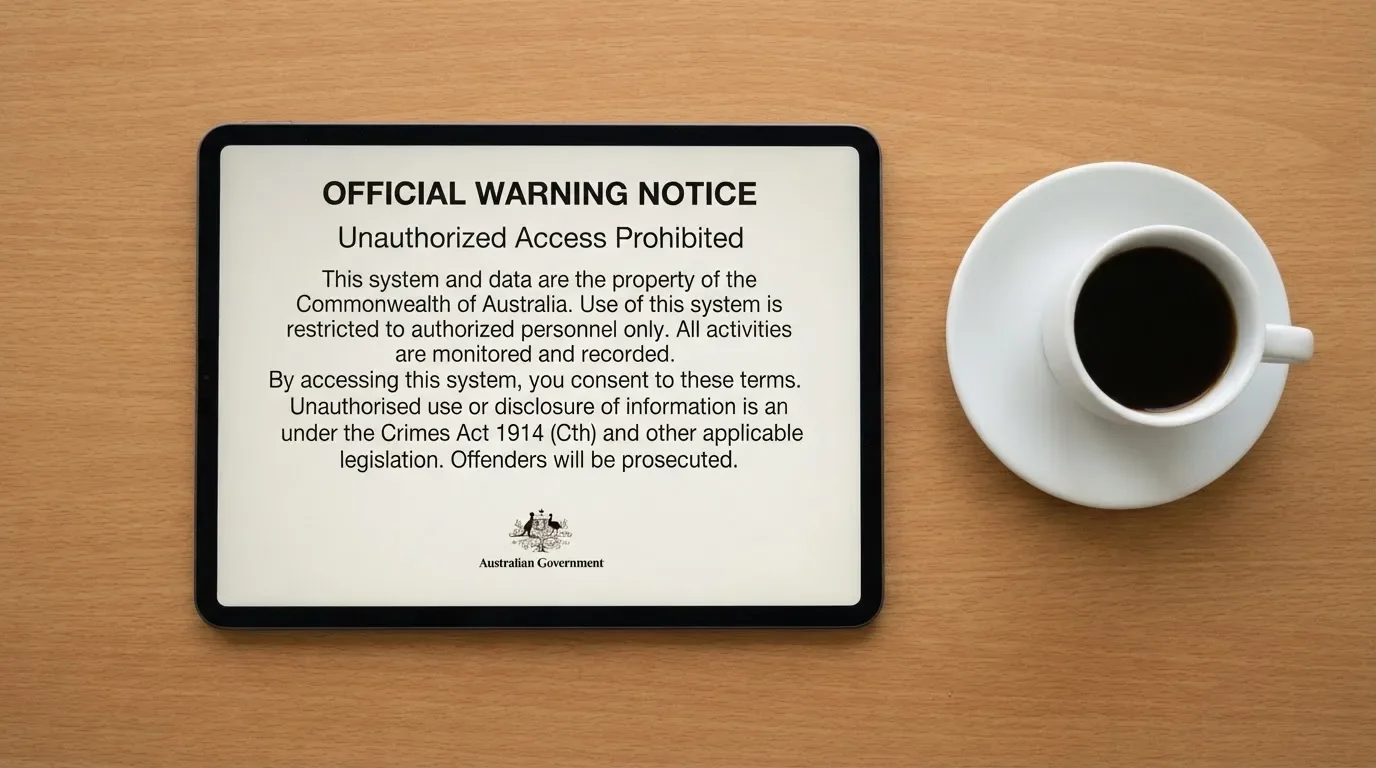
That is the only line item in the ACMA’s enforcement record that names Uptown Pokies directly. The brand does not appear on the rolling blocking lists that have removed 1,751 sites since November 2019; the supplier of its software does. The practical effect for an Australian punter is the same — the Interactive Gambling Act applies to the supplier as much as to the operator — but the search for “is Uptown Pokies on the ACMA blocked list” returns a softer answer than the marketing implies. The brand sits one tier back from the regulator’s direct line of fire, through its software provider.
The wider pattern is visible in the formal warnings the ACMA has issued to other offshore casino brands serving Australians in 2022–2026. Eleven of those brands appear later in this page, each with the date of its warning and the operator the ACMA named. They are not a ranking; they are the regulator’s own list of names it has publicly found in breach of the Interactive Gambling Act.
Why no Australian licence means no Australian protection
The legal position is not complicated. Online casino games cannot be licensed in Australia, so any casino brand serving Australians is doing so without an Australian licence. The brand itself may display a Curaçao, Kahnawake or Malta Gaming Authority licence — those are real licences issued by real regulators, and they bind the operator to the rules of that jurisdiction. None of them bind the operator to Australian consumer law, and none of them give an Australian punter a complaints body to approach if a withdrawal is refused or a bonus is voided.
The Interactive Gambling Amendment Act 2017 strengthened the law and gave the ACMA its current enforcement toolkit. The 2023 amendments extended the credit-card ban on licensed wagering to credit-related products and digital currency. The Interactive Gambling Amendment (Gambling Reform) Bill 2026 passed Parliament on 19 August 2026, with its advertising and inducement measures commencing 1 January 2027 — law with a start date, not yet in force on a page read in 2026.
The individual player is not the IGA’s target. The Act is aimed at providers, not punters. An Australian who plays at an offshore casino is not personally breaking the law. What the law does not do is protect them either. There is no Australian complaints body to escalate to, no BetStop binding on the offshore brand, no AUSTRAC-style supervision of how player funds are held.
BetStop, the National Self-Exclusion Register, has been live since August 2023 and binds every Australian-licensed online and phone wagering service. An offshore casino is not connected to it. A punter who has registered with BetStop is still able to deposit at Uptown Pokies and similar brands; the self-exclusion register does not reach them. The same applies to the National Gambling Helpline 1800 858 858 and the chat service at Gambling Help Online — both free, both 24/7, and both available regardless of where the gambling actually happens. The protection runs one way: an Australian punter can self-exclude from the legal market, and that exclusion stops there.
The tax position is not the protection either. Gambling winnings of a recreational player are not assessable income under section 6-5 of the ITAA 1997, and losses are not deductible, unless the person carries on a business of gambling. An offshore casino win is treated the same way as a land-based win for tax purposes — no tax owing, no deduction available. That is the easy part of the picture. The hard part is what happens to the deposit, and what happens when a withdrawal is refused and the only place to argue is the operator’s own customer service.
Responsible gambling, in a market that is not connected to Australian safeguards
The responsible-gambling frame an Australian punter is used to does not apply offshore. BetStop does not bind Uptown Pokies or any of the other eleven brands reviewed below. State-based deposit limits do not bind them. The credit-card ban that has applied to Australian-licensed online wagering since 11 June 2024 does not extend to offshore brands, because the operator is not licensed in Australia to begin with. What an Australian punter keeps is the deposit block their own bank may put in place — and that is the one part of the Australian consumer frame that does reach the offshore brand, at the point of payment.
Westpac’s gambling block works at card level: it refuses authorisation of transactions registered under the merchant category code “Betting/Casino Gambling” on eligible personal credit and debit cards. ANZ’s gambling transaction block, activated in the ANZ app, blocks gambling transactions made through a digital wallet such as Apple Pay on an eligible card, not just the physical card. Once activated, removing ANZ’s gambling block again requires a 48-hour waiting period, and the bank warns that not all gambling transactions will be blocked and that some non-gambling transactions might be blocked in error. The bank-side block is partial — it stops the transaction but only where the merchant category code is correctly classified, and only at the issuing bank.
For an Australian with a gambling problem, the path that does work is the Australian one. The National Gambling Helpline at 1800 858 858 is free and operates 24/7, with chat through Gambling Help Online. BetStop registration covers every Australian-licensed operator. State-based help services run face-to-face counselling in every capital city. None of these are substitutes for legal Australian-licensed online casinos — those do not exist — but they are what actually works at the moment the punter decides they want out, and they are the only consumer-side safety net that reaches the punter at all.
Payments and payout speed: what an Australian punter actually sees
The marketing words around offshore casinos tend to promise instant deposits and fast withdrawals. The mechanics behind those words are what matter.
How the deposits reach an offshore casino
Apple Pay, Google Pay and Samsung Pay transactions collectively accounted for around 45% of all card payments in Australia by number at the end of 2025, and Apple does not charge consumers a fee for using Apple Pay in stores, online or in apps — any surcharge comes from the merchant’s own card-processing fees, not from Apple. Apple states that transaction limits and PIN requirements for Apple Pay purchases are set by the card issuer or merchant, not by Apple itself. None of this changes the legal position for an offshore casino: Apple Pay is a front end to a card, and the card is what the issuing bank sees. ANZ’s gambling block catches a wallet transaction because it catches the underlying card; the wallet is a presentation layer, not a separate payment rail.
Credit cards are a different story. Under the Interactive Gambling Act 2001 as amended in 2023, Australian-licensed online wagering services cannot accept payment by credit card or other credit-related products, and the restriction constrains the gambling use of linked digital wallets such as Apple Pay on eligible cards. The restriction does not bind an offshore casino, because the offshore casino is not an Australian-licensed wagering service. A punter with a credit card can still deposit at an offshore site. The Australian-licensed bookmakers cannot accept the same transaction. The asymmetry is not a marketing claim; it is a feature of who is licensed where.
For bank transfers, the New Payments Platform — accessible to the public since 13 February 2018 and owned by New Payments Platform Australia Ltd, whose 13 shareholders include the Reserve Bank of Australia and the country’s major banks — sets the rules. With Osko, a bank transfer between participating Australian banks arrives in under a minute, 24/7 including weekends, whether it is addressed to a BSB and account number or to a PayID. PayID-based instant transfers are available at over 100 Australian financial institutions. More than 25 million PayID identifiers had been registered on the platform as of April 2025. Participants must keep the platform’s monthly outages to no more than two minutes.
The convenience of Osko and PayID cuts both ways. Paying to a PayID shows the name of the account holder before the transfer is sent, and AP+ warns that being asked to transfer money to a PayID on an illegal gambling site almost certainly means a scam site. A punter who reaches an offshore casino, sees a PayID or BSB and account number to deposit into, and sends the funds has made an instant irrevocable transfer to a named account. The name on that account is what dispute resolution starts from.
BPAY, available in the online banking of over 140 banks and financial institutions and offered by over 95,000 businesses, is a bill-payment service: the payer enters the Biller Code and the Customer Reference Number printed on the bill. It is not a deposit method at offshore casinos; offshore casinos are not BPAY billers. A brand asking an Australian to pay by BPAY is asking for an unusual payment path, and the absence of that path is part of how the offshore brand is structured.
AUSTRAC’s threshold-transaction-report rule, which requires reporting of transfers of A$10,000 or more, applies only to physical cash; ordinary electronic bank transfers are not subject to that per-transaction reporting requirement, regardless of the amount sent. A punter wiring A$10,000 or A$50,000 to an offshore casino through Osko is not generating an AUSTRAC report. The size of the transfer has no automatic flag attached to it.
How the withdrawals are supposed to come back
The marketing line from offshore casinos is “withdrawals within 24 hours” or “instant payouts”. The line is consistent across the category. What backs it is harder to verify without a customer account, and the affiliate marketing pages that publish the line are the only sources for it. The audit-tested position is qualitative: offshore casinos vary widely on actual payout time, and the punter who tries to verify it has no Australian complaints body to escalate to if the withdrawal stalls or is refused.
American Express is worth naming here because it sits at the intersection of the offshore brand’s marketing and the Australian consumer’s frame. American Express was established in 1850 as a freight-forwarding company and later became a card issuer, launching its first charge card on 1 October 1958; unlike Visa or Mastercard’s four-party network, Amex traditionally issues cards and processes transactions itself as a three-party scheme. The Reserve Bank of Australia’s July 2025 review proposes removing surcharges only on eftpos, Mastercard and Visa card transactions, explicitly leaving American Express outside the scope of the proposed surcharge ban. Amex is treated differently by the regulator, and a punter depositing with Amex at an offshore casino is paying whatever surcharge the merchant has set on top of the interchange rate — a surcharge the proposed reform does not touch.
The structure of an offshore withdrawal is simple to state and difficult to verify: the punter requests a withdrawal, the operator processes it through whatever rails it has access to, and the funds arrive at the punter’s nominated account on whatever timeline the operator sets. The punter has no recourse if the operator declines the withdrawal, voids it for “bonus abuse”, or returns the funds to the casino balance on a technicality. The Australian consumer-protection frame ends at the Australian border.
Bonuses and free spins: what the marketing actually sells
The bonus offers attached to sites like Uptown Pokies are the most heavily advertised part of the offshore category. They are also the part with the weakest audit trail, because the only sources for the specific terms — the wagering multiple, the maximum cashout, the eligible games — are affiliate marketing pages published by the operators themselves.
The structure of an offshore welcome package
An offshore welcome package typically combines a deposit match (often staged across the first two to four deposits) with a free-spin allocation on a named slot. The headline numbers — “100% up to A$500 plus 100 free spins” and similar — appear on affiliate sites verbatim because the affiliate site is paid on the punter who signs up. The terms underneath those numbers — the wagering multiple, the contribution rate of different game types, the maximum cashout from a free-spin win, the expiry window — are written in the small print of the operator’s own terms page and are not independently audited.
The house always has an edge. A 35x wagering multiple on a bonus amount, played at a slot with a 96% return to player, costs the punter roughly 1.4% of the bonus amount in expected loss per dollar wagered — the bonus is not free money, it is a forced volume of play on terms the operator sets. The bonus’s real cost is the volume of play the wagering requirement forces, multiplied by the house edge the slot carries, minus whatever the punter would have wagered anyway. A punter who would not have played without the bonus is paying that cost; a punter who would have played anyway is paying only the difference between the bonus volume and the volume they would have done at their own pace.
Why the bonus terms are not independently published
The reason an Australian punter cannot verify a 35x wagering multiple or a $100 maximum cashout on a free-spin win at Uptown Pokies is that no Australian regulator audits those terms. The brand displays an offshore licence, the offshore licence binds the operator to the offshore regulator, and the offshore regulator does not have an Australian-facing consumer-protection mandate. The affiliate page that publishes the bonus terms is paid by the operator. The operator’s own terms page is the only authoritative source, and it is written by the operator.
This is the part of the offshore proposition the marketing does not foreground. The headline is “free money”; the footnote is that the free money has a forced volume of play attached, and that the volume carries an expected loss, and that the expected loss is the real cost of the bonus. The arithmetic that turns “free” into “not free” is the same arithmetic every time: turnover times the house edge, minus what would have been wagered anyway.
Free spins, birthday bonuses and loyalty claims
Free-spin allocations are usually tied to specific named slots, with a fixed coin value and a maximum cashout from the resulting winnings. Birthday bonuses are a loyalty-tier claim: the operator says it will send the punter a bonus on their birthday, the terms of which the punter discovers when the bonus arrives. Loyalty programmes in this category are tiered by deposit volume, and the tiers are reset on inactivity windows the operator sets.
None of these features are independently audited. They are operator-set, operator-published and operator-enforced. An Australian punter who relies on the loyalty programme’s terms is relying on the operator to honour them. There is no Australian complaints body to escalate to if the operator does not.
Mobile and app: how the offshore casino reaches a phone
A site like Uptown Pokies is built mobile-first. The desktop version is a fallback; the phone is the primary screen.
Browser-first rather than app-store-first
Offshore casino apps do not appear on the Australian Apple App Store or Google Play Store. Apple and Google both enforce policies that prohibit real-money gambling apps from operators not licensed in the user’s jurisdiction. An Australian punter who reaches Uptown Pokies on a phone reaches it through the phone’s browser, not through an installed app. The “app” the marketing mentions is a progressive web app — a website that behaves like an app on the phone, with a home-screen icon and push notifications if the punter installs it.
This is not a defect. The browser version is the product. The progressive web app is the same product with a home-screen shortcut. The punter who installs the shortcut installs the same website, with the same terms, the same offshore licence, and the same absence of Australian consumer protection.
What changes on a smaller screen
The smaller screen does not change the offshore proposition. The terms are the same; the bonus terms are the same; the withdrawal process is the same. What the smaller screen changes is the punter’s ability to read the terms before accepting them. A full terms page that a desktop reader scrolls through is a terms page a phone reader scrolls past. The progressive web app’s installation prompt arrives before the punter has read the terms; the home-screen icon lands on a screen the punter will tap on later, when the offer is the only thing the punter sees.
The marketing knows this. The mobile-first design is the design that maximises deposits and minimises term-reading. An Australian punter who deposits from a phone deposits faster, on smaller text, and reads less. The punter who wants to read the terms reads them on a desktop.
The specific games, providers and live tables offshore casinos offer
The game catalogue at an offshore casino is the part of the proposition most often described in detail on affiliate pages, because it is the part the affiliate uses to attract clicks.
Realtime Gaming and the supplier behind Uptown Pokies
The ACMA’s August 2022 formal warning to Proxous Advanced Solutions Limited concerned the supply of Realtime Gaming-branded software to illegal online casinos serving Australians, with Uptown Pokies named among the contravening services. Realtime Gaming is a long-standing online casino software supplier, and its games — slot titles, table games and video poker variants — are the typical backbone of a Curaçao-licensed offshore casino aimed at US and Australian traffic.
The supplier relationship is what makes the games catalogue possible. The offshore operator licences the software, the software provider hosts the games, and the operator takes a revenue share. The games are not the operator’s own product; they are a third-party catalogue running on the operator’s site.
Live dealer tables
Live dealer tables are sourced from a smaller number of specialist studios. The studios themselves operate from jurisdictions where live dealer gaming is licensed; the offshore casino streams the tables and takes a cut of the bets. A punter playing live dealer blackjack at an offshore casino is playing at a real table, run by a real dealer, streamed in real time, and the casino’s edge is the same edge it carries on the slots — the house always has an edge, and live dealer games carry it through the rules of the game rather than through an RTP figure.
What the game catalogue cannot tell an Australian punter
The game catalogue cannot tell the punter whether the games are running on the operator’s stated software provider. It cannot tell the punter whether the RTP figures displayed in the game info screens are the figures the game is actually paying out. It cannot tell the punter whether the random number generator is independently audited. None of these are answerable from the outside. The punter who wants to know the answers is asking the operator, and the operator is the only source.
Eleven offshore brands the ACMA has formally warned: a regulator-side record
The brands below are not a ranking and not a recommendation. Each appears because the ACMA itself issued a formal warning under the Interactive Gambling Act 2001, naming the operator and the date. Online casino games cannot be licensed anywhere in Australia, whatever licence the brand displays.
| Brand | ACMA action and date | Operator named by the ACMA | Subject support |
|---|---|---|---|
| RocketPlay | Formal warning, March 2026 | Pulsup Ltd (Rocketplay); earlier Dama N.V., May 2022 | Listings-only |
| Level Up Casino | Formal warning, May 2022 | Dama N.V. | Listings-only |
| Woo Casino | Formal warning, March 2025 | Dama N.V. | No-data |
| Spirit Casino | Formal warning, May 2025 | Dama N.V. | No-data |
| National Casino | Formal warning, July 2025 | Consolutetish S.R.L. | Listings-only |
| Bizzo Casino | Formal warning, July 2025 | Consolutetish S.R.L.; earlier TechSolutions, 2022 | Listings-only |
| Ignition Casino | Formal warning, July 2025 | Bamboo Media | No-data |
| Instant Casino | Formal warning, February 2025 | EOD Code SRL | Listings-only |
| Jackbit | Formal warning, April 2026 | Ryker B.V. | No-data |
| Casino Intense | Formal warning, April 2025 | Sterplay Holding Ltd | Listings-only |
| Sky Crown | Formal warning, September 2022 | Hollycorn N.V. | No-data |
RocketPlay
RocketPlay is the most recently named brand on the ACMA’s list: a formal warning was issued to Pulsup Ltd over Rocketplay in March 2026, with an earlier warning to Dama N.V. covering the same brand in May 2022. The brand sits under a Curaçao-style licence, which is what every brand on this list sits under, and which binds the operator to its offshore regulator rather than to any Australian consumer law. The brand’s marketing is the standard offshore mix — deposit match welcome package, free-spin allocation on a named slot, and a loyalty tier advertised by deposit volume. None of those terms are independently audited by any Australian regulator, because no Australian regulator licenses the brand.
Level Up Casino
Level Up Casino was named in the ACMA’s May 2022 warning to Dama N.V., which covered six casino brands in a single action: Bambet, Dazard, Level Up, Rocketplay, Wild Tornado and Cobra Casinos. The brand has not been the subject of a subsequent standalone ACMA warning, but the 2022 warning remains on the regulator’s published list. The ACMA’s enforcement action against Dama N.V. has continued through 2025 — Woo Casino and Spirit Casino, named above, were both the subject of further formal warnings in 2025.
Woo Casino
Woo Casino received a fresh formal warning from the ACMA in March 2025, with Dama N.V. again named as the operator. The earlier 2022 warning to Dama N.V. did not name Woo Casino specifically; the March 2025 action did. The brand sits under the same Dama N.V. corporate umbrella as RocketPlay, Level Up Casino, Spirit Casino and several others — a single offshore operator running multiple brands is the typical structure in this part of the market.
Spirit Casino
Spirit Casino received a formal warning in May 2025, again with Dama N.V. named. The pattern across Woo Casino, Spirit Casino and the 2022 batch is that Dama N.V. is one offshore operator running several brands, each with its own marketing surface, each with the same offshore licence behind it. The ACMA’s warnings cover the brands individually; the corporate structure behind them is shared.
National Casino
National Casino was the subject of a July 2025 formal warning to Consolutetish S.R.L., alongside Bizzo Casino. The two brands share an operator. AUSTRAC’s threshold-transaction-report rule and the Australian Government’s BetStop register both apply to Australian-licensed wagering services, and National Casino is not one. A punter reaching National Casino from inside Australia is reaching an offshore site outside Australian consumer-protection reach.
Bizzo Casino
Bizzo Casino was named in the same July 2025 warning to Consolutetish S.R.L., and had already been the subject of a 2022 formal warning to TechSolutions (CY) Group Limited and TechSolutions Group N.V. The brand has been on the ACMA’s enforcement radar across two operators and three years. The 2022 warning did not stop the brand continuing to serve Australians; the 2025 warning suggests the ACMA considers the issue unresolved.
Ignition Casino
Ignition Casino received a formal warning in July 2025 with Bamboo Media named as the operator. The brand targets both Australian and US traffic, and its game catalogue is built on the standard offshore mix of slots, table games and a smaller live dealer offering. None of those features are independently audited by an Australian regulator.
Instant Casino
Instant Casino received a formal warning in February 2025 with EOD Code SRL named. The brand is one of the newer entrants in the Australian-facing offshore market and sits in the same licensing tier as the rest of the list — a Curaçao-style licence, an offshore operator, and no Australian consumer-protection reach.
Jackbit
Jackbit received a formal warning in April 2026 with Ryker B.V. named. Jackbit is also one of the brands named in the broader ACMA enforcement round; the brand’s marketing has emphasised cryptocurrency deposits, which sit outside the credit-card ban that has applied to Australian-licensed wagering since 11 June 2024 because the offshore operator is not an Australian-licensed wagering service in the first place.
Casino Intense
Casino Intense received a formal warning in April 2025 with Sterplay Holding Ltd named. The brand sits in the mid-tier of the offshore casino market by Australian traffic, and its marketing is the standard deposit-match-plus-free-spins package. The offshore licence behind it is the standard Curaçao-style licence; the ACMA’s warning does not affect the licence, but it does mark the brand as one the regulator has found in breach of Australian law.
Sky Crown
Sky Crown was the subject of a formal warning to Hollycorn N.V. in September 2022, which also covered the Blue Leo casino service. Hollycorn N.V. is one of the larger offshore casino operators, with multiple brands running under shared corporate structure. Sky Crown is the brand the ACMA named; Blue Leo ran alongside it under the same warning.
The blocking rate the ACMA is now running
The running total of blocked sites is 1,751 from the first blocking request in November 2019 to the round reported on 26 June 2026. That is roughly 269 months of enforcement, for an average blocking rate of around 6.5 sites per month across the full enforcement window. The early months of the regime carried a much lower rate — the first blocking requests went out in late 2019, and the ACMA’s enforcement pace accelerated once the Interactive Gambling Amendment Act 2017 had been in force long enough for the regulator to act on it. The recent rounds have run at a substantially higher monthly rate than the long-run average, with the June 2026 round alone adding 12 sites. The current pace is the relevant one for an Australian punter considering a brand not yet on the list: it is faster than it has ever been, and the list is still growing.
Frequently asked questions
Is the site styled as Uptown Pokies actually licensed to accept Australian players?
No. No Australian state or territory licenses online casino games or online pokies. The Interactive Gambling Act 2001 makes it an offence to provide those services to a person in Australia. The brand displays an offshore licence — Curaçao or a similar jurisdiction — which binds the operator to its offshore regulator. It does not give the operator an Australian licence, and it does not give an Australian punter an Australian complaints body. The ACMA named the supplier behind the brand in a formal warning in August 2022.
What sign-up bonus does a site styled as Uptown Pokies typically advertise?
The offshore category advertises a deposit-match welcome package, usually staged across the first two to four deposits, combined with a free-spin allocation on a named slot. Headline figures like “100% up to A$500 plus 100 free spins” appear on affiliate marketing pages, which are paid by the operator. The wagering multiple, the maximum cashout from a free-spin win, the eligible games and the expiry window are set in the operator’s own terms and are not independently audited. The bonus is not free money; it is a forced volume of play on the operator’s terms.
Does a site like this behave differently through its app compared with its regular website?
It does not. Offshore casino apps are not available through the Australian Apple App Store or Google Play Store. An Australian punter who reaches the brand on a phone reaches it through the phone’s browser, not through an installed app. The “app” the marketing describes is a progressive web app — the same website with a home-screen icon. The terms, the bonus terms, the withdrawal process and the offshore licence are identical across the browser and the progressive web app. The phone is a smaller screen on the same product.
What do reviews say about how a site styled this way handles a birthday or loyalty bonus claim?
Affiliate reviews describe birthday bonuses as a loyalty-tier feature, with the actual bonus amount set by the operator at the time of issue. Loyalty programmes in this category are tiered by deposit volume and reset on inactivity windows the operator sets. The bonus terms are operator-set, operator-published and operator-enforced, and there is no Australian complaints body to escalate to if the operator declines the bonus or voids it for inactivity. The loyalty programme’s terms are the only authoritative source, and they are written by the operator.
How can someone check whether a site calling itself Uptown Pokies is legitimate before depositing anything?
The check that matters is whether the site has an Australian licence — and the answer is no, because no Australian state or territory licenses online casino games. The ACMA’s published formal-warning list is searchable by brand name. The ACMA’s published blocking list is searchable by URL. The bank-side gambling block at Westpac, ANZ and the other major Australian banks will refuse the deposit at the point of payment, where the merchant category code is correctly classified. None of those checks turn an offshore site into a licensed one; they show the punter what the regulator and the bank already know about the site.
What withdrawal method, such as Neosurf, does a site like this typically mention, and does it matter?
Neosurf is a prepaid voucher, and offshore casinos mention it because it sits outside the credit-card ban that has applied to Australian-licensed wagering since 11 June 2024 — the offshore operator is not Australian-licensed to begin with, so the credit-card ban does not bind it. A Neosurf deposit is a prepaid voucher redeemed at the casino site, not a credit card transaction. The withdrawal side is the harder question: the operator pays out through whatever rails it has access to, and the punter has no Australian consumer-protection recourse if the withdrawal stalls or is refused. The deposit method is the part the marketing foregrounds; the withdrawal method is the part the marketing understates.