
Pokies tips and tricks in 2026: where the marketing stops working
A reader typing “pokies tips and tricks 2026” into a search box is usually hunting for one thing that does not exist: a way to make a pokie machine pay out more often than the math allows. The articles that promise such a thing are almost always affiliate pages for offshore sites that no Australian is licensed to use — sites the Australian Communications and Media Authority has spent the last seven years directing internet providers to block, in batches of a dozen at a time. This page walks through what those articles actually sell, what the mathematics underneath says instead, and what an Australian player’s bankroll ends up at when a “winning tip” lands them on the wrong side of the Interactive Gambling Act.
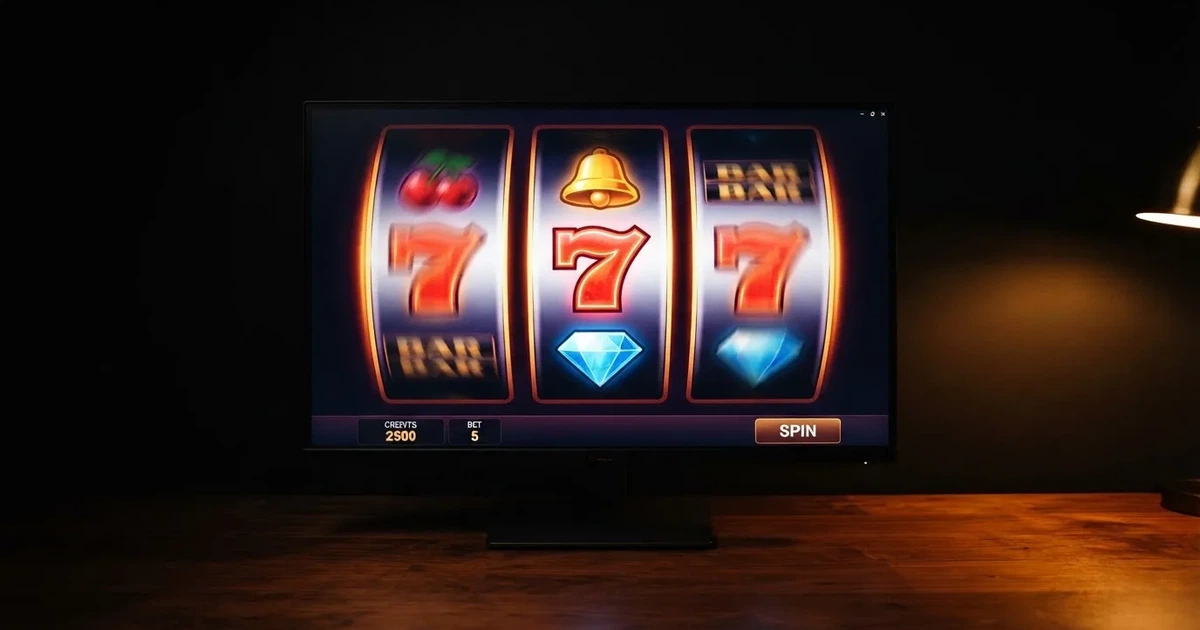
Current as of 9 November 2026 — checked against the ACMA register and the relevant state gaming commissions.
Table of Contents
- The prohibition offshore pokies tips leave out
- Where Australian players get help
- Dragon Link paytables and what tips usually claim
- Comparing what tips and tricks claim against what the ACMA record shows
- Fundamentals: how the RNG decides a pokie spin
- Operator landscape: 11 brands the ACMA has acted against
- The ACMA’s blocking rate since November 2019
- Frequently asked questions
The prohibition offshore pokies tips leave out
The legal position starts and ends with the Interactive Gambling Act 2001, the Interactive Gambling Amendment Act 2017, and the position of every state and territory in between: online casino games and online pokies cannot be licensed for Australian customers. What can be licensed is wagering on races and sport (placed before the event), lotteries and keno. In practice, online bookmaking is regulated through the Northern Territory Racing and Wagering Commission, which supervises 52 bookmakers including Sportsbet, Bet365 and Ladbrokes for tax reasons. The NTRWC has no full-time staff of its own and meets once a month in Darwin. Beyond pre-event wagering, the IGA makes the provision of an online casino or online pokies service to a person in Australia an offence.

Enforcement sits with the ACMA, which investigates, issues formal warnings and asks Australian internet service providers to block illegal sites. The cumulative count reported in June 2026 was 1,751 illegal gambling and affiliate marketing websites blocked since the first blocking request in November 2019. The June 2026 round alone added another 12: 7Signs, ChromaBet, Donbet, Duospin, Freshbet, Slots Gem, Jacks Club, Lucky Start, Pointsbetz, Spinrise, Vinyl Casino and Wildsino. More than 230 unlicensed services have left the Australian market since the regime was strengthened in 2017.
H2 Gambling Capital’s 2025 report puts annual Australian losses to illegal gambling sites at roughly A$3.9 billion. The same source tracks the share of gambling going through legal channels falling from 74% in 2021 to 64% — a ten-point swing in five years, roughly the size of the offshore industry’s grip. None of that is a basis on which a “pokies tips” page can offer a working strategy. The market being targeted is one Australians are blocked from using, and the tips are written by people paid to drive traffic into it.
The individual player is not the IGA’s target. The Act aims at the provider. What this means in practice, though, is that an offshore site offers no Australian consumer protection, no complaints body, no ADR scheme, and no recourse if a withdrawal is refused or a bonus is clawed back. A site can be blocked with a balance still on the account — it has happened to Australian customers before, and the ACMA’s blocking rounds have never involved compensating affected players. The protection in place for licensed services does not follow the customer offshore.
Formal warnings over the period run to dozens of operators and rebrandings. The ACMA has named Pulsup Ltd over Rocketplay (March 2026); Dama N.V. over a six-brand cluster including Bambet, Dazard, Level Up, Rocketplay, Wild Tornado and Cobra Casino (May 2022), then again over Woo Casino (March 2025) and Spirit Casino (May 2025); Bamboo Media over Ignition Casino and Consolutetish S.R.L. over National Casino and Bizzo Casino (July 2025); EOD Code SRL over Instant Casino (February 2025); Sterplay Holding Ltd over Casino Intense (April 2025); Ryker B.V. over Jackbit and CasinOK (April 2026); and Hollycorn N.V. over Sky Crown and Blue Leo in September 2022. Each is a provider that continued offering prohibited services to Australians despite an explicit regulator notice. None of them is licensed to do so.
Payment rails carry their own restriction. Since 11 June 2024, credit cards, credit-related products and digital currency are banned as a deposit method for any Australian-licensed online or phone wagering service, with penalties for the operator reaching A$247,500. The legal deposit routes are debit card, bank transfer, PayID/Osko and BPAY. A site that asks an Australian for a credit card or a crypto deposit is operating outside the Australian framework before a dollar changes hands. The minimum age is 18.
The Interactive Gambling Amendment (Gambling Reform) Bill 2026 passed Parliament on 19 August 2026. Its advertising and inducement measures commence on 1 January 2027 — law with a start date, not yet in force on a 2026 page. The bill tightens what inducements licensed operators can run and what their affiliates can publish. For an offshore site, none of that bites; for licensed wagering services, it changes what “tips and tricks” content can sit next to.
The cost angle here is the first one the page wants to set down. The cost of a “pokies tip” is not the tip’s price. It is the cost of where the tip leads — to a transaction the IGA does not recognise, in a venue with no consumer protection, against a regulator that has been asking ISPs to cut it off for nearly seven years. The “math” the tips claim to share sits in a venue the rest of the page treats as closed.
Where Australian players get help
The support system that exists for Australian players sits entirely within licensed services. The National Gambling Helpline — 1800 858 858 — is free, open 24 hours a day, and offers web chat through Gambling Help Online. State-level services run the same intake: Gambling Help NSW, Gambler’s Help Victoria, Gambling Help QLD, and the equivalents in other jurisdictions. Each operates the same intake — a phone line, a web chat, a callback option — and each routes callers to financial counselling, mental health support and self-exclusion registration where appropriate. A reader who has been chasing losses on the strength of “pokies tips and tricks” advice — particularly advice that pushed them toward a site they cannot verify — is precisely the audience those services exist to catch.
BetStop, the National Self-Exclusion Register, has been live since August 2023. Registration is free, and a single exclusion binds every Australian-licensed online and phone wagering service at once. For a player who has self-excluded from any of the 52 NTRWC-licensed bookmakers — Sportsbet, Ladbrokes, Bet365 and the rest — that exclusion holds across the network. The point of the register is that one decision closes every legal door at the same time. A player who has been around the loop more than once can register in minutes and never has to register again. The minimum exclusion period is three months; longer exclusions run up to a lifetime ban.
What BetStop does not do is reach offshore casinos. A self-excluded Australian can still open an account at an unlicensed site; the exclusion is a domestic arrangement that only domestic operators are required to honour. The same logic applies to deposit limits, time-out tools, reality checks and the activity statements a licensed operator must produce. Each is a statutory requirement on Australian-licensed services. None of them applies to the offshore venue a tips page is steering readers toward.
That is the second cost angle the page wants to set down. Every safety net Australian regulators have built — self-exclusion, deposit caps, complaint adjudication, payout enforcement, the activity statement a player can demand from a licensed operator — is a licensed-service feature. An offshore site offers none of them, and the affiliate pages selling pokies tips do not link to a helpline in the footer. A page that does not link to 1800 858 858 is not a neutral reader service. It is a sales funnel in the shape of one.
The financial cost of problem gambling in Australia is the third angle, and it is harder to put a number on than it should be. Queensland’s counselling services see thousands of calls a year; NSW’s Gambling Help services see tens of thousands more; the productivity loss to employers and the mental health cost to families do not appear on any operator’s P&L. The aggregate figure the research carries here is the A$12.18 billion lost on gaming machines in 2020-21 alone, which is the floor of what problem play actually costs the country before any of the human toll is priced in. The state commissions publish their own data and the federal Productivity Commission has carried the broader number in its inquiries; what neither publishes is the much larger figure that families carry without writing it down.
A reader looking for a tip that “guarantees” a win is, in the data, a reader who has already begun chasing. That is the moment the support services exist for. The line is worth drawing here because the rest of the page goes on to say, in detail, why the tip cannot work; this is the section that says, in fewer words, what to do about it.
Dragon Link paytables and what tips usually claim
Dragon Link is the title that gets named first in the “pokies tips and tricks” searches, and the reasons are partly about its popularity and partly about the kind of player the game attracts: a hold-and-respin format, a denomination range from one cent to five dollars, jackpots in the thousands, and a variance profile that rewards longer sessions. The version most Australians play is the Aristocrat machine that runs in pubs, clubs and casino floors in every state except Western Australia. None of this is a tip. It is what the paytable — printed on the machine or in the game’s information screen — already shows.
The legal picture for the machine itself is that pokies operate in every Australian state and territory, and each jurisdiction separately regulates their design and operation. Australia’s share of the world’s pub and club poker machines is about 3%, against 0.3% of the global population — a 10-to-1 ratio that explains why the country’s gambling data dominates regional comparisons. In 2020-21, Australians bet almost A$150 billion through gaming machines and lost A$12.18 billion on them. New South Wales, the densest market, had 87,298 gaming machines outside casinos across 2,195 venues as of June 2023, with player losses of A$8.18 billion in 2022-23. Queensland had 21,122 gaming machines operating in 351 venues in October 2023. Victoria had 26,380 outside Crown Casino in 488 venues in 2021-22, capped at 30,000 statewide. Tasmania’s machines sit under the Tasmanian Liquor and Gaming Commission since 2021, ending the Federal Group monopoly that had run since 1968. Western Australia banned poker machines in pubs and clubs when Crown Perth opened in 1985; the casino’s own machine count has since grown from about 200 to roughly 2,500, every one of them approved by the state’s Gaming and Wagering Commission. Tasmania’s mandatory pre-commitment cards, once slated to lead the country, were pushed to a late 2025 start.
Minimum RTP by Jurisdiction
| Jurisdiction | Min. RTP |
|---|---|
| New South Wales | 85% |
| Northern Territory | 85% |
| Queensland | 85% |
| Victoria | 85% (87% Crown Melbourne) |
| ACT | 87% |
| Tasmania | 87% |
| South Australia | 87.5% |
| Western Australia | 90% |
The legal minimum return-to-player, set jurisdiction by jurisdiction, runs 85% in New South Wales, the Northern Territory, Queensland and (generally) Victoria, 87% at Crown Melbourne, 87% in the Australian Capital Territory and Tasmania, 87.5% in South Australia, and 90% in Western Australia. These are floors, not exact game RTPs. A machine’s actual return depends on its configuration and the version of its software.
A paytable, then, is the maths stated explicitly. It lists what each symbol combination pays, what triggers a feature (free spins, hold-and-respin, jackpot rounds), what the bonus mechanics are, and what the maximum exposure on a single spin can be. For Dragon Link, the central feature is the hold-and-respin bonus: three or more pearl symbols lock in place, the player receives respins to land more pearls, and the round pays out per pearl collected, with the grand jackpot awarded when all 15 positions are filled. The grand jackpot is the largest line item on the paytable. The base game and minor bonuses are smaller. The mathematics sit in the relative weighting of those payouts against the number of possible outcomes, and they do not move because of the player’s bet size or playing pattern — except where the paytable requires max credits to qualify for a particular jackpot tier.
That last clause is where most of the “tips” articles earn their traffic. The bet-max-for-jackpot claim is real for Dragon Link and similar titles: the grand jackpot only triggers when the player has wagered the maximum number of credits on the spin that triggers it. Drop a credit and the same bonus round pays the minor jackpot, not the grand. That is a difference of two or three orders of magnitude on a five-dollar machine, which is the kind of number a tips article can present as “the secret”.
What the same article usually fails to mention is that the base game’s return-to-player is unaffected by the bet size. Drop a credit and the house edge on the non-jackpot portion is identical. What changes is the player’s variance exposure: max bet raises the upper tail, lowers the lower tail, and increases the average stake per round. The machine’s RTP stays the same. What the player buys with max credit is access to the grand jackpot tier — a low-probability event — at a higher per-spin cost.
The variance profile of Dragon Link is what most “tips” articles misread. Variance is the spread of outcomes around the expected value; a higher-variance game pays out less often but pays more when it does, while a lower-variance game pays out more often but pays less. Dragon Link is on the higher-variance end of the spectrum, with a hit frequency for the base game that sits well below 50% and bonus rounds that may not trigger for many tens of spins. That is the design — not a flaw, not a sign that the machine is “due”. The hit frequency is set by the reel weights, the paytable and the bonus trigger conditions, all of which are fixed before the machine is deployed and tested as part of the certification process.
The rest of the “tips” cluster — “play during off-peak”, “the machine is due”, “hot and cold cycles” — does not survive a serious read of the paytable. Each spin on a certified Australian pokie is generated by a Random Number Generator tested to a jurisdiction’s technical standard; the machine has no memory of the previous spin; the time of day has no effect on the sequence. The variance profile is real: Dragon Link is a higher-variance game, which means longer dry spells punctuated by larger wins. That is a property of the paytable, not of when the player sits down.
The cost of misunderstanding the paytable shows up in two ways. The first is straightforward: a player who drops credits to chase a “hot” machine gets the same math with a smaller jackpot ceiling. The second is more subtle: a higher-variance game played with the wrong bankroll is the kind of mistake that turns an evening into a hole. The paytable tells the player the worst-case exposure on a single spin (the cost of triggering the bonus with max credits, before any payout) and the best-case (the grand jackpot). It does not tell the player when those outcomes will land. The mathematics of the game is the same on every spin. The player’s experience of it is not.
Comparing what tips and tricks claim against what the ACMA record shows
The comparison this page wants to put on the table is not brand-versus-brand. It is the comparison between the promise a “tips and tricks” page makes and the evidence on the regulator’s register. The promise is that a strategy moves the math; the evidence is that the math does not move, and that the venue the tips steer readers toward is one the ACMA has spent the last seven years asking ISPs to block.
Start with the claims. A “pokies tips and tricks” article, regardless of where it sits, will claim one of three things: that bet size can unlock a higher return, that timing matters, or that machine selection matters. Each is a statement about the math. Each is wrong at the level of the random number generator, and right at the level of a single clause the article usually leaves out.
“Max bet unlocks the full RTP” is right for a single line on the paytable — the line that ties the grand jackpot to max-credit play — and wrong for the rest of the RTP, which is identical at every credit level the machine accepts. “Play off-peak” is wrong; the RNG sequence does not depend on the player count in the venue. “Hot machines” is wrong; a certified Australian pokie does not retain state between spins. The pattern-recognition claim is wrong at the level of the technical standard the machine has been certified to; if there were patterns, the regulator would not have approved the game.
Move to the venue. The tips lead to one of two places: an Australian-licensed venue (pub, club, casino) or an unlicensed offshore site. The licensed venue offers a regulated machine, a published RTP floor, an adjudicator in the relevant state commission, and access to the support services described earlier in this page. The unlicensed site offers none of those. The same Dragon Link title, the same bet-max claim, the same “off-peak” tip, produces different outcomes in the two venues — and the difference is not about the machine. It is about everything around it.
Move to the cost. A$12.18 billion lost on gaming machines in 2020-21 is the floor of what the licensed venues cost Australian players. The illegal-site cost is the A$3.9 billion H2 Gambling Capital estimates for 2026. Add a player’s withdrawal risk, the absence of dispute resolution, and the regulator’s willingness to block the site mid-balance, and the offshore venue is not “the same game at better odds”. It is a worse-odds game in a worse venue. The tips article that omits that distinction is selling a product, not a strategy.
The “tips” industry itself runs on the affiliate model. An article offers free pokies advice, and somewhere in the body — often near the call to action — a link leads to a “recommended” offshore casino, with the publisher paid per signup or per deposit. The math in the article is incidental to the revenue. The math on the casino side is what the affiliate is selling access to, and it is the math the regulator has been naming since 2017. The ACMA’s formal warning list is the comparison table the rest of the page sits on. Eleven of those brands are reviewed individually in the next section. Each is named because the regulator named it; each carries the operator behind the brand; each is, on the regulator’s record, a venue an Australian cannot use without stepping outside the IGA. The comparison the page is drawing is not a ranking. It is the record of what happens to the marketing promise when the regulator shows up.
Fundamentals: how the RNG decides a pokie spin
Every modern Australian pokie is governed by a Random Number Generator — a piece of software that produces a sequence of numbers at a rate far higher than the reels can display them. The visible outcome of a spin is a function of one number in that sequence, captured at the moment the spin button is pressed or the lever pulled. Each spin corresponds to one captured number. Each captured number corresponds to one outcome, drawn from the game’s mathematical distribution. The distribution is fixed by the game’s design — the symbol set, the reel layout, the paytable weights — and approved by the relevant state regulator before the machine is allowed on a pub floor.

Two properties of that process matter for everything that follows.
The first is independence. A captured number on one spin has no causal link to a captured number on the next. The machine’s RNG does not “know” what just happened. It cannot owe a jackpot, cannot punish a streak, cannot reward a player for sitting down. Every spin is a fresh sample from the same distribution. That is what the technical approval process tests for: a generator whose output passes the regulator’s suite of statistical tests, certified before the machine is deployed and re-certified on a schedule set by the jurisdiction.
The second is the relationship between the bet size and the outcome. A bet is a stake attached to a captured number. The stake does not change the captured number. It changes what happens when the captured number resolves into a paying combination — the absolute payout, not the probability of the payout. On a non-progressive game, betting one credit and betting five credits on the same spin produces the same outcome with a five-fold larger payout (or no payout). On a progressive game, the rule is different: some jackpots only pay at max credit. That is the one place where bet size affects the player’s expected value — by granting or denying access to a particular prize pool, not by changing the underlying return-to-player of the rest of the game.
The rest of the “strategy” the tips articles sell reduces to chasing variance. Variance is the spread of outcomes around the expected value. A high-variance game pays out less often, but pays more when it does. A low-variance game pays out more often, but pays less. Dragon Link is in the higher-variance camp; many of the more popular online titles (the ones the offshore tips pages link to) sit in a similar range. The shape of the variance curve is what the player is buying with max credit, not a different expected value.
The house edge is the third property, and it is the one the marketing never reaches for. House edge is 1 minus RTP. A game with a 90% RTP has a 10% house edge; for every A$100 wagered across the long run, A$10 stays with the operator. The house edge is not affected by the player’s strategy. It is not affected by the bet size (with the progressive-jackpot caveat). It is not affected by the time of day. It is the structural commission built into the math. The only strategy that moves the house edge is to play a different game with a lower edge — and even then, on the pokies side, the difference between jurisdictions is the 85% to 90% range described in the paytable section above. That is a five-percentage-point spread, real but small.
Expected value and the law of large numbers are where the long-run shape of the math becomes concrete. A player wagering A$1 per spin on a 90% RTP machine has an expected loss of A$0.10 per spin. Across 100 spins, the expected loss is A$10; across 1,000 spins, A$100; across 100,000 spins, A$10,000. The variance means the actual result can be far from the expected value over short sessions, but the more spins the player plays, the closer their actual outcome converges to the expected value. Chasing tips is not a way around the convergence. It is a way of accelerating it.
What does work, then, is not a strategy in the sense the tips articles use the word. What works is bankroll management: deciding, in advance, how much the player is willing to lose, and stopping when that figure is reached. What works is understanding that variance is real — a player can win more than the expected value over a short session, or less, by amounts that look like a strategy at work but are not. What works is accepting that the math does not move, and that the only variable under the player’s control is the decision to stop.
The cost framing of fundamentals is plain. The tips industry promises something the math cannot deliver. What it delivers is volume: more spins, more sessions, more time at the venue. The more time the player spends at a pokie, the closer their actual outcome converges to the long-run house edge. Chasing tips is a way of accelerating that convergence. The bankroll is the unit the math measures.
Operator landscape: 11 brands the ACMA has acted against
The eleven brands below are not a ranked list. They are the brands the ACMA has named in formal warnings, drawn from the regulator’s own publications. Each brand’s review carries the operator the ACMA named (the company behind the brand, which often covers several at once), the date of the warning, and a one-paragraph read of what that action means for a reader using “pokies tips and tricks” to find a place to play. The same constraint applies to every one of them: no state or territory in Australia licenses online casino games, no matter what licence the site displays.
| Brand | ACMA action and date | Operator named by the ACMA | Subject support |
|---|---|---|---|
| RocketPlay | Formal warning March 2026 (Pulsup Ltd); earlier May 2022 (Dama N.V.) | Pulsup Ltd | — |
| Level Up Casino | Formal warning May 2022 | Dama N.V. | Listed among BGaming’s partner casinos |
| Woo Casino | Formal warning March 2025 | Dama N.V. | — |
| Spirit Casino | Formal warning May 2025 | Dama N.V. | — |
| National Casino | Formal warning July 2025 | Consolutetish S.R.L. | Mentioned on Wikipedia |
| Bizzo Casino | Formal warning July 2025; earlier 2022 (TechSolutions) | Consolutetish S.R.L. | — |
| Ignition Casino | Formal warning July 2025 | Bamboo Media | — |
| Instant Casino | Formal warning February 2025 | EOD Code SRL | — |
| Jackbit | Formal warning April 2026 | Ryker B.V. | — |
| Casino Intense | Formal warning April 2025 | Sterplay Holding Ltd | Mentioned in coverage by the ABC, the ACMA and Crown Melbourne |
| Sky Crown | Formal warning September 2022 | Hollycorn N.V. | — |
RocketPlay
The ACMA has warned the RocketPlay brand twice. The most recent action, dated March 2026, named Pulsup Ltd over Rocketplay.com.au specifically — a domain registered to target Australian customers despite the prohibition. The earlier action, dated May 2022, named Dama N.V. over Rocketplay alongside five other brands (Bambet, Dazard, Level Up, Wild Tornado and Cobra Casino). The rebranding from the Dama N.V. operator to a Pulsup Ltd entity did not put the brand outside the IGA; it put a familiar product behind a different corporate name. A reader landing on Rocketplay through a tips article is, on the ACMA’s record, landing on a venue that has been told twice to stop and has continued.
Twice named under two different corporate names in four years — the clearest signal in the ACMA’s record that rebranding does not change status.
Level Up Casino
The May 2022 warning named Dama N.V. over a six-brand cluster that included Level Up. Dama N.V. has been one of the more visible operators in the ACMA’s enforcement record, appearing in three of the warnings on this page. Level Up’s listing on BGaming’s site — a game provider’s partner page — does not alter its status under Australian law. A site that lists a brand among its partner casinos is not certifying that the brand is licensed to Australian customers; it is noting a commercial relationship, which sits outside the regulator’s role.
Sits inside one of the ACMA’s most-named operator groups; the BGaming listing is consistent with that record, not in tension with it.
Woo Casino
The ACMA’s March 2025 warning named Dama N.V. over Woo Casino — a separate action from the 2022 cluster but the same operator. A pattern of repeated naming under the same corporate umbrella is a tell in the ACMA’s record: the operator has continued offering prohibited services through new brands even after earlier warnings. A reader looking at Woo Casino through a tips article is looking at the third Dama N.V. brand on this list.
The third Dama N.V. brand on this list; the warning is fresh and the operator is the one the regulator has told to stop before.
Spirit Casino
The May 2025 warning is the fourth Dama N.V. brand to appear on the ACMA’s register. The pattern is consistent. Spirit Casino carries the same underlying operator as three other brands reviewed here; the warning is the regulator’s most recent in the Dama N.V. sequence, which now stretches across three separate calendar years.
Same operator as three other brands on this page; the rebrand is the move, not the marketing.
National Casino
The ACMA’s July 2025 warning named Consolutetish S.R.L. over National Casino, in the same round that named Bizzo Casino under the same operator. National Casino’s mention on Wikipedia is consistent with the regulator’s record — it sits on a list of brands that have been the subject of an ACMA action. The corporate name (Consolutetish S.R.L.) does not appear in any Australian-licensed register, and the S.R.L. suffix is the Romanian equivalent of a limited liability company.
Paired with Bizzo Casino in the ACMA’s July 2025 round; one warning is a record, two is a pattern.
Bizzo Casino
Bizzo has the longest history on the ACMA’s record among the brands reviewed here. The July 2025 warning named Consolutetish S.R.L., as for National Casino; a separate 2022 warning had earlier named TechSolutions (CY) Group Limited and TechSolutions Group N.V. over Bizzo. A brand that has been the subject of two ACMA actions under two different operators is the clearest signal on this page that rebranding does not change the legal status. The 2022 TechSolutions warning was one of the regulator’s earliest formal warnings in the modern enforcement cycle.
Warned twice under two different operators; rebranding is what the regulator has already priced in.
Ignition Casino
The July 2025 warning named Bamboo Media over Ignition Casino — a different operator from the Consolutetish S.R.L. pair reviewed immediately above. Bamboo Media’s other brands do not appear on this list, but the ACMA’s record of naming it specifically over Ignition is itself the relevant fact. The brand has a long history in the offshore market, predating the ACMA’s current enforcement cycle by several years.
Warned under an operator that does not appear elsewhere on this list; the warning itself is the relevant fact.
Instant Casino
The February 2025 warning named EOD Code SRL over Instant Casino — the earliest warning in the second half of the ACMA’s 2024-25 enforcement cycle and the first action under that operator. A reader finding Instant Casino through a “tips and tricks” search is finding a venue the regulator has named within the last twelve months.
The earliest action in the second half of the 2024-25 cycle; recent naming, not historical.
Jackbit
The April 2026 warning named Ryker B.V. over Jackbit, alongside CasinOK. The April 2026 action is one of the most recent on the ACMA’s record and is the second of the two operator-pair warnings that the regulator issued in 2026 (after Rocketplay in March). Jackbit is on the ACMA’s most-recent enforcement cycle, which is also the cycle covered by the calculation in the next section.
On the ACMA’s most recent enforcement cycle; using it now is using a venue the regulator has named within weeks of this page’s date.
Casino Intense
The April 2025 warning named Sterplay Holding Ltd over Casino Intense. The brand appears in reporting by the ABC and the ACMA on the regulator’s enforcement record, and is also referenced on Crown Melbourne’s site — the latter being a licensed Australian casino, not an endorsement of Casino Intense, but an entry that indicates how widely the brand’s name has circulated in Australian coverage.
April 2025 under Sterplay Holding Ltd; the coverage footprint across Australian reporting has not been matched by any positive Australian licensing.
Sky Crown
The September 2022 warning named Hollycorn N.V. over Sky Crown and Blue Leo — the earliest action on this list and the one tied to a 2022 formal warning PDF that the ACMA has continued to publish. Hollycorn N.V. has not appeared in any subsequent ACMA action in the data this page is built on. Whether that represents compliance, rebrand, or simply a gap in the ACMA’s published register is not for the page to settle.
The earliest warning on this list; an unresolved 2022 action rather than an active one.
The ACMA’s blocking rate since November 2019
The arithmetic this section is built around is straightforward. Between the first blocking request in November 2019 and the most recent reported total in June 2026, the ACMA has directed Australian internet service providers to block 1,751 illegal gambling and affiliate marketing websites. Averaged across the 79 months that span, the figure runs to about 22 blocked sites a month — the long-run rate the regulator has sustained since enforcement began.
That figure is a long-run average, not a steady monthly rate. The actual pattern is lumpy. Some reporting rounds alone have directed the blocking of a dozen or more sites — the June 2026 round named 12; earlier rounds have been larger or smaller. Quieter months have seen fewer than five. Reading the long-run average as a steady monthly cadence overstates the regulator’s consistency; reading it as a peak rate understates it. The honest band, given the published data, sits between roughly 18 and 26 blocked sites per month, with the spread accounted for by the size of individual rounds and the gaps between them.
The condition attached to the band matters. The 79-month denominator includes the entire enforcement window — November 2019 to June 2026 — and the 1,751 numerator is the cumulative count across that window. If the calculation were re-run from a different anchor (for example, the date of the most recent reporting round, or the start of the strengthened enforcement regime in 2017), the band would shift. Re-anchoring to 2017 would not change the numerator but would expand the denominator, pushing the per-month rate down. Re-anchoring to a single recent reporting round would produce a peak figure far above the long-run average. The band the page publishes is anchored to the published enforcement window, because that is the window the regulator reports against.
The interpretive point is plain. At an average rate of about 22 blocked sites a month, an offshore casino launching today is operating on a regulator’s clock that has not stopped. The June 2026 round covered 12 sites; the rounds before it covered more. A “tips and tricks” article that links to a brand the reader cannot verify is, on this arithmetic, linking into a list the regulator is actively growing.
Frequently asked questions
Can any pokies tip actually change the odds, or is every spin random?
No tip changes a pokie’s odds. Every spin is an independent sample from the same distribution the regulator approved. What a tip changes is the player’s behaviour — bet size, machine choice, session length — and behaviour is what the house edge compounds over time. The math itself does not move.
Why do Dragon Link tips read differently from general pokies tips?
Dragon Link’s hold-and-respin format and tiered jackpot give tips articles more text to work with. The grand jackpot requires max credits, so “bet max” is a real paytable line. Variance is high, making outcomes feel pattern-laden. None of that is the math moving; it is the math behaving as the paytable states.
Is there a legal way to try pokies strategies in Australia?
Yes — at any licensed land-based venue: pubs, clubs, the Crown casinos in states that allow them. Those machines sit under state gambling commissions, accept responsible-gaming tools and connect to BetStop. The minimum RTPs run from 85% in NSW to 90% in Western Australia. There is no licensed Australian online casino.
Does bet size change the odds on a typical pokie?
Not the odds. A wager is a stake on an already-generated outcome; the stake changes what a winning combination pays, not the probability of hitting one. The exception is progressive jackpots requiring max credit to qualify for the top tier — Dragon Link’s grand is one. RTP is otherwise identical at every credit level.
What do ‘tips to win pokies’ articles usually get wrong about random number generators?
They treat the machine as if it remembers. It does not. Each spin is a fresh sample from a fixed distribution; the regulator’s technical approval tests for exactly that property. Tips built on “due” jackpots, hot-and-cold cycles or time-of-day effects describe a machine that would not pass certification. The math is constant.