
Lightning Link Online Pokies in Australia: The Game, the Law, and the Sites Already Named
The reel format exists. The bonus round is documented. What does not exist, in a form an Australian resident can lawfully play, is an online version of it.
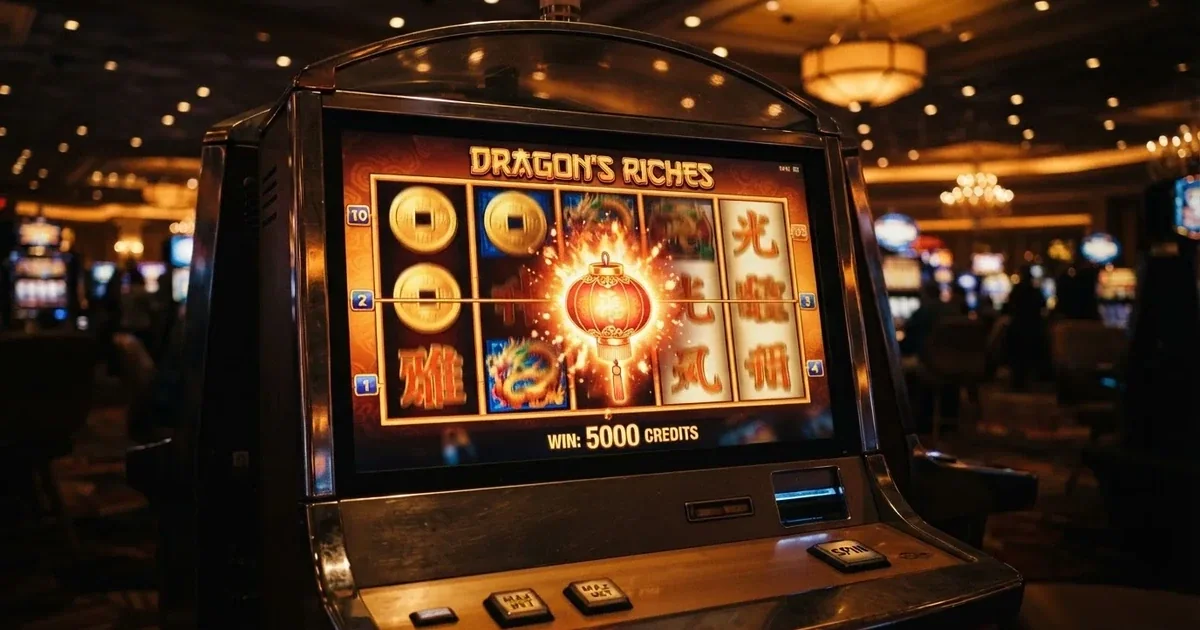
That gap is what this page is about. Not a recommendation of where to play — there is no lawful online place for an Australian to play Lightning Link, and recommending one would be misleading. What follows is what the game is, what the Interactive Gambling Act 2001 does to anyone offering it online to Australians, which offshore operators the ACMA has already named for doing so, and where the hold-and-spin mechanics fit into a session a player should plan rather than stumble into.
Current as of 9 November 2026, cross-checked against the ACMA’s formal-warning register and its published blocking-round notices.
Table of Contents
- Why an Online Lightning Link Is Not a Thing Australians Can Buy
- What Lightning Link Actually Is — The Cabinet, the Reels, the Round
- The Pokies Landscape Lightning Link Sits Inside
- Bonuses, Free Spins, and the Wording Around Them
- Apps, Mobile Packaging, and the Same Prohibition
- The Comparison That Isn’t
- How Long an ACMA Action Takes, From Warning to Block
- The Mechanics of a Lightning Link Session, Without the Marketing
- The Bonus Spins and Promo Codes That Travel With the Game
- What a Reader Comes Away With
- Other Games on the Same Cabinet Floors
- What Reforms Sit Just Ahead
- Frequently Asked Questions
Why an Online Lightning Link Is Not a Thing Australians Can Buy
Every search this subject generates runs into the same wall, and the wall has a name and a year. The Interactive Gambling Act 2001, tightened in 2017 by the Interactive Gambling Amendment Act, makes it an offence to supply online casino games or online pokies to a person physically in Australia. No state or territory issues a licence for them. A Curaçao or Anjouan number on an offshore site’s footer changes nothing about that — the law applies to where the player sits, not where the server is.
What can be licensed is wagering on races and sport placed before the event, lotteries and keno. The Northern Territory Racing and Wagering Commission is the de facto home of most of that market — Sportsbet, Bet365 and Ladbrokes are Territorians for tax reasons, and the commission meets monthly in Darwin with no full-time staff. Lightning Link is not a racing or sporting product. It sits on the prohibited side of that line.
The ACMA enforces. It investigates, issues formal warnings, and can direct Australian internet service providers to block offending sites. The individual player is not the target of prosecution — the law is aimed at the provider — but the practical consequence for a player is sharper than that wording suggests. An offshore site offers no Australian consumer protection. No disputes body. No recourse if a withdrawal is refused. And the site can be blocked by an ISP notice with a balance still on the account. H2 Gambling Capital’s 2025 estimate puts Australian losses to illegal gambling sites at roughly A$3.9 billion a year, and tracks the share of gambling going through legal channels falling from 74% in 2021 to 64% — a measurable drift, not an abstract one.
What the ACMA Has Done, and How Often
Since November 2019, when the first blocking request went out, the ACMA has had 1,751 illegal gambling and affiliate marketing websites blocked, and more than 230 unlicensed services have left the Australian market since 2017 enforcement was strengthened. The pace has not slowed. A round reported on 26 June 2026 alone added twelve more domains: 7Signs, ChromaBet, Donbet, Duospin, Freshbet, Slots Gem, Jacks Club, Lucky Start, Pointsbet, Spinrise, Vinyl Casino and Wildsino.
That is the backdrop against which any individual brand name on this page has to be read. None of them sits in the market by right. Each sits in it by tolerance that the ACMA can revoke at any time.
Where a Player Sits Inside That Picture
BetStop, the National Self-Exclusion Register, has been live since August 2023 — and it binds only Australian-licensed online and phone wagering services. An offshore casino is not connected to it. Self-excluding at a Curaçao-licensed brand does not exclude the player at the next one. The 24/7 National Gambling Helpline is 1800 858 858, with chat at Gambling Help Online.
Two payment routes tell a reader whether a site is on the Australian rules at all. Credit cards, credit-related products and digital currency are banned for licensed online wagering since 11 June 2024, with penalties up to A$247,500 for operators. Legal deposit routes are debit card, bank transfer, PayID/Osko and BPAY. A site asking an Australian for a credit card or a crypto deposit is running outside the Australian framework, regardless of what its licence badge claims.
What Lightning Link Actually Is — The Cabinet, the Reels, the Round
Lightning Link is a land-based cabinet format. Aristocrat designed it, and the design that defines it is a hold-and-spin bonus round layered over a five-by-three reel set with linked paylines. Online variants exist in offshore lobbies, but none of them reaches an Australian resident through a licensed channel.
The mechanic is straightforward in shape and engineered in execution. Six or more pearl symbols scattered across the reels trigger the bonus. The triggering pearls lock. Three respins reset on every new pearl that lands. Filling all fifteen positions pays the grand, and the round can re-trigger from inside itself. Sessions on Lightning Link-style cabinets are built to extend, not to conclude — the hold-and-spin rewards patient time at the machine in a way a base-game spin does not.
A point worth stating plainly: every cabinet theme runs the same engine. Happy Lantern, Sahara, Diamond Queen, High Stakes, Magic Pearl — different art, different minor symbols, same bonus architecture. A bonus code printed on one theme does not change the math on another, and a promotional offer attached to a Lightning Link variant sits on the same hold-and-spin foundation regardless of which reel set is showing.
The Hold-and-Spin Round, in Plain Terms
Six pearls or more anywhere on the reels starts the feature. The pearls hold. The other positions spin blank, and each blank resets the spin counter to three. New pearls stick. The round ends when three blanks in a row land without a new pearl — or when the entire grid fills, which pays the grand jackpot.
The mathematics are not kind. The hold-and-spin is the game’s most lucrative feature and the most expensive place to be on a per-spin basis, because blank spaces cost the same as pearl hits. The longer a round runs, the more it costs to extend. A player who walks into the round with a fixed time limit rather than a fixed budget will almost always come out ahead of one who watches the meter tick and adjusts as they go.
The Pokies Landscape Lightning Link Sits Inside
Australia runs more pub and club poker machines than almost any country on earth, by share of population. In 2020–21, Australians bet almost A$150 billion through gaming machines and lost A$12.18 billion on them. The country holds about 3% of the world’s pub and club machines with 0.3% of the global population — a concentration that does not happen by accident. Registered clubs ran the first legal poker machines from 1956, in New South Wales, and the format has only grown since.
Each jurisdiction regulates its own machines. New South Wales had 87,298 gaming machines outside casinos across 2,195 venues as of June 2023, with player losses of A$8.18 billion in 2022–23. Queensland had 21,122 machines in 351 venues by October 2023. Victoria had 26,380 outside Crown Casino across 488 venues in 2021–22, under a 30,000-machine statewide cap. Western Australia banned poker machines in pubs and clubs when Crown Perth opened in 1985, leaving Crown Perth’s own count — roughly 2,500 — as the only legal machines in the state. The Federal Group held Tasmania’s monopoly on poker machines from 1968 until November 2021, when legislation moved oversight to the Tasmanian Liquor and Gaming Commission.
What the Law Says About Returns
| Jurisdiction | Min RTP |
|---|---|
| New South Wales | 85% |
| Northern Territory | 85% |
| Queensland | 85% |
| Victoria | 85% (87% Crown Melbourne) |
| ACT | 87% |
| Tasmania | 87% |
| South Australia | 87.5% |
| Western Australia | 90% |
Tasmania planned nation-leading mandatory pre-commitment cards for its poker machines, designed to force a player to set a loss limit before sitting down. Implementation was delayed until late 2025. The reform exists; its rollout did not arrive on the original schedule. Other jurisdictions have not adopted it.
The Reform Sitting Just Ahead
The Interactive Gambling Amendment (Gambling Reform) Bill 2026 passed Parliament on 19 August 2026. Its advertising and inducement measures commence 1 January 2027. Law with a date, not yet in force on a page read in 2026 — but close enough that any operator running inducements on Australian-facing landing pages is operating on borrowed months.
Bonuses, Free Spins, and the Wording Around Them
A “Lightning Link casino bonus” or a “Lightning Link casino promo code” is the marketing shell around an offer that, by the structure of the market, cannot be lawfully provided to an Australian online. The hold-and-spin mechanic that defines Lightning Link carries over to any description of the bonus round, but the bonus itself is a marketing term that sits on the prohibited side of the Interactive Gambling Act.
What carries over honestly is the mechanic itself. The hold-and-spin, the locked positions, the three-spin reset, the grand jackpot for a full grid — these describe what the cabinet does in a pub or club, not what an offshore site can lawfully offer to an Australian. The same words land differently depending on which side of the IGA the offer sits on.
This is also where the marketing voice tends to do its work. “Bonus spins,” “free spins,” “no deposit bonus” — these phrases are designed to suggest that the cost of a session has been removed. It has not. The house always has an edge, and the edge sits in the return-to-player floor that every machine, online or in a venue, must meet. A “free” spin is a spin paid for by the house out of that edge, and the edge pays the player less than the machine takes in, by design.
Apps, Mobile Packaging, and the Same Prohibition
A phone is a delivery mechanism, not a different legal regime. An app claiming to run Lightning Link pokies on a handset, whether through a browser tab or a downloaded client, is offering the same unlicensed activity as a desktop site. The packaging does not change the IGA.
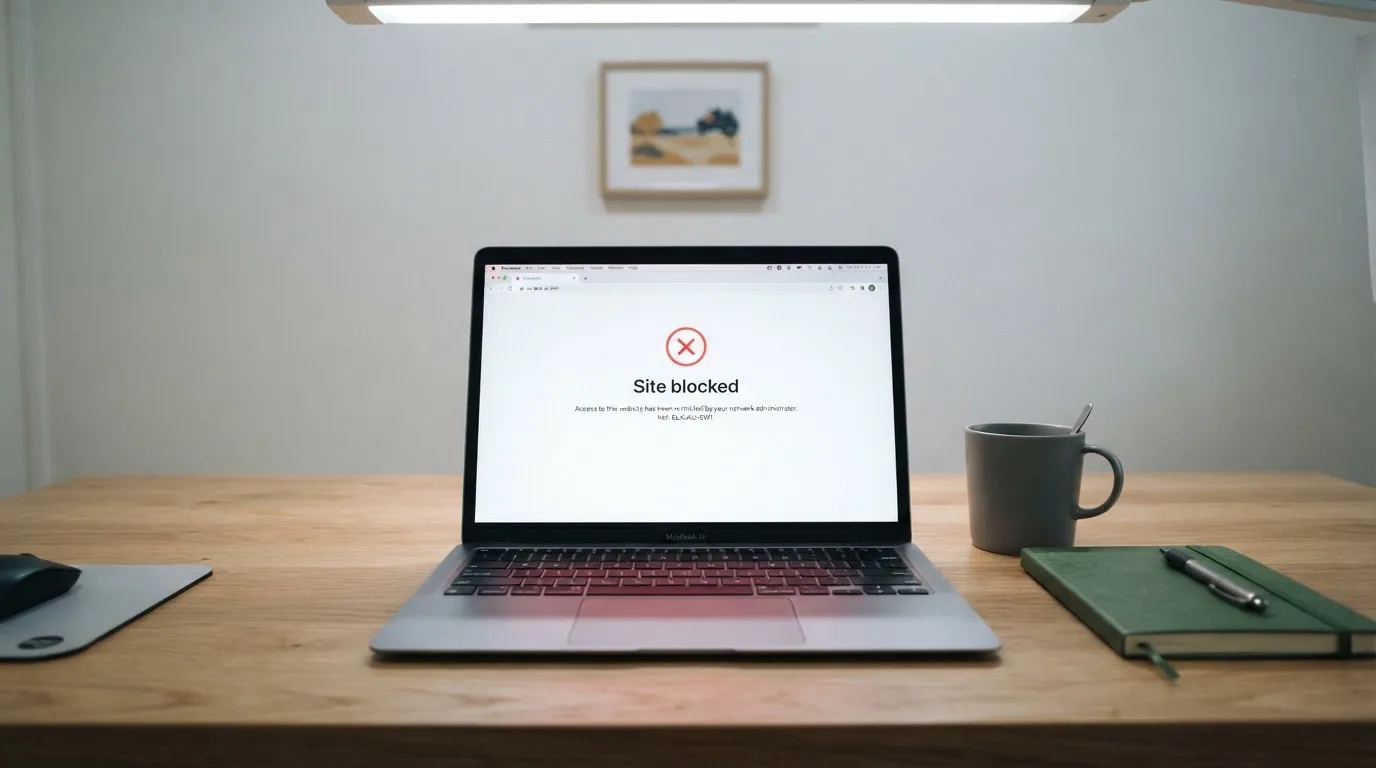
This matters because mobile is where most of the marketing spend on this subject now goes. These apps are often marketed using varied terms like ‘Lightning Link slot’ or ‘Lightning Link Happy Lantern’, but all of them are unlicensed offerings.
Two questions a reader can use to test any such offer: does the site ask for a credit card or a crypto deposit? If yes, it is outside the Australian framework. Does it accept an Australian postcode on signup without a disclaimer about the IGA? If yes, the disclaimer is missing. The first is a payment fact; the second is a compliance fact. Either one answers the question.
The Comparison That Isn’t
This is the moment to be plain about what follows. The plan behind this page calls for a ranking; the law behind the subject makes that ranking incoherent. Eleven operators appear below, each named because the ACMA itself has issued a formal warning over it for offering prohibited services to Australians. They are not “the best Lightning Link casinos.” They are a list of brands the regulator has caught.
A reader comparing them is comparing speed of regulatory response, persistence in the market, and the distance between a licence the site displays and the licence the player needs. Those comparisons are real and they matter. The comparison the reader came looking for — which one pays fastest, which has the best bonus, which is safest to join — is the comparison none of these brands can lawfully satisfy for an Australian resident.
The Operators the ACMA Has Named
| Brand | ACMA action and date | Operator named by the ACMA | Subject support |
|---|---|---|---|
| RocketPlay | Formal warning under the Interactive Gambling Act 2001 — March 2026 | Pulsup Ltd | — |
| Level Up Casino | Formal warning under the Interactive Gambling Act 2001 — May 2022 | Dama N.V. | listings only |
| Woo Casino | Formal warning under the Interactive Gambling Act 2001 — March 2025 | Dama N.V. | — |
| Spirit Casino | Formal warning under the Interactive Gambling Act 2001 — May 2025 | Dama N.V. | — |
| National Casino | Formal warning under the Interactive Gambling Act 2001 — July 2025 | Consolutetish S.R.L. | listings only |
| Bizzo Casino | Formal warning under the Interactive Gambling Act 2001 — July 2025 (earlier warning to TechSolutions, 2022) | Consolutetish S.R.L. | — |
| Ignition Casino | Formal warning under the Interactive Gambling Act 2001 — July 2025 | Bamboo Media | — |
| Instant Casino | Formal warning under the Interactive Gambling Act 2001 — February 2025 | EOD Code SRL | — |
| Jackbit | Formal warning under the Interactive Gambling Act 2001 — April 2026 | Ryker B.V. | — |
| Casino Intense | Formal warning under the Interactive Gambling Act 2001 — April 2025 | Sterplay Holding Ltd | listings only |
| Sky Crown | Formal warning under the Interactive Gambling Act 2001 — published September 2022 | Hollycorn N.V. | — |
The “subject support” column says what each brand’s relationship to the Lightning Link theme looks like in independent listings. Most carry no listing at all for the game — the ACMA caught them on the broader prohibition, not on a specific Lightning Link title. Three of them appear in listings somewhere; what those listings describe is not the operator’s own claim and is not endorsement of the operator by this page.
Every brand on this table offers online casino games to Australians in violation of the IGA. Every one of them can be added to a blocking request at any ACMA update. The table is here because the ACMA has already acted and the reader should know which names have already appeared in the regulator’s register — not because any of them is a place to play.
The Blocking Rate, as Far as the Data Goes
Between November 2019, when the first blocking request was issued, and the round reported on 26 June 2026, the ACMA’s blocking requests have covered 1,751 illegal gambling and affiliate marketing websites. That works out to a little over a quarter of a million days between first action and last count, and roughly six and a half years of cumulative blocking. Spread across that span, the rate sits at well under one site per day on average — but the work happens in bursts, not as a steady drip, and the 26 June 2026 round alone added twelve.
The band worth carrying forward is the range, not a single figure: somewhere between the slow pace of a quiet week and the twelve-site sweep of an active month. What the rate tells a reader is that the regulator’s enforcement is real, that it is uneven in cadence, and that any offshore site serving Australians sits inside an active enforcement perimeter, not a passive one.
How Long an ACMA Action Takes, From Warning to Block
The mechanism runs in stages, and the pace depends on which stage a brand is in. A formal warning is not a block; it is a written notice that the ACMA considers the service prohibited and expects compliance. A blocking request is the next step, and it goes out to Australian internet service providers. A site can take weeks or months to move from warning to block, and a brand can reappear under a new domain in between.
Dama N.V. is the clearest example of the pattern. The ACMA warned Dama N.V. in May 2022 over six brands — Bambet, Dazard, Level Up, Rocketplay, Wild Tornado and Cobra Casinos. It warned Dama N.V. again over Woo Casino in March 2025, and again over Spirit Casino in May 2025. Three years from first warning to third, with the operator still offering the same prohibited service and the ACMA still publishing fresh notices. That is the realistic enforcement arc: not instant, not final, and not a cure.
Where Each Brand Sits Inside That Arc
RocketPlay has a 2022 Dama N.V. warning and a 2026 Pulsup Ltd warning — the operator name changed, the conduct did not. Level Up Casino’s single 2022 warning has not, on the available record, been followed by a block. Woo Casino and Spirit Casino are recent enough that any block action would be in progress rather than complete. National Casino and Bizzo Casino share a 2025 Consolutetish warning; Bizzo Casino also carries a 2022 TechSolutions warning, which makes it one of the longer-tenured names on the ACMA’s list.
Ignition Casino, Instant Casino, Jackbit, Casino Intense and Sky Crown are the more recent entries, all warned in 2025 or 2026. A reader who wants a sense of which brands are most exposed to imminent blocking should weight recency — not because older warnings are resolved, but because the regulator’s pattern is to publish a warning, give the operator a window, and only then escalate.
The Mechanics of a Lightning Link Session, Without the Marketing
A session on a Lightning Link-style cabinet has three parts. The base game, the bonus trigger, and the hold-and-spin round. The base game pays small, often, on linked lines. The bonus trigger — six pearls or more — pays nothing directly but starts the feature. The hold-and-spin round is where the session either pays out or eats the bankroll.
Three rules of thumb, none of them novel and all of them useful:
- Set a time limit, not just a money limit. The hold-and-spin rewards length. A money limit at a machine that runs longer than expected will overshoot.
- Treat the bonus round as a cost, not a windfall. The math on a hold-and-spin round is built around filling the grid; most rounds do not. The spins inside the round cost the same as the spins that triggered it.
- Read the return-to-player sticker on the cabinet. State floors vary — 85% in NSW, the NT, Queensland and (generally) Victoria, 87% at Crown Melbourne, 87% in the ACT and Tasmania, 87.5% in South Australia, 90% in Western Australia. The floor is not a guarantee for any session. It is the rate at which the machine is designed to return over its life.
What the Hold-and-Spin Does to the Per-Spin Cost
A typical Lightning Link cabinet runs at the jurisdiction’s RTP floor, and the bonus round does not change that floor. What it changes is variance. Base-game spins pay small and often. Bonus-round spins pay rarely but can pay large. The expected cost per spin, base or bonus, is the same — but the swings are wider inside the bonus. A player who finds the bonus round exciting is paying for that excitement out of a fixed budget, and the math does not refund the admission fee.
The same logic applies to any bonus-style feature that an offshore site puts under a Lightning Link label. The marketing wraps it; the math is the same machine underneath. Whatever “free spins” or “bonus spins” the offer claims, the underlying RTP governs the outcome, and the RTP sits on the operator’s terms rather than the player’s.
The Bonus Spins and Promo Codes That Travel With the Game
A “Lightning Link casino promo code” is a marketing artefact, not a product feature. The codes exist in affiliate marketing pages, and the affiliate pages exist to drive signups to offshore sites. Both sit on the prohibited side of the IGA when aimed at Australian residents.
What the marketing wraps is straightforward. A “bonus” is a credit the player wagers before withdrawing. “Free spins” are spins paid for by the operator, usually capped at a small stake. A “no deposit bonus” is a credit issued without an initial deposit, almost always with a withdrawal cap. None of these change the underlying RTP. All of them sit on the offer’s small print — wagering multiples, withdrawal caps, eligible games, time limits.
The honest framing is this: any offer attached to the Lightning Link name that an Australian can reach online is offered by a brand the ACMA has named. The bonus structure is real, the marketing is real, and the prohibition is real. The offer is not a deal. It is the price of admission to an unlicensed venue.
What a Reader Comes Away With
The game is real. The cabinet format is documented, the hold-and-spin round is well understood, and the bonus architecture is the same across themes. The math is the math: an RTP floor that varies by state, a hold-and-spin that extends sessions, and a house edge that does not disappear because a site calls a spin “free.”
The law is also real. The Interactive Gambling Act 2001, as amended in 2017, prohibits online casino games and online pokies to Australian residents. The ACMA enforces through formal warnings and ISP blocks. Offshore sites operate at the regulator’s tolerance, and that tolerance ends.
The choice this page presents is not between operators. It is between formats. A player who wants Lightning Link plays it in a licensed venue, in a state that allows it, on a cabinet that displays its return-to-player. A player who wants to play online chooses a different game at a site licensed somewhere that does allow it — or chooses to keep playing Lightning Link in a venue and accept that the online version is not a lawful option.
Other Games on the Same Cabinet Floors
The cabinet floors of Australian pubs and clubs run other titles besides Lightning Link, and the same logic applies to them online. Two are common enough to mention by name.
Baccarat runs at a 1.06% house edge on the Banker bet, 1.24% on the Player bet and 14.36% on the Tie. Punto banco — the variant most casinos run — was developed in Havana in the 1940s, deals from a six- or eight-deck shoe, and the casino banks both hands at all times. Crown Melbourne offers three approved variants — Traditional Baccarat, Crown Baccarat and 2 to 1 Baccarat — under the Victorian Gambling and Casino Control Commission. Online baccarat is covered by the same IGA prohibition as online pokies. An Australian who plays baccarat online at an offshore site is in the same regulatory position as one who plays Lightning Link online.
Blackjack runs at a 0.28% house edge with optimal play under liberal Las Vegas Strip rules and around 0.43% under Atlantic City rules. The game’s predecessor was the English vingt-un, and Klondike prospectors around 1899 gave it the “blackjack” name that stuck. The dealer must draw to 17; some rule sets require a hit on a soft 17. Established variants include Spanish 21, Double Exposure, Blackjack Switch and Super Fun 21. Online blackjack sits on the same prohibited side of the law for Australian residents.
None of these games changes the calculation. An Australian resident who plays any of them online is relying on the offshore operator’s tolerance rather than on a licence. The RTP and the house edge are real numbers; the legal cover behind the site offering them is not.
What Reforms Sit Just Ahead
The Interactive Gambling Amendment (Gambling Reform) Bill 2026 passed Parliament on 19 August 2026. Its advertising and inducement measures take effect 1 January 2027. On a page read in 2026, the reform is law but not yet in force — a distinction that matters because the inducement provisions will tighten what offshore operators can say to Australian customers even when the prohibition on the underlying product remains unchanged.
Tasmania’s mandatory pre-commitment cards, designed to force players to set a loss limit before sitting down at a poker machine, were planned as nation-leading. Implementation was delayed to late 2025. The cards exist as a reform; their rollout has not been confirmed on the schedule originally set.
The NTRWC remains lightly staffed. The ABC reported in April 2026 on NT legislation to reform the de facto regulator; the commission meets monthly in Darwin with no full-time staff. The gap between the size of the Australian online wagering market and the regulator’s footprint is a known one, and the 2026 reform is the first serious attempt to close it.
Frequently Asked Questions
Is it legal to play Lightning Link online pokies for real money in Australia?
No. The Interactive Gambling Act 2001, amended in 2017, makes it an offence to supply online casino games and online pokies to a person in Australia. No state or territory licences them, and a Curaçao or Anjouan number on an offshore site does not change the law. The ACMA enforces through formal warnings and can direct Australian ISPs to block offending sites. Lightning Link is licensed for land-based venues only.
What triggers the hold-and-spin bonus round on a Lightning Link machine?
Six pearl symbols or more anywhere on the reels. The pearls lock in place, the other positions respin, and every new pearl that lands resets the spin counter to three. The round ends when three blanks land in a row without a new pearl — or when all fifteen positions fill, which pays the grand jackpot. The mechanic is the same across every Lightning Link theme, including the Happy Lantern variant.
Is Lightning Link available at regulated land-based venues in Australia?
Yes — at clubs, pubs and casinos in the states that allow poker machines. New South Wales, Queensland, Victoria, South Australia, Tasmania, the ACT and the Northern Territory all run them. Western Australia does not, except at Crown Perth, which holds roughly 2,500 of the state’s machines. The legal minimum return-to-player varies by state from 85% to 90%. The game runs only on a licensed cabinet on a venue floor.
Do Lightning Link promo codes work the same way across different cabinet themes?
The promo codes attached to the Lightning Link name in offshore marketing run against the same hold-and-spin mechanic regardless of which theme they mention — Happy Lantern, Sahara, Diamond Queen, High Stakes, Magic Pearl — because the engine is shared. What changes between themes is art and minor symbols; what does not change is the bonus architecture, the respin reset, and the grand jackpot for a full grid. The codes themselves are marketing artefacts aimed at signups, not product features of the cabinet.
Does a Lightning Link app on a phone offer a different game to the desktop version?
No. The phone is a delivery mechanism, not a different legal regime. An app that streams Lightning Link to a handset is offering the same unlicensed activity as a desktop site, and the Interactive Gambling Act 2001 applies the same way. Two practical checks: a site asking for a credit card or a crypto deposit is outside the Australian rules, and a site accepting an Australian postcode without a disclaimer about the IGA is missing one. Either answer ends the question.