
Best Online Pokies Real Money Australia 2026: What the Law Actually Allows
Anyone searching for “real money pokies online Australia” lands on this page looking for a shortlist of casinos. There isn’t one to hand over. The Interactive Gambling Act 2001 makes it an offence to provide online casino games, including online pokies, to anyone in Australia, and no state or territory issues a licence for them. That doesn’t leave readers with nothing. It leaves them with a different question: what is on offer, and what isn’t, and what the law does once a site targets Australians anyway.
Data current as of 31 October 2026 · Licence and ACMA enforcement claims verified against the Australian Communications and Media Authority’s published register of formal warnings and blocked-website notices.
Table of Contents
- Responsible Gaming and Player Safeguards in Australia
- Payments and Payout Speed: PayID and the Legal Deposit Routes
- Mobile and App Experience
- Specific Games, Providers and Live Tables
- Landsca
- The Blocking Record: How Fast the ACMA Is Closing Sites
- Overview: What Real Money Online Pokies Are and Aren’t in Australia
- Legality, Enforcement and the 2026 Reform
- How the ACMA Enforces Against an Offshore Site
- Frequently Asked Questions
Responsible Gaming and Player Safeguards in Australia
The reason an Australian page on real money pokies opens on safeguards rather than on bonuses is that the legal product in Australia is the land-based pokie, a machine sitting in a pub, club or casino that takes cash, prints a ticket, and pays out under a state-level return-to-player floor.

| Jurisdiction | Minimum RTP |
|---|---|
| New South Wales | 85% |
| Northern Territory | 85% |
| Queensland | 85% |
| Victoria | 85% (87% at Crown) |
| ACT | 87% |
| Tasmania | 87% |
| South Australia | 87.5% |
| Western Australia | 90% |
The safeguards sit on top of that product and they extend unevenly to anything offered offshore.
BetStop, the National Self-Exclusion Register, went live in August 2023 and is the centrepiece. A person who registers with BetStop is excluded from every Australian-licensed online and phone wagering service for a minimum period they choose. The catch is binding: the register covers wagering services licensed in Australia. An offshore casino offering online pokies to Australians is not connected to BetStop, because it is not licensed in Australia. Self-excluding through BetStop does not stop an offshore site from accepting a deposit, sending bonus emails, or letting an account stay open.
The state-level systems cover the land-based machines in their jurisdiction. Each state sets a minimum return-to-player for its pokies, and that figure varies: 85% in New South Wales, the Northern Territory and Queensland, 87% at Crown Melbourne and across the ACT and Tasmania, 87.5% in South Australia, and 90% in Western Australia, which bans the machines outside the one casino at Crown Perth. Tasmania legislated a mandatory pre-commitment card system that was meant to be nation-leading; its implementation was pushed back until late 2025, so on a 2026 read the rollout is in transition rather than fully operational.
The National Gambling Helpline runs on 1800 858 858, free and 24 hours, with web chat through Gambling Help Online. These are the routes that work regardless of where a player is reading from. Any “responsible gaming” page on an offshore site that promises an Australian complaints body is not pointing at a body that has jurisdiction over that site.
Payments and Payout Speed: PayID and the Legal Deposit Routes
Real money online pokies, the prohibited product, attract searches about PayID almost as a reflex. PayID is an Australian real-time payment rail that runs through the New South Wales payments system, settles in seconds and is branded Osko at the bank end. It is built into the everyday banking app of every major Australian bank. For an Australian punter placing a bet with a licensed wagering provider, PayID is one of the deposit methods the Interactive Gambling Act and its accompanying rules explicitly permit: debit card, bank transfer, PayID/Osko and BPAY. Since 11 June 2024, credit cards, credit-related products and digital currency have been banned as a payment method for licensed online wagering, with penalties of up to A$247,500 for operators that breach the rule.
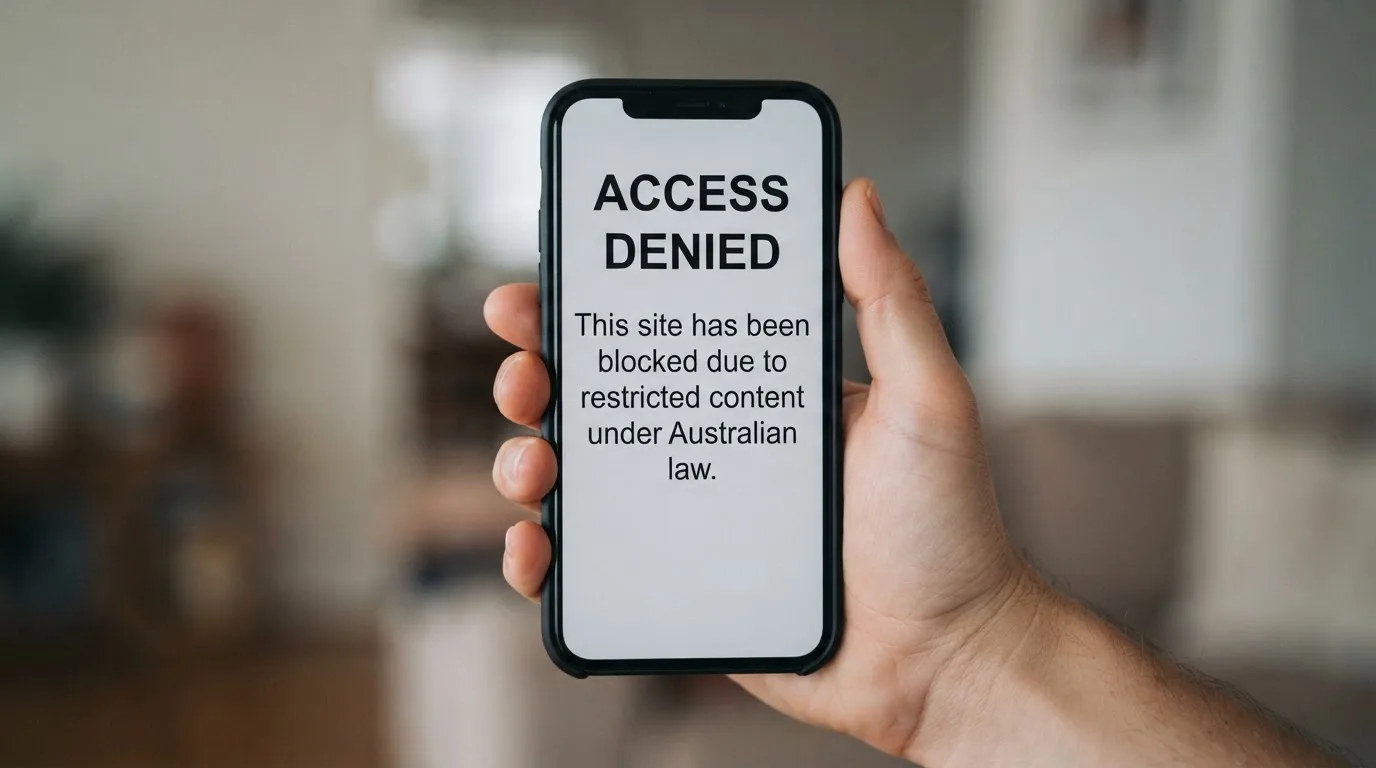
For an offshore casino offering online pokies to Australians, the picture inverts. The site is not bound by the credit-card ban; the prohibition is on the operator, not the player, and the player is the one whose bank may or may not let the transaction through. Some Australian banks do block gambling-related PayID transactions at their end, which is why an offshore site that “accepts PayID” can still produce a failed transaction from an Australian bank account. Banks that flag gambling transactions tend to do so on the payee name rather than on the rail, so the speed of PayID is irrelevant if the transaction never lands. Where a withdrawal does clear, the speed depends on the offshore operator’s own processing window, not on PayID, and a payout that takes “up to three business days” sits beyond any consumer-protection body an Australian can complain to.
The NTRWC, the Northern Territory Racing and Wagering Commission, regulates 52 of Australia’s online bookmakers, including Sportsbet, Bet365 and Ladbrokes, all licensed in the Territory largely for tax reasons. It is the body that authorises PayID as a deposit route for the licensed wagering providers it supervises, and its role is the reason PayID sits at the centre of the Australian payments conversation at all. The commission has no full-time staff and meets once a month in Darwin; its regulatory reach covers wagering on sport and racing placed before the event, not online casino games, and the offshore sites that line up PayID logos are borrowing an Australian payment icon without sitting under Australian supervision.
Mobile and App Experience
Every brand on the list below runs a mobile product, whether as a downloadable app or as a mobile browser version. None of it is licensed for Australian players, so the question is what the experience costs the reader, not which one is best. The phone-screen experience of a real money online pokie on an offshore site looks much like the desktop experience of the same site, scaled down: a vertical reel layout, deposit and withdrawal buttons in a corner, a balance and bonus counter at the top. An Australian reader comparing one of these against another will find that the differences sit in catalogue, in payment friction and in how the operator treats a withdrawal request once it is made, not in whether the site works on a phone.
A “real money pokies app” downloaded from the Australian App Store or Google Play store will not be a real-money casino app licensed for Australians, because no such licence exists. What sits in the store is either a free-play pokie product, a wagering app licensed by the NTRWC for sports and racing, or an offshore casino app whose terms of service bar Australian residents. A reader searching for “best real money pokies app Australia” gets app-store listings for products that cannot legally offer real-money play to them, which is the gap the search reflects.
The phone-screen experience of a land-based pokie is different and does not compete with the offshore product. Club and pub machines take cash or a pre-loaded card; their interfaces are licensed state by state and their return-to-player floors are set in legislation. They are not downloadable, which is why a reader searching for an “app” is reaching past them. The mobile experience Australians have access to legally is wagering on sport and racing through licensed apps.
Specific Games, Providers and Live Tables
The games that fill an offshore online casino’s lobby are pokies in the Australian sense: slot machines, three-reel classics, five-reel video slots, branded games, jackpot networks, Megaways titles. They are built by a handful of large studios, distributed by aggregators and presented under the operator’s brand. An Australian reader comparing one offshore site to another is mostly comparing which studios each has on its books and which titles are available in which country, because the catalogue changes once a site detects an Australian IP address. The big studios do not all license their games to operators that target prohibited jurisdictions, and the absence of a recognisable title is sometimes the studio declining, not the operator choosing.
The shelf that covers specific games sits awkwardly on an Australian page. Baccarat and blackjack are the table games most often named in the same breath as online pokies, and both have well-known house edges: baccarat’s Banker bet carries a 1.06% edge, the Player bet 1.24% and the Tie 14.36%; blackjack under liberal Las Vegas Strip rules runs about 0.28% with optimal play. Those figures are true for the games as played at licensed tables in Australia, like Crown Melbourne’s three baccarat variants approved by the Victorian Gambling and Casino Control Commission. They are not, in any sense the law recognises, available to an Australian punter through an offshore pokie site.
The distinction matters because the offshore sites do not run live baccarat or blackjack for Australians under Australian supervision. They run them under their own house rules, often with shuffled shoes by remote studios and minimum bets set below what a regulator would require. A punter who beats the baccarat Banker edge on the screen of an offshore site has not won under New South Wales law, has no Australian body to complain to if the withdrawal stalls, and may find the site blocked by an Australian internet service provider with the balance still on the account. The games exist; the protection that goes with them does not.
Landsca
This is not a ranking and it is not a recommendation. Every brand below sits on the list because the ACMA itself issued a formal warning about it for offering prohibited interactive gambling services to Australians. The columns are: brand, the ACMA action and the date it was issued, the operator entity named in that warning, and whether the operator’s own materials support a given payment or game subject for Australian users.
| Brand | ACMA action and date | Operator named by the ACMA | Subject support |
|---|---|---|---|
| RocketPlay | Formal warning, March 2026 | Pulsup Ltd (RocketPlay); earlier Dama N.V., May 2022 | — |
| Level Up Casino | Formal warning, May 2022 | Dama N.V. | listings-only (BGaming) |
| Woo Casino | Formal warning, March 2025 | Dama N.V. | — |
| Spirit Casino | Formal warning, May 2025 | Dama N.V. | — |
| National Casino | Formal warning, July 2025 | Consolutetish S.R.L. | listings-only |
| Bizzo Casino | Formal warning, July 2025; earlier 2022 | Consolutetish S.R.L. (2025); TechSolutions (2022) | — |
| Ignition Casino | Formal warning, July 2025 | Bamboo Media | — |
| Instant Casino | Formal warning, February 2025 | EOD Code SRL | — |
| Jackbit | Formal warning, April 2026 | Ryker B.V. | — |
| Casino Intense | Formal warning, April 2025 | Sterplay Holding Ltd | listings-only |
| Sky Crown | Formal warning (date per ACMA) | Hollycorn N.V. | — |
What the table shows is that the ACMA’s enforcement activity in this space runs against the operator entity, not the brand. Dama N.V. alone accounts for four entries: RocketPlay, Level Up Casino, Woo Casino and Spirit Casino, three of them in 2025 and 2026 after the original 2022 warning covered six brands. The same operator may run more than one brand, change the URL on a brand while keeping the warning on file, or shift jurisdiction. A reader who treats a brand as the unit of analysis misses the point of the warning, which is about the entity serving Australian users.
The rightmost column carries information about whether research found a specific subject confirmed for the operator, a provider listing mentioning the brand, or no data at all. Most entries carry an em dash, which means no data was found — not that the operator is unsuitable, but that the available sources did not confirm the subject for that brand. That absence is itself information: the offshore market is opaque enough that what is not confirmable from outside is what most needs verifying from inside.
RocketPlay
The ACMA issued a formal warning to Pulsup Ltd over RocketPlay in March 2026, on top of an earlier May 2022 warning to Dama N.V. covering six brands that included RocketPlay. The brand has been on the wrong side of the regulator twice in four years, which is the kind of record that should give pause. The site does not hold an Australian licence; it cannot. The legal product in Australia is the licensed wagering provider supervised by the NTRWC, and RocketPlay is not one of those.
For a reader who has stumbled onto the site through search results, the cost of that absence is not the deposit itself but the absence of an Australian complaints body when a withdrawal stalls. RocketPlay’s operator is Pulsup Ltd, an entity the ACMA has named publicly in a formal warning, and that fact alone should shape any reader’s expectation of recourse.
Level Up Casino
Dama N.V. took a formal warning over Level Up Casino in May 2022 alongside five other brands. The operator is the same corporate group behind RocketPlay, Woo Casino, Spirit Casino and Cobra Casinos, all of which have also been the subject of ACMA action. Game-provider listings do name Level Up as a venue carrying their content, which is what the table records as “listings-only” — the brand appears in industry directories rather than as a confirmed distributor.
The verdict is the same one that applies to any Dama N.V. property. A reader choosing this site is choosing it knowing that the operator behind it has been formally warned in Australia and that nothing about the brand changes the underlying prohibition.
Woo Casino
The ACMA issued a formal warning to Dama N.V. over Woo Casino in March 2025. Two years after the May 2022 warning, which did not include Woo, the operator added a brand and the regulator named it again. The intervening period saw Dama N.V. add more brands and the ACMA track them; Woo is the second Dama N.V. property specifically warned in 2025.
A reader who treats Woo as separate from the May 2022 cohort misses the link. Dama N.V. is the operator named across the warnings; the brand is a URL the regulator tracks after the fact.
Spirit Casino
Spirit Casino drew a formal warning to Dama N.V. in May 2025, the third Dama N.V. brand warned in 2025 alone. The pattern across RocketPlay, Woo and Spirit is the same operator entity, repeated warnings, and a brand roster the ACMA is updating as the operator rotates.
For an Australian reader comparing Spirit to its Dama N.V. siblings, the comparison is not between three different operators. It is between three brand fronts for the same entity, each carrying the same prohibition, the same lack of Australian licence, and the same absence of Australian consumer protection.
National Casino
The ACMA issued a formal warning to Consolutetish S.R.L. over National Casino in July 2025, alongside a warning over Bizzo Casino from the same operator. The Italian corporate entity appears in the ACMA’s record rather than a Curacao or Cyprus holding company, which is a small detail but a meaningful one for a reader cross-checking who actually runs the site they are looking at.
Game-provider listings mention National Casino, which is what the “listings-only” column records, but the operator-side answer to “is this licensed in Australia” is the same as every other entry on this list: it cannot be.
Bizzo Casino
Bizzo has the longest record on the table. The ACMA issued a formal warning to TechSolutions (CY) Group Limited and TechSolutions Group N.V. over Bizzo Casino in 2022, then a separate formal warning to Consolutetish S.R.L. over Bizzo Casino in July 2025. Three years apart, two different operator entities named in ACMA action, the same brand at the centre.
What a reader takes from this is that the brand has outlived its original operator. A warning issued in 2022 was not enough to take the brand out of the Australian market, and a 2025 warning took a different corporate name with it. The site exists; the ACMA’s record shows the operator changing; the prohibition on offering online casino games to Australians has not changed.
Ignition Casino
The ACMA issued a formal warning to Bamboo Media over Ignition Casino in July 2025. Bamboo Media is not the operator behind any other brand on this list, which makes Ignition the cleanest single-operator, single-warning entry. The brand is well known offshore; the warning is current.
For an Australian reader, the offshore recognition does not translate into Australian supervision. Ignition runs under its own house rules, holds no Australian licence, and sits outside BetStop because BetStop only binds Australian-licensed wagering services.
Instant Casino
The ACMA issued a formal warning to EOD Code SRL over Instant Casino in February 2025. The brand name suggests immediacy; the regulatory record suggests the opposite. A warning at the start of 2025 sits in front of the site’s Australian-facing operations without a licence behind them.
The reader’s question on Instant Casino is the same as on the rest: which body supervises this site for Australian users, and what is the route when a withdrawal is delayed? Neither answer leads to Australia.
Jackbit
The ACMA issued a formal warning to Ryker B.V. over Jackbit and CasinOK in April 2026. Two brands, one operator, one warning — the same pattern as Dama N.V.’s portfolio. A reader who sees Jackbit advertised without seeing CasinOK named alongside it is missing the rest of the operator’s footprint.
Ryker B.V. is a Curacao-registered entity. The ACMA’s record is what carries weight on this page, because the operator’s licence in Curacao is irrelevant to whether it can lawfully offer online casino games to a person in Australia.
Casino Intense
The ACMA issued a formal warning to Sterplay Holding Ltd over Casino Intense in April 2025. Sterplay Holding Ltd is named as the operator; Casino Intense is the brand. Industry listings and Australian regulator references both turn up Casino Intense, which is what the “listings-only” cell records.
The page that the searcher actually wants — a list of legitimate Australian online pokie sites — does not exist, because no state or territory licences them. Casino Intense is on this list because the ACMA acted against it, not because it qualifies as an option for Australian players.
Sky Crown
The ACMA issued a formal warning to Hollycorn N.V. over Sky Crown and Blue Leo. Hollycorn N.V. is the operator named in the regulator’s published notice. Both brands are run by the same entity, and the warning covers both.
A reader comparing Sky Crown to Blue Leo is comparing two URLs run by the same operator, both formally warned. The choice between them is a choice between equivalent prohibitions.
The Blocking Record: How Fast the ACMA Is Closing Sites
Between November 2019 and June 2026, the Australian Communications and Media Authority asked Australian internet service providers to block 1,751 illegal gambling and affiliate marketing websites. The number is not a guess — the ACMA publishes its blocking requests — and the growth is steady. The single round reported on 26 June 2026 added twelve more: 7Signs, ChromaBet, Donbet, Duospin, Freshbet, Slots Gem, Jacks Club, Lucky Start, Pointsbetz, Spinrise, Vinyl Casino and Wildsino.
A rough rate against the period from the first blocking request to the most recent published total gives a band of roughly 260 to 270 sites blocked per year across the six-and-a-half-year window, with the rate varying by year and accelerating in some quarters as the ACMA acts on affiliate pages rather than only the casino front doors. The figures in research are point-in-time counts: 1,751 in June 2026, with earlier rounds adding their own names. The rate of change between rounds is what tells a reader whether enforcement is steady, slowing or speeding up; the absolute number tells a reader how many URLs have already been shut to Australian ISPs.
A site blocked by an Australian ISP leaves Australian readers unable to reach it through the main residential ISPs. It does not always leave the site offline globally. A reader who travels and signs in from overseas may still reach it, and a reader who uses a VPN may reach it from inside Australia. The block is the regulator’s strongest tool short of prosecution, and it is what an offshore operator faces when it persists in targeting Australian users. More than 230 unlicensed gambling services have left the Australian market since enforcement was strengthened in 2017, which the ACMA reports as the cumulative effect of warnings, blocks and the credit-card ban working together.
H2 Gambling Capital’s 2025 report estimates that Australians lose about A$3.9 billion a year to illegal gambling sites, with the share of gambling going through legal channels falling from 74% in 2021 to 64%. That figure is a model output rather than a regulator’s count, and it sits alongside the ACMA’s own number rather than replacing it; together they describe a market that is regulated at the legal end and growing at the illegal end.
Overview: What Real Money Online Pokies Are and Aren’t in Australia
The pokie itself is a generic term for an electronic gaming machine in Australia. The first legal poker machines in the country sat in registered clubs in New South Wales from 1956, and the term has stuck across every state and territory since. Each jurisdiction separately regulates the design and operation of the machines in its pubs, clubs and casinos: how many there can be, what return-to-player floor they must hit, what hours they can operate, and what player-card systems track play. New South Wales had 87,298 gaming machines outside casinos across 2,195 venues in June 2023, with player losses of A$8.18 billion across the 2022–23 financial year. Queensland had 21,122 machines across 351 venues in October 2023; Victoria had 26,380 outside Crown Casino in 488 venues in 2021–22, under a statewide cap of 30,000. Tasmania’s machines were run by Federal Group under a monopoly that ran from 1968 until legislation in November 2021 ended it and moved oversight to the Tasmanian Liquor and Gaming Commission. Western Australia banned the machines outside Crown Perth when the casino opened in 1985, and the casino’s own machine count has grown from about 200 then to roughly 2,500 now.
In 2020–21, Australians bet almost A$150 billion through gaming machines and lost A$12.18 billion on them, a number that puts Australia at about 3% of the world’s pub and club poker machines despite holding about 0.3% of the global population. The land-based machines are the regulated product. The online version is the prohibited one: online pokies cannot be offered to a person in Australia, no state or territory issues a licence for them, and the Interactive Gambling Act 2001, strengthened by the 2017 amendments, is the statute that makes the offer an offence.
The marketing word on every offshore site that targets Australians is “real money”. The legal word is “prohibited interactive gambling service”. A real money pokie is a game played on a machine licensed in an Australian jurisdiction, under that jurisdiction’s rules, paying out at or above its minimum return-to-player. An “online real money pokie” in the marketing sense is a slot game on an offshore site that targets Australians in breach of the IGA, with no Australian licence, no Australian complaints body and no guarantee the site is reachable next week.
Legality, Enforcement and the 2026 Reform
The Interactive Gambling Act 2001 prohibits the provision of online casino games and online pokies to a person in Australia. The Interactive Gambling Amendment Act 2017 strengthened enforcement and the ACMA’s powers. The IGA targets the provider, not the player; an Australian individual playing on an offshore site is not prosecuted. The provider, whether based in Curacao, Cyprus, Italy or anywhere else, commits an offence by offering the service to Australians, and the ACMA’s tools are formal warnings, blocking requests to ISPs, and referrals for civil penalty proceedings.
What is licensed in Australia is wagering on racing and on sport, placed before the event, plus lotteries and keno. Wagering is licensed state by state; in practice most online bookmakers hold their Australian licence from the Northern Territory, through the NTRWC, which supervises 52 operators including Sportsbet, Bet365 and Ladbrokes. Lotteries are licensed separately in each state, and keno runs in clubs and casinos under state rules. The “real money pokies” the searcher is asking about is none of these.
The Interactive Gambling Amendment (Gambling Reform) Bill 2026 passed Parliament on 19 August 2026. Its advertising and inducement measures are scheduled to commence on 1 January 2027, which makes them law on the books as of the date of this page but not yet in force. The measures tighten what licensed wagering providers can offer by way of bonus inducements, sign-up offers and advertising. They do not open up online casino games; they tighten the rules around what is already legal. The line between legal wagering and prohibited online casino games does not move with this bill.
Tax on winnings is the part most readers misunderstand. Gambling winnings of a recreational player in Australia are not assessable income under section 6-5 of the ITAA 1997, and losses are not deductible, unless the person carries on a business of gambling. For an Australian whose only gambling is recreational, the ATO has nothing to take from a win. The catch is that a recreational punter using an offshore site has no Australian body to complain to, no recourse on a stuck withdrawal, and a balance that may become unrecoverable if the site is blocked. Tax is not the cost; the missing protection is.
How the ACMA Enforces Against an Offshore Site
The path the ACMA runs through is visible in the warning record. The first move is a formal warning naming the operator entity and the brand, published on the ACMA website. A warning does not block a site, but it puts the regulator’s view on the record. The second move is a request to Australian ISPs to block the site at the DNS level, which is what produced the 1,751 cumulative blocks by June 2026. The third move is referral for civil penalty proceedings, with penalties for breach running into the hundreds of thousands of Australian dollars and beyond.
For a reader looking at the ACMA’s published register, the entry that matters is the operator name and the date. Dama N.V. appears repeatedly across 2022 and 2025; Consolutetish S.R.L. appears in 2025; Ryker B.V. appears in 2026. The operator entity is what an Australian internet service provider’s block hits and what a civil penalty is brought against. The brand is the URL the punter sees. A reader who tracks only the brand misses the operator’s record; a reader who tracks the operator sees the same name coming back with different brand front doors.
The 12-name blocking round of June 2026 — 7Signs, ChromaBet, Donbet, Duospin, Freshbet, Slots Gem, Jacks Club, Lucky Start, Pointsbetz, Spinrise, Vinyl Casino and Wildsino — shows how the ACMA works through affiliate and aggregator pages as well as casino front doors. Pointsbetz is a points-style affiliate page; the rest are casino brands. Blocking the affiliate cuts off the funnel that brings Australian traffic in the first place.
Frequently Asked Questions
What is the difference between a free-play pokie and a real money one?
A free-play pokie runs on the same game engine as the real money version, but every spin is on the house and the winnings cannot be withdrawn. A real money pokie takes a stake per spin, deducts it from the player’s balance, and pays out at the game’s stated return-to-player over the long run. In Australia, the real money pokie is the machine in a licensed venue; the online real money pokie is the prohibited product the IGA 2001 stops being offered to Australians.
Can real money online pokies be played using PayID in Australia?
Not lawfully. PayID is a legal deposit route for Australian-licensed wagering on sport and racing, and the credit-card ban of 11 June 2024 confirmed that legal wagering runs through debit card, bank transfer, PayID/Osko and BPAY. An offshore casino offering online pokies to Australians sits outside that framework, and a PayID transfer to it is not protected by Australian consumer law. Some Australian banks also block gambling-related PayID transactions at their end.
Is it legal for an online casino to offer real money pokies to Australians?
No. The Interactive Gambling Act 2001, as amended by the Interactive Gambling Amendment Act 2017, prohibits the provision of online casino games and online pokies to anyone in Australia. No state or territory licences online casino games. The ACMA’s enforcement record — 1,751 blocked sites and more than 230 services that have left the market since 2017 — is the practical effect of that prohibition.
Is there a dedicated real money pokies app for Australian players?
No app store distributes a real-money online pokie app licensed for Australians, because no such licence exists. What Australian app stores carry are free-play pokie products, wagering apps licensed by the NTRWC for sport and racing, and offshore casino apps whose terms bar Australian residents. The “real money pokies app” the searcher is looking for is not on the Australian side of the store.
How much did Australians wager on gaming machines in 2020–21?
Australians bet almost A$150 billion through gaming machines in 2020–21 and lost A$12.18 billion on them. Australia holds about 3% of the world’s pub and club poker machines despite holding about 0.3% of the global population, which is the scale of the land-based pokie market the offshore sites are reaching for.