
Low Volatility Slots in Australia: The Legal Shape Behind the Search
A search for “best low volatility slots Australia” lands on a gap. The Interactive Gambling Act 2001 prohibits offering online casino games to anyone in Australia, and no state or territory issues a licence for it. That prohibition covers online pokies and online slot machines of every volatility profile, including the low-volatility titles a player might otherwise pick for steady, smaller payouts. What follows is not a shortlist of operators; the market a reader in Australia can lawfully use is different, and this page lays out what that difference costs.
Current as of 7 November 2026, verified against the ACMA’s register of formal warnings and blocking requests as published on acma.gov.au.
Table of Contents
- How the Australian prohibition actually applies to online slots
- Player protection: BetStop and what it covers
- What low volatility means, and what it is worth
- A shortlist the ACMA itself has named
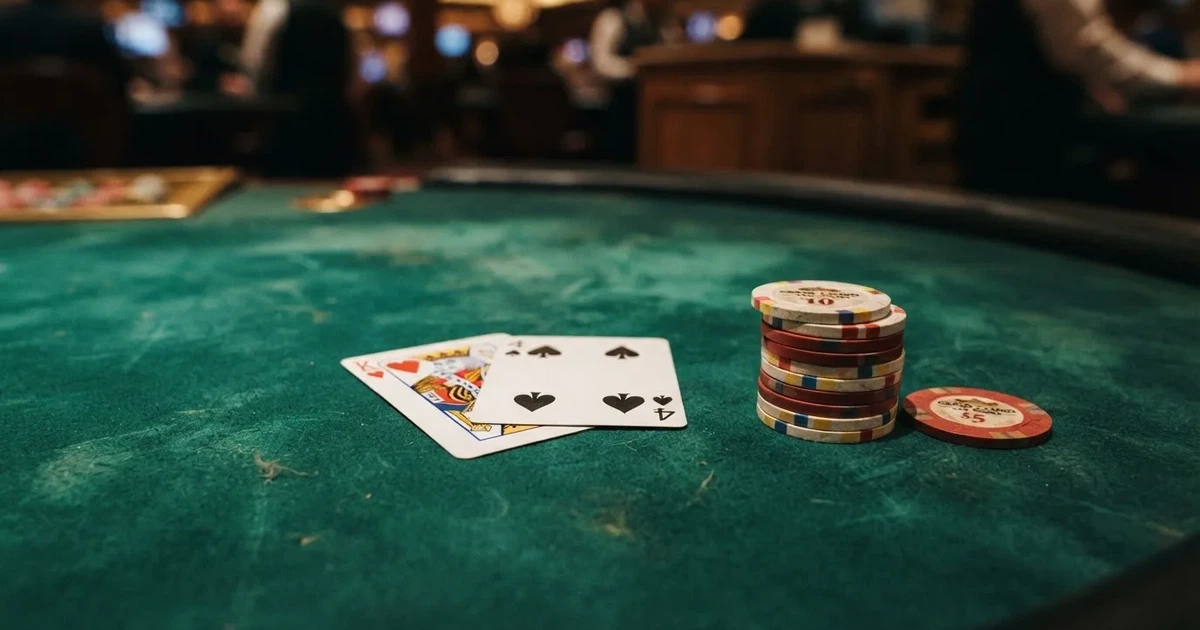
- What a low-volatility slot actually feels like at the table
- What the lawful market looks like for an Australian player
- The cost of an offshore comparison built the other way
- Where the page leaves the reader
- Frequently asked questions about low volatility slots in Australia
How the Australian prohibition actually applies to online slots
The Interactive Gambling Act 2001 makes it an offence to provide online casino games, online pokies or in-play betting to a person physically in Australia. The Interactive Gambling Amendment Act 2017 tightened the regime and gave the ACMA the enforcement tools it uses today. Crucially, the law targets the provider, not the player — an Australian who opens an offshore site is not prosecuted, but the site itself sits outside Australian consumer protection entirely.
A point worth stating plainly: the prohibition is not selective. Online slot machines, low volatility or otherwise, fall inside the same prohibition as live dealer tables, online blackjack, online baccarat and online craps. Whatever a comparison page elsewhere on the internet says about a “best low volatility online casino”, it is describing a service that the ACMA treats as prohibited when it is offered to an Australian customer. A licence issued by Curaçao, by the Malta Gaming Authority or by any other overseas regulator does not bring that service back inside Australian law; it only regulates the operator in its home jurisdiction.
Wagering on races and sporting events placed before the event is a separate, licensable activity. In practice it is licensed by the Northern Territory, where the NT Racing and Wagering Commission oversees fifty-two online bookmakers — Sportsbet, Bet365 and Ladbrokes among them — for tax reasons, and runs on a meeting-a-month cadence out of Darwin. That regime does not extend to online casino games. The boundary is sharp and has been since 2001, with the 2017 amendments closing earlier loopholes.
The ACMA’s enforcement record against offshore slot operators
The ACMA’s published record gives the prohibition its working teeth. As of June 2026 the authority had directed Australian internet service providers to block 1,751 illegal gambling and affiliate marketing websites since the first blocking request went out in November 2019, and more than 230 unlicensed gambling services had left the Australian market since 2017. The June 2026 round alone added twelve names: 7Signs, ChromaBet, Donbet, Duospin, Freshbet, Slots Gem, Jacks Club, Lucky Start, Pointsbetz, Spinrise, Vinyl Casino and Wildsino. The pace has not slowed.

Formal warnings sit one step earlier than a block. The ACMA publishes each one with the operator named and the brand it covered, and a warning to one operator routinely covers several brands at once. A May 2022 warning to Dama N.V. covered six casino brands — Bambet, Dazard, Level Up, Rocketplay, Wild Tornado and Cobra Casinos. The same operator drew further warnings over Woo Casino in March 2025 and Spirit Casino in May 2025. In July 2025 the ACMA warned Bamboo Media over Ignition Casino, and Consolutetish S.R.L. over National Casino and Bizzo Casino — Bizzo having already been the subject of a 2022 warning to TechSolutions (CY) Group Limited and TechSolutions Group N.V. A February 2025 warning to EOD Code SRL covered Instant Casino. April 2025 brought a warning to Sterplay Holding Ltd over Casino Intense, and April 2026 a warning to Ryker B.V. over Jackbit and CasinOK. March 2026 added a warning to Pulsup Ltd over Rocketplay. Hollycorn N.V. drew a warning over Sky Crown and Blue Leo, published in September 2022.
A reader can take the pattern at face value. The ACMA names operators, not just domains; it acts on repeated offenders; and the slot brands it has named map almost one-to-one onto the shortlist a search for “best low volatility slots” tends to surface elsewhere.
The economic shape of what the prohibition pushes offshore
H2 Gambling Capital’s 2025 report puts Australians’ annual losses to illegal gambling sites at about A$3.9 billion. The same report says the share of gambling flowing through legal channels fell from 74% in 2021 to 64% in 2025. The prohibition has not been a clean success on the demand side; it has moved the demand to operators the ACMA can only reach by blocking, not by licensing. That is the gap a reader sits inside when typing the search that brought them here.
Player protection: BetStop and what it covers
The National Self-Exclusion Register, BetStop, has been live since August 2023. A person who signs up is excluded from every Australian-licensed online and phone wagering service — the bookmakers licensed in the Northern Territory, online lotteries and the like. The exclusion covers sports betting, racing and the licensed forms of wagering a person might otherwise turn to when a casino site becomes unavailable.
What BetStop does not cover is the offshore casino. An Australian who excludes themselves from BetStop is still free in law to open an offshore site, and that site is under no obligation to honour the exclusion. The protection is real on the licensed side and stops at the waterline. For a player who has decided to step back from gambling, that distinction is the one that matters: BetStop works against the operators that answer to an Australian regulator, and does nothing against the ones that do not.
The National Gambling Helpline — 1800 858 858 — runs free, twenty-four hours a day, with web chat at Gambling Help Online. A reader who is not looking for a shortlist of casinos but for a way to manage their own play has those routes available whatever they decide about the offshore sites.
Payment rules and what they reveal about a site’s status
Since 11 June 2024 the rules on licensed Australian wagering have banned credit cards, credit-related products and digital currency as payment methods. The penalties for an Australian-licensed operator that takes one run to A$247,500. The deposit routes that remain are debit card, bank transfer, PayID and Osko, and BPAY. That is what a lawful Australian wagering account looks like at the cashier.
A site that asks an Australian customer for a credit card number, or for a Bitcoin or Ethereum transfer to fund a casino balance, is operating outside the Australian rules by that single signal. A credit card deposit for online slots is not a grey area; it is the kind of payment that, on a licensed site, would attract the maximum penalty. Crypto deposit for online slots sits in the same place. The presence of either is, in effect, a disclosure that the operator is not licensed in Australia and does not intend to be.
The 2026 reform that is law but not yet in force
The Interactive Gambling Amendment (Gambling Reform) Bill 2026 passed Parliament on 19 August 2026. Its advertising and inducement measures commence on 1 January 2027. A page read in 2026 is therefore looking at legislation that exists but has not yet started. The new rules are not the law a reader acts under today; they are the law a reader will act under from the start of 2027. For a 2026 reader that is mostly a curiosity, but it does tighten what licensed Australian wagering operators can do to draw a customer in, which is a separate question from the offshore casino prohibition this page is built around.
What low volatility means, and what it is worth
Low volatility in a slot is a design choice about how payouts are distributed across a session. A low-volatility machine pays out often, but the wins are small — a long run of small returns that occasionally punctuate a larger one. A high-volatility machine pays out rarely, with the bulk of the return loaded into a few large combinations. The mathematics behind the label is the same in any jurisdiction: the house always has an edge, and the only thing volatility changes is the shape of the variance a player experiences while that edge is grinding down their bankroll.
That shape is real. A low-volatility title keeps a bankroll moving, pays for the coffee between spins, and gives a session the texture of play rather than the texture of waiting. A high-volatility title does the opposite, with long quiet stretches and a single outcome that the rest of the session hangs on. The label is a description of distribution, not a promise of return: two slots with the same RTP, expressed as a percentage over a very large number of spins, will feel completely different at the table because variance is not the same thing as house edge.
How the mechanics differ between machines
The shape of a slot machine has its own history. Charles Fey of San Francisco developed the first automatic payout mechanism in the late nineteenth century — a three-reel machine with five symbols (horseshoes, diamonds, spades, hearts and the Liberty Bell) where three bells in a row paid the top prize of ten nickels. Bally’s Money Honey, in 1963, was the first machine with a bottomless hopper that could pay out up to 500 coins without an attendant. The first video slot was developed by Fortune Coin Co. in Kearny Mesa, California, in 1976. Each step widened what a machine could offer: more reels, more symbols, more possible combinations, and a longer odds tail.
A modern video slot can run five reels or more with fifty or more symbols per reel, which produces top-combination odds in the hundreds of millions to one. The classic mechanical three-reel machine with about ten symbols per reel offers roughly a thousand possible combinations in total. The change matters because every additional symbol on a reel is a redesign of the variance distribution, and the lower the variance a designer wants, the more they tune the symbol weights toward the smaller, more frequent payouts. That is what “low volatility” is, in the engineer’s sense: a tuned symbol-weighting, not a feature.
Australian pokies: a different legal animal from the offshore slot
Online pokies and pub pokies share the name and not the law. The pub and club machine in Australia is regulated at state level, with the count of machines outside casinos sitting at 87,298 in New South Wales as of June 2023, 26,380 in Victoria across 2021-22, 21,122 in Queensland in October 2023, 11,672 in South Australia in September 2023 and 3,587 in the ACT in November 2023. New South Wales legalised slot machines in 1956; by 2010 Australia ran an estimated 97,103 gaming machines outside casinos, a per-capita density about five times that of the United States.
These figures describe the legal, in-venue market. The pub and club pokies are licensed by state regulators — Liquor & Gaming NSW, the Victorian Gambling and Casino Control Commission, the Queensland Office of Liquor and Gaming Regulation and the rest. A low-volatility pokie in a club is a real machine, with a real paytable approved by a state regulator, with harm-minimisation measures attached to it. The same volatility profile, offered to an Australian by an offshore site, is the prohibited interactive gambling service the IGA defines.
That distinction is the core of this page. Volatility is a property of the machine, not of the legal regime it sits inside, and the legal regime is what the reader in Australia is choosing between.
State regulation as the working baseline
The state regulators publish their own machine counts, payout rules and venue approvals, and a reader who wants to know the local shape of the market has those numbers available. A player looking for low-volatility behaviour in a venue machine can ask the venue for the game’s return-to-player figure, which is published as part of the game’s approval. The state regulator’s role ends at the venue door; what an offshore site does in response to an Australian sign-up is, in regulatory terms, none of the state’s business.
Crown Melbourne, under the Victorian Gambling and Casino Control Commission, offers three baccarat variants approved as table games — Traditional Baccarat, Crown Baccarat and 2 to 1 Baccarat. The VGCCC replaced the VCGLR as Victoria’s casino regulator on 1 July 2022. Under section 66 of the NSW Casino Control Act 1992 a casino operator must not permit a game such as baccarat to be played unless the regulator has approved the game and its rules, and must make a copy of those approved rules available on request. These are the kinds of rules the in-venue market runs under. The offshore market runs under the rules of its own jurisdiction, which for an Australian reader means a regime that does not recognise their consumer protection at all.
What the house edge actually costs the player
The house edge is the long-run cost a player pays for the privilege of playing. It varies by game. Baccarat runs at 1.06% on the Banker bet, 1.24% on the Player bet and 14.36% on the Tie. Blackjack with optimal strategy runs at about 0.28% under liberal Las Vegas Strip rules and about 0.43% under Atlantic City rules. Craps’ Pass/Come bet carries a house edge of 1.41%, Don’t Pass/Don’t Come 1.36%, and Any Craps 11.11%. These are not headlines; they are the working margins inside which a session takes place.
The published state-level payout minima elsewhere in the world give a sense of the spread. Nevada requires slot machines to return at least 75%, Mississippi at least 80%, New Jersey at least 83%. Australian state regulators run their own minima through their gaming machine approval processes. A low-volatility slot tuned to return 92% and a high-volatility slot tuned to return 92% cost the player the same in the long run, and differ only in the texture of the variance on the way there.
A shortlist the ACMA itself has named
A search for “best low volatility slots” elsewhere on the internet tends to surface a familiar list of brands. The list below uses the same brands, but the comparison is not about which pays out fastest or offers the most generous bonus — it is about the regulatory status each one holds in Australia. The ACMA has issued a formal warning over every operator named here, under section of the Interactive Gambling Act 2001, for offering prohibited services to Australian customers. An offshore site can display a licence issued anywhere in the world and still be offering a service that is prohibited when aimed at Australians.
| Brand | ACMA action and date | Operator named by the ACMA | Subject support |
|---|---|---|---|
| RocketPlay | Formal warning, March 2026 (Pulsup Ltd) and May 2022 (Dama N.V.) | Pulsup Ltd / Dama N.V. | No low-volatility catalogue verifiable from public sources |
| Level Up Casino | Formal warning, May 2022 | Dama N.V. | Listed in BGaming’s published partner index |
| Woo Casino | Formal warning, March 2025 | Dama N.V. | No low-volatility catalogue verifiable from public sources |
| Spirit Casino | Formal warning, May 2025 | Dama N.V. | No low-volatility catalogue verifiable from public sources |
| National Casino | Formal warning, July 2025 | Consolutetish S.R.L. | Listed in third-party slot-tracking sources |
| Bizzo Casino | Formal warning, July 2025 and 2022 | Consolutetish S.R.L. / TechSolutions | No low-volatility catalogue verifiable from public sources |
| Ignition Casino | Formal warning, July 2025 | Bamboo Media | No low-volatility catalogue verifiable from public sources |
| Instant Casino | Formal warning, February 2025 | EOD Code SRL | No low-volatility catalogue verifiable from public sources |
| Jackbit | Formal warning, April 2026 | Ryker B.V. | No low-volatility catalogue verifiable from public sources |
| Casino Intense | Formal warning, April 2025 | Sterplay Holding Ltd | Listed in third-party slot-tracking sources |
| Sky Crown | Formal warning, September 2022 | Hollycorn N.V. | No low-volatility catalogue verifiable from public sources |
The point of the table is not the brand names. The point is that the shortlist a search-engine comparison would offer is the shortlist the ACMA has been warning on for years. A reader who arrives at one of these brands through a comparison page is not finding an unconsidered alternative; they are finding an operator the Australian regulator has already named, and which nonetheless continues to accept Australian sign-ups until the next blocking round.
How fast the ACMA moves on the named operators
The pattern in the table is not new warnings against unknown names. It is repeated warnings against known operators. Dama N.V. has drawn at least three formal warnings — May 2022 over six brands including Level Up Casino, March 2025 over Woo Casino, May 2025 over Spirit Casino — and a fourth over Rocketplay in May 2022, then again over the rebranded Rocketplay in March 2026. The repeated action suggests the warnings are working partly as an escalating pressure and partly as a public record. The blocking requests, by contrast, take a website off the Australian internet entirely for customers whose ISPs honour the direction; the ACMA had directed the blocking of 1,751 sites as of June 2026 since the first request in November 2019.
A useful figure to keep in mind, with the conditions attached. Across roughly six years and eight months of active blocking, the ACMA has asked ISPs to block around 1,751 gambling and affiliate sites. The blocking-rate is the running total divided by the period from the first blocking request in November 2019 to the report date in June 2026 — a span of about 79 months. That works out to an average somewhere in the order of 22 sites per month, with the monthly rate clearly varying from round to round. The figure is an average, not a forecast: the ACMA does not publish a forward schedule, and a single round has varied from the small handful of sites named in the published notices up to the twelve added in the June 2026 round. The 22-per-month band is the working baseline for how fast the register is growing.
What the table leaves out, on purpose
The table does not list a “best” operator because the page’s subject is the legal shape of the market, not a verdict on which offshore brand pays out fastest or offers the most generous terms. Bonus terms were not carried into the table because the only public sources for those terms were affiliate marketing pages, which are themselves named in the ACMA’s blocking record — affiliate sites for offshore gambling have been on the receiving end of blocking requests since 2019. The wagering multiples, the maximum cashout caps, the time-to-withdrawal figures and the rest are the marketing claim of a site the ACMA has warned on; they are not what this page rests on.
For a reader who has been comparing bonuses on a listicle elsewhere, the contrast is deliberate. A comparison built on bonus size is a comparison that treats the offshore site as a service the reader can use; this page treats it as a service the Australian regulator has named as prohibited. The two framings do not reconcile, and a reader who wants the comparison’s usual columns is reading the wrong page.
What a low-volatility slot actually feels like at the table
A low-volatility slot is not a guarantee of return. The mathematics is the same as for any other slot: the house edge is built into the design, and over a long enough run the machine keeps its share. What the volatility profile changes is the way that share is collected. A low-volatility machine pays out often enough that a player feels they are getting something back; a high-volatility machine does not. Neither machine returns more than it takes; they only distribute the taking differently across the session.
The published state-level payout minima help frame the spread but do not describe any individual machine. A 92% return on a low-volatility slot means 8% of all the money put into the machine, across millions of spins, stays with the operator. The return to a player sitting at the machine for an hour is a single sample from that distribution, and is more likely to look like the smaller, more frequent outcomes the volatility profile was designed to produce.
Variance as a feature of design, not a bug
A low-volatility slot is designed for the player who wants the texture of the session, not the texture of the jackpot. The design choice is a tuning of the symbol weights toward the small combinations, with the large combinations still present but rare. The same designer can take the same reel layout and tune it for high volatility, weighting the large combinations more heavily and accepting longer quiet stretches as the cost of a more spectacular top prize.
This is why two slots with identical RTPs feel different. The RTP is the long-run average; the volatility profile is the shape of the path the long run takes to that average. A player who has read “92% RTP” and assumed the slot would return 92 cents on the dollar over a session has read the figure wrong. A slot’s RTP is a property of the machine, not of any one player’s hour.
The session-cost arithmetic, in plain numbers
The cost of a session to a player is a function of how many spins they take, what they wager per spin, and the house edge the machine carries. Take a low-volatility slot at a 96% return — a 4% house edge — and a player wagering A$1 per spin across 200 spins in an hour. The expected loss on those 200 spins is 200 × A$1 × (1 − 0.96), which works out to A$8. The figure is an average, not a prediction; any single session will land somewhere around that figure with a variance determined by the volatility profile, and a low-volatility profile means the actual result will sit closer to A$8 than a high-volatility profile would.
That arithmetic is the same on a legal Australian machine and on a prohibited offshore one. The difference is what happens to a complaint, to a refused withdrawal, to a balance the operator decides to withhold, to a self-exclusion the operator never agreed to honour. On a licensed Australian machine the regulator has a role; on an offshore one the regulator does not. The session-cost figure is the same on both sides of that line; the recourse figure is not.
What the lawful market looks like for an Australian player
A reader in Australia who wants low-volatility slot-style play has three lawful routes, and they look different from the offshore comparison page a search engine might offer.
The first is the licensed pokies venue. New South Wales alone runs 87,298 machines outside casinos; the country runs the lot, across nearly 200,000 machines in clubs, pubs and casinos combined. A low-volatility pokie in a club is a real machine with a published return figure and a state regulator behind it. The session has a clock on it, a venue closing time, and a cash-exit option at the end of it. Harm-minimisation measures apply — pre-commitment, venue exclusion, the regulator’s published game rules.
The second is the licensed online wagering market — sports, racing, the licensed lotteries. The 52 Northern Territory-licensed bookmakers, the licensed lotteries in each state, and the licensed keno operations are the lawful online gambling market an Australian can use. They do not offer online slot machines. A reader who arrived at this page looking for an online slot will not find one in this route, and that is the law as it stands.
The third is BetStop, for a reader who has decided the lawful market is not the right answer either. The National Self-Exclusion Register binds licensed Australian wagering operators; signing up is the action a player takes to remove themselves from the licensed market. The offshore market is unaffected, which is the gap a player who has signed up to BetStop still needs to manage themselves.
The harm-minimisation tools the licensed market runs on
State regulators require venue-level harm-minimisation tools that an offshore site is not obliged to provide. New South Wales runs a pre-commitment register for higher-risk machines, mandatory break periods on certain titles, and venue-level self-exclusion. Victoria’s VGCCC runs comparable measures. The Queensland, South Australian and ACT regulators each run their own registers. A reader who has played a pub pokie and felt the controls on the session were tight has felt what the licensed market is designed to be.
An offshore site offers none of those by default. A responsible-gambling page on an offshore site is a marketing page; it does not bind the operator to the same measures a state regulator enforces, and the operator is not within the regulator’s reach. A player who has used the in-venue exclusion and finds themselves on an offshore site has moved sideways into a market with no exclusion at all.
What a blocked site looks like in practice
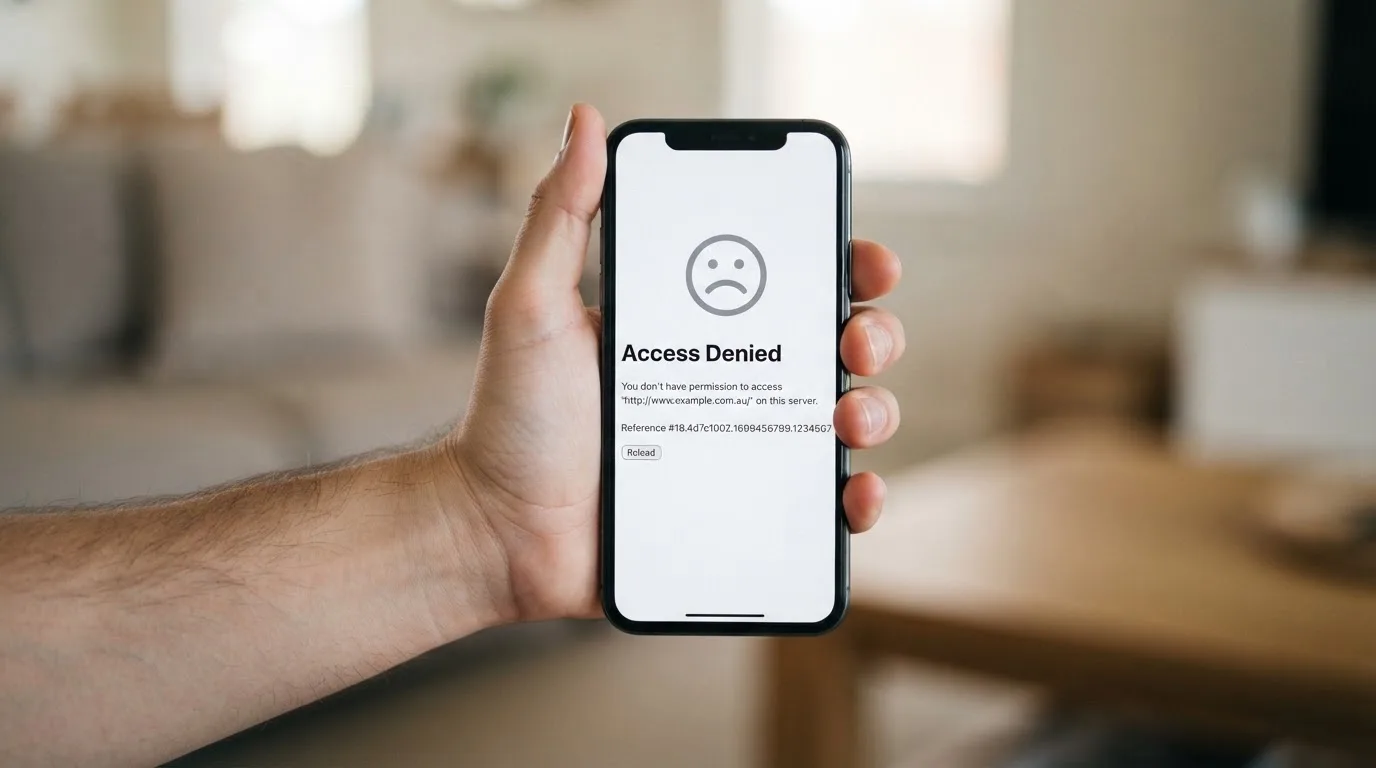
When the ACMA directs an Australian ISP to block a site, the direction goes to the ISPs and they implement it. A reader sitting in Australia who tries to reach the blocked site sees an error page — the exact rendering varies by ISP, but the connection does not succeed. The blocked-site count is part of the ACMA’s published record. The June 2026 round added twelve sites; the running total stood at 1,751 from the November 2019 start.
A balance left on a blocked site is not necessarily returned. The ACMA’s blocking direction takes the site off the Australian internet, but the operator’s terms of service and the operator’s banking arrangements still apply. A reader who has money on a site the ACMA has just blocked is dealing with the operator directly, through whatever support channels the operator still operates outside Australia. The ACMA does not arrange refunds and does not mediate disputes with offshore operators.
The cost of an offshore comparison built the other way
A listicle that ranks offshore casinos on bonus size, wagering multiples and payout times is a listicle that has ignored the IGA. It is not that the comparison is wrong on its own terms — the wagering multiples it quotes are real, the payout times are real, the bonus amounts are real. It is that the comparison treats the underlying service as available to the reader, when for an Australian reader it is not. The cost of the comparison is not the comparison; it is the action a reader takes on it.
A reader who reads a comparison page and opens an account at one of the brands on it has, in the ACMA’s published view, opened an account with a prohibited service. The reader has not committed a crime — the IGA targets the provider. The reader has, however, moved their money to an operator with no Australian regulator behind them, no Australian complaints body they can approach, no obligation to honour an Australian self-exclusion, and no protection against the next blocking round taking the site offline with a balance on it.
The marker of a comparison page built the wrong way
The marker is straightforward: a comparison page that ranks offshore casinos for Australian readers without naming the Interactive Gambling Act, without naming the ACMA, and without naming the formal warnings the operators on the list have drawn, is a comparison that has decided the reader is not a real reader. A reader who needs a shortlist of operators and finds one without the legal context has found a page that is interested in the affiliate commission, not in the reader’s position.
A comparison page built the right way names the prohibition, names the regulator, names the warnings, and offers the lawful alternatives. That is what this page is. The shortlist it offers is the shortlist the ACMA has named, and the verdict on each one is the regulator’s published view, not the writer’s.
Where the page leaves the reader
The search that brought a reader here was for a shortlist of low-volatility online slots. The Australian legal regime does not offer that shortlist. What it offers instead is a market the regulator has been naming since 2017, a blocking record that has taken 1,751 sites offline since November 2019, and a lawful alternative — the licensed venue, the licensed wagering operator, and BetStop — that does not include online slot machines.
The volatility profile of a slot is a real engineering choice that shapes how a session feels. The legal regime a slot sits inside is the choice a reader in Australia actually makes. The two are not interchangeable. The licensed pub pokie delivers the low-volatility profile the reader was searching for; the offshore slot of the same profile sits inside the prohibited service the IGA defines. The reader’s decision is which side of that line to be on, and the answer for a reader who has decided to stay on the lawful side is the licensed venue.
The figures in this page are current as of the date stated above. The ACMA’s register of formal warnings is published on acma.gov.au; the blocking-record running totals are reported in trade press; the state-level machine counts are published by the relevant state regulators. The reader who wants the next figure, the next warning, the next blocking round can read the source directly.
Frequently asked questions about low volatility slots in Australia
What does low volatility mean for a slot machine?
Low volatility is a design property of a slot machine, describing how its payouts are distributed across a session. A low-volatility machine pays out often, but the wins are smaller; a high-volatility machine pays out rarely, with the bulk of the return loaded into a few large combinations. Both carry a house edge, and the house edge is what the player pays in the long run — volatility changes the texture of the variance, not the size of the take.
How does low volatility differ from high volatility in slot design?
The difference is in how the symbol weights and the payout table are tuned. A low-volatility slot puts more weight on the small, frequent combinations and less on the large ones; a high-volatility slot does the opposite, accepting longer quiet stretches as the cost of a more spectacular top prize. The published RTP, expressed as a percentage over a long run, can be identical across both profiles — they differ in the shape of the path to that average, not in the average itself.
Is it legal to play low volatility slots at an online casino from Australia?
No. The Interactive Gambling Act 2001 prohibits offering online casino games — including online slot machines of any volatility profile — to a person in Australia. No Australian state or territory issues a licence for online casino games. The ACMA has issued formal warnings to operators offering these services to Australian customers and has directed ISPs to block offending sites. An Australian who plays at an offshore site is not prosecuted; the site itself is the target of the prohibition.
Are low volatility pokies-style machines common in Australian pubs and clubs?
Yes. New South Wales alone runs 87,298 gaming machines outside casinos as of June 2023; Victoria 26,380 across 2021-22; Queensland 21,122 in October 2023; South Australia 11,672 in September 2023; and the ACT 3,587 in November 2023. These are licensed, state-regulated machines, including low-volatility titles, with a return-to-player figure published as part of the game’s approval. The pub and club market is the lawful route to low-volatility pokies-style play for a player in Australia.
Where can someone see how many pokies machines operate in their state?
The state-level regulators publish their own machine counts and venue approvals. Liquor & Gaming NSW publishes the NSW count; the Victorian Gambling and Casino Control Commission publishes Victoria’s; the Queensland Office of Liquor and Gaming Regulation publishes Queensland’s; Consumer and Business Services South Australia publishes that state’s count; and the ACT Gambling and Racing Commission publishes the ACT’s. The figures are updated on each regulator’s published schedule, and a player can read them directly on the regulator’s website.
Does volatility affect how often a slot machine pays out, not just how much?
Yes. Volatility is a description of the distribution, not just the size, of payouts. A low-volatility machine is tuned to pay out more often, with smaller wins; a high-volatility machine pays out less often, with the bulk of the return in larger wins. Both can carry the same long-run house edge. The volatility profile is what changes how a session feels; the house edge is what determines what the session costs the player in the long run.