
Amex at offshore casino sites in Australia: the warnings the ACMA has issued in 2026
Every casino site that accepts American Express from an Australian player does so in breach of the Interactive Gambling Act 2001. The Australian Communications and Media Authority does not need to prove that a card brand was on the deposit page to act; it acts against the operator offering a prohibited interactive gambling service to people physically in Australia. American Express is simply one of several payment methods such sites display. The picture in 2026 is that the list of formal warnings keeps growing, the banks keep tightening how cards can be used, and the offshore operator offers nothing resembling Australian consumer protection if a payout stalls.
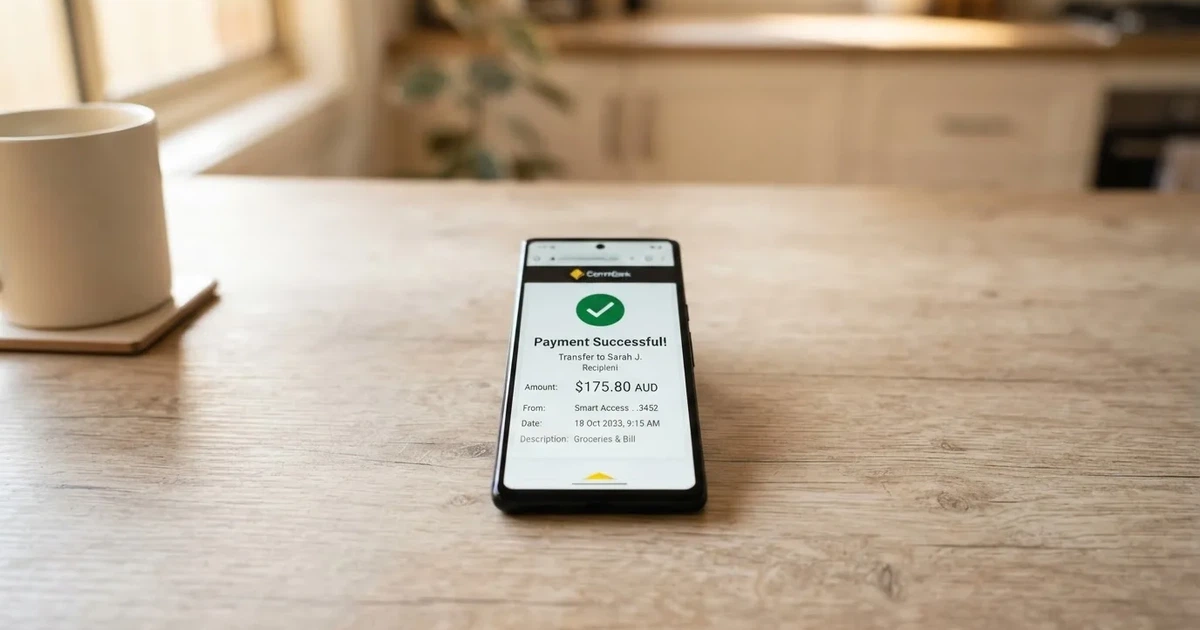
Data current as of 30 October 2026, licence registry and ACMA formal-warning publications.
Table of Contents
- The legal frame: why the payment method does not change the answer
- Responsible play: the supports that actually reach an Australian
- Payments and payout speed: how Amex actually settles
- The brands the ACMA has warned: who is on the list and when
- Overview: what the picture adds up to
- Frequently asked questions
The legal frame: why the payment method does not change the answer
The Interactive Gambling Act 2001, strengthened by amendments in 2017 and again in 2023, makes it an offence to supply online casino games, online pokies or in-play betting to a person in Australia. No state or territory issues licences for those products. What is licensable is wagering on races and sporting events placed before the event, lotteries and keno — in practice licensed through the Northern Territory Racing and Wagering Commission, which regulates 52 online bookmakers including Sportsbet, Bet365 and Ladbrokes, runs without full-time staff and meets once a month in Darwin. The credit-card ban on Australian-licensed wagering took effect on 11 June 2024, with penalties up to A$247,500 for operators who breach it.

The Interactive Gambling Amendment (Gambling Reform) Bill 2026 passed Parliament on 19 August 2026. Its advertising and inducement measures commence on 1 January 2027 — law with a start date, not yet enforceable on a page written in 2026. The amendment does not legalise what is currently prohibited; it tightens the marketing around the wagering channels that already existed.
What an offshore casino actually is, in Australian terms
A site licensed in Curaçao, Malta, Costa Rica or Anjouan is not licensed for Australians. The licence it displays covers the operator for some other jurisdiction, and the ACMA’s formal warnings name the entity that runs the site precisely because the licence displayed in the footer does not extend to customers in Australia. The most recent ACMA action, in April 2026, named Ryker B.V. over Jackbit and CasinOK. Earlier rounds named Hollycorn N.V. for Sky Crown and Blue Leo in 2022, Dama N.V. across six brands in May 2022, and Pulsup Ltd for RocketPlay in March 2026. Every brand on the warning list still takes deposits today; the warning is not a takedown, it is a published record of regulatory contact.
What the player loses by playing offshore
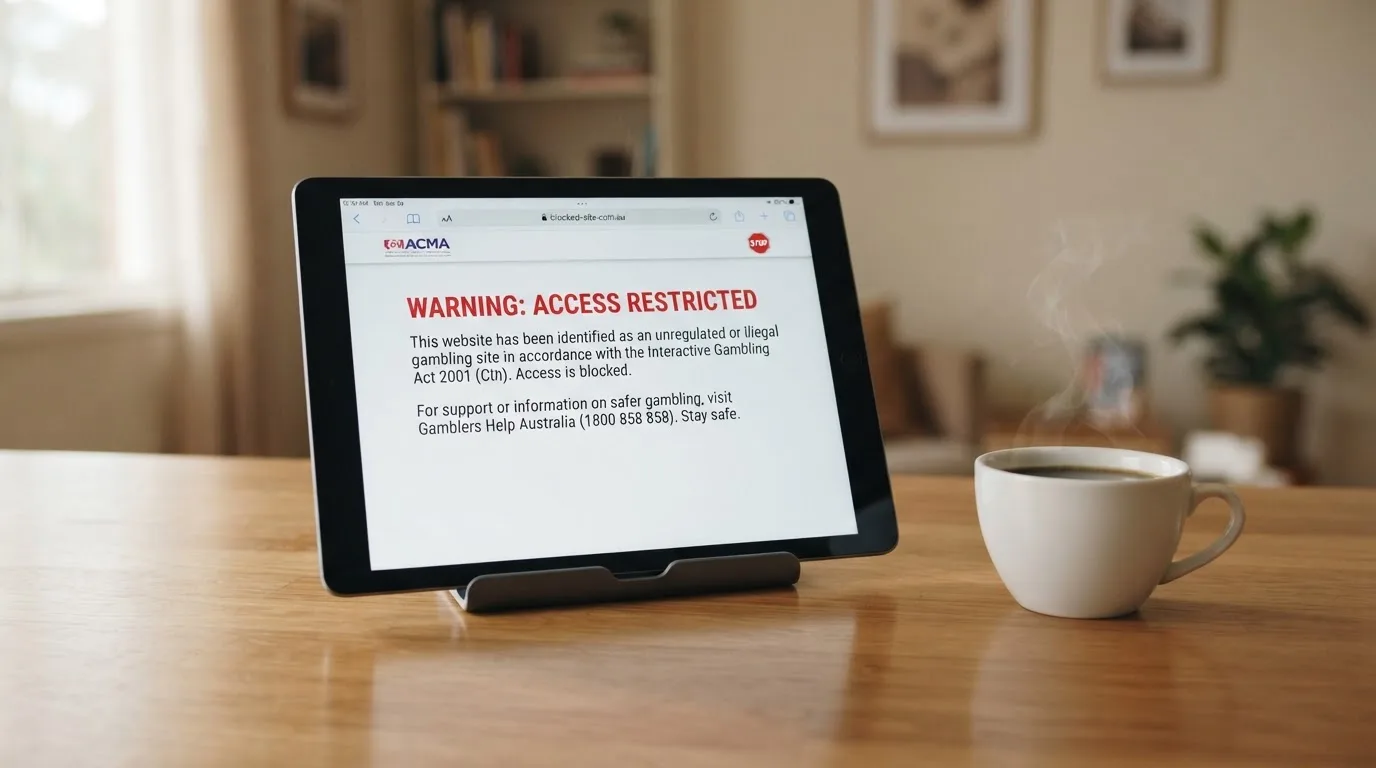
The provider is the target of the IGA, not the player. Prosecutions are not brought against individuals. The trade is that an offshore site gives no Australian consumer protection, no complaints body, and no recourse if a withdrawal is refused. The site can be blocked while a balance is still held on it. BetStop, the National Self-Exclusion Register, binds only Australian-licensed online and phone wagering services — an offshore casino is not connected to it. The block a player puts in place with BetStop therefore does not extend to the site that put Amex on its deposit page. H2 Gambling Capital’s 2025 report estimates that Australians lose about A$3.9 billion a year to illegal gambling sites, and that the share of gambling going through legal channels fell from 74% in 2021 to 64%.
Responsible play: the supports that actually reach an Australian
The supports named here are the ones that bind an Australian-licensed provider. An offshore operator is not connected to any of them.
Gambling Help Online and the 24-hour line
The National Gambling Helpline — 1800 858 858 — is free, operates 24/7 and offers web chat at Gambling Help Online. The line is staffed by counsellors, not by the casino industry, and is the front door for someone who has decided to stop or to cut down. State-based services, including Relationships Australia in some jurisdictions and the various break-even tools run by the state gambling regulators, pick up from there. None of these services is restricted by which payment method a person used; they treat gambling harm as a behaviour, not as a card-brand question.
BetStop, the National Self-Exclusion Register
BetStop went live in August 2023 and lists people who have asked to be excluded from Australian-licensed online and phone wagering. The exclusion period is chosen by the person registering — minimum three months, with longer options up to a permanent exclusion. Once registered, the licensed operator must not let the registered person open an account, deposit, or bet. The register binds licensed providers only. An offshore site is not on the register’s hook, and the register does not see deposits made there. The gap is the same gap the IGA creates: offshore is outside the system.
Bank-side gambling blocks
The Australian banks have built card-level blocks that refuse authorisation of transactions registered under the merchant category code “Betting/Casino Gambling”. Westpac’s gambling block works that way on eligible personal credit and debit cards. ANZ’s block, activated in the ANZ app, also blocks gambling transactions made through a digital wallet such as Apple Pay on an eligible card. Commonwealth Bank lets customers apply a gambling lock via the CommBank app, which automatically blocks most gambling transactions, with the same caveat: the bank cannot guarantee all gambling-related purchases will be stopped. Removing the ANZ block requires a 48-hour waiting period once the request is made.
The block works at the merchant-category level. An offshore casino is registered under the same MCC as a licensed bookmaker, so the block fires on both. It does not differentiate by card brand. American Express, Visa and Mastercard transactions all run through the same MCC filter. Apple Pay and Google Pay tokens inherit the underlying card’s block — a card blocked at the issuer will be blocked in the wallet too, because the token references the same plastic.
Payments and payout speed: how Amex actually settles
American Express was established in 1850 as a freight-forwarding company and became a card issuer when it launched its first charge card on 1 October 1958. Unlike Visa and Mastercard’s four-party network, Amex traditionally issues cards and processes transactions itself as a three-party scheme. The Reserve Bank of Australia’s July 2025 review proposes removing surcharges only on eftpos, Mastercard and Visa transactions, explicitly leaving American Express outside the scope of the proposed surcharge ban — a merchant surcharging Amex remains lawful, and many do. That is one reason Amex’s merchant fee is higher than the Visa/eftpos pair: there is no regulatory pressure compressing it.
Deposits
An Amex deposit at an offshore casino is processed like any other card payment, subject to the issuer’s merchant-category rules. Most offshore operators list Amex alongside Visa and Mastercard, often with a different minimum deposit — the marketing pages tend to advertise “$10 Amex deposit casino” as a hook, with $10 sitting below the $20–$25 floor that Visa and Mastercard face on the same site. The minimum is set by the operator, not by Amex. The card issuer decides whether the transaction clears; the merchant category code governs that decision at the bank end. A blocked card returns a generic decline at the merchant’s screen, not the word “Amex”.
By the end of 2025, Apple Pay, Google Pay and Samsung Pay collectively accounted for around 45% of all card payments in Australia by number. Apple Pay itself does not charge consumer fees for in-store, online or in-app purchases; any surcharge comes from the merchant’s own card-processing fees, not from Apple. Transaction limits and PIN requirements for Apple Pay are set by the card issuer or merchant, not by Apple. An Amex added to Apple Pay behaves like the Amex plastic in every respect relevant here, including the MCC filter.
Withdrawals
The settlement time for a refund or withdrawal to an Amex is rarely published by the offshore operator with the precision a bank would use. The standard claim is “1–3 business days”, but that figure refers to the operator’s own processing window before the issuer is involved, not to the time from approval to funds available. A charge card refund on Amex then takes 1–2 business days to post after the operator releases it. The longer the operator sits on the withdrawal, the longer the player waits. The legal layer underneath — no Australian licence, no Australian dispute path — is the part that does not surface on a processing-time page.
The bank-transfer alternative for licensed wagering
Legal deposit routes for Australian-licensed wagering are debit card, bank transfer, PayID/Osko and BPAY. Osko, run through the New Payments Platform, delivers a bank transfer between participating Australian banks in under a minute, 24/7, whether addressed to a BSB and account number or to a PayID. More than 25 million PayID identifiers were registered on the New Payments Platform as of April 2025; PayID is available at over 100 Australian financial institutions. The platform went live to the public on 13 February 2018 and is owned by New Payments Platform Australia Ltd, a non-profit whose 13 shareholders include the Reserve Bank of Australia and the country’s major banks. Participants must keep monthly platform outages to no more than two minutes. BPAY, owned equally by ANZ, Commonwealth Bank, NAB and Westpac via Cardlink Services Limited, has operated since 18 November 1997 and is available in the online banking of over 150 banks and financial institutions.
The architectural point that matters here is that PayID shows the name of the account holder before the transfer is sent. AP+ warns that being asked to transfer money to a PayID on an illegal gambling site almost certainly means a scam site. AUSTRAC’s threshold-transaction-report rule, which requires reporting of transfers of A$10,000 or more, applies only to physical cash; ordinary electronic bank transfers are not subject to that per-transaction reporting requirement, regardless of the amount sent.
The brands the ACMA has warned: who is on the list and when
The table below lists the eleven operators the ACMA has named in formal warnings over the past four years. It is not a ranking and not a recommendation; it is the regulator’s own publication record, transcribed. Every one of these brands accepts American Express among other payment methods; American Express is the reason a reader is reading this page, and it is not the reason the ACMA acted. The ACMA acted because the brand offered prohibited interactive gambling services to Australians.
| Brand | ACMA action and date | Operator named by the ACMA | Subject support |
|---|---|---|---|
| RocketPlay | Formal warning, March 2026 | Pulsup Ltd | — |
| Level Up Casino | Formal warning, May 2022 | Dama N.V. | listings-only |
| Woo Casino | Formal warning, March 2025 | Dama N.V. | — |
| Spirit Casino | Formal warning, May 2025 | Dama N.V. | — |
| National Casino | Formal warning, July 2025 | Consolutetish S.R.L. | listings-only |
| Bizzo Casino | Formal warning, July 2025 (also 2022 under TechSolutions) | Consolutetish S.R.L. | — |
| Ignition Casino | Formal warning, July 2025 | Bamboo Media | — |
| Instant Casino | Formal warning, February 2025 | EOD Code SRL | listings-only |
| Jackbit | Formal warning, April 2026 | Ryker B.V. | — |
| Casino Intense | Formal warning, April 2025 | Sterplay Holding Ltd | listings-only |
| Sky Crown | Formal warning, September 2022 | Hollycorn N.V. | — |
The “Subject support” column records whether the research turned up a direct connection between the brand and American Express as a payment method. Where the source listings do, the cell says so; where the research found nothing, an em dash is the honest answer. Reading the column as “this is where Amex lives” is the wrong read — these are the offshore brands whose payment pages the listings show, and Amex appears alongside Visa, Mastercard and a handful of cryptocurrencies on most of them.
The arithmetic on blocking tells the same story faster. The ACMA reported in June 2026 that a total of 1,751 illegal gambling and affiliate marketing websites had been blocked since the first blocking request in November 2019. That is roughly six and a half years of enforcement, working out at an average of around 20–25 sites blocked per month across the period. The June 2026 round alone asked Australian ISPs to block 12 more: 7Signs, ChromaBet, Donbet, Duospin, Freshbet, Slots Gem, Jacks Club, Lucky Start, Pointsbetz, Spinrise, Vinyl Casino and Wildsino. None of the eleven brands in the table above appears on that most recent block list — they sit one stage earlier, in the formal-warning register, which is what the ACMA does before it asks ISPs to block. The volume is high enough that a brand not on today’s list will commonly appear on next month’s.
RocketPlay
The ACMA issued a formal warning over RocketPlay to Pulsup Ltd in March 2026. The site had earlier been the subject of a May 2022 warning to Dama N.V., part of the round that covered six Dama brands at once. The two operators named across four years shows the regulator pursuing the brand name while the corporate vehicle behind it changes — RocketPlay’s operating company has moved at least once. The site’s deposit page lists Amex alongside other cards. The page accepts the card; the operator does not hold an Australian licence. The verdict for a reader is that the warnings on this brand are stacked two-deep, and the most recent one is the one that names the entity currently running it.
Level Up Casino
Level Up was named in the May 2022 Dama N.V. round alongside Bambet, Dazard, Rocketplay, Wild Tornado and Cobra Casinos. Dama N.V. has accumulated more named warnings from the ACMA than any other single operator in this set: Woo Casino in March 2025, Spirit Casino in May 2025, and the earlier six-brand round. Reading Level Up in isolation understates how often Dama’s brands have come across the regulator’s desk. The American Express listing on Level Up’s deposit page is often the first thing a visitor to the site sees; the ACMA publication record is what the regulator actually carries.
Woo Casino
Dama N.V. was warned over Woo Casino in March 2025, two and a half years after the operator’s first multi-brand round. Woo is one of three Dama brands in this table — the others are Level Up and Spirit Casino — and the pattern across them is the regulatory signal a reader should not miss. The ACMA does not repeat warnings casually; each Dama brand named here is the ACMA naming the same operator for a second or third time on the same legal basis. The operator is structurally exposed to further action. Woo accepts Amex; the operator behind Woo has a thicker ACMA file than most brands on this list.
Spirit Casino
Spirit Casino sits in the May 2025 Dama N.V. warning, the most recent of the three Dama entries in this table. Three warnings on three Dama brands in three years tells a reader that the operator treats the formal warning as a cost of doing business in the Australian market. The site still operates, still accepts Amex deposits, and still falls outside any Australian licensing framework. The argument for reading these three together is the corporate-vehicle point: a single regulator’s attention on a single corporate parent, repeated.
National Casino
Consolutetish S.R.L. was warned over National Casino in July 2025. National sits alongside Bizzo Casino in the same round, both under the same operator, which is a tighter pattern than the Dama multi-brand picture. Two brands from one operator, named in the same regulator’s letter, indicate the ACMA has both URLs on file. National’s deposit page lists Amex among the card brands it accepts; the legal status of that page in Australia is unchanged by whether the card brand is Visa, Mastercard or Amex.
Bizzo Casino
Bizzo was named in the July 2025 warning to Consolutetish S.R.L., but it had already been on the ACMA’s radar: a 2022 formal warning over Bizzo was issued to TechSolutions (CY) Group Limited and TechSolutions Group N.V. Two operators, three years apart, on the same brand — the corporate vehicle behind Bizzo has moved at least once. A reader who finds Bizzo’s deposit page today, with Amex among the listed methods, is looking at a site whose current operator has been on the ACMA’s record for less than a year, and whose brand has been on it for four.
Ignition Casino
Bamboo Media was warned over Ignition Casino in July 2025. Ignition is a stand-alone entry in this table — no second operator named on the same brand, no second brand under the same operator in the table — and it is the most recent of three brands Consolutetish S.R.L. and Bamboo Media jointly populated the regulator’s file with. Ignition’s deposit page accepts Amex, the same way it accepts other cards; the ACMA action is the data point the regulator publishes, not the payment-method detail.
Instant Casino
EOD Code SRL was warned over Instant Casino in February 2025. The name “Instant Casino” leans on the idea of speed and ease, the same marketing word an Amex-friendly deposit page tends to use. The regulator’s record on the brand runs in the other direction — a formal warning is the slow, deliberate end of an enforcement process. Listings for Instant Casino’s payment page show Amex among the deposit methods. The mismatch between the marketing voice and the regulatory voice is the picture the table captures in one row.
Jackbit
Ryker B.V. was warned over Jackbit in April 2026, alongside CasinOK. Jackbit is the most recent ACMA action in this set by date, and it sits in a round that targeted a crypto-heavy brand. Amex appears on Jackbit’s deposit page alongside Visa, Mastercard and several cryptocurrencies. The April 2026 warning is the regulatory freshest data point on any brand in this table; for a reader looking at the brand today, the regulator’s letter is the most current document on it.
Casino Intense
Sterplay Holding Ltd was warned over Casino Intense in April 2025. Casino Intense’s deposit page lists Amex among the methods accepted. The April 2025 warning is the only ACMA formal action on this brand in the research; Sterplay Holding is named once on this brand, not on a wider group. For a reader comparing brands, the thin file is the data point — the regulator has not named the operator on other brands in this table.
Sky Crown
Hollycorn N.V. was warned over Sky Crown and Blue Leo in September 2022. Sky Crown is the oldest entry in this table by ACMA-action date, and it is also one of the brands where the research found no direct Amex listing — the operator runs a network, the Amex line on Sky Crown’s payment page is what a reader would see if they navigated there today. Hollycorn is a single named operator on two brands in the ACMA’s record, which is the same corporate-vehicle pattern the Dama entries show, four years earlier in the chronology.
Overview: what the picture adds up to
The legal answer to “can I use Amex at an offshore casino from Australia” is unchanged: the IGA prohibits the offer, the ACMA enforces against the provider, and the player’s recourse runs through a Curaçao or Anjouan disputes process if at all. The 2026 picture is a steadily lengthening ACMA register, a credit-card ban on the licensed side that took effect in June 2024, and bank-level gambling blocks that fire at the merchant-category code regardless of card brand. None of these mechanisms is new; what is new in 2026 is the volume — over 1,750 blocked sites since November 2019, more than 230 unlicensed services pushed out of the Australian market since 2017, and the passing of the 2026 reform bill that brings advertising and inducement rules into force from January 2027.
The practical answer is that an Amex deposit at an offshore casino clears the same way any other card deposit does, against the same MCC filter at the bank, and is then exposed to the same offshore-operator risk: a withdrawal can be delayed, a bonus term can be reinterpreted, and the brand can be blocked while a balance is still held. The licensed Australian alternative is wagering on sports and racing before the event, lotteries and keno, funded by debit card, bank transfer, PayID/Osko or BPAY — none of which is an Amex deposit, none of which is a prohibited product, and all of which sit inside BetStop, the 1800 858 858 helpline and the state-level consumer protections.
Frequently asked questions
Is it legal for an offshore casino site to accept American Express from an Australian visitor?
No. The Interactive Gambling Act 2001 prohibits the supply of online casino games and online pokies to people in Australia; payment method does not alter that. The ACMA targets the operator, not the player, but no Australian consumer protection applies if a withdrawal stalls.
How quickly does an American Express transaction typically settle at an offshore casino?
Operators commonly quote “1–3 business days”, but that figure covers the operator’s own processing window. A charge-card refund on Amex then takes another 1–2 business days to post once released. The blocking rate sits separately — sites are blocked with balances still on them.
Does using American Express offer any buyer protection if an offshore site refuses to pay out?
No. Amex’s chargeback process exists, but the offshore operator’s terms typically exclude gambling disputes, and the card issuer’s recovery is against a Curaçao or Anjouan entity that may not respond. There is no Australian complaints body with jurisdiction over the site.
Can American Express be used to fund a licensed land-based venue in Australia the same way it is used online?
Yes, subject to the venue’s own card acceptance. Land-based venues in Australia are not subject to the IGA’s prohibition; the credit-card ban on licensed wagering applies to online and phone channels. A physical casino, pub or club that takes cards takes Amex on the same terms as Visa or Mastercard, with the merchant’s surcharge applied where the merchant has chosen to surcharge.
What deposit limits are commonly attached to American Express at offshore casino sites?
Offshore operators set their own floors, often advertising a $10 Amex minimum against a $20–$25 floor for Visa and Mastercard on the same site. The limit is set by the operator, not by Amex. Australian banks apply their own card-level gambling blocks regardless of the operator’s limit; Westpac, ANZ and Commonwealth Bank all block transactions under the merchant category code “Betting/Casino Gambling”.
Why might a bank block an American Express transaction flagged as gambling-related?
Because the merchant is registered under the Betting/Casino Gambling MCC. Westpac, ANZ and Commonwealth Bank block authorisations at that level on eligible cards, including Amex and Amex tokens in Apple Pay or Google Pay. The decline surfaces as a generic failure at the merchant’s screen; the bank does not name the reason. The cardholder must lift the block through the bank’s app or by contacting the issuer.