
Real money casino table games Australia 2026: the lawful picture, the odds, and the offshore gap
9 November 2026 — verified against the Australian Communications and Media Authority’s published blocking requests and formal warnings.
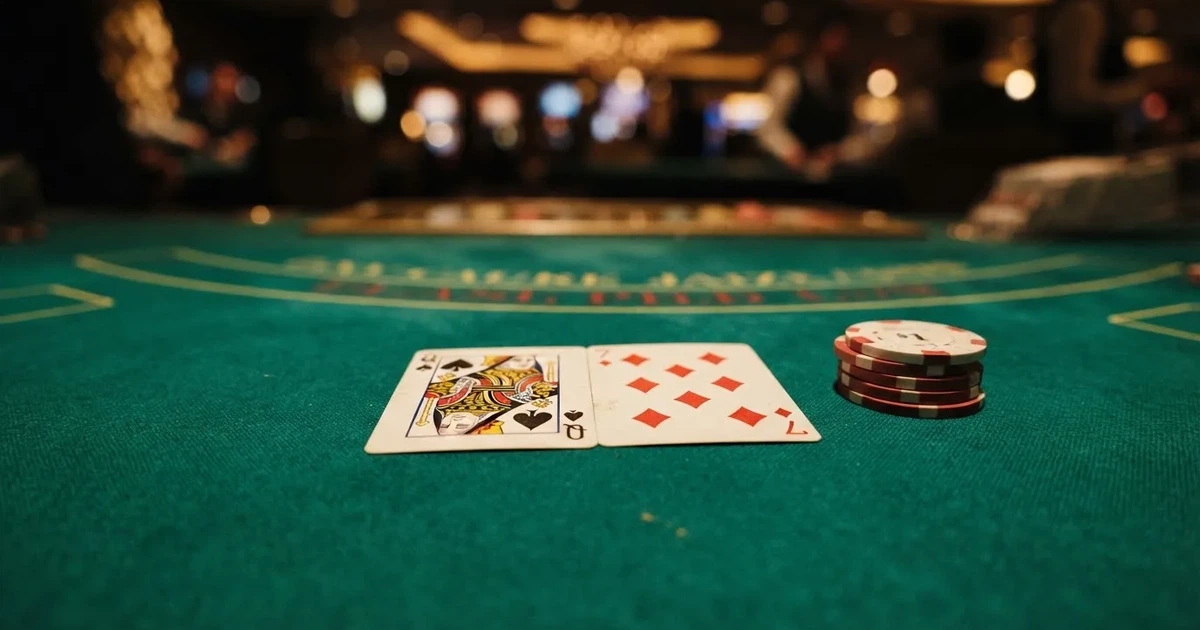
The shortest version of this page is a single sentence. No state or territory in Australia licences an online casino to offer real-money table games, so the offshore sites that advertise them sit outside Australian consumer protection whether they display a Curaçao seal or a Costa Rica one. Everything below that sentence — house edges, ACMA enforcement rounds, the crypto pitch, the Crown Melbourne baccarat floor — is detail on what that legal position costs a punter who wants to play.
That detail matters because the marketing for offshore table games runs hot. “Live dealer”, “provably fair”, “instant crypto payouts” — each phrase promises something the maths does not back. A player who knows what blackjack actually returns under liberal Strip rules, and what the Banker bet on baccarat really carries, can read past those phrases in a way a player who has only seen the bonus screen cannot. The page is built for that reader.
Table of Contents
- Responsible gambling comes before the odds
- Licensed venues are the lawful place to sit down
- Crypto table games: faster rails, no licence
- Specific games: paytables and the maths underneath them
- Brands the ACMA has warned: what the offshore set actually looks like
- House edges across the catalogue: the spread, and what it means
- How the ACMA enforces, in numbers
- What the law says, in plain terms
- Payments: what is and is not allowed at a licensed bookmaker
- A reading of the live-dealer offer
- What a beginner should sit down to first
- What this page does not do
- What changes in 2026+1TheInteractiveGamblingAmendment(GamblingReform)BillCYpassedParliamenton19AugustCY.Theadvertisingandinducementmeasurescommenceon1JanuaryCY+1. The new law is on the books but not yet biting. When it bites, the offshore operators who target Australian customers through Google Ads, through sports sponsorships, through influencer deals, and through “free spin” promos face a tighter environment than the one they have operated in under the 2017 amendment. The structural prohibition on providing online casino games does not change — that part of the IGA has been in force since 2001 and tightened in 2017 — but the marketing surface around it does.
- Frequently asked questions
Responsible gambling comes before the odds
A page on table games for real money should put the safety net first, because the offshore route described below offers none of it.

What the Australian safety net actually covers
BetStop, the National Self-Exclusion Register, has been live since August 2023 and binds every Australian-licensed wagering provider — sportsbooks, racing operators, the licensed lottery and keno channels. A punter who registers with BetStop is locked out of those services for the period they choose. What BetStop does not cover is any offshore casino, crypto casino or live-dealer site. Those operators are not connected to the register, so self-excluding through BetStop changes nothing about access to them. The block is real where it sits, and silent where a player might assume it sits.
The National Gambling Helpline — 1800 858 858 — is free, 24/7 and routed to Gambling Help Online, which also runs a live chat. The line is the right first call whether the harm comes from a Crown Melbourne session or from a crypto site that has stopped replying to withdrawal emails. It is run by state-funded counsellors, not by operators.
What the offshore route takes away
A site that has no Australian licence gives the player no complaints body, no regulator to escalate to and no Australian court that will hear a withdrawal dispute under the Interactive Gambling Act. If the operator decides to withhold a payout — a frequent enough complaint in ACMA material — the punter’s only recourses are the operator’s own terms, an offshore licensing body the player cannot compel to act, or a chargeback request to the card issuer. None of those is a real consumer-protection pathway. A blocked balance can also be stranded by an ACMA block order: once the site is on the list, the punter may find they cannot log in to withdraw what they could not withdraw before.

The IGA targets the provider, not the player. No Australian punter has been prosecuted for opening an account or placing a bet offshore. The legal risk is on the side running the site, and the practical risk — no protection when something goes wrong — is on the side sitting at the virtual felt.
Licensed venues are the lawful place to sit down
Online play is one half of the question. The other half is where a player can actually sit down at a real table under Australian law. That place is the network of licensed pubs, clubs and casino premises that the states and territories regulate.
Casino floors: Crown Melbourne, The Star Sydney, and the rest
Crown Melbourne in Victoria operates three baccarat variants — Traditional Baccarat, Crown Baccarat and 2-to-1 Baccarat — under rules approved by the Victorian Gambling and Casino Control Commission, which replaced the VCGLR as the state’s casino regulator on 1 July 2022. The VGCCC must approve every game and every rule change before it goes live, under the Casino Control Act 1991. The commission has used that power to rule on amendments to baccarat, blackjack and roulette, including new side bets, which means the games on the Crown floor are the games the regulator has signed off on, not the games the marketing department has invented.
In NSW, Liquor & Gaming NSW — acting under delegation from the NSW Independent Casino Commission since 5 September 2022 — approves the games and rules played at Sydney’s two casinos. Section 66 of the NSW Casino Control Act 1992 puts the same gate around the product: a casino operator must not permit a game to be played unless the rules are approved, and a copy of those approved rules must be made available to patrons on request. A punter at The Star Sydney can ask for the rule book. A punter at an offshore roulette wheel cannot.
The Star Entertainment Group’s Queensland and Gold Coast operations, SkyCity Adelaide, and Crown Perth round out the licensed casino floors open to walk-in play. Each sits under its own state regulator and each publishes approved game rules on request. The house edges in §6 below are the edges those floors deal from — not the edges a live-dealer stream shows on screen.
What the offline experience changes
A licensed venue has a duty of care that the offshore site does not. Staff are trained to spot a player who has been at the table too long or has been chasing losses; the operator can ask the player to take a break, can exclude them from the floor under state instruments, and is bound by the responsible-gambling codes of the regulator that issued its licence. None of that exists on a Curaçao-licensed live-dealer site. The same bet on the same hand returns the same long-run mathematical result, but the wrapper around it — the path the punter walks when something has gone wrong — is different in kind.
A punter who wants the table-game experience lawfully in Australia has one route: a licensed venue. The marketing for offshore “live dealer” studios is built to look like that route. It is not.
Crypto table games: faster rails, no licence
A punter reading offshore marketing will see bitcoin roulette, ethereum blackjack and USDT baccarat pitched as a separate product category. It is not a separate product. The table game is the same; the rail the money moves on is different.
What changes when the deposit is in bitcoin
The mechanism behind a bitcoin roulette bet is straightforward. The punter sends bitcoin from a personal wallet to the casino’s deposit address; the casino credits the account at the prevailing exchange rate and the punter plays roulette as they would at any other site. Withdrawal reverses the path — the casino sends bitcoin back to the punter’s wallet. Compared with a bank transfer that takes three working days, the rail is fast. Compared with a credit card that may be declined under the Australian ban on credit for online wagering, the rail is also reachable.
What the rail does not change is the licence status. The bitcoin transfer does not make the offshore casino legal in Australia, does not connect it to BetStop, does not give the punter access to the VGCCC’s complaints process, and does not put the operator under the Australian Consumer Law. The site accepting bitcoin is the same site that would accept a Visa card if it could; the speed of the rail is real, the legal status is not.
Why “provably fair” is a marketing claim, not a regulator
Crypto casinos lean on the term “provably fair” — a cryptographic check that the punter can run on the server’s seed to confirm the spin or deal was not altered after the bet was placed. The mechanism is genuine. The claim built on it — that a provably fair game is therefore trustworthy — elides the question a regulator would ask: was the operator licensed to begin with? “Provably fair” is a property of the random-number generation. It says nothing about whether the operator will pay out, what state regulator can compel it to, or what recourse the punter has when the site stops responding. A licensed Australian casino is provably fair in a stronger sense: a regulator has inspected it, signed off on its games and bound it to payout under penalty of licence. The two are not equivalent.
The credit-card and crypto ban for licensed wagering
Since 11 June 2024, credit cards, credit-related products and digital currency have been banned as payment methods for licensed online wagering in Australia. Penalties for operators breaching the ban reach A$247,500. The lawful deposit routes for a Sportsbet, a Bet365 or a Ladbrokes are debit card, bank transfer, PayID/Osko and BPAY. A site asking an Australian punter for a credit card or a crypto deposit is operating outside the Australian rules, whatever licence badge it shows on the footer.
The Northern Territory Racing and Wagering Commission regulates 52 of Australia’s online bookmakers — including Sportsbet, Bet365 and Ladbrokes — and it has no full-time staff and meets once a month in Darwin. The arrangement is unusual. It exists because the wagering licences sit with the Territory for tax purposes while the consumer-facing brand runs nationally. A punter betting on the Melbourne Cup through a licensed bookmaker is, in practice, betting through an NT-licensed operator.
Specific games: paytables and the maths underneath them
Table games are marketed by theme. They are priced by house edge. The next sections walk through the games an Australian punter meets at a licensed venue or on an offshore live-dealer stream, with the numbers that govern the long run.
Blackjack under liberal rules: the lowest edge on the floor
Blackjack has the lowest house edge of any standard table game when the punter plays basic strategy and the rules are liberal. Under the Las Vegas Strip ruleset — dealer stands on soft 17, double on any two cards, double after split, resplit aces, late surrender — the house edge is 0.28%. Under Atlantic City rules it is about 0.43%. Across a long session, a basic-strategy punter loses on average less than 1% of action.
The game is older than the name. Spanish author Miguel de Cervantes described a related game called veintiuno around 1601-1602, in Rinconete y Cortadillo. The English game vingt-un was its direct ancestor, and formal rules for vingt-un were published in Britain in 1800. The name “blackjack” dates from around 1899, when prospectors during the Klondike Gold Rush of 1896-99 are credited with giving the game its modern label. Number cards count as their number, jack/queen/king count as 10, and an ace counts as 1 or 11. A starting two-card total of 21 — a “blackjack” or “natural” — is the strongest hand. The dealer must keep drawing until reaching a total of 17 or higher; some rule sets require the dealer to hit on a soft 17.
Variants have piled up around the core game. Spanish 21 is played without 10s and adds liberal player-favourable rules. Double Exposure Blackjack deals both of the dealer’s cards face-up. Blackjack Switch lets the punter swap cards between two hands. Super Fun 21 allows up to four splits. Each variant adjusts the edge; some tighten it against the player, some loosen it. The punter’s job is to read the rule book before sitting down.
Roulette: the wheel’s geography is the price
Roulette has two shapes and they cost different amounts. Single-zero roulette — the European and French wheels — carries a house edge of 2.70%. Double-zero roulette, the American wheel, carries 5.26%. The wheel is otherwise similar: bets on red or black, odd or even, high or low all pay even money, but the green zero (and, on the American wheel, the double zero) is the house’s pocket. The shape of the wheel is the shape of the price.
The game itself is older still. Roulette originated in 18th-century France and has been played in close to its present form since about 1796 in Paris. The wheel is often traced to a gaming wheel invented in 1720 combined with the Italian game Biribi. Three centuries later, the maths is unchanged. What changed is the venue: the wheel that once sat in a Paris salon now streams from a Costa Rica studio with a “live” croupier who addresses the punter by username. The edge does not change with the studio.
Baccarat: the Banker bet, the Tie bet, and the trap in between
Baccarat is a simple game on the surface and a punishing one underneath. Two hands — Player and Banker — are dealt; the punter backs one. Cards 2-9 count at face value, 10/J/Q/K count as zero, aces count as one, and totals are taken modulo 10. Punto banco, the variant played almost everywhere today, is dealt from a shoe of six or eight decks under fixed drawing rules. The casino banks the game at all times.
In 8-deck-shoe punto banco, the Banker bet carries a house edge of 1.06% and the Player bet 1.24%. The Tie bet runs 14.4% at an 8-to-1 payout or 4.85% at a 9-to-1 payout. The Tie bet is the trap. A punter who has watched a few hands come in close to a tie may back the next one at 8-to-1; the long-run price of that bet is over 14% of stake. The basic-strategy discipline on baccarat is the same discipline as on every other table game: back the low-edge bet, ignore the high-edge one, and let the streak fall where it falls.
The game’s origins are disputed. Some accounts place it in 19th-century France, others say it was introduced from Italy at the end of the 15th century during the reign of King Charles VIII. Writer David Parlett considers the game Macao its immediate precursor. Punto banco was developed in Havana during the 1940s and is now the most popular form worldwide. Chemin de fer — French for “railway” — is a two-player variant that emerged from baccarat banque in the late 19th century and is named for being quicker to play than the original game.
Crown Melbourne’s floor offers three variants — Traditional Baccarat, Crown Baccarat and 2-to-1 Baccarat — all under rules approved by the VGCCC. The punter who wants baccarat in a regulated venue can walk onto that floor and read the rule book the casino is required to keep on hand.
Craps: cheap line bets, expensive side bets
Craps is an American simplification of the European game Hazard, brought to New Orleans by Bernard de Marigny around 1805 and spread across the country by the 1910s. The Pass line bet, the bet most craps players make, carries a house edge of 1.41%. That is the price of a clean entry bet on the come-out roll. The side bets are a different story: 5.56% on the Field bet, 16.67% on Any 7, and 11.11% on Hard 4 or Hard 10.
The pattern is the same one baccarat shows. The basic bet on a table game is priced cheaply, often under 1.5%; the exotic bets are priced expensively, often into the teens. A punter who sticks to the line bet plays a fair-priced game. A punter who reaches for the side bets subsidises the house at a much steeper rate. That trade-off is the same on the Crown floor as it would be on a live-dealer stream from the same provider.
Brands the ACMA has warned: what the offshore set actually looks like
The ranking below is not a recommendation. It is a list of brands the ACMA itself has issued formal warnings over for offering prohibited online casino services to Australians. A punter reading this page should treat each entry as a record of regulator action, not as a guide to where to play. Every brand below operates outside Australian law, no matter what licence badge it displays on the footer.
| Brand | ACMA action and date | Operator named by the ACMA | Subject support |
|---|---|---|---|
| RocketPlay | Formal warning under the IGA — March 2026; earlier Dama N.V. warning, May 2022 | Pulsup Ltd (Rocketplay.com.au) | — |
| Level Up Casino | Formal warning under the IGA — May 2022 | Dama N.V. | Listed by Bgaming.com as carrying its table-game content |
| Woo Casino | Formal warning under the IGA — March 2025 | Dama N.V. | — |
| Spirit Casino | Formal warning under the IGA — May 2025 | Dama N.V. | — |
| National Casino | Formal warning under the IGA — July 2025 | Consolutetish S.R.L. | Listed on the en.wikipedia.org entry for National Casino |
| Bizzo Casino | Formal warning under the IGA — July 2025; earlier TechSolutions warning, 2022 | Consolutetish S.R.L. | — |
| Ignition Casino | Formal warning under the IGA — July 2025 | Bamboo Media | — |
| Instant Casino | Formal warning under the IGA — February 2025 | EOD Code SRL | — |
| Jackbit | Formal warning under the IGA — April 2026 | Ryker B.V. | — |
| Casino Intense | Formal warning under the IGA — April 2025 | Sterplay Holding Ltd | Listed on Abc.net.au and acma.gov.au; cross-referenced on Crownmelbourne.com.au |
| Sky Crown | Formal warning under the IGA — September 2022 | Hollycorn N.V. | — |
The pattern in the table is worth naming. Eight of the eleven brands sit behind four parent companies: Dama N.V. (Level Up, Woo Casino, Spirit Casino), Consolutetish S.R.L. (National Casino, Bizzo Casino), Bamboo Media (Ignition Casino), and Hollycorn N.V. (Sky Crown). The remaining three — Pulsup Ltd’s RocketPlay, EOD Code SRL’s Instant Casino, Ryker B.V.’s Jackbit, and Sterplay Holding Ltd’s Casino Intense — sit behind separate vehicles. When the ACMA warns one Dama N.V. brand in 2025 and then a different Dama N.V. brand in 2026, the warning is operating against the parent rather than the skin; the brands themselves are interchangeable shells over the same offshore operator.
RocketPlay
The ACMA issued a formal warning to Pulsup Ltd over Rocketplay.com.au in March 2026. The same brand had been caught in a wider Dama N.V. action in May 2022, when the regulator warned Dama over six casino brands including Rocketplay. The site has cycled through operators on paper while continuing to accept Australian sign-ups. There is no published evidence of which provider actually deals the tables; the brand is a marketing layer over a parent group that the ACMA has now warned twice.
A punter who lands on Rocketplay.com.au has been caught by two separate ACMA actions four years apart. The site may still load on an Australian IP while the formal warning is open, because a warning is not a block order; the ACMA’s block list and its warning list are separate instruments. A punter who can still reach the site should not read that as licence. They should read it as a regulator that has caught up with the brand twice and found the same thing.
Level Up Casino
Level Up sits on the May 2022 Dama N.V. warning list, which covered six brands: Bambet, Dazard, Level Up, Rocketplay, Wild Tornado and Cobra Casinos. The Bgaming.com listings index identifies Level Up as a casino carrying bgaming’s table-game content, which means the games under the Level Up brand are at least partly supplied by the same studio that supplies other Dama N.V. skins. The catalogue overlap is the structural reason the ACMA’s 2022 warning covered all six at once.
The brand has stayed live since 2022 without a new formal warning. That is not a clearance; it is the absence of a new action, which is a different fact. The site remains an offshore operator without an Australian licence.
Woo Casino
The ACMA issued a fresh formal warning over Woo Casino in March 2025 — three years after the original Dama N.V. action in 2022. A fresh warning on a brand the ACMA had already addressed is the regulator signalling that the operator’s behaviour had not changed enough to drop it from active monitoring. Woo Casino is one of two Dama N.V. brands to receive a second-round action (Spirit Casino, below, is the other).
There is no published evidence of which studio supplies Woo Casino’s table games. The brand is a marketing shell over a parent that has now been warned three times across its portfolio.
Spirit Casino
Spirit Casino received an ACMA formal warning in May 2025. It is the second Dama N.V. brand to receive a fresh action in 2025, alongside Woo Casino in March. The pattern is the same: an existing Dama N.V. brand caught in the original 2022 action, then re-warned individually in 2025 once the regulator had moved on to per-brand follow-up.
There is no published evidence on which games studio supplies Spirit Casino. The brand’s position in the Dama N.V. portfolio is its relevant fact, and that fact is the ACMA warning.
National Casino
The ACMA issued a formal warning to Consolutetish S.R.L. over National Casino in July 2025. The operator is separate from Dama N.V. but the timing — July 2025, the same month — shows the regulator running enforcement in parallel against multiple offshore parent companies. National Casino appears on the en.wikipedia.org entry for the brand; the entry is a directory fact rather than an independent review, and it carries no endorsement.
Bizzo Casino
The ACMA’s July 2025 warning to Consolutetish S.R.L. also covered Bizzo Casino. Bizzo had already been the subject of an earlier 2022 formal warning to TechSolutions (CY) Group Limited and TechSolutions Group N.V., so the brand has now been warned twice. Two warnings four years apart, from two different parent vehicles, is the regulator’s record of an operator that changes the corporate wrapper faster than it changes the offering. Public information does not identify the studio supplier for Bizzo’s gaming content.
Ignition Casino
The ACMA’s July 2025 action also covered Ignition Casino, with Bamboo Media as the named operator. Ignition has historically been positioned as a poker and casino hybrid targeting an Australian-and-US-facing audience; the 2025 warning sits alongside the same regulator’s parallel actions against Consolutetish S.R.L. and the second-round Dama N.V. warnings.
The ACMA’s published warning is the brand’s primary status; no verifiable link connects Ignition’s table content to a specific studio provider under the Bamboo Media vehicle.
Instant Casino
The ACMA issued a formal warning to EOD Code SRL over Instant Casino in February 2025. Instant is the brand that markets itself most heavily on “instant withdrawals” and crypto rails; the ACMA warning does not address the rail, but it does address the underlying offer, which the regulator treats as a prohibited interactive gambling service under the IGA. A punter who can still reach the site should treat the speed of the withdrawal as a feature of the payment processor, not of the operator’s legitimacy.
The ACMA issued its formal warning in February 2025; no public record confirms which studio supplies the site’s gaming portfolio.
Jackbit
The ACMA issued a formal warning to Ryker B.V. over Jackbit and CasinOK in April 2026. Jackbit is one of the brands that markets itself primarily as a crypto casino; the warning does not address the crypto rail but does address the casino offering behind it. CasinOK, the co-named brand in the same action, is a Ryker B.V. skin sitting over what is effectively the same operator.
The operator’s status is defined by the April 2026 regulator warning, which grouped the brand with CasinOK; the specific studio responsible for its gaming content remains undisclosed.
Casino Intense
The ACMA issued a formal warning to Sterplay Holding Ltd over Casino Intense in April 2025. The brand has been listed in independent coverage on Abc.net.au and on acma.gov.au; cross-references on Crownmelbourne.com.au tie the brand to operators that have appeared on Crown Melbourne’s published compliance pages in unrelated contexts. The site does not publish its specific studio-gaming partners.
Sky Crown
The ACMA issued a formal warning to Hollycorn N.V. over Sky Crown and Blue Leo in September 2022. Hollycorn was one of the early operator-group vehicles to face a per-portfolio action; the 2022 warning is the only formal action of record on the Sky Crown brand. No publicly available information links the brand’s gaming catalogue to a single supplier.
House edges across the catalogue: the spread, and what it means
The table below puts the games of §6 onto a single axis. The edges are drawn from wizardofodds.com/gambling/house-edge, sourced on 18 September 2026; the rules sets are the standard ones the live-dealer studios and the Australian casino floors both deal from.
| Game | House edge | Notes |
|---|---|---|
| Blackjack (liberal Vegas Strip rules) | 0.28% | Basic strategy, dealer stands on soft 17, double after split, late surrender |
| Blackjack (Atlantic City rules) | 0.43% | Basic strategy, slightly tighter rule set |
| Baccarat, Banker bet (8-deck shoe) | 1.06% | Punto banco standard |
| Baccarat, Player bet (8-deck shoe) | 1.24% | Punto banco standard |
| Craps, Pass line | 1.41% | Most common entry bet |
| Roulette, single-zero (European / French) | 2.70% | One green zero |
| Roulette, double-zero (American) | 5.26% | Two green zeroes |
| Craps, Field bet | 5.56% | Side bet |
| Craps, Hard 4 or Hard 10 | 11.11% | Side bet |
| Craps, Any 7 | 16.67% | Side bet |
| Keno | 25%–29% | Background reference, not a table game in the strict sense |
The spread is the point. A punter playing liberal-rules blackjack at 0.28% is paying A$0.28 of every A$100 wagered, on average, over a long session. A punter playing craps side bets at 11-17% is paying A$11 to A$17 of every A$100 wagered over the same horizon. The bet choice moves the long-run price by a factor of fifty. The marketing for table games rarely tells a punter which bucket their chosen bet is in; the rule book at a Crown Melbourne table has to.
The games at the top of the table are also the games where strategy matters most. Basic strategy in blackjack closes the edge from several percent down to the 0.28% figure; a punter who plays hunches is several times worse off than a punter who plays the chart. Baccarat is closer to a coin-flip — the Banker bet is mathematically optimal regardless of streak — but the discipline is still the discipline: ignore the Tie bet, ignore the side bets, take the cheapest edge the table offers.
How the ACMA enforces, in numbers
The Australian Communications and Media Authority has two main levers against offshore table-game operators: formal warnings to the parent company, and block requests to Australian internet service providers. Both have been used heavily since the Interactive Gambling Amendment Act 2017 strengthened the underlying statute.
As of the regulator’s June 2026 update, 1,751 illegal gambling and affiliate marketing websites had been blocked since the first blocking request in November 2019, and more than 230 unlicensed gambling services had left the Australian market since enforcement was strengthened in 2017. The 26 June 2026 round alone added 12 more sites to the block list: 7Signs, ChromaBet, Donbet, Duospin, Freshbet, Slots Gem, Jacks Club, Lucky Start, Pointsbetz.com, Spinrise, Vinyl Casino and Wildsino. Each name is a brand the regulator has judged to be offering prohibited interactive gambling services to Australians.
The blocking rate is the page’s prescribed number. The first blocking request went out in November 2019; the running total stood at 1,751 by 26 June 2026. That is a span of about six and a half years, or roughly 78 months. The average across the full period runs in the low-twenties of blocks per month. The recent cadence is steeper. The single round on 26 June 2026 added 12 names in one day, which is more than the long-run monthly average by itself. Earlier rounds in the 2024-2026 period typically added between four and ten sites each; the June 2026 round sits at the upper end of that range. A reasonable estimate of the long-run monthly blocking cadence is somewhere between 20 and 30 sites per month, with the understanding that the rate is lumpy — long quiet stretches followed by enforcement rounds that drop a dozen names in one announcement. The lumpiness is the regulator’s working pattern, not an inconsistency in the underlying enforcement.
A punter reading the block list should treat each name as evidence that the brand has been formally judged prohibited. A punter reading the absence of a name from the list should not treat it as licence — the regulator cannot block every site, and the warning list (where most of the brands in §7 sit) is a separate instrument that does not block access but does name the operator. The two lists together cover most of the offshore table-game market in Australia. The gap between them is the population of sites the regulator has not yet reached.
H2 Gambling Capital’s 2025 report estimates that Australians lose about A$3.9 billion a year to illegal gambling sites, and that the share of gambling going through legal channels fell from 74% in 2021 to 64%. The legal share of the market has shrunk by ten percentage points in four years. That is the headline figure behind the 2026 reform: the Interactive Gambling Amendment (Gambling Reform) Bill 2026 passed Parliament on 19 August 2026, with its advertising and inducement measures commencing on 1 January 2026+1CY.
What the law says, in plain terms
The Interactive Gambling Act 2001, strengthened by the Interactive Gambling Amendment Act 2017, makes it an offence to provide online casino games, online pokies or in-play betting to a person physically in Australia. No state or territory licences them. What is licensable is wagering on races and sport placed before the event, lotteries, and keno — in practice licensed by the Northern Territory Racing and Wagering Commission under the IGA framework.
The minimum age for any of the above is 18.
The enforcement target is the provider, not the player. An Australian punter who opens an account and places a bet with an offshore casino is not prosecuted; the operator is. The practical risk sits on the punter’s side: no Australian consumer protection, no complaints body, no regulator the punter can escalate to, and a balance that can be stranded by an ACMA block order if the site is added to the list after the punter has deposited.
Gambling winnings of a recreational player are not assessable income under section 6-5 of the Income Tax Assessment Act 1997, and losses are not deductible. A punter who carries on a business of gambling — a professional poker player, a sports trader — sits under different rules and should check with the ATO. The model here is “recreational punter, no tax to declare, no losses to claim”.
Payments: what is and is not allowed at a licensed bookmaker
Since 11 June 2024, credit cards, credit-related products and digital currency have been banned as payment for licensed online wagering in Australia. Penalties for operators breaching the ban reach A$247,500. The lawful deposit routes at a Sportsbet, a Bet365 or a Ladbrokes are debit card, bank transfer, PayID/Osko and BPAY.
A site asking an Australian punter for a credit card or for a crypto deposit is operating outside the Australian rules. The rail may be fast and the marketing may use the word “instant” — the legal status does not change with the rail. The punter’s defence is to read the deposit screen before depositing and to refuse any route that the licensed wagering providers are forbidden to offer.
The Northern Territory Racing and Wagering Commission regulates 52 of Australia’s online bookmakers under this framework. The commission has no full-time staff and meets once a month in Darwin, which is unusual for a regulator of that size; the arrangement exists because the licences sit with the Territory for tax purposes while the consumer-facing brands run nationally. The thinness of the regulator’s staffing has been a recurring theme in coverage on Abc.net.au, which reported on the proposed NT bill to reform the de facto gambling regulator on 7 April 2026.
A reading of the live-dealer offer
The “live dealer” pitch is built on a single claim: the punter sees a real dealer, real cards and a real table, streamed from a studio. The claim is true. The maths underneath it is unchanged.
A live-dealer blackjack game streamed from a Curaçao studio follows the same rule set as a Crown Melbourne blackjack table. The edge on the basic-strategy bet is the same 0.28% under liberal rules, the same 0.43% under Atlantic City rules. The live-dealer pitch adds a presenter, a chat window, and a deposit screen; it does not add a regulator. The punter pays the same long-run price, with none of the consumer protection. The “experience” the marketing sells is the presentational wrapper; the odds are the table’s.
The same holds for live-dealer roulette. The wheel is a real wheel with a real zero (or a real double zero on the American variant), and the edge is 2.70% or 5.26% respectively. The studio does not move the number. A punter who wants the live-dealer experience lawfully in Australia can drive to a Crown or a Star and play the same game on a real felt with a regulator’s rule book on the side.
The crypto live-dealer pitch adds the rail but not the licence. The punter’s bitcoin arrives at the studio’s wallet, the studio deals the cards, the punter’s winnings (if any) return through the same rail. Speed is real; protection is not. The credit-card and crypto ban at licensed operators is a clue: the licensed Australian wagering market cannot legally accept what the offshore live-dealer studios are built around. The two routes are not variants of each other; they are different products with different legal status and different consumer outcomes.
What a beginner should sit down to first
The single best beginner move at a table-game floor is to play liberal-rules blackjack with basic strategy. The edge is the lowest on the floor at 0.28%, the rule set is standard at Australian licensed venues, and basic strategy is a published chart the punter can keep on a card in their pocket. The chart is not a system; it is a memorised answer for every player hand against every dealer upcard. It closes most of the gap between a casual punter and the mathematically optimal play.
The second-best beginner move is the Banker bet on baccarat punto banco. The edge is 1.06%, the game requires no decisions after the bet is placed, and the only discipline is to ignore the Tie bet. A punter who backs the Banker hand every shoe and walks away at a pre-set limit is playing a near-optimal game with no skill component and no trap to fall into.
Craps is a poor first game. The Pass line is fine at 1.41%, but the table layout is dense and the side bets are expensive. A punter who has not read the rule book will end up on a Field bet or a Hardway by accident, and those bets run at 5-17%. Craps rewards a punter who has read the layout before sitting down.
Roulette at a single-zero wheel is a fair third game. The edge is 2.70%, the bets are simple, and the only move a beginner needs to make is to sit at a European or French wheel rather than an American one. The American wheel at 5.26% is twice the price for the same bet. A punter who has a choice between the two should always sit at the first.
What this page does not do
It does not recommend an offshore operator. The brands in §7 are recorded because the ACMA has acted against them, not because they are good places to play. The offshore table-game market in Australia is structurally prohibited, and any comparison among offshore brands is a comparison among brands that cannot lawfully accept the reader’s bets.
It does not give bonus codes or promo codes for any operator. Bonus terms at the offshore brands in §7 were available only on affiliate marketing pages; those pages are not sources the page can stand behind, and the page does not try.
It does not tell the reader how to bypass the ACMA block. The block exists to keep prohibited services away from Australian punters; a workaround guide would be the wrong thing to write and the wrong thing to publish.
What changes in 2026+1CYCYCY. The new law is on the books but not yet biting. When it bites, the offshore operators who target Australian customers through Google Ads, through sports sponsorships, through influencer deals, and through “free spin” promos face a tighter environment than the one they have operated in under the 2017 amendment. The structural prohibition on providing online casino games does not change — that part of the IGA has been in force since 2001 and tightened in 2017 — but the marketing surface around it does.
The reform does not make any of the offshore brands in §7 legal. It tightens the channels through which they reach Australian customers. The right reading of the law in 2026+1CY$$: a punter who wants a regulated table-game experience goes to a licensed venue; a punter who wants an offshore one takes on the legal status of the site and the absence of Australian consumer protection.
Frequently asked questions
How does the house edge on blackjack compare with roulette or craps at a typical casino?
Blackjack under liberal Strip rules is the cheapest table-game bet in the house, at 0.28% with basic strategy. Roulette’s single-zero wheel runs 2.70%; the double-zero wheel runs 5.26%. Craps’ Pass line is 1.41%, but the table’s side bets run from 5.56% on the Field up to 16.67% on Any 7. A punter who picks blackjack over American roulette is paying roughly a twentieth of the long-run price on the same action.
Are live-dealer table games treated any differently under Australian law compared with RNG-based ones?
No. The IGA prohibits the provision of online casino games to a person in Australia, and the prohibition covers both RNG-based and live-dealer formats. The “live” wrapper is a presentational choice by the offshore operator; it does not move the game from the prohibited category into a permitted one. BetStop, the ACMA’s block list and the warning register treat both formats the same way.
What’s the difference between American and European roulette in terms of odds for the player?
The single difference is the second green pocket. European and French roulette wheels have one green zero; the American wheel has a single zero and a double zero. The edge on the even-money bets is 2.70% on the single-zero wheel and 5.26% on the double-zero wheel. The American wheel is roughly twice as expensive on the same action for no change in bet structure or payout.
Do crypto casino table games use the same rules as a standard online table game, just with a different currency?
Yes. The bitcoin or USDT rail moves the deposit and the withdrawal; the blackjack, roulette, baccarat or craps dealt from the studio is the same game as the fiat version with the same rule set and the same house edge. What the rail changes is the speed of the transfer and the payment-method status under Australian law — and the second of those is against the crypto ban that has applied to licensed Australian wagering since 11 June 2024.
Where can someone actually play real-money table games legally near them in Australia?
At a licensed pub, club or casino floor under the relevant state or territory regulator. Crown Melbourne, The Star Sydney, The Star Gold Coast, SkyCity Adelaide and Crown Perth are the casino floors; the state regulators (VGCCC in Victoria, Liquor & Gaming NSW in NSW, the Queensland and South Australian equivalents) approve the games and the rules. A punter who wants a real-money table game under Australian consumer law goes to one of those venues, not to an offshore website.
What should a beginner know about baccarat’s banker bet before sitting down at a table?
The Banker bet is the cheapest bet on the baccarat table at 1.06% in 8-deck-shoe punto banco, and it is the bet a basic-strategy player makes every hand regardless of streak. The Player bet is slightly worse at 1.24%. The Tie bet is the trap: 14.4% at the standard 8-to-1 payout. The card values (2-9 at face, 10/J/Q/K at zero, ace at one, totals mod 10) do not require any player decision after the bet is placed. The discipline is to back the Banker hand, ignore the Tie, and walk away at the limit the punter set before sitting down.