Best casinos for online craps in Australia: what the law actually allows in 2026
 Available in US
The search makes a straightforward promise: name a casino, point at a craps table, hand over a bonus code. The law does not honour that promise. Under the Interactive Gambling Act 2001, no Australian-licensed operator may offer online casino games, craps included, to a person physically in Australia. The “best casinos for online craps Australia” the search promises cannot, in 2026, be licensed inside the country the search is run from. The page below works through that gap rather than around it.
Data current as of 25 September 2026, verified against the ACMA’s published register of formal warnings and blocking actions.
Table of Contents
- Craps at a glance: what the table actually does
- What an online craps bonus is really worth
- Why no Australian casino can lawfully offer online craps
- How the ACMA enforces the prohibition
- The eleven brands the ACMA has acted against
- What Australian players can lawfully use
- BetStop, harm minimisation, and where help is found
- The 2026 reform and what it changes
- What the blocking rate looks like, 2026-onward
- How to read a bonus offer on a craps site
- What the page is not for
- Frequently asked questions
Craps at a glance: what the table actually does
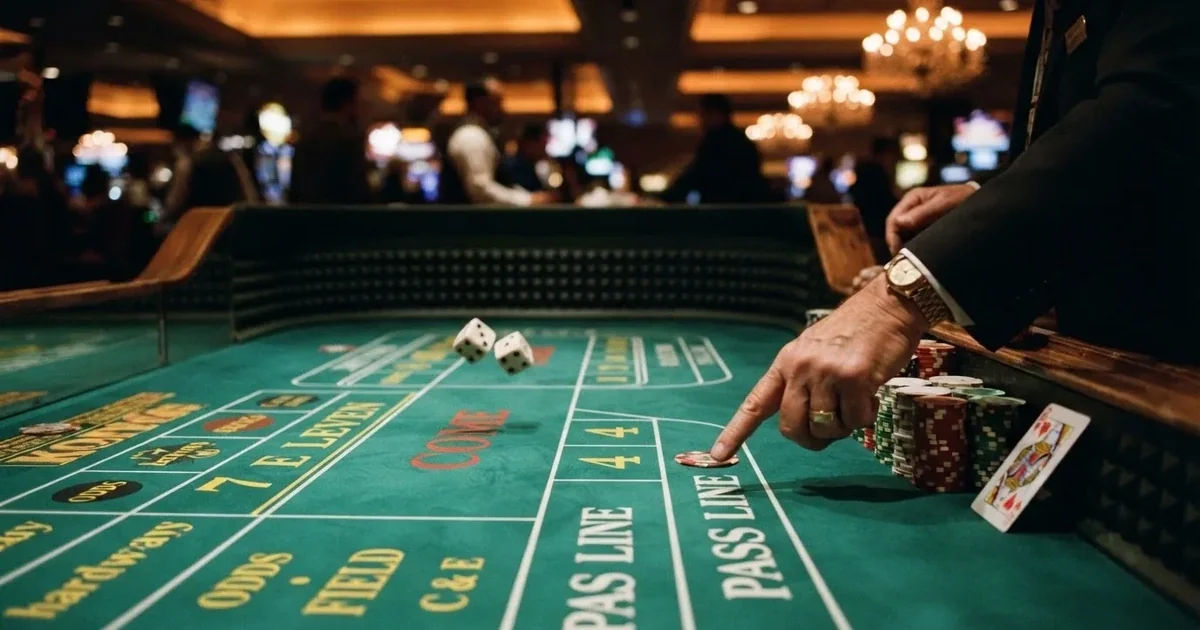
A craps table looks busy because the felt prints every bet a player can place before the dice leave the stickman. Underneath, the math is plain. A shooter throws two dice. On the first throw, the come-out roll, 7 or 11 wins for Pass Line bettors, 2, 3 or 12 loses. Any other number (4, 5, 6, 8, 9 or 10) becomes “the point” and the shooter keeps rolling until either the point repeats (Pass Line wins) or a 7 appears first (Pass Line loses).

The Pass Line carries a house edge of 1.41%. Don’t Pass sits at 1.36%, slightly tighter because the layout favours the player by a fraction. Any Craps, the one-roll bet that wins on any showing of 2, 3 or 12, costs the player 11.11% in expectation. Any 7, the proposition bet that wins on a single 7, is the worst seat at the table at 16.67%. The Field bet sits at 5.56%. These numbers are not stylistic — they are why craps has a reputation as one of the fairer table games, and why one-roll proposition bets have a reputation as the opposite.
A player who wants to flatten the house edge further takes the free odds bet behind a Pass or Don’t Pass line. That stake is paid at true odds, so it carries a 0% edge, the only bet on the layout with that property. The catch is that the free odds bet can only be made in addition to a line bet, and the casino caps how much can ride behind it.
Modern craps grew out of the English dice game Hazard, simplified in New Orleans around 1805 and given its modern Don’t Pass layout by John H. Winn in Philadelphia in 1907. Variants include Crapless Craps, which drops 2, 3, 11 and 12 from the come-out losers, and street craps, played informally without a marked table or a stickman. None of the variants changes the underlying offer: a game with a built-in house edge, paid for in expectation.
What an online craps bonus is really worth
Craps bonuses are marketed the way slot bonuses are: a percentage match on a deposit, sometimes with free chips or “free play” credited on sign-up. The headline figure does not survive contact with the terms. Three numbers decide what an offer costs the person claiming it: the wagering multiple, the maximum cashout, and the contribution rate of craps toward clearing that turnover.
Wagering is the multiplier on the bonus that must be turned over before any withdrawal. A A$100 bonus at 40× requires A$4,000 in placed bets before the bonus balance moves to cash. The expected loss on that turnover at a craps house edge around 1.4% is roughly A$56, before the player has placed a cent of their own money at risk past the bonus itself.
Maximum cashout caps sit on top of that. A bonus paying “up to 10× the bonus” means a A$100 bonus can yield at most A$1,000 in withdrawable winnings, regardless of how the dice fall. Contribution rate is the third trap: many promos count craps at a reduced percentage toward turnover, or exclude table games altogether. An offer reading “slots 100%, table games 10%” effectively requires ten times the listed turnover for a craps player.
The honest read of a craps bonus in 2026: a marketing number that almost always costs more than it returns in expected value, with terms that move the cost around but rarely below the entry fee. A punter chasing a bonus is paying for the privilege of clearing it; the game underneath pays the casino its edge either way.
Why no Australian casino can lawfully offer online craps
The Interactive Gambling Act 2001, tightened by the Interactive Gambling Amendment Act 2017, makes it an offence to provide online casino-style games, online pokies and in-play betting to customers physically in Australia. Craps, baccarat, blackjack, roulette and the rest of the table catalogue are all caught. The penalties attach to the provider, not the player: individuals face fines up to A$220,000 per day and corporations up to A$1.1 million per day for continuing to offer prohibited services.
What the IGA does license is wagering on racing and sporting events placed before the event, lotteries, and keno. The Northern Territory Racing and Wagering Commission (NTRWC) regulates 52 of the country’s online bookmakers — Sportsbet, Bet365 and Ladbrokes included — under Territory licences taken for tax reasons. The commission runs without full-time staff and meets once a month in Darwin. No state or territory issues a licence for online casino games. A site displaying a Curaçao, Malta or Kahnawake badge is offshore by definition; that licence is not an Australian one and confers no Australian consumer protection.
The distinction matters at the cashout window. An offshore casino offers no Australian complaints body, no Australian recourse if a withdrawal is refused, and no guarantee the site stays reachable — Australian internet service providers are bound by ACMA directions to block prohibited services, and a balance can sit behind that block. A player using a licensed Australian wagering service has the opposite: an Australian licensee, an Australian regulator and a binding self-exclusion register.
How the ACMA enforces the prohibition
The Australian Communications and Media Authority (ACMA) is the body that administers the IGA’s prohibition. Its three levers are formal warnings, blocking requests to ISPs, and infringement notices. By June 2026, the ACMA had directed Australian ISPs to block 1,751 illegal gambling and affiliate marketing websites since the first blocking request in November 2019, and reported that more than 230 unlicensed gambling services had left the Australian market since enforcement was strengthened in 2017.
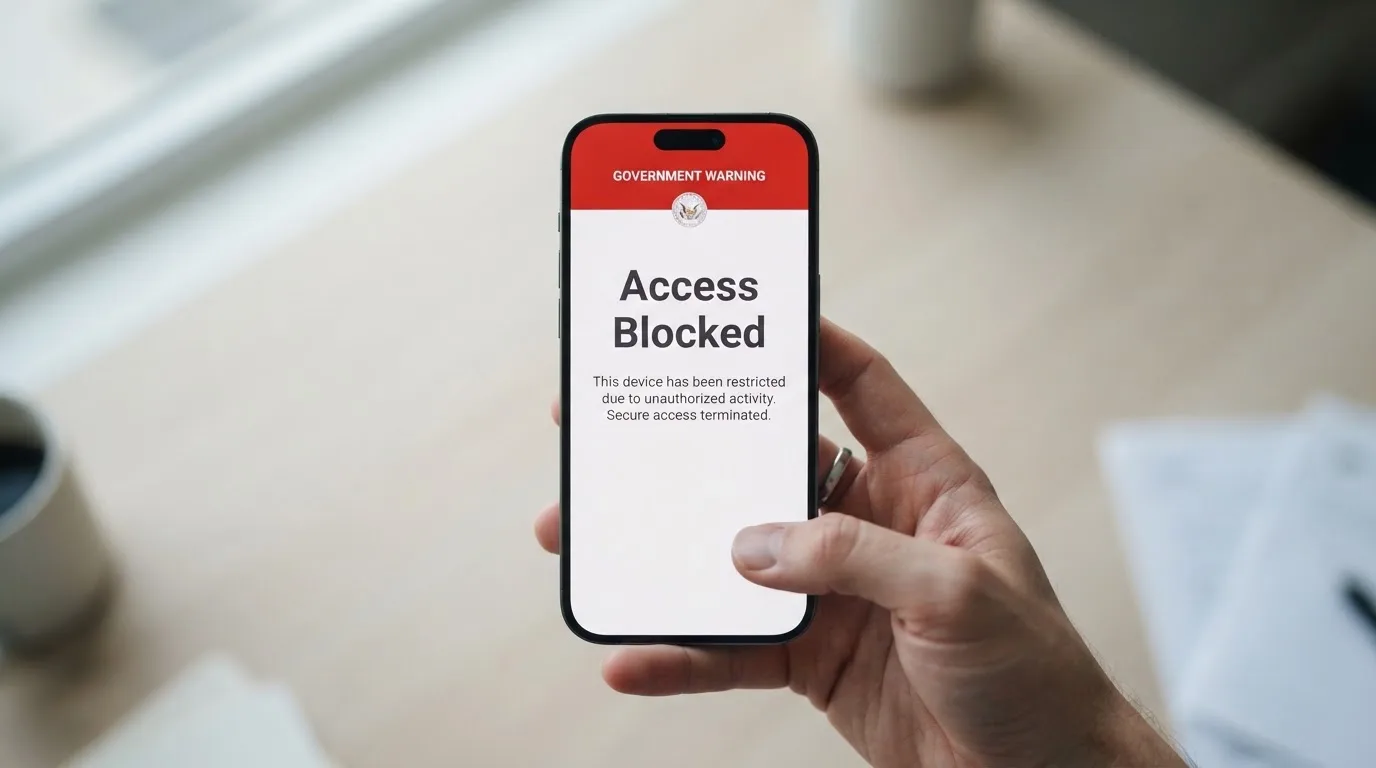
The latest published round, reported on 26 June 2026, added 12 more sites: 7Signs, ChromaBet, Donbet, Duospin, Freshbet, Slots Gem, Jacks Club, Lucky Start, Pointsbetz, Spinrise, Vinyl Casino and Wildsino. Each blocking request is published and traceable; the register is the public record of what the ACMA has acted against.
Formal warnings are the ACMA’s other tool. They name the operator behind a brand and the date the warning was issued, and they precede blocking by several months in most cases. The warnings matter because they tell readers who is actually behind the brand they are looking at, rather than the white-label front the site presents.
H2 Gambling Capital’s 2025 estimate puts Australians’ annual losses to illegal gambling sites at about A$3.9 billion. The share of gambling going through legal channels fell from 74% in 2021 to 64% in the same period, a ten-point swing in four years. Most of that movement is in casino-style products: betting on racing and sport, which is licensed, has held up better.
The eleven brands the ACMA has acted against
Every brand in the table below has been the subject of a formal warning from the ACMA for offering prohibited online casino services to Australians. The table is not a ranking and not a shortlist — under the IGA, none of these sites can lawfully offer online craps to a person in Australia, and the only sources for their bonus terms were affiliate marketing pages. What the table shows is who is actually behind each brand and when the ACMA warned them.
| Brand | ACMA action and date | Operator named by the ACMA | Subject support |
|---|---|---|---|
| RocketPlay | Formal warning, March 2026; earlier warning to Dama N.V., May 2022 | Pulsup Ltd | — |
| Level Up Casino | Formal warning, May 2022 | Dama N.V. | Listings only — BGaming |
| Woo Casino | Formal warning, March 2025 | Dama N.V. | — |
| Spirit Casino | Formal warning, May 2025 | Dama N.V. | — |
| National Casino | Formal warning, July 2025 | Consolutetish S.R.L. | Listings only — en.wikipedia.org |
| Bizzo Casino | Formal warning, July 2025; earlier warning, 2022 | Consolutetish S.R.L. (TechSolutions in 2022) | — |
| Ignition Casino | Formal warning, July 2025 | Bamboo Media | — |
| Instant Casino | Formal warning, February 2025 | EOD Code SRL | — |
| Jackbit | Formal warning, April 2026 | Ryker B.V. | — |
| Casino Intense | Formal warning, April 2025 | Sterplay Holding Ltd | Listings only — ABC, acma.gov.au, Crown Melbourne |
| Sky Crown | Formal warning, September 2022 | Hollycorn N.V. | — |
Dama N.V. alone accounts for four of the eleven: Level Up, Woo, Spirit and the earlier 2022 warning over RocketPlay, which was followed up by a March 2026 warning to Pulsup Ltd over the .com.au domain. Consolutetish S.R.L. picks up National Casino and Bizzo, with Bizzo having been warned twice under different operators — TechSolutions in 2022, Consolutetish in 2025. Three of the eleven (Woo, Spirit and RocketPlay) were warned in the fourteen months from March 2025 to March 2026 alone, which gives a sense of how regularly the ACMA rotates through the same corporate groups.
What Australian players can lawfully use
The lawful alternative to offshore online craps falls into three lanes. Licensed Australian wagering services offer racing and sport, licensed lotteries offer draw games and instant tickets, and land-based casinos offer table games including craps under state approval. Each carries a different regulatory regime and a different set of protections.
Land-based craps in Australia is thinner than in the United States. Crown Melbourne runs craps under Victorian Gambling and Casino Control Commission approval, with the regulator replacing the older VCGLR on 1 July 2022. Crown’s baccarat offering runs to three variants (Traditional, Crown and 2 to 1) and is similarly approved under the VGCCC regime; the same body approves table game rules under the Casino Control Act 1991 in Victoria and the equivalent acts in other states. Star Sydney in NSW is regulated under section 66 of the Casino Control Act 1992, which requires each table game’s rules to be approved before it is offered. Jupiters, Treasury and The Star Gold Coast in Queensland sit under the Queensland Office of Liquor and Gaming Regulation.
The practical effect: a punter who wants to play craps at a real table flies to a casino city or stays home and uses the casino’s hotel. There is no online channel, because the IGA blocks it. A punter who wants to bet on Saturday’s races or this weekend’s AFL can use a licensed Australian bookmaker, which is regulated, taxed locally and bound by the same self-exclusion rules as the rest of the Australian wagering market.
The licensed wagering market is the only one in which the player has standing with an Australian regulator. Offshore sites, including the eleven warned above, sit outside that regime entirely.
BetStop, harm minimisation, and where help is found
BetStop, the National Self-Exclusion Register, has been live since August 2023. A punter who registers is excluded from every Australian-licensed online and phone wagering service for a chosen period, with a minimum of three months and a maximum lifetime. The register binds Australian licensees, not offshore casinos — an offshore site is not connected to it, which is one of several reasons the register is only partial protection against prohibited services.
The harm-minimisation rules that apply to Australian licensees include the credit card ban that took effect on 11 June 2024. Credit cards, credit-related products and digital currency are banned as payment for licensed online wagering; penalties for operators accepting them reach A$247,500. Legal deposit routes for licensed wagering are debit card, bank transfer, PayID/Osko and BPAY. A site asking an Australian punter for a credit card or a crypto deposit is operating outside the Australian rules — useful as a flag, since offshore sites frequently offer both.
The National Gambling Helpline is 1800 858 858, free, 24/7, with chat at Gambling Help Online. The helpline is staffed for people chasing losses, problem gambling more broadly, and the family or friends of someone whose play has become harmful. A punter reading this page because they have already lost more than they intended has a service waiting for them at the end of the phone.
The 2026 reform and what it changes
The Interactive Gambling Amendment (Gambling Reform) Bill 2026 passed Parliament on 19 August 2026. Its advertising and inducement measures commence on 1 January 2027, which means they are law with a start date but not yet in force on a 2026 page. The bill does not legalise online casino games; it tightens the existing prohibition by limiting how licensed Australian wagering services advertise and what inducements they can offer. The offshore casino ecosystem sits outside its reach in the same way it sits outside BetStop’s reach.
A reader comparing 2026 to a few months later should treat the start date as the dividing line: until 1 January 2027, the IGA’s existing prohibition and the ACMA’s existing enforcement are what applies; after that date, the inducement rules layer on top without changing what is and is not licensable.
What the blocking rate looks like, 2026-onward
The ACMA’s published blocking record gives the cleanest measure of how often an Australian punter’s chosen offshore site is shut off. Between November 2019 and June 2026, 1,751 illegal sites were blocked across roughly 79 months. That works out to around 22 sites blocked per month, or roughly one every 36 hours, on the average. The June 2026 round alone added 12, so the underlying monthly rate in active rounds is higher and the gap between rounds is sometimes wider.
The rate is uneven because the ACMA works in batches: a round of formal warnings, then a round of blocking requests, then a quieter period while the ISPs route the blocks. A punter who picks an offshore site in a quiet week has a wider window before blocking reaches them; a punter who picks one named in a fresh round has a narrower one. The relevant fact for someone choosing where not to play is not the average rate but the pattern: most named operators are warned more than once before the ACMA blocks, and a balance on a site that gets blocked mid-session stays there.
The arithmetic is the page’s core data: 1,751 blocks over 79 months is a rate, not a guarantee. A punter who reads it as “the ACMA gets around to most sites eventually” is reading it correctly. A punter who reads it as “my site will be safe for X months” is reading more into it than the figure supports.
How to read a bonus offer on a craps site
The way through a craps bonus is mechanical, and the mechanical reading is the one that survives contact with the marketing. Three numbers, in order: the bonus amount, the wagering multiple, and the contribution rate for table games.
A A$100 bonus at 35× wagering with craps contributing 100% requires A$3,500 in placed bets before the bonus balance moves to cash. At a 1.4% house edge on Pass Line play, the expected loss on that turnover is about A$49. The bonus has paid for itself only if the punter clears the wagering and walks away ahead of that expected loss, which is statistically unlikely. The maximum cashout, if any, sits on top: a 10× cap means the bonus can return at most A$1,000 in withdrawable winnings, regardless of how the dice fall in the clearing window.
A punter who wants the closest thing to a fair offer looks for: low wagering (under 30×), no maximum cashout, and table games counted at 100% toward turnover. None of the eleven brands above publishes terms that meet all three, and the affiliate marketing pages that list their bonuses do not audit them. The honest reading is that the bonus is the second cost of playing craps offshore, not a discount on it.
What the page is not for
This page is not a shortlist of offshore casinos for an Australian reader to play craps at. None of the eleven brands above can lawfully offer the product this search asks for, and the only sources for their bonus terms were affiliate marketing pages whose business is the click, not the audit. A reader who arrived looking for “best casinos for online craps Australia” will not find what they came for, because what they came for is the very thing the Interactive Gambling Act 2001 prohibits.
What the page does offer is the regulatory record, the enforcement pace, the table math, and the lawful alternatives: licensed wagering on racing and sport, land-based table games under state approval, and the self-exclusion and help-line routes for a punter who has already lost more than they intended. The Interactive Gambling Amendment (Gambling Reform) Bill 2026 does not change any of that in 2026; it adds advertising and inducement rules with a 1 January 2027 start date and leaves the underlying prohibition in place.
A punter reading this in Australia who wants to play craps tonight has three real options: a licensed Australian wagering account for racing or sport, a state-approved land-based casino with a craps table, or a phone call to 1800 858 858. The other options on the page are the eleven the ACMA has warned against, and the record of how often those warnings turn into blocks is the page’s answer to the question the search asks.
Frequently asked questions
What house edge does the Pass/Come bet carry in craps?
Pass and Come both run at a 1.41% house edge, the lowest single-bet edge on the craps layout aside from the free odds bet, which sits at 0%. Don’t Pass and Don’t Come are fractionally tighter at 1.36%. Most of the rest of the table is built up from bets with much higher edges, and the proposition bets in the centre of the felt can run to 11% and beyond.
What is the difference between a Pass Line and a Don’t Pass bet in craps?
Pass Line wins on a come-out roll of 7 or 11, loses on 2, 3 or 12, and rides a point number until it repeats (win) or a 7 appears first (lose). Don’t Pass is the mirror: it wins on 2, 3 and (in most casinos) 12-barred, loses on 7 or 11, and wins on a 7-out before the point repeats. Don’t Pass is statistically fractionally tighter because of the 12-bar rule.
Is it legal for an online casino to offer craps to players in Australia?
No. The Interactive Gambling Act 2001 prohibits offering online casino games, including craps, to anyone in Australia, and no state or territory licenses online casino products. The ACMA enforces the prohibition through formal warnings and ISP blocking requests. The penalty regime targets the provider, not the individual player, with fines up to A$220,000 per day for individuals and A$1.1 million per day for corporations.
Why is the Any Craps bet considered a poor-value wager?
Any Craps is a one-roll bet that pays when the dice show 2, 3 or 12, and it carries a house edge of 11.11%. That is roughly eight times the edge on a Pass Line bet, and the bet has to hit on a single throw to win. The same logic applies to most of the proposition bets in the centre of the felt: Any 7, for instance, runs at 16.67%, the worst seat on the layout.
Can craps be played at a licensed Australian land-based casino?
Yes, at Crown Melbourne under Victorian Gambling and Casino Control Commission approval, and at other state-licensed casinos under their respective Casino Control Acts. The game is not offered online because the IGA prohibits it; the table version is played in person at the casino floor. Crown’s baccarat offering includes three approved variants under the same regulator.
What should someone do if they are chasing craps losses online?
The National Gambling Helpline is 1800 858 858, free and 24/7, with chat at Gambling Help Online. BetStop, the National Self-Exclusion Register, covers Australian-licensed wagering services for a chosen minimum of three months. Both routes are open to the punter and to anyone concerned about a family member or friend’s play; offshore sites are not bound by either, which is part of why the prohibition exists in the first place.
Created by the ”Casino Live Dealer Hub” editorial team.