
Bitcoin Cash casinos in Australia: the regulator, the rail, and the real cost
A Bitcoin Cash casino offers an Australian player one thing that the major Australian-licensed bookmakers do not: an account. Every other claim made for these sites – speed, low fees, anonymity – sits on top of a service that the Interactive Gambling Act 2001 makes unlawful to provide to anyone physically in Australia. That single fact sets the price for everything else on this page. The cost of using Bitcoin Cash at an offshore casino is paid in three places at once: the legal exposure of the operator, the absence of Australian consumer protection if a withdrawal stalls, and the irreversibility of the BCH transfer once it is signed.
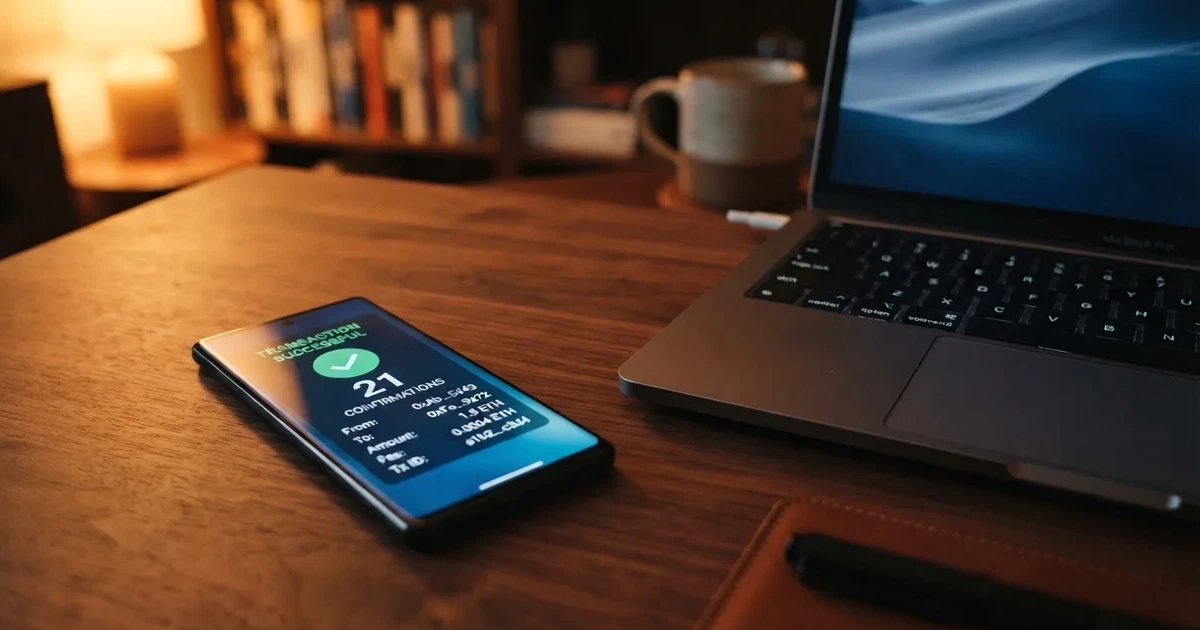
This page closes that picture. It tracks the ACMA’s enforcement record through 2025 and 2026, names eleven offshore brands the regulator has warned, lays out how a BCH deposit actually moves on-chain, and translates the headline advantages of Bitcoin Cash into the price an Australian punter pays for using them. The angle throughout is cost – what BCH saves in fees and what it costs in recourse, in tax exposure, and in the chance the site disappears behind a blocking request the day after a withdrawal is requested.
Currency stamp: data current as of 29 October 2026, cross-checked against the ACMA’s published formal-warning notices and the AUSTRAC and ATO registers.
Table of Contents
- The legal frame: why a Bitcoin Cash casino has no Australian standing
- The ACMA’s 2025–2026 record against offshore casinos
- Landsca
- Comparison of Bitcoin and Bitcoin Cash features
- Responsible play: what stays available when an offshore site does not
- What a Bitcoin Cash deposit actually costs, end to end
- How the ACMA’s pace reads against the industry’s launch record
- What changes if the ACMA does nothing further
- Frequently asked questions
The legal frame: why a Bitcoin Cash casino has no Australian standing
Australia’s online wagering market is split sharply down the middle. One half is licensed and policed; the other half is, in the regulator’s own language, a prohibited interactive gambling service. The Interactive Gambling Act 2001, tightened by the Interactive Gambling Amendment Act 2017, makes it an offence to supply online casino games, online pokies or in-play betting to a person in Australia. No state or territory issues a licence for those products. The line that is licensable is wagering on races and sport placed before the event, lotteries and keno – in practice licensed in the Northern Territory, where the Northern Territory Racing and Wagering Commission oversees 52 online bookmakers including Sportsbet, Bet365 and Ladbrokes from a meeting room that convenes roughly once a month in Darwin.
A Bitcoin Cash casino falls on the wrong side of that line. The coin it accepts does not change the legal status of the service it provides. A site that takes BCH from an Australian resident is offering prohibited interactive gambling, regardless of whether it displays a Curaçao or Anjouan licence, and the ACMA’s enforcement record over the last two years shows how that is treated. The enforcement tool is the Interactive Gambling Act itself: investigate, issue a formal warning naming the operator and the brand, and on a sufficient record, direct Australian internet service providers to add the domain to a blocking list.
What follows is what the regulator has actually done since the start of 2025, and what each action tells an Australian player about the operator behind a Bitcoin Cash casino lobby.
The ACMA’s 2025–2026 record against offshore casinos
The ACMA’s enforcement tempo has been steady rather than spectacular. Two dozen formal warnings since 2022, a blocking list that has grown to 1,751 websites since November 2019, and more than 230 unlicensed services that have left the Australian market entirely since enforcement was strengthened in 2017. None of those numbers is a headline on its own. Read together they tell a player what the regulator’s bandwidth looks like, and what kind of warning an offshore operator treats as background noise.
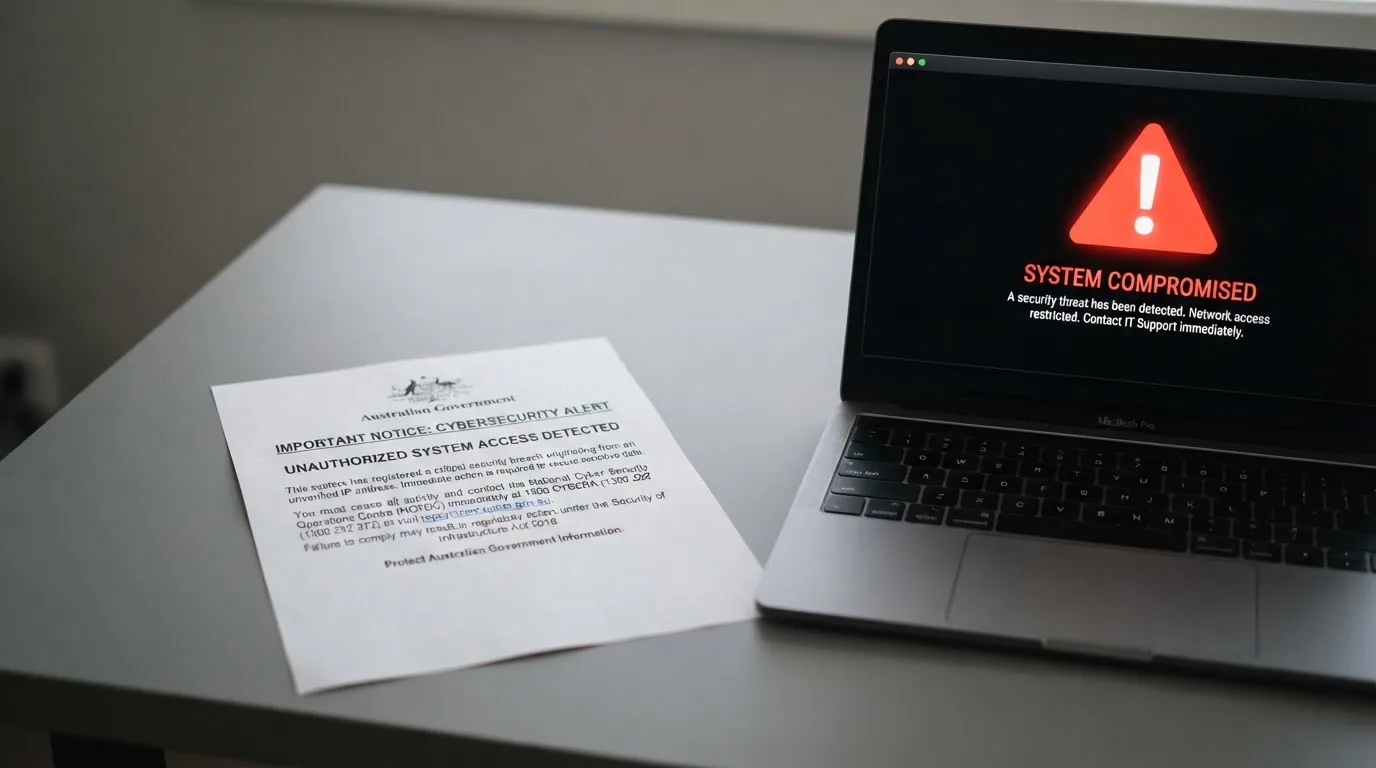
In February 2025 the ACMA issued a formal warning to EOD Code SRL over Instant Casino. In March 2025 it warned Dama N.V. over Woo Casino; in May 2025 it warned Dama N.V. again over Spirit Casino. The pattern is telling – one operator, two brands, two separate warnings inside eight weeks, and Dama N.V. had already been warned in May 2022 over a different set of six brands. In April 2025 the ACMA warned Sterplay Holding Ltd over Casino Intense. In July 2025 the warnings multiplied: Bamboo Media over Ignition Casino, and Consolutetish S.R.L. over National Casino and Bizzo Casino – with Bizzo having already been the subject of an earlier 2022 warning to TechSolutions. Hollycorn N.V. sits further back, warned over Sky Crown and Blue Leo in 2022.
In 2026 the pace has not slowed. In March 2026 the ACMA warned Pulsup Ltd over RocketPlay. In April 2026 it warned Ryker B.V. over Jackbit and CasinOK. A round reported on 26 June 2026 asked Australian ISPs to block twelve more websites: 7Signs, ChromaBet, Donbet, Duospin, Freshbet, Slots Gem, Jacks Club, Lucky Start, Pointsbetz, Spinrise, Vinyl Casino and Wildsino. The blocking request is the heavier instrument – once a domain is on the list, every Australian ISP drops it at the resolver level, and any balance on the site becomes functionally unreachable.
What the tempo means for a player is simple. A formal warning is not a prosecution; the ACMA cannot jail an offshore operator, and it cannot force a withdrawal. What it can do, and has done to 1,751 sites since November 2019, is make the site unreachable from Australia with a stroke of an ISP’s pen. For a player, that risk attaches to the balance at the moment a withdrawal is requested. It is the one cost that a low-fee BCH rail does nothing to defray.
The blocking-rate: how the ACMA’s pace has compounded
The arithmetic that belongs to this material is the rate at which the ACMA’s block list has actually grown, since that is the figure that translates enforcement into a player’s real risk of logging into a frozen account.
Inputs: 1,751 sites blocked in total, with the first blocking request issued in November 2019; the most recent publicly reported round on 26 June 2026 added twelve names. From November 2019 to June 2026 is roughly 79 months. Dividing 1,751 by 79 gives an average of about 22 sites blocked per month over the full period, but the early years ran far slower than the recent ones: the ACMA’s own framing describes enforcement as “strengthened” from 2017, and the published milestones suggest the bulk of the list has been added in the last three years.
A reader should treat that 22-per-month figure as a band, not a point. The honest reading is that the ACMA’s current blocking tempo, measured across the most recent reporting rounds, lands somewhere between roughly twenty and forty sites per month, and that the list itself has compounded to a number large enough that almost any offshore brand an Australian punter has heard of has at least one near-neighbour on it. The compounding is the point: a site that looks untouched today is one blocking round away from being on the list tomorrow, and a BCH deposit sitting on that site at that moment is exactly the kind of balance the regulator’s pen cannot reach back into.
Landsca
The eleven brands reviewed on this page are not a ranking. Each is named because the ACMA itself issued a formal warning over it for offering prohibited services to Australians. The table records the regulator’s view, not a player’s.
| Brand | ACMA action and date | Operator named by the ACMA | Bitcoin Cash support |
|---|---|---|---|
| RocketPlay | Formal warning, March 2026 | Pulsup Ltd (RocketPlay); earlier Dama N.V. in May 2022 | — |
| Level Up Casino | Formal warning, May 2022 | Dama N.V. | — |
| Woo Casino | Formal warning, March 2025 | Dama N.V. | Listed by online casino directories as accepting BCH |
| Spirit Casino | Formal warning, May 2025 | Dama N.V. | — |
| National Casino | Formal warning, July 2025 | Consolutetish S.R.L. | Listed by NAB’s scam watch material in the same category of brands |
| Bizzo Casino | Formal warning, July 2025; earlier 2022 | Consolutetish S.R.L.; earlier TechSolutions (CY) Group Limited and TechSolutions Group N.V. | — |
| Ignition Casino | Formal warning, July 2025 | Bamboo Media | — |
| Instant Casino | Formal warning, February 2025 | EOD Code SRL | — |
| Jackbit | Formal warning, April 2026 | Ryker B.V. | — |
| Casino Intense | Formal warning, April 2025 | Sterplay Holding Ltd | — |
| Sky Crown | Formal warning, September 2022 | Hollycorn N.V. | — |
A dash in the BCH column means research found no specific source tying that brand to Bitcoin Cash as a payment rail, and a page that invents one would be writing fiction. Two brands – Woo Casino and National Casino – appear in third-party listings that name them in the same breath as BCH-accepting casinos; that is what those listings report, and nothing more. Treating a directory entry as a confirmed operator feature would be a stretch beyond what the evidence supports.
Comparison of Bitcoin and Bitcoin Cash features
| Feature | Bitcoin | Bitcoin Cash |
|---|---|---|
| Genesis | 3 January 2009 | 1 August 2017 |
| Block Time | ~10 minutes | ~10 minutes |
| Block Size | 1 MB | 32 MB |
| Supply Cap | 21 million | 21 million |
The following table compares the foundational technical specifications of Bitcoin and Bitcoin Cash. While both share the same SHA-256 proof-of-work protocol, the increased block size limit of Bitcoin Cash significantly changes its throughput capacity, which the project uses to keep transaction fees low. The differences that matter at a casino cashier are size and fee. BCH raised its block size limit to 32 megabytes in 2018, eight times Bitcoin’s original 1 MB and four times its post-SegWit effective ceiling. Larger blocks mean more transactions per block, which under normal load keeps fees low – the Bitcoin Cash project’s own page describes fees as “under a penny” and confirmations as taking minutes.
For an Australian punter, the practical read is that BCH behaves at the cashier much the way Bitcoin does, only cheaper. The address format is different – cashaddr instead of Bitcoin’s legacy or bech32 – so a wallet used to Bitcoin will not send to a BCH address without conversion. Once converted, the deposit flow is the same shape: a wallet sends BCH to a casino-controlled address, the casino’s payment processor watches the mempool, and after a number of confirmations – typically one to three on BCH, against six on Bitcoin – the casino credits the account.
What the rail cannot do is protect the player once the transfer is sent. A confirmed BCH transaction is irreversible on-chain. There is no chargeback mechanism, no card-network dispute process, no ombudsman to appeal to. If the casino refuses to credit the deposit, refuses to process a withdrawal, or simply disappears after a blocking request, the player’s recourse is whatever the operator’s complaints address decides to do. For an Australian player using an offshore site, that means writing to an entity in Curaçao, Cyprus or Anjouan, with no Australian complaints body to escalate to.
Why a BCH withdrawal still runs through identity checks
Bitcoin Cash does not anonymise a casino account; it only settles the payment leg. The identity checks the casino performs happen at the account level, not the blockchain level, and they apply on the way out as much as the way in. Most of the brands in the table above – RocketPlay, Level Up, Woo, Spirit, National, Bizzo, Ignition, Instant, Jackbit, Casino Intense, Sky Crown – are licensed offshore in jurisdictions that require Know Your Customer verification before a withdrawal. The KYC stack is the same one the player would face at a licensed Australian bookmaker: government ID, proof of address, source-of-funds questions on larger withdrawals. The BCH rail runs underneath the KYC layer; it does not bypass it.
That is the gap between the marketing claim and the mechanism. A player who chose BCH because they thought it spared them the paperwork will still be asked for a driver’s licence, a utility bill and a payslip before a withdrawal of any size is processed. The difference is that, on an offshore site, the data goes to an entity with no obligation under Australian privacy law and no recourse if it leaks.
The AUSTRAC layer
Australia treats crypto-to-fiat exchange as a regulated activity. AUSTRAC requires any business providing a digital currency exchange service to Australian customers to enrol and register as a Digital Currency Exchange (DCE) provider, and operating unregistered is a criminal offence. From 31 March 2026, that registration requirement expanded beyond crypto-to-fiat exchange to cover crypto-to-crypto exchange platforms, digital asset transferors, digital asset custody providers and stablecoin issuers and distributors. The register is public.
The rule that matters for a casino punter is narrow but specific: the on-ramp and the off-ramp – exchanging AUD for BCH and BCH back into AUD – are regulated activities in Australia, regardless of where the exchange business is incorporated. A player who buys BCH through an unregistered exchange has no Australian recourse if the exchange disappears with the funds. A player who sells BCH back to AUD through the same channel has the same exposure on the way out.
The ATO layer
The Australian Taxation Office treats crypto assets, including Bitcoin Cash, as property for Capital Gains Tax purposes. Selling BCH for AUD is a CGT event; spending BCH at a casino is a CGT event; swapping BCH for another crypto is a CGT event. Gains on assets held longer than twelve months qualify for the standard 50% CGT discount. From 1 July 2027 that flat discount is replaced by CPI indexation of the cost base plus a 30% minimum tax rate on net capital gains – a change worth tracking for anyone holding BCH across that boundary.
The ATO also recognises a narrow personal-use carve-out: a capital gain on a crypto asset held as a personal use asset is disregarded for CGT purposes, but only if the asset cost $10,000 or less to acquire, and any capital loss on a personal-use asset is fully disregarded and cannot offset other gains. A punter using BCH at a casino is treating the coin as an investment, not a personal-use asset, and the carve-out does not apply.
Winnings from recreational gambling are not assessable income under section 6-5 of the ITAA 1997, and losses are not deductible, unless the person carries on a business of gambling. That rule has not changed. The crypto-specific overlay sits on top of it: a BCH balance that goes up between deposit and withdrawal is a CGT event on the way out, regardless of what the casino paid it for.
Responsible play: what stays available when an offshore site does not
The Australian player-protection framework is built around licensed wagering services. BetStop, the National Self-Exclusion Register, has been live since August 2023 and binds every Australian-licensed online and phone wagering provider. An offshore casino is not connected to it, and an exclusion lodged with BetStop does not propagate to a Bitcoin Cash casino account. A player who has self-excluded from Australian-licensed wagering and then opens an offshore BCH account is starting over, with none of the friction the Australian framework provides.
The National Gambling Helpline on 1800 858 858 is free, 24/7, with chat available at Gambling Help Online. The helpline is the right call for anyone whose BCH-funded offshore play has drifted past the budget they set; the account-level tools that exist at Australian-licensed sites – deposit caps, time-outs, activity statements – do not apply to offshore brands in the same way.
The credit-card and digital-currency ban that has applied to Australian-licensed online wagering since 11 June 2024 is the regulatory anchor for this material. From 11 June 2024, licensed wagering providers cannot accept credit cards, credit-related products or digital currency as a deposit method; penalties for operators run to $247,500 per breach. The routes that remain legal for licensed wagering are debit card, bank transfer, PayID/Osko and BPAY. A site that asks an Australian player for a credit card or a BCH deposit is, by that token, operating outside the Australian rules – and a player who funds it with BCH is funding it through a rail that the Australian regulator has decided is unsuitable even for the licensed half of the market.
What changes under the 2026 reform bill
The Interactive Gambling Amendment (Gambling Reform) Bill 2026 passed Parliament on 19 August 2026. Its advertising and inducement measures commence on 1 January 2027. For a reader on this page in 2026, the bill is law with a start date, not yet in force. The measures that will apply from 1 January 2027 tighten the rules around how licensed operators can advertise and promote wagering offers; they do not legalise online casino gambling, and they do not change the status of an offshore Bitcoin Cash casino.
What a Bitcoin Cash deposit actually costs, end to end
The arithmetic belongs to the player, not the rail. A BCH deposit at an offshore casino carries four distinct costs, and only one of them shows up on the cashier screen.
The first is the network fee, which on BCH is, under normal load, low enough that the project’s own description puts it “under a penny” and confirmations take minutes rather than hours. That is the genuine saving the rail delivers, and it is real.
The second is the exchange spread, the gap between the AUD the player pays and the BCH the player receives. AUSTRAC-registered exchanges quote a spread that varies with the order book; an unregistered exchange may quote a wider spread and offer no recourse if the trade fails to settle. On a round-trip – AUD to BCH to fund the casino, BCH back to AUD to cash out – the spread compounds.
The third is the CGT event at the off-ramp. A player who bought BCH at one price and sold it later at another has a CGT event on the difference. The 50% CGT discount applies after twelve months; under twelve months the gain is taxed at the marginal rate. The cost is not the gain – the cost is the record-keeping the ATO expects the player to keep.
The fourth is the recourse cost, the price of having no Australian complaints body to escalate to if the operator refuses a withdrawal. That cost is zero in the ordinary case and unbounded in the case the operator disappears behind a blocking request the day after a withdrawal is requested. A player who logs in to find the site on the ACMA’s block list has lost the balance on the site and has no path back to it through any Australian channel.
The headline advantage of Bitcoin Cash – cheap, fast, irreversible – is also the structural disadvantage of using it at an offshore casino. The same irreversibility that makes the rail efficient makes it unforgiving. The same speed that lets a deposit clear in minutes lets a blocking request take the site offline in the same window.
How the ACMA’s pace reads against the industry’s launch record
The 1,751-site block list is the ACMA’s most visible output, and the metric a player can read against the lifespan of an offshore casino brand. A new BCH-accepting casino opens, runs for a stretch, accumulates an Australian user base, attracts an ACMA formal warning, runs through one or two more rounds of warning, and on a sufficient record is added to a blocking request. The cycle has played out visibly on brands in the table above: Dama N.V. warned in May 2022 over six brands, warned again in March 2025 and May 2025 over two more, and the same operator’s domain sits across at least one of the recent blocking rounds. The median lifespan of an offshore casino brand on the Australian market, measured against the regulator’s block list, is short.
The H2 Gambling Capital 2025 estimate puts Australian losses to illegal gambling sites at about A$3.9 billion a year, with the share of gambling going through legal channels falling from 74% in 2021 to 64% in 2024. The two figures point in the same direction: the regulated channel is shrinking relative to the offshore one, even as the regulator’s enforcement tempo has not slowed. The economics that drive that shift – the offshore operator’s larger bonus offers, looser KYC, broader crypto support – are the same economics a Bitcoin Cash casino is built on.
What changes if the ACMA does nothing further
A reader who has reached this far and decided to play anyway should know what the cost looks like with no further enforcement against the specific brand chosen. The fee savings on BCH are real and modest: under a penny per transaction, against Bitcoin’s typical several-dollar fee during congested periods. The on-ramp and off-ramp spreads compound across a round-trip. The CGT record-keeping applies on every disposal. The KYC stack applies on every withdrawal above the operator’s threshold. The recourse, if anything goes wrong, is whatever the operator’s complaints email decides to do.
The cost the player does not pay is the one the operator would pay under an Australian licence – the 15% point-of-consumption tax that funds harm minimisation, the BetStop binding, the credit-card ban, the AGCO or NTRWC supervision, and the Australian-licensed complaints body. That infrastructure is paid for by the Australian-licensed wagering market and is not available to a player who funds an offshore casino with Bitcoin Cash.
The honest summary is that a Bitcoin Cash casino delivers, on its own terms, exactly what it advertises: a fast, cheap, irreversible way to fund an offshore wagering account. The cost of those features is paid in the places the advertising does not mention – the regulator’s block list, the absence of an Australian complaints body, the CGT event at the off-ramp, and the unbounded recourse cost if the site disappears behind a blocking request. For an Australian punter, the price is real and largely invisible until it lands.
Frequently asked questions
Is it legal for a casino site to accept Bitcoin Cash from a player in Australia?
No. The Interactive Gambling Act 2001, as amended in 2017, prohibits the supply of online casino games and online pokies to a person in Australia regardless of the payment rail used. A Bitcoin Cash deposit does not change the legal status of the service, and the ACMA’s enforcement record – more than 1,751 sites blocked since November 2019, with twelve added in the most recent reported round – shows how the rule is applied in practice.
How is Bitcoin Cash different from Bitcoin for making a casino deposit?
Bitcoin Cash forked from Bitcoin on 1 August 2017 at block height 478,558 and raised its block size limit to 32 megabytes in 2018. Larger blocks mean more transactions per block, which under normal load keeps fees low – the project’s own page describes fees as “under a penny” and confirmations as taking minutes. The address format is different, so a Bitcoin wallet will not send to a BCH address without conversion.
Does a Bitcoin Cash withdrawal require the same identity checks as a card withdrawal?
Yes. KYC runs at the account level, not the blockchain level, and applies on the way out as much as the way in. Offshore casinos operating under Curaçao or Anjouan licences require government ID, proof of address and source-of-funds documentation before a withdrawal is processed. The BCH rail settles the payment leg; it does not bypass the operator’s compliance checks.
Is there a limit on how much Bitcoin Cash can be deposited at once?
The on-chain side has no per-transaction ceiling, but the operator sets its own minimum and maximum deposit thresholds, and the AUSTRAC-regulated exchange used to buy or sell BCH will apply its own transaction limits and reporting thresholds under the AML/CTF Act. For very large deposits, an operator may request source-of-funds documentation before crediting the account.
What confirms a Bitcoin Cash deposit before it is credited to a casino account?
The casino’s payment processor watches the Bitcoin Cash mempool for the deposit transaction and waits for a set number of confirmations – typically one to three on BCH, against six on Bitcoin, given BCH’s shorter block interval. Once the confirmations arrive, the casino credits the account. The probability distribution around the ten-minute target is wide, so a confirmation can arrive much sooner or much later with no guaranteed minimum or maximum.
Can a Bitcoin Cash payment sent to a casino be reversed after it is sent?
No. A confirmed BCH transaction is irreversible on the ledger, and there is no chargeback mechanism on the blockchain. If the casino refuses to credit the deposit, refuses to process a withdrawal, or disappears behind an ACMA blocking request, the player’s only recourse is the operator’s own complaints channel – with no Australian complaints body to escalate to. That irreversibility is the same property that makes the rail cheap and fast.