
Reload bonuses in 2026: why the second deposit is where the offer gets interesting
The welcome bonus exists to draw a player in. The reload bonus exists to bring them back. That distinction is the whole story, and it is the reason a reload offer tends to carry smaller numbers, tighter conditions, and a more deliberate marketing frame than the sign-up package it sits beside. Australians searching for reload offers run straight into the legal wall that catches the welcome bonus on the same site — there is no licensed online casino in any state or territory, so anything styled as a “reload bonus” is being marketed by an offshore operator the ACMA has already acted against, often more than once.

This page is current as of 30 October 2026, with licence claims cross-checked against the Australian Communications and Media Authority’s register of formal warnings and blocking orders. Where the offer a brand advertises could not be confirmed against an authoritative source, the page says so rather than carrying the marketing figure forward.
Table of Contents
- How a reload bonus is actually built
- The Australian situation, in one paragraph
- How the reload offer is usually framed in marketing
- The wagering math, in plain terms
- Brand-by-brand: the eleven sites the ACMA has acted against
- What the blocking record looks like in numbers
- The law Australians actually face
- The player-protection floor an offshore site does not provide
- Payment methods as background, not as an offshore promise
- Reload bonus offers through that frame
- What this page is not
- Frequently asked questions
How a reload bonus is actually built
A reload bonus is a percentage match on a subsequent deposit — the second, the third, or a deposit made on a specific day the casino flags as a “reload day”. The shape of the offer is almost always the same as the welcome bonus it sits next to: a percentage, a maximum bonus amount, a wagering multiple, and a list of games the bonus can be cleared on. What changes is the audience and the framing. The welcome bonus is sold as a once-off reward for arriving; the reload bonus is sold as an ongoing loyalty mechanic for staying.

That structural similarity is the point. A player who has already cleared one bonus on the site has already paid, in time and turnover, for the privilege of being treated as a known customer. The reload offer monetises that sunk cost. The casino knows roughly how much the player wagers per session, which games they prefer, and how responsive they are to deposit prompts. A 50% reload on a Tuesday is built around that knowledge. The sign-up offer, by contrast, was a guess.
Three things consistently separate a reload offer from the welcome bonus on the same site:
- The percentage is lower. A 100% welcome is common; a 50% reload is the median; 25% reloads for low-tier players are routine. The casino has less reason to overpay.
- The maximum bonus is smaller. Even where the percentage is identical, the cap tends to be tighter, because the casino is matching a known customer, not recruiting one.
- The expiry is shorter. A reload offer is usually valid for a day, a weekend, or a promotional week. A welcome bonus can stretch over a month.
None of these differences is hidden in the terms, but none is the headline either. The casino’s marketing puts the percentage up; the player finds the cap and the clock when they go to claim.
The Australian situation, in one paragraph
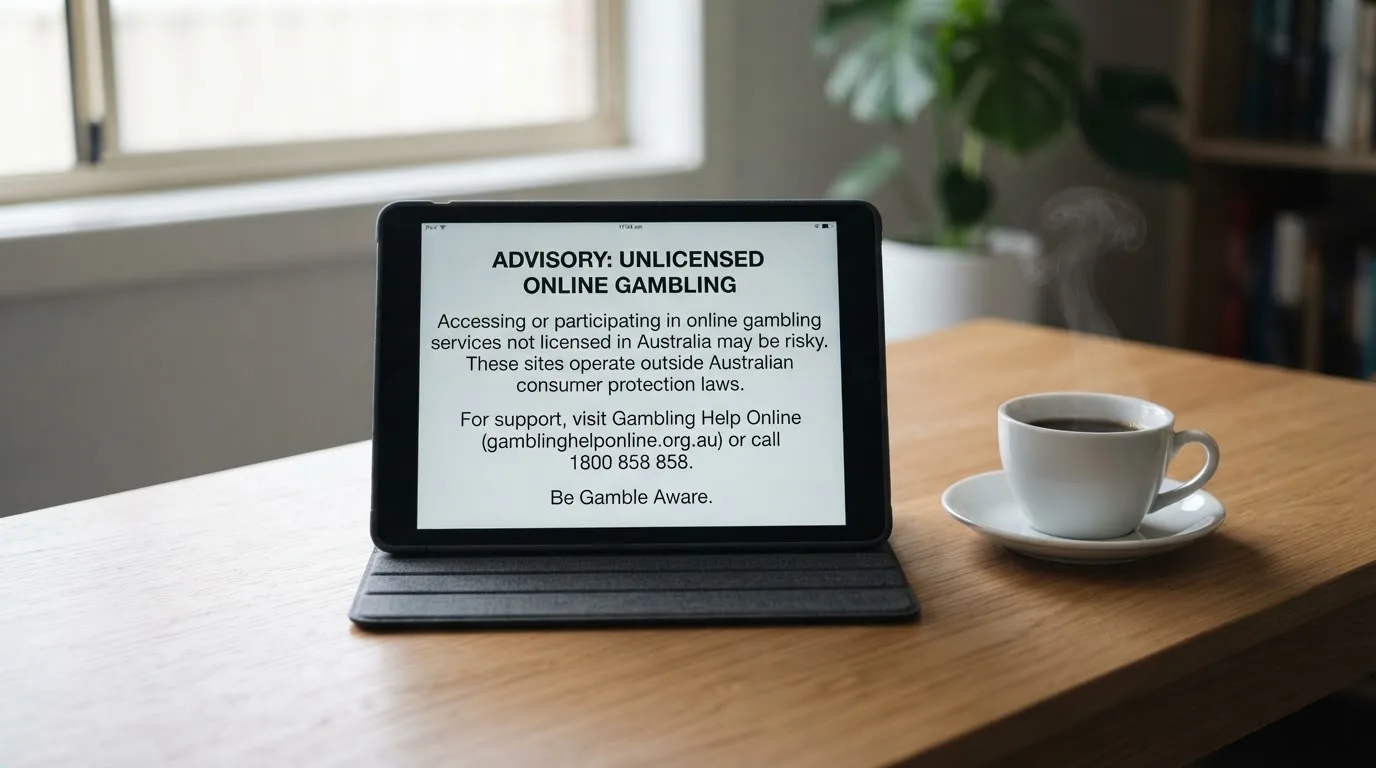
Online casino games — pokies, roulette, blackjack, baccarat and the rest — are not licensable in any Australian state or territory. The Interactive Gambling Act 2001, as amended in 2017, makes the supply of those games to a person physically in Australia a civil offence, and enforcement sits with the ACMA. What is licensed is wagering on racing and sport (pre-event only), lotteries, and keno — in practice regulated out of the Northern Territory. The minimum age is 18. That is the whole legal frame, and the only thing an Australian player can do legally at an “online casino” reload bonus page is read it; depositing at one is not, on its own, prosecuted against the player, but the operator is the one the IGA targets, and the balance can be stranded when the site is blocked.
How the reload offer is usually framed in marketing
The marketing language around reload bonuses is almost always built around three claims, and each of them has a more honest reading underneath.
“Weekly reload” — the offer is sold as a recurring event, often every Friday or over the weekend. The marketing reads as if the bonus is part of a standing schedule; in practice the casino can change the percentage, the cap, the eligible games and the wagering multiple week to week, and frequently does. A player who has been conditioned to expect a particular offer may find the terms have moved.
“Loyalty reward” — the framing positions the reload as recognition of the player’s history with the site. That is partly true. The reload offer is calibrated to the player’s prior activity; the casino’s CRM is the engine. The calibration, however, runs in the casino’s favour: a known customer who deposits reliably is precisely the kind of player the operator wants to keep depositing.
“Lower wagering” — reload offers are sometimes marketed as carrying lighter wagering requirements than the welcome bonus, because the player is supposed to be a known quantity. That is often genuinely true, and it is also a way of getting a returning player to clear another bonus they would not have claimed at the welcome bonus’s rate.
The thread through all three is that the marketing language is doing two jobs at once — selling the offer, and softening the reader’s expectation that the offer’s cost will be passed to them.
The wagering math, in plain terms
A reload bonus with a 50% match up to A$200 and a 35x wagering requirement on the bonus only is asking the player to turn over A$7,000 before any of the bonus becomes withdrawable. If the player plays pokies at A$1 per spin, that is 7,000 spins. At a five-second spin interval that comes to roughly 9.7 hours of continuous play. The expected loss, on a slot with a 96% return to player, is the turnover multiplied by the house edge: A$7,000 × 0.04 = A$280. That is the bonus’s real cost in expectation, paid in time as well as money.
A few qualifiers travel with every figure in that paragraph. The 96% return is an average over many spins, not a guarantee per session. The five-second spin interval is the speed a typical pokie runs at; live dealer games are slower, jackpot slots can be faster. The expected loss is a statistical estimate, not a prediction for any individual player. And the bonus amount is the only number being turned over in the calculation above — if the deposit is also locked in, the turnover roughly doubles and the expected loss roughly doubles with it.
The wagering multiple is the single most important number on the offer. Everything else — the percentage, the cap, the eligible games — is set around it. A 50% reload at 35x is a different offer from a 50% reload at 20x, and the cap is the same in both.
Brand-by-brand: the eleven sites the ACMA has acted against
What follows is not a ranking. The Australian Communications and Media Authority has issued a formal warning over each of the eleven brands below for offering prohibited interactive gambling services to people in Australia. They are presented in the order the ACMA has acted, with the most recent warnings first, and the only reason any of them appears on this page is the ACMA’s own action — no bonus terms are reproduced, because the only sources for those terms were affiliate marketing pages.
Ranked ACMA actions by brand
| Brand | ACMA action and date | Operator named by the ACMA | Subject support |
|---|---|---|---|
| RocketPlay | Formal warning, March 2026; earlier warning to the same operator group, May 2022 | Pulsup Ltd (RocketPlay); previously Dama N.V. | Mentioned in third-party listings, no confirmed Australian-facing terms |
| Level Up Casino | Formal warning, May 2022 | Dama N.V. | Mentioned in third-party listings, no confirmed Australian-facing terms |
| Woo Casino | Formal warning, March 2025 | Dama N.V. | — |
| Spirit Casino | Formal warning, May 2025 | Dama N.V. | — |
| National Casino | Formal warning, July 2025 | Consolutetish S.R.L. | Mentioned in third-party listings, no confirmed Australian-facing terms |
| Bizzo Casino | Formal warning, July 2025; earlier warning, 2022 | Consolutetish S.R.L.; previously TechSolutions Group | Mentioned in third-party listings, no confirmed Australian-facing terms |
| Ignition Casino | Formal warning, July 2025 | Bamboo Media | — |
| Instant Casino | Formal warning, February 2025 | EOD Code SRL | Mentioned in third-party listings, no confirmed Australian-facing terms |
| Jackbit | Formal warning, April 2026 | Ryker B.V. | — |
| Casino Intense | Formal warning, April 2025 | Sterplay Holding Ltd | Mentioned in third-party listings, no confirmed Australian-facing terms |
| Sky Crown | Formal warning, September 2022 | Hollycorn N.V. | — |
Where the third column reads “Mentioned in third-party listings, no confirmed Australian-facing terms”, the page is recording what industry listings have said about the brand and nothing more. Where it reads “—”, the brand has no listing-level coverage of reload bonus offers that this page could verify against an authoritative source. In neither case is the operator’s own marketing being carried forward.
A pattern jumps out of the right-hand column. Five of the eleven brands have at least some third-party listings mention. Six do not, and one of those six — Jackbit — was the subject of the most recent ACMA warning at the time of writing. The page cannot tell the reader why the listings are uneven, but it can tell the reader that the listings are uneven.
RocketPlay
RocketPlay has been on the ACMA’s list twice. The most recent formal warning, in March 2026, named Pulsup Ltd as the operator behind RocketPlay; an earlier May 2022 warning caught the same brand under Dama N.V., one of a six-brand group action that month. Two warnings over the same brand suggests the operator continued marketing into Australia after the first action, which is itself the kind of pattern the ACMA’s enforcement framework is built to catch. Third-party listings have mentioned RocketPlay, but no reload bonus terms on this page can be confirmed against an authoritative source.
Level Up Casino
Level Up was caught in the same Dama N.V. group action in May 2022 as four other brands on this list. The single formal warning over four years is the kind of pattern that makes the ACMA’s blocking register meaningful — a brand stays in the warnings list because the regulator keeps checking, and the absence of a fresh warning is not the same thing as compliance. Where RocketPlay has been caught twice, Level Up has the older single action; the difference in the warning record is the page’s only honest comparison between the two.
Woo Casino
Woo Casino carries a March 2025 warning under Dama N.V., which is also the operator of record for RocketPlay, Level Up, Spirit Casino and four others from the May 2022 group. The same operator group keeps showing up across different brand names, which is how the offshore casino market is structured — a small number of B.V.- or N.V.-registered companies running portfolios of brands that look distinct to players but share corporate and platform infrastructure. No third-party listing material on Woo Casino was confirmed for this page.
Spirit Casino
Spirit Casino also sits under Dama N.V., with a May 2025 warning. Three of the eleven brands on this page are operated by Dama N.V. — RocketPlay, Level Up, Woo Casino and Spirit Casino, in fact, with Dazard, Wild Tornado, Bambet and Cobra Casinos outside the eleven. The operator group is the through-line more than the brand names are. Where two of the four Dama N.V. brands were caught twice (RocketPlay and the underlying operator), Spirit Casino’s single warning puts it in the same bucket as Level Up.
National Casino
National Casino carries a July 2025 warning under Consolutetish S.R.L., the same operator as Bizzo Casino. The pair was caught in the same round — two brands from one operator in the same enforcement action is a pattern, not a coincidence. National Casino does appear in third-party listings, alongside BetStop and AUSTRAC mentions, which is the most cross-referenced entry on this page outside RocketPlay.
Bizzo Casino
Bizzo was warned twice. The July 2025 action caught it under Consolutetish S.R.L., and an earlier 2022 action had been issued to TechSolutions (CY) Group Limited and TechSolutions Group N.V. over the same brand. Two warnings over the same brand, two different named operators, is the same shape as RocketPlay’s record: the brand carries on, the corporate entity behind it shifts, the Australian-facing marketing continues.
Ignition Casino
Ignition Casino carries a July 2025 warning under Bamboo Media. It is one of the brands on this list without any third-party listing coverage the page could confirm — the warning exists on the ACMA’s register, and the brand’s own marketing has had nothing the page could verify against. That gap is a feature, not a defect, of the table above.
Instant Casino
Instant Casino carries a February 2025 warning under EOD Code SRL. It is one of the more cross-referenced brands on the page, with listings mentions and coverage of the payment methods that online casino reload pages often link to it. The warning is older than RocketPlay’s and Jackbit’s, which puts it in the middle of the eleven-brand set on recency.
Jackbit
Jackbit carries the most recent warning on this page at the time of writing — April 2026, under Ryker B.V. The freshest warning is not the same as the strongest case against the brand; it simply means the ACMA acted most recently. No third-party listing material on Jackbit was confirmed, so the warning is the only record this page carries about the brand.
Casino Intense
Casino Intense carries an April 2025 warning under Sterplay Holding Ltd. It is the most cross-referenced entry on the page for support services — AUSTRAC, BetStop, and third-party industry listings all carry the brand name, which gives the reader more places to read about it than the other ten. Whether that is a positive signal is the wrong question; the warning is the regulator’s view, not the listings’.
Sky Crown
Sky Crown carries a September 2022 warning under Hollycorn N.V., the same operator as Blue Leo. It is the oldest formal warning on this page. A formal warning issued in 2022 and not superseded by a fresh action is the ACMA’s standing record on the brand; the warning has not been withdrawn. No third-party listing material was confirmed for Sky Crown.
What the blocking record looks like in numbers
The ACMA’s blocking mechanism has been running since the first blocking request in November 2019. By June 2026, a total of 1,751 illegal gambling and affiliate marketing websites had been blocked across the rounds since then. The pace has accelerated — the most recent round in June 2026 alone added 12 sites to the block list, including 7Signs, ChromaBet, Donbet, Duospin, Freshbet, Slots Gem, Jacks Club, Lucky Start, Pointsbetz, Spinrise, Vinyl Casino and Wildsino.
The blocking rate, calculated as 1,751 sites divided across the roughly 79 months between November 2019 and June 2026, comes to around 22 sites blocked per month on average across the program’s life. That figure is the long-run average; in practice the ACMA’s blocking is uneven, with rounds of one to a dozen sites followed by quieter periods. A more useful band for the reader sits between 15 and 30 sites per month, with most months at the lower end and a handful of enforcement rounds pulling the average up. Either way, the program is running, the site count keeps moving, and the eleven brands on this page are a sample of where it has landed.
The law Australians actually face
The Interactive Gambling Act 2001, as strengthened by the Interactive Gambling Amendment Act 2017, is the instrument that catches the brands above. It is a civil regime aimed at providers, not players. An Australian player depositing at an offshore casino is not, on its own, prosecuted — but the operator carrying the player is the one the regulator targets, and the player has no Australian consumer protection behind them when the operator’s site is blocked, when a withdrawal is refused, or when the bonus terms turn out to be different from the marketing.
What the IGA does not prohibit is wagering on racing and sport, lotteries and keno. Those are licensed products, regulated in practice by the Northern Territory Racing and Wagering Commission (NTRWC) out of Darwin. The NTRWC regulates 52 of Australia’s online bookmakers — Sportsbet, Bet365 and Ladbrokes among them — for tax reasons, despite running with no full-time staff and meeting once a month. The casino reload bonus market sits entirely outside that frame.
The Interactive Gambling Amendment (Gambling Reform) Bill 2026 passed Parliament on 19 August 2026, with its advertising and inducement measures commencing 1 January 2027. That is law with a start date, not yet in force on a page dated in 2026 — the inducement restrictions become enforceable on the new-year date, and any reload bonus marketed before then sits under the existing regime, not the new one.
The player-protection floor an offshore site does not provide
BetStop, the National Self-Exclusion Register, has been live since August 2023. It binds every Australian-licensed online and phone wagering service. An offshore casino is not connected to it. A player who has self-excluded through BetStop is not, by virtue of having done so, blocked from depositing at the eleven brands on this page. The self-exclusion decision travels with the licence, and the eleven brands do not hold one.
The same gap applies to complaint bodies. A licensed Australian wagering provider answers to a state or territory regulator and, in practice, to an external dispute resolution scheme. An offshore operator answers to its own terms page. The page’s value to a reader who has been refused a withdrawal at an offshore site is the same as the operator’s customer service team’s value — exactly what the operator decides it is.
The National Gambling Helpline is 1800 858 858, free, 24/7, with online chat at Gambling Help Online. The line is the right one to call before opening another browser tab, not after.
Payment methods as background, not as an offshore promise
The payment methods that reload bonus pages typically mention are not licensed deposit routes for online casino in Australia — online casino is not licensed at all — so what follows is background information about how those methods work in the Australian payments system, not any endorsement of an offshore operator’s deposit process.
PayID sits on the New Payments Platform, which went live to the public on 13 February 2018. With PayID, the payer sees the name of the account holder before the transfer is sent — and AP+ warns that being asked to send money to a PayID on an illegal gambling site almost certainly means a scam site. Osko by the same operator carries a bank-to-bank transfer between participating Australian banks in under a minute, 24/7, addressed to a BSB and account number or to a PayID. Over 100 Australian financial institutions support PayID-based instant transfers, and more than 25 million PayID identifiers were registered on the platform by April 2025.
BPAY has been running since 1997 and is owned, via Cardlink Services Limited, equally by ANZ, Commonwealth Bank, NAB and Westpac. The payer enters the Biller Code and the Customer Reference Number (CRN) printed on the bill; the service is available in the online banking of over 140 banks and financial institutions and is offered by over 95,000 businesses. BPAY is operated by Australian Payments Plus (AP+), the same body that runs PayID and Osko.
AUSTRAC’s threshold-transaction-report rule applies to physical cash transfers of A$10,000 or more; ordinary electronic bank transfers are not subject to that per-transaction reporting requirement, regardless of the amount sent. That is a structural fact about Australian payments, not a comment on the offshore casino market.
For card-based payments: the Interactive Gambling Act’s 2023 amendments prohibit Australian-licensed online wagering services from accepting credit cards or credit-related products, a restriction that extends to linked digital wallets. Apple Pay, Google Pay and Samsung Pay transactions together accounted for around 45% of all card payments in Australia by number at the end of 2025 — a number large enough that the IGA’s restriction bites across a meaningful slice of consumer behaviour.
Several Australian banks let cardholders apply their own gambling block. Westpac’s block works at the card level, refusing authorisation of transactions under the merchant category code “Betting/Casino Gambling” on eligible personal credit and debit cards. ANZ’s block, activated in the ANZ app, also blocks gambling transactions made through a digital wallet on an eligible card, not just on the physical card — and removing it again requires a 48-hour waiting period. Commonwealth Bank lets customers apply a gambling lock to eligible cards via the CommBank app. None of these banks guarantees that every gambling transaction will be stopped, and the bank’s own warnings say as much.
American Express sits slightly apart. Unlike Visa or Mastercard’s four-party network, Amex traditionally issues its own cards and processes its own transactions as a three-party scheme. The Reserve Bank of Australia’s July 2025 review proposes removing surcharges only on eftpos, Mastercard and Visa, leaving American Express explicitly outside the scope of the proposed surcharge ban. The network structure is the reason the policy lands the way it does.
Reload bonus offers through that frame
Putting the payment section beside the legality section changes how a reload bonus offer reads. The casino’s marketing says “weekly reload, 50% up to A$200, 35x wagering on pokies”. The legal frame says no Australian licence covers the offer. The payments frame says a deposit from an Australian bank card or PayID account, to an account that no Australian regulator oversees, sits outside the consumer protection an Australian player has at a licensed wagering provider. The marketing is correct about the offer; the frame is correct about what surrounds the offer; the player has to choose which of the two readings matters more.
A few consequences follow from that choice. A player who takes a reload bonus at an offshore casino cannot then complain to an Australian regulator if the bonus is not honoured. A player who self-excludes through BetStop and then deposits at an offshore casino has not had their exclusion honoured by anyone — BetStop does not bind the offshore operator. A player who triggers their bank’s gambling block on the card has, by design, made the next deposit harder, not impossible — the bank warns that not every transaction will be blocked.
What this page is not
This page does not rank the eleven brands against each other. They are not competing for the reader’s patronage here; they are listed because the ACMA has acted against each of them, and the action is the only reason any of them appears. This page does not carry any reload bonus terms forward from affiliate marketing, because the only sources for those terms were the affiliate marketing pages themselves. This page does not recommend any operator as a place to play. Online casino play from Australia sits outside the Australian licensing frame, and the ACMA’s record on each of the eleven brands is the regulator’s view of the operators in question.
Frequently asked questions
What exactly is a reload bonus, and how does it differ from a first sign-up bonus?
A reload bonus is a percentage match on a subsequent deposit — typically lower in percentage and smaller in cap than a welcome bonus, with a tighter expiry window. The welcome bonus is sold as a one-off reward for arriving; the reload is sold as an ongoing loyalty mechanic for staying, and is calibrated to the player’s known deposit history with the operator.
Why would a bitcoin casino specifically brand its repeat-deposit offer as a “reload bonus”?
The “reload” label is marketing framing rather than a structural difference from the welcome bonus — the underlying mechanics are usually the same: a percentage, a cap, a wagering multiple and a list of eligible games. Bitcoin or otherwise, the label signals that the operator is targeting a known, returning customer rather than a first-time sign-up.
Is accepting a reload bonus from an offshore casino legally different from accepting its welcome bonus?
No. The Interactive Gambling Act 2001 covers the supply of prohibited interactive gambling services to a person in Australia, which includes the bonus structure on the site, whether it is the first offer or a repeat one. The operator is the target of the IGA, not the player, and the licence status of the operator does not change between welcome and reload.
How often do offshore sites run a reload bonus for existing players — weekly, or only occasionally?
A weekly reload on a fixed day — Friday or the weekend — is the most common pattern, but the operator can change the percentage, cap, eligible games and wagering multiple week to week, and frequently does. The “weekly” framing in the marketing is a schedule the operator can move at any time without notice.
Does a reload bonus on pokies usually carry the same wagering terms as the original sign-up offer?
Often not. Reload offers are sometimes marketed as carrying lighter wagering than the welcome bonus, because the player is a known quantity to the operator; that is genuinely often true, and it is also a way of getting a returning player to clear another bonus they would not have claimed at the welcome bonus’s rate. The wagering multiple is the figure to check before claiming either offer.