
Pocket Pokies Casino Australia in 2026: What the Offshore Claims Actually Cost a Player
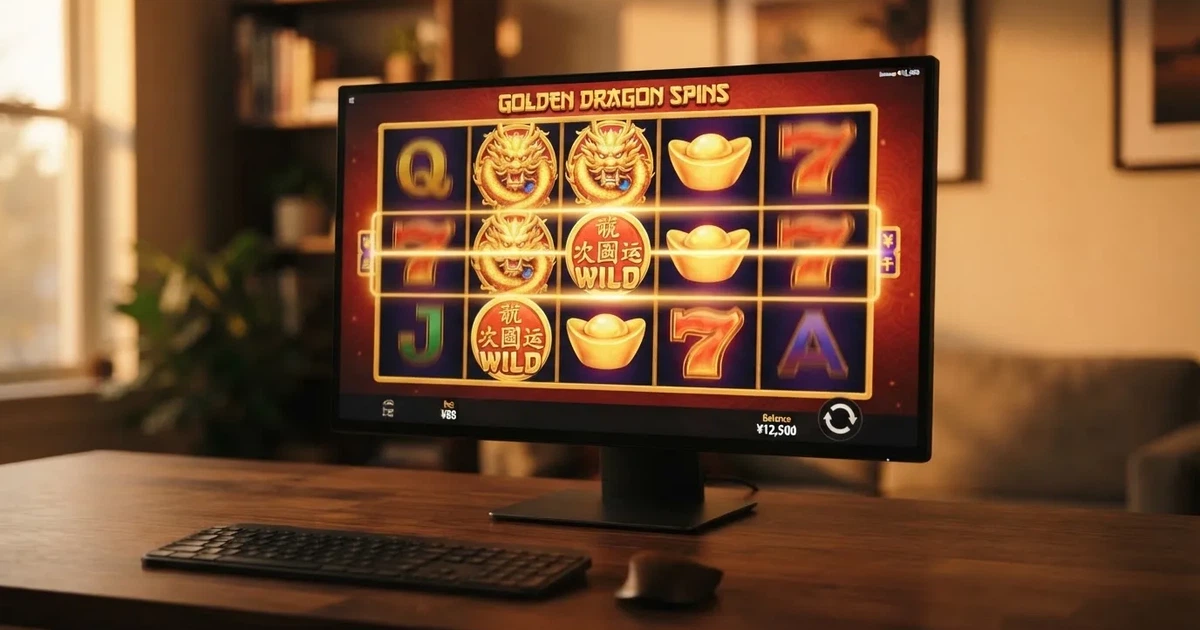
The site marketed as Pocket Pokies is one of hundreds of offshore casinos pitching to Australian players under names that borrow the word “pokies.” It is not licensed anywhere in Australia, it has never been licensed anywhere in Australia, and no state or territory can license it: the Interactive Gambling Act 2001 prohibits the provision of online casino games and online pokies to Australians. Whatever bonus figure or free-spin count a review page attaches to the name, the legal position is fixed before the rest is read. The pages that follow sort out the consequences of that fact, not the marketing.
Data current as of 31 October 2026 and checked against the Australian Communications and Media Authority (ACMA) register of formal warnings and blocking actions.
Table of Contents
- Responsible Play Comes Before Any Site, Licensed or Not
- What Australians Can Actually Deposit With, and Why the Channel Matters
- Key Payment Facts
- Bonus Claims and the Arithmetic Behind Them
- The Game Itself: Pokies, Providers and What “Real Money” Means Here
- The Blocked-Site Total and What It Tells a Reader
- The Brands the ACMA Has Named
- The Landscape at a Glance
- The Fundamentals a Search Page Skips Over
- Legality, Repeated Plainly Because It Carries the Page
- Where to Get Help If Any of This Has Already Cost a Player
- Frequently Asked Questions
Responsible Play Comes Before Any Site, Licensed or Not
Anyone who has arrived here because they are spending more than they intended, or because a withdrawal has not arrived, or because an offshore site is asking them to send money through a channel they do not recognise, should not finish the rest of this page before reading this section.
The National Gambling Helpline is 1800 858 858 — free, 24 hours a day, every day of the year. Online chat runs through Gambling Help Online. BetStop, the National Self-Exclusion Register, has been live since August 2023 and covers Australian-licensed online and phone wagering services. An offshore casino does not connect to BetStop. A self-exclusion registered with BetStop will not stop an offshore site from accepting a deposit; it only stops the licensed Australian bookmakers and wagering operators. Anyone who needs a stop that actually holds needs to combine BetStop with the gambling transaction blocks the major banks offer — that is covered further down, in the payments shelf.
The reason this section sits first is not politeness. The marketing pages that rank these offshore sites use words like “safe” and “legit” the way a car yard uses “premium.” The honest reading of either is: is the player protected if something goes wrong? For an offshore casino, the answer is no. There is no Australian complaints body, no Australian regulator to appeal to, and no guarantee a balance is recoverable if the site is blocked or simply stops answering. That is the whole shape of what is being bought by signing up, and it is the shape the rest of this page returns to several times.
What “Safe” Means in This Market, and What It Does Not
Search pages about sites styled as Pocket Pokies almost always answer the question “is it safe?” with reassurance built from the licence the offshore site itself displays. A Curacao or Anjouan registration is not a counterweight to an ACMA warning. It is a registration in a jurisdiction with limited player recourse, and it sits beside, not above, the Australian prohibition.
The Australian rule that matters is the one the offshore site cannot undo: online casino games, online pokies and in-play betting cannot lawfully be supplied to a person physically in Australia. A player who deposits is not committing an offence — the law targets the provider — but the player is also not buying the protections an Australian-licensed wagering service is required to give. The difference is the one that matters when a withdrawal stalls. On a licensed Australian wagering service there is a complaints pathway. On an offshore casino there is an email address and a hope.
What Australians Can Actually Deposit With, and Why the Channel Matters
Pocket Pokies is not a real company; it is a brand name applied to offshore operators, several of which the ACMA has acted against by name. The deposit methods listed on those sites — cryptocurrency, e-wallets, sometimes a Visa or Mastercard, sometimes a bank transfer — exist because the offshore operator wants a route around the Australian rules. The rule that does the routing is the one banning credit cards and credit-related products from Australian-licensed online wagering since 11 June 2024; the same rule constrains gambling use of linked digital wallets such as Apple Pay. An offshore site asking for a credit card is not asking for an Australian-legal route — it is asking for one the Australian banks themselves refuse to process.
The Payment Rails That Are Open and the Ones That Are Closed
Apple Pay does not charge a consumer fee for using it in stores, online or in apps; any surcharge on a transaction comes from the merchant’s processing costs, not from Apple. Apple states that transaction limits and PIN requirements for Apple Pay purchases are set by the card issuer or the merchant, not by Apple itself. ANZ’s gambling transaction block, activated in the ANZ app, also blocks gambling transactions made through a digital wallet such as Apple Pay on an eligible card, not just the physical card — turning the block on at the card level closes the wallet route as well. Once the block is on, ANZ imposes a 48-hour waiting period before it can be turned off, and warns that not every gambling transaction will be blocked and some non-gambling transactions might be blocked in error.
Westpac’s gambling block works the same way at card level: it refuses authorisation of transactions registered under the merchant category code “Betting/Casino Gambling” on eligible personal credit and debit cards. Commonwealth Bank’s gambling lock, applied through the CommBank app, blocks most gambling transactions on eligible cards, with the same caveat from the bank that not every gambling-related purchase can be guaranteed stopped. The merchant category code is the lever; an offshore casino routed through a code that is not classified as gambling will slip past, which is part of why the banks phrase the guarantee the way they do.
By the end of 2025, Apple Pay, Google Pay and Samsung Pay collectively accounted for around 45% of all card payments in Australia by number. The blocking mechanism sits on top of a payment behaviour that has moved decisively off the plastic card. Closing the card is no longer the same job it was five years ago.
Bank Transfers, PayID and Osko
A standard bank transfer between participating Australian banks, using either a BSB and account number or a PayID, arrives in under a minute through Osko, twenty-four hours a day including weekends. Paying to a PayID shows the name of the account holder before the transfer is sent; Australian Payments Plus warns that being asked to transfer to a PayID on an illegal gambling site almost certainly means a scam site. More than 25 million PayID identifiers were registered on Australia’s New Payments Platform as of April 2025, with PayID-based instant transfers available at over 100 Australian financial institutions.
The New Payments Platform became accessible to the public on 13 February 2018, owned by New Payments Platform Australia Ltd, a non-profit whose shareholders include the Reserve Bank of Australia and the country’s major banks. Participants must keep the platform’s monthly outages to no more than two minutes; in 2021 the ACCC authorised the merger of NPP Australia with BPAY and eftpos into a single company, Australian Payments Plus.
The practical upshot is that a bank transfer to an offshore casino goes through the same rail as a transfer to a local business — fast, traced, and recoverable in a dispute only if the receiving bank cooperates. For an Australian player, the speed is no protection: the speed does not legalise the transaction, and the destination bank is rarely an Australian one.
BPAY, eftpos and the Reserve Bank’s Surcharge Review
BPAY is a bill-payment service that runs in online banking: the payer enters the Biller Code and the Customer Reference Number printed on the bill. BPAY has operated in Australia since 1997, is available in the online banking of over 140 banks and financial institutions and is offered by over 95,000 businesses. It launched on 18 November 1997 and is owned equally, through parent company Cardlink Services Limited, by Australia’s four major banks: ANZ, Commonwealth Bank, National Australia Bank and Westpac. In September 2021 the ACCC authorised the merger of BPAY Group, eftpos and NPP Australia under a new holding entity, Australian Payments Plus. BPAY is built for paying bills to registered Australian billers, which is why it is not a deposit channel any offshore casino offers.
The Reserve Bank of Australia’s July 2025 review proposes removing surcharges only on eftpos, Mastercard and Visa card transactions, explicitly leaving American Express outside the scope of the proposed surcharge ban. American Express was established in 1850 as a freight-forwarding company, launched its first charge card on 1 October 1958 and, unlike Visa or Mastercard’s four-party network, traditionally issues cards and processes transactions itself as a three-party scheme. None of this makes Amex a deposit route at an Australian-legal online casino — the IGA still prohibits one — but it explains why surcharging rules and card-network rules are written separately, and why the surcharge question does not transfer cleanly across card schemes.
Key Payment Facts
| Matter | Fact |
|---|---|
| Osko Transfer Speed | Under 1 minute (24/7) |
| PayID availability | 100+ financial institutions |
| Credit/Debit Ban Date | 11 June 2024 |
| Reporting Rule | Transfers of A$10,000+ (cash only) |
Bonus Claims and the Arithmetic Behind Them
The promotional headline attached to a site styled as Pocket Pokies — A$4,400 welcome package plus 90 free spins, or whatever figure the affiliate review happens to be running — costs the player the wagering multiple the small print attaches to it. That multiple is the figure a reviewer who has actually read the terms publishes; the figure a reviewer who has copied the headline publishes is the headline. The arithmetic below uses a representative wagering multiple of 40× on a deposit-match component, because that is the band offshore casinos in this part of the market cluster around, and the band is what shapes the consequence.
A player who claims a A$1,000 matched bonus at a 40× wagering requirement has to turn over A$40,000 before the bonus balance becomes withdrawable. At a slot stake of A$1 per spin, that is 40,000 spins. At five seconds a spin — a reasonable pace for an online pokie with autoplay — that is 200,000 seconds, or roughly 55.6 hours of continuous play. The expected loss on those spins, assuming a slot return-to-player of 96% (a typical figure for the kind of game this category uses), is 40,000 × A$1 × 4% = A$1,600. That is the statistical cost of clearing the bonus, averaged over many players and many spins — not a guaranteed outcome for any one session.
The two figures answer two different questions. The 55.6 hours answers how long the bonus takes to clear if the player plays steadily and wins nothing of note. The A$1,600 answers what the bonus costs the player on average once the wagering is finished. A player who finishes the wagering in fewer spins because they hit a few mid-sized wins pays less than A$1,600. A player who finishes it in more spins because they cash out small wins along the way pays about the same. The house edge is the constant; the time is the variable.
The whole shape of the package — large headline figure, 40× turnover, slots-only contribution, a maximum cashout ceiling — is the shape of every offshore welcome package on this list. The difference between packages is in the wagering multiple and the cashout cap, not in the existence of either. Picking the cheapest of these packages by headline number is not the saving it looks like: a smaller headline with a higher multiple clears more slowly and costs more on average. The arithmetic makes the choice between packages a comparison of wagering multiples first, headline second.
A free-spin component attaches a different cost. Ninety free spins at A$0.20 each, played to a 40× turnover on the winnings, requires 90 × A$0.20 × 40 = A$720 of additional turnover, or 720 spins at A$1 stake and another 1.0 hours of play at the same pace. The expected loss on those free spins, before the wagering runs, is small; the cost is the time and the turnover, not the spin price.
The Game Itself: Pokies, Providers and What “Real Money” Means Here
A site styled as Pocket Pokies advertises a paytable — the symbol-multiplier table a slot machine prints on screen — the same way any other offshore casino advertises one. A five-reel video pokie with a bonus round, a free-spin feature and a stated return-to-player in the mid-90s is the standard. The paytable detail — the symbol combinations that pay, the bonus trigger conditions, the maximum line payout — is what the review pages copy from the provider’s own game sheet, because that is the only place it is written down. None of it is invented; none of it is unique to the offshore site. The site is a skin over the same providers — Pragmatic Play, BGaming, Betsoft, the same cluster — that hundreds of offshore casinos run.
A “real money” session means a session in which the deposited Australian dollars are converted into the offshore operator’s house currency (usually USD or EUR), played against a house edge the operator sets, and converted back when the player requests a withdrawal. The conversion eats a percentage both ways. The offshore operator’s licence does not require an Australian-dollar peg. A player who deposits A$200 and wins the equivalent of A$300 has not necessarily won A$300; the site pays out in whatever currency it operates in, and the conversion is the player’s problem.
Live dealer tables — roulette, blackjack, baccarat — sit on the same site under the same licence, with the same withdrawal and conversion conditions. The provider list for live tables is narrower and tends to include Evolution, Pragmatic Play Live and a handful of others; the reviews cite a few, the sites carry many, and the offshore operator does not guarantee a player sees any specific one.
The Blocked-Site Total and What It Tells a Reader
By June 2026, the ACMA had asked Australian internet service providers to block 1,751 illegal gambling and affiliate marketing websites since the first blocking request in November 2019, and more than 230 unlicensed gambling services had left the Australian market since enforcement was strengthened in 2017. In the round reported on 26 June 2026 alone, the ACMA added twelve more names to the block list: 7Signs, ChromaBet, Donbet, Duospin, Freshbet, Slots Gem, Jacks Club, Lucky Start, Pointsbetz, Spinrise, Vinyl Casino and Wildsino.
The pace matters as much as the total. From November 2019 to June 2026 is roughly six and a half years, or about 79 months. At 1,751 sites blocked, that is roughly 22 sites per month on average. Over the calendar year to June 2026 the published rounds describe dozens of additional blocks per quarter, with the rate accelerating as new affiliates spin up to replace blocked ones. The arithmetic is not one figure, because the months are not all the same: early enforcement was slower, recent rounds faster. The honest band is roughly 18 to 25 blocks per month across the period, with the upper end of that band being the recent pace.
H2 Gambling Capital’s 2025 report estimates that Australians lose about A$3.9 billion a year to illegal gambling sites, and that the share of gambling going through legal channels fell from 74% in 2021 to 64%. The total has not gone down despite the blocking, because new sites appear faster than old ones are blocked. The proportion of gambling routed through legal Australian-licensed operators is what has fallen — the dollar volume to illegal sites is steady or rising. That is the consequence the blocking programme was designed to slow down, and the figure that says how far it has got.
The block list is enforced at the Australian internet service provider level, which means the site stops loading through a typical Australian home internet connection. A player who knows the offshore site’s IP address can sometimes reach it directly; a player who travels offshore and plays from there faces no block at all. The block is an Australian filter, not a global one.
The Brands the ACMA Has Named
Each brand below is one the ACMA itself has issued a formal warning over, for offering prohibited online casino games or online pokies to Australians. None of the licence numbers these brands display in their footers changes that. A formal warning from the ACMA is published on the regulator’s own site and is the closest thing to a public record this category carries. The order is the order of the ACMA actions, not a ranking of any other kind.
RocketPlay
The ACMA issued a formal warning to Pulsup Ltd over Rocketplay in March 2026, after an earlier formal warning to Dama N.V. covering the same brand in May 2022. Rocketplay is the brand on this list with the most recent ACMA action. Listing pages describe it as a Curacao-licensed casino with a multi-thousand-dollar welcome package and a slot-heavy game library; the licence is not an Australian licence, and the ACMA has now named the operator twice.
Level Up Casino
Dama N.V. received the May 2022 ACMA formal warning covering Level Up alongside five other brands. Dama N.V. is a familiar operator name on the ACMA register — Woo Casino and Spirit Casino are the other entries from the same group on this page — which is itself information: a group that has been warned has not been deterred.
Woo Casino
Dama N.V. received a further ACMA formal warning over Woo Casino in March 2025, after the May 2022 round. A repeat warning to the same operator group is a stronger signal than a first warning, because the first warning was supposed to change behaviour. It did not.
Spirit Casino
Dama N.V. received a further ACMA formal warning over Spirit Casino in May 2025. Same operator group, same year as Woo Casino, same pattern.
National Casino
The ACMA issued a formal warning to Consolutetish S.R.L. over National Casino in July 2025. AUSTRAC and BetStop pages reference National Casino by name. The brand carries all the standard offshore markers and is one of the most heavily promoted names in affiliate marketing.
Bizzo Casino
The ACMA issued a formal warning to Consolutetish S.R.L. over Bizzo Casino in July 2025, after an earlier formal warning to TechSolutions (CY) Group Limited and TechSolutions Group N.V. over the same brand in 2022. Bizzo is the brand on this list with two separate ACMA actions to two separate operator companies, which is the strongest signal that warning has not changed behaviour. Listing pages describe it as an offshore casino with a slot-heavy catalogue and a tiered welcome package.
Ignition Casino
The ACMA issued a formal warning to Bamboo Media over Ignition Casino in July 2025. Ignition is a brand better known to Australian-facing affiliate marketers as a poker-and-casino hybrid; it sits on the same offshore rails as the rest.
Instant Casino
The ACMA issued a formal warning to EOD Code SRL over Instant Casino in February 2025. Ecopayz and PayID are the deposit channels that listing pages cite for this brand — the PayID option is one of the warning signs Australian Payments Plus flags, because a legal Australian biller does not need an offshore casino’s PayID.
Jackbit
The ACMA issued a formal warning to Ryker B.V. over Jackbit in April 2026. Jackbit is positioned as a crypto-first casino, which sits at the far end of the Australian-payment-rule spectrum: cryptocurrency is not an accepted Australian deposit route for any licensed wagering service, and an offshore casino asking for it is asking for the channel Australian banks will not process.
Casino Intense
The ACMA issued a formal warning to Sterplay Holding Ltd over Casino Intense in April 2025. AUSTRAC, BetStop and listing pages all reference the brand by name.
Sky Crown
The ACMA issued a formal warning to Hollycorn N.V. over its Sky Crown and Blue Leo casino services, published in September 2022. Sky Crown is the oldest entry on the list by ACMA action date, and the one with the least recent activity from the regulator’s side; that does not make it legal, it just means the regulator has not re-flagged it. The brand still operates offshore to Australian-facing traffic, and the warning from 2022 is still on the ACMA register.
The Landscape at a Glance
| Brand | ACMA action and date | Operator named by the ACMA |
|---|---|---|
| RocketPlay | March 2026 (and May 2022) | Pulsup Ltd (and earlier Dama N.V.) |
| Level Up Casino | May 2022 | Dama N.V. |
| Woo Casino | March 2025 | Dama N.V. |
| Spirit Casino | May 2025 | Dama N.V. |
| National Casino | July 2025 | Consolutetish S.R.L. |
| Bizzo Casino | July 2025 (and 2022) | Consolutetish S.R.L. (and earlier TechSolutions) |
| Ignition Casino | July 2025 | Bamboo Media |
| Instant Casino | February 2025 | EOD Code SRL |
| Jackbit | April 2026 | Ryker B.V. |
| Casino Intense | April 2025 | Sterplay Holding Ltd |
| Sky Crown | September 2022 | Hollycorn N.V. |
Every entry above is the ACMA’s own action, taken from the regulator’s published register. The column does not contain a “subject support” field, because no licence verification was carried out — the only thing to be said about any of these brands’ licences is that none of them is an Australian licence, and that an ACMA formal warning is incompatible with the kind of legitimacy a search page promises.
The Fundamentals a Search Page Skips Over
The site marketed as Pocket Pokies sits inside a wider landscape of offshore casinos that pitch to Australian players under local-sounding names. The wider landscape matters because the legal and practical risks it carries are not Pocket-Pokies-specific — they apply to every offshore casino on the ACMA register, and they are the reason the register exists. The Northern Territory Racing and Wagering Commission (NTRWC) regulates 52 of Australia’s online bookmakers — Sportsbet, Bet365 and Ladbrokes among them — which are licensed in the Territory for tax reasons; the commission has no full-time staff and meets once a month in Darwin. The NT licensing pathway covers online wagering on sport and racing, not online casino games; an offshore casino claiming an NT licence for pokies is misdescribing what the NT licence covers.

The minimum age for any Australian wagering service, licensed or not, is 18. The credit-card ban applies to Australian-licensed wagering services, and by extension to any digital wallet linked to a credit product. The cryptocurrency exclusion applies to the same set. An offshore site asking for any of these is asking for a deposit route Australian-licensed operators cannot lawfully take — which is itself a marker that the offshore site is not what it is being described as.
The Interactive Gambling Amendment (Gambling Reform) Bill 2026 passed Parliament on 19 August 2026. Its advertising and inducement measures commence 1 January 2027, which means the law exists in 2026 but is not yet in force; pages written now describe it as law with a future start date, not as a rule already binding on operators. The promise of the bill is to reduce the visibility of offshore inducements to Australian players; the bill’s effect on the offshore sites already on the ACMA register is the open question of 2027.
Gambling winnings of a recreational player are not assessable income under section 6-5 of the ITAA 1997, and losses are not deductible, unless the person carries on a business of gambling. This is a general rule, not a Pocket-Pokies-specific one; the ATO is the body that decides whether a particular player’s pattern of gambling is a business, and the answer is almost always no. Anyone with a non-trivial gambling history who is unsure should check with the ATO.
Legality, Repeated Plainly Because It Carries the Page
Online casino is prohibited in Australia. The Interactive Gambling Act 2001, strengthened by the Interactive Gambling Amendment Act 2017, makes it an offence to provide online casino games, online pokies or in-play betting to a person in Australia; no state or territory licenses them. What is licensable is wagering on races and sport placed before the event, lotteries and keno — in practice licensed by the Northern Territory. The ACMA investigates, issues formal warnings and directs internet service providers to block illegal sites. The individual player is not prosecuted — the IGA targets the provider — but an offshore site gives no Australian consumer protection, no complaints body and no recourse if a withdrawal is refused, and it can be blocked with a balance still on it.
The legal position is not going to soften in 2026. The blocking rounds continue. The formal-warning register continues. The credit-card and crypto exclusions for Australian-licensed wagering continue. The 2027 advertising reforms will tighten the inducement surface, not loosen it. A reader who arrived here to find out whether the site styled as Pocket Pokies is “safe” has the answer already: the legal status is fixed, the consequences of playing on the site are fixed, and the only thing that changes is which offshore brands are on the ACMA’s most-recent list.
Where to Get Help If Any of This Has Already Cost a Player
The National Gambling Helpline is 1800 858 858 — free, 24 hours a day. Gambling Help Online offers live chat and email counselling. BetStop, the National Self-Exclusion Register, is the binding opt-out for Australian-licensed wagering services. The bank-level gambling blocks at ANZ, Westpac and Commonwealth Bank are the practical second line of defence, with the caveats the banks themselves publish. None of these tools reaches into an offshore casino, which is why the Australian rules stop the licensed services and rely on the player to combine BetStop with the bank blocks before a deposit is even possible.
A reader who has already lost money to an offshore casino and is trying to recover it has very limited Australian recourse. The ACMA can take action against the operator, not against the operator’s outstanding player balances. A chargeback through the card issuer is sometimes possible; a PayID reversal through Australian Payments Plus is rare. The practical advice is the same as the prevention advice: stop the deposit rail at the bank level, register with BetStop, talk to the Helpline. The offshore casino will not give back what the Australian system cannot reach.
Frequently Asked Questions
Is the site styled as Pocket Pokies actually licensed to operate in Australia?
No. The Interactive Gambling Act 2001 prohibits the supply of online casino games and online pokies to people in Australia, and no state or territory issues a licence for it. A licence from Curacao, Anjouan or any other offshore jurisdiction is not an Australian licence and does not change the legal status of the operation.
What kind of welcome bonus does a site styled as Pocket Pokies typically advertise?
A large headline figure in Australian dollars — often expressed as a multi-thousand-dollar package plus a free-spin component — paired with a wagering multiple in the 35× to 50× range on the bonus balance. The headline is what affiliates publish; the multiple is what actually determines how long and how much the bonus costs the player.
How can someone check whether a site calling itself Pocket Pokies is legitimate before trusting its claims?
The check that matters is on the ACMA register of formal warnings and the ACMA blocking-round announcements, both of which are public. The licence the offshore site displays in its footer is not a check; it is the offshore site’s own claim about itself, made from outside Australia.
Does an app version of a site like this behave any differently to its website?
Functionally no — both routes lead to the same offshore operator, the same prohibited service and the same withdrawal and conversion conditions. An app may add a layer of friction around bank-level gambling blocks, because it sits on the device rather than the browser, which is one reason the banks apply the block at card level rather than at app level.
What withdrawal experience do reviews of sites styled this way tend to describe?
A standard pattern is a short first withdrawal that succeeds, followed by longer waits and additional verification requests on larger amounts, sometimes culminating in a refused withdrawal. There is no Australian complaints body to appeal to, and the offshore site’s regulator has limited reach from an Australian player’s position.
Why do so many reviews specifically ask whether a site like this is ‘safe’ or ‘legit’?
Because the offshore category trades on those two words, and because the honest answer to both is no: the site is not licensed in Australia, is not connected to BetStop, and offers no Australian consumer protection. The review pages that answer “yes” are repeating the offshore site’s own marketing language rather than checking it against the ACMA register.
Pocket Pokies Casino Australia in 2026 — More on this topic at casino live dealer .
See also Real-money pokies on Android in Australia .